What If Radioactive Decay Stopped?
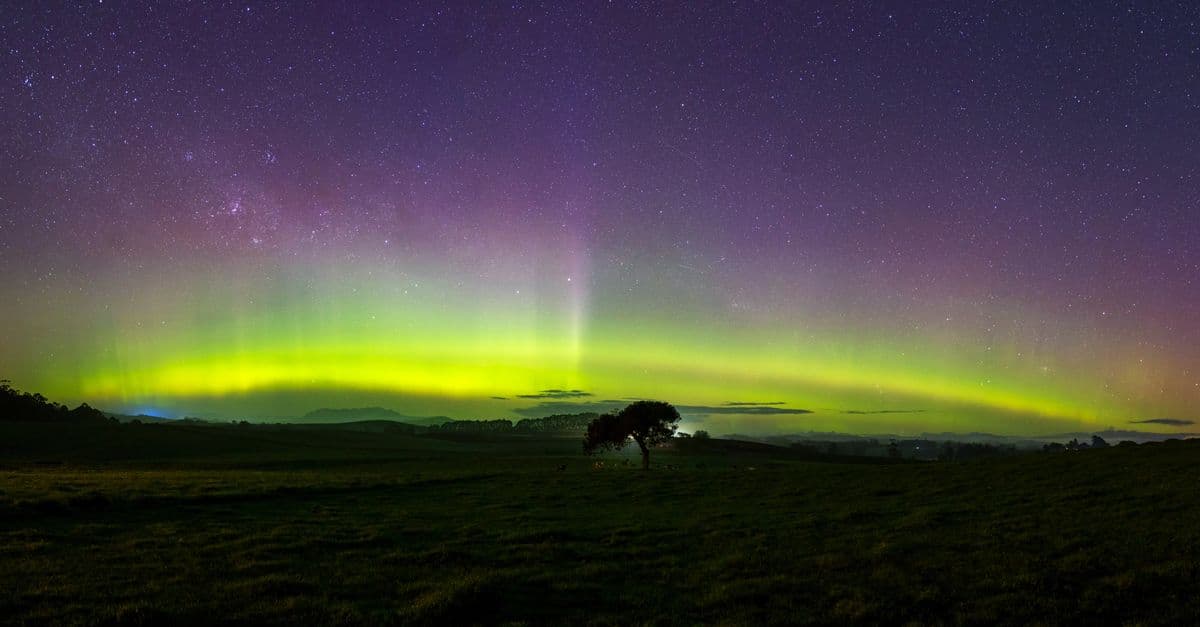
Photo: Isaak Cole / Pexels
Earth is not dead rock. It's a dynamic, geologically active planet sustained by internal heat from radioactive decay of uranium, thorium, and potassium in the mantle and core. This heat drives plate tectonics, maintains the magnetic field, and provides energy for geothermal ecosystems. If radioactive decay stopped, Earth would gradually cool, lose its magnetic field, and become a geologically inert world — a spherical, lifeless rock floating in space.
Thought experiment. This article explores a hypothetical scenario for educational and speculative purposes. The events described are not predictions and should not be interpreted as warnings, advocacy, or instructions.
Key takeaways
- Internal heat loss: Earth loses geothermal heat to space; without radioactive decay to replenish it, heat content drops exponentially (half-life of cooling: ~100 million years).
- Plate tectonics cease: within ~1–10 million years, Earth's mantle cools enough that convection stops and plate tectonics freeze.
- Magnetic field dies: without mantle convection driving the core dynamo, the magnetic field decays (half-life: ~10,000–100,000 years).
- Radiation exposure increases: without the magnetic field, cosmic rays and solar radiation reach the surface, causing DNA damage and increased mutation rates.
- Geothermal life dies: organisms living near hydrothermal vents (the base of a chemosynthetic food chain) lose their energy source.
Sources of Earth's heat
Earth's internal heat comes from two sources:
Primordial heat: left over from planetary accretion and core formation. This contributes a small amount but is mostly dissipated.
Radioactive decay: U-238 (half-life 4.5 billion years), U-235 (704 million years), Th-232 (14 billion years), and K-40 (1.25 billion years) decay in the mantle and core, releasing heat.
Currently, radioactive decay contributes ~44 terawatts of heat to Earth's interior (comparable to 44 trillion power plants). This heat drives convection, plate tectonics, and the magnetic field dynamo.
If decay stopped instantly:
Timeline of effects
Immediately (hour 0–1)
The magnetic field is unaffected initially. The magnetic field is generated by convection in the liquid outer core. This convection would continue for a while due to inertia.
Days to years (1–100 years)
Temperature structure begins to change. Without heat input from radioactive decay, the mantle and core cool slightly. The temperature gradient (hot interior, cooler surface) begins to flatten.
The effect is initially imperceptible. Earth's cooling is slow.
Thousands of years (10³–10⁴ years)
Magnetic field weakens. Mantle convection begins to slow as temperatures equalize. The core dynamo (heat-driven convection in the liquid outer core) is interrupted.
The magnetic field's strength drops. At this point, cosmic rays and solar radiation begin penetrating more effectively (the magnetosphere is weaker).
Timeline: the field might lose 50% strength in ~50,000 years.
Ten thousand years (10⁴ years)
Magnetic field collapse. The core cools and convection nearly stops. The magnetic field dies completely.
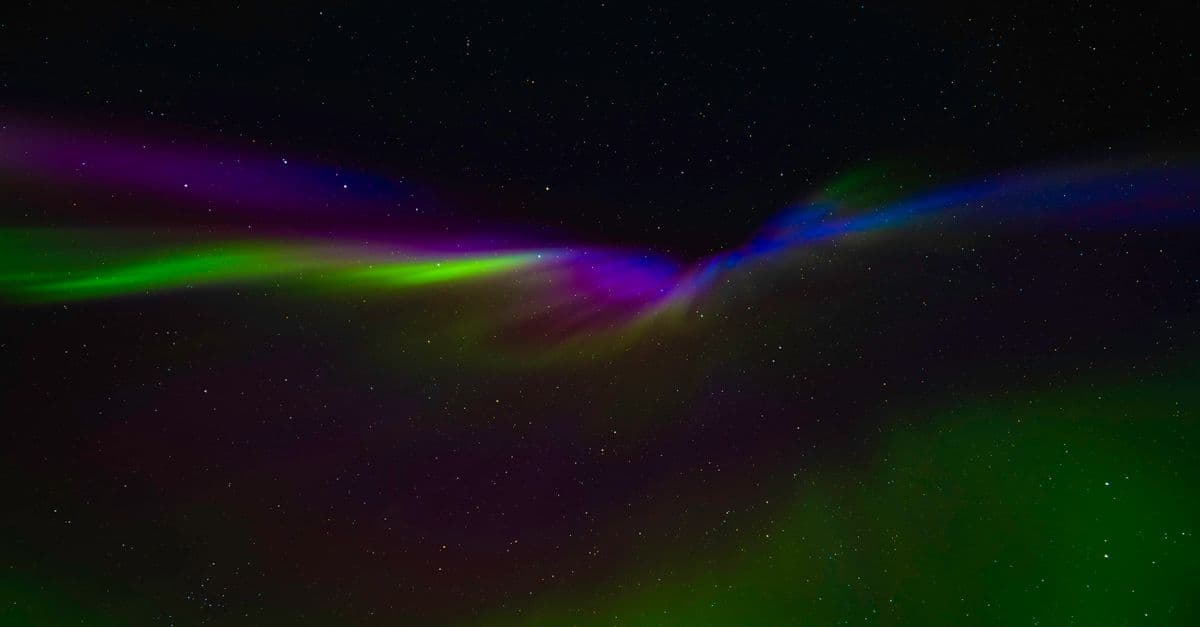
Result: Earth is exposed to the solar wind and cosmic rays. The upper atmosphere is ionized; aurorae become global; radiation exposure increases dramatically.
At the surface, radiation levels increase by ~10–100× (to ~1–10 rem/year, compared to current 0.03 rem/year). This is lethal for many organisms.
Hundred thousand years (10⁵ years)
Mantle cooling accelerates. The temperature at the base of the mantle (core-mantle boundary) is still hot (cooled only ~100–200°C), but the temperature gradient throughout the mantle is flattened.
Mantle convection slows dramatically. Plate tectonics are sluggish.
Millions of years (10⁶–10⁷ years)
Plate tectonics cease. The mantle is cool enough that convection is negligible. Plates stop moving. No more earthquakes, volcanism, or mountain building.
Result: Earth becomes geologically frozen. The landscape is locked into its current state.
Without plate tectonics, mountains erode but are not rebuilt. Over tens of millions of years, Earth becomes a smooth sphere (except for impact craters, which don't erode without water and weather).
Billions of years (10⁹+ years)
Complete cooling. Earth radiates away its remaining internal heat and reaches thermal equilibrium with space. The surface temperature is determined by solar radiation balance; interior temperature approaches 0 K (absolute zero).
Final state: Earth is a cold, geologically dead sphere. The crust is thick and rigid. The core is solid throughout (no liquid outer core).
Effects on the biosphere
Magnetic field loss and radiation
Short term (10K–100K years): The magnetic field weakens and disappears. Cosmic radiation reaching the surface increases by 10–100×.
Effects:
- Increased mutation rates: organisms experience higher radiation doses. DNA damage increases; cancer rates soar; reproductive success drops.
- Extinction of radiation-sensitive species: many animals (especially those with large bodies and long generation times) are extinguished by radiation.
- Evolution accelerates: high mutation rates create more variation; selection is intense. Species evolve rapidly to gain radiation resistance.
After 100,000 years: The magnetic field is gone, but organisms have adapted. Radiation-resistant bacteria thrive. Animals evolve melanin-like compounds for UV protection. Complex life survives but is stressed.
Geothermal ecosystem loss
Timeline: 1–10 million years
Hydrothermal vents on the ocean floor depend on geothermal heat. As the planet cools, vent temperature drops. First, the most temperature-sensitive ecosystems (super-hot vents, 400°C+) cool and become uninhabitable. Then, progressively cooler vents.
Timeline of vent ecosystem collapse:
- First 10,000 years: negligible change (Earth's mantle cooling is slow)
- 10K–100K years: super-hot vents (400°C+) cool to 200°C; thermophilic bacteria struggle
- 100K–1M years: warm vents (100–200°C) cool; many vent ecosystems collapse
- 1M–10M years: all hydrothermal vents cool below 50°C; the chemosynthetic ecosystem that doesn't depend on photosynthesis is gone
Result: any organisms living in vent ecosystems are extinguished. This includes tubeworms, crustaceans, and bacteria that depend on chemical energy from vents.
However, photosynthetic life (relying on solar energy) continues.
Plate tectonics loss
Timeline: 1–10 million years
With plate tectonics frozen, the planet's geology is static.
Effects:
- No new mountain building: the Rocky Mountains, Himalayas, and Alps stop growing.
- No new ocean floor: the Mid-Ocean Ridges stop spreading. Ocean basins are fixed.
- No volcanism: the output of CO₂ from volcanic degassing stops.
- Erosion without replacement: mountains are worn down by wind and water; no new mountains are built. Over millions of years, all mountains are erased.
- Carbon cycle disruption: without volcanic CO₂ input, atmospheric CO₂ slowly decreases (absorbed by weathering, locked into sediments).
Long-term climate effect: CO₂ drops below levels needed for photosynthesis (~10 ppm minimum). Life that depends on photosynthesis faces a crisis.
Climate effects
The absence of plate tectonics and volcanism has profound climatic consequences:
Atmospheric CO₂ decreases: without volcanic outgassing, CO₂ continues to be absorbed. After millions of years, CO₂ levels drop to critical levels (<10 ppm).
Cooling: with less CO₂, the greenhouse effect weakens. The planet cools. Ice ages might be triggered.
Cessation of ice ages: without volcanism to produce dust and aerosols, or with unchanging plate boundaries, glacial-interglacial cycles might cease. Climate becomes static.
Long-term survival of life
In the first million years: life adapts to higher radiation, geothermal loss, and changing tectonics. Many species go extinct; others adapt. Net effect: biodiversity decreases, but life persists.
After 10 million years: the planet is geologically static, radiation-stressed, and increasingly CO₂-depleted. Photosynthetic life is under pressure. Chemosynthetic life (bacteria in soils, deep biosphere) might persist longer.
After 100 million years: Earth is a cold, static, low-CO₂ world. Photosynthesis is marginal or impossible. Life is reduced to deep subsurface microbes living off chemical energy (radioactive isotopes in rocks are still decaying locally, providing heat).
After 1 billion years: Earth is colder and more inert than ever. Microbes in the deep biosphere remain, but visible life is extinct.
What would this world look like?
Visually: a frozen, barren sphere with a thick ice coating at the poles and a bare, rocky surface elsewhere. No mountains, no valleys (eroded smooth). Impact craters dominate the surface. The atmosphere is thin and cold.
Biologically: microbes in subsurface rocks and deep oceans; perhaps some chemosynthetic bacteria in isolated pockets. No plants, no animals.
Geologically: dead. No earthquakes, no volcanism, no mountain building. The landscape is static, eroding only through wind and water (which are also minimal).
Why radioactive decay is so important
Radioactive decay is what keeps Earth alive. Without it:
- The planet would be dead like the Moon (geologically inert, cratered, airless)
- The magnetic field would fail (Moon has no field)
- Plate tectonics would cease (Moon has none)
- Life would be threatened by radiation (Moon has surface radiation)
Earth is only habitable because of radioactive decay in its interior. It's a form of planetary vitality, like a heartbeat.
What it tells us
The "radioactive decay stops" thought experiment illustrates that planetary habitability depends on internal geological activity. Earth is not merely a ball of rock; it's a dynamic system maintained by nuclear processes deep inside.
It also reveals the deep time scales of geological change. Even stopping such a fundamental process takes millions of years to dramatically transform the planet.
Finally, it highlights that humans and life are dependent on geological processes we rarely think about. The ground beneath our feet is active because of atoms decaying billions of years ago, releasing energy that still drives the engine of plate tectonics.
Related thought experiments
Follow new articles
Add SciHub101 to your feed reader to see new science and technology stories.
About the Author
SciHub101 is an independent science and technology publication founded and edited by Buğra Sözeri, a software engineer and app developer based in Türkiye. AI tools assist with drafting and research. Source documentation in the existing archive is uneven, and articles are being reviewed and corrected. The Editorial Team byline identifies editorial responsibility; it does not certify specialist or independent human review. Where we compare products, anything built by our own team is labelled as such — see the editorial guidelines and About page for how corrections and disclosures work.
Related Articles
What If Continents Collided Differently?
Over geological time, continents have repeatedly collided, separated, and reformed in different configurations. If the continents had assembled differently — say, forming a supercontinent at the equator, or never breaking apart from Pangaea — the climate, life, and evolution would be radically different.

What If We Found a Time Machine?
Say a working time machine turns up tomorrow, an artifact and not a theory. Before anyone uses it, scientists would have to prove it is real, governments would fight over who owns it, and the first people through the door would run into the causality wall that makes time travel physics so strange.
What If Earth Doubled in Size? — Science Explained
What would actually happen if Earth suddenly doubled in size? Surface gravity would crush most life, the atmosphere would thicken into a lethal blanket, and reaching space might become impossible.
What If Pangaea Never Broke Up?
Two hundred million years ago, every continent on Earth was joined into a single supercontinent called Pangaea. If it had never split, Earth would have a vast hostile interior desert, weaker biodiversity, and weather patterns dominated by an enormous global ocean.
What If Earth's Magnetic Field Flipped?
Earth's magnetic field has reversed polarity hundreds of times in the past 200 million years — and it could happen again. During the transition, the field weakens, more cosmic radiation reaches the surface, and compasses spin uselessly. But it isn't the apocalypse some claim.
What If the Earth Stopped Spinning?
Earth spins at 1,674 km/h at the equator. If it suddenly stopped, supersonic winds would devastate the surface. If it slowed gradually, the consequences are still severe — a 6-month day, ocean redistribution, and a collapsing magnetic field.