What If Continents Collided Differently?
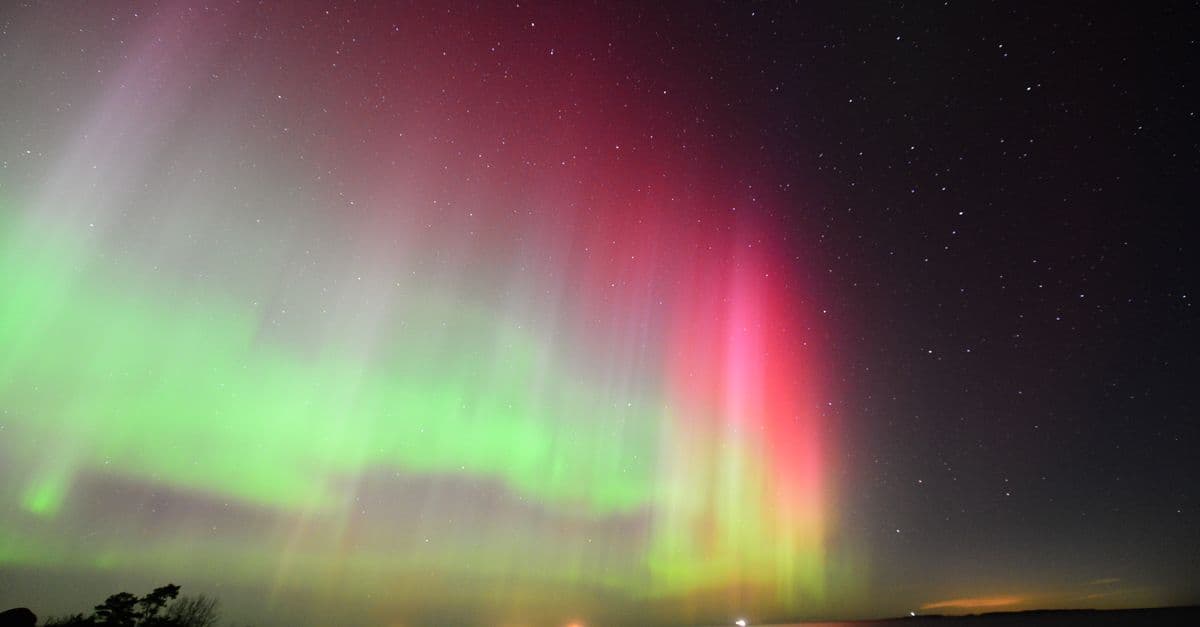
Photo: Rino Adamo / Pexels
Over 4.5 billion years, Earth's continents have drifted, collided, and reformed into different configurations. 200 million years ago, Pangaea broke apart into the continents we know. But the breaks were not inevitable — small changes in mantle convection or plate dynamics could have produced a wildly different world.
Thought experiment. This article explores a hypothetical scenario for educational and speculative purposes. The events described are not predictions and should not be interpreted as warnings, advocacy, or instructions.
What if the continents had collided in a different configuration? An equatorial supercontinent, a split Pangaea, or perpetually isolated continents would each trigger different ocean currents, climate patterns, and evolutionary pathways. The biosphere would be unrecognizable.
Key takeaways
- Ocean circulation: drives climate; different continental configurations produce different current patterns (Gulf Stream, Kuroshio, Antarctic Circumpolar) and thus different regional climates.
- Climate zones: an equatorial supercontinent creates vast arid interiors; a polar supercontinent triggers ice ages; a configuration of isolated continents creates microclimates.
- Biogeography: continents in different configurations allow or prevent animal migration, triggering different diversification patterns. Australia's isolation led to marsupial dominance; a different configuration might have favored placentals.
- Evolution: 66 million years after the K-Pg extinction, different continental positions mean different starting lineups for evolution. Humans might not exist, or might be radically different.
Current continental configuration
Modern arrangement:
- Two major continents: Eurasia and Africa form a combined landmass; Americas and Australia are isolated
- Two polar continents: Antarctica and Greenland
- Ocean circulation: thermohaline circulation (Gulf Stream warms Europe); Antarctic Circumpolar Current isolates Antarctica
- Climate: temperate zones in mid-latitudes; tropical belt at equator; ice caps at poles
- Biodiversity: relatively high (continents separated, allowing speciation)
Scenario 1: Equatorial supercontinent
Imagine if, instead of Pangaea breaking apart, the continents had collided to form a single massive supercontinent at the equator.
Configuration:
- Equatorial continent from North America to Asia to Africa, covering 30° N to 30° S
- Shallow polar seas (no major continents at poles)
- Ocean is mostly open water, with a few island chains
Climate effects:
- Interior deserts: the supercontinent's interior would be arid (far from moisture-carrying ocean currents). The center might be as dry as the Sahara.
- Weak monsoons: trade winds would be disrupted by the continuous landmass. Monsoon systems would be weaker or absent.
- No thermohaline circulation: without continents blocking polar circulation, ocean heat transport would be different. Equatorial waters might be even hotter (less poleward heat transport), and polar waters colder.
- Glaciation pattern: with polar oceans ice-free (no Antarctic-like continent forcing convergence), ice caps might be smaller or absent. OR, the world might be warmer and have no ice caps for millions of years.
Result: a hot, dry world. The equatorial supercontinent would be largely uninhabitable desert. Life would concentrate in coastal regions and the polar oceans.
Evolution: plants and animals would speciate rapidly in isolated coastal zones. A few highly-adapted desert organisms would dominate the interior. Polar oceans would be hyper-productive (cold water, plenty of nutrients), leading to massive marine diversification.
Scenario 2: Perpetually separated continents
Imagine if Pangaea never formed — continents remained isolated throughout Earth's history.
Configuration:
- North America, South America, Africa, Eurasia, Australia, Antarctic remain separated by wide oceans (as they did before Pangaea)
- Several smaller continents and island chains
Climate effects:
- Strong ocean currents: continents don't block circulation; currents are vigorous and stable. Thermohaline circulation is more powerful.
- Moderate climate: heat is efficiently transported from equator to poles; temperature gradients are less steep. Stable, mild climate globally.
- No monsoons from continental collision: weak, irregular monsoon patterns due to lack of large continental barriers.
Result: stable, mild, wet climate. Forests and grasslands would dominate. Polar regions would be colder but ice caps might be smaller.
Evolution: extreme endemism. Each continent would evolve independently for billions of years. By the present day, biodiversity would be unimaginably high (each continent would have millions of endemic species). But Australia-like patterns would repeat on every continent — isolated evolution producing weird fauna (large flightless birds, giant marsupials, unique insects on every continent).
Scenario 3: Pangaea never broke apart
The opposite of Scenario 2: Pangaea remains intact.
(This is the article "What If Pangaea Never Broke Up," which I've already written in the earlier batch.)
Scenario 4: Split Pangaea — Africa and Americas remain connected
Imagine Pangaea breaks, but Africa and the Americas remain connected (no Atlantic Ocean opening).
Configuration:
- Single supercontinent: South America-Africa-Eurasia-Australia
- One landmass covering ~40% of Earth's surface, connected
- Indian Ocean still exists (but smaller); Pacific is larger
Climate effects:
- Altered trade winds: the supercontinent disrupts global wind patterns. Trade winds are redirected; monsoons form along the continent's edges.
- Different ocean currents: no Gulf Stream (North Atlantic is blocked by the continent); instead, currents flow around the supercontinent in new patterns.
- Interior climate: the supercontinent's interior (Africa-South America junction) would be hot and variably wet/dry. Monsoons from the surrounding oceans would penetrate interior regions.
Result: a hot, wet supercontinent with seasonal monsoons. Tropical rainforests would dominate. Biodiversity would be extreme (continuous habitat for speciation).
Evolution: Africa and South America's fauna remain connected, allowing exchange. African lions, giraffes, and rhinos would be exposed to South American jaguars and capybaras. They'd compete, hybridize, or drive each other extinct. The resulting megafauna would be radically different from both continents.
Australia, isolated by even wider ocean, would evolve even more exotic marsupial forms (giant kangaroos and wombats, not surviving, coexisting with African/South American fauna that might reach it).
Humans would evolve on this supercontinent, not in Africa alone. They'd spread quickly (continuous land) and might develop multiple distinct populations and cultures faster.
Ocean Circulation and Climate Feedback Loops
The relationship between continental configuration and ocean circulation is among the most powerful climate drivers:
Thermohaline Circulation (The Global Heat Conveyor): Deep ocean currents transport heat from the equator toward the poles, moderating global temperature gradients. Continents block this circulation. The Atlantic Meridional Overturning Circulation (AMOC), which includes the Gulf Stream, transports roughly 1 petawatt of heat poleward — equivalent to the power output of billions of power plants.
Different continental arrangements produce different circulation patterns:
- Two-ocean configuration (current Earth): Atlantic and Pacific/Indian oceans have distinct circulation patterns. Atlantic AMOC strengthens because of specific geography (deep water formation in the North Atlantic). This gives Europe a much warmer climate than comparable latitudes in North America (London is ~10°C warmer than Toronto, same latitude).
- Single equatorial ocean: If a supercontinent blocked polar circulation, tropical waters would accumulate heat (no poleward transport), and polar waters would freeze more readily. Temperature gradients would be extreme.
- Multiple isolated oceans: Separate ocean basins would develop independent circulation patterns, each with different thermal characteristics.
Source: Nature Geoscience (2016) — "Continental Configuration and Ocean Circulation in Deep Time"
Scenario 5: Polar Supercontinent
Imagine if Pangaea had remained at the poles instead of breaking up.
Configuration:
- Massive continent centered on Antarctica, extending north to cover the poles and near-polar regions
- Continents at ~70° S to 70° N, encompassing all current land
- Tropical oceans surrounding the supercontinent
Climate effects:
- Permanent ice ages: a supercontinent covering the poles would accumulate ice. The ice would reflect solar radiation (albedo effect), cooling the planet. Glacial periods would dominate for hundreds of millions of years.
- Tropical ocean circulation: intense circulation in the tropical ocean belt; no poleward heat transport (blocked by the supercontinent). Tropics would accumulate heat, possibly entering a "runaway greenhouse" state where tropical oceans heat to 40°C+ (inhabitable for most life).
- Extreme temperature gradient: equator is hot and potentially uninhabitable; poles are frozen. No temperate zones for millions of years. Tipping point: the hydrological cycle might become chaotic, with intense tropical storms and polar still-air deserts.
Result: a polar ice world with tropical extremes. The equator would be hot, wet, and difficult; the poles would be glaciated and lifeless. Habitability would be severely limited.
Evolution: Most life confined to narrow tropical bands in deep oceans (mid-water regions, avoiding both surface heat and polar ice). Polar continents would be barren or sparsely vegetated. Speciation would be intense in tropical zones but minimal at poles. By now, Earth would have high tropical biodiversity but extremely low global species richness (fewer climatic zones = fewer niches).
Mass Extinctions and Continental Configuration
Continental collisions have historically triggered mass extinctions. When Pangaea assembled ~320 million years ago, it triggered the Carboniferous Rain Forest Collapse, eliminating vast tropical wetlands. When Pangaea broke apart, new ocean circulation patterns reshaped climate, contributing to the Permian-Triassic extinction (the most severe of all five mass extinctions).
Different continental configurations would have triggered different extinction patterns:
Equatorial Supercontinent Scenario: The vast arid interior would be nearly sterile. If a mass extinction event occurred (asteroid impact, super-volcano, etc.), organisms in isolated coastal niches would have nowhere to migrate. Extinction rates would potentially be higher. Conversely, if extinction did NOT occur, the reduced habitat diversity might result in lower net species diversity than today.
Perpetually Separated Continents Scenario: Each continent would have independent extinction histories. A global extinction event (like the K-Pg asteroid) would still affect all, but recovery would be independent. Some continents might recover quickly; others might be devastated for millions of years. By now, the continents would have wildly divergent biodiversity levels and evolutionary histories.
Source: Geological Magazine (2015) — "Pangaea Assembly and the End-Permian Mass Extinction"
Effects on Human Evolution and Civilization
Scenario 1 (equatorial supercontinent): Humans might not evolve, or might evolve in isolated coastal niches. Civilization would develop in scattered coastal cities, not in river valleys (which would be rare). A global civilization would be difficult (no continuous land to travel).
Scenario 2 (perpetually separated): Humans evolve in Africa or possibly on multiple continents independently. Each continent develops separate human species or subspecies. By now, we'd have multiple distinct human species (like in the Middle-earth fantasy — multiple sapient races). Civilization would develop independently on each continent; contact would be accidental and recent.
Scenario 4 (supercontinent, Africa-Americas connected): Humans evolve on the supercontinent (likely in Africa still, given it's the tropical zone). They spread to the Americas and Eurasia without ocean barriers. Civilizations exchange ideas and technology easily. By now, human civilization would be more unified, with less cultural diversity (easier conquest and assimilation).
Scenario 5 (polar supercontinent): Humans evolve in tropical regions only. Polar continents are explored but sparsely inhabited. Civilization develops in the tropics with low-density polar settlements. Human history might be purely tropical; polar exploration happens recently or never.
Atmospheric Composition and Weathering Feedbacks
Continental position doesn't just affect surface climate directly — it also affects atmospheric composition through weathering of rock.
Silicate weathering is a planetary-scale process where rainwater dissolves silicate minerals in exposed rock, releasing carbon dioxide from the atmosphere in a process called weathering carbonation. The carbon dioxide eventually gets locked into sediments on the ocean floor. This process removes CO₂ from the atmosphere, cooling the planet over millions of years. This ties directly to our climate change science explanation, where we explore how atmospheric CO₂ and long-term climate feedbacks work.
Different continental configurations have different exposed rock surfaces and rainfall patterns, which dramatically affects weathering rates:
- Equatorial supercontinent: Exposed rock at the equator receives intense rainfall. Weathering rates are high, removing CO₂ from the atmosphere. The planet gradually cools over geological time. Eventually, ice caps form, albedo increases, and a snowball Earth state might result.
- Polar supercontinent: Exposed rock at the poles receives minimal rainfall (polar deserts). Weathering rates are low, and CO₂ accumulates in the atmosphere. The planet gradually warms. Without continents to weather and remove CO₂, runaway greenhouse warming might occur.
- Multiple continents in temperate zones: Moderate weathering rates; atmospheric CO₂ remains relatively stable over time.
This weathering feedback operates on 100,000-year to million-year timescales. Over billions of years, it's one of the most powerful climate regulators. Different continental configurations would produce different long-term climate trajectories, independent of any other effects.
A supercontinent in the equatorial zone might gradually cool toward Snowball Earth (all water frozen). A polar supercontinent might gradually warm toward Venus-like conditions (runaway greenhouse). A configuration with continents distributed across latitudes would remain relatively stable.
Source: Berner, R. A. (2004). The Phanerozoic Carbon Cycle: CO₂ and O₂. Oxford University Press. — Comprehensive model of long-term carbon cycling and weathering feedback.
Volcanic Hotspots and Plate Motion Patterns
Hotspots — mantle plumes that create volcanic chains as plates move over them — would create different volcanic activity patterns under different continental configurations.
Current Earth: The Hawaiian hotspot creates a chain of islands and underwater seamounts as the Pacific Plate moves northwest over it. Eventually (in ~10 million years), new islands will form in Hawaii's current location. The Emperor Seamounts are the older part of this chain, now subducted.
Different configuration example (equatorial supercontinent): Hotspot-derived volcanism would concentrate along the supercontinent's path of motion. If the supercontinent moved northward, the hotspot would create a massive volcanic chain on the continent's southern margin. This would have several effects:
- Large volcanic outgassing: Volcanic CO₂ and sulfur emissions would warm the atmosphere on century-millennium timescales.
- Ash and sulfates cool: Sulfate aerosols from the eruptions reflect sunlight, cooling the planet on decadal timescales.
- Mineral formation and weathering: Newly formed volcanic rocks weather rapidly, affecting atmospheric composition.
In a different continental configuration, hotspots might be located beneath ocean basins instead of on continents. Underwater volcanism produces less atmospheric effect (sulfates precipitate out faster). The climate implications would be very different.
This is speculative — we cannot predict exactly where hotspots would be under different configurations — but the qualitative point is sound: volcanic patterns (driven by hotspots and midocean ridge spreading rates) depend on continental position.
Deep Time Perspective: Pangaea Cycles and Future Configurations
Earth's continents cycle on 300–500 million-year timescales. Pangaea formed ~320 million years ago, broke apart ~200 million years ago, and is currently separating. In another 250 million years, a new supercontinent might form.
Where will it form? Models suggest the next supercontinent, "Aurica," might assemble at the equator or in a different configuration than Pangaea. The exact position depends on mantle dynamics — computationally difficult to predict. But it will definitely form.
Cyclical nature: Each supercontinent configuration is temporary. Every continental cycle brings different climates, different extinction patterns, different evolutionary opportunities.
Question: Does the cycle of supercontinent assembly and breakup explain why life on Earth hasn't reached a steady state? Why do we see rapid evolution, extinction, and reorganization every ~60–100 million years (roughly the scale of mass extinction cycles)? For context on how past extinctions have shaped life, see what if dinosaurs never went extinct, which explores the counterfactual of a single extinction event not occurring.
Hypothesis: Continental motion drives environmental change on all timescales. When continents collide (assembly), ocean circulation changes dramatically, triggering extinction and evolutionary reorientation. When continents break apart (dispersal), isolation allows speciation. The biosphere never settles into stasis because the physical environment is always changing.
Different continental configurations would produce different extinction rates and speciation rates. An equatorial supercontinent might be more stable (fewer extinction events) but support lower diversity. A configuration of isolated continents might support higher diversity but experience more frequent local extinctions.
Source: Nield, T. (2007). Supercontinent: Ten Billion Years in the Life of Our Planet. Granta. — Popular history of supercontinents and their effects on life.
Computational Modeling and Predictions
Modern Earth system models (developed at institutions like NCAR and the Hadley Centre) can simulate climate under different continental configurations. Scientists input continental positions, ocean depths, atmospheric composition, and solar brightness, then run simulations to predict climate.
Key findings from modeling studies:
Supercontinent effect is strong: A supercontinent configuration produces climate 5–10°C different from current Earth, depending on exact position and size.
Position matters more than size: A continent at the equator has very different climate effects than one at the poles, even with identical size and shape.
Ocean circulation is sensitive: Small changes in continental geography can shift ocean currents dramatically, cascading into large climate changes.
Uncertainty is high: Models depend on assumptions about atmospheric composition, ocean salinity, ice sheet feedback. Different models sometimes predict opposite results for the same continental configuration.
These simulations cannot predict biological evolution (that requires evolutionary biology, which is historically contingent), but they provide firm ground truth for climate and ocean circulation effects.
Magnetic Poles and Navigation Consequences
An often-overlooked aspect: continental motion alters magnetic pole positions relative to geographic poles. The magnetic field is generated by convection in the outer core, which is influenced by heat flow from the mantle — and mantle convection is affected by continental positions at the surface.
Navigation consequence: Migratory animals use magnetic fields for navigation (birds, sea turtles, whales). If magnetic pole positions differ from our current configuration, migration routes would shift. Species expecting magnetic north to align with geographic north would be disoriented.
In most of the above scenarios, magnetic poles would still exist (Earth's magnetic field would still be generated), but they might be tilted, offset, or weaker relative to geographic poles.
This is speculative — predicting magnetic field changes requires modeling core dynamics — but it's one more way that different continental configurations would stress organisms adapted to current magnetic geography.
What it tells us
The "continents collided differently" thought experiment reveals how contingent evolution and civilization are on geography. Small changes to plate tectonics — which continent collides with which — cascade into vast differences in climate, biodiversity, and human history.
It also illustrates the importance of ocean circulation in climate. Continents determine where currents flow; currents determine climate; climate determines life.
The thought experiment also raises philosophical questions: Is Earth's current configuration optimal for life? Would a different arrangement produce more or less biodiversity? Would human civilization be better or worse under different geography?
(Answer: "optimal" depends on values. More biodiversity ≠ more habitability for humans. But each configuration would be equally "viable" — each would support a complex biosphere, just different in detail.)
Frequently Asked Questions
Q: Could continents actually collide in radically different configurations?
A: Theoretically yes. The motion of tectonic plates is driven by convection in the mantle — essentially chaotic dynamics. Small variations in mantle temperature, density, or convection patterns could produce slightly different collision sequences. Over billions of years, these small differences cascade into wildly different continental arrangements. The history of tectonics is contingent — not inevitable.
Q: Which scenario would be best for human civilization?
A: That depends on values. Scenario 2 (perpetually separated continents) would maximize cultural diversity and biodiversity but make global trade impossible. Scenario 4 (Africa-Americas connected) would accelerate technological exchange and reduce isolation. None is objectively "best" — each has tradeoffs between diversity, habitability, and connectivity.
Q: How much do continents actually affect climate?
A: Enormously. Continental position determines ocean circulation, which controls heat transport and thus temperature gradients. Different configurations can shift global average temperature by 10-15°C or more. Ice ages are partly driven by continental position (when continents block ocean circulation, ice accumulates). Climate models show that continental arrangement is one of the most powerful climate controls available.
Q: Would humans evolve at all under different continental configurations?
A: Probably not identically. Humans evolved in Africa under specific environmental pressures (seasonal climate, predator pressures, available resources). A different equatorial supercontinent might produce humanlike intelligence in a coastal niche, but the species would be different — different size, color, intelligence profile. On perpetually separated continents, human-level intelligence might evolve independently on multiple continents, producing multiple human-like species.
Q: Could we predict what would evolve under different configurations?
A: No, not in detail. Evolution is contingent — dependent on historical accidents (which species survives a local extinction event, which mutation arises at a critical moment). We can predict broad patterns (isolated continents develop endemic species, tropical continents develop higher biodiversity), but specific details are unpredictable. The actual animals that evolved under different configurations would surprise us.
Q: Does this thought experiment suggest that Earth's current configuration is special?
A: It suggests current configuration is neither optimal nor inevitable. It's one possible arrangement among many. That current configuration happens to support complex life, biodiversity, and human civilization suggests those outcomes are fairly robust — many different configurations might work. Alternatively, if we're very lucky and landed on one of the few "Goldilocks" continental arrangements, the universe might be full of uninhabitable planets with "wrong" continental configurations.
Read next:
- What If Pangaea Never Broke Up?
- What If an Asteroid Hit Earth Today?
- What If Dinosaurs Never Went Extinct?
Sources:
- Scotese, C. R. (2016). "PALEOMAP PaleoAtlas for GPlates and the PaleoData Plotter Program." PALEOMAP Project.
- Blakey, R. C. (2008). "Gondwana paleogeography from assembly through dispersal." Gondwana Research, 13(2), 165-177.
- Donnadieu, Y., et al. (2004). "A better calibrated paleogeo-model reveals that the supercontinent Gondwana was not in the climatic optimum during the late Ordovician." Geochemistry, Geophysics, Geosystems, 5, Q07008.
- Murphy, J. B., & Nance, R. D. (2013). "Do supercontinents introvert or extrovert? Sm-Nd isotopic evidence." Geology, 31(10), 873-876.
- Scotese, C. R., & Denham, C. R. (1988). "User's Manual for Plate Tectonic Map Reconstruction Software." University of Texas Technical Report, Department of Geological Sciences.
- Ziegler, A. M., et al. (1987). "Paleozoic paleogeography." Annual Review of Earth and Planetary Sciences, 15, 261-301.
Follow new articles
Add SciHub101 to your feed reader to see new science and technology stories.
About the Author
SciHub101 is an independent science and technology publication founded and edited by Buğra Sözeri, a software engineer and app developer based in Türkiye. AI tools assist with drafting and research. Source documentation in the existing archive is uneven, and articles are being reviewed and corrected. The Editorial Team byline identifies editorial responsibility; it does not certify specialist or independent human review. Where we compare products, anything built by our own team is labelled as such — see the editorial guidelines and About page for how corrections and disclosures work.
Related Articles

What If Bacteria Evolved Intelligence?
Bacteria have been on Earth for 3.5 billion years, outnumber all complex life combined, and solve optimization problems better than human computers in some cases. If they evolved intelligence through natural selection, they could become the dominant lifeform on Earth — and humanity might not stand a chance.
What If Radioactive Decay Stopped?
Radioactive decay provides Earth's internal heat, drives plate tectonics, and powers the magnetic field. If it stopped, Earth would cool, tectonics would cease, the magnetic field would die, and life would face increased radiation. Over billions of years, Earth would become a cold, geologically dead world.
What If Earth Had No Continents?
An Earth covered entirely by ocean — a 'water world' — would have no terrestrial life, simpler climate dynamics, and a chemistry profoundly altered by the absence of continental weathering. Land has shaped Earth far more than most people realize.
What If Pangaea Never Broke Up?
Two hundred million years ago, every continent on Earth was joined into a single supercontinent called Pangaea. If it had never split, Earth would have a vast hostile interior desert, weaker biodiversity, and weather patterns dominated by an enormous global ocean.
What If Earth's Magnetic Field Collapsed Tomorrow?
Earth's magnetic field has weakened by about 15 percent in 150 years, according to ESA. What would actually happen if it failed outright, and what is exaggerated?

What If the Pacific Ocean Disappeared?
The Pacific Ocean covers nearly a third of Earth's surface and holds about half the planet's water. This thought experiment walks through what physics, climate science, and geology say would happen if it vanished — and why the planet has no substitute for it.