What If the Pacific Ocean Disappeared?
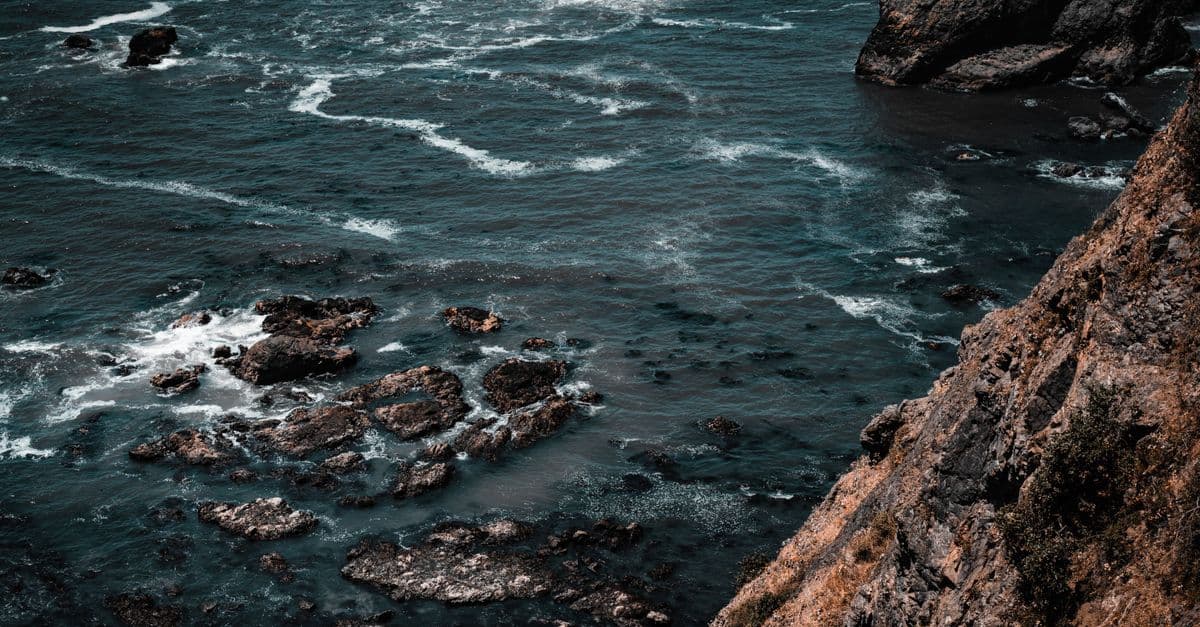
Photo: Alfo Medeiros / Pexels
This is a thought experiment, not a prediction. The Pacific Ocean covers about 155 million square kilometers (60 million square miles), roughly 30% of Earth's surface, and holds close to half of all water in the global ocean, according to NOAA Ocean Exploration. Nothing in physics allows an ocean to simply vanish, but tracing what would happen if it did is a useful way to see how much of the planet's climate, biology, and geology quietly depends on it.
Thought experiment. The scenarios below are hypothetical and speculative, built on real physical, climatological, and biological constraints. They are not forecasts, warnings, or policy positions.
Just how big is the Pacific, really
Before imagining its absence, it helps to see the scale of what would be gone. The Pacific averages about 4,000 meters (13,000 feet) deep, according to NOAA, and its deepest point, the Challenger Deep in the Mariana Trench, reaches roughly 10,935 meters (35,876 feet) below the surface based on 2020 submersible measurements reported by NOAA's ocean and coastal repository. Stack Mount Everest into that trench and its summit would still sit more than 2,000 meters underwater.
The Pacific basin alone is larger than the combined landmass of every continent on Earth. It touches the coastlines of Asia, Australia, the Americas, and thousands of islands, and it contains roughly 49.4% of all water in the world's oceans by NOAA's accounting. That is not a rounding error in the planet's water budget. It is close to half of it.
Think of Earth's total water supply as a single bathtub. The Pacific is not a faucet feeding that tub; it is nearly half the water already sitting inside it. Pull that water out and you are not draining a tributary, you are draining the tub itself.
Why "disappearing" needs three different scenarios
Water does not disappear on its own. It can evaporate, freeze, or flow somewhere else, but the total mass of hydrogen and oxygen atoms on Earth stays essentially fixed over human timescales. So a genuine "Pacific vanishes" thought experiment has to pick a mechanism, because the mechanism determines the outcome.
We will walk through three physically distinct versions:
- Instant removal. The Pacific's water is simply gone, no residue, no vapor, as if the basin were surgically emptied.
- Instant evaporation. All that water becomes atmospheric vapor in one stroke.
- Redistribution. The water is not destroyed but relocated, flowing into new inland basins and leaving the Pacific floor dry.
Each of these produces a wildly different Earth. None of them is survivable for the biosphere as we know it, but the paths to collapse look almost nothing alike, which is itself the interesting part of the exercise. A related thought experiment is what if all water on Earth disappeared.
Scenario one: the water is simply gone
Picture the Pacific basin, still shaped exactly as it is today, but completely empty. The instant this happens, several things start moving.
First, the neighboring oceans no longer meet resistance from Pacific water pressure at their boundaries. The Atlantic and Indian Oceans connect to the Pacific basin through the Drake Passage near South America, the gaps around Australia and Indonesia, and the Arctic. Within hours, enormous volumes of water begin draining from the Atlantic and Indian Oceans into the newly empty Pacific basin, driven by nothing more exotic than gravity finding the lowest available surface.
This is where a useful analogy helps. Imagine three connected swimming pools at the same water level, separated only by low walls. Drain one pool completely and the other two do not stay full. Water pours over the shared walls until a new, lower common level is reached across all three. The Pacific basin, at an average depth of 4,000 meters, is an enormous void relative to the shallower connecting seaways, so the inflow would be geologically fast and, on human timescales, essentially unstoppable.
Within days, coastal regions on the Atlantic and Indian Ocean rims would see falling water levels as their oceans drain toward the Pacific void, the opposite of a flood: harbors emptying, tidal zones retreating kilometers inland, ships stranded on newly exposed seabed. Within weeks to months, a new equilibrium sea level would emerge, lower everywhere than today's, because the total ocean volume now has to spread across a system that includes an enormous, partially refilled Pacific basin.
The net effect is not that global sea level drops to zero. It is that the remaining water redistributes itself across a bigger effective basin, lowering sea level everywhere while leaving the deepest parts of the old Pacific still submerged under whatever inflow arrives. Coastlines worldwide would be redrawn in the process, exposing continental shelves that are currently underwater and creating land bridges between landmasses that are separated today.
How would this affect the Panama and Bering land bridges?
Even a partial sea level drop would reopen land connections that existed during past ice ages, when global sea level was tens of meters lower than today. A draining Pacific would likely reopen and widen many of these corridors within weeks, though the ecosystems that once used them are gone and could not simply reappear on the same timescale.
Scenario two: the water becomes vapor
This version is the most violent, and the physics behind it is well documented in planetary science. If the Pacific's roughly 710 million cubic kilometers of water became atmospheric water vapor in a single event, Earth's atmosphere would suddenly contain vastly more water vapor than the roughly 13,000 cubic kilometers it normally holds, based on standard atmospheric water budget estimates used in climate science.
Water vapor is a potent greenhouse gas, arguably the dominant one in Earth's atmosphere by mass, and this is precisely the mechanism at the heart of what atmospheric scientists call the moist greenhouse and runaway greenhouse effects. James Kasting's foundational 1988 modeling work, published in Icarus, showed that a runaway greenhouse on an Earth-like planet occurs once incoming solar flux reaches roughly 1.4 times its present value, driving surface temperatures high enough that oceans evaporate entirely and cannot recondense (see Kasting 1988, ScienceDirect). Kasting's related work on the moist greenhouse describes a related but distinct state: once mean surface temperature climbs to around 340 Kelvin (67°C, or about 153°F), the stratosphere becomes wet enough that water vapor is broken apart by sunlight and hydrogen escapes to space, slowly stripping a planet of its oceans, a process thought to have happened to early Venus.
Dumping half of Earth's ocean water into the atmosphere at once would not wait for slow solar brightening to trigger this state; it would create local greenhouse conditions instantly. Surface temperatures would spike dramatically within hours as the added water vapor traps outgoing infrared radiation. Photosynthesis in surface plants would stop almost immediately, both from heat stress and from a sky thick enough with vapor to block usable sunlight in many regions. This scenario functions less like weather and more like a planet-wide pressure cooker.
Eventually, physics would push back. As the vapor-choked atmosphere radiates heat to space and portions of it rise and cool, condensation would begin, and Earth would experience rainfall on a scale with no precedent in human history, potentially depositing kilometers of water depth back onto the surface over subsequent weeks as the system re-equilibrates. But that recovery would arrive long after the initial thermal spike had already ended most surface life.
Scenario three: the water goes somewhere else
The gentlest version, relatively speaking, imagines the Pacific's water flowing into new inland basins rather than vanishing or vaporizing. Continental interiors that are dry today, portions of central Asia, the American interior, inland Australia, would flood into vast new seas as water finds its way to the lowest available land elevations.
This scenario preserves more of the planet's total water cycle. Precipitation continues, rivers still flow, and life on the remaining exposed land has a fighting chance, at least initially. But it is still catastrophic. Every coastal city and port on the Pacific rim, home to a significant share of global population and economic activity, would lose the ocean it was built around. Trade routes, fishing economies, and regional climates built on Pacific proximity would collapse or relocate. New inland seas would reshape regional weather patterns in ways not seen since prehistoric epochs when large inland seas like the ancient Western Interior Seaway covered parts of North America.
Of the three scenarios, this is the one where organized human civilization would have the best chance of adapting parts of itself, but "best chance" here still means a catastrophe on the scale of ending most of the world's coastal economies simultaneously.
What the Pacific actually does for global climate
Removing the Pacific is not just a geography problem. It breaks several of the climate system's central mechanisms, because the Pacific is not a passive body of water sitting between continents. It actively drives global weather.
The clearest example is the El Niño-Southern Oscillation, or ENSO, described by NOAA as "arguably the most influential climate driver on Earth" (see NOAA Climate.gov's ENSO overview). ENSO is a naturally recurring pattern in which surface temperatures and winds across the tropical Pacific shift between warm (El Niño) and cool (La Niña) phases every two to seven years. These shifts alter rainfall over North America, change the length and intensity of the South Asian monsoon, and shift the frequency of Atlantic hurricanes, according to NOAA's ENSO research program. A planet without a Pacific has no ENSO, and every one of those downstream weather systems loses its primary tuning mechanism.
Layered on top of ENSO is the Pacific Decadal Oscillation, a slower, multi-decade pattern of Pacific surface temperature shifts that influences fisheries, drought cycles, and regional climate trends across the Pacific Rim and beyond. Removing the Pacific removes this pattern too, along with whatever compensating climate behavior the rest of the ocean system had built around it.
There is also a simpler, more mechanical role the ocean plays: heat storage. Water has an unusually high heat capacity, meaning it can absorb enormous amounts of solar energy without changing temperature very much, then release that energy slowly. Oceans function as the planet's thermal flywheel, smoothing out the difference between day and night, and between summer and winter, especially in coastal and maritime climates. Losing roughly half the ocean's heat storage capacity means continental interiors would swing to far greater extremes: hotter summers, colder winters, and sharper day-to-night temperature swings, because there would be far less thermal mass nearby to buffer the changes.
Why can't the Atlantic and Indian Oceans just take over the Pacific's climate role?
The Atlantic and Indian Oceans are smaller, hold less total heat capacity, and have their own separate circulation patterns (like the Atlantic Meridional Overturning Circulation) that are not built to substitute for ENSO or the Pacific Decadal Oscillation. They would absorb some of the burden but could not replicate a system tuned by millions of years of Pacific-specific geography, bathymetry, and wind patterns.
The biological collapse
The Pacific is not just water. It is the largest habitat on Earth, and its loss under any of the three scenarios would represent the largest mass extinction event in the planet's history, eclipsing even the Cretaceous-Paleogene extinction that ended the era of non-avian dinosaurs 66 million years ago.
Start with fisheries. Nearly 60% of all wild-caught fish worldwide come from the Pacific Ocean, which produced about 47 million tonnes of the global catch in 2022 alone, according to the FAO's State of World Fisheries and Aquaculture report. The Northwest Pacific fishing region alone accounted for 18.6 million tonnes, roughly 23.3% of all marine catches recorded globally that year. Losing the Pacific does not just remove a slice of the seafood supply; it removes the majority of it, instantly, for every coastal economy that depends on it.
Coral reefs concentrate even more dramatically in Pacific waters. The Coral Triangle, spanning roughly 6 million square kilometers across Indonesia, the Philippines, and neighboring Pacific waters, contains about 76% of the world's known coral species, roughly 605 out of 798 recognized species, along with 37% of the world's coral reef fish species, 235 of which exist nowhere else on Earth, according to the Coral Triangle Initiative. This single region also supports the livelihoods of more than 100 million people who depend on reef fisheries and tourism.
None of this counts the deep-sea biodiversity unique to Pacific trench environments, where organisms have adapted to pressures found nowhere else, including chemosynthetic communities near Mariana Trench hydrothermal vents that rely on chemical energy rather than sunlight. It also does not count the migratory species, from Pacific salmon to leatherback sea turtles to gray whales, whose entire life cycles are built around Pacific currents, spawning grounds, and feeding routes.
Removing the Pacific under any scenario means these species have nowhere to go. The Atlantic and Indian Oceans are not empty backup habitats; they are already fully occupied ecosystems with their own species, food webs, and carrying capacities that cannot simply absorb an influx of displaced Pacific life, even in the versions of this scenario where some water and some organisms survive the transition.
| Pacific Ocean Feature | Scale | Source |
|---|---|---|
| Share of Earth's surface | ~30% (155 million km²) | NOAA Ocean Exploration |
| Share of global ocean volume | ~49.4% of all seawater | NOAA Ocean Exploration |
| Average depth | ~4,000 m (13,000 ft) | NOAA Ocean Exploration |
| Deepest point (Challenger Deep) | ~10,935 m (35,876 ft) | NOAA repository, 2020 measurement |
| Share of global wild fish catch | ~60% (47 million tonnes in 2022) | FAO, State of World Fisheries and Aquaculture 2024 |
| Coral species in the Coral Triangle | ~76% of world's coral species | Coral Triangle Initiative |
| Share of world's active volcanoes on its rim | ~75% | NOAA Ocean Exploration, Ring of Fire |
| Share of world's earthquakes on its rim | ~90% | NOAA Ocean Exploration, Ring of Fire |
Table: Key Pacific Ocean statistics referenced in this thought experiment, with primary sources.
The geology nobody thinks about
The Pacific basin is bordered by the Pacific Ring of Fire, a roughly 40,250-kilometer (25,000-mile) arc of subduction zones and volcanic activity that produces about 75% of the world's active volcanoes and around 90% of the world's earthquakes, according to NOAA Ocean Exploration's Ring of Fire fact page. This is not a coincidence of geography. The Ring of Fire exists because Pacific tectonic plates are actively subducting, sliding beneath neighboring plates, at multiple points around the basin's edge.
Ocean water plays a direct chemical role in that subduction process. Water carried down with subducting oceanic crust lowers the melting point of surrounding mantle rock, which is part of why subduction zones generate so much volcanic activity in the first place; the water essentially acts as a chemical catalyst that helps rock melt at lower temperatures than it otherwise would. Remove the ocean water sitting on top of and within that subducting crust, and the melting dynamics that fuel Ring of Fire volcanism would shift in ways current models cannot precisely predict, since no comparable natural experiment exists to calibrate against.
There is also a slower, more mechanical geological effect worth understanding through an analogy. Think of the Pacific seafloor the way you'd think of a mattress with someone lying on it. The weight compresses it slightly. Take the person's weight away and the mattress springs back up, not instantly, but steadily, until it reaches a new resting shape. Removing the roughly 710 million cubic kilometers of water pressing down on the Pacific seafloor would trigger a similar process, called isostatic rebound, where the underlying crust and mantle slowly rise now that the water's weight is gone. This rebound would not happen in days or weeks; it plays out over centuries as rock deforms and adjusts to reduced pressure, and it would likely be accompanied by significant seismic activity as stresses redistribute throughout the crust.
Could any humans survive this
Survival odds depend entirely on which scenario is in play, and none of them are good.
In the instant-removal scenario, coastal populations around the Atlantic and Indian Oceans would face rapid and dangerous water level changes as those oceans drain toward the Pacific void, while the climate disruption from losing ENSO, the Pacific Decadal Oscillation, and roughly half the planet's ocean heat capacity would devastate global agriculture within a single growing season. Inland populations at higher elevations, far from draining coastlines, would have the best odds of near-term survival, but would still face years to decades of disrupted weather, crop failures, and the collapse of global trade and fishing economies. This version is catastrophic but not instantly fatal to the species.
In the instant-evaporation scenario, the thermal spike from a suddenly water-vapor-saturated atmosphere would functionally end complex surface life across most of the planet within hours to days, based on the mechanics of the moist and runaway greenhouse states described in Kasting's climate modeling. There is no plausible refuge from a planet-wide greenhouse spike of that magnitude.
In the redistribution scenario, land-based ecosystems and inland populations would have real, if difficult, survival prospects, since total planetary water and precipitation cycles remain largely intact even as the map is redrawn. This is the only one of the three scenarios where "civilization persists in a diminished form" is a plausible outcome rather than wishful thinking.
Across all three versions, the common thread is that coastal civilization as it currently exists would end. A large share of the world's largest cities, ports, and food-producing regions sit on or near coastlines shaped by the ocean system as it exists today, and none of that infrastructure or agriculture is built to function without it.
What people get wrong about this scenario
The most common mistake in casual versions of this thought experiment is treating "the Pacific disappears" as if it only affects the Pacific Rim. It does not. Because the world's oceans are physically connected and the atmosphere is a single shared system, removing the largest single component of that system propagates effects globally within days to weeks, not just locally.
A second common error is assuming sea level would simply drop by an amount proportional to the Pacific's share of ocean volume, roughly halving global sea level. That arithmetic only works in the redistribution or vapor scenarios in a rough sense. In the instant-removal scenario, the actual outcome is more complicated: total ocean volume stays the same, but it now has to fill a system that includes an enormous empty basin, meaning sea level drops everywhere as water redistributes into that void, not because water was destroyed but because the available space to fill expanded dramatically.
A third mistake is assuming marine life could simply migrate to the Atlantic or Indian Oceans if the Pacific vanished gradually rather than all at once. Existing ocean basins are already at ecological capacity for their local conditions; species evolved for Pacific temperatures, currents, and food webs generally cannot simply relocate into a fully occupied ecosystem with different chemistry, competitors, and predators, even given more time than any of these scenarios would allow.
The takeaway
None of these three scenarios is physically realistic, but each one isolates a different function the Pacific quietly performs: storing about half the planet's water, driving the dominant global weather pattern through ENSO, hosting the majority of the world's fish catch and coral biodiversity, and interacting chemically and mechanically with the most seismically active plate boundary on Earth. Removing any one of those functions would be a global emergency on its own. Losing all of them simultaneously is why this thought experiment consistently lands on "civilization does not survive intact" regardless of which mechanism does the removing. The value of the exercise is not in predicting doomsday; it is in surfacing just how much ordinary planetary stability rides on a single ocean basin that most people only think about as a backdrop for a map. For another Earth-scale thought experiment, see what if all humans disappeared tomorrow.
Frequently asked questions
Q: How much of Earth's water is actually in the Pacific Ocean? A: About 49.4% of all water in the global ocean sits in the Pacific, according to NOAA Ocean Exploration, making it nearly half of Earth's total seawater by volume in a single basin.
Q: Could the Pacific Ocean actually disappear in real life? A: No. Water cannot simply vanish under known physics; it can only change state (liquid, vapor, ice) or relocate. This article treats disappearance as a hypothetical device to explore the Pacific's real functions in Earth's climate and biology.
Q: What is the deepest point of the Pacific Ocean? A: The Challenger Deep in the Mariana Trench, measured at approximately 10,935 meters (35,876 feet) below sea level in a 2020 NOAA-affiliated submersible survey.
Q: Would global sea level rise or fall if the Pacific disappeared? A: It depends on the mechanism. If the water is simply removed, sea level falls everywhere as the remaining ocean redistributes to fill the newly empty basin. If it evaporates, there is no liquid sea level to speak of until catastrophic rainfall later recondenses much of it. If it is redistributed into new inland seas, coastal sea level falls while new inland water bodies form.
Q: How does the Pacific Ocean affect weather outside the Pacific region? A: Through the El Niño-Southern Oscillation (ENSO), which NOAA describes as the most influential climate driver on Earth. ENSO shifts rainfall patterns over North America, alters the strength of the South Asian monsoon, and changes Atlantic hurricane frequency, all from temperature shifts in the tropical Pacific.
Q: Why is the Pacific Ring of Fire linked to the ocean itself, not just the land around it? A: Subducting oceanic crust carries water into the mantle, which lowers the melting point of surrounding rock and helps drive the volcanic activity responsible for about 75% of the world's active volcanoes along the Ring of Fire, per NOAA.
Q: How much of the world's fish supply comes from the Pacific? A: Roughly 60% of all wild-caught fish worldwide, about 47 million tonnes in 2022, according to the FAO's State of World Fisheries and Aquaculture report.
Q: What is the Coral Triangle and why does it matter for this scenario? A: The Coral Triangle is a roughly 6-million-square-kilometer region spanning Indonesia, the Philippines, and nearby Pacific waters that contains about 76% of the world's known coral species and supports over 100 million people's livelihoods, according to the Coral Triangle Initiative. Its loss would represent one of the largest single biodiversity collapses imaginable.
Q: Would any marine life survive the loss of the Pacific? A: Species confined to the Atlantic, Indian, or Arctic Oceans would survive the initial event, but existing ocean basins are already at ecological capacity, so large-scale migration or "absorption" of displaced Pacific species into those ecosystems is not realistic.
Q: What is the difference between a "moist greenhouse" and a "runaway greenhouse"? A: Both describe a climate feedback loop where added water vapor traps heat, but a runaway greenhouse (per James Kasting's 1988 modeling) causes complete ocean evaporation once solar flux passes a threshold, while a moist greenhouse is a stable but hot state where a wet stratosphere slowly loses hydrogen to space over long timescales, the mechanism thought to explain Venus's history.
Read next:
Follow new articles
Add SciHub101 to your feed reader to see new science and technology stories.
About the Author
SciHub101 is an independent science and technology publication founded and edited by Buğra Sözeri, a software engineer and app developer based in Türkiye. AI tools assist with drafting and research. Source documentation in the existing archive is uneven, and articles are being reviewed and corrected. The Editorial Team byline identifies editorial responsibility; it does not certify specialist or independent human review. Where we compare products, anything built by our own team is labelled as such — see the editorial guidelines and About page for how corrections and disclosures work.
Related Articles
What If Humans Never Discovered Fire?
Fire transformed humanity. It allowed cooking — which expanded our diet, shrank our guts, and grew our brains. It enabled metallurgy, ceramics, glass, and ultimately civilization itself. Without it, our species would be smaller, weaker, less intelligent, and forever stuck in the Stone Age.
What If the Moon Didn't Exist? Life Without Moonlight
Beyond tides and axial tilt, a moonless sky would have rewritten human calendars, coastal navigation, and the reproductive clocks of thousands of species. Here's the cultural and biological story the physics leaves out.
What If Earth Had No Continents?
An Earth covered entirely by ocean — a 'water world' — would have no terrestrial life, simpler climate dynamics, and a chemistry profoundly altered by the absence of continental weathering. Land has shaped Earth far more than most people realize.
What If All Water on Earth Disappeared?
What would happen if every drop of water on Earth vanished? Explore the catastrophic consequences for life, atmosphere, and planet.
What If Earth's Magnetic Field Collapsed Tomorrow?
Earth's magnetic field has weakened by about 15 percent in 150 years, according to ESA. What would actually happen if it failed outright, and what is exaggerated?
What If All Humans Disappeared Tomorrow?
If humanity vanished overnight, Earth would begin a dramatic recovery — from nuclear meltdowns in hours to rainforest regrowth over centuries.