What If All Insects Disappeared?
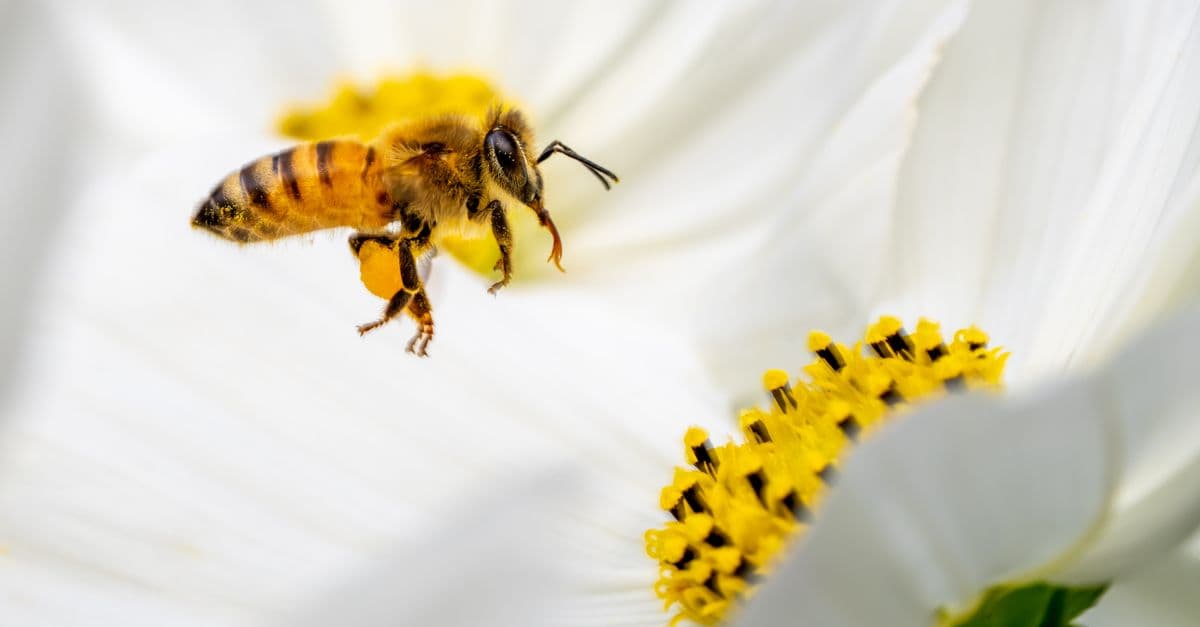
Photo: ERIK DING / Pexels
E. O. Wilson, the Harvard biologist who spent a career studying ants, argued that if insects vanished, "the environment would collapse into chaos" within a matter of months. That is a thought experiment, not a forecast, but it is grounded in real biology. Insects pollinate crops, recycle dead organic matter, aerate soil, and feed a huge share of the animal kingdom. This article walks through what would actually happen, in what order, if every insect species on Earth disappeared at once — and how close current insect declines already bring us to a partial version of that scenario.
Thought experiment. This article explores a hypothetical scenario for educational and speculative purposes. The events described are not predictions and should not be interpreted as warnings, advocacy, or instructions.
Key takeaways
- About 75% of the world's food crop types depend on animal pollinators, mostly insects, according to the UN Food and Agriculture Organization (FAO).
- Insect pollinators contribute roughly one-third of global crop production by volume; the rest comes from wind-pollinated staples like wheat, rice, and corn (Our World in Data).
- Insect populations are already falling fast in measured regions: flying insect biomass dropped more than 75% over 27 years in German nature reserves (Hallmann et al., 2017, PLOS ONE).
- North America has lost nearly 3 billion birds since 1970, a decline tied partly to insect-food scarcity (Rosenberg et al., 2019, Science).
- A 2019 global review estimated 40% of insect species face long-term population decline, though the paper's global extrapolation has been contested by other entomologists (Sánchez-Bayo & Wyckhuys, 2019, Biological Conservation; Simmons et al., 2019, critique).
Why insects matter more than their size suggests
Insects are the most diverse group of animals on Earth. Roughly one million species have been formally described, and estimates of the true total run into the millions more once undescribed tropical species are counted. That diversity is not trivia — it is the reason insects perform so many distinct ecological jobs at once, jobs that few other organisms are positioned to take over.
Think of an ecosystem as a factory floor. Large animals like deer, wolves, and hawks are the visible workers moving around the room. Insects are the wiring underneath the floor: pollination circuits, waste-disposal chutes, and soil-conditioning pipes that keep the whole building running. You do not notice the wiring until it is cut, and then everything stops at once, not gradually.
A second useful analogy: insects function like the enzymes in a chemical reaction. They do not make up much of the total biomass of an ecosystem, but they catalyze processes — pollination, decomposition, nutrient cycling — that would proceed extremely slowly or not at all without them. Remove the catalyst and the reaction does not just slow down; in many cases it stops.
The pollination crisis: what would happen to food within a year
If every insect vanished simultaneously, the first visible consequence would hit agriculture within a single growing season. Roughly 75% of global food crop types depend on animal pollination to set fruit or seed, according to the FAO's Global Action on Pollination Services program. Insects, chiefly bees, flies, beetles, and moths, do nearly all of that pollination work; the remainder from bats and birds is a small fraction by comparison.
The crops that would fail or crash first fall into clear categories.
| Crop category | Examples | Pollination dependence |
|---|---|---|
| Tree fruit and nuts | Apples, almonds, cherries, mangoes | High to total |
| Berries | Blueberries, strawberries, raspberries | High |
| Cucurbits | Squash, cucumbers, melons | Near-total |
| Stimulant and flavor crops | Coffee, cocoa, vanilla | High to total |
| Fiber crops | Cotton | Moderate to high |
| Cereal staples | Wheat, rice, corn, oats, barley | None (wind-pollinated) |
Table: Relative dependence of major crop categories on insect pollination. Compiled from FAO pollination data and Klein et al., 2007, Proceedings of the Royal Society B.
What survives on a plate without insects is mostly wind-pollinated cereal: wheat, rice, corn, oats, and barley, along with self-pollinating crops like most legumes. These grains supply the bulk of humanity's calories today, so mass starvation from calorie shortage alone would not be immediate. But cereals are calorie-dense and micronutrient-poor. A diet stripped of fruits, nuts, and most vegetables would drive widespread deficiencies in vitamin A, vitamin C, folate, and other micronutrients that pollinator-dependent produce supplies.
A frequently cited 2015 analysis published in The Lancet modeled the health consequences of complete pollinator loss and estimated it could cause an additional 1.4 million deaths a year globally from diseases linked to poor micronutrient intake, with roughly 71 million more people falling into vitamin A deficiency and comparable numbers affected by folate and other shortfalls (Smith et al., 2015, The Lancet). That is a model built on assumptions about diet substitution, not a certainty, but it illustrates the scale of the nutritional hole that insect pollination currently fills.
How much is insect pollination worth economically?
Global estimates for the direct economic value of insect-pollinated crop production commonly fall in the range of hundreds of billions of dollars a year worldwide, reflecting both the crop value at risk and the yield boost pollinators provide even for partially self-fertile crops. The exact figure varies by methodology and year, but every peer-reviewed estimate treats pollination as one of the largest single ecosystem services humans receive for free (Klein et al., 2007; IPBES, 2016).
Decomposition halts: the world stops recycling itself
Removing insects does not just stop new plants from growing. It stops old organic matter from breaking down. On land, most dead plant material, dung, and animal carcasses are processed by a partnership between detritivore insects — beetles, flies, ants, termites — and microbes. Insects do the physical work of shredding, tunneling, and transporting organic matter into forms bacteria and fungi can finish digesting. Remove the insects and the microbes are left trying to break down whole logs and intact carcasses with no help chewing them into manageable pieces.
Three examples make the scale concrete.
Termites are the dominant decomposers of dead wood in tropical and subtropical ecosystems, where they process a substantial share of fallen timber and plant litter, cycling carbon and nutrients back into soil far faster than fungi alone could manage. In termite-free experimental plots, leaf litter decomposition slows measurably and soil moisture regulation changes (Griffiths et al., 2019, Science).
Dung beetles bury a large majority of livestock dung in pastures within days of it being deposited, according to long-running agricultural studies in Australia and North America, preventing pasture fouling, cutting fly populations that transmit disease, and returning nitrogen to soil. Without them, pastures would accumulate dung crusts within weeks, smothering grass growth and creating breeding grounds for pest flies.
Carrion insects (blowflies, carrion beetles) are typically the first responders to an animal carcass, arriving within hours and initiating decomposition that would otherwise depend entirely on much slower bacterial and fungal action. Forensic entomology exists as a field precisely because carrion insect succession is so fast and predictable. Remove them, and vertebrate carcasses in the wild would persist for months rather than days to weeks, raising the risk of disease transmission to scavenging mammals and birds.
How fast would leaf litter actually pile up?
Within one to two growing seasons, temperate forest floors would show visibly thicker, undecomposed leaf litter, since insect shredders like millipedes' insect counterparts (beetle larvae, fly larvae) normally fragment leaves into smaller pieces microbes can access quickly. Within a few years, nutrient cycling would slow enough to reduce soil fertility and plant growth rates in affected forests.
Food web collapse: who starves, and in what order
Insects sit near the base of most terrestrial and freshwater food webs, which means their disappearance would ripple upward through nearly every group of land animals, though not all at the same speed.
Insectivorous birds would be hit almost immediately. An estimated 60% of bird species feed insects to their nestlings even when the adults eat seeds or fruit the rest of the year, because growing chicks need the protein and fat insects provide. Species like swallows, flycatchers, warblers, and many woodpeckers that eat insects as adults year-round would lose their food source entirely. The ongoing North American bird decline, nearly 3 billion birds lost since 1970 according to a landmark 2019 Science study led by Cornell's Ken Rosenberg, is already disproportionately concentrated in insectivorous grassland and farmland species, a pattern researchers link partly to insecticide use reducing prey availability (Rosenberg et al., 2019).
Bats would collapse within weeks. The large majority of the roughly 1,400 known bat species are insectivorous, and many eat their body weight in insects nightly. Insectivorous bat colonies have no fallback food source at that scale; population crashes documented after white-nose syndrome killed off North American bat colonies show how quickly insect-eating bat numbers can fall once their prey base or the bats themselves are disrupted.
Amphibians and many reptiles — frogs, toads, salamanders, most lizards — rely on insects for the majority of their diet at some or all life stages. Their disappearance would remove a key mid-tier link connecting invertebrates to snakes, birds, and small mammals that eat them.
Freshwater fish would lose a major food source too. Mayflies, midges, caddisflies, and stoneflies spend their larval stages in streams and lakes, and trout, salmon, and many other freshwater fish depend heavily on these aquatic insect larvae. Fly fishing as a sport exists because trout diets are so insect-dominated; remove aquatic insects and freshwater fisheries would face a slower but still severe decline.
Each of these losses cascades further upward. Hawks, owls, foxes, and snakes that prey on insect-eating birds, bats, and amphibians would lose prey in turn. Within a handful of years, the pyramid of insectivore-dependent species above insects would thin out dramatically, even though the process would take longer than the pollination crisis to fully play out.
Which animals would be least affected?
Large herbivores that eat grass or leaves directly (deer, cattle, elephants) and top carnivores that hunt those herbivores (lions, wolves) would be affected only indirectly, through habitat and prey-web disruption rather than losing a direct food source, since their diets do not include insects.
Soil systems: the underground engineers disappear
Insects and their relatives do an outsized share of soil engineering work. Ants move enormous volumes of soil as they excavate nests, mixing organic matter downward and mineral matter upward in a process that, in many ecosystems, moves more soil over time than earthworms do. Termite mounds in savanna and tropical ecosystems function as underground irrigation and nutrient-redistribution systems, channeling water and organic matter through tunnel networks that can extend meters below the surface. Beetle larvae burrowing through topsoil break up compacted layers and create channels that improve drainage and root penetration.
Without these soil engineers, agricultural soils would compact faster, water infiltration would degrade, and nutrient cycling would slow. None of this would cause instant crop failure the way losing pollination would, but it would compound the agricultural crisis over subsequent growing seasons, making already-stressed farmland harder to work.
What would actually survive?
A post-insect world would not be lifeless, but it would look radically simplified compared to today.
- Wind-pollinated plants — grasses, conifers, oaks, and most temperate forest trees — would continue reproducing largely unaffected, since they never depended on insect pollinators.
- Self-pollinating crops — wheat, rice, most legumes — would keep producing food, forming the backbone of a much narrower human diet.
- Marine ecosystems would be largely untouched directly, since insects play almost no ecological role in open ocean or deep sea environments (a handful of species live in coastal and intertidal zones, but they are a rounding error in marine food webs). Indirect effects, such as losses among seabirds that also eat land insects, would be limited.
- Microbial decomposition would continue, just far more slowly, since bacteria and fungi do not need insects to function, only to work at a normal pace.
The resulting biosphere would be dominated by grasses, conifers, wind-pollinated agriculture, marine life, and the smaller number of vertebrates able to survive on non-insect diets. Terrestrial biodiversity, especially among birds, bats, amphibians, and flowering plants, would be a fraction of its current richness.
Are we running a slow-motion version of this experiment already?
The complete disappearance of all insects is not a realistic near-term scenario. But partial, regional insect declines are well documented, and they let researchers observe smaller-scale versions of these dynamics in real time. For a narrower version, see what if all bees disappeared, and for the bigger picture, what if all humans disappeared.
The most cited data point comes from Hallmann and colleagues' 2017 study in PLOS ONE, which used standardized insect traps across 63 protected nature reserves in Germany and found flying insect biomass had fallen more than 75% over 27 years, with no single land-use or weather variable fully explaining the drop (Hallmann et al., 2017). A broader 2019 review by Sánchez-Bayo and Wyckhuys in Biological Conservation compiled 73 historical insect-decline studies and projected that 40% of insect species could face extinction within decades if current trends continued, though the authors relied heavily on European and North American data, and other entomologists have criticized extrapolating that figure to a confident global estimate (Sánchez-Bayo & Wyckhuys, 2019; Simmons et al., 2019).
Monarch butterfly populations overwintering in Mexico have fallen sharply from their 1990s peak, tracked annually by measuring the area of forest they occupy, a decline linked to habitat loss along migration routes and reduced milkweed availability from herbicide use (World Wildlife Fund Mexico monitoring program). And the 3-billion-bird loss documented by Rosenberg and colleagues is concentrated disproportionately in insectivorous species, a correlation consistent with, though not definitive proof of, insect-food scarcity as a contributing driver.
None of this means total insect extinction is imminent. Insects as a group are extraordinarily resilient, and many pest and generalist species are thriving even as specialist populations decline. But the documented regional collapses show that the mechanisms in this thought experiment, pollination shortfalls, decomposition slowdowns, and insectivore population crashes, are not purely hypothetical. They are measurable, ongoing processes in specific ecosystems today.
Could humanity adapt without insects?
Some substitution is technically possible, though none of it scales cheaply.
Hand-pollination already happens where insect pollinators have locally collapsed. In parts of Sichuan, China, orchard workers hand-pollinate pear and apple trees with brushes after decades of pesticide use devastated local wild bee populations, a labor-intensive practice widely cited as a cautionary example of what pollinator loss costs in human labor (Partap & Ya, 2012, HortScience).
Robotic pollination is an active area of agricultural robotics research: small drones or ground robots equipped with soft brushes or electrostatic pollen-transfer surfaces have been demonstrated in controlled trials. None have been deployed at a scale remotely close to global agriculture, and the engineering and energy cost of replacing billions of pollinator visits per season with machines remains, by every serious estimate, orders of magnitude more expensive than the insects doing it for free.
Breeding self-pollinating or wind-pollinated crop varieties could replace some insect-dependent species over time, but breeding programs take years to decades, and some crops (like many fruit trees) have proven very difficult to convert away from insect dependence without losing fruit quality or yield.
Replacing the full bundle of services insects provide, pollination, decomposition, soil engineering, and food-web support, simultaneously and at planetary scale is not something current or foreseeable technology can do. That gap is the clearest signal of how much functional work insects perform for free.
What people get wrong about this scenario
A common misconception is that losing insects would mainly hurt "nature" in some abstract sense while human food systems, backed by industrial agriculture, would keep functioning close to normal. The pollination data contradicts that directly: the crops most dependent on insects are the ones supplying dietary variety and micronutrients, not just quantity, and industrial agriculture is downstream of pollination, not a substitute for it.
A second misconception is that only bees matter. Bees are the best-studied and most economically visible pollinators, but flies, beetles, moths, and butterflies collectively pollinate a large share of wild plants and a meaningful share of crops too, particularly in tropical and understudied regions. A world that lost only bees, discussed in more detail in our companion piece on bee extinction, would be damaging but survivable in ways that losing every insect group would not be.
A third misconception is that insect decline is uniform and inevitable. The evidence shows sharp regional and taxon-specific variation: some pollinators and specialist decomposers are collapsing fast in intensively farmed landscapes, while many generalist and pest insects are stable or increasing. That unevenness matters because it means the mechanisms behind decline, pesticide exposure, habitat loss, and climate shifts, are addressable rather than an unstoppable global trend affecting every species equally.
Frequently asked questions
Q: What percentage of food crops depend on insect pollination? About 75% of global food crop types depend on animal pollinators, mostly insects, though this represents roughly one-third of total crop production by volume since major cereal staples are wind-pollinated (FAO; Our World in Data).
Q: Would humans starve if all insects disappeared? Mass starvation from calorie shortage is unlikely in the short term because wheat, rice, corn, and other cereal staples are wind-pollinated and would keep producing. The bigger risk is micronutrient deficiency from losing most fruits, vegetables, and nuts, which a 2015 Lancet-published model estimated could raise noncommunicable disease deaths by roughly 1.4 million a year globally (Smith et al., 2015).
Q: How fast would decomposition stop without insects? Visible effects, thicker undecomposed leaf litter, accumulating pasture dung, and longer-lasting carcasses, would appear within weeks to a couple of growing seasons, since insects like dung beetles and carrion flies normally process organic matter within days.
Q: Which animals would go extinct first without insects? Insectivorous specialists with no dietary alternative would decline fastest: most of the world's roughly 1,400 bat species, insect-dependent songbirds like swallows and warblers, and many amphibians and freshwater fish that rely on aquatic insect larvae.
Q: Are insect populations actually declining right now? Yes, in measured regions. German nature reserves recorded a more than 75% drop in flying insect biomass over 27 years, and a global review estimated 40% of insect species face long-term decline, though that global figure has been scientifically contested (Hallmann et al., 2017; Sánchez-Bayo & Wyckhuys, 2019).
Q: Could robots replace insect pollinators? Experimental pollination robots exist, but none operate at a scale close to global agriculture, and every serious cost estimate puts mechanical pollination far more expensive than the free service insects provide today.
Q: Would ocean life be affected if all insects disappeared? Only marginally and mostly indirectly. Insects play almost no direct ecological role in open ocean or deep sea ecosystems; effects would be limited to coastal species and to animals like seabirds that also depend partly on terrestrial insects.
Q: Is this the same as the "insect apocalypse" people talk about in the news? Not exactly. The "insect apocalypse" or "Insectageddon" framing in media coverage refers to real, documented regional declines, not total global insect extinction. This article's full-disappearance scenario is a thought experiment used to illustrate what those declines are trending toward, not a claim that it is imminent.
Q: Do insects only matter for pollination? No. Pollination gets the most attention because it directly affects human food supply, but decomposition, soil engineering, and serving as the food base for birds, bats, amphibians, and freshwater fish are comparably important ecological functions insects perform.
The takeaway
The insect-disappearance scenario is useful precisely because it is implausible: nothing in nature removes an entire animal group instantly, so the thought experiment isolates what each of insects' many jobs actually contributes. Pollination failure would hit human nutrition within a season. Decomposition slowdown and food-web collapse would unfold over subsequent years, thinning out birds, bats, amphibians, and freshwater fish that have no dietary alternative. None of humanity's substitutes, hand-pollination, robotics, crop breeding, come close to replacing that bundle of services at scale. The real value of the exercise is that it turns an abstract respect for biodiversity into a specific, measurable dependency, and that dependency is already being tested, in smaller doses, by the insect declines documented across multiple continents today.
Read next:
Follow new articles
Add SciHub101 to your feed reader to see new science and technology stories.
About the Author
SciHub101 is an independent science and technology publication founded and edited by Buğra Sözeri, a software engineer and app developer based in Türkiye. AI tools assist with drafting and research. Source documentation in the existing archive is uneven, and articles are being reviewed and corrected. The Editorial Team byline identifies editorial responsibility; it does not certify specialist or independent human review. Where we compare products, anything built by our own team is labelled as such — see the editorial guidelines and About page for how corrections and disclosures work.
Related Articles
What If Antarctica Completely Melted?
Antarctica holds about 26.5 million cubic kilometres of ice — enough to raise global sea levels by roughly 58 metres if it all melted. Coastlines would be redrawn, hundreds of cities flooded, and global climate fundamentally restructured.
What If Earth's Magnetic Field Flipped?
Earth's magnetic field has reversed polarity hundreds of times in the past 200 million years — and it could happen again. During the transition, the field weakens, more cosmic radiation reaches the surface, and compasses spin uselessly. But it isn't the apocalypse some claim.
What If All Bees Went Extinct?
Bees pollinate roughly one-third of the food we eat. If they vanished, our diets would collapse to staple grains, the prices of fruits, nuts, and vegetables would soar, and entire ecosystems built on flowering plants would unravel within a generation.
What If All Bees Disappeared?
Bees pollinate $235B in crops yearly. If they vanished, almonds, apples, and coffee would collapse — but humanity wouldn't starve. Here's why.
What If the Amazon Rainforest Disappeared?
The Amazon holds tens of billions of tonnes of carbon, makes about half of its own rainfall, and shelters roughly one in ten known species. Here is what a total loss would set in motion, and why the forest may not need to be fully cleared to fail.

What If Earth's Oxygen Levels Doubled?
If atmospheric oxygen rose from 21% to 42%, paper would catch fire from a single spark, lightning storms would ignite vast wildfires, and giant insects might become possible — but the world would be a tinderbox.