What If Earth's Magnetic Field Flipped?
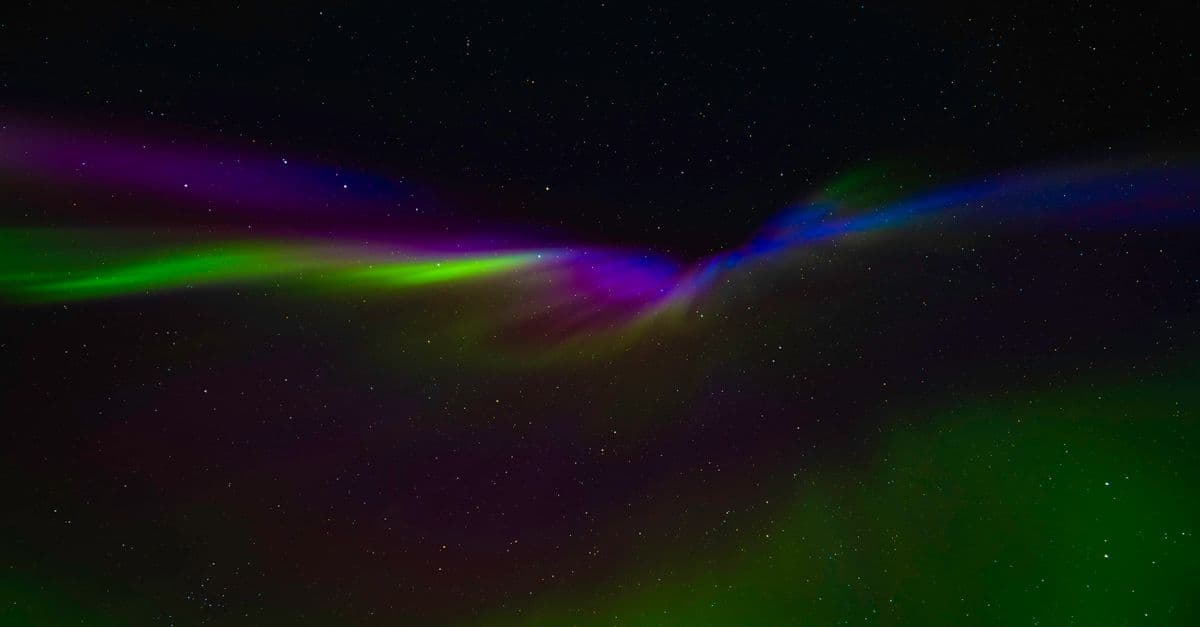
Photo: Raul Ling / Pexels
Roughly every 200,000 to 300,000 years, on average, Earth's magnetic poles swap places. North becomes south; south becomes north. This is not science fiction or doomsday speculation. It is a routine feature of our planet's geological history, recorded in the magnetic minerals of basalt erupted over the past four billion years. The most recent full reversal, the Brunhes-Matuyama reversal, happened roughly 780,000 years ago. We are, statistically, overdue for another — though "overdue" in geology can still mean tens of thousands of years away.
Thought experiment. This article explores a hypothetical scenario for educational and speculative purposes. The events described are not predictions and should not be interpreted as warnings, advocacy, or instructions.
What would it actually be like to live through one? The honest answer, grounded in paleomagnetic and space-physics research rather than headlines, is: less catastrophic than popular accounts suggest, but not without real consequences for technology, radiation exposure, and animal life.
Key takeaways
- Earth has undergone hundreds of confirmed reversals over its history, cycling through both directions of polarity for at least the past 83 million years.
- A full reversal is not instantaneous. Estimates for the Brunhes-Matuyama transition range from roughly 1,200 years at some sites up to about 22,000 to 30,000 years overall, depending on the method and location studied.
- During a reversal the field weakens substantially and becomes multipolar (many local poles instead of one clean north-south axis) rather than vanishing outright.
- Increased cosmic ray and solar particle flux reaches the surface and near-Earth orbit, raising risk to electronics, satellites, and astronauts.
- No confirmed reversal in the geological record lines up cleanly with a mass extinction event.
What the magnetic field actually does
Earth's magnetic field is generated by the geodynamo, the churning motion of liquid iron and nickel in the outer core, organized into a rough dipole shape by the planet's rotation and by convection currents thousands of kilometers below our feet. Field strength at the surface today runs roughly 25 to 65 microtesla depending on latitude, weak compared to a refrigerator magnet but planet-spanning in reach.
Think of the field less like a suit of armor and more like a highway system for charged particles. It doesn't stop the solar wind (the constant stream of charged particles flowing from the Sun) or cosmic rays from reaching Earth's vicinity. Instead it redirects most of them, funneling the highest-energy particles toward the poles, where they collide with atmospheric gases and produce the aurora, and trapping others in the Van Allen radiation belts, doughnut-shaped zones of charged particles thousands of kilometers overhead where they pose no threat to the surface.
That redirection matters for four practical reasons. The field deflects most incoming solar and cosmic radiation away from the lower atmosphere and surface. It maintains the Van Allen belts as a kind of parking structure for dangerous particles instead of letting them rain down uniformly. It helps the atmosphere itself stick around: Mars, which lost its global magnetic field roughly 4 billion years ago, subsequently lost most of its atmosphere to solar wind erosion over the following billions of years, according to data from NASA's MAVEN mission. And it gives migratory animals and human navigators a stable directional reference.
What "reversal" actually means
A geomagnetic reversal is not a sudden, instantaneous flip like flicking a switch. It unfolds over a timescale that is fast by geological standards but glacially slow by human ones.
The process generally proceeds in three phases. First, the dominant dipolar field — the clean north-south magnet shape most people picture — weakens, in some reconstructions by as much as 90% of its prior strength. Second, the field becomes chaotic and multipolar, meaning multiple local "north" and "south" regions appear scattered across the globe instead of two poles at opposite ends of the planet. Third, a new dipolar configuration eventually re-establishes itself with the opposite polarity from where it started.
Crucially, the field does not vanish during any of this. Even in the chaotic multipolar phase, local field strength persists, just distributed unevenly rather than organized into a single global axis. Paleomagnetic reconstructions of the Matuyama-Brunhes transition, compiled in a 2023 global data review published in the Journal of Geophysical Research: Solid Earth, put the apparent duration of the transition itself at roughly 1,200 to 10,000 years at any given site, with the full process — including precursor instabilities before and after — estimated to span on the order of tens of thousands of years. Earlier estimates from a 2010 paper argued for a much faster core transition, potentially completing within a human lifetime at the field's fastest-changing moments, though that finding remains debated among paleomagnetists. What is consistent across studies is that the field does not disappear; it degrades into something messier for an extended period before reorganizing.
How fast could a reversal happen?
Estimates vary by method and location, ranging from centuries for the fastest local field changes recorded in some lava flows to tens of thousands of years for the full global transition. Most paleomagnetists treat the multi-thousand-year estimate as the more representative picture of a complete reversal, with rapid local swings representing brief instabilities within that longer process rather than the whole event.
The mechanism: why the dynamo destabilizes
To understand why reversals happen at all, it helps to picture the outer core as a pot of water on a stove that never quite reaches a stable simmer. Convection currents of molten iron and nickel, driven by heat escaping from the solid inner core, twist and fold under the influence of Earth's rotation (the Coriolis effect) to generate electric currents, and those currents generate the magnetic field, in a self-sustaining loop called the geodynamo.
That loop is not perfectly stable. Small perturbations in the flow pattern — turbulence, changes in heat flux from the core-mantle boundary, or shifts in how fast the inner core grows — can occasionally push the dynamo into a different, competing flow configuration. When two flow patterns of comparable strength but opposite polarity briefly coexist, the surface field weakens and fragments, because the two patterns are partially canceling each other out rather than reinforcing a single dipole. Eventually one configuration wins out, and the field reorganizes around it, sometimes in the original orientation (an "excursion," which reverts) and sometimes in the opposite one (a true reversal).
This is analogous to a spinning top that occasionally wobbles hard enough that it could tip over into a new resting orientation, but usually rights itself instead. Most wobbles — geomagnetic excursions — settle back to the original spin. Only occasionally does the wobble carry all the way through to a flip.
Effects on technology
Modern infrastructure depends on a stable magnetic and radiation environment in ways earlier eras of human history never had to reckon with.
Compass-based navigation becomes useless during the multipolar phase, since a compass needle relies on a coherent north-south field to orient. Aviation, marine navigation, and any surveying that still uses magnetic compasses as a backup would lose that tool, though GPS and inertial navigation systems would remain functional and would take over as the primary reference.
GPS and satellites face a harder problem. A weaker field allows more cosmic rays and solar energetic particles to penetrate into low Earth orbit, increasing the rate of single-event upsets — cosmic ray strikes that flip a bit in a memory chip or damage a circuit outright. Satellite electronics would need more shielding and redundancy, and expected operational lifetimes could shorten. Crews on the International Space Station, and any future long-duration orbital or lunar missions, would face measurably higher radiation dose rates.
Power grids carry a related risk. Large geomagnetic storms already induce damaging currents in long-distance transmission lines; the 1989 storm that triggered a nine-hour blackout across the Hydro-Québec grid is the standard reference case. A weakened global field wouldn't necessarily make individual solar storms stronger, but it would reduce the buffer that currently helps deflect the most energetic particles, making severe space-weather events land harder when they do occur.
Aviation on polar routes already carries higher radiation exposure for crew and passengers than equatorial routes, because the field funnels particles toward the poles; airlines and regulators already track this for high-mileage crew members. During a weak-field period that polar radiation dose would rise further, likely prompting rerouting of polar flights during active space-weather periods, similar to precautions already taken during major solar storms today.
| Technology | Normal conditions | During weak-field reversal phase |
|---|---|---|
| Compass navigation | Reliable, stable heading | Unreliable or unusable during multipolar phase |
| GPS satellites | Occasional single-event upsets | Increased upset rate, added shielding needed |
| Power grids | Vulnerable to major solar storms | Vulnerable to more frequent and severe induced currents |
| Polar aviation | Elevated but managed radiation dose | Further elevated dose, more frequent rerouting |
| ISS and crewed spaceflight | Managed dose via Van Allen belt shielding | Higher dose rates, shorter safe mission windows |
Table: How a weakened geomagnetic field during a reversal would affect major technology systems, compared with today's baseline conditions.
Effects on life
This is where popular accounts of a magnetic reversal often overstate the danger. Despite a substantial weakening of the field, two other protective layers remain fully in place during a reversal: the atmosphere itself, which provides roughly 10 meters of water-equivalent shielding against cosmic rays, and the sheer distance and physics of how charged particles interact with matter, which limits how much additional radiation actually reaches ground level even with a degraded field.
Radiation exposure. Reconstructions of past excursions, including Laschamp, suggest surface radiation dose could rise measurably during the weakest phases of a reversal, though estimates vary by study and location. Cancer risk from that increase would likely be modest at the population level rather than catastrophic, and genetic mutation rate increases over a reversal lasting centuries to millennia would be unlikely to produce a detectable evolutionary signal in most species, since background mutation rates already vary across environments without visible effects on survival.
Ozone layer. Increased high-energy particle flux can generate nitrogen oxides in the stratosphere, which catalytically destroy ozone. This mechanism is well established in atmospheric chemistry. The 2025 Science Advances reconstruction of the Laschamp event modeled how far the auroral oval — the ring around each pole where particle precipitation into the atmosphere is concentrated — spread outward from the poles during the field's weakest phase, providing the first detailed space-physics picture of how that ozone-depleting particle flux would have been distributed globally rather than concentrated only at high latitudes.
Animal navigation. Sea turtles, salmon, monarch butterflies, many migratory bird species, and some fish use Earth's magnetic field, sensed through specialized magnetoreceptor cells, as one of several cues for long-distance navigation. During a chaotic multipolar phase those cues would become unreliable or contradictory. Species that also rely on visual landmarks, star patterns, or olfactory cues, as many migratory birds do, would likely cope better than species relying on magnetic sensing alone. Over the centuries-to-millennia timescale of a reversal, natural selection would have time to favor individuals with alternate navigation strategies, but small or already-endangered populations with narrow migratory corridors could face added pressure during the transition.
Mass extinctions. This is the most reassuring point in the entire dataset. Compilations of the geological reversal record spanning at least the past 83 million years show reversals occurring both during and well outside the windows of known mass extinction events, with no consistent correlation between the two. The five recognized mass extinctions in Earth's history — including the end-Permian and end-Cretaceous events — are attributed to other drivers entirely, such as massive volcanism and asteroid impact, not magnetic field behavior.
Does a weak magnetic field increase cancer risk for humans?
Radiation exposure would rise somewhat during the weakest phase of a reversal, but the atmosphere remains the dominant shield against cosmic rays regardless of magnetic field strength. Most estimates suggest any added cancer risk from a reversal would be a modest population-level increase, not a mass health crisis, and would unfold gradually over centuries.
Would a magnetic reversal cause mass extinction?
No confirmed correlation exists between the roughly hundreds of reversals recorded in rocks over the past 83 million years and any of Earth's five recognized mass extinction events. Those extinctions are tied to causes like massive volcanism or asteroid impacts, not to magnetic field polarity changes.
Are we currently heading into a reversal?
The field's overall strength has been declining for roughly the past two centuries, though the rate and pattern vary by region and are still actively studied. One region of particular interest is the South Atlantic Anomaly, a large zone stretching from South America to southern Africa where the field is unusually weak. ESA's Swarm satellite constellation, which has monitored the field continuously since 2013, has documented that this weak zone has grown substantially over the past decade, with a newer weak spot southwest of Africa intensifying in recent years as well, according to ESA mission updates. Satellites passing through the anomaly already experience elevated radiation exposure, which is part of why space agencies track the region closely for spacecraft operations.
That said, several caveats matter. Current field strength remains within the range of normal variability documented over the past tens of thousands of years; nothing about today's readings is unprecedented in the paleomagnetic record. Multiple weakening episodes in Earth's past, including Laschamp, did not result in full reversals — they are classified as excursions, temporary deviations that eventually reverted to the original polarity rather than completing a flip. And most paleomagnetists studying the current trend do not consider a full reversal imminent on any timescale relevant to a single human civilization, meaning something on the order of the coming centuries.
The honest scientific position is this: a reversal is a real, recurring feature of Earth's history and could plausibly happen again within the next several thousand years, but no current data lets scientists predict when with any precision, or even confirm that the present weakening trend is the start of one rather than an excursion that will recover.
What people get wrong about magnetic reversals
The most common misconception, amplified by disaster media, is that a reversal means the field switches off entirely and Earth is left defenseless against space radiation for years. The paleomagnetic and space-physics record does not support that picture. Even at its weakest documented point during the Laschamp excursion, the field retained roughly 10% of its modern strength, not zero, and it remained multipolar rather than absent — still providing partial, if messy, protection.
A second misconception ties reversals directly to mass extinctions or civilizational collapse, often citing the Laschamp event alongside unrelated developments like megafauna decline or Neanderthal population changes during the same broad era. A widely discussed 2021 paper proposed links between the Laschamp excursion and climate shifts, extinctions, and Neanderthal decline; that interpretation has been disputed by other paleomagnetists, who note that many proposed effects rely on correlation over a period when multiple other environmental pressures — including the last glacial period itself — were already in play. The 2025 space-physics reconstruction of Laschamp focused on characterizing the auroral and radiation environment during the event rather than asserting causal links to extinction, a more conservative and better-supported framing.
A third misconception treats "the field is weakening" as equivalent to "a reversal is starting." Field strength fluctuates on decadal and centurial timescales even without a reversal underway, and the geological record contains far more excursions that reverted than confirmed full reversals. Watching the South Atlantic Anomaly grow is scientifically interesting and operationally relevant for satellite operators, but it is not, by itself, evidence that a full pole flip is imminent.
Could we prepare for one?
If a reversal were confirmed to be underway in its early stages, several practical responses already exist as extensions of current space-weather preparedness rather than exotic new technology. Satellite operators could deploy hardened electronics and greater shielding, building on techniques already used for spacecraft operating in the South Atlantic Anomaly today. Power grid operators could expand geomagnetic storm monitoring and install additional protective devices on long transmission lines, an area utilities have already invested in since the 1989 Quebec blackout highlighted the vulnerability. Atmospheric scientists could intensify ozone layer monitoring to track any measurable depletion from increased particle precipitation. Aviation regulators could adjust polar routing protocols and crew radiation exposure limits, similar to existing protocols used during major solar storms. And conservation programs for magnetically sensitive migratory species could begin tracking whether populations are shifting toward alternate navigation cues, informing habitat and corridor protection decisions.
The key point across all of these is timescale. Because a full reversal unfolds over centuries to tens of thousands of years rather than days or years, humanity — assuming current technological society persists in some form — would have generations of lead time to adapt infrastructure incrementally, not months.
The takeaway
The "what if the field flipped" scenario is a useful reminder that Earth's protective systems are not walls, they are traffic directors. The magnetic field doesn't block radiation outright; it channels it toward the poles and into the Van Allen belts, sparing most of the planet most of the time. When that redirection weakens during a reversal, the consequences are real and measurable, especially for satellites, power grids, and magnetically-sensing animals, but the geological record is clear that life as a whole has weathered hundreds of these transitions without a linked mass extinction. The technology built during the transition is what would actually need to adapt; the biosphere, having survived this cycle over and over across deep time, most likely would too.
Read next:
Follow new articles
Add SciHub101 to your feed reader to see new science and technology stories.
About the Author
SciHub101 is an independent science and technology publication founded and edited by Buğra Sözeri, a software engineer and app developer based in Türkiye. AI tools assist with drafting and research. Source documentation in the existing archive is uneven, and articles are being reviewed and corrected. The Editorial Team byline identifies editorial responsibility; it does not certify specialist or independent human review. Where we compare products, anything built by our own team is labelled as such — see the editorial guidelines and About page for how corrections and disclosures work.
Related Articles

What If All Insects Disappeared?
Insects pollinate roughly three-quarters of food crop types, recycle dead plants and animals, aerate soil, and feed countless animals. If they vanished overnight, terrestrial ecosystems would unravel within a few years and most of agriculture would fail.
What If a Gamma-Ray Burst Hit Earth?
A gamma-ray burst aimed at Earth from within a few thousand light-years would deplete the ozone layer in seconds, expose the surface to lethal UV, and possibly trigger a mass extinction. The good news: no such cosmic gun is currently aimed at us.

What If Radioactive Decay Stopped?
Radioactive decay provides Earth's internal heat, drives plate tectonics, and powers the magnetic field. If it stopped, Earth would cool, tectonics would cease, the magnetic field would die, and life would face increased radiation. Over billions of years, Earth would become a cold, geologically dead world.

What If the Pacific Ocean Disappeared?
The Pacific Ocean covers nearly a third of Earth's surface and holds about half the planet's water. This thought experiment walks through what physics, climate science, and geology say would happen if it vanished — and why the planet has no substitute for it.

What If Earth Had No Continents?
An Earth covered entirely by ocean — a 'water world' — would have no terrestrial life, simpler climate dynamics, and a chemistry profoundly altered by the absence of continental weathering. Land has shaped Earth far more than most people realize.
What If Earth's Magnetic Field Collapsed Tomorrow?
Earth's magnetic field has weakened by about 15 percent in 150 years, according to ESA. What would actually happen if it failed outright, and what is exaggerated?