What If Earth Had No Continents?
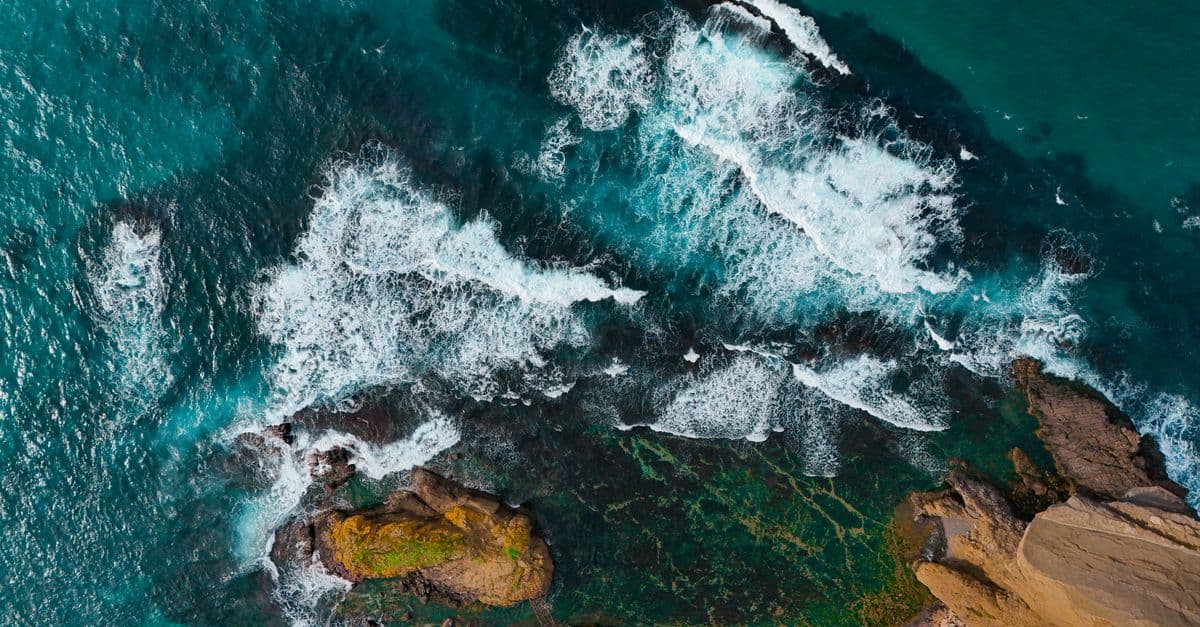
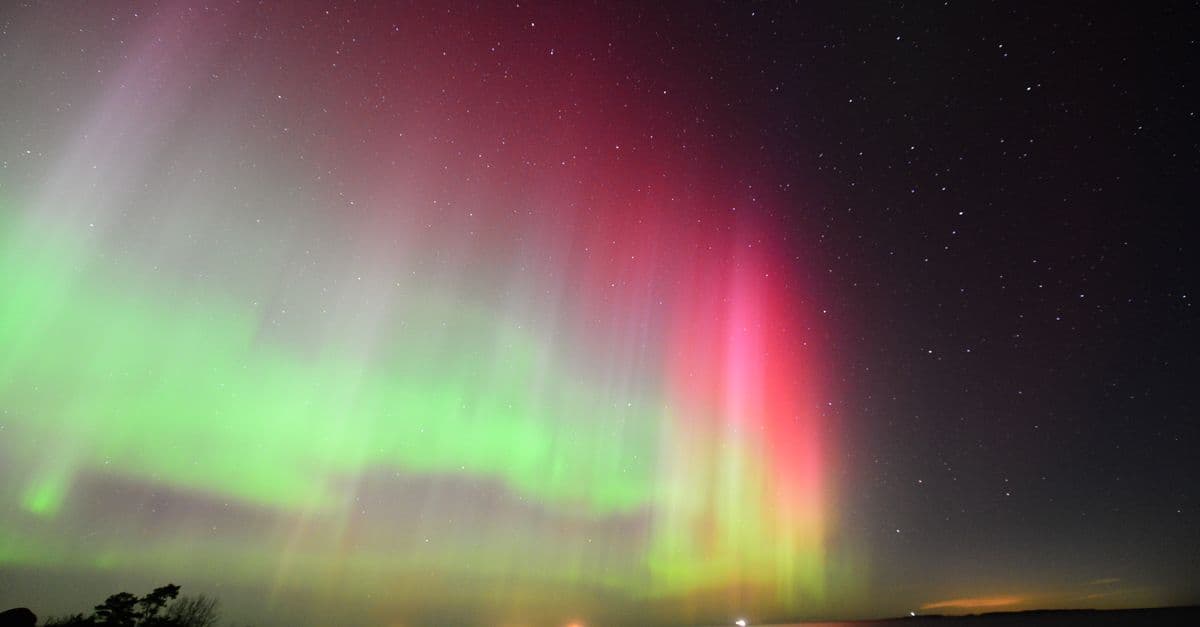
Photo: Hobi Photography / Pexels
Ocean covers about 70.8% of Earth's surface, holding roughly 1.37 billion cubic kilometers of water at an average depth of 3,688 meters (Ocean Literacy UNESCO-IOC). The remaining 29% — dry land — is where every tree, insect, mammal, campfire, and city on the planet exists. Now picture that 29% gone: a planet with the same mass, the same water, and the same sunlight, but no continents at all. This is the "water world" scenario, and astronomers now think it might be one of the most common outcomes for rocky planets in the galaxy.
Thought experiment. This article explores a hypothetical scenario for educational and speculative purposes. The events described are not predictions and should not be interpreted as warnings, advocacy, or instructions.
Key takeaways
- A continent-free Earth would be a global ocean averaging roughly 2.7 to 3.7 km deep, with no islands ever breaking the surface.
- Terrestrial life — plants, insects, reptiles, mammals, birds — would not exist. All biology would be marine.
- Continental silicate weathering is the planet's long-term thermostat for atmospheric CO₂. Remove continents, and that thermostat mostly stops working.
- Ocean chemistry, nutrient availability, and biological productivity would all shift, likely toward a less productive biosphere than today's Earth.
- Fire, metallurgy, and agriculture all require dry land, so technological civilization would be effectively impossible.
- Real exoplanets that may fit this description — TOI-1452 b, LHS 1140 b, and "hycean" candidates like K2-18 b — are already reshaping how astronomers think about habitability.
Why Earth has continents in the first place
Continents exist because of a quirk of density and chemistry. Ocean floor is made of basalt, a dense volcanic rock that forms directly from mantle melts at mid-ocean ridges. Continental crust is made of granite and related rocks, which are far less dense and float higher on the mantle the way a block of pine floats higher than a block of oak. That density difference is why continents rise above sea level while ocean basins stay submerged.
Granite itself is a byproduct of plate tectonics. When one plate subducts beneath another, water carried down with the sinking slab lowers the melting point of the mantle wedge above it, generating magma that is chemically different from the basalt at mid-ocean ridges. Repeated over billions of years — through arc volcanism, sediment accretion, and continental collision — this process has been slowly building up granitic continental crust since roughly 3.5 billion years ago. Continents, in other words, are not a starting condition of rocky planets. They are a very slow byproduct of a very specific kind of plate tectonics.
If Earth's plate tectonics had been slightly different — weaker mantle convection, a different water budget, a different mix of subducting material — continental crust might never have accumulated enough to break the ocean surface. Earth would have stayed a water world for its entire history, the same way researchers now suspect many rocky exoplanets have.
How deep would a global ocean actually be
This is a straightforward volume calculation, and it is one of the more satisfying parts of the thought experiment because the math is simple and the source data is solid. Earth's total ocean volume is close to 1.37 billion cubic kilometers (The Physics Factbook; Ocean Literacy UNESCO-IOC). Earth's total surface area is about 510 million square kilometers. Divide the first number by the second and you get an average depth of roughly 2.7 km if that water were spread perfectly evenly over the entire globe rather than concentrated in ocean basins that only cover 70.8% of the planet. The opposite scenario is explored in what if all water disappeared.
In practice, the seafloor is not smooth. Mid-ocean ridges, seamounts, and volcanic plateaus would still exist beneath a global ocean, rising thousands of meters above the abyssal plains the same way they do today. Some of the tallest seamounts — undersea volcanoes that in today's world sometimes break the surface as islands like Hawaii or Iceland — would come close to the surface but, without continental crust to add buoyant, low-density rock into the mix, they would stay submerged. There would be no islands, no coastlines, and no continental shelves anywhere on the planet.
That matters more than it sounds. Continental shelves are shallow, sunlit, nutrient-rich zones where most of Earth's current fisheries and much of its marine biodiversity are concentrated. A water world has none of them. Instead, the entire ocean would behave more like today's open, mid-ocean gyres: vast, relatively nutrient-poor, and dependent on deep upwelling rather than river-delivered nutrients for productivity.
How deep are water-world oceans predicted to be on real exoplanets?
Much deeper than Earth's. Models of water-rich exoplanets suggest oceans "conceivably hundreds of kilometers deep" on worlds with several times Earth's water content, compared with Earth's average ocean depth of about 3.7 km (Universe Today). At those depths, high-pressure ice phases can form at the ocean floor, cutting the water off from the rocky mantle entirely.
Climate without continental weathering
This is the least intuitive and most consequential part of losing the continents. Earth's climate has stayed broadly stable for hundreds of millions of years — not because CO₂ never changes, but because a slow feedback loop called the carbonate-silicate cycle keeps pulling it back toward equilibrium. That cycle depends almost entirely on continental rock being exposed to rain.
Here is the mechanism, step by step:
- Atmospheric CO₂ dissolves in rainwater, forming weak carbonic acid.
- The acid chemically weathers silicate rocks on land — granite, basalt, feldspar — converting them into dissolved bicarbonate ions.
- Rivers carry the bicarbonate to the ocean.
- Marine organisms use it to build calcium carbonate shells and skeletons.
- When they die, those shells sink and accumulate as carbonate sediment on the seafloor.
- Over tens of millions of years, subduction carries that carbon back down into the mantle, where volcanism eventually releases some of it again as CO₂.
The loop is self-correcting: more atmospheric CO₂ means warmer temperatures and more rainfall, which speeds up weathering, which pulls more CO₂ out of the air. Less CO₂ means cooler, drier conditions, which slows weathering and lets volcanic CO₂ accumulate again. It is, in effect, a planetary thermostat, and it is the main reason Earth has never permanently tipped into a runaway greenhouse or a permanent snowball despite billions of years of a brightening Sun and constant volcanic outgassing.
Take away the continents and step 2 has essentially nothing to act on. Basalt weathering still happens at the seafloor, particularly around hydrothermal vents, but at a far slower rate than rain-driven weathering of exposed continental rock. Research on exoplanet water worlds specifically identifies continental silicate weathering as "extremely efficient at stabilizing the climate" and treats its absence as one of the defining habitability challenges for ocean-covered planets (search summary of exoplanet water-world habitability research).
What happens to CO₂ without a weathering thermostat?
Volcanic outgassing keeps adding CO₂ to the atmosphere regardless of whether continents exist. Without continental weathering to remove it at a comparable rate, CO₂ can accumulate over millions of years, pushing the climate toward much higher temperatures than an equivalent Earth with continents would experience for the same volcanic activity.
Two likely fates for a water world's climate
Detailed modeling of ocean-planet climates, including the influential 2018 study by Edwin Kite and Eric Ford in The Astrophysical Journal, finds that water-world climates do not settle into one predictable outcome (Kite & Ford, 2018, ApJ). Instead, the range of possible outcomes is wide, and ocean chemistry, not just temperature, becomes a major variable. Their models found that many water worlds can retain habitable surface liquid water for over a billion years, but the possible ocean pH spans an unusually broad range compared with Earth's relatively narrow, buffered ocean chemistry.
Two broad end-states show up repeatedly across water-world climate models:
- A hot, CO₂-rich equilibrium. Without continental weathering pulling CO₂ down, the atmosphere can stabilize at concentrations and temperatures well above Earth's, potentially approaching a moist greenhouse state where water vapor itself becomes a powerful, self-reinforcing greenhouse gas.
- A frozen equilibrium. If a water world starts cool or orbits toward the outer edge of its star's habitable zone, ice can build up before enough greenhouse gas accumulates to stop it, locking the planet into a globally frozen ocean. A related concept, the "ice cap zone," describes an extended habitable range for ocean worlds where a planet can host a stable band of open water even while much of its ocean stays frozen at the poles (arXiv:1803.07717).
The reassuring part is that a global ocean provides enormous thermal inertia — water absorbs and releases far more heat per degree of temperature change than rock or air, which smooths out short-term climate swings the way a large lake moderates nearby weather more than a small pond does. The concerning part is that this same water world has lost the geological feedback that keeps the long-term average from drifting toward one of those two extremes.
Ocean chemistry on a planet with no rivers
Rivers do more than deliver fresh water to the ocean. They are the dominant source of dissolved iron, phosphorus, and other trace nutrients that marine phytoplankton need to grow, along with the bicarbonate that buffers ocean pH and keeps it from swinging too far in either direction. Remove every river on the planet, and the ocean loses its main nutrient supply chain along with its main buffering mechanism.
Kite and Ford's modeling underscores just how variable ocean chemistry can become without that buffering: possible pH ranges for water-world oceans are far wider than anything seen in Earth's actual ocean history, because the carbon and mineral inputs that keep Earth's ocean pH within a narrow, life-friendly band are themselves dependent on continental input (Kite & Ford, 2018, ApJ). A water world's ocean chemistry, in other words, is not guaranteed to land anywhere close to what Earth's marine life is adapted to.
Without river-delivered iron and phosphorus, nutrient cycling would depend entirely on deep-ocean upwelling bringing nutrients from the seafloor back to sunlit surface water — a slower, patchier process than the constant, concentrated nutrient delivery that today's continental margins provide. Today's most productive fisheries and richest marine ecosystems cluster almost exactly where continental runoff meets ocean water, from the Grand Banks to the mouth of the Amazon. A water world has none of those zones.
What life would look like without any land
Every branch of life that depends on dry land simply would not exist. There would be no forests, no grasslands, no insects, no reptiles, no birds, and no mammals, including no primates and no humans. All photosynthesis would happen in the surface layer of the open ocean, carried out by phytoplankton and possibly large floating algae mats rather than land plants.
The biosphere that remains would likely be both less diverse and less productive than Earth's current one, for two compounding reasons. First, continental margins — the shallow, nutrient-rich strip where land meets sea — are responsible for a disproportionate share of Earth's marine productivity relative to their small share of ocean area, and a water world has none of them. Second, geographic isolation on land is one of the primary engines of Earth's biodiversity: separate continents and mountain ranges let evolution run in parallel, producing distinct lineages that later come into contact and diversify further. A single connected global ocean, with far fewer physical barriers between populations, would likely produce a biosphere with less regional specialization than Earth's patchwork of continents, islands, and isolated valleys has generated.
None of this means a water world would be lifeless. It would very likely support fish-like, cephalopod-like, and invertebrate life throughout its history, possibly including intelligent species. What it would almost certainly lack is the specific combination of biological diversity and continental resources that, on Earth, eventually produced a technological, land-based civilization.
Why civilization needs land, not just life
Even granting a water world intelligent life — dolphin-like or octopus-like, capable of communication, tool use, and problem-solving — there is a hard physical barrier standing between that intelligence and anything resembling human technology: fire.
Fire cannot exist underwater. It requires an oxidizer, fuel, and a dry environment, none of which are compatible with an aquatic habitat. And fire, as basic as it sounds, is the gateway to almost everything that separates human technological civilization from every other intelligent species on Earth:
| Technology | Why it requires dry land | Water-world equivalent |
|---|---|---|
| Fire | Needs an oxidizer and dry fuel; impossible underwater | None |
| Metallurgy | Requires sustained high heat and dry ore-processing conditions | None |
| Ceramics and glass | Require kilns and dry, high-temperature firing | None |
| Agriculture | Requires soil, sunlight, and stable dry ground for planting | Limited to surface algae farming |
| Writing and record-keeping | Requires dry, stable, durable surfaces for symbols to persist | Extremely limited |
| Domesticated large animals | Most domesticable species (horses, cattle, oxen) are terrestrial | None |
Table: The land-dependent technology stack that a water-world species would be missing.
Every row on that list compounds. No fire means no smelting, so no metal tools. No metal tools means no advanced construction, no engines, no electronics. No dry writing surfaces means much slower accumulation and transmission of knowledge across generations. Some researchers refer to this general problem as the aquatic civilization barrier: intelligence and culture may be achievable underwater, but the physical prerequisites for a technological civilization are not.
Could an aquatic species ever develop technology comparable to humans?
Almost certainly not through the same path. Aquatic animals can display sophisticated tool use and social learning, as seen in dolphins and octopuses today, but the absence of fire rules out metallurgy, ceramics, and combustion-based engineering, which are the foundations every human technological advance from the Bronze Age onward has built on.
Real exoplanets that may already be water worlds
This is not a purely hypothetical exercise. A growing number of confirmed exoplanets appear to fit the water-world profile, and they are reshaping how astronomers think about what "habitable" actually means.
TOI-1452 b is considered one of the strongest ocean-planet candidates found so far. It orbits within its host star's habitable zone, and its density is consistent with a deep global ocean rather than a rocky, Earth-like surface (Universe Today). LHS 1140 b, roughly 48 light-years away, is another rare habitable-zone rocky planet whose bulk properties are consistent with a substantial water or ice layer.
K2-18 b, a "mini-Neptune" about 2.6 times Earth's radius and more than eight times its mass orbiting a red dwarf 124 light-years away, has become the most closely studied candidate in a newly proposed planet class called "hycean" worlds — a term combining "hydrogen" and "ocean" coined by Cambridge astronomer Nikku Madhusudhan in 2021 (Space.com; The Planetary Society). Hycean worlds are envisioned as planets larger and often hotter than Earth, covered by deep global oceans and wrapped in thick, hydrogen-rich atmospheres. James Webb Space Telescope observations of K2-18 b in 2023 detected candidate signatures of dimethyl sulfide and dimethyl disulfide, molecules that on Earth are produced primarily by marine microorganisms, though the interpretation of that data remains actively debated among astronomers and has been challenged by subsequent reanalyses of the same spectrum (Space.com).
None of these worlds are confirmed to be true water worlds in the strict sense of this thought experiment, and the K2-18 b biosignature claims specifically remain contested rather than settled science. But their existence shows that continent-free, ocean-dominated planets are not a science-fiction abstraction. They may be one of the more common outcomes among rocky and sub-Neptune-sized planets discovered around smaller, cooler stars.
Water worlds and the Fermi paradox
If water worlds really are common outcomes for rocky planets in a star's habitable zone, and if the aquatic civilization barrier really does block technological development, that combination offers a partial, speculative answer to the Fermi paradox — the open question of why, given the sheer number of potentially habitable planets in the galaxy, we have not detected any signs of other technological civilizations.
The logic runs like this: liquid water may be common. Life may even be common, given how quickly it appeared on Earth after conditions allowed for it. But a specific geological feature — enough exposed, dry, chemically diverse continental crust — may be comparatively rare. Under that framework, the galaxy could plausibly host abundant microbial and even complex marine life while still being nearly silent in terms of detectable technology, simply because most of those biospheres never had the land, and therefore the fire, required to build a radio telescope.
This idea is speculative rather than an established resolution to the Fermi paradox, and it competes with many other proposed explanations, from the rarity of intelligence itself to the short lifespan of technological civilizations. But it reframes Earth's continents from background scenery into a specific, non-guaranteed geological ingredient in our own existence.
Could Earth actually lose its continents
Not on any timescale that matters to humans, and not really on any future geological timescale either. Continental crust is buoyant enough that it strongly resists subduction; oceanic crust dives back into the mantle at subduction zones constantly, but continental crust mostly accumulates rather than disappears; this is why continents have been growing in total volume for roughly 3.5 billion years rather than shrinking. Sea levels have risen and fallen by over a hundred meters across ice ages and warm periods, and even briefly flooded large low-lying regions of continents, but that is a far cry from erasing entire continents. A related scenario is what if continents collided differently.
The more likely long-term fate runs in the opposite direction. As the Sun continues to brighten over the next roughly one to two billion years, rising surface temperatures are expected to accelerate ocean evaporation until Earth eventually loses its oceans entirely, becoming a dry, Venus-like world rather than a water world. If Earth ever passed through a global-ocean, continent-free phase, the best evidence points to that having happened, if at all, in the deep past — during the Hadean or early Archean eon, well over 3.5 billion years ago — not as something in our future.
What people get wrong about water worlds
A common assumption is that more water automatically means more habitable, since liquid water is the baseline requirement most habitability searches use. The Kite and Ford modeling complicates that assumption directly: their results show that surface water on these planets can persist for over a billion years, but ocean chemistry, not just the presence of liquid water, is what actually determines habitability, and that chemistry becomes far less predictable without continental input (Kite & Ford, 2018, ApJ). A planet can have abundant liquid water and still be a poor candidate for the kind of chemistry complex life depends on.
Another frequent misconception is treating "ocean world" and "water world" as interchangeable with "Earth-like." Hycean worlds like K2-18 b are often described in headlines using Earth-ocean comparisons, but their atmospheres are hydrogen-dominated rather than nitrogen-oxygen like Earth's, their surface gravities and radii are substantially larger, and surface temperatures on some candidates are proposed to reach nearly 200°C, conditions with little resemblance to Earth's oceans beyond the shared presence of liquid water ([based on hycean-world research summarized above]).
A third misconception, common in casual discussion of the Fermi paradox, is treating the aquatic civilization barrier as a proven filter rather than a reasonable but unconfirmed hypothesis. No one has detected an aquatic alien civilization to test the idea against, and Earth's own history is the only detailed case study available. It is a coherent argument grounded in basic chemistry and physics, not an established scientific consensus.
The takeaway
Earth's continents look like passive scenery, but they are doing quiet, continuous work that most people never think about: buffering the atmosphere's CO₂ through weathering, feeding the ocean the nutrients that sustain its most productive ecosystems, and providing the one thing every technological civilization on this planet has needed, which is somewhere dry enough to build a fire. Take the continents away and Earth does not become lifeless, but it very plausibly becomes uninhabitable for anything resembling us. The exoplanets now emerging as water-world candidates make this less of a thought experiment and more of a live question in astrobiology: how many planets out there have life in their oceans but will never have anyone to ask about it.
Frequently asked questions
Q: How deep would Earth's ocean be with no continents? A: Spreading Earth's existing ocean volume — about 1.37 billion cubic kilometers — evenly across the planet's full surface area gives an average depth of roughly 2.7 km, though real seafloor topography and the planet's actual average ocean depth today of 3,688 meters suggest a range closer to 2.7 to 3.7 km.
Q: Would any life survive on an Earth with no continents? A: Yes, marine life would very likely survive and could remain diverse, but it would be limited to fish-like, cephalopod-like, and invertebrate forms, since every terrestrial branch of life, including plants, insects, reptiles, birds, and mammals, requires dry land to exist.
Q: Why does climate regulation depend on continents? A: The carbonate-silicate cycle, Earth's long-term climate thermostat, relies on rain chemically weathering exposed continental rock to remove atmospheric CO₂ over geological timescales. Without continental rock, that removal pathway mostly disappears, and volcanic CO₂ can accumulate largely unchecked.
Q: Could an intelligent species evolve in the ocean and still build technology? A: Intelligence and tool use appear achievable underwater, as seen in dolphins and octopuses, but fire cannot exist underwater, and fire is the prerequisite for metallurgy, ceramics, and combustion engineering, the foundations of human technological development.
Q: Are there real exoplanets that might be water worlds? A: Yes. TOI-1452 b and LHS 1140 b are considered strong candidates for deep, habitable-zone oceans, and K2-18 b is a leading candidate for a proposed "hycean" world, a hydrogen-atmosphere ocean planet class named by astronomer Nikku Madhusudhan in 2021.
Q: What is a "hycean" planet? A: A hycean planet is a proposed class of exoplanet larger and often hotter than Earth, covered by a deep global ocean and wrapped in a thick, hydrogen-rich atmosphere. The term combines "hydrogen" and "ocean" and was introduced by Cambridge researchers studying planets like K2-18 b.
Q: Could Earth ever actually lose its continents? A: No, not through any realistic geological process. Continental crust is too buoyant to subduct back into the mantle at any meaningful rate, which is why continental volume has grown steadily for roughly 3.5 billion years rather than shrinking.
Q: How does a water world relate to the Fermi paradox? A: If water worlds are a common outcome for habitable-zone rocky planets, and if the lack of fire on such planets blocks the development of technology, that combination offers one speculative partial explanation for why detectable technological civilizations might be rare even if life itself is common.
Q: Would a water world's ocean be more acidic than Earth's? A: Not necessarily more acidic specifically, but modeling shows water-world ocean pH can span a much wider range than Earth's tightly buffered ocean, because the continental mineral input that stabilizes Earth's ocean chemistry would be missing.
Q: What percentage of Earth's surface is currently covered by ocean? A: About 70.8%, leaving roughly 29% as exposed continental land, according to oceanographic surface-area data compiled from sources including UNESCO's Ocean Literacy program.
Read next:
Follow new articles
Add SciHub101 to your feed reader to see new science and technology stories.
About the Author
SciHub101 is an independent science and technology publication founded and edited by Buğra Sözeri, a software engineer and app developer based in Türkiye. AI tools assist with drafting and research. Source documentation in the existing archive is uneven, and articles are being reviewed and corrected. The Editorial Team byline identifies editorial responsibility; it does not certify specialist or independent human review. Where we compare products, anything built by our own team is labelled as such — see the editorial guidelines and About page for how corrections and disclosures work.
Related Articles

What If Antibiotics Stopped Working?
Antimicrobial resistance is rising fast. If antibiotics universally failed, common infections would kill again, surgery and chemotherapy would become extraordinarily risky, and life expectancy would drop by years. The world would resemble the medical landscape of 1925.
What If Humans Evolved on a Low-Gravity Planet?
Gravity shapes everything about an animal — its skeleton, muscles, circulatory system, even brain. Humans evolved on a 1g planet. On a Mars-like 0.38g world, we'd be taller, lankier, weaker, and likely shorter-lived from chronic bone and circulatory problems.
What If the Pacific Ocean Disappeared?
The Pacific Ocean covers nearly a third of Earth's surface and holds about half the planet's water. This thought experiment walks through what physics, climate science, and geology say would happen if it vanished — and why the planet has no substitute for it.

What If All Water on Earth Disappeared?
What would happen if every drop of water on Earth vanished? Explore the catastrophic consequences for life, atmosphere, and planet.
What If Continents Collided Differently?
Over geological time, continents have repeatedly collided, separated, and reformed in different configurations. If the continents had assembled differently — say, forming a supercontinent at the equator, or never breaking apart from Pangaea — the climate, life, and evolution would be radically different.
What If Earth's Magnetic Field Collapsed Tomorrow?
Earth's magnetic field has weakened by about 15 percent in 150 years, according to ESA. What would actually happen if it failed outright, and what is exaggerated?