What If Pangaea Never Broke Up?
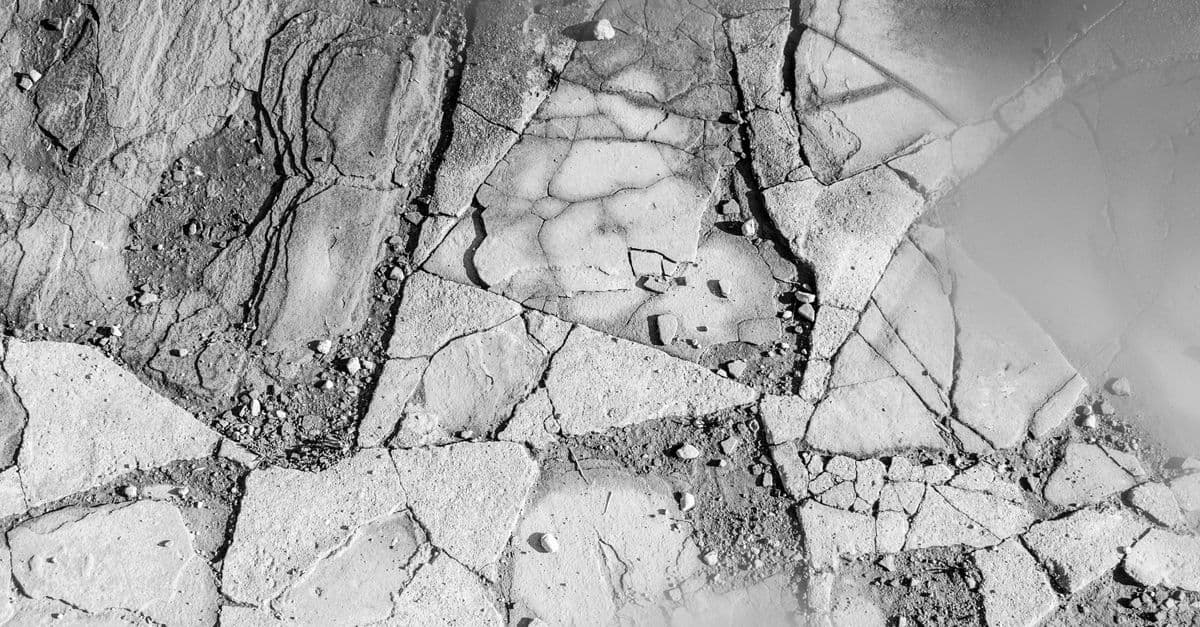
Photo: wal_ 172619 / Pexels
About 200 million years ago, the single supercontinent Pangaea began to fragment. Africa pulled away from South America. India broke from Antarctica. Europe drifted from North America. The breakup gave rise to the modern continents, the Atlantic and Indian Oceans, the Himalayas (when India crashed into Asia roughly 50 million years ago), and the geographic patterns of biodiversity we see today, according to the United States Geological Survey.
Thought experiment. This article explores a hypothetical scenario for educational and speculative purposes. The events described are not predictions and should not be interpreted as warnings, advocacy, or instructions.
If Pangaea had never broken up, Earth's geology, climate, and life would be unrecognizable. This thought experiment is worth taking seriously precisely because it isn't fanciful science fiction — Pangaea was real, it lasted roughly 100 million years, and its interior climate, its single global ocean, and its effect on the diversity of life have all been reconstructed from actual rock and fossil evidence. Running the counterfactual forward tells us how much plate tectonics, a slow-motion process that has reshaped Earth's surface for billions of years, has determined the shape of the modern biosphere.
Key takeaways
- Pangaea was a single landmass surrounded by a single ocean called Panthalassa, fully assembled by roughly 300 million years ago and beginning to break apart around 200 million years ago.
- A persistent supercontinent would have a vast arid interior, thousands of kilometers from any coastline, similar to what the rock record of Permian-age Pangaea already shows.
- Biodiversity would be lower because isolated ecosystems are what drive speciation, and a single landmass offers far less isolation.
- A single global ocean, undivided by continents, would allow much larger current systems and, per some models, more extreme storm behavior.
- The single deadliest mass extinction in Earth's history, the Permian-Triassic "Great Dying" roughly 252 million years ago, happened while Pangaea was intact — a warning about how a connected world can also be a fragile one.
- Mammalian, and eventually human, evolution unfolded largely because continents kept splitting apart after the Cretaceous; on a permanent Pangaea, that story would look very different, or might not include humans at all.
Why supercontinents form and break apart
The continents are not fixed scenery. They ride on tectonic plates that creep along at a few centimeters per year, roughly the speed your fingernails grow, driven by heat escaping the planet's interior through mantle convection and the pull of old, cold oceanic crust sinking back into the mantle at subduction zones. The USGS notes that plate speeds range from under 1 centimeter per year to more than 15 centimeters per year depending on the plate, with the Mid-Atlantic Ridge spreading at roughly 2.5 centimeters a year, about the rate a human fingernail grows (USGS).
Over hundreds of millions of years, that slow creep aggregates the continents into supercontinents, then tears them apart again, in what geologists call the supercontinent cycle. Pangaea's predecessors were Rodinia, assembled roughly 1.2 billion years ago, and Columbia (also called Nuna), assembled around 1.8 billion years ago (LiveScience). Estimates for the length of the cycle vary, but a commonly cited figure is that supercontinents reassemble roughly every 400 to 500 million years, or somewhat longer according to some reconstructions.
The driver of breakup is thought to involve mantle plumes: columns of unusually hot rock rising from deep in the mantle. When a plume reaches the underside of a supercontinent, it can't spread out sideways the way it would beneath thinner oceanic crust, so heat pools underneath the continental "blanket." That heat weakens the overlying lithosphere (the rigid outer shell of crust and uppermost mantle) until it rifts, thins, and eventually splits into new ocean basins. For a related scenario, see what if continents collided differently.
For Pangaea to have never broken up, mantle dynamics would have needed to differ from what actually happened: weaker plumes, a cooler and more sluggish mantle, or a different arrangement of subduction zones that never generated enough rifting force. This isn't physically absurd. Mars and Venus, Earth's rocky planetary neighbors, both have what geologists call "stagnant lid" tectonics: their surfaces are essentially single continuous shells with no plate boundaries and no continental drift at all. Earth is, so far, the only rocky planet in the solar system confirmed to have active plate tectonics, which makes the persistence of Pangaea a genuinely useful counterfactual, not just a curiosity.
A continental interior of extreme aridity
The single most striking feature of a persistent Pangaea would be its interior climate. Water vapor evaporates from oceans and gets carried inland by weather systems, but the farther a parcel of air travels over land, the more moisture it loses to rainfall along the way. Continental interiors are therefore drier than coastlines almost everywhere on Earth today; the bigger the continent, the bigger and drier its interior becomes. Pangaea would have taken that principle to its logical extreme: at its peak, no point on the supercontinent was closer than roughly a few thousand kilometers to open ocean along some interior routes, an isolation distance with no modern equivalent.
We don't have to guess at this. Geologists can read Permian and Triassic rock layers, when Pangaea actually existed, the way a climatologist reads a modern weather station. Continental interior deposits from that period show:
- Extensive evaporite deposits — thick layers of salt and gypsum that form only when shallow water bodies evaporate faster than they're replenished, a hallmark of arid basins.
- Aeolian (wind-deposited) sandstones with the characteristic cross-bedding of ancient sand dunes, found across what is now the central and southwestern United States, extending into Europe.
- Red beds, iron-oxidized sediments that form under oxidizing, generally dry conditions rather than the reducing conditions of wetlands or deep water.
Climate modeling of Pangaean conditions, going back to early simulations reviewed in the geological literature on Permian climate, consistently reproduces a pattern researchers sometimes call the Pangaea megamonsoon: a seasonal reversal of winds so extreme that summer brought intense monsoonal rain to some coastal margins while the deep interior stayed baked and rainless nearly year-round (Springer, Climate Model Simulations of the Permian; Kutzbach & Gallimore, Climate of the Supercontinent Pangea, Journal of Geology). More recent work using modern climate models and orbital-cycle analysis of Triassic sediments has confirmed that this megamonsoon signal shows up rhythmically in the rock record, tied to Earth's orbital eccentricity cycles, further supporting the idea that Pangaea's geography, not just its latitude, drove an unusually intense monsoon system (Scientific Reports, 2025).
Coastal margins, where seasonal moisture from the surrounding ocean could penetrate inland, would remain comparatively hospitable, hosting forests, river systems, and diverse animal life much like the fringes of Pangaea actually did during the Triassic. But the geographic center of a permanent Pangaea, potentially spanning a desert larger than any that exists on Earth today, including the Sahara, would likely remain a near-lifeless expanse of dunes, salt flats, and extreme temperature swings for as long as the supercontinent held together.
How hot and cold would the interior get?
Continental interiors lack the moderating effect of nearby ocean water, which absorbs and releases heat slowly and evens out temperature swings. Modern continental deserts routinely show wide day-to-night and summer-to-winter temperature ranges for exactly this reason; the Gobi Desert, for instance, swings from summer highs near 40°C to winter lows well below −30°C. A Pangaean interior, being even farther from any ocean than any desert existing today, would plausibly show similarly wide or more extreme seasonal swings, though pinning an exact number requires a specific climate model run rather than a general physical argument.
A single global ocean
The ocean surrounding Pangaea, called Panthalassa (from the Greek for "all sea"), covered the majority of Earth's surface with no continents to divide its currents into separate basins. The consequences of that geography ripple through everything from ocean chemistry to storm behavior.
Simpler, larger-scale circulation. Today's ocean currents are shaped by continental boundaries: the Gulf Stream exists because the Atlantic basin has a particular shape, the Antarctic Circumpolar Current exists because Antarctica is unobstructed by any other landmass at its latitude. With no Atlantic-Pacific-Indian divide, Panthalassa would likely have organized into a small number of vast, hemispheric current gyres instead of the many regional gyres we have now.
Fewer confined current systems. Instead of distinct, semi-isolated gyres like the North Pacific or South Atlantic gyres, a single global ocean would produce broad, continuous circulation patterns with less regional variation in temperature and nutrient delivery.
The possibility of unusually intense tropical storms. Modern hurricanes are partly limited in size and duration by the amount of open, warm ocean they can draw energy from before making landfall or crossing into cooler water. Climate scientists have speculated, using the term "hypercane" for a hypothetical storm far more intense than any recorded hurricane, about what might be physically possible given an unusually large expanse of warm open ocean. Panthalassa, with far more uninterrupted warm-water fetch than any modern ocean basin, is a geography where that kind of speculation becomes more plausible, though it remains a model-dependent extrapolation rather than a directly observed phenomenon from the fossil or sediment record.
Marine biodiversity would likely be lower, not higher. It might seem like one enormous ocean should support more species than several smaller ones, but the opposite tends to be true. Isolation, not raw habitat area, is usually the stronger driver of new species forming. A single connected ocean lets species mix and compete globally rather than diverging in separate basins, which tends to produce fewer, more widespread species rather than many regionally distinct ones.
Lower biodiversity across the board
Speciation, the process by which one species splits into two, depends heavily on geographic isolation. When a population is separated by a mountain range, a strait of open water, or a shifting continent, the two halves stop interbreeding, accumulate different mutations over generations, and eventually diverge enough that they can no longer produce fertile offspring even if reunited. Continental drift has been one of the most powerful isolation mechanisms in the history of life precisely because it separates entire populations for tens of millions of years at a stretch.
A persistent Pangaea would sharply reduce that kind of isolation in several ways:
| Isolation mechanism | On the real, fragmented Earth | On a permanent Pangaea |
|---|---|---|
| Ocean barriers | Separate Australia, Madagascar, South America into distinct evolutionary "experiments" | Largely absent; land animals can walk almost anywhere |
| Climate zone diversity | Many regional climates shaped by ocean currents and continent position | Fewer, broader climate bands (one vast interior desert, one megamonsoon coast) |
| Competitive spread | Dominant species often confined to their home continent | A single successful lineage could spread across the entire landmass |
| Endemic hotspots | Madagascar, Australia, Hawaii, the Galápagos host species found nowhere else | Little basis for this kind of extreme regional endemism to develop |
Table: how continental fragmentation drives biodiversity, and what a permanent Pangaea removes.
The net effect, based on the general relationship between isolation and speciation rate that evolutionary biologists have documented across many taxa and continents, would be meaningfully lower global biodiversity than the roughly 8.7 million estimated eukaryotic species alive today. The thousands of endemic species found in Madagascar, Australia, the Galápagos Islands, and Hawaii, essentially all products of long-term geographic isolation, would have no comparable mechanism to arise on a Pangaea where nearly everything is connected by dry land.
A persistent Pangaea would also likely be more vulnerable to catastrophic, planet-wide extinction events, not less. The actual Permian-Triassic extinction, which killed an estimated 90 percent of all species and roughly 95 percent of marine species, is the most severe extinction event ever documented in Earth's history, and it happened while Pangaea was fully assembled (Stanford Doerr School of Sustainability). The leading explanation is the eruption of the Siberian Traps, a colossal volcanic event that buried roughly 5 million square kilometers under lava and triggered a cascade of global warming, ocean acidification, and ocean oxygen depletion. Pangaea's geography almost certainly made things worse: with continents fused into one landmass, coastline and shallow marine habitat, the richest and most productive parts of any ocean, was drastically reduced compared to a world with many separate continental margins, leaving marine life with fewer refuges when the crisis hit.
Why does isolation create more species than a single connected landmass?
Isolated populations face different climates, predators, food sources, and mates, so natural selection pushes them in different directions over time. Without barriers separating them, populations continue to interbreed and compete directly, which tends to homogenize traits rather than diversify them. This is why island chains and isolated continents, not vast connected landmasses, are typically the richest sources of unique species on Earth today.
Mammalian evolution and the road to humans
The age of mammals as we know it, dominated by placental mammals, marsupials, and a huge range of specialized forms, began largely after Pangaea broke up and the continents drifted into their current, separated arrangement. Several threads of evidence tie this timing together:
- Mammals diversified explosively after the Cretaceous-Paleogene extinction roughly 66 million years ago, which wiped out the non-avian dinosaurs and opened ecological niches mammals rapidly filled, a process that occurred well after the continents had already separated.
- Geographic isolation drove the evolution of dramatically different faunas on different continents: marsupials in Australia, unusual edentate and primate lineages in South America, lemurs and tenrecs in Madagascar, and placental mammals dominating the northern continents that remained connected longest.
- Each separated continent effectively ran its own multi-million-year evolutionary experiment, isolated from competition and gene flow with the others, which is exactly the mechanism that produces distinctive faunas rather than a single homogenous one.
On a Pangaea that never broke up, this kind of regional radiation would be far less pronounced. A single, connected global landmass would likely favor a smaller number of highly successful, widely dispersed mammalian lineages rather than the dozens of regionally distinct orders we actually have. Marsupials and monotremes (egg-laying mammals like the platypus), whose distinctiveness is largely a product of Australia's long isolation after it separated from the rest of Gondwana, might never have evolved the specific forms we recognize today, or might have been outcompeted before they could diversify.
Whether primates, and eventually hominins (the lineage leading to modern humans), would have arisen at all on a permanent Pangaea is genuinely impossible to answer with confidence, and any specific claim here would be speculation rather than science. What can be said with more confidence is that human evolution as it actually happened was tightly bound to specific geographic and climatic events in eastern Africa: the formation of the East African Rift Valley, the associated changes in rainfall and vegetation that pushed some primate populations out of dense forest and into more open savanna habitat, and the glacial-interglacial climate cycles of the last few million years. The East African Rift itself is a product of active plate tectonics pulling the African continent apart. On a Pangaea, that specific rifting event, and the specific evolutionary pressures it created, would not exist in anything like its actual form.
Mountain building patterns would look very different
Most of Earth's great mountain ranges are products of plate collisions, not erosion alone:
- The Himalayas formed when the Indian Plate crashed into the Eurasian Plate roughly 50 million years ago, and the range is still rising today as that collision continues.
- The Alps formed from the collision of the African and Eurasian plates.
- The Andes formed from ongoing subduction of the oceanic Nazca Plate beneath the South American continent.
- The Rocky Mountains have a more complex history tied to interactions with the Pacific plate system over tens of millions of years.
Without the specific sequence of continental fragmentation, drift, and later collision that actually produced these ranges, a permanent Pangaea would have a very different mountain-building history. Erosion, which works constantly and doesn't pause for geological convenience, would have ground down whatever mountain belts existed from Pangaea's original assembly (a collision event itself, since Pangaea formed from earlier continental fragments smashing together around 300 million years ago). Left largely undisturbed by fresh tectonic collisions for hundreds of millions of years, that interior terrain would likely flatten into vast low-relief basins, some of them potentially below sea level, further amplifying the aridity problem, since low, flat interiors are especially poor at generating the orographic rainfall that mountains produce when moist air is forced upward and cools.
Could Earth have ended up looking like Mars or Venus?
If plate tectonics had been substantially weaker throughout Earth's history, not just in the specific case of Pangaea failing to break up, the planet could plausibly have ended up resembling its rocky neighbors more closely than it resembles the Earth we actually inhabit.
Mars has what planetary geologists call stagnant-lid tectonics: a single, largely immobile outer shell with no active plate boundaries. Its surface preserves ancient terrain billions of years old, punctuated by enormous volcanoes such as Olympus Mons, the largest known volcano in the solar system, which grew so large precisely because the crust beneath it never moved away from the underlying hotspot the way Earth's plates do.
Venus similarly lacks continuous plate tectonics, though its surface appears to undergo episodic, catastrophic global resurfacing events rather than the steady, incremental plate motion Earth exhibits.
Active plate tectonics does more than rearrange continents. It performs several functions that appear important for keeping Earth habitable over long timescales:
- Carbon cycling. Subduction carries carbon-bearing rock back into the mantle, part of a long-term feedback loop, sometimes called the carbonate-silicate cycle, that helps regulate atmospheric CO₂ and prevent runaway greenhouse or icehouse states over millions of years.
- Magnetic field generation. Earth's magnetic field arises from convection in the molten outer core, a process that is influenced by heat flow from the mantle above it, which is itself shaped by plate tectonic activity.
- Weathering feedback. Mountain building exposes fresh rock to erosion and chemical weathering, a process that draws down atmospheric CO₂ over geological time and has been proposed as one of the planet's key long-term thermostats.
A hypothetical Earth with little or no plate tectonics might struggle to maintain the kind of long-term climate stability that has allowed complex life tens of millions of years to diversify without a runaway greenhouse or global freeze cutting the process short. This doesn't mean life would be impossible on such a world, but it underscores how much of Earth's habitability is tied not just to its distance from the sun, but to the specific, ongoing geological churn happening beneath our feet.
What people get wrong about this thought experiment
Myth: "A single supercontinent would mean more total land, so more life overall." Total land area isn't the limiting factor for biodiversity; isolation and habitat variety are. A Pangaea's vast connected interior would mostly be desert, and its lack of separated basins would suppress the kind of regional speciation that actually produces the bulk of Earth's species diversity today.
Myth: "Pangaea's climate would have been uniformly hot because it existed a long time ago." Pangaea's actual climate, as reconstructed from Permian and Triassic rock, was not simply hot everywhere; it was strongly zoned, with an intensely arid interior, a seasonally wet megamonsoon belt near the coasts, and cooler conditions at higher latitudes, much as any large landmass would be today.
Myth: "If Pangaea never broke up, humans would still have evolved eventually, just somewhere else." This treats human evolution as an inevitability that would find a way regardless of geography. In reality, the specific rifting of the East African plate, and the resulting climate and habitat shifts, is tightly linked to the story paleoanthropologists tell about early hominin evolution. Remove that particular tectonic event and there is no strong basis for assuming an equivalent species would arise through some other mechanism.
Myth: "One global ocean would mean uniform, calm seas." A single, undivided ocean removes the basin boundaries that constrain modern current systems and storm tracks, which several climate models suggest could produce larger-scale, potentially more extreme weather patterns rather than calmer ones.
Frequently asked questions
Q: When did Pangaea actually exist, and when did it start breaking up? Pangaea was fully assembled by roughly 300 million years ago, during the late Carboniferous and early Permian periods, and began rifting apart starting around 200 million years ago, in the Early Jurassic, with the process of continental separation continuing for well over 100 million years afterward.
Q: What was Panthalassa? Panthalassa was the single global ocean that surrounded Pangaea, covering the majority of Earth's surface at the time. It had no continental divisions comparable to today's separate Atlantic, Pacific, and Indian Oceans, and modern climate models suggest it hosted its own version of large-scale sea surface temperature variability comparable in some ways to the modern El Niño-Southern Oscillation system.
Q: Would Pangaea's interior really have been as dry as the Sahara? Rock evidence from actual Permian-age Pangaea, including salt deposits, wind-blown sand dune formations, and iron-oxidized red beds across regions like the present-day central and southwestern United States and parts of Europe, indicates the interior was strongly arid, consistent with climate model predictions of a hyper-arid continental core far from any coastline.
Q: Why does a single continent produce fewer species than several separated ones? Because new species typically arise when a population is isolated long enough to diverge genetically from the rest of its species. A single, unbroken landmass offers far fewer natural barriers than several continents separated by oceans, so populations mix and compete rather than splitting into distinct lineages.
Q: Did the Permian-Triassic mass extinction have anything to do with Pangaea's shape? The extinction's primary trigger is thought to be the Siberian Traps volcanic eruptions, but Pangaea's geography likely worsened its impact on marine life. A single fused continent drastically reduced the total amount of shallow coastal and shelf habitat available worldwide, which is normally among the most productive and species-rich marine environments, leaving fewer refuges when the crisis struck.
Q: How fast do continents actually move? Tectonic plates move at rates ranging from less than 1 centimeter per year to more than 15 centimeters per year depending on the plate and setting, according to the USGS. The Mid-Atlantic Ridge, for comparison, spreads at roughly 2.5 centimeters a year, about the same rate a human fingernail grows.
Q: Could plate tectonics stop happening on Earth in the future? There's no evidence that Earth's plate tectonic system is currently slowing down or at risk of stopping on any timescale relevant to humans. The stagnant-lid tectonics seen on Mars and Venus are thought to reflect fundamental differences in planetary size, internal heat, and water content rather than a phase that Earth is approaching.
Q: Would marsupials like kangaroos exist on a permanent Pangaea? Almost certainly not in a form we would recognize. Australia's marsupials diversified into their current, highly distinctive forms largely because the continent was isolated from other landmasses for tens of millions of years, allowing marsupials to fill ecological niches that placental mammals occupy elsewhere. A connected Pangaea offers no comparable isolation mechanism.
Q: Is there any evidence hypercanes could actually form over a single global ocean like Panthalassa? The term "hypercane" describes a hypothetical storm more intense than any hurricane on record, generally discussed in the context of unusually warm, extensive open ocean. It remains a model-based extrapolation rather than something directly observed in the geological record, so it should be treated as a plausible but unconfirmed possibility rather than an established fact about Pangaea's actual weather.
The takeaway
A world where Pangaea never broke apart would not simply be today's Earth with the continents glued together. It would be a fundamentally different planet: a hyper-arid interior desert larger than any that exists now, a single vast ocean generating its own extreme weather, and a biosphere with meaningfully fewer species because the geographic isolation that drives new species into existence would be largely absent. The actual Permian-Triassic extinction, which unfolded while Pangaea was intact, hints that a fused world may also be a more fragile one, with fewer refuges when catastrophe strikes. Perhaps most strikingly, the specific chain of tectonic events that produced the East African Rift Valley, and with it the environmental pressures tied to early human evolution, would simply not exist on a permanent Pangaea. The breakup of a supercontinent 200 million years ago wasn't just background scenery for the story of life on Earth. It was one of the story's main characters.
Read next:
Follow new articles
Add SciHub101 to your feed reader to see new science and technology stories.
About the Author
SciHub101 is an independent science and technology publication founded and edited by Buğra Sözeri, a software engineer and app developer based in Türkiye. AI tools assist with drafting and research. Source documentation in the existing archive is uneven, and articles are being reviewed and corrected. The Editorial Team byline identifies editorial responsibility; it does not certify specialist or independent human review. Where we compare products, anything built by our own team is labelled as such — see the editorial guidelines and About page for how corrections and disclosures work.
Related Articles

What If Earth's Oxygen Levels Doubled?
If atmospheric oxygen rose from 21% to 42%, paper would catch fire from a single spark, lightning storms would ignite vast wildfires, and giant insects might become possible — but the world would be a tinderbox.

What If the Speed of Light Were Slower?
If the speed of light were dramatically lower — say, 100 km/h — relativistic effects would dominate everyday life. Cars would gain mass as they accelerated, time would dilate for joggers, and the universe would look profoundly different.
What If Continents Collided Differently?
Over geological time, continents have repeatedly collided, separated, and reformed in different configurations. If the continents had assembled differently — say, forming a supercontinent at the equator, or never breaking apart from Pangaea — the climate, life, and evolution would be radically different.
What If Radioactive Decay Stopped?
Radioactive decay provides Earth's internal heat, drives plate tectonics, and powers the magnetic field. If it stopped, Earth would cool, tectonics would cease, the magnetic field would die, and life would face increased radiation. Over billions of years, Earth would become a cold, geologically dead world.
What If Earth Had No Continents?
An Earth covered entirely by ocean — a 'water world' — would have no terrestrial life, simpler climate dynamics, and a chemistry profoundly altered by the absence of continental weathering. Land has shaped Earth far more than most people realize.
What If Earth's Magnetic Field Collapsed Tomorrow?
Earth's magnetic field has weakened by about 15 percent in 150 years, according to ESA. What would actually happen if it failed outright, and what is exaggerated?