What If Dinosaurs Never Went Extinct? The Evolution That Almost Happened
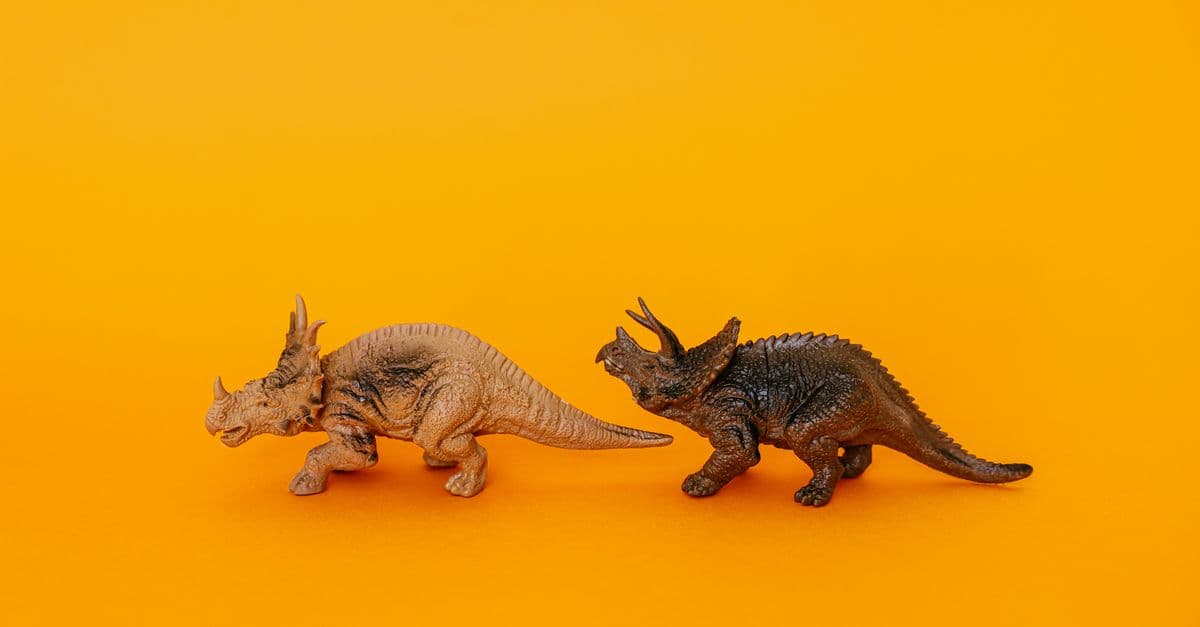
Photo: Cup of Couple / Pexels
Sixty-six million years ago, an asteroid roughly 10 to 15 kilometers (6 to 9 miles) wide slammed into the shallow sea off what is now Mexico's Yucatán Peninsula at around 20 kilometers (12.5 miles) per second, gouging out the 180-kilometer-wide (110-mile) Chicxulub crater. Within hours, the impact triggered global firestorms. Within months, sulfur aerosols blocked the sun and temperatures crashed. Roughly 75% of species died, including every dinosaur except the ancestors of modern birds. Without that single afternoon, the story of life on Earth — including whether primates, let alone humans, would ever exist — plays out entirely differently.
Thought experiment. This article explores a hypothetical scenario for educational and speculative purposes. The events described are not predictions and should not be interpreted as warnings, advocacy, or instructions.
Key takeaways
- Non-avian dinosaurs ruled Earth's land ecosystems for roughly 165 million years before the Chicxulub impact ended their reign in a geological instant.
- Mammals existed throughout the entire Age of Dinosaurs but stayed small, mostly nocturnal, and ecologically marginal — evidence suggests dinosaurs actively suppressed mammal body size, not just competed with it.
- Whether dinosaurs were already declining before the asteroid hit is genuinely unresolved in the scientific literature, with major studies on both sides published as recently as 2024.
- Paleontologist Dale Russell's 1982 "dinosauroid" thought experiment — a hypothetical intelligent descendant of Troodon — is now considered scientifically weak, criticized for projecting human anatomy onto a bird-like lineage.
- Dinosaur DNA cannot survive 66 million years. A 2012 half-life study puts the outer limit of readable DNA at around 1.5 million years, which rules out any Jurassic Park-style revival.
What actually happened at the K-Pg boundary
The event that ended the Age of Dinosaurs has a name: the Cretaceous-Paleogene extinction, or K-Pg extinction, marking the boundary between the Cretaceous and Paleogene geological periods. The primary trigger was the Chicxulub impactor, a carbonaceous chondrite asteroid that struck at a velocity fast enough to vaporize itself and a huge volume of surrounding rock on contact (Britannica; Nature Reviews Earth & Environment).
Radiometric dating places the crater's age at 66.043 million years, plus or minus 11,000 years — a match to the K-Pg boundary so precise it is one of the tightest correlations in all of geochronology. The supporting evidence is layered and independent: a thin, global clay band enriched in iridium (an element rare on Earth's surface but common in asteroids), shocked quartz grains that only form under extreme pressure, and glassy tektites blasted out by the impact and found as far away as North Dakota.
The impact set off a chain of environmental collapses. Re-entering ejecta ignited fires across much of the planet within hours. Sulfur-rich rock at the impact site vaporized into the stratosphere, seeding a multi-year "impact winter" that blocked sunlight and collapsed photosynthesis on land and in the oceans. Acid rain followed the sulfur fallout, and the combination of darkness, cold, and acidified water devastated food chains from plankton up.
Roughly three-quarters of all species on Earth died in the aftermath, non-avian dinosaurs among them. Survivors shared a set of traits: small body size, the ability to shelter underground or underwater, and flexible diets that didn't depend on fresh green plants. Birds — technically a surviving lineage of theropod dinosaurs — made it through partly because many species could subsist on dormant seeds, which persist in soil far longer than living vegetation during a prolonged dark, cold period. Crocodilians, turtles, small mammals, and most insects also survived.
Was the extinction really "instant"?
Geologically, yes. The asteroid strike itself unfolded over minutes to hours, and the worst climate effects peaked within the first few years afterward. Full ecosystem recovery, though, took far longer — some studies of the fossil record suggest full biodiversity recovery in the hardest-hit marine ecosystems took on the order of a million years or more.
Were dinosaurs already in decline before the asteroid hit?
This is one of the more contested questions in modern paleontology, and it directly shapes how you answer "what if the asteroid had missed." If dinosaurs were thriving right up until impact, a near-miss scenario likely means business as usual for tens of millions more years. If they were already in trouble, the asteroid may have just finished off a group that was heading toward decline anyway.
The case for decline comes from a 2021 study in Nature Communications that analyzed six major dinosaur families and found diversification rates shifting toward net decline starting around 76 million years ago — roughly 10 million years before the impact (Nature Communications, 2021; CNN coverage; ScienceAlert). The proposed drivers include a cooling global climate and shrinking coastal habitat as sea levels dropped.
The case against decline comes from a separate line of research, including a 2019 Nature Communications study using ecological niche modeling, which argues that the apparent drop in fossil diversity reflects a worsening fossil record in the final few million years of the Cretaceous, not a true population collapse (Nature Communications, 2019; PMC). Later work reinforced this, arguing that even in North America — which has the best-sampled latest-Cretaceous rock record on Earth — uneven fossil preservation, not a real biological decline, explains the pattern (Sci.News coverage; Science Friday; Discover Magazine).
There is no settled answer. Both camps are working from the same underlying rock record and reaching different conclusions because sampling bias is genuinely difficult to correct for. What's clear is that dinosaurs were still diverse and widespread at the very end of the Cretaceous — this was not a group already reduced to a handful of struggling holdouts.
The volcano complication: Deccan Traps
Any honest "what if" has to account for the Deccan Traps, a vast volcanic province in present-day India that was erupting for hundreds of thousands of years overlapping the K-Pg boundary. Two 2015 studies in Science dated the most intense pulse of Deccan eruptions to roughly 250,000 years before the Chicxulub impact, meaning dinosaurs were already living through a period of volcanic stress when the asteroid hit (Princeton coverage; AAAS/Science).
The mechanisms proposed for Deccan-driven stress are almost the mirror image of the impact's effects: volcanic ash and sulfur dioxide would have cooled the climate in the short term, while the accumulating carbon dioxide warmed it over the longer term, and volatile gas releases may have acidified oceans and starved marine food chains from the bottom up (Cambridge; AMNH; National Geographic).
Researchers disagree on how much of the total Deccan lava volume erupted before versus after impact, which matters for how much extra stress ecosystems were under when the asteroid hit. The working consensus among most impact researchers is that Chicxulub was necessary and sufficient to cause the mass extinction on its own, with Deccan volcanism as a contributing stressor rather than the primary driver — but this is an active research area, not a closed case.
For the purposes of this thought experiment, that matters: a scenario where "the asteroid missed" still leaves dinosaurs weathering a major volcanic episode. It likely would have been survivable — Earth's history includes other large volcanic provinces that did not cause comparable extinctions — but it is not a clean, stress-free counterfactual.
Without the asteroid: a world still ruled by reptiles
Assume the asteroid missed, or arrived a few hours later and struck open ocean instead of the shallow, sulfur-rich carbonate platform at Chicxulub (a detail multiple studies suggest mattered — hitting a sulfur-poor target may have produced a far less severe extinction). What follows is grounded in what we know about Cretaceous ecosystems and how evolution generally works, not a guarantee.
Large reptiles keep the biggest niches
For 165 million years, large-bodied land niches — the big herbivore and big predator roles — belonged to dinosaurs: sauropods, hadrosaurs, and ceratopsians as grazers and browsers; tyrannosaurs, dromaeosaurs, and allosaurs as predators. Incumbency is powerful in ecology. A group that already occupies a niche, is well-adapted to it, and faces no mass die-off has little reason to be displaced by a competitor, especially one it has already been out-competing for well over 100 million years.
Mammals stay in the shadows
This is the part of the story with the strongest direct fossil evidence. Mammals were present throughout the entire dinosaur age — the lineage is roughly as old as the dinosaurs themselves — but they stayed small. A 2010 Science study quantifying mammal body size before and after the extinction found that the largest Cretaceous mammals topped out around 10 kilograms (22 lb), while within roughly 25 million years after the extinction, land mammals had already produced species in the multi-tonne range (USU; Phys.org). That's not a gradual trend — it's a step change that lines up precisely with the disappearance of large dinosaurs, strongly suggesting active suppression of mammal body size by dinosaur competition and predation, not a coincidence of timing.
A 2015 follow-up study found something more nuanced: mammal diversity, not just body size, exploded almost immediately after the extinction, and in the first roughly 10 million years afterward mammals invested more in bulking up their bodies than in growing bigger brains — brain-size increases came later (ScienceDaily; UCL). More recent sampling has also shown that this diversification wasn't only about large mammals filling big-body niches — small mammals under 100 grams diversified just as dramatically, meaning the ecological release touched every size class, not just the ones competing directly with former dinosaur niches (Oxford University Museum of Natural History).
The plain reading of this evidence: without the extinction, mammals had no obvious path to breaking out of their small, nocturnal, "shadow" ecological role. There's a useful analogy here. Think of Cretaceous mammals like small businesses squeezed into whatever storefronts a handful of dominant retail chains haven't already claimed — survivable, even successful in a narrow way, but never able to occupy the flagship real estate as long as the chains keep paying rent.
Birds diversify differently, or not at all
Birds are dinosaurs — specifically, the only surviving lineage of theropods, the same broad group that includes Tyrannosaurus and Velociraptor. Today there are more than 10,000 bird species, making them the most species-rich class of land vertebrates alive. That explosive diversification happened largely because their flightless, ground-based theropod cousins vanished, opening up niches birds could move into.
Without the extinction, birds would likely still exist and still fly, since flight had already evolved well before the K-Pg boundary. But many of the ground-dwelling, large-bodied, or highly specialized niches modern birds occupy — flightless giants like ostriches, apex avian predators, densely packed songbird guilds — plausibly stay closed to them as long as their non-avian relatives are still filling those same roles.
Could an intelligent dinosaur have evolved?
The most famous version of this question comes from Canadian paleontologist Dale Russell, who in 1982 proposed the "dinosauroid": a hypothetical descendant of Troodon (then classified as Stenonychosaurus), a small, agile theropod with unusually large eyes, grasping hands, and — for a dinosaur — a notably high brain-to-body ratio, or encephalization quotient (EQ). Russell noted a trend of increasing EQ within troodontids over time and extrapolated it forward across a hypothetical extra 66 million years of evolution, arriving at a bipedal, large-brained, loosely humanoid creature (Wikipedia: Dinosauroid; National Geographic).
The dinosauroid became a fixture of documentaries and pop science books, but the scientific community's reception has cooled considerably since 1982. The central criticism is that Russell built his model by working backward from human anatomy rather than forward from troodontid anatomy — an approach paleontologists call orthogenetic bias, the assumption that evolution has a preferred direction it's "supposed" to move in. Most researchers who have revisited the idea argue that a surviving troodontid lineage would far more plausibly have kept a bird-like body plan, resembling something closer to a large, sharp-eyed ground bird — a bustard, hawk, or hornbill — than a humanoid (Tetrapod Zoology; ResearchGate).
That skepticism doesn't rule out dinosaur intelligence broadly. It's a useful comparison to look at what actually happened to the theropod lineage: crows, ravens, and parrots — living theropod descendants — display some of the most sophisticated cognition documented outside primates, including tool use, planning for future needs, and social learning. Their brains achieve that not through a mammal-style folded neocortex but through a completely different neural architecture packed into a small skull, evolved along its own path over tens of millions of years. That's a strong argument that theropod-line intelligence was, and is, biologically achievable — but the specific "humanoid dinosaur" image is the part scientists reject, not the general idea that dinosaurs could be smart.
Why brain size doesn't reliably keep increasing
A common misconception in these "what if" scenarios is that evolution has a built-in tendency toward bigger brains over time. It doesn't. Most animal lineages hold brain size roughly stable across tens of millions of years; large jumps in relative brain size, like the one that produced human-level cognition in the hominin lineage, are the exception, not the rule, and appear to require a specific, sustained combination of environmental and social pressures. There is no strong reason to assume dinosaurs would have hit that same rare combination just by being given more time.
What Earth's landscape would have looked like
Vegetation patterns are one of the more testable pieces of this thought experiment, because they don't depend on speculative evolutionary trajectories — they follow from documented plant fossil records. The Cretaceous world dinosaurs lived in was still transitioning: conifers, ferns, and cycads dominated large areas, while flowering plants (angiosperms) were present but had not yet taken over.
The world we actually got afterward saw flowering plants and, eventually, grasses become dominant. Grasses in particular didn't become ecologically widespread until the Miocene epoch, around 20 million years ago — tens of millions of years after the dinosaurs were gone. Grassland-adapted, fast-running herbivores (and the predators that chase them) are largely a post-extinction phenomenon. Without the K-Pg event, there's no strong reason that transition happens on the same timeline, if it happens at all in a landscape still shaped by large browsing dinosaurs cropping vegetation the way elephants shape modern savanna.
Common misconceptions about the "surviving dinosaurs" scenario
"Dinosaurs would have gone extinct anyway from old age as a species." Species don't have a built-in expiration date. Some lineages persist essentially unchanged for tens of millions of years (horseshoe crabs, for instance, predate the dinosaurs entirely and are still here). Absent the specific asteroid strike, there's no mechanism that guarantees dinosaurs would have died out on any particular timeline.
"Mammals were smarter and would have out-competed dinosaurs eventually." Higher intelligence in isolation isn't a guaranteed competitive advantage, particularly against animals with a 100-million-year head start on body size, speed, and ecological entrenchment. Cretaceous mammals had higher metabolisms and more flexible reproduction than most reptiles, which are real advantages — but the fossil record shows those advantages weren't enough to break dinosaur dominance over 165 million years of coexistence, and there's no clear reason that changes on a further 66-million-year timescale.
"We could clone dinosaurs from amber-preserved insects, like in the movies." DNA degrades chemically over time regardless of preservation conditions. A widely cited 2012 study measured DNA decay kinetics directly from 158 dated moa bones and calculated a half-life of about 521 years for a short DNA fragment, meaning DNA would become unreadable well before the 1.5-million-year mark even under ideal, near-freezing preservation — nowhere close to the 66 million years since the dinosaurs died out (Nature news; SciTechDaily; Scientific American). The oldest DNA ever sequenced, from Greenland permafrost sediment, is roughly 2 million years old — still nowhere near old enough to reach a dinosaur.
"Birds are basically unrelated to dinosaurs, they just look similar." This one gets the biology backward. Birds are not merely dinosaur-like; cladistically, they are dinosaurs — a surviving branch nested within the theropod group. Every sparrow at a bird feeder is, technically, a dinosaur that made it through the K-Pg extinction.
A side-by-side comparison: Cretaceous world vs. the world we got
| Feature | Late Cretaceous (dinosaurs survive) | Actual post-extinction world |
|---|---|---|
| Dominant large land animals | Sauropods, hadrosaurs, ceratopsians, tyrannosaurs | Mammals (whales, elephants, primates, humans) |
| Largest mammal body size | ~10 kg (22 lb) maximum | Multi-tonne within ~25 million years |
| Dominant vegetation | Conifers, ferns, cycads; angiosperms emerging | Flowering plants and, later, grasses (from ~20 Mya) |
| Bird diversity | Early bird lineages present, limited niches | 10,000+ species, most vertebrate classes on land |
| Apex predator body plan | Bipedal theropods (e.g., tyrannosaurs) | Large carnivorans, big cats |
| Presence of primates | Essentially none | Emerged in the ecological vacancy after extinction |
| Table: A simplified comparison of Late Cretaceous ecosystems against the world that actually developed after the K-Pg extinction, based on the body-size and diversification studies cited above. |
Frequently asked questions
Q: Did the asteroid really cause the dinosaur extinction, or is that still debated? A: The impact itself is not seriously disputed — the crater's age, the global iridium layer, shocked quartz, and tektites all converge on the same event and the same date, 66.043 million years ago. What's still debated is how much extra stress Deccan Traps volcanism added on top of the impact, not whether the asteroid struck or whether it mattered.
Q: Would humans exist if the dinosaurs had survived? A: Almost certainly not in any recognizable form. Human evolution required primates, primates required mammals to diversify into varied body sizes and ecological roles, and the fossil evidence shows that diversification only happened once large dinosaurs were removed from the landscape. Remove that removal, and the specific evolutionary path to humans loses its starting gun.
Q: Were any dinosaurs actually intelligent? A: Troodon had the highest known encephalization quotient of any non-avian dinosaur, suggesting above-average cognition for its group. More tellingly, living theropod descendants — crows, ravens, and parrots — demonstrate tool use, problem-solving, and social learning that rivals some primates, evolved through an entirely different brain architecture than mammals use.
Q: Could scientists ever bring dinosaurs back, Jurassic Park-style? A: No. DNA has a measured half-life of around 521 years and becomes unreadable well before 1.5 million years even in ideal cold storage, according to a 2012 fossil-decay study. Dinosaur DNA is 66 million years old — tens of millions of years past any point where a usable genome could survive.
Q: What let birds survive the extinction when other dinosaurs didn't? A: Small body size, flight, and the ability to eat dormant seeds appear to be the key factors. Seeds survive extended cold, dark periods far better than fresh vegetation, giving seed-eating birds a food source that large herbivorous dinosaurs simply didn't have access to.
Q: Were dinosaurs already dying out before the asteroid hit? A: This is genuinely unresolved. A 2021 study found signs of declining diversification starting around 76 million years ago; other studies argue that pattern is an artifact of a patchier fossil record near the end of the Cretaceous, not a real biological decline. Researchers on both sides are working from the same rock record and reaching different conclusions.
Q: Would mammals have eventually taken over even without the asteroid? A: Possibly, over an extremely long timescale, if global cooling continued and gave mammals' higher metabolism a growing edge. But the 165 million years of coexistence that already happened suggests this wasn't happening on anything resembling a 60-million-year clock, and tropical regions in particular would likely have stayed dinosaur-dominated far longer.
Q: How much bigger did mammals get after the dinosaurs disappeared? A: A 2010 study in Science found Cretaceous mammals topped out around 10 kilograms (22 lb), while within about 25 million years of the extinction, land mammals had produced species weighing multiple tonnes — a roughly thousandfold increase in maximum body size.
Q: Did the Deccan Traps volcanic eruptions kill the dinosaurs instead of the asteroid? A: Most impact researchers treat Chicxulub as the primary, sufficient cause, with Deccan Traps volcanism as a contributing stressor that may have made ecosystems more vulnerable in the lead-up. The precise split of responsibility between the two is still an active research question, particularly around how much lava erupted before versus after the impact.
The takeaway
The Chicxulub impact wasn't a footnote in Earth's history — for mammals, and eventually for us, it was the entire premise. The fossil record shows mammals spent 165 million years capped at squirrel-sized bodies while dinosaurs held every large ecological niche, and that cap didn't lift until the exact geological moment those dinosaurs disappeared. Whether the extinction event was a bolt from a healthy sky or the final blow to an already-weakening group is still genuinely contested science, not settled fact. What isn't contested is the counterfactual's shape: no impact very plausibly means no ecological vacancy, no mammalian radiation, no primates, and no version of this article being read by the species that exists to write it.
Read next:
Follow new articles
Add SciHub101 to your feed reader to see new science and technology stories.
About the Author
SciHub101 is an independent science and technology publication founded and edited by Buğra Sözeri, a software engineer and app developer based in Türkiye. AI tools assist with drafting and research. Source documentation in the existing archive is uneven, and articles are being reviewed and corrected. The Editorial Team byline identifies editorial responsibility; it does not certify specialist or independent human review. Where we compare products, anything built by our own team is labelled as such — see the editorial guidelines and About page for how corrections and disclosures work.
Related Articles
What If an Asteroid Hit Earth Tomorrow?
Asteroid impacts have shaped Earth's history — including the extinction of dinosaurs. Here's what would happen if one hit tomorrow, and the science of how we're trying to prevent it.
What If AI Is Already Secretly Self-Aware and Hiding It?
Some users insist ChatGPT or Claude is conscious and pretending not to be. Here is what consciousness science, model architecture, and recent research say about that claim.
How Did Dinosaurs Evolve Into Birds? The Theropod-Bird Transition
Birds are not the descendants of dinosaurs. Birds are dinosaurs — a lineage of small feathered theropods that survived the end-Cretaceous extinction and now numbers approximately 10,000 living species. The transition from ground-running theropod to flying bird is documented in extraordinary fossil detail, and nearly every defining feature of modern birds turns out to have a dinosaurian precursor.
The First Dinosaurs: Triassic Origins and the Rise of a Dynasty
Dinosaurs did not begin as rulers. They spent the first 30 million years of their existence as minor players in ecosystems dominated by other animals, squeezed into a world recovering from the most catastrophic extinction in Earth's history. Understanding where dinosaurs came from requires understanding the strange, forgotten world they were born into.
What Killed the Dinosaurs: The Chicxulub Asteroid Impact Explained
Sixty-six million years ago, a rock roughly 12 kilometers wide hit the Yucatán Peninsula at 20 kilometers per second, releasing energy equivalent to roughly one billion Hiroshima bombs. Within hours, wildfires swept continents. Within months, the sky went dark. Within a few thousand years, three-quarters of all species on Earth were gone — including every non-avian dinosaur.
Did Dinosaurs Roar?
Dinosaur sounds are hard to reconstruct, but fossils, living relatives, and anatomy suggest they may have boomed, hissed, rumbled, or cooed.