Did Dinosaurs Roar?
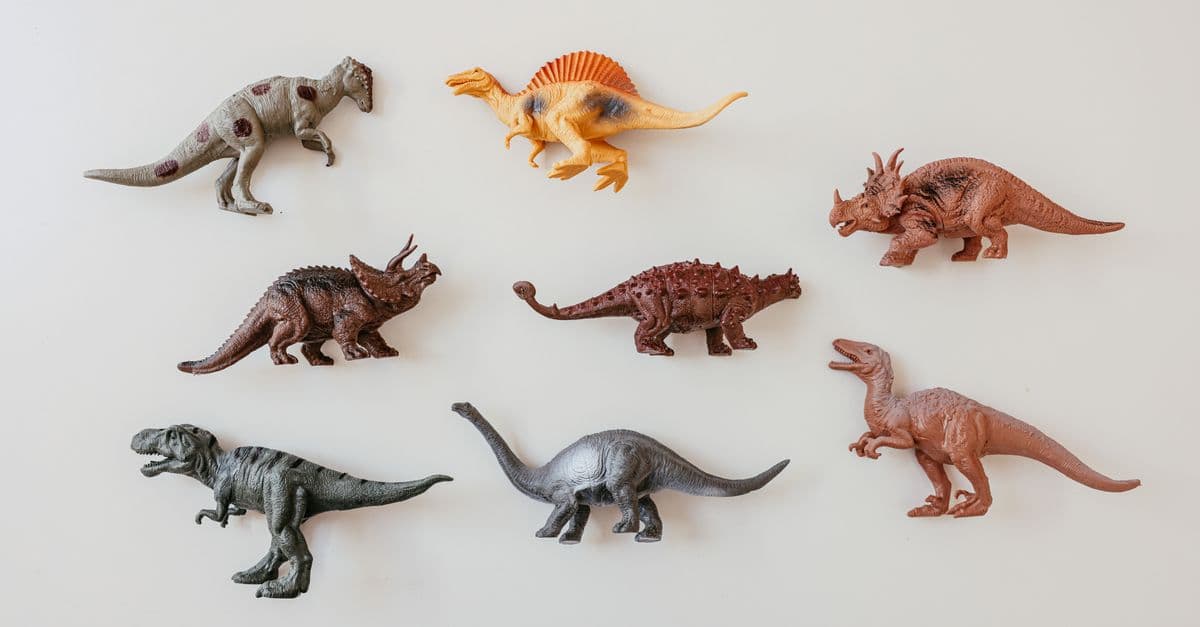
Photo: Cup of Couple / Pexels
Every dinosaur movie since the 1990s has trained audiences to expect the same thing: a Tyrannosaurus rex rears back, opens its jaws wide, and unleashes a bone-shaking, open-mouth roar built from layered lion, elephant, and alligator recordings. It is one of the most effective sound designs in film history. It is also, according to the anatomy of T. rex's closest living relatives, probably wrong. The mouth-open roar is a Hollywood convention, not a paleontological finding, and the animals best positioned to tell us what dinosaurs actually sounded like — birds and crocodilians — mostly do not roar at all.
Why paleontologists doubt the Hollywood roar
Soft tissue almost never fossilizes. Vocal cords, syrinxes (the bird sound-producing organ), and laryngeal tissue are exactly the kind of fragile, non-mineralized material that decomposes long before burial and mineral replacement can preserve it. That single fact is the root of the entire problem: paleontologists cannot simply find a fossilized voice box and play it back. Every reconstruction of dinosaur sound is an inference built from indirect evidence, and inference is a different kind of claim than direct observation.
So where does the "roar" idea come from in the first place? Mostly from mammals. Lions, tigers, bears, and other large modern predators do produce loud, open-mouth roars, and those sounds are deeply embedded in the popular imagination as the default vocabulary of "big scary animal." Film sound designers reached for that vocabulary because it reads instantly as threatening to an audience, not because any fossil evidence pointed there. Movie sound is built for emotional effect, not phylogenetic accuracy.
The scientific approach works differently. To reconstruct how an extinct animal might have sounded, researchers turn to what is called the extant phylogenetic bracket: a method of inferring an unknown trait in an extinct organism by looking at the shared traits of its two closest living relative groups. For any non-avian dinosaur, those two bracketing groups are birds (which are, technically, living theropod dinosaurs) and crocodilians (alligators, crocodiles, caimans, and gharials). Both groups sit on either side of the dinosaur family tree, and traits shared by both bracketing groups are reasonably assumed to have also been present in the extinct animals between them.
And that is where the roar hypothesis runs into trouble. Roaring — the loud, open-mouth, resonant vocalization typical of big cats — is essentially absent from both brackets. Crocodilians bellow and hiss with mouths that are often closed or barely parted. Most birds sing, squawk, honk, or call through an open beak, but the specific acoustic signature of a mammalian roar, produced by a flexible larynx and vocal folds, is not something either bracketing lineage does. If neither living relative group roars, the parsimonious inference is that the dinosaurs between them on the family tree probably did not either, at least not in the mammal-roar sense the term implies in English.
The closed-mouth vocalization discovery
The most direct challenge to the movie roar came from a 2016 study published in the journal Evolution by researchers including Tobias Riede at Midwestern University, working with colleagues at the University of Texas at Austin's Jackson School of Geosciences. The team examined closed-mouth vocalization — sounds an animal produces by pushing air into an inflatable pouch in the neck or esophagus while keeping its beak or mouth shut — across a wide sample of living archosaurs, the reptile group that includes birds, crocodilians, and their extinct dinosaur relatives (UT Austin Jackson School of Geosciences, 2016).
The researchers found that 52 of the 208 bird species they investigated are capable of closed-mouth vocalization, and that the trait clusters strongly among larger-bodied species. Ostriches produce a resonant closed-mouth boom. Doves coo without fully opening their beaks. Several ground-dwelling and wetland birds use inflatable throat sacs to generate low, resonant pulses that carry over long distances without the acoustic signature of an open-throated call.
Using ancestral-state reconstruction — a statistical method that maps a trait's presence or absence across a family tree to estimate how likely it was present in shared ancestors — the team concluded that closed-mouth vocalization likely evolved independently at least 16 separate times across the bird family tree, and that the underlying anatomical capacity for it was probably present deep in the archosaur lineage, potentially including large-bodied non-avian dinosaurs. Their headline conclusion, widely reported at the time, was that big dinosaurs like T. rex may have been more likely to produce a low, closed-mouth rumble, boom, or hiss-like call than an open-jawed roar (UT Austin, 2016).
What Parasaurolophus can actually tell us about pitch
Not every dinosaur relied on soft-tissue anatomy to shape its sound, and that gives paleoacoustics researchers one genuinely solid foothold: bone. Parasaurolophus, a duck-billed hadrosaur that lived roughly 76 to 73 million years ago, carried an elaborate, backward-curving crest with hollow internal tubes connecting its nasal passages to the top of its skull. Unlike vocal cords, that bony crest fossilizes beautifully, and CT scanning can map its internal chambers in detail.
Researchers, including a long-running project involving Sandia National Laboratories that used CT scans of a well-preserved skull to digitally reconstruct the crest's internal airways, have modeled how air moving through those looping nasal tubes would resonate (Sandia National Laboratories). More recent work presented at Acoustical Society of America meetings has built physical resonance models — nicknamed the "Linophone" after researcher Hongjun Lin — that use 3D-printed replicas of the crest's internal tubing to test what frequencies the geometry naturally amplifies (Acoustical Society of America / ScienceDaily, 2024).
The consistent finding across these approaches is that the crest's long, looping internal tubes behave like a wind instrument, and that geometry favors low-frequency, resonant sound rather than a high-pitched shriek. Because each individual's crest tubing has a slightly different length and shape, researchers also suggest that the resulting calls could have varied enough between individuals to make each Parasaurolophus recognizable by voice, similar to how individual elephants or whales can be distinguished acoustically. This is one of the only dinosaur sound reconstructions built on hard anatomical geometry rather than soft-tissue inference, which is why it carries unusually high confidence for a paleoacoustics claim.
What did T. rex actually sound like?
No one knows the exact pitch or timbre, because T. rex's throat anatomy did not fossilize. The best-supported inference, based on the closed-mouth vocalization research and the absence of roaring in both birds and crocodilians, is a low-frequency rumble, hiss, or bellow-like call rather than an open-mouth cinematic roar.
Beyond Parasaurolophus: the crested hadrosaur family sang in different keys
Parasaurolophus is the celebrity of dinosaur paleoacoustics, but it was not the only crested duck-billed dinosaur running air through a hollow bony chamber, and the differences between the crests matter as much as the shared idea. Parasaurolophus, Lambeosaurus, Corythosaurus, and Hypacrosaurus together make up the lambeosaurine hadrosaurs, a Late Cretaceous subgroup defined by exactly this kind of ornate, hollow-crested skull, and each genus built the internal plumbing differently.
Paleontologist David Evans, working from CT scans of skulls representing all four genera, reconstructed both the nasal airways inside the crests and the brain and inner-ear anatomy that would have processed any sound those airways produced (Evans, 2009, The Anatomical Record). Corythosaurus carries a tall, rounded, dinner-plate-shaped crest with a comparatively simple looping nasal passage. Lambeosaurus has a hatchet-shaped crest with a more convoluted internal route. Parasaurolophus has the longest and most elaborate tube of the group, curving backward well past the skull itself. Because each shape changes the length and number of bends the air has to travel through, each genus would have produced a structurally different resonant tone, in the same way a trombone and a French horn sound different despite both being brass instruments that work on the same acoustic principle.
Evans's study did not stop at the airway geometry. He also examined the inner ear, specifically the cochlear duct, the coiled structure that processes sound frequency, and found it was elongated in lambeosaurines compared to non-crested hadrosaurs. An elongated cochlea in living animals generally correlates with better low-frequency discrimination, which lines up neatly with the idea that these animals were not just capable of producing deep, resonant calls through their crests but were also anatomically equipped to hear and distinguish them (EurekAlert summary of Evans's research). That pairing, a sound-producing structure and a hearing structure tuned to the same frequency range the sound-producer generates, is exactly the kind of matched anatomical evidence paleoacousticians look for, and it is considerably harder to dismiss as coincidence than either finding would be alone.
There is also a developmental angle worth noting. CT-based growth studies of lambeosaurine crests suggest the internal nasal passages lengthened and became more convoluted as an individual aged, meaning a juvenile's crest call and an adult's crest call from the same species would likely have differed in pitch, probably shifting from a higher-pitched sound early in life toward a deeper one in adulthood as the resonating chamber grew longer, similar to how a human voice deepens with the lengthening of the vocal tract through adolescence.
What sauropods may have heard, and possibly said, in infrasound
Hadrosaurs get the paleoacoustic attention because their crests fossilize as an obvious resonating structure, but the largest animals ever to walk on land, the long-necked sauropods like Diplodocus, Apatosaurus, and Brachiosaurus, present a different kind of acoustic puzzle rooted in body size rather than head ornamentation. Researchers studying the inner ear anatomy of sauropods, including CT-based reconstructions of the titanosaur Sarmientosaurus, have focused on the basilar membrane inside the cochlea, a structure whose length correlates with the range of frequencies an animal can detect: longer basilar membranes generally detect lower frequencies, and shorter ones detect higher frequencies (ScienceDaily, 2007).
Because sauropods were exceptionally large animals with correspondingly large skulls and inner ears, that anatomy points toward hearing weighted heavily toward the low end of the frequency spectrum, potentially down into the infrasound range below 20 hertz, the threshold of human hearing. Computer models of sauropod skull morphology built from this kind of anatomical data have suggested some species could plausibly have produced sounds as low as 5 to 10 hertz, deep enough that a human standing nearby would feel more than hear it, in the same register as the low-frequency rumbles elephants use to communicate over several kilometers (NewsBreak summary of sauropod infrasound research).
That elephant comparison is doing real analytical work, not just decorative work. Elephants use infrasonic rumbles, sounds below the range of human hearing, to coordinate movement across a herd that may be spread over many kilometers of savanna, effectively maintaining a long-distance "cell network" of low, ground-and-air-transmitted calls that predators and casual human observers cannot detect. If sauropods had comparably tuned hearing, and nothing about their inner ear anatomy rules that out, a herd of multi-tonne long-necked dinosaurs moving across a Jurassic floodplain could plausibly have coordinated the same way, using calls pitched below what most predators, and certainly below what any human time-traveler, could consciously hear. This remains a plausible inference from anatomy rather than a confirmed behavior, since no fossil can record whether sauropods actually used that hearing range for social communication as opposed to, say, simply detecting the footsteps and low rumbling activity of other large animals nearby.
Why crocodilians matter as much as birds
Birds get most of the attention in dinosaur-sound discussions because they are direct descendants of theropod dinosaurs, but crocodilians are just as important to the reconstruction, because they anchor the other side of the phylogenetic bracket. American alligators produce a deep, resonant bellow during mating season, generated by air moving through the body while the jaws stay largely closed, and the sound is often accompanied by visible vibration on the water's surface, a phenomenon researchers call the "water dance." That bellow is loud, low-frequency, and unmistakably reptilian, and it shares more acoustic character with the closed-mouth booms of large birds than with any mammalian roar.
Crocodilians also hiss, a sound produced by forcefully expelling air, and juvenile crocodilians produce distinct chirps and grunts to communicate with their mothers and siblings before and after hatching. None of this vocal repertoire resembles the sustained, open-throat roar of a big cat. Because crocodilians and birds independently retain closed-mouth or hiss-based vocalization as dominant strategies despite roughly 240 million years of separate evolution since their last common ancestor, the shared trait is a strong signal that this was the ancestral condition across the whole archosaur lineage, including the dinosaurs in between.
Comparing the evidence: movie roar versus bracketed vocalization
The table below lays out how the Hollywood convention stacks up against what the phylogenetic bracket, the fossil record, and modern comparative anatomy actually support.
| Evidence type | Hollywood open-mouth roar | Bracketed closed-mouth / low-frequency call |
|---|---|---|
| Closest living relative support | Not found in birds or crocodilians as a typical call type | Present in ostriches, doves, and 50+ other bird species; present in crocodilian bellows and hisses |
| Anatomical basis | Requires a flexible mammalian larynx and vocal folds, structures absent in birds and crocodilians | Consistent with a syrinx (birds) or laryngeal structures paired with inflatable throat pouches (both groups) |
| Fossil evidence | None; larynx and vocal cords do not fossilize | Indirect but supported for hadrosaurs via bony crest resonance chambers (Parasaurolophus) |
| Best-documented case study | — | Parasaurolophus crest CT scans and physical resonance models (Sandia National Laboratories; Acoustical Society of America) |
| Origin of the convention | 20th-century film sound design borrowing from lion, elephant, and alligator recordings | Peer-reviewed ancestral-state reconstruction across 208 bird species (Riede et al., Evolution, 2016) |
| Scientific confidence level | Low; not supported by comparative anatomy | Moderate to high, depending on species and whether bony resonance structures are present |
Table: Comparing the cinematic roar convention against the anatomical and comparative evidence for dinosaur vocalization.
What the evidence cannot settle
It is worth being honest about the limits here, because paleoacoustics is one of the more speculative corners of dinosaur science even when it is done carefully. The phylogenetic bracket tells scientists what traits were probably present in the ancestor shared by birds and crocodilians, but it cannot specify the exact pitch, loudness, rhythm, or emotional context of any single species' call. A trait being "probably present" in a lineage is a different, weaker claim than "this specific animal made this specific sound in this specific situation," and good science writing should not blur that distinction.
There is also enormous variation to account for. Non-avian dinosaurs ranged from pigeon-sized theropods to 40-tonne sauropods, and body size, neck length, skull shape, and respiratory anatomy all influence what frequencies an animal can physically produce. A hollow-crested hadrosaur like Parasaurolophus had an anatomical feature purpose-built for acoustic resonance; a small, feathered dromaeosaur almost certainly did not, and its calls may have sounded more like a large bird's than anything associated with "dinosaur sounds" in popular culture. There is no single answer for "what did a dinosaur sound like" any more than there is a single answer for "what does a mammal sound like" across the group that includes mice, whales, and lions.
Finally, closed-mouth vocalization capacity does not mean every large dinosaur necessarily used it, or used it exclusively. Ancestral-state reconstruction estimates probability across a family tree; it does not guarantee that every branch expressed the trait the same way, or at all. Some non-avian dinosaurs may well have produced open-mouth hisses, snarls, or calls that fall somewhere between the two categories described here. The fair summary is not "dinosaurs cooed like doves" but "the best comparative evidence points toward low-frequency, often closed-mouth or resonance-based sound production, and away from the mammalian open-mouth roar that dominates film."
Why the roar became the default anyway
If the science points away from roaring, why does the convention persist so strongly? Partly because it works dramatically. An open, visible mouth reads as a threat display to human viewers regardless of the actual biology involved, and film sound designers are solving for audience emotion, not phylogenetic accuracy. The 1993 sound design for Jurassic Park, which blended baby elephant squeals, tiger snarls, and alligator hisses into the now-iconic T. rex roar, predates the 2016 closed-mouth vocalization study by more than two decades, so the filmmakers were working with the information and creative instincts available at the time, not deliberately ignoring later peer-reviewed research.
The larger misconception this feeds is the idea that dinosaurs behaved like scaled-up mammals with reptile skin, when the anatomical reality points toward something closer to an oversized, low-slung, sometimes-feathered bird relative. That reframing connects directly to how paleontologists reconstruct dinosaur appearance more broadly, using preserved soft tissue, skin impressions, and even fossilized pigment structures rather than assumption. It also connects to the fact that many dinosaur lineages, especially theropods like the ones most often depicted roaring on screen, carried feathers rather than the smooth reptilian hide most movies still favor. For another common dinosaur misconception, see whether humans and dinosaurs ever coexisted.
What this means
Dinosaurs almost certainly made sound, and for animals with distinctive skull anatomy like Parasaurolophus, researchers can model that sound with real confidence because the resonating structure survived as fossilized bone. For most other dinosaurs, including T. rex, the honest answer is that the loud, open-mouth roar audiences know from film is a dramatic convention rather than a documented behavior, and the anatomical evidence from birds and crocodilians instead points toward lower-frequency rumbles, hisses, bellows, and closed-mouth booms. That is not a disappointing answer. It replaces a generic monster-movie sound with something more interesting: an evolutionary logic connecting a 76-million-year-old duck-billed dinosaur's nasal crest to the boom of a modern ostrich and the bellow of an alligator in a nearby swamp.
Read next:
- How Do We Know What Dinosaurs Looked Like?
- Did Dinosaurs Have Feathers? The Fossil Evidence Explained
- What Killed the Dinosaurs: The Chicxulub Asteroid Impact Explained
Frequently Asked Questions
Q: Did Tyrannosaurus rex really roar like in the movies? A: Probably not in the open-mouth, mammalian sense shown on screen. Neither of T. rex's closest living relative groups, birds and crocodilians, typically produces that kind of roar, so comparative anatomy points toward a lower-frequency, possibly closed-mouth call instead, such as a bellow, rumble, or hiss.
Q: How can scientists study dinosaur sounds if soft tissue like the larynx doesn't fossilize? A: They use the extant phylogenetic bracket method, comparing traits shared by birds and crocodilians, the two living groups that bracket the dinosaur family tree, to infer what was probably present in the extinct animals between them. Where fossilized bony structures exist, such as a hadrosaur's hollow crest, researchers can also build direct acoustic models from CT scans.
Q: What is closed-mouth vocalization, and which animals use it today? A: It is a sound production method where an animal pushes air into an inflatable pouch in the throat or esophagus while keeping its beak or mouth shut, producing a low, often resonant sound. Ostriches, doves, and more than 50 other bird species use it today, and it appears to have evolved independently at least 16 times among birds.
Q: What did Parasaurolophus sound like, and how do we know? A: Likely a low-frequency, resonant rumble or bellow that could change pitch, produced by air moving through the long, looping tubes inside its bony head crest. Researchers, including teams at Sandia National Laboratories and the Acoustical Society of America, have modeled this using CT scans and physical replicas of the crest's internal airways.
Q: Is it possible some dinosaurs did roar with an open mouth? A: It cannot be ruled out for every species, since dinosaurs varied enormously in size and anatomy and the fossil record of soft tissue is essentially absent. But for the large theropods most often depicted roaring in film, the comparative evidence from birds and crocodilians favors closed-mouth or low-frequency calls over a true mammalian roar.
Sources
- UT Austin Jackson School of Geosciences: "Bird Research Suggests Calling Dinosaurs May Have Been Tight-Lipped" (2016)
- UT Austin News: "Dinosaurs May Have Cooed Like Doves" (2016)
- Sandia National Laboratories: "Scientists Use Digital Paleontology to Produce Voice of Parasaurolophus Dinosaur"
- ScienceDaily / Acoustical Society of America: "The Parasaurolophus' Pipes: Modeling the Dinosaur's Crest to Study Its Sound" (2024)
- Evans, D. C. (2009). "Endocranial Anatomy of Lambeosaurine Hadrosaurids: A Sensorineural Perspective on Cranial Crest Function." The Anatomical Record.
- EurekAlert: "Brain structure provides key to unraveling function of bizarre dinosaur crests"
- ScienceDaily: "What Did Dinosaurs Hear?" (2007) — sauropod inner ear and low-frequency hearing research
- Comparative anatomy evidence from living birds and crocodilians (extant phylogenetic bracketing method).
Follow new articles
Add SciHub101 to your feed reader to see new science and technology stories.
About the Author
SciHub101 is an independent science and technology publication founded and edited by Buğra Sözeri, a software engineer and app developer based in Türkiye. AI tools assist with drafting and research. Source documentation in the existing archive is uneven, and articles are being reviewed and corrected. The Editorial Team byline identifies editorial responsibility; it does not certify specialist or independent human review. Where we compare products, anything built by our own team is labelled as such — see the editorial guidelines and About page for how corrections and disclosures work.
Related Articles
How Big Were Dinosaur Eggs?
Dinosaur eggs reveal nesting behavior, growth, oxygen limits, shell structure, and why even giant dinosaurs did not lay impossibly huge eggs.
How Did Dinosaurs Evolve Into Birds? The Theropod-Bird Transition
Birds are not the descendants of dinosaurs. Birds are dinosaurs — a lineage of small feathered theropods that survived the end-Cretaceous extinction and now numbers approximately 10,000 living species. The transition from ground-running theropod to flying bird is documented in extraordinary fossil detail, and nearly every defining feature of modern birds turns out to have a dinosaurian precursor.
What Killed the Dinosaurs: The Chicxulub Asteroid Impact Explained
Sixty-six million years ago, a rock roughly 12 kilometers wide hit the Yucatán Peninsula at 20 kilometers per second, releasing energy equivalent to roughly one billion Hiroshima bombs. Within hours, wildfires swept continents. Within months, the sky went dark. Within a few thousand years, three-quarters of all species on Earth were gone — including every non-avian dinosaur.
How Fast Could Dinosaurs Run?
Dinosaur speed estimates come from tracks, bones, muscle models, and biomechanics. This guide explains what scientists can and cannot know.
Were Dinosaurs Colorful?
Fossil pigments, feathers, skin impressions, and living relatives suggest many dinosaurs were more colorful than old museum models.