What If the Amazon Rainforest Disappeared?
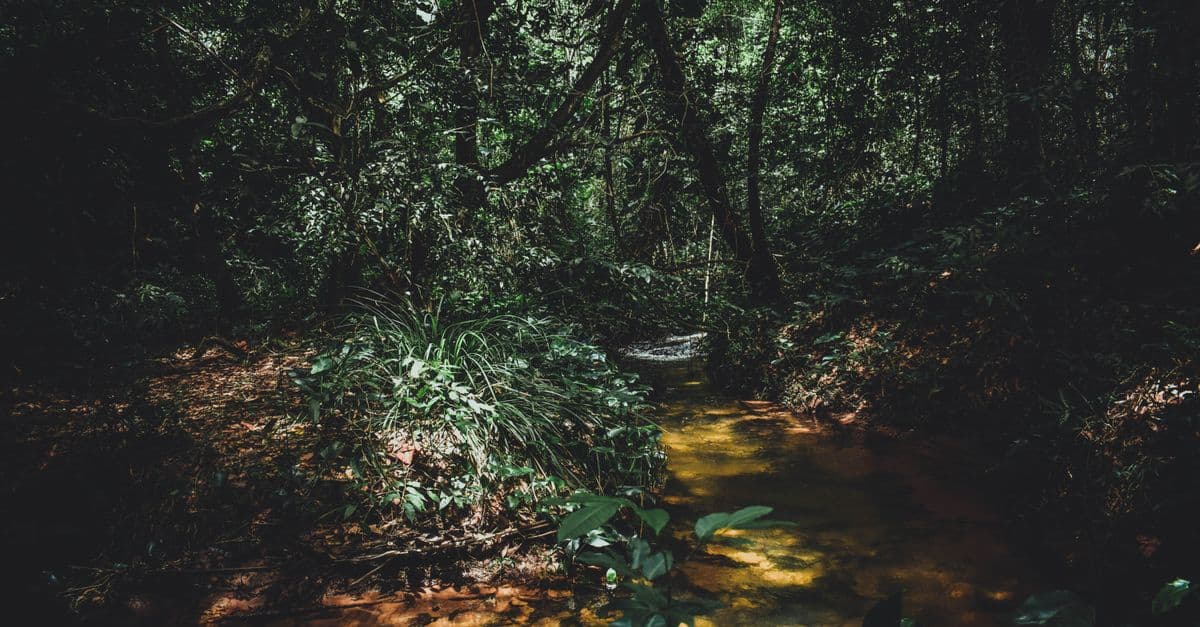
Photo: Matheus Natan / Pexels
Thought experiment. This article explores a hypothetical scenario for educational purposes. It is not a prediction, and nothing here should be read as advocacy or instructions. Every figure below is attributed to a published source, and where a number is our own arithmetic, it says so.
The Amazon basin drains about 7 million square kilometers (2.7 million square miles) across nine countries, and its forest covers roughly 5.5 to 6 million of them. One in ten known species on Earth lives there, an estimated 390 billion trees stand in it, and the forest produces about half of its own rainfall. If every tree vanished, the damage would not stay in South America: a huge carbon store would be released, rainfall patterns would shift, and a unique biological community would be gone. This article walks through what that would mean, and why scientists think the forest could fail long before it is fully cleared.
Why the Amazon isn't just a big park
Most people picture the Amazon as a very large park: trees, rivers, jaguars, done. That picture misses the part that makes it dangerous to lose. The Amazon behaves less like scenery and more like a machine with moving parts, one that manufactures its own weather and locks away carbon at the same time.
Here are the headline numbers, with their sources.
| Feature | Figure | Source |
|---|---|---|
| Area of drainage basin | About 7 million km² (2.7 million sq mi); forest area listed at 5.5 million km² | Wikipedia, Amazon rainforest |
| Individual trees | An estimated 390 billion, in about 16,000 species | Same |
| Share of known species | "One in ten known species in the world" | Same |
| Recorded vertebrates | About 2,200 fish, 1,294 birds, 427 mammals, 428 amphibians, 378 reptiles | Same |
| Aboveground carbon | 56.8 billion tonnes (a NASA GEDI study found 37 billion at coarser resolution) | Mongabay on MAAP analysis, 2024 |
| Share held by Indigenous peoples | About 29 percent of the Amazon bioregion | World Resources Institute |
The Wikipedia figures are a compilation of published counts, and the basin and forest areas in the article differ slightly depending on how the forest is delimited. Treat them as rough magnitudes, not precise totals.
The rainfall engine: a forest that waters itself
Think of the Amazon less like a sponge sitting passively in the landscape and more like a pump station that keeps a continent's plumbing running. Trees pull water from the soil and release it as vapor through their leaves, a process called transpiration (the plant equivalent of sweating). That vapor rises, forms clouds, and falls again as rain, often hundreds of kilometers downwind.
Lovejoy and Nobre, writing in Science Advances in 2018, put it this way: moisture is recycled five to six times as air crosses the basin, and the forest generates about half of its own rainfall (Lovejoy & Nobre, 2018). In other words, the same water droplet gets used again and again on its way west. Each pass depends on trees being there to lift it back into the air.
The moisture does not stay inside the basin. The Wikipedia summary of the research notes that forest moisture contributes to rainfall in Brazil, Paraguay, and Argentina (Wikipedia, Amazon rainforest). These atmospheric streams are often called "flying rivers." If you want the general physics of how water moves between land, air, and sea, see how the water cycle works.
An analogy helps here. Imagine a relay race in which each runner hands the baton to the next. Remove one runner near the start and the baton never reaches the runners at the finish. The Amazon's downwind regions are the late runners. They get less rain not because something changed there, but because an upstream hand-off failed.
How much carbon would be released?
Start with what is stored. The 2024 MAAP analysis put aboveground carbon at 56.8 billion tonnes. That number is carbon, not carbon dioxide (CO2). Each tonne of carbon burned or decomposed becomes about 3.67 tonnes of CO2, because of the weight of the added oxygen. Multiplying, 56.8 billion tonnes of carbon corresponds to roughly 208 billion tonnes of CO2. That is our own arithmetic, using a standard chemistry ratio, not a figure from the study.
Soil, roots, and dead wood hold additional carbon, and estimates of that amount vary widely, so this article does not give a single number for it. The better-sourced figure for a partial scenario comes from the World Resources Institute, which reports that scientists estimate deforesting about 20 percent of the Amazon could trigger large-scale dieback, releasing more than 90 billion tonnes of CO2 (WRI).
Two cautions matter for reading these numbers.
First, "stored" is not the same as "released and left in the air." Oceans and land plants absorb a large share of emitted CO2, so only a fraction of any release stays in the atmosphere in the long run. Second, timing matters. A release over years to decades adds to the atmosphere in a different way from a single pulse, and fire releases carbon faster than slow decay.
How would that compare with human emissions?
On the MAAP comparison, aboveground carbon alone is more than 1.5 times global emissions in 2023, as Mongabay phrased it. Converting to CO2 as above shows the stock is far larger than a year of human emissions when measured on the same basis. Either way, it is a large store that has been kept out of the air for centuries, and losing it would count against the remaining carbon budget that governs how much more CO2 humanity can emit and still meet its temperature goals. For the basic climate physics behind that budget, see climate change science and how it works.
A thought experiment in three time frames
Nobody has watched a whole rainforest disappear, so the following sequence is a reasoned scenario, not an observation. Each step is anchored to a mechanism documented in the research above.
The first years. Cleared or burned forest would release carbon quickly through fire and then more slowly as wood and litter rot. Fire is especially important. Lovejoy and Nobre describe a feedback in which widespread burning dries the surrounding forest and makes it more vulnerable to fire the following year (Lovejoy & Nobre, 2018).
The first decades. With fewer trees to lift water, rainfall would fall, especially in the south and east. The dry season has already been lengthening in the southern and eastern Amazon over the last two decades, with droughts in 2005, 2010, and 2015 to 2016 flagged as possible early signs of the tipping point. Forest that survives clearing would face more stress, which would make it burn more easily.
The longer term. Eastern and southern areas would be the most likely to shift toward savanna or degraded scrub. Whether the western Amazon, which receives moisture from upwind, would dry gradually or hold on depends on how much upwind forest remains. The research does not give a single date for a full transition, and that uncertainty is real.
The mechanism that could break the forest without a chainsaw
The most counterintuitive part of the Amazon story is that total destruction does not require clearing every hectare. Past a threshold, the forest can begin dismantling itself in a process called dieback.
The chain runs like this:
- Deforestation reduces transpiration, and therefore rainfall, in downwind areas.
- Less rain stresses the remaining forest, particularly in the dry season.
- Stressed, drier forest burns more easily, from lightning, escaped agricultural fires, or deliberate clearing.
- Burned areas often fail to regrow as forest and convert to savanna-like vegetation.
- Savanna releases far less water vapor, which dries the regional climate further.
That is a positive feedback loop, meaning each step reinforces the next. A snowball rolling down a slope is the classic image: the further it rolls, the more snow it picks up, so it grows faster instead of slowing down.
Where is the threshold?
The estimates have been tightening toward lower numbers. A first generation of models put the threshold near 40 percent deforestation. Lovejoy and Nobre argued in 2018 that combined effects of deforestation, warming, and fire point to a tipping point at 20 to 25 percent deforestation in the eastern, southern, and central Amazon, and recommended keeping deforested area below 20 percent as a safety margin. They also noted that many studies suggest 4 degrees Celsius of global warming alone would tip most of the central, southern, and eastern Amazon into degraded savanna (Lovejoy & Nobre, 2018).
In 2024, Flores and colleagues published a review in Nature examining critical thresholds for five major drivers of water stress. They estimated that 10 to 47 percent of Amazonian forests could be exposed to compounding disturbances by 2050 (Flores et al., "Critical transitions in the Amazon forest system," Nature 626:555–564, 2024).
In 2026, Wunderling and colleagues reported in Nature that deforestation of 22 to 28 percent of the Amazon, combined with 1.5 to 1.9 degrees Celsius of warming above preindustrial levels, could trigger a widespread shift to degraded forest and savanna, possibly as early as the 2040s. In their modeling, roughly two-thirds of the rainforest could be degraded or turn to savanna. Without further deforestation, a large-scale transition becomes likely only at about 3.7 to 4 degrees Celsius of warming, though up to 35 percent of the Amazon would still degrade. Co-author Arie Staal summarized the finding: "the more deforestation happens, the lower this global warming threshold becomes" (Mongabay, May 2026).
| Study | Threshold or finding | Year |
|---|---|---|
| Lovejoy & Nobre, Science Advances | Tipping point at 20 to 25 percent deforestation; 4 °C warming alone could tip most of the central, southern, and eastern Amazon | 2018 |
| Flores et al., Nature | 10 to 47 percent of forests exposed to compounding disturbances by 2050 | 2024 |
| Wunderling et al., Nature | 22 to 28 percent deforestation with 1.5 to 1.9 °C warming; as early as the 2040s | 2026 |
The numbers differ because the studies use different models and ask slightly different questions. They agree on the direction: the safe margin is narrower than once thought.
Where the Amazon actually stands today
The scenario is hypothetical, but the starting point is not. According to the Mongabay report on the 2026 study, about 17 to 18 percent of the Amazon is deforested (for how that compares with other countries' forest holdings, see countries with the most forest cover), and 1.5 degrees Celsius of warming is likely to be reached by 2030. The World Resources Institute reports that about 17 percent of Amazonian forest was lost over the past 40 to 50 years, with more than four-fifths of that land converted mainly to pasture.
Parts of the forest already leak carbon
A 2021 study in Nature by Gatti and colleagues used 590 aircraft vertical profiles of CO2 and carbon monoxide at four Amazonian sites between 2010 and 2018. Total carbon emissions were higher in the east than in the west, largely because of fire, and southeastern Amazonia was a net carbon source to the atmosphere even when fire emissions were excluded. The eastern region has seen more deforestation, warming, and moisture stress than the west over the past 40 years (Gatti et al., Nature, 2021).
The 2023 drought
In 2023, unusually high temperatures and dry air, especially from September to November, pushed the region from a carbon sink to a weak carbon source. A study led by Santiago Botía at the Max Planck Institute for Biogeochemistry estimated a release of 10 to 170 million tonnes of carbon, with reduced carbon absorption by plants accounting for up to 30 percent of the net carbon loss across tropical lands that year. Temperatures were about 1.5 degrees Celsius above the 1991 to 2020 average. Fire activity was within normal levels for 2003 to 2023, so fire was not the main driver (Max Planck Institute for Biogeochemistry).
That finding is important for a subtle reason. The forest did not burn. It simply stopped absorbing carbon as well, because heat and dryness weakened the trees.
Is the Amazon still a net sink overall?
For now, mostly yes. The MAAP analysis reported that the Amazon gained 64.7 million tonnes of aboveground carbon between 2013 and 2022, so it remains a net sink rather than a source. A gain of that size is small next to a 56.8 billion tonne stock, which is why a bad drought year can tip the balance.
What a drier continent would look like
Remove the forest's transpiration and the effects would not stop at the basin's edge. The following table summarizes what the research supports and where the evidence is thin.
| Region | Link to the forest | What the research supports |
|---|---|---|
| Eastern and southern Amazon | Direct rainfall recycling; already drying | Dry season lengthening over two decades; highest dieback risk |
| Western Amazon | Receives moisture carried west from upwind forest | Depends on how much upwind forest remains; no single projection |
| Brazil, Paraguay, Argentina | Forest moisture contributes to their rainfall | Rainfall would be expected to fall; the size of the change is uncertain |
| Global climate | Carbon store and water cycle | Large release possible; share that stays airborne is uncertain |
Agriculture and power are plausible casualties, since farming and hydropower in southern South America depend on rainfall. This article does not quote a specific percentage loss for crops or electricity, because the figures in the sources reviewed were not strong enough to cite. Treat claims of precise losses with caution.
For comparison with other planetary tipping scenarios, see what if the North Atlantic current stopped, which covers a different circulation system with its own thresholds.
What gets lost that can't come back
The Amazon is one of the most species-dense places on Earth. The compiled counts include at least 40,000 plant species and thousands of vertebrates, and the Wikipedia summary reports that about one in five bird species and one in five fish species are found there (Wikipedia, Amazon rainforest). Many are endemic, meaning they exist nowhere else, so losing the habitat means losing the species, not displacing it. For a ranking of where biodiversity concentrates, see countries with the most biodiversity.
The loss would also remove the base of the food web in a way that is hard to model. A tropical forest is a network in which insects pollinate, birds spread seeds, and fungi move nutrients between trees. To get a sense of how interlinked those networks are, what if all insects disappeared traces what happens when a single group vanishes.
Many Amazon species have never been formally described, so an unknown number of chemical compounds with medical or agricultural potential would vanish before anyone knew they existed. That argument is old, and it is also unquantified. No reliable count exists of how many such compounds the forest holds.
The people who live there, and what they protect
The Amazon is home to many Indigenous peoples. The WRI analysis reports that Indigenous people hold about 29 percent of the Amazon bioregion, and the Wikipedia summary lists more than 30 million people from 350 ethnic groups in the Amazon as a whole, with Indigenous peoples making up 9 percent of the population.
Their lands are not merely lived on; they protect the forest. According to the WRI analysis of 2001 to 2021 data, Indigenous-managed forests in the Amazon were a net carbon sink, removing about 340 million tonnes of CO2-equivalent per year after accounting for emissions. Nearly 94 percent of Indigenous forest area was a net sink. Per hectare, Indigenous forests emitted about 0.60 tonnes of CO2-equivalent per year, compared with 3.2 tonnes outside Indigenous lands. The authors say the benefit comes mainly from lower emissions, not higher removals, so protecting standing forest is the priority (WRI).
The MAAP analysis adds that protected and Indigenous lands hold about 61 percent of the densest carbon areas in the Amazon. A total loss of forest would erase one of the most effective conservation arrangements now operating in the basin, and the accumulated knowledge of the people who manage it.
Common misconceptions
"Loss means every tree is cut." The tipping-point research says otherwise. Past roughly 20 to 28 percent deforestation, depending on the study and the warming level, parts of the forest could convert to savanna through drought and fire without further direct clearing.
"The Amazon is only a carbon sink." That framing ignores the water cycle. The forest generates about half of its own rainfall, and losing that would be a regional water problem on top of a global carbon problem.
"The Amazon has already collapsed." The evidence does not say that. The MAAP analysis found a net gain in aboveground carbon from 2013 to 2022, and the 2023 shift to a weak carbon source came in an extreme drought year. What the research does say is that the margin is shrinking, and Carlos Nobre, commenting on the 2026 study, described the Amazon as "even closer to a tipping point."
"Replanting fixes it." Replanting can restore tree cover, but the full community of species, soil life, and old-growth structure takes far longer to return, and no single recovery time applies. The better-supported strategy is to prevent loss, since the carbon and species in standing forest are already in place.
"Technology can pull the carbon back out." Carbon removal technologies exist at small scale, and a feasibility discussion is in direct air capture: how it works, what it costs, and where it fits. Removing a release on the order of tens of billions of tonnes would be a task of a different magnitude.
Frequently asked questions
Q: How much carbon does the Amazon store? A: A 2024 analysis by Amazon Conservation's MAAP project estimated 56.8 billion tonnes of carbon in aboveground biomass, with Brazil holding 32.1 billion tonnes. A NASA GEDI study at coarser resolution found 37 billion tonnes. Soil and root carbon would add to those totals, but estimates vary widely.
Q: Does the Amazon really make its own rain? A: Largely, yes. Lovejoy and Nobre note that moisture is recycled five to six times as air crosses the basin, and the forest generates about half of its own rainfall. Forest moisture also contributes to rainfall in Brazil, Paraguay, and Argentina.
Q: How close is the Amazon to its tipping point? A: A 2026 Nature study found that deforestation of 22 to 28 percent combined with 1.5 to 1.9 degrees Celsius of warming could trigger widespread dieback, possibly as early as the 2040s. About 17 to 18 percent of the Amazon is already deforested, according to Mongabay's report on the study.
Q: Is the Amazon still absorbing carbon? A: On balance, yes. The MAAP analysis found a net gain of 64.7 million tonnes of aboveground carbon from 2013 to 2022. But parts of the southeast act as net carbon sources, and the whole region became a weak source during the 2023 drought.
Q: Would losing the Amazon cause runaway climate change? A: The sources reviewed do not support a single "runaway" outcome. A large carbon release would eat into the remaining carbon budget and add to warming from fossil fuels, but how much warming depends on how fast the carbon is released and how much the oceans and other land absorb. It would be a serious accelerant, not a standalone switch.
Q: Do Indigenous lands really protect the forest? A: According to the World Resources Institute, Indigenous-managed forests in the Amazon had lower deforestation rates than similar lands managed by others, and per-hectare emissions were about 0.60 tonnes of CO2-equivalent a year versus 3.2 tonnes outside Indigenous lands.
Q: What can be done about it? A: Researchers consistently point to reducing deforestation and limiting global warming, since the 2026 study found the tolerable warming threshold falls as deforestation rises. That is a research finding, not a policy prescription.
The takeaway
The Amazon is not just a large collection of trees sitting on top of a large amount of carbon. It is an integrated system that recycles its own rainfall, moves moisture toward neighboring countries, and shelters about one in ten known species. A total loss would release a store of carbon that, on one careful analysis, comes to 56.8 billion tonnes aboveground alone, and it would end a biological community that cannot be rebuilt on any human timescale. The most sobering finding is that the forest does not have to reach zero to fail. The best current estimates put the danger zone at 22 to 28 percent deforestation alongside 1.5 to 1.9 degrees of warming, and about 17 to 18 percent of the forest is already gone. How close that leaves the system to its edge is still being worked out, and the answer keeps moving closer.
Sources
- Lovejoy & Nobre, "Amazon Tipping Point," Science Advances, 2018: PMC5821491
- Mongabay, "Deforestation and warming could push Amazon to tipping point by 2040s" (reporting Wunderling et al., Nature, 2026): news.mongabay.com
- Mongabay, "Clearest picture yet of Amazon carbon density" (MAAP analysis, 2024): news.mongabay.com
- Max Planck Institute for Biogeochemistry, 2023 drought and carbon source study: bgc-jena.mpg.de
- World Resources Institute, Amazon carbon and Indigenous forests: wri.org
- Gatti et al., Nature, 2021, and Flores et al., Nature, 2024, as linked in the text.
- Wikipedia, Amazon rainforest, for compiled species and area figures: wikipedia.org
Read next:
Follow new articles
Add SciHub101 to your feed reader to see new science and technology stories.
About the Author
SciHub101 is an independent science and technology publication founded and edited by Buğra Sözeri, a software engineer and app developer based in Türkiye. AI tools assist with drafting and research. Source documentation in the existing archive is uneven, and articles are being reviewed and corrected. The Editorial Team byline identifies editorial responsibility; it does not certify specialist or independent human review. Where we compare products, anything built by our own team is labelled as such — see the editorial guidelines and About page for how corrections and disclosures work.
Related Articles
What If We Could See in All Wavelengths of Light?
Human eyes detect a tiny slice of the electromagnetic spectrum — visible light. If we could see ultraviolet, infrared, microwaves, X-rays, and radio waves simultaneously, the world would become a chaotic visual feast revealing hidden information at every wavelength.
What If Humans Never Discovered Fire?
Fire transformed humanity. It allowed cooking — which expanded our diet, shrank our guts, and grew our brains. It enabled metallurgy, ceramics, glass, and ultimately civilization itself. Without it, our species would be smaller, weaker, less intelligent, and forever stuck in the Stone Age.
The Amazon Rainforest: Earth's Lungs Explained by Science
The Amazon is not Earth's oxygen factory, but it stores vast carbon and recycles rain across a continent. Here is what the evidence says about deforestation, drought, and tipping points.
The Biodiversity Collapse: Why Species Are Vanishing Faster
Species are disappearing tens to hundreds of times faster than the long-run average, and monitored wildlife populations have fallen by about three-quarters since 1970. Here is what the numbers mean, what drives the loss, and what has worked.

What If All Bees Disappeared?
Bees pollinate $235B in crops yearly. If they vanished, almonds, apples, and coffee would collapse — but humanity wouldn't starve. Here's why.
What If the North Atlantic Current Stopped?
The North Atlantic Current (part of the Gulf Stream system) carries warm tropical water northward, keeping Europe mild and habitable. If it stopped due to freshwater influx or climate change, Europe would plunge into ice-age conditions within decades — while other regions experience opposite effects.