What If We Could See in All Wavelengths of Light?
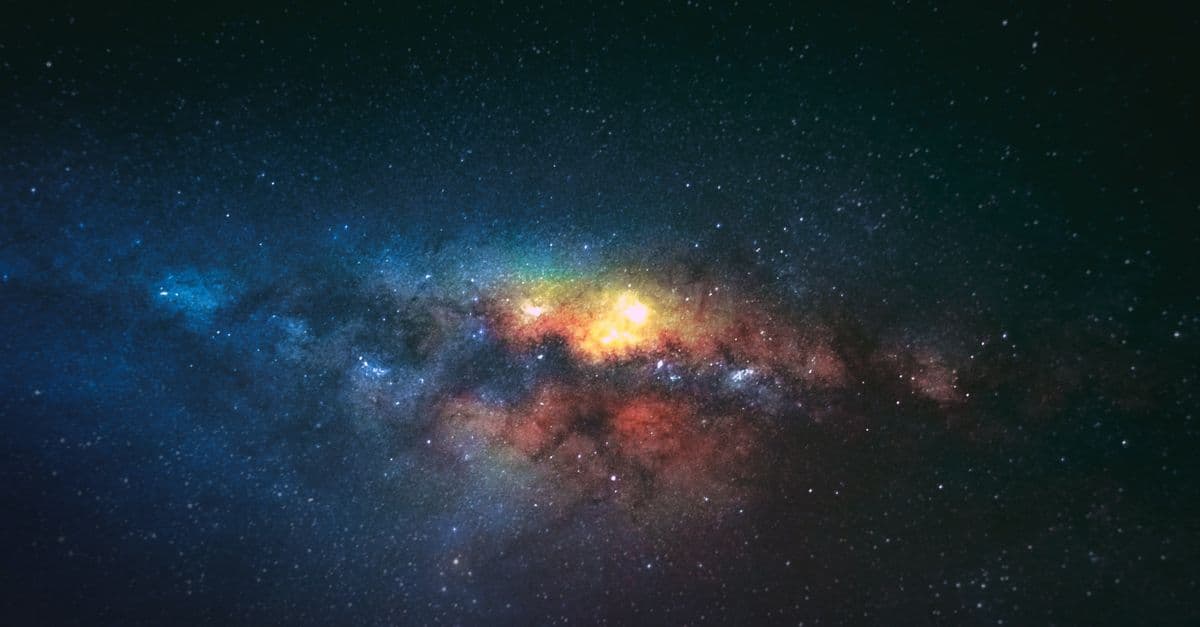
Photo: Rafael Cerqueira / Pexels
Human vision spans roughly 380 to 700 nanometers, the narrow rainbow from violet to red that eye scientists call the "visible window" (Evident Scientific, human vision and color perception). That band is a sliver of the full electromagnetic spectrum, which runs from gamma rays with wavelengths smaller than an atomic nucleus to radio waves that stretch for kilometers. This is a thought experiment, not a prediction: what would happen if a human being could see the entire spectrum at once, and why can't we?
Thought experiment. This article explores a hypothetical scenario for educational and speculative purposes. The events described are not predictions and should not be interpreted as warnings, advocacy, or instructions.
Every region of the electromagnetic spectrum carries different physical information, from the heat radiating off a coffee mug to the crushing gravity around a supernova. About 20 km wide but containing more mass than the Sun.">neutron star. Stacking all of it onto a single visual system would mean either an extraordinary upgrade to human perception or, more plausibly, a sensory overload that no known nervous system could survive intact.
Key takeaways
- Visible light occupies roughly 380 to 700 nanometers, a slice of the electromagnetic spectrum that spans about 24 orders of magnitude in wavelength.
- Each band of the spectrum encodes different physics: chemistry and fluorescence in ultraviolet, heat in infrared, dense matter in X-rays, nuclear processes in gamma rays.
- The human eye's own hardware (a UV-absorbing lens, three cone pigments tuned to narrow peaks) hard-limits what we can detect, independent of any brain capacity.
- Some animals push past our range at the margins: birds and bees detect near-ultraviolet, pit vipers "see" infrared heat with a non-visual organ, and mantis shrimp carry the most elaborate photoreceptor set known in the animal kingdom.
- True simultaneous full-spectrum vision is not just a hardware problem. Different wavelengths require fundamentally different detection physics (photon absorption by pigments, thermal radiometry, ionization), so no single organ built from cell membranes could plausibly register the whole spectrum at once.
Why the visible window is so narrow in the first place
Vision starts with a photon striking a pigment molecule and triggering a chemical change the nervous system can read. In human rod and cone cells, that molecule is built around retinal, a derivative of vitamin A bound to a protein called opsin. Retinal only isomerizes, meaning it only flips its molecular shape in a way that triggers a nerve signal, when it absorbs a photon in a fairly narrow energy range. Rhodopsin, the pigment used by rod cells for low-light vision, peaks in sensitivity around 505 nanometers (Evident Scientific). The three cone pigments that give humans color vision peak at roughly 419 nanometers (short wavelength, perceived as blue), 531 nanometers (medium, green), and 558 nanometers (long, red) (Evident Scientific). Outside that narrow band, on both the shorter and longer ends, photons either pass straight through the retina without being absorbed or carry too little or too much energy for the retinal molecule's chemistry to work.
A second limit sits in front of the retina entirely: the lens. The human lens is transparent to visible light but strongly absorbs ultraviolet radiation, which is a protective feature, since UV photons carry enough energy to damage proteins and DNA in the retina. People who have cataract surgery, in which the clouded natural lens is replaced with a synthetic intraocular lens, sometimes report a genuine expansion of what they can see. Some artificial lenses transmit a little more near-ultraviolet light than a natural lens does, so patients occasionally describe a faint violet or whitish tinge to light sources like fluorescent bulbs that they couldn't detect before surgery. This is a well-documented, if modest, real-world glimpse of what happens when you remove one biological filter on human vision.
A third constraint has nothing to do with chemistry and everything to do with geometry. Radio waves have wavelengths measured in centimeters to kilometers. A structure has to be at least comparable in size to a wave to interact with it efficiently (this is the same principle that makes a satellite dish large and a Wi-Fi antenna tiny by comparison). A retinal cell is a few micrometers across, many orders of magnitude smaller than even the shortest useful radio wavelength, so no biological "radio retina" built from ordinary cells could resolve an image in that band without being absurdly, impossibly large.
What each wavelength would actually show you
If you could bolt every known detection method onto a single visual system, here's roughly what would flood in, organized from the longest wavelengths to the shortest.
Table: What full-spectrum vision would reveal, band by band
| Band | Approximate wavelength | What it comes from | What you would "see" |
|---|---|---|---|
| Radio waves | ~1 mm to 100,000 m | Wi-Fi routers, cell towers, broadcast antennas, pulsars, galactic gas | Every phone and router glowing, the sky streaked with pulsar flashes |
| Microwaves | ~1 mm to 1 cm | Cosmic microwave background, radar, satellite links, microwave ovens | A faint uniform glow (2.725 K) filling the entire sky, plus bright radar and satellite beacons |
| Infrared | ~700 nm to 1 mm | Body heat, engines, sunlight, the Earth itself | Every warm body glowing, camouflage by color rendered useless |
| Visible | ~380 to 700 nm | Reflected sunlight, LEDs, flames | What you already see today |
| Ultraviolet | ~10 to 380 nm | Sun, lightning, black lights | UV floral "nectar guides," sunburned skin lighting up |
| X-rays | ~0.01 to 10 nm | Medical scanners, accretion disks, solar corona | Bones visible through skin, hospitals blazing with radiation sources |
| Gamma rays | less than 0.01 nm | Nuclear reactions, gamma-ray bursts, radioactive decay | Distant cosmic flashes, reactor cores and isotopes glowing |
Wavelength boundaries are approximate; the electromagnetic spectrum is a continuum without hard cutoffs between bands.
Radio waves: the sky filled with human chatter
Radio is the longest-wavelength region and, on Earth, is dominated by artificial sources: Wi-Fi routers, cell towers, broadcast antennas, GPS satellites, and Bluetooth devices. If you could see this band, ordinary domestic life would look like a light show, with every router glowing continuously and every phone flaring each time it pings a tower. Astronomically, radio vision would reveal the diffuse glow of cold hydrogen gas tracing out the spiral arms of the Milky Way and the sharp, rhythmic flashes of pulsars, rapidly spinning neutron stars that sweep beams of radio emission across the sky like a lighthouse.
Microwaves: the oldest light in the universe
Just above radio in energy sits the microwave band, home to the cosmic microwave background (CMB), the leftover radiation from roughly 380,000 years after the Big Bang, when the universe first became transparent to light. NASA's Far Infrared Absolute Spectrophotometer instrument aboard the COBE satellite measured this radiation's temperature at 2.725 kelvin with a precision of 0.03%, confirming it matches the spectrum of a near-perfect blackbody (NASA Science, COBE mission). Arno Penzias and Robert Wilson first detected this signal by accident in 1964 while testing a radio antenna in New Jersey, initially mistaking the faint, uniform hiss for interference from pigeon droppings before realizing they had stumbled on relic light from the early universe (Wikipedia, discovery of the cosmic microwave background). With microwave vision, the entire sky, day or night, would carry a faint, perfectly uniform glow, the oldest light that exists, sitting behind everything else you look at.
Infrared: a world made of heat
Infrared sits just past red on the spectrum and is emitted by anything with a temperature above absolute zero, which in practice means everything: people, animals, engines, sidewalks that baked in the sun. This is the wavelength range that thermal cameras already exploit, and it's the one modest overlap the animal kingdom has with our hypothetical full-spectrum eye. Pit vipers, boas, and pythons have evolved a genuinely separate heat-sensing organ, the facial pit, that operates through the ion channel TRPA1, the most heat-sensitive vertebrate protein channel yet identified (Nature, "Molecular basis of infrared detection by snakes"). This channel isn't a photoreceptor at all; it detects the physical warming of the pit membrane by radiant heat rather than absorbing infrared photons the way a retinal pigment absorbs visible ones. Different pit-bearing species have tuned this channel to different thresholds, roughly 28°C in rattlesnakes and 33°C in pythons, compared to about 37°C in related snakes that lack the pit organ entirely (ResearchGate, "Infrared Snake Eyes: TRPA1 and the Thermal Sensitivity of the Snake Pit Organ"). If your own eyes worked this way, faces, hands, and any warm-blooded animal would glow with visible heat, and something as simple as an open refrigerator door would stand out as a dark, cold rectangle against a warm kitchen.
Ultraviolet: the hidden signage of the natural world
Just past violet sits ultraviolet, where the physics shifts from thermal radiation back to photon absorption by specific molecules, similar in principle to visible light but with more energetic photons capable of breaking chemical bonds. Many flowers carry ultraviolet patterns, often called nectar guides, that are completely invisible to unaided human eyes but visible to the pollinators the plant is trying to attract. Birds see this range too: bird color vision runs on four cone types rather than three, with the fourth tuned to violet or ultraviolet depending on the species, and researchers estimate this tetrachromatic system lets birds discriminate roughly 100 million colors compared to about one million for a typical human trichromat (Arcadia Bird, "Tetrachromacy a powerful tool"; PMC, "Ultraviolet vision in birds: the importance of transparent eye media"). Bird UV sensitivity isn't decorative. Studies show that experimentally blocking UV wavelengths changes mate-choice outcomes even in species that already look colorful to human observers, meaning the UV signal is doing real communicative work that we simply can't perceive (ScienceDirect, "Ultraviolet vision in birds: What is its function?").
X-rays and gamma rays: matter and the nucleus laid bare
Past ultraviolet, photon energy climbs fast enough to start ionizing atoms rather than just exciting them, which is why these bands are handled by dedicated instruments (medical scanners, security screening, space telescopes) rather than anything resembling an eye. X-ray vision would reveal dense structures like bone and metal glowing through soft tissue, along with medical equipment and the corona of the Sun, which radiates strongly in X-rays due to its multi-million-degree plasma. Gamma rays sit at the extreme high-energy end and originate from nuclear processes: radioactive decay, nuclear reactors, and violent cosmic events called gamma-ray bursts, some of the most energetic explosions known, thought to be triggered by the collapse of massive stars or the merger of neutron stars. Both bands are also dangerous. The photon energies involved are high enough to damage or mutate DNA directly, which is precisely why biological tissue is built to be blind to them rather than sensitive to them.
What full-spectrum vision would actually feel like
Assume, for the sake of the thought experiment, that some engineered visual system could physically register every one of these bands at once. The immediate problem wouldn't be detection, it would be processing. Human color vision already runs on a comparatively modest input: three cone types feeding a visual cortex that's spent millions of years of evolution learning to compress that data into fast, efficient object and motion recognition. Layering in dozens of additional, physically unrelated channels, each requiring different physics to interpret, would multiply the raw data stream by orders of magnitude.
Think of it the way an audio engineer thinks about channels. A stereo recording carries two channels and your brain effortlessly locates a voice in a room. A film sound mix might carry seven or more channels, and mixing engineers spend careers learning to keep that comprehensible. Full-spectrum vision would be less like adding a few more channels and more like trying to listen to a hundred simultaneous orchestras, each playing a piece written in a musical notation your ears have never learned. There is no obvious reason to think the "listening" itself would even be coherent, let alone useful.
There's also the raw energy problem. Sunlight carries far more total energy outside the visible band than within it, especially in infrared. A full-spectrum eye exposed to daylight wouldn't just see a brighter version of today's world, it would be swamped, similar to opening every window, running every speaker, and turning on every light in a house simultaneously and calling the result "seeing better."
How does the mantis shrimp's vision compare to a hypothetical full-spectrum human eye?
Mantis shrimp are often cited as the closest real-world example, with 12 to 16 distinct photoreceptor types compared to a human's three, spanning deep ultraviolet through visible light and including sensitivity to polarized light (Discover Magazine, "Rainbow Shrimp Vision"). Counterintuitively, research published in Science found mantis shrimp are worse than humans at distinguishing similar colors, because rather than blending signals from overlapping receptors the way human trichromatic vision does, mantis shrimp appear to scan a scene and identify a color category quickly rather than finely discriminating between close shades (Science, "A Different Form of Color Vision in Mantis Shrimp"). More receptors, in other words, bought speed rather than precision, a genuinely useful trade for a predator that strikes prey in milliseconds. It's a useful corrective to the instinct that "more channels equals better vision:" mantis shrimp are the real-world proof that adding receptor types doesn't automatically scale up perceptual quality, and their brains appear to have specialized for rapid categorization instead of the kind of continuous color blending human brains perform.
Why we don't see the whole spectrum, and how science built substitutes instead
Evolution builds sensory systems around what's useful and available, not what's theoretically possible. Visible light dominates because it's the band the Sun emits most strongly in and the band that passes cleanly through Earth's atmosphere and through water, which matters enormously for a species (and its evolutionary ancestors) that spent hundreds of millions of years living in and near water. There was no evolutionary pressure to also detect gamma rays, because almost none reach the surface, and no pressure to see radio waves, because for most of the history of life on Earth there was no meaningful radio signal to detect at all; the modern radio environment is barely a century old.
Instead of evolving new organs, humans built external instruments that do the translating for us, and this turns out to be a far more practical solution than trying to reengineer an eyeball. Radio telescopes convert radio-wavelength signals into images astronomers can interpret visually. Thermal cameras render infrared as a false-color visible image, the basis of night-vision and search-and-rescue technology. Medical X-ray machines and CT scanners do the same for X-ray absorption. Multispectral satellites, the kind used in agriculture and environmental monitoring, typically capture four to ten broad bands including red, green, near-infrared, and red-edge wavelengths, while hyperspectral sensors go further still, capturing 50 to 250 or more narrow bands only 5 to 10 nanometers wide each to build a detailed spectral fingerprint of every pixel in a scene (V2 Solutions, "Multispectral & Hyperspectral Imagery in Agriculture"). Farmers use this data to catch crop disease and nutrient deficiency before it's visible to the naked eye, essentially outsourcing a kind of full-spectrum vision to a satellite rather than to a human retina.
What animal actually sees the widest range of light?
No single animal sees the full electromagnetic spectrum, but mantis shrimp come closest in terms of raw receptor diversity, with 12 to 16 photoreceptor types spanning deep ultraviolet, visible light, and polarized light (Discover Magazine). Snakes with facial pits extend into infrared using a completely separate, non-visual heat-sensing organ rather than an eye.
Could a cataract surgery patient really see ultraviolet light?
Some intraocular lenses used to replace a clouded natural lens transmit slightly more near-ultraviolet light than the eye's original lens did, and some patients report seeing a faint violet or whitish tinge from UV-emitting sources they couldn't detect before. This is a real, modest expansion of the visible range, not a jump into deep ultraviolet vision.
Why can't the human eye see radio waves?
Radio wavelengths, from about a millimeter up to many kilometers, are far larger than a retinal cell, which is only a few micrometers across. A structure needs to be roughly comparable in scale to a wave to detect it efficiently, so no eye built from ordinary-sized cells could resolve a radio-wavelength image, regardless of how the underlying photoreceptor chemistry worked.
Is the cosmic microwave background really visible everywhere in the sky?
Yes. The CMB is a nearly uniform 2.725-kelvin glow that fills the entire observable sky, a relic of light released about 380,000 years after the Big Bang when the universe first became transparent, confirmed to high precision by NASA's COBE satellite (NASA Science).
Do bees and birds actually see colors humans can't imagine?
They see wavelengths humans can't detect, particularly ultraviolet, but describing the subjective experience as a "color humans can't imagine" goes beyond what the biology tells us. What's measurable is that bird tetrachromacy roughly quadruples the theoretical color-discrimination space compared to human trichromacy, and that removing UV wavelengths experimentally changes real behaviors like mate selection (ScienceDirect).
Why do X-rays and gamma rays damage tissue instead of just being "seen"?
Photon energy increases as wavelength shortens. X-ray and gamma-ray photons carry enough energy to knock electrons loose from atoms and molecules, a process called ionization, which can break chemical bonds in DNA and other cellular machinery. That destructive potential is exactly why biological tissue evolved to be blind to these bands rather than sensitive to them.
What's the practical difference between multispectral and hyperspectral imaging?
Multispectral sensors typically capture 3 to 10 relatively wide spectral bands, such as red, green, blue, and near-infrared, which is sufficient for most everyday remote-sensing tasks. Hyperspectral sensors capture 50 to 250 or more narrow, contiguous bands only a few nanometers wide each, producing a far more detailed spectral signature useful for detecting subtle differences like early-stage crop disease (V2 Solutions).
Would full-spectrum vision make camouflage useless?
Within the infrared band specifically, yes, in large part. Camouflage that matches visible-light coloring does nothing to hide a heat signature, which is exactly why thermal cameras can spot a warm body against a cool background even when it's invisible in ordinary light. Extending detection into other bands like radio or X-ray wouldn't meaningfully improve on this, since most everyday objects don't emit strongly or differently in those ranges.
What people get wrong about "seeing more"
The most common misconception is treating full-spectrum vision as strictly additive, as though every new band would layer neatly on top of what we already perceive, like adding more megapixels to a camera. The mantis shrimp research is the clearest real-world rebuttal to that idea: more receptor types measurably did not translate into finer color discrimination, and in some respects performed worse than human trichromatic vision at telling similar hues apart (Science). Receptor count and perceptual quality are not the same thing, and a brain has to do real interpretive work to turn raw receptor signals into anything resembling a coherent picture.
A second common error is assuming "seeing" a wavelength band is a single unified kind of act across the spectrum. It isn't. Visible and ultraviolet vision rely on photon absorption by a pigment molecule. Pit-organ infrared detection in snakes relies on a completely different mechanism, radiant heating of a membrane sensed through an ion channel, not photon absorption at all (Nature). X-ray and gamma-ray detection would require yet another mechanism entirely, since at those energies you're dealing with ionization rather than the gentle molecular shape-changes that visible-light vision depends on. There is no single biological pathway that scales smoothly across all of these physics, which is a big part of why "full-spectrum vision" is a thought experiment rather than an engineering roadmap.
A third mistake is imagining full-spectrum vision as a pure upgrade with no downside. Every wavelength band beyond the visible either carries too little usable spatial information (radio, microwave), too much destructive energy (X-ray, gamma-ray), or would simply overwhelm existing sunlight-dominated infrared imaging with heat noise. Evolution converged on the visible window not out of limitation alone but because it represents close to the practical optimum: strong solar output, good atmospheric and water transparency, and photon energies gentle enough to detect without being damaged in the process.
The takeaway
Full-spectrum vision is a genuinely useful thought experiment precisely because it fails: the visible window we're stuck with isn't an arbitrary evolutionary accident but close to the best trade-off available given the Sun's output, Earth's atmosphere, and the chemistry of biological tissue. Every other band demands a fundamentally different detection mechanism, from ion channels sensing radiant heat to instruments that count ionizing photons, which is exactly why no single eye could plausibly do it all. What humans actually did instead was smarter than evolving new eyes: we built radio telescopes, thermal cameras, X-ray scanners, and hyperspectral satellites that each translate one slice of the spectrum into something our existing visible-light eyes can already interpret. We didn't need to see everything. We needed instruments that could see for us, and then hand the results back in a language our three cone types already speak.
Read next:
Follow new articles
Add SciHub101 to your feed reader to see new science and technology stories.
About the Author
SciHub101 is an independent science and technology publication founded and edited by Buğra Sözeri, a software engineer and app developer based in Türkiye. AI tools assist with drafting and research. Source documentation in the existing archive is uneven, and articles are being reviewed and corrected. The Editorial Team byline identifies editorial responsibility; it does not certify specialist or independent human review. Where we compare products, anything built by our own team is labelled as such — see the editorial guidelines and About page for how corrections and disclosures work.
Related Articles
What If Cosmic Expansion Suddenly Reversed?
The universe has been expanding for 13.8 billion years, and dark energy is currently accelerating that expansion. If it suddenly reversed and the universe began contracting, we would be heading toward a 'Big Crunch' — but the change would be too slow for any individual to notice.

What If the Amazon Rainforest Disappeared?
The Amazon holds tens of billions of tonnes of carbon, makes about half of its own rainfall, and shelters roughly one in ten known species. Here is what a total loss would set in motion, and why the forest may not need to be fully cleared to fail.

What If Gravity Was Twice as Strong? — Science Explained
What would actually happen if gravity suddenly doubled? Your skeleton would fracture under your own weight, the atmosphere would compress into a dense killing fog, and tall buildings would collapse. But life could still evolve — just very differently.

What If Gravity Suddenly Became 10% Weaker?
Lower gravity sounds like a fitness boost — but the consequences would cascade through the planet, the climate, and life itself in ways most people don't expect.

How Animals See the World Differently: UV, Infrared, and Polarized Light
A dog's world is not black-and-white, it is blue and yellow. Bees and many songbirds see ultraviolet patterns that are invisible to us. Pit vipers image heat. Mantis shrimp carry 12 to 16 photoreceptor types but use them in an unexpected way. Every animal lives inside a visual world shaped by which wavelengths mattered most to its ancestors.
How Glasses Work — Correcting Vision Explained
How glasses, contacts, and laser surgery correct myopia, hyperopia, astigmatism, and presbyopia — the physics and biology of clear vision.