What If You Removed All the Empty Space from Matter?
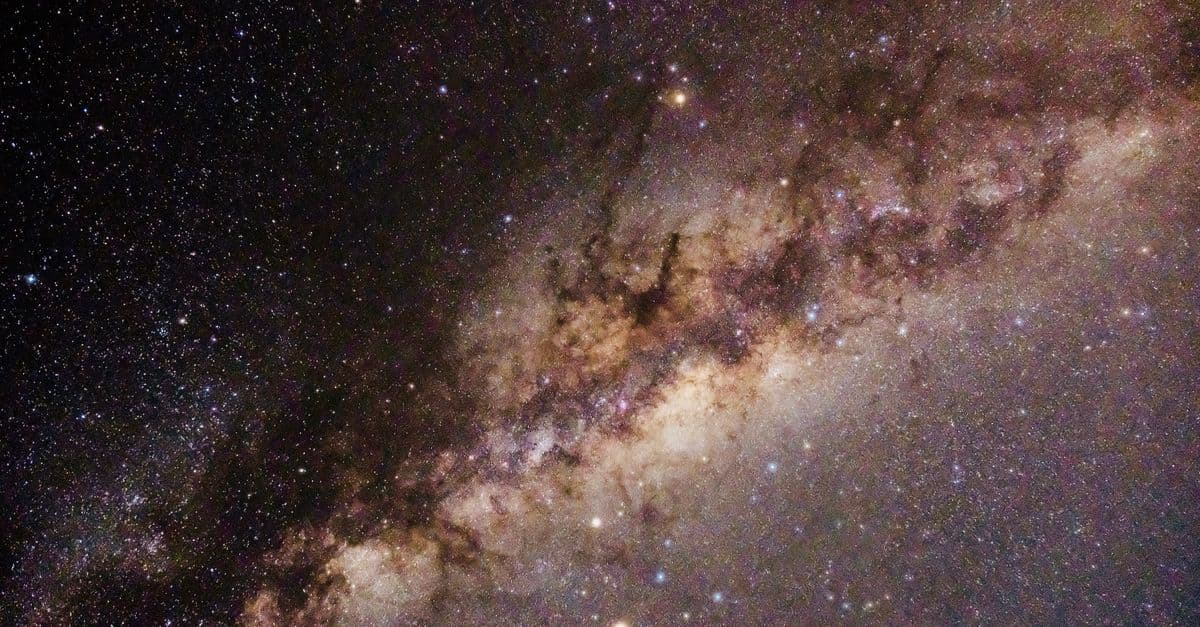
Photo: Marek Piwnicki / Pexels
Here is a fact that defies intuition: almost all of an atom's volume holds no particles at all. If you could remove all the empty space from matter, squeezing every nucleus against its neighbors, the solid floor under you would shrink by a factor of trillions, and all eight billion people on Earth would fit into something close to a sugar cube. That does not happen in daily life, and the reasons reveal some of the strangest physics we know. This article does the arithmetic, explains what stops it, and shows where the universe does it anyway.
Thought experiment. This article explores a hypothetical scenario for educational and speculative purposes. The events described are not predictions and should not be interpreted as warnings, advocacy, or instructions.
The answer connects a 1911 experiment with gold foil to white dwarfs, neutron stars, and the detection of colliding stars by gravitational waves.
Key takeaways
- A hydrogen nucleus has roughly 1/63,000 the radius of the atom around it, so the nucleus fills only a tiny fraction (around four parts in 10^15) of the atom's volume.
- If you squeezed the matter in all of humanity to the density of an atomic nucleus, it would occupy about 1.5 to 2.2 cubic centimeters, close to a sugar cube.
- Ordinary matter resists compression because electrons are fermions that obey the Pauli exclusion principle, and because of electric forces. This is what keeps solids solid.
- Gravity can beat that resistance. White dwarfs are supported by electron degeneracy pressure, and neutron stars by neutron degeneracy pressure, and a sugar cube of neutron-star material would weigh about a billion tons.
- "Empty space" is a loose phrase. The electron cloud and the electromagnetic field fill the region, and even a proton is not a solid ball.
How empty is an atom, really?
Before 1911, the leading picture was J.J. Thomson's "plum pudding" model, proposed after he discovered the electron in 1897. It imagined electrons embedded in a diffuse blob of positive charge, like raisins in a pudding. In that picture the atom was roughly as large as the stuff in it, with no sharp distinction between matter and space.
The turning point came from an experiment run by Hans Geiger and Ernest Marsden in Rutherford's lab in Manchester. They fired alpha particles (helium nuclei) at a thin metal foil. Almost all passed straight through, but a few bounced back. According to a historical timeline of the experiments, the 1909 results showed that about 1 in 8,000 alpha particles was deflected through more than 90 degrees in the platinum measurements. Rutherford later described the result as the most incredible event of his life, comparing it to firing a 15-inch shell at tissue paper and having it come back to hit you. By May 1911 he had published the nuclear model: a tiny, dense, positively charged core with the electrons far away. Our guide to the Rutherford gold foil experiment walks through the apparatus step by step.
The numbers for hydrogen
Hydrogen is the cleanest case. According to NIST's 2022 CODATA values, the proton's root-mean-square charge radius is 8.4075 × 10^-16 meters, or about 0.84 femtometers (a femtometer is 10^-15 meters). The Bohr radius, the most probable distance of the electron in a ground-state hydrogen atom, is 5.29 × 10^-11 meters, or 52.9 picometers.
Divide one by the other and you get about 63,000. The electron's typical distance is roughly 63,000 times the radius of the nucleus. Because volume scales with the cube of radius, the nucleus occupies about 1 part in 2.5 × 10^14 of the volume of a sphere with the Bohr radius. That is around 4 × 10^-15 of the volume, or about 4 × 10^-13 percent.
A scaling analogy makes this concrete. Blow the proton up until it is a marble about 2 centimeters across. On that scale the electron would most likely be found about 630 meters away, so the atom would span well over a kilometer. In between, there is no matter that we know of, only the electron's wave function and the electromagnetic field.
| Quantity | Value | Source |
|---|---|---|
| Proton rms charge radius | 8.4075 × 10^-16 m | NIST, CODATA 2022 |
| Bohr radius | 5.2918 × 10^-11 m | NIST, CODATA 2022 |
| Ratio of radii | About 63,000 to 1 | Calculated |
| Nucleus share of atomic volume (hydrogen) | About 4 × 10^-15 | Calculated |
Heavier atoms have larger nuclei, so the fraction is higher, but it stays vanishingly small. Whichever way you measure it, the old "99.9999 percent empty" slogan understates the case. The more accurate statement is that nearly all of an atom's volume lies outside its nucleus.
Doing the arithmetic: how small would humanity become?
Nuclear matter has a remarkably uniform density. Experiments, mostly electron scattering from heavy nuclei such as lead-208, give a saturation density of about 0.16 nucleons per cubic femtometer, which corresponds to roughly 2.3 × 10^14 grams per cubic centimeter, or 2.3 × 10^17 kilograms per cubic meter, as quoted in reviews of dense matter in compact stars. Different ways of converting 0.16 nucleons per cubic femtometer to mass give values up to about 2.7 × 10^17, so treat the density as accurate to within about 20 percent.
Now we need the mass of humanity. Researchers at the London School of Hygiene and Tropical Medicine estimated that global adult biomass was about 287 million tonnes in 2005, with an average adult body mass of 62 kilograms. Using roughly 8 billion people and an average of 50 to 62 kilograms each (children weigh less), the total comes to about 4 × 10^11 to 5 × 10^11 kilograms.
Volume equals mass divided by density:
- At 4 × 10^11 kg and 2.7 × 10^17 kg/m^3, the volume is about 1.5 × 10^-6 cubic meters, or 1.5 cm^3.
- At 5 × 10^11 kg and 2.3 × 10^17 kg/m^3, the volume is about 2.2 × 10^-6 cubic meters, or 2.2 cm^3.
That is a cube roughly 1.1 to 1.3 centimeters on a side. All of humanity, with every bone, brain, and bank account, would fit in something close to a sugar cube, and the cube would weigh as much as all of us do now: about 400 to 500 million tonnes. These are order-of-magnitude figures, because the average mass of a person and the exact nuclear density both carry uncertainty.
Why the sugar cube would not just sit there
The thought experiment has a catch. A block of bare nuclear matter would be wildly unstable. Its own surface gravity would be enormous: by my arithmetic, a 4 × 10^11 kg ball with a radius of about 0.7 centimeters would pull at its surface with an acceleration of tens of thousands of g. More importantly, nothing on Earth would hold it together. Physicists expect that neutron-rich matter is bound only when the gravity of a star pushes on it from outside, which is exactly what happens inside a supernova. About 20 km wide but containing more mass than the Sun.">neutron star. Free of that pressure, such matter would be expected to fly apart. So the sugar cube is a calculation, not a recipe.
Scaling the idea up to planets and stars
The same division works for anything with a known mass. Earth's mass is about 5.97 × 10^24 kilograms. At 2.3 × 10^17 kilograms per cubic meter, that fits in about 2.6 × 10^7 cubic meters, a sphere roughly 370 meters across, which is about as wide as a few city blocks. The Sun's mass, about 1.99 × 10^30 kilograms, would fill a sphere with a radius of about 12.7 kilometers, or roughly 25 kilometers across.
That last number deserves a second look. It is close to the roughly 20 kilometers NASA gives for a real neutron star. A neutron star is, to a first approximation, a star's worth of material squeezed to the density of a nucleus. The sugar-cube arithmetic is not a parlor trick; it describes objects that exist.
| Object | Mass (kg) | Size if squeezed to nuclear density |
|---|---|---|
| All of humanity | About 4 × 10^11 to 5 × 10^11 | A cube roughly 1.1 to 1.3 cm on a side |
| Earth | About 5.97 × 10^24 | A sphere about 370 m across |
| The Sun | About 1.99 × 10^30 | A sphere about 25 km across |
Calculated here from a nuclear density of 2.3 × 10^17 kg/m^3. A density of 2.7 × 10^17 would make each size about 5 percent smaller in linear dimension.
Why you cannot actually squeeze matter this way
If atoms are so empty, why can you not push your hand through a table, and why does a block of iron not collapse into a dot? The usual answer, "the electrons repel each other," is true but incomplete.
Two ingredients: electricity and the exclusion principle
When two atoms approach, their electron clouds overlap and the negative charges repel. That is electromagnetic repulsion, and it is a big part of why surfaces feel solid. But it is not the whole story, and it does not explain why matter as a whole does not collapse. Atoms are neutral; the positive nucleus attracts electrons just as strongly as it repels other nuclei. Something else must stop electrons from piling closer and closer around the nuclei.
That something is the Pauli exclusion principle, proposed by Wolfgang Pauli in 1925: no two electrons (or other identical fermions) can occupy the same quantum state. A quantum state is specified by energy, momentum, spin, and other properties. If you squeeze electrons into a smaller volume, the available low-energy states fill up, and the extra electrons must occupy higher-energy states with greater momentum. The system pushes back. Think of seats in a theater: if every seat in the front rows is taken, newcomers must sit farther back, and the audience as a whole takes up more room than the number of people alone would suggest. You can learn more about the man behind it in our profile of Wolfgang Pauli.
A rigorous result
This idea was turned into a theorem. In 1967 Freeman Dyson and Andrew Lenard proved that matter made of electrons and nuclei is stable, meaning that its energy grows in proportion to the number of particles rather than faster. Elliott Lieb and Walter Thirring gave a much shorter proof in 1975. According to a historical account of the exclusion principle, the stability result depends on electrons being fermions. Dyson showed that if electrons were bosons (particles not bound by the exclusion principle), bulk matter would be unstable and collapse into a dense phase.
In other words, the reason you can stand on the ground is not an accident of everyday chemistry. It follows from two basic features of quantum mechanics: the uncertainty principle and the Pauli exclusion principle. For a broader introduction, see our overview of quantum mechanics and the physics of the very small.
When gravity wins: white dwarfs
Ordinary matter can resist everything a laboratory can throw at it. A star's gravity is another matter. A white dwarf is the exposed core of a star that has shed its outer layers and stopped fusing. NASA describes a white dwarf as usually Earth-size but hundreds of thousands of times more massive, and says a teaspoon of its material would weigh more than a pickup truck.
By my arithmetic, a Sun-mass object (2 × 10^30 kilograms) packed into a sphere the size of Earth (volume about 1.1 × 10^21 cubic meters) has an average density near 2 × 10^9 kilograms per cubic meter. That is about two million times the density of water. Here electron degeneracy pressure does the holding: the electrons are packed so tightly that the exclusion principle forces them to move at high speeds, creating a pressure that balances gravity. You can read more about these remnants in our piece on white dwarfs.
The Chandrasekhar limit
There is a ceiling. In the early 1930s, the Indian astrophysicist Subrahmanyan Chandrasekhar showed that electron degeneracy pressure can only support a nonrotating white dwarf up to about 1.4 times the mass of the Sun. Above that, the electrons become relativistic, the pressure no longer rises fast enough to balance gravity, and the star collapses. His life and the controversy that followed are covered in our profile of Subrahmanyan Chandrasekhar.
When gravity wins harder: neutron stars
If the collapsing core exceeds the limit, electrons are forced into protons, producing neutrons and neutrinos:
e⁻ + p⁺ → n + ν_e
The core turns into a ball made mostly of neutrons. The neutron was discovered by James Chadwick in 1932, as described in our article on the Chadwick neutron discovery, and within two years Walter Baade and Fritz Zwicky had proposed that supernovae might leave neutron stars behind. Observational proof came in 1967, when Jocelyn Bell, then a graduate student at Cambridge, found a regular radio signal that turned out to come from a spinning neutron star.
NASA reports that neutron stars measure about 20 kilometers across, pack roughly half a million times Earth's mass into that sphere, and that one sugar cube of the material would weigh about 1 trillion kilograms, or 1 billion tons, on Earth. That is NASA's round figure; the actual density varies with depth and with the still-uncertain equation of state for matter this dense.
Neutron stars are held up by neutron degeneracy pressure, the same exclusion principle applied to neutrons. Together with the strong nuclear force, it supports stars up to a limit. The heaviest neutron star measured so far, the millisecond pulsar J0740+6620, has a mass of about 2.14 solar masses, according to a 2019 study in Nature Astronomy. Theory suggests the ceiling lies somewhere around 2 to 3 solar masses, but the exact value depends on the unknown behavior of ultra-dense matter.
A density ladder
| Object | Approximate density (kg/m^3) | How we know |
|---|---|---|
| Water | 1,000 | Definition-scale reference value |
| White dwarf (Sun's mass in Earth's volume) | About 2 × 10^9 | Calculated from NASA's size and mass description |
| Atomic nucleus | About 2.3 × 10^17 | Nuclear saturation density from electron scattering |
| Neutron star | About 10^17 to 10^18 | NASA sugar-cube figure; varies with depth |
Notice that a neutron star is essentially a single, gigantic atomic nucleus, held together by gravity instead of the strong force alone. That is the "no empty space" outcome, realized on a scale of 20 kilometers. Our article on neutron stars as the most extreme objects in the universe covers their interiors and crusts in more detail.
Spin, pulsars, and cosmic collisions
Stars rotate, and collapse concentrates that spin through conservation of angular momentum (the principle that a spinning object speeds up when it shrinks, like a skater pulling in their arms). Only the stellar core collapses, not the whole star, so the shrinkage from a core thousands of kilometers wide to a ball about 20 kilometers across is what produces the rapid spin.
The fastest known pulsar, PSR J1748-2446ad, spins 716 times per second, according to its 2006 discovery paper by Jason Hessels and colleagues. For a radius of 10 to 12 kilometers, my arithmetic puts the equator moving at about 15 to 20 percent of the speed of light. Pulsars emit beams of radiation that sweep past Earth like a lighthouse, which is how most neutron stars are found; see our piece on pulsars and neutron stars.
Neutron stars also collide. On August 17, 2017, the LIGO and Virgo detectors recorded gravitational waves from two neutron stars spiraling together. The paper reporting the event, published in Physical Review Letters, gave component masses between 0.86 and 2.26 solar masses and noted that a gamma-ray burst arrived 1.7 seconds after the merger. That single event tied together nuclear physics, relativity, and astronomy; our article on the LIGO gravitational wave detection explains how the instruments work.
When even that fails: black holes
If the remnant is massive enough, neutron degeneracy pressure cannot hold it up either. No known force can stop the collapse, and the result is a black hole, a region where gravity is so strong that nothing, not even light, can escape.
In classical general relativity, the equations predict a singularity at the center, a point of infinite density. Most physicists read that as a sign that the theory breaks down and that a quantum theory of gravity, which does not yet exist in complete form, is needed. For what an observer would experience at the edge, see the related reading at the end of this article on falling into a black hole.
Is the nucleus itself empty?
Pushing the "empty space" idea further raises an obvious question: if atoms are mostly empty, are nuclei solid? Not in the sense of a billiard ball. A proton contains three valence quarks bound by the strong force, plus a sea of gluons and short-lived quark-antiquark pairs. The mass of a proton is about 938 MeV, but the bare masses of its quarks account for only around 1 percent of that.
Lattice quantum chromodynamics calculations, such as a 2018 study in Physical Review Letters summarized by APS Physics, attribute most of the rest to the energy of quarks and gluons moving and interacting inside the proton. In that sense, nearly all of the mass of ordinary matter is stored as energy of fields. The question "what is actually solid?" ends up with an unsettling answer: nothing, if solid means a lump of indivisible material.
The electron cloud isn't what you picture
The "marble nucleus, tiny electron marbles, and vacuum between them" image is helpful for the arithmetic, but it misleads in several ways.
In quantum mechanics, an electron in an atom is described by a wave function, a mathematical object whose square gives the probability of finding the electron at each location. The "orbit" is a probability cloud, not a path. The Bohr radius is the distance where the probability peaks for hydrogen's ground state, not the edge of anything. The cloud has no hard boundary and fades smoothly with distance.
As far as experiments can tell, electrons are point-like, so the electron itself contributes essentially nothing to the atom's volume. The space between is not empty in the classical sense either: it contains the electron's wave function and the electromagnetic field of the nucleus. Certain electron states even have a nonzero probability of being found at the nucleus. That is why some nuclei can capture an inner electron and convert a proton into a neutron, a process called electron capture.
This matters for the "99.9999 percent empty" claim. It is a statement about where the point-like particles are, not about whether anything fills the rest. Physicists would sooner say that most of an atom's volume is the region where its electrons can be found. It is a region of fields and probabilities that has real physical effects, including everything we call chemistry.
Common misconceptions
"I am mostly empty space, so I could fall through the floor." The electromagnetic repulsion between electron clouds and the Pauli exclusion principle together prevent it. The "empty" space is not free for other atoms to occupy.
"Atoms are mostly empty, so matter is mostly nothing." The volume outside the nucleus is filled with electron wave functions and fields, and most of the mass comes from the energy of quarks and gluons.
"Compressing matter that much makes a black hole." Not automatically. A neutron star is far denser than anything on Earth and is still not a black hole. Collapse to a black hole requires enough total mass that even neutron degeneracy pressure fails.
"The sugar cube of humanity is a real thing." It is a calculation. Nuclear-density matter exists in nature only inside neutron stars, supported by gravity at stellar scales.
Frequently asked questions
Q: Could you compress matter this much with a machine? A: No. Reaching nuclear densities in bulk requires stellar-scale gravity. Particle accelerators briefly create extremely hot, dense matter by smashing heavy nuclei together, but only a tiny number of particles for a tiny fraction of a second, nothing like a macroscopic block.
Q: Do neutron stars spin? A: Yes, and some spin extremely fast. The fastest known pulsar, PSR J1748-2446ad, rotates 716 times per second. Spin comes from conservation of angular momentum as the stellar core collapses, and the beams of radiation that sweep past Earth give pulsars their name.
Q: What would happen if you got close to a neutron star? A: You would not survive the approach. By my estimate, a typical neutron star of 1.4 solar masses and a 12-kilometer radius has a surface gravity about 100 billion times Earth's, and an escape velocity of more than half the speed of light. Tidal forces, the difference in pull between your head and your feet, would stretch you apart long before you reached the surface.
Q: Is there anything denser than a neutron star other than a black hole? A: Possibly. Theorists have proposed quark stars, in which quarks are no longer confined inside neutrons, and hybrid stars with quark matter in their cores. No such object has been confirmed, so they remain hypotheses.
Q: How do we detect neutron stars? A: Mostly through pulsars, whose beams of radio waves, X-rays, or gamma rays sweep across Earth as the star rotates. We can also detect them through gravitational waves from mergers, as in the 2017 event recorded by LIGO and Virgo, and through X-ray emission from matter falling onto them.
Q: Why do solids feel solid if atoms are mostly empty? A: Because the electron clouds of neighboring atoms repel each other, and because the exclusion principle forbids electrons from crowding into the same states. Dyson and Lenard proved in 1967 that matter built from fermion electrons and nuclei is stable, which is the mathematical core of this explanation.
Q: Is the hydrogen number the same for every atom? A: No. The 63,000-to-1 ratio is specific to hydrogen's ground state. Heavier atoms have bigger nuclei and different electron arrangements, so their ratios and volume fractions differ, though the nucleus still fills only a minuscule share of the atom.
The takeaway
Atoms are not solid balls. Their volume is dominated by a region of electron probability around a nucleus that is some 63,000 times smaller in radius, and all the particles of humanity, squeezed to nuclear density, would occupy about as much room as a sugar cube. Ordinary matter does not collapse because electrons are fermions that obey the Pauli exclusion principle and because charges repel, and that stubbornness gives solids their shape. Only gravity on the scale of a star can defeat it, which is why white dwarfs and neutron stars exist and why a thimble of one outweighs a mountain or a truck. The sugar cube is a calculation. The neutron star is a real object that we have weighed, timed, and heard colliding.
Sources
- NIST, proton rms charge radius and Bohr radius, 2022 CODATA recommended values
- NASA, Neutron Stars and Types of Stars
- Walpole SC, et al., The weight of nations: an estimation of adult human biomass, BMC Public Health, 2012
- Cromartie HT, et al., a massive neutron star, PSR J0740+6620, Nature Astronomy, 2019
- Hessels JWT, et al., A Radio Pulsar Spinning at 716 Hz, 2006
- Abbott BP, et al., GW170817: Observation of Gravitational Waves from a Binary Neutron Star Inspiral, Physical Review Letters 119, 161101 (2017), DOI 10.1103/PhysRevLett.119.161101
- The Role of the Exclusion Principle for Atoms to Stars: A Historical Account
- Dense Matter in Compact Stars: Theoretical Developments and Observational Constraints
- APS Physics, proton mass decomposition from lattice QCD
Related Reading
- What If Parallel Universes Are Real? The Physics Behind the Multiverse
- What If Earth Had Two Moons? The Science of a Twin-Moon World
- What If Dark Matter Doesn't Exist? Modified Gravity vs Invisible Mass
- What If the Universe Is a Simulation? The Science and Philosophy Behind the Idea
- What Would Happen If You Fell Into a Black Hole?
Follow new articles
Add SciHub101 to your feed reader to see new science and technology stories.
About the Author
SciHub101 is an independent science and technology publication founded and edited by Buğra Sözeri, a software engineer and app developer based in Türkiye. AI tools assist with drafting and research. Source documentation in the existing archive is uneven, and articles are being reviewed and corrected. The Editorial Team byline identifies editorial responsibility; it does not certify specialist or independent human review. Where we compare products, anything built by our own team is labelled as such — see the editorial guidelines and About page for how corrections and disclosures work.
Related Articles

What If "Natural" Medicines Were More Effective Than Modern Drugs?
Some natural remedies do work — many modern drugs come from plants. But "natural = better" doesn't survive scientific scrutiny. Here's what the clinical evidence actually shows.
What If We Discovered an Earth-Twin Planet?
Astronomers have found thousands of exoplanets. An Earth-sized planet in a habitable zone isn't exotic anymore. But a true Earth twin — similar size, similar temperature, liquid water, an oxygen atmosphere — would be something else entirely. Here's what would happen if we found one.
What If You Fell Into a Black Hole?
Two perspectives, one terrifying destination. From spaghettification to the firewall paradox — the real physics of falling into a black hole.

The Rutherford Nuclear Atom: How Alpha Scattering Revealed the Nucleus
In 1911, Ernest Rutherford interpreted Geiger and Marsden's alpha scattering data and concluded that the atom has a tiny, dense nucleus. Here is how the experiment worked and what the results proved.
What If Time Travel Was Possible?
Forward time travel already happens. This is what it would actually cost a person who chose to use it — a one-way ticket, physically real.
What If Gravity Disappeared for One Second?
What if gravity vanished for one second? The math shows orbits shift by millimeters to meters, and the ground may carry you along. A thought experiment.