The Rutherford Nuclear Atom: How Alpha Scattering Revealed the Nucleus

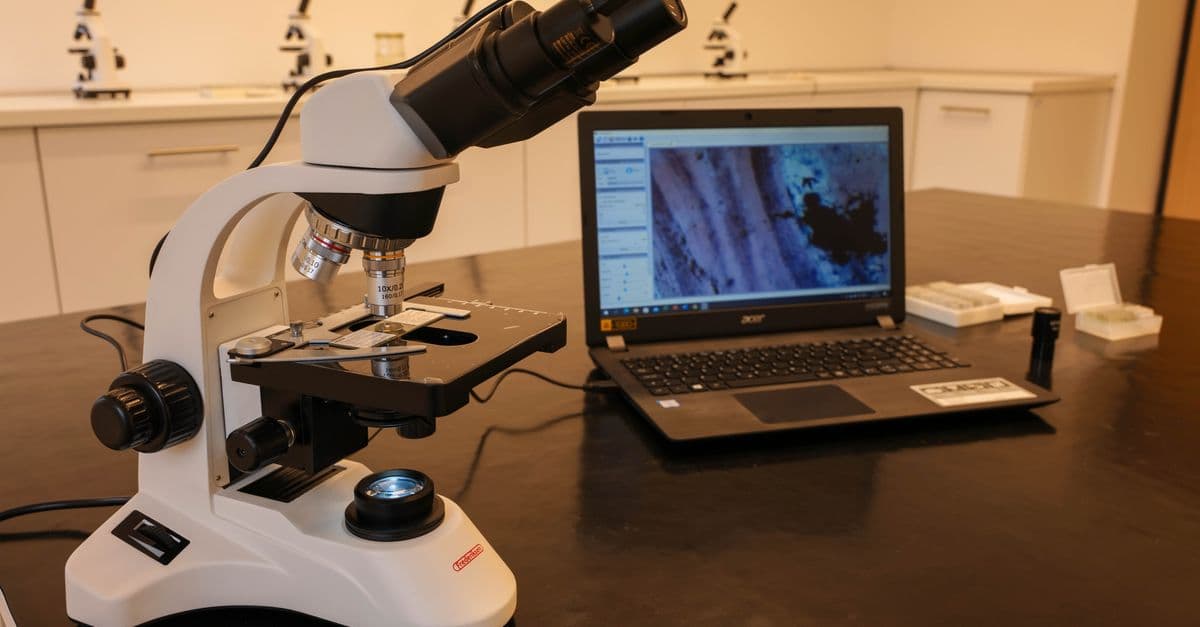
Photo: Jakub Zerdzicki / Pexels
In 1909, Hans Geiger and Ernest Marsden fired positively charged alpha particles at a sheet of gold foil less than 400 nanometers thick and watched where they went. Most sailed straight through. But roughly one in 8,000 bounced back at angles greater than 90 degrees. When Ernest Rutherford heard that result, he later said it was "almost as incredible as if you fired 15-inch shells at tissue paper and they came back and hit you." By 1911, his mathematical analysis of those deflections had identified an object no one had seen before: the atomic nucleus.
What the Prevailing Model Predicted — and Why It Was Wrong
Before the Geiger-Marsden experiments, the dominant picture of the atom was J. J. Thomson's so-called plum pudding model, published in 1904. Thomson had discovered the electron in 1897 and knew that atoms are electrically neutral, so he proposed that an atom was a diffuse sphere of positive charge with small electrons embedded throughout it, like plums suspended in a pudding.
Plum pudding model — Thomson's 1904 atomic model in which a uniform ball of positive charge fills the atom's volume, with negatively charged electrons embedded within it like raisins in a cake.
The plum pudding model made a specific, testable prediction about alpha scattering. If positive charge were spread thinly and uniformly throughout the atom, an alpha particle passing through would encounter only weak, distributed repulsive forces. Each individual deflection would be tiny — a fraction of a degree — and even after passing through many atoms in the foil, statistical accumulation of these tiny deflections would produce a maximum total scattering angle of only a few degrees. Large-angle scattering — anything above about 10 degrees — was essentially impossible in this model.
The model was not absurd. Thomson was one of the most skilled and careful experimentalists of his era, and the plum pudding model successfully explained several properties of atoms, including certain spectral series and the ratio of charge to mass. It simply turned out to be wrong about the distribution of the positive charge.
Source: APS News — "May 1911: Rutherford and the Discovery of the Atomic Nucleus" (aps.org/apsnews/2006/05/rutherford-discovery-atomic-nucleus)
The Geiger-Marsden Setup: What Was Actually Done
The experiment is often summarized as "firing particles at gold foil," but the operational details reveal why it was a measurement of unusual precision for 1909.
Alpha particle — a positively charged particle emitted by certain radioactive nuclei, consisting of two protons and two neutrons (identical to a helium-4 nucleus). Alpha particles from radium-C (bismuth-214 in modern notation) carry about 7.7 MeV of kinetic energy.
The radioactive source was a sample of radium C enclosed in a lead block with a narrow channel, producing a collimated beam of alpha particles. This beam was directed at a gold foil. Gold was chosen for practical reasons: it can be beaten into extremely thin sheets without tearing, because gold atoms are ductile and pack into a tight crystalline structure. The foil Geiger and Marsden used was about 400 nm thick — roughly 1,000 gold atoms deep. Thinner foil meant fewer multiple scattering events, making the data easier to interpret.
Around the foil, Geiger and Marsden placed a movable detector: a screen coated with zinc sulfide, which produces a visible flash (scintillation) wherever an alpha particle strikes. One experimenter sat in a darkened room and counted scintillation flashes through a low-power microscope as the detector was repositioned at different angles. This was painstaking, eye-straining work, carried out flash by flash across hundreds of thousands of observations.
The core finding: at 0 degrees (straight-through), the beam passed almost entirely undeflected. At angles up to about 5 or 10 degrees, small deflections were common. But a small fraction — approximately 1 in 8,000 alpha particles — deflected by more than 90 degrees, including some that came almost straight back toward the source.
Source: Wikipedia — "Rutherford Scattering Experiments" (en.wikipedia.org/wiki/Rutherford_scattering_experiments)
Rutherford's Calculation: Deriving the Nucleus from Scattering Data
Rutherford's contribution was not more experimental work — it was a piece of mathematics that extracted a physical model from the scattering statistics Geiger and Marsden had measured.
He asked: what charge distribution inside an atom could produce large-angle scattering? Working through the classical mechanics of a charged particle approaching a repulsive charge, he derived a formula — now called the Rutherford scattering formula — that predicts how many particles should scatter into any given angular range, given a certain magnitude and spatial distribution of positive charge.
Rutherford scattering formula — a mathematical expression, derived by Rutherford in 1911 using classical Coulomb repulsion, predicting the angular distribution of particles scattered by a point-like positive charge: N(θ) ∝ 1/sin⁴(θ/2), where N(θ) is the number of particles deflected to angle θ.
The key insight: large-angle scattering, including backscattering, is only possible if the repulsive charge is concentrated at a point (or a very small region) rather than spread throughout the atom. A distributed charge cannot produce the Coulomb force needed to reverse an alpha particle's momentum, because the alpha particle would penetrate the positive cloud before feeling a concentrated repulsion. A point charge, however, can produce arbitrarily large deflections at close approach.
By fitting his formula to the Geiger-Marsden data, Rutherford found that all of the positive charge (and therefore essentially all of the mass) had to be contained within a radius no larger than about 10⁻¹⁴ meters — roughly 1/10,000th the radius of the atom itself. The atom is about 10⁻¹⁰ meters across. The nucleus is about 10⁻¹⁴ to 10⁻¹⁵ meters across. The difference in volume between the two is 10¹² — one trillion times. The atom is almost entirely empty space.
Rutherford published this model in May 1911 in Philosophical Magazine. He named the central positive charge the "nucleus" — from the Latin for "little nut" or "kernel."
Source: APS News — "May 1911: Rutherford and the Discovery of the Atomic Nucleus" (aps.org/apsnews/2006/05/rutherford-discovery-atomic-nucleus)
Source: ChemTeam — "Rutherford's Nucleus Paper of 1911" (chemteam.info/Chem-History/Rutherford-1911/Rutherford-1911.html)
An Analogy for the Scale
The scale difference between an atom and its nucleus is genuinely difficult to internalize from numbers alone. Try this: if you scaled an atom up to the size of a major sports stadium — say, about 300 meters across — the nucleus at the center would be the size of a marble, roughly 3 millimeters in diameter. Everything else inside that stadium, all the way out to the seats, is vacuum. The electrons orbit somewhere near the outer walls of the stadium, but they are so small that at this scale they would be invisible even under a microscope.
This is not an approximation or a simplification for public consumption. It is accurate. When an alpha particle misses the nucleus as it passes through the gold foil — which is what happens in 7,999 out of every 8,000 cases — it really is traveling through a region with no matter in the ordinary sense, experiencing only distant electrical forces too weak to deflect it significantly.
The second useful analogy: a large-angle backscattering event in this experiment is like a golf ball rolling across a football field and hitting a single BB pellet hidden somewhere on the grass. The golf ball bounces back only if it strikes the pellet almost directly — and finding out how many golf balls bounce back tells you both where the pellet is and how big the repulsive force around it is.
A Timeline of the Nuclear Atom's Discovery
| Year | Event |
|---|---|
| 1897 | J. J. Thomson discovers the electron; atoms contain negative charges |
| 1904 | Thomson proposes the plum pudding model of the atom |
| 1908 | Rutherford receives Nobel Prize in Chemistry for work on radioactivity and alpha particles |
| 1909 | Geiger and Marsden begin scattering experiments at Rutherford's Manchester laboratory |
| 1909 | First results: significant large-angle scattering observed; published by Geiger and Marsden |
| 1911 | Rutherford publishes mathematical analysis; proposes nuclear model; names the nucleus |
| 1913 | Niels Bohr builds on Rutherford's model, adding quantized electron orbits |
| 1914 | Rutherford identifies the proton as the nuclear particle carrying positive charge |
| 1919 | Rutherford performs first artificial nuclear reaction (alpha particle striking nitrogen) |
| 1932 | James Chadwick discovers the neutron, completing the basic picture of nuclear composition |
| 1934 | Enrico Fermi begins systematic neutron-bombardment studies of nuclei |
Source: Encyclopaedia Britannica — "Rutherford model" (britannica.com/science/Rutherford-model)
The Bohr Model: What Rutherford's Model Could Not Explain
Rutherford's nuclear model was immediately successful at explaining the scattering data. But it generated a severe problem that classical physics could not resolve: why don't the electrons fall into the nucleus?
In classical electrodynamics, a charged particle moving in a curved path (as an electron orbiting a nucleus would be) continuously radiates energy as electromagnetic radiation. An electron orbiting a proton in a hydrogen atom would lose energy at a calculable rate and spiral inward, crashing into the nucleus in approximately 10⁻¹¹ seconds — far shorter than the age of the universe. Hydrogen atoms clearly do not do this, so something was wrong with applying classical physics to the electron's orbit.
Niels Bohr, working in Rutherford's Manchester laboratory in 1913, resolved this by proposing that electrons can only occupy certain discrete orbits, each corresponding to a fixed energy level, and that electrons in these permitted orbits do not radiate. An electron only emits or absorbs energy when it transitions between orbits, and the energy of emission or absorption matches the frequency of the spectral lines that had been measured in hydrogen for decades.
The Bohr model was not the full quantum mechanical picture — that came in 1925 and 1926 with Heisenberg's matrix mechanics and Schrödinger's wave equation — but it built directly on Rutherford's nuclear model and successfully explained the hydrogen spectrum for the first time. Rutherford's nucleus gave Bohr something concrete to orbit around.
Source: Encyclopaedia Britannica — "Rutherford model" (britannica.com/science/Rutherford-model)
The Nuclear Charge Problem: Moseley's X-Ray Confirmation
One detail Rutherford's 1911 paper left unresolved was the exact value of the nuclear charge for any given element. He could infer a rough value from the scattering angles, but not a precise one. The answer came from a young physicist in his own laboratory: Henry Moseley.
In 1913 and 1914, Moseley measured the characteristic X-ray frequencies emitted by different elements when bombarded with electrons. He showed that the frequency of X-rays scales systematically with what he called the atomic number — an integer that increases by one with each element in the periodic table. Moseley identified atomic number with the number of positive charges in the nucleus (the number of protons, in later terminology).
Atomic number — the number of protons in the nucleus of an atom; it determines the element's chemical identity and its position in the periodic table.
Moseley's work transformed the periodic table from an ordering by atomic mass (which had occasional anomalies requiring elements to be listed out of sequence) to an ordering by atomic number (which is exact and has no exceptions). It also confirmed Rutherford's nuclear model quantitatively: each element corresponds to a nucleus with a specific integer charge, exactly as the nuclear model predicted.
Moseley was killed at Gallipoli in 1915 at the age of 27. The scientific community's response to his death is often cited as a reason why scientists were subsequently exempted from front-line military service in some countries.
Source: Wikipedia — "Rutherford Scattering Experiments" (en.wikipedia.org/wiki/Rutherford_scattering_experiments)
Rutherford's Methodology: Why Geiger and Marsden's Counting Was Credible
Before accepting that 1 in 8,000 alpha particles bounced backward, one must ask: how confident were Geiger and Marsden that this was real and not random noise? The answer is that the number of counts they accumulated was very large, and the counting method, though tedious, was systematic.
Geiger and Marsden measured angular distributions by positioning the zinc sulfide detector screen at fixed angles around the foil and counting the scintillation flashes over measured time intervals. At small angles, the count rates were high — thousands of flashes per minute — and statistics were robust. At large angles, count rates were very low, sometimes only a few flashes per hour. But the experiments ran for long periods, and Geiger had developed reliable protocols for minimizing counting errors through dark adaptation, consistent light levels, and cross-checks between observers.
The 1909 paper by Geiger and Marsden published a summary result: approximately 1 in 8,000 alpha particles deflected by more than 90 degrees, with a note that the figure was reproducible across multiple experimental runs and with different foil thicknesses. Rutherford required quantitative confirmation before publishing his 1911 model, and between 1909 and 1911, Geiger performed a much more systematic set of measurements at many angles, verifying the sin⁻⁴(θ/2) angular dependence predicted by Rutherford's formula.
The 1913 paper by Geiger and Marsden — often considered the definitive experimental confirmation of the nuclear model — measured the scattering cross-section at angles from 15° to 150° using four different metal foils (gold, silver, copper, aluminum) and showed agreement with Rutherford's formula at each angle across all foils. The agreement was better than 20% throughout the measured range, which was the systematic precision achievable with scintillation counting. This was sufficient to establish the nuclear model beyond reasonable doubt.
Source: Encyclopedia MDPI — "Geiger-Marsden Experiment" (encyclopedia.pub/entry/30564)
What the Experiment Could Not Resolve — and What Came Next
Rutherford's 1911 model placed all positive charge in a small central nucleus but said nothing about what that nucleus was made of. At the time, the only known subatomic particles were the electron and the alpha particle. Rutherford speculated that the nucleus might contain both protons and electrons, with the electrons contributing negative charge to reduce the total nuclear charge below the total atomic mass.
This nuclear-electron model was eventually ruled out, primarily by nuclear spin measurements in the early 1930s. The correct picture emerged when James Chadwick, working in Rutherford's Cavendish Laboratory, discovered the neutron in 1932 by analyzing the products of alpha particle bombardment of beryllium. The nucleus consists of protons and neutrons — collectively called nucleons — with the number of protons equal to the atomic number and the total number of nucleons approximately equal to the atomic mass.
The mechanism holding nucleons together in the nucleus — the strong nuclear force — required a separate theoretical framework that began with Hideki Yukawa's meson theory in 1935 and was not fully developed until quantum chromodynamics in the 1970s. Rutherford's 1911 experiment identified where the nucleus was. Explaining what kept it together took another six decades.
Source: Wikipedia — "Rutherford Scattering Experiments" (en.wikipedia.org/wiki/Rutherford_scattering_experiments)
What People Get Wrong About the Gold Foil Experiment
The most common mistake is treating the 1911 Rutherford paper and the 1909 Geiger-Marsden experiments as a single event. They were not. The experimental work by Geiger and Marsden was published in 1909. Rutherford's theoretical interpretation and the nuclear model came two years later, in 1911. The experiment and the theory were separated by a significant gap, which included Rutherford working through the mathematics of Coulomb scattering from different charge distributions.
A second misconception: the alpha particles did not "bounce off the nucleus" in the sense of mechanical contact. Gold nuclei and alpha particles are both positively charged. The scattering is purely electrostatic — the alpha particle feels Coulomb repulsion and is deflected before it ever makes physical contact with the nucleus. Rutherford's nuclear model does not require any concept of what the nucleus is made of, only that it carries a large positive charge in a small volume.
A third error is the claim that "gold was chosen because it is the most malleable element." Gold is extremely malleable, which is why it was used — it could be beaten into foils thin enough to approximate a monolayer condition. But platinum and silver foil were also used in follow-up experiments, and the large-angle scattering was found in those too. The choice of gold was practical, not fundamental to the result.
Finally, the fraction of backscattered particles is often misquoted. The figure "1 in 8,000" applies to particles deflected by more than 90 degrees. About 1 in 20,000 were deflected by more than 45 degrees, and the overall fraction showing any measurable deflection above 2 degrees was roughly 1 in 6,000. These numbers vary by foil thickness and alpha particle energy, but the core point — that the overwhelming majority pass straight through — holds in all versions of the experiment.
For the quantum mechanical description of the atom that replaced Rutherford's classical picture, see how quantum mechanics describes atomic orbitals. For the strong force that holds the nucleus together, see the Standard Model of particle physics.
FAQs
Q: Why did the large-angle scattering prove a concentrated nucleus rather than a distributed charge?
A: Because classical Coulomb mechanics shows that a distributed positive charge cannot deflect a fast-moving alpha particle through large angles. If the positive charge is spread throughout the atom, the maximum force the alpha particle can feel is the repulsion from the total charge integrated over the volume it passes through — which produces only small deflections. A concentrated point charge, however, can exert a very large repulsive force at short range, deflecting the alpha particle through any angle up to 180 degrees depending on how close it approaches. Rutherford's scattering formula, derived for point-charge repulsion, matched the Geiger-Marsden data precisely.
Q: How did Rutherford estimate the size of the nucleus from the scattering data?
A: By calculating the distance of closest approach for an alpha particle that reverses direction. When an alpha particle with a known kinetic energy approaches the nucleus head-on and is turned back, all of its initial kinetic energy has been converted to Coulomb potential energy at the point of closest approach. Setting kinetic energy equal to Coulomb potential energy and solving for distance gives an upper bound on the nuclear radius. For gold, this calculation yields a nuclear radius of at most about 3 × 10⁻¹⁴ meters — about 30 femtometers. Modern measurements put the gold nucleus radius at about 7 × 10⁻¹⁵ meters (7 fm).
Q: What is the Rutherford scattering formula and does it still hold?
A: The Rutherford scattering formula predicts that the number of particles deflected into a detector at angle θ is proportional to 1/sin⁴(θ/2), and also proportional to the square of the nuclear charge and inversely proportional to the square of the alpha particle's kinetic energy. It holds very well for alpha particles that do not penetrate the nucleus — that is, for scattering at energies where the alpha particle is always outside the nuclear radius. At higher energies, where the alpha particle can reach the nuclear surface, the distribution departs from Rutherford's formula, and this departure itself can be used to measure the nuclear size. The formula was derived classically and gives the same result as a full quantum mechanical treatment for Coulomb scattering (a coincidence of the mathematics).
Q: Did Rutherford's model account for the stability of atoms?
A: No. It left the problem of electron orbital stability completely unsolved. Classical electrodynamics predicts that an orbiting electron radiates continuously and spirals into the nucleus in about 10 picoseconds. Rutherford was aware of this problem but did not resolve it — that fell to Niels Bohr in 1913, who postulated quantized orbits, and ultimately to quantum mechanics in 1925–1926, which replaced classical orbits with probability distributions.
Q: Was Ernest Marsden an undergraduate when he did this work?
A: Yes. Ernest Marsden was an undergraduate student at the University of Manchester, working under Hans Geiger's supervision, when the key 1909 experiments were performed. He was approximately 19 or 20 years old. Rutherford reportedly suggested Marsden work on whether any alpha particles scattered at large angles "as a start." The fact that backscattering was observed at all was Marsden's crucial empirical contribution. He went on to a distinguished career in New Zealand science.
Q: Why did it take two years after the 1909 experiments for Rutherford to publish the nuclear model?
A: Rutherford needed to work through the Coulomb scattering mathematics carefully before he could claim the nuclear model with confidence. He was also occupied with other research and administrative duties. The 1909 Geiger-Marsden paper reported the observations without a theoretical explanation. Rutherford spent the next two years testing whether a distributed-charge model could reproduce the data by any interpretation and eventually convinced himself it could not. The 1911 paper contains the full mathematical derivation showing that only a concentrated nuclear charge explains the angular distribution.
The Takeaway
Rutherford's nuclear atom is one of the clearest examples in the history of physics of an experiment producing a result so unexpected that it required a new conceptual framework, not just a revision of an existing one. The plum pudding model was not corrected by the scattering data — it was demolished. The atom turned out to be mostly vacuum, with an almost unimaginably small and dense kernel of positive charge at its center. That nucleus, in the following decades, became the subject of its own science: nuclear physics, nuclear reactions, nuclear energy, and ultimately a deep theory of the forces holding nucleons together. All of it traces back to a bored undergraduate in a dark room, counting tiny flashes of light on a zinc sulfide screen in Manchester in 1909.
Read next:
Follow new articles
Add SciHub101 to your feed reader to see new science and technology stories.
About the Author
SciHub101 is an independent science and technology publication founded and edited by Buğra Sözeri, a software engineer and app developer based in Türkiye. AI tools assist with drafting and research. Source documentation in the existing archive is uneven, and articles are being reviewed and corrected. The Editorial Team byline identifies editorial responsibility; it does not certify specialist or independent human review. Where we compare products, anything built by our own team is labelled as such — see the editorial guidelines and About page for how corrections and disclosures work.
Related Articles

The Seligman Learned Helplessness Experiment: When Giving Up Is Learned
In 1967, Martin Seligman showed dogs exposed to inescapable shocks stopped trying to escape when escape became possible. The learned helplessness model reshaped depression research.

The Rosenhan Experiment: The Study That Shook Psychiatry — Then Cracked
David Rosenhan's 1973 Science paper sent 8 pseudopatients into psychiatric hospitals. It changed psychiatry — until a 2019 investigation found the data may not hold up.

Rutherford's Gold Foil Experiment: Discovering the Atomic Nucleus
In 1909, Ernest Rutherford fired alpha particles at gold foil and discovered something astounding—the atom is mostly empty space with a tiny, dense nucleus. This experiment revolutionized nuclear physics.

The Bohr-Einstein Debates: The Thought Experiments That Shaped Quantum Physics
Einstein spent years designing thought experiments to break quantum mechanics. Bohr defeated every one. The Bohr-Einstein debates, from Solvay 1927 to the EPR paradox.
Young's Double-Slit Experiment: Light as a Wave
In 1801, Thomas Young passed light through two slits and saw stripes on a screen that only waves can produce. The same experiment later revealed the quantum nature of matter.

History of the Atom: From Dalton to Quantum Mechanics
The atom went from a philosophical guess to a nuclear reality in about 150 years. Each model that replaced the last was stranger than anyone expected.