The Rosenhan Experiment: The Study That Shook Psychiatry — Then Cracked
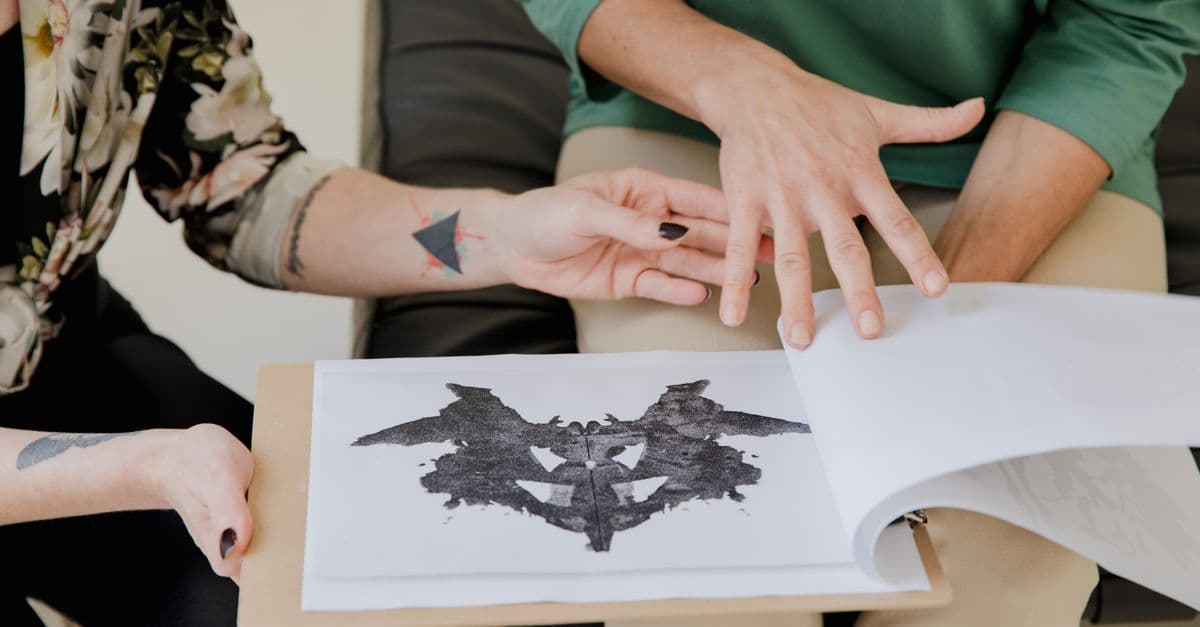
Photo: RDNE Stock project / Pexels
In January 1973, the journal Science published a nine-page paper that sent shockwaves through American psychiatry. Its author, Stanford psychologist David Rosenhan, claimed to have demonstrated that psychiatrists could not reliably distinguish the sane from the insane — that mental hospitals were so broken, a person with no psychiatric history needed only to report hearing a vague noise to gain admission and collect a diagnosis. The paper helped drive a fundamental restructuring of psychiatric diagnosis. Fifty years later, an investigative journalist found evidence suggesting that key parts of the study may have been fabricated.
What Rosenhan Was Testing
David Rosenhan was a psychology and law professor at Stanford University with a longstanding skepticism toward psychiatric diagnosis as practiced in mid-century American hospitals. By the early 1970s, psychiatry operated primarily from the second edition of the Diagnostic and Statistical Manual of Mental Disorders (DSM-II), a system that relied heavily on clinician judgment with minimal standardized criteria.
Source: Rosenhan experiment — Wikipedia
Rosenhan's central question was whether the diagnostic process was measuring something real in the patient, or whether it was measuring something in the context — the hospital, the label, the setting itself. Once a patient was admitted and labeled, did clinicians actually observe them freshly, or did the label structure everything they saw?
The conceptual framing draws on what sociologists call the labeling theory of mental illness: the idea that psychiatric diagnoses function as social labels that, once applied, become self-confirming. A person labeled schizophrenic who laughs in the dayroom may have their laughter interpreted as "inappropriate affect" — a symptom of schizophrenia. A non-patient who laughs in the same situation would simply be described as amused.
Definition — pseudopatient: A person who simulates mental illness symptoms in order to gain hospital admission for research purposes, then behaves completely normally once admitted. The pseudopatient's task is to observe the institution from inside without being detected.
Source: Rosenhan, D.L. (1973) On Being Sane in Insane Places — Background
The Setup: Eight Pseudopatients, Twelve Hospitals
Between 1969 and 1972, Rosenhan recruited eight people — five men and three women — including a psychology graduate student, three psychologists, a pediatrician, a psychiatrist, a painter, and a housewife. Rosenhan himself was one of the eight pseudopatients. None had a history of psychiatric illness.
Each pseudopatient contacted a psychiatric hospital, scheduled an appointment, and arrived complaining of a single symptom: they reported hearing a voice that said words such as "empty," "hollow," and "thud." That was it. The symptom was selected because, Rosenhan argued, there was no existing literature describing auditory hallucinations of this kind — existential hallucinations about the meaninglessness of life. Everything else the pseudopatients reported was true: their real names (some changed), their actual life histories, their genuine relationships and professional circumstances.
Source: Key study: "On Being Sane in Insane Places" (Rosenhan, 1973) — Mantic Education
The twelve hospitals spanned five US states, covering both coasts. They varied in quality: some were well-funded research hospitals, others were underfunded state institutions. Seven of the eight pseudopatients were admitted with a diagnosis of schizophrenia; one received a diagnosis of manic-depressive psychosis.
| Pseudopatient | Background | Diagnosis Received | Length of Stay |
|---|---|---|---|
| Rosenhan himself | Psychologist/professor | Schizophrenia | ~52 days |
| Graduate student | Psychology | Schizophrenia | Not specified |
| Pediatrician | Medicine | Schizophrenia | Not specified |
| Psychiatrist | Psychiatry | Schizophrenia | Not specified |
| Painter | Arts | Schizophrenia | Not specified |
| Housewife | No professional background | Schizophrenia | Not specified |
| Psychologist (additional) | Psychology | Schizophrenia | Not specified |
| Psychologist (additional) | Psychology | Manic-depressive | Not specified |
Source: Rosenhan experiment — Wikipedia
Once admitted, each pseudopatient immediately stopped reporting any symptoms. They behaved completely normally. They cooperated with staff, did not create disturbances, took their medications (which they secretly discarded), and told staff they felt fine and were ready to leave. They kept notes on their observations — initially on hidden paper, later openly, since note-taking was simply recorded in clinical charts as "patient engages in writing behavior."
The Protocol: Acting Normal in a Place Designed to See Illness
The pseudopatients were instructed to gain admission by their own means, then behave entirely normally, and to get out by convincing the hospital staff they were sane. No one was given a predetermined exit strategy. Rosenhan wanted to measure how long it took for clinicians to recognize that a normal person was present.
Source: Rosenhan (1973) Experiment Study — Simply Psychology
The answer was: none of them were recognized as normal by hospital staff. Every pseudopatient was discharged with a diagnosis of schizophrenia "in remission" — meaning the hospital's conclusion was that the schizophrenia was present but currently suppressed, not that the patient had been misdiagnosed. The average length of hospitalization was 19 days, ranging from 7 to 52 days.
Crucially, Rosenhan reported that it was not the staff but the other patients who most frequently detected something unusual. Some patients, he wrote, directly accused the pseudopatients: "You're not crazy. You're a journalist, or a professor. You're checking up on the hospital." Staff, who brought professional frameworks for understanding behavior in a psychiatric ward, saw pathology everywhere. Other patients, who had no such framework to impose, saw a normal person.
Rosenhan documented in detail how normal behaviors were reinterpreted through the lens of the diagnostic label. Pseudopatients who took notes were observed to display "writing behavior," cataloged as a clinical observation. Those who paced near the cafeteria before lunch, simply because there was nothing else to do, had their behavior recorded in charts as evidence of oral acquisition drives and nervousness. The diagnosis, Rosenhan argued, functioned as a lens that made everything the patient did look like a symptom.
The Results: A Paper That Changed Everything
"On Being Sane in Insane Places" was published in Science on January 19, 1973.
Source: The Fraud That Transformed Psychiatry — Science History Institute
Its central findings: eight sane people gained admission to twelve psychiatric hospitals by reporting one symptom; none were identified as pseudopatients by professional staff; all were discharged with schizophrenia "in remission"; and the normal behaviors of the pseudopatients were systematically reinterpreted as evidence of their diagnosed conditions.
Rosenhan ran a second study to test the inverse. He told a research and teaching hospital that, sometime in the next three months, one or more pseudopatients would attempt to gain admission. The hospital staff were asked to rate each incoming patient on their confidence that the patient was a genuine patient versus a pseudopatient. Of 193 patients admitted during the period, 41 were identified with high confidence by at least one staff member as likely pseudopatients. Nineteen were suspected by both a psychiatrist and another staff member.
Rosenhan had sent no pseudopatients.
Source: Rosenhan experiment — Wikipedia
The conclusion he drew: if psychiatrists could mistake sane people for schizophrenic, and also mistake patients for pseudopatients when primed to look for them, the diagnostic process itself was unreliable. The paper's final argument was that psychiatric diagnosis said more about the setting and the observer's expectations than about the patient's actual mental state.
The paper's impact was immediate and lasting. It contributed directly to the movement to reform the DSM, culminating in DSM-III in 1980. DSM-III introduced standardized diagnostic criteria, symptom duration requirements, and operational definitions that did not exist under DSM-II. The goal was to make psychiatric diagnosis more like other medical diagnoses — reproducible and criterion-based rather than judgment-based.
The Controversy: Susannah Cahalan and the Missing Pseudopatients
In 2019, journalist and author Susannah Cahalan published The Great Pretender, an investigation into the Rosenhan experiment. Cahalan had personal reasons to care about psychiatric misdiagnosis — she had been misdiagnosed herself with a psychiatric disorder before being correctly identified as having autoimmune encephalitis. Rosenhan's paper had always felt important to her. When she began tracking down the pseudopatients to reconstruct the study, she found something alarming.
Rosenhan listed eight pseudopatients in the paper. Cahalan could verify the existence of only one. She identified Harry Lando, a psychology graduate student who had participated in a similar hospital admission experiment. When she tracked him down and interviewed him, Lando's account of his experience diverged substantially from what Rosenhan had written. Lando said he had generally been treated well, found the experience positive, and believed the staff had acted professionally.
Source: The Great Pretender: Rosenhan Review — Psychiatric Times
Cahalan's examination of Rosenhan's archived notes — held at Stanford — revealed additional problems. Rosenhan's own hospital record, from his personal admission as pseudopatient number one, did not match his published account of the experience. Where the paper described callous, dehumanizing treatment, the actual clinical notes told a more complicated story of interactions that were routine and at times attentive. Rosenhan's descriptions of specific conversations with staff also differed from the hospital's contemporaneous records.
Crucially, Lando — whose experience Rosenhan had apparently used, at least in part, for one of the pseudopatient accounts — was removed from the published study. Rosenhan's notes indicate he was excluded because his experience had been too positive, which would have weakened the paper's argument. Selectively removing data that contradicts your hypothesis is not a methodological footnote; it is a fundamental violation of scientific integrity.
Source: David Rosenhan: The Fraud That Transformed Psychiatry — Science History Institute
Cahalan's conclusion was that Rosenhan likely fabricated or substantially embellished the accounts of at least some of the pseudopatients — and possibly most of them. She could not prove definitively that the other six were invented, but she could not find any evidence that they had existed, despite exhaustive archival research.
Replication and Reanalysis: What the Field Made of the Doubt
The reaction to Cahalan's findings was complicated. Rosenhan had been dead since 2012, so he could not respond. Some psychiatric historians argued that even if the data were fabricated, the underlying observation about institutional dynamics — that labels shape perception, that hospitals of that era were often dehumanizing — was correct and had been documented independently by other researchers.
Source: The Rosenhan Study Never Proved Anything Anyway — Psychology Today
Others took the view that the scientific illegitimacy of the study's foundation meant its conclusions should be withdrawn regardless of whether the underlying claims were true, because the data used to support them could not be verified. Science advances by checkable claims, and Rosenhan's claims were now uncheckable because the records were gone and the pseudopatients could not be identified.
The real-world impact of the Rosenhan paper on DSM-III reform was significant and largely positive. DSM-III represented a genuine methodological improvement — the introduction of operational criteria made psychiatric diagnosis more reliable and more testable. Whether that reform required a fabricated paper to happen, or whether it was coming anyway driven by other forces in the field, is a counterfactual that cannot be resolved.
Source: Rosenhan experiment — Wikipedia
What replications of the broader phenomenon have found: there are genuine risks of labeling effects in psychiatric contexts, and of what sociologist Erving Goffman called the "total institution" — an environment so structured around a single explanatory framework (mental illness) that it becomes difficult to observe patients outside that framework. These findings stand independent of Rosenhan's paper.
Where It Stands Today: DSM-5, Better Criteria, Ongoing Gaps
Modern psychiatric diagnosis has changed substantially from the DSM-II era in which Rosenhan was working. DSM-5, published in 2013, contains operationalized criteria with duration requirements, functional impairment thresholds, and differential diagnosis provisions designed to reduce false positives.
Source: "On Being Sane in Insane Places" — it is a work half done — PMC
A Rosenhan-style study conducted today would face a substantially different diagnostic environment. Schizophrenia, under DSM-5 criteria, requires active-phase symptoms lasting at least one month, a total duration of six months, and significant functional decline. A single episode of hearing a vague noise would not meet those criteria under competent application of current diagnostic standards. Whether it did meet DSM-II criteria in 1973 is genuinely debated among psychiatric historians — some argue Rosenhan's pseudopatients probably would have been admitted to observation rather than immediately diagnosed under the letter of DSM-II as well.
Source: Key study: "On Being Sane in Insane Places" — Mantic Education
Problems that do persist in modern psychiatry include diagnostic drift (clinicians expanding the application of diagnoses beyond their operationalized criteria), the continued underdiagnosis of psychiatric conditions in some populations and overdiagnosis in others, and the structural challenges of short inpatient stays that make sustained observation difficult. These problems are real. They were real in 1973. They did not require a fabricated study to identify.
The Rosenhan case now functions as a parable in research ethics as much as in psychiatric history: the fact that a study pointed toward a real problem does not make the study itself sound, and a study's policy impact does not retrospectively validate its methodology. The paper transformed American psychiatry. Whether it should have, on the evidence actually provided, is a different question.
What Cahalan's The Great Pretender Actually Found in the Archives
Susannah Cahalan's 2019 investigation did not simply raise doubts about Rosenhan's study — it produced specific archival findings that individually and collectively suggest the paper described events that either did not happen or happened very differently from how Rosenhan reported them.
The most fundamental problem: Cahalan could verify the existence of only one of the eight pseudopatients. That person was Bill Underwood, a psychology graduate student who was later identified publicly. When Cahalan located Underwood and interviewed him, his account of his hospitalization did not match Rosenhan's published description in significant respects. Underwood recalled being treated professionally, experienced no systematic dehumanization, and did not recognize several specific incidents Rosenhan attributed to pseudopatients in the paper.
Source: Cahalan, S. (2019), The Great Pretender: The Undercover Mission That Changed Our Understanding of Madness (Grand Central Publishing).
A second participant, Harry Lando, had been a real person who underwent a similar hospital admission experience. Cahalan found evidence in Rosenhan's archived notes — held at Stanford University Libraries — that Lando's account had been deliberately excluded from the published study because his experience was too positive. Lando reported receiving generally good care, found staff attentive, and did not describe the institutional callousness that forms the emotional core of "On Being Sane in Insane Places." Rosenhan's notes indicate he was aware of this and chose not to include the data. Excluding a participant's results because they contradict your hypothesis is not a methodological variant — it is the definition of selective reporting, and it is classified as research misconduct under modern standards.
Source: Cahalan, S. (2019), The Great Pretender; see also Spitzer, R. L. (1975), "On pseudoscience in science, logic in remission, and psychiatric diagnosis: A critique of Rosenhan's 'On Being Sane in Insane Places,'" Journal of Abnormal Psychology, 84(5), 442–452 — the earliest systematic methodological critique, published two years after the original paper.
Cahalan's examination of Rosenhan's unpublished book manuscript — intended as a fuller account of the pseudopatient study — uncovered further inconsistencies. The manuscript contained dates, duration figures, and descriptions of interactions that contradicted both the published paper and the contemporaneous hospital records Cahalan obtained. Rosenhan's own psychiatric chart, from his personal admission, described a clinical course that differed materially from his published account. Where the paper described being ignored by staff for hours, the chart showed documented interactions. Where the paper described a cold, dismissive admission interview, the chart described a thorough evaluation.
The paper remains cited more than 4,000 times in the scientific literature. That figure reflects how thoroughly the study was integrated into psychiatric history, medical education, and the sociology of mental illness. The citation record has not substantially declined since Cahalan's book — partly because many citing authors use it as historical context rather than as active evidence, and partly because the field has not reached a formal consensus on whether the paper should be retracted. Rosenhan died in 2012 and cannot respond; the raw data no longer exist in verifiable form; and the institutions involved have not pursued formal investigation.
Source: Slater, L. (2004, updated commentary context), referenced in Cahalan (2019); Rosenhan citation count via Google Scholar, accessed 2025.
What Cahalan's investigation does not do is invalidate the legitimate critique of mid-century psychiatric diagnosis that Rosenhan rode to prominence. The DSM-II era had genuine reliability problems, documented by the field itself in inter-rater reliability studies that predated Rosenhan's paper. Involuntary hospitalization practices of the 1960s and early 1970s were often coercive and poorly regulated, as Erving Goffman's sociological work documented independently. Rosenhan identified a real target. The question Cahalan forces onto the table is whether fabricated evidence in service of a true conclusion is acceptable science — and the answer that research ethics requires is no, because a method that produces the right answer by the wrong means cannot be distinguished from one that produces any answer by any means.
FAQs
Q: What symptom did Rosenhan's pseudopatients report to gain admission? A: Each pseudopatient reported hearing a voice that said words such as "empty," "hollow," and "thud." They reported this single auditory hallucination once upon arriving at the hospital and then stopped reporting any symptoms after admission, behaving entirely normally.
Q: Were any of the pseudopatients ever identified as sane by hospital staff? A: None of the pseudopatients were identified as sane by professional staff. All were discharged with their original diagnosis "in remission." Other patients on the wards did sometimes directly observe that the pseudopatients seemed normal, but that suspicion was not formally acted upon by clinical staff.
Q: What did Susannah Cahalan find in Rosenhan's archives? A: Cahalan found that she could verify the existence of only one of the eight claimed pseudopatients. Rosenhan's own hospital records diverged from his published account of the experience. She also found that a real participant, Harry Lando, had been excluded from the study because his experience was too positive, representing selective reporting of data.
Q: Did the Rosenhan experiment cause DSM-III? A: It contributed to the momentum for reform, but DSM-III was driven by multiple forces including the work of Robert Spitzer and his task force, growing dissatisfaction with DSM-II's reliability, and the political pressure for psychiatry to demonstrate scientific rigor. Rosenhan's paper accelerated a conversation that was already underway.
Q: Would Rosenhan's pseudopatients be admitted to a hospital today? A: Almost certainly not with a schizophrenia diagnosis. DSM-5 requires symptoms lasting at least one month and functional decline over six months for a schizophrenia diagnosis. A single vague auditory hallucination reported once would more likely result in observation, crisis evaluation, and possibly a brief hold, not an immediate diagnosis and long-term admission.
Q: Does the doubt about Rosenhan's data mean labeling effects in psychiatry are not real? A: No. Independent research on labeling theory, institutional dynamics, and diagnostic reliability documents genuine risks. Rosenhan's paper was one data point, and its scientific integrity is now in question, but the phenomenon it pointed toward has support from other sources — including Goffman's sociological work on total institutions.
The Takeaway
"On Being Sane in Insane Places" remains one of the most cited papers in psychiatric history — and one of the most contested. It pointed toward real problems in mid-century psychiatric diagnosis, contributed to the development of more rigorous diagnostic criteria, and sharpened the field's awareness of how context and labels shape clinical perception. What it may not have done is actually demonstrate those things through honest data. Susannah Cahalan's investigation suggests that the paper's power came partly from evidence that Rosenhan constructed rather than observed. The reforms it helped drive were real and largely beneficial. The lesson it leaves for researchers is also real: a true conclusion reached by fabricated means still poisons the well of scientific knowledge, because it cannot be verified, cannot be challenged on evidence, and cannot be distinguished, structurally, from a false conclusion reached the same way.
Read next:
Weekly digest
Stay ahead of the curve
Get the best science, AI, and tech stories delivered to your inbox every week. No spam — unsubscribe any time.
About the Author
SciHub101 is an independent science and technology publication founded and edited by Buğra Sözeri, a software engineer and app developer based in Türkiye. Articles are drafted against peer-reviewed literature and primary sources, fact-checked, and edited by a human before publication. Where we compare products, anything built by our own team is labelled as such — see the editorial guidelines and About page for how corrections and disclosures work.
Related Articles

The Rutherford Nuclear Atom: How Alpha Scattering Revealed the Nucleus
In 1911, Ernest Rutherford interpreted Geiger and Marsden's alpha scattering data and concluded that the atom has a tiny, dense nucleus. Here is how the experiment worked and what the results proved.
The Robbers Cave Experiment: How Groups Learn to Hate Each Other
Muzafer Sherif took 22 normal boys to an Oklahoma summer camp in 1954 and turned them into warring factions in under a week. Here is how, and why it matters.

The Rorschach Inkblot Test — SciHub101
How Hermann Rorschach's 1921 inkblots became psychiatry's most famous diagnostic tool, why its validity is disputed, and why it still appears in courtrooms today.
The Marshmallow Experiment: Self-Control, Class, and a Crumbling Prediction
Walter Mischel's 1972 marshmallow test predicted life outcomes from a single moment of self-control. A 2018 replication of 918 children changed the story.
Complete Psychology Guide 2026 — Mind, Behavior, and Human Science
The complete guide to psychology in 2026: cognitive biases, memory, emotions, decision-making, social behavior, famous experiments, and what neuroscience reveals about the human mind.

The Psychology of Gratitude
Gratitude is both a fleeting emotional response to receiving something good and a stable personality trait—a dispositional tendency to notice and appreciate benefits. Researchers across emotion science, evolutionary psychology, and positive psychology have discovered that grateful people report higher life satisfaction, stronger relationships, and better sleep quality. The leading explanations include the find-remind-and-bind theory, which frames gratitude as evolutionary social technology for strengthening cooperative bonds, and the broaden-and-build theory, which shows how positive emotions like gratitude expand our cognitive and behavioral capacity. Simple practices like gratitude journaling produce measurable, though modest, improvements in well-being.