What If the Moon Didn't Exist? Life Without Moonlight
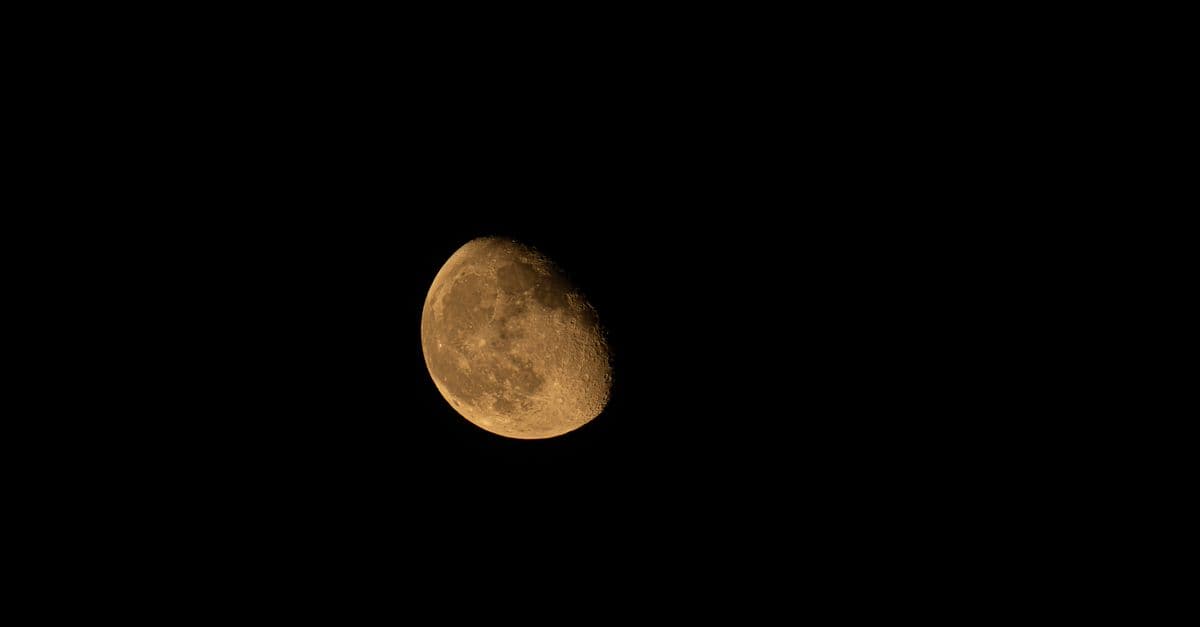
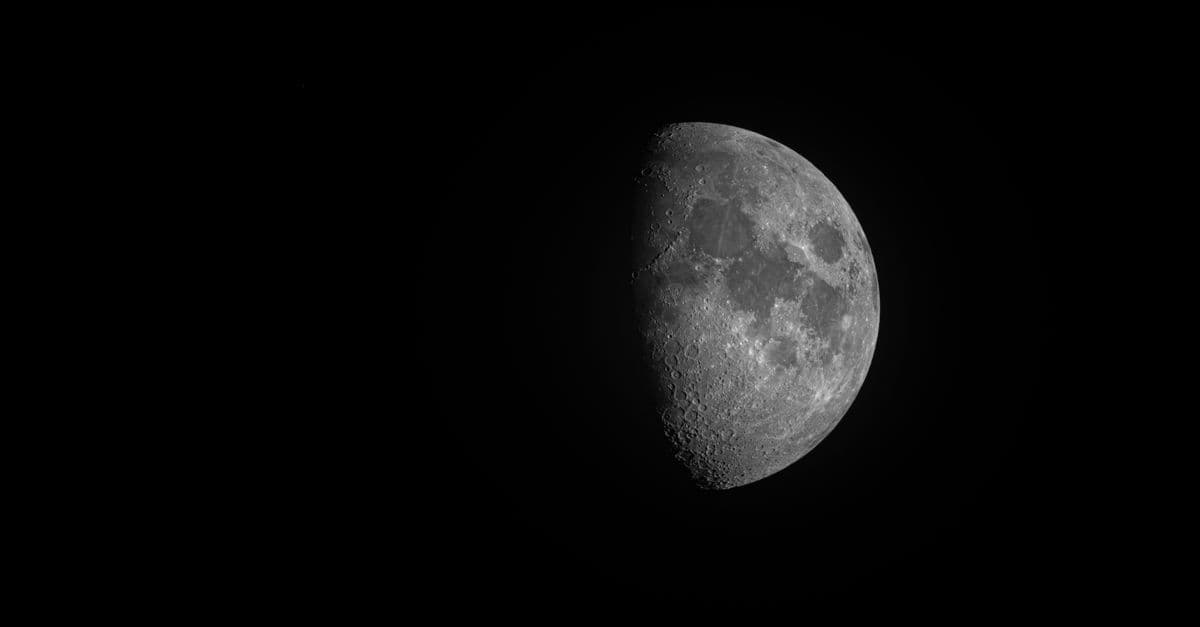
Photo: Qing Luo / Pexels
Every calendar humans have ever built started as an attempt to count moons. Every sailor who crossed an ocean before satellite navigation existed used the Moon's position, phase, or rising point as a working clock and compass. And every coral reef that spawns on the same handful of nights each year is reading a lunar signal, not a solar one. If the Moon had never formed, none of that would exist — and the story of how humans and other species built their lives around a light in the sky would never have been written.
Thought experiment. This article explores a hypothetical scenario for educational and speculative purposes. The events described are not predictions and should not be interpreted as warnings, advocacy, or instructions.
Key takeaways
- Lunar calendars are the oldest timekeeping systems documented, with notched bone tally marks from roughly 32,000 years ago in Ice Age Europe interpreted by some archaeologists as records of the Moon's phases.
- The Sumerians built the first fully lunar civil calendar, and nearly every ancient culture — Babylonian, Hebrew, Chinese, Islamic, pre-colonial Polynesian — used the Moon's roughly 29.5-day cycle to structure months, festivals, and agricultural planning.
- Polynesian wayfinders crossed thousands of kilometers of open Pacific Ocean using a mental "star compass" that incorporated the Moon's rising and setting points alongside stars, swells, and bird flight paths — centuries before the magnetic compass reached the region.
- Coral species time mass spawning events to specific nights around the full moon, and laboratory work shows moonlight itself, not just the tidal cycle, acts as the synchronizing cue.
- Dung beetles are the only known animal that can navigate using the polarization pattern of moonlight, a signal roughly a million times dimmer than daylight polarization.
- A moonless Earth's night sky would be roughly 1,000 times darker on clear nights without a full moon overhead, since typical full-moon illuminance runs around 0.1 to 0.3 lux against a starlight-only sky near 0.0001 lux.
The oldest clock humans ever built
Long before sundials, water clocks, or mechanical gears, people were already tracking time by watching the sky change shape. The lunar calendar — a system of timekeeping in which months are defined by the Moon's roughly 29.5-day cycle from new moon to new moon — appears to be the earliest calendar system humans devised. Some archaeologists, following the analysis pioneered by researcher Alexander Marshack, have interpreted sequences of notches carved into bone plaques found in Ice Age caves in France and Germany, dating to as far back as roughly 32,000 years ago, as records that tracked the Moon's changing phases night by night (Living With the Moon, citing Marshack's lunar-notation hypothesis).
By the time complex civilizations emerge in the historical record, the pattern is already universal. The Sumerians, in Mesopotamia, are generally credited with building the first fully developed lunar civil calendar, with each month beginning on the day the thin crescent of a new moon first became visible after sunset (Moonsighting.com, "Evolution of Calendars"). That Sumero-Babylonian system was later adopted and adapted by the ancient Greeks, who added an extra thirteenth month periodically to keep the lunar calendar roughly aligned with the solar year, and the Romans followed a similar lunar-based structure until Julius Caesar replaced it with the solar Julian calendar in 45 BCE (Britannica, "Lunar calendar").
This is not a small cultural footnote. The seven-day week, still in use worldwide, likely traces back to Babylonian astrology that divided the lunar month into quarters matching the Moon's phases. Islamic religious observance still runs on a purely lunar calendar today, with the Hijri year roughly 11 days shorter than the solar year because it makes no adjustment to stay aligned with the seasons. None of this represents "the" way to build a calendar — a moonless Earth's cultures would still have needed some system to track agricultural seasons — but it would have been built entirely around solar and stellar cycles, likely emerging later and along a very different technical path, since a bright, regularly changing nearby object is a far easier phenomenon to notice and count than the subtler seasonal drift of sunrise position or star patterns.
Would ancient civilizations have developed a calendar without the Moon?
Almost certainly, but on a longer timeline and through a different route. Sun-based calendars require tracking solstices and equinoxes over a full year, a subtler and slower observation than watching the Moon visibly change shape every few nights. Early astronomers likely needed the Moon's fast, obvious cycle as a stepping stone before they had the patience or instrumentation for full solar-year tracking.
Navigating an ocean without a moon
Before the magnetic compass reached the Pacific, and centuries before satellite positioning existed anywhere, Polynesian navigators were already crossing thousands of kilometers of open ocean between Hawai'i, Tahiti, New Zealand, and Easter Island using nothing but careful observation of the sky and sea. Their system, sometimes called wayfinding, relies on a mental construct known as the Hawaiian star compass — a division of the horizon into 32 named "houses," each spanning about 11.25 degrees of arc, tied to where specific celestial bodies rise and set (Polynesian Voyaging Society, "Polynesian Wayfinding").
The Moon was one of several tools in that system, not the only one. Navigators tracked constellations, the sun's rising and setting points, ocean swell direction, and even the flight patterns of land-seeking birds, but the Moon's position and phase contributed both to nightly direction-finding and to the navigational calendar used to plan voyages around predictable seasonal conditions (University of Hawai'i, "Wayfinding and Navigation"). A wayfinder on a multi-week voyage could memorize a sequence of dozens of stars for a single route, switching from one to the next as each rose too high in the sky to judge direction accurately — but on nights with heavy cloud cover obscuring the stars, a visible moon low on the horizon offered a backup bearing that pure starlight navigation couldn't replace.
Think of it less like a single instrument and more like a redundant sensor array on a spacecraft. Losing the Moon wouldn't have grounded Polynesian voyaging — wayfinders clearly navigated successfully using stars, swells, and birds alone on moonless or cloud-covered nights — but it would have removed one of the more reliable backup references available on any given night, particularly during the several nights each month when the Moon simply isn't visible even with a Moon present, the new-moon phase.
Life that runs on moonlight, not just tides
The article on what would happen if Earth had no Moon covers the mechanical side of lost tides in detail — how solar tides alone would produce roughly 46% of today's tidal force, and how weaker tidal mixing may have slowed the fish-to-tetrapod transition onto land. But tides are not the only lunar signal biology depends on. A separate and more direct dependency exists: many species read moonlight itself, independent of the tide it happens to coincide with.
Coral reefs are the clearest example. Many reef-building coral species synchronize mass spawning — releasing eggs and sperm into the water column on the same handful of nights each year — to specific phases of the lunar cycle. Merulinid corals, one major reef-building group, spawn on a fairly regular schedule several days after the full moon, while corals in the genus Acropora tend to spawn more irregularly, clustered around the full moon itself (Astronomy.com, summarizing lunar-spawning research). Researchers have gone further than just correlating spawning dates with moon phase — a 2023 study published in the Journal of Biological Rhythms used field experiments that physically shaded corals from moonlight in the days surrounding a full moon and found that spawning was delayed by roughly five days from when the shading began, direct evidence that moonlight itself, not merely an internal calendar or the tide, is acting as the triggering cue (Komoto et al., Journal of Biological Rhythms, 2023; PubMed record). A related 2021 PNAS study on the coral species Dipsastraea speciosa pinned the timing even more precisely to moonrise itself, not just the phase of the Moon on a given night (PNAS, 2021).
Take the Moon away, and this synchronization mechanism simply has no signal to lock onto. Coral spawning wouldn't necessarily stop — many marine species use other cues like temperature and day length — but the precise, reef-wide simultaneity that maximizes fertilization success by flooding predators with more eggs than they can possibly eat would lose its clearest timing anchor.
Do land animals use moonlight to navigate too?
Yes, though the mechanisms vary by species. The clearest documented case is the nocturnal dung beetle Scarabaeus zambesianus, shown in controlled experiments to steer using the polarization pattern moonlight creates as it scatters through Earth's atmosphere — the same physical principle that lets bees read polarized sunlight, except the beetles are working with a signal roughly a million times dimmer (Discover Magazine, reporting on Dacke et al. research; ScienceDaily coverage). The beetles' navigational accuracy tracks moon phase closely: polarized light at a quarter moon measures only about a third as strong as at full moon, and at a thin crescent it drops to roughly a fifth, and beetle path-straightness degrades correspondingly (Astronomy.com, "Moonlight guides dung beetle activity").
Migratory birds, seals, and moths are also documented using light from the Moon, stars, and the Milky Way band as directional references during night travel, alongside magnetic and olfactory cues (Discover Magazine, dung beetle polarized-light coverage). A 2025 study in Nature additionally documented that Bogong moths use a dedicated stellar compass, calibrated against Earth's magnetic field, for their long-distance seasonal migrations across Australia — evidence that nocturnal animals have evolved multiple redundant celestial navigation systems, of which moonlight is only one (Nature, 2025). A moonless Earth wouldn't erase nocturnal navigation altogether, since stellar and magnetic backups clearly exist across many species, but it would remove the single brightest, most reliable nighttime beacon that a wide range of animals currently use as a supplementary cue.
| Species / group | Lunar cue used | What it does with it | Source |
|---|---|---|---|
| Merulinid corals | Full-moon phase timing | Synchronizes mass spawning nights | Astronomy.com, J. Biol. Rhythms 2023 |
| Dipsastraea speciosa coral | Precise moonrise timing | Fine-tunes spawning to specific hour | PNAS, 2021 |
| Scarabaeus zambesianus dung beetle | Polarized moonlight pattern | Straight-line orientation while rolling dung balls | Discover Magazine, Dacke et al. |
| Migratory birds, seals, moths | Moon, stars, Milky Way brightness | Supplementary directional reference at night | Discover Magazine; Nature 2025 (Bogong moth) |
| Polynesian wayfinders | Moonrise/moonset bearing | Backup direction-finding on cloud-covered nights | Polynesian Voyaging Society |
Table: A sample of species and human cultures that use moonlight or moon position as a functional signal, independent of the Moon's tidal effects.
How dark would the sky actually get?
There's a simple, measurable answer to what a moonless night would look like, and it turns out the difference is enormous. Typical full-moon illuminance at ground level on a clear night runs around 0.1 to 0.3 lux, while a moonless, starlight-only sky measures roughly 0.0001 lux — meaning a full moon can be on the order of a thousand times brighter than starlight alone (Astronomy & Geophysics, Oxford Academic, "How bright is moonlight?"). For comparison, that same full moon is itself about 400,000 times dimmer than the Sun, with an average magnitude around -13 — a reminder that "moonlit" and "sunlit" occupy wildly different points on the brightness scale even though moonlight can feel bright enough to walk by (Astronomy & Geophysics, Oxford Academic).
A moonless Earth's night sky, in other words, would essentially always sit at that darkest end of the range — every night would look like the darkest, moonless nights we experience today, with none of the roughly two weeks each month currently washed out by a bright gibbous or full moon. That has a real upside for astronomy: professional and amateur observatories already schedule their most sensitive faint-object observations, like deep-sky imaging of dim galaxies and nebulae, around the "dark window" of the lunar cycle when the Moon has set or isn't up, specifically because moonlight scatters through the atmosphere and washes out faint light from distant objects. A permanently moonless sky would mean every night qualifies as a dark-sky night for that purpose.
The tradeoff, of course, is that naked-eye stargazing and any pre-electric nighttime activity that depended on ambient moonlight — walking, hunting, agriculture requiring nighttime irrigation checks, informal outdoor gatherings — would have needed to happen in near-total natural darkness, or with the help of fire, throughout all of human history. It's a genuinely open question how much slower or different the development of artificial lighting technology might have been in a species whose ancestors never had a reliably bright natural night light to work, travel, or gather by roughly half the nights of the month.
Would a moonless sky be better or worse for astronomy?
Better for observing faint deep-sky objects, since there would be no monthly stretch of moonlit nights washing out dim starlight — professional observatories already plan their most sensitive observations around the Moon's dark window today. It would be worse for naked-eye, unaided nighttime activity and navigation, since humanity would lose its single brightest natural nocturnal light source on every night rather than roughly half of them.
What people get wrong about moonlight's role
The most common misconception is treating the Moon's influence on Earth as purely mechanical — gravity, tides, axial stability — while overlooking that a huge share of its actual historical and biological impact comes simply from being a bright, regularly changing light source in the night sky. Tides move water. Moonlight, separately, has directly shaped when corals reproduce, how some insects navigate, and how nearly every pre-industrial human culture measured time.
A second misconception is assuming that losing the Moon would simply delete these behaviors rather than reroute them. The coral-spawning research is a good example: shading experiments show spawning gets delayed, not eliminated, when moonlight cues are removed, meaning corals retain backup mechanisms tied to temperature and possibly circadian rhythms. Similarly, Polynesian navigators demonstrably crossed oceans on moonless nights using stars and swells, and Bogong moths use an independently evolved stellar compass for their seasonal migration. A moonless Earth wouldn't be biologically or culturally blank — it would simply have had to lean harder on the backup systems that already exist alongside lunar cues, likely with less precision, slower cultural development of timekeeping, and weaker reproductive synchrony in reef ecosystems.
A third myth, worth flagging directly: the popular belief that the full moon measurably affects human sleep, mood, or behavior beyond simple ambient light levels has weak, inconsistent scientific support across controlled studies, and any real effect in a moonless world would more plausibly stem from the total absence of a bright natural night light — not from some other physiological lunar mechanism.
The takeaway
The Moon's tidal and axial-tilt effects, covered in depth in our companion article on a moonless Earth's climate and evolution, get most of the scientific attention because they're mechanically dramatic and easy to model. But the cultural and biological record shows a second, quieter story: humans built their earliest calendars around the Moon's visible phases, Pacific navigators used its position as a working compass alongside the stars, and species from reef corals to dung beetles evolved to read its light as a precise timing or directional signal. None of that required tides at all — it required a bright, reliable, regularly changing object in the night sky. Remove the Moon, and you don't just destabilize a planet's climate over geologic time; you erase the signal that shaped how an entire biosphere, and one particularly curious species within it, learned to keep time and find their way in the dark.
Read next:
- What If Earth Had No Moon?
- What If Earth Had Two Moons?
- What If Earth Stopped Rotating?
- What If the Pacific Ocean Disappeared?
FAQ
Q: How old is the oldest known lunar calendar evidence? A: Some archaeologists date the earliest possible lunar timekeeping to roughly 32,000 years ago, based on notched bone plaques found in Ice Age caves in France and Germany that researcher Alexander Marshack interpreted as sequential records of the Moon's changing phases.
Q: Did any culture successfully navigate the ocean without relying on the Moon? A: Yes. Polynesian wayfinders crossed thousands of kilometers of open Pacific Ocean primarily using a star compass, ocean swell patterns, and bird flight behavior, with the Moon serving as one supplementary reference among several rather than an essential one — proof that moonless-night ocean navigation was already a solved problem in human history.
Q: Do coral reefs actually need moonlight to spawn, or just the tide? A: Research indicates moonlight itself is the trigger, separate from tidal timing. Shading experiments on corals around the full moon delayed spawning by about five days, and a related study found spawning timing tracks precisely with moonrise, both pointing to light exposure — not water movement — as the proximate cue.
Q: How much darker would nights be without the Moon? A: Roughly 1,000 times darker on nights that currently have a full moon. Full-moon illuminance measures about 0.1 to 0.3 lux, while a moonless, starlight-only sky measures around 0.0001 lux. A permanently moonless Earth would experience that darkest condition every night of the year.
Q: Which animals are known to navigate using moonlight specifically? A: The nocturnal dung beetle Scarabaeus zambesianus is the best-documented case, shown in experiments to steer using the polarization pattern of moonlight, a signal about a million times dimmer than the polarized sunlight pattern bees use during the day. Migratory birds, seals, and moths also use moon and star brightness as supplementary nighttime directional cues.
Q: Would humans have invented calendars without the Moon? A: Almost certainly, but later and through a different route. Solar calendars require tracking subtler year-long solstice and equinox cycles, while the Moon's fast, visually obvious roughly 29.5-day cycle offered ancient observers an easier entry point into systematic timekeeping, which is likely why nearly every earliest known calendar system was lunar rather than solar.
Q: Is a moonless sky better for stargazing? A: For faint deep-sky objects like dim galaxies and nebulae, yes — professional and amateur astronomers already schedule their most sensitive observations around the "dark window" of the lunar cycle to avoid moonlight washing out faint light. A permanently moonless Earth would offer that same dark-sky advantage on every night rather than roughly half of them.
Q: Does the full moon really affect human sleep or mood? A: Controlled studies have found weak and inconsistent evidence for any direct physiological effect of lunar phase on human sleep or behavior. Any real change in a hypothetical moonless world more plausibly stems from the simple absence of a bright natural night light rather than any other biological mechanism tied to the Moon itself.
Follow new articles
Add SciHub101 to your feed reader to see new science and technology stories.
About the Author
SciHub101 is an independent science and technology publication founded and edited by Buğra Sözeri, a software engineer and app developer based in Türkiye. AI tools assist with drafting and research. Source documentation in the existing archive is uneven, and articles are being reviewed and corrected. The Editorial Team byline identifies editorial responsibility; it does not certify specialist or independent human review. Where we compare products, anything built by our own team is labelled as such — see the editorial guidelines and About page for how corrections and disclosures work.
Related Articles

What If the Pacific Ocean Disappeared?
The Pacific Ocean covers nearly a third of Earth's surface and holds about half the planet's water. This thought experiment walks through what physics, climate science, and geology say would happen if it vanished — and why the planet has no substitute for it.
What If We Discovered Intelligent Aliens Tomorrow?
Confirmed contact with an intelligent alien civilization wouldn't just be a science headline. It would trigger a decades-old international protocol, test the resilience of every major religion, and replay a pattern human societies have lived through before: first contact between civilizations of unequal power.
What If the Moon Disappeared Tomorrow?
If the Moon vanished overnight, Earth's tides, axial tilt, and life itself would change forever. Here's the science of what happens next.
What If Earth Had No Moon?
The Moon is more than a nightlight. It holds Earth's tilt steady, drives our tides, and may have made complex life possible.
What If Earth Had Two Moons? The Science of a Twin-Moon World
A second moon would change tides, eclipses, calendars, and possibly life itself. Here's exactly what would happen — based on real orbital physics — if we suddenly had two moons.
What If Earth Lost Its Axial Tilt?
Earth's 23.5° tilt creates seasons and stabilizes climate. What would happen if it vanished — or flipped to 90°?. Learn the science, key examples, and...