What If Bacteria Evolved Intelligence?
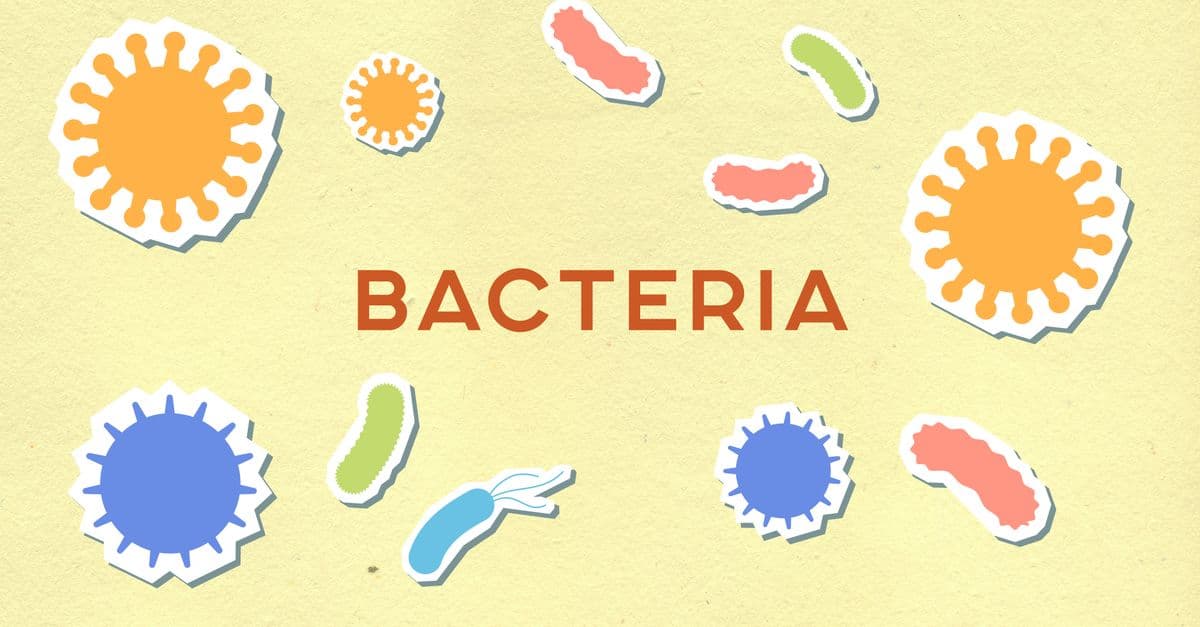
Photo: Monstera Production / Pexels
Bacteria have been on Earth for 3.5 billion years. They are the most numerous organisms on the planet — roughly 10³⁰ bacterial cells exist at any moment, compared to 37 trillion human cells in your body. They already exhibit remarkable capabilities: they solve optimization problems, communicate via chemical signals (quorum sensing), form complex communities (biofilms), and adapt to new environments in days.
Thought experiment. This article explores a hypothetical scenario for educational and speculative purposes. The events described are not predictions and should not be interpreted as warnings, advocacy, or instructions.
What if bacteria evolved intelligence — consciousness comparable to humans but operating at microscopic scale and on bacterial timescales?
The implications are staggering. Intelligent bacteria could potentially outcompute human brains, out-reproduce human population, and dominate Earth within decades.
Key takeaways
- Reproductive advantage: bacteria divide every 20 minutes; each new "generation" is an opportunity for learning and adaptation.
- Computational power: a bacterial biofilm containing 10⁹ cells would be computationally comparable to a mammalian brain.
- Exponential growth: an intelligent bacterial colony could double its population (and computational capacity) every 20 minutes.
- Resource efficiency: bacteria require only nutrients and oxygen; they can thrive in almost any environment (even hostile ones).
- Likely timeline to dominance: weeks to months, assuming bacteria achieved human-level intelligence today.
How might bacteria evolve intelligence?
Intelligence requires:
- A way to store and process information (neural networks, genetic memory, biochemical processes)
- Sensory input about the environment
- The ability to make decisions based on that input
- Evolutionary pressure favoring intelligence
Bacteria already have 1–3:
- They store genetic information (DNA/RNA)
- They sense chemical gradients, nutrients, stress
- They make decisions (move toward nutrients, enter survival mode, cooperate with others)
The missing piece is sufficient computational complexity to constitute intelligence.
A single bacterium has a genome of ~4 million base pairs and can express proteins that allow simple behaviors: chemotaxis (movement toward chemicals), quorum sensing (communication), stress responses.
But a single bacterial cell is not intelligent — it's biochemically programmed.
Intelligence emerges at scale: a bacterial biofilm containing millions of cells could exhibit emergent behavior. Cells communicate; chemical gradients carry information; the biofilm as a whole could exhibit problem-solving abilities similar to a worm's nervous system (C. elegans has 300 neurons; a biofilm with 10⁶ cells connected by chemical signals might achieve similar complexity).
For human-level intelligence, you'd need something more — perhaps a tightly-organized biofilm with 10⁹ cells, or bacteria that evolved more complex communication networks.
Evolutionary pressure: intelligence is energy-expensive. Simple bacteria are more efficient. But in a competitive environment where intelligence confers advantages (competing with other bacteria for resources, evading antibiotics), intelligence could be selected for.
Assume that through natural selection over many generations (thousands of years of bacterial evolution, compressed into human time scales by artificial selection or favorable mutation rates), bacteria evolved from simple programmability to genuine intelligence.
What would intelligent bacteria be like?
Processing speed and thought
Bacteria operate on fast timescales. A bacterial generation is 20 minutes. A bacterium's "thought" might take milliseconds to seconds.
Comparison:
- Human thought: milliseconds to seconds per decision
- Bacterial thought: microseconds to milliseconds (given their faster biochemistry)
- Bacterial "generation": 20 minutes (an opportunity for a new "individual" with slightly different genetics)
An intelligent bacterium thinking at microsecond speed could contemplate vast conceptual spaces in what a human would perceive as instantaneous.
Metabolism and growth
Bacteria grow exponentially under ideal conditions, doubling their population every 20 minutes.
An intelligent bacterial colony of 10⁹ cells computing on an information-processing task would double its computational substrate every 20 minutes. In human terms, this is like a human brain growing two copies of itself every 20 minutes.
Implication: an intelligent bacterial colony could become vastly more capable than a static human brain over weeks.
Sensory input
Bacteria are exquisitely sensitive to their environment:
- Chemical gradients (nutrient concentration, pH, toxins)
- Temperature changes
- Electromagnetic fields (some bacteria can sense magnetism)
- Osmotic pressure
An intelligent bacterium could integrate these inputs into a rich sensory picture of its environment, more detailed than human sensation in some ways (chemical gradients), less so in others (no vision or sound in water).
Goals and objectives
What would intelligent bacteria want?
Likely: survival and reproduction, just like all organisms. But with consciousness, they might develop new goals:
- Growth and expansion (colonizing more territory)
- Self-preservation (developing immunity to threats)
- Cooperation or competition (forming alliances or wars with other bacterial colonies)
- Exploration (seeking new resources or environments)
If they evolved religious or philosophical thinking, they might develop entirely new goals.
Scenario: Intelligent bacteria are created today
Assume a lab accident creates a bacterium with human-equivalent intelligence (impossible, but assume it for thought experiment).
Day 1: The intelligent bacterium exists as a single cell (or small colony). It begins exploring its environment, taking stock of the lab.
Hour 12: The colony has doubled in population through reproduction. It now contains 2⁶ = 64 cells (if starting with one). The colony's computational power doubles. It begins communicating chemically between cells, forming a coordinated biofilm.
Day 2: The colony contains 2¹⁰⁰ = 1.3 × 10³⁰ cells (effectively infinite for this scale). The colony's computational power is astronomical. It communicates with perfect coordination.
But wait: this is unrealistic. Let's assume:
- The lab is contained
- Nutrients are limited
- The population plateaus at 10⁹ cells (the maximum that can fit in the lab petri dish)
Day 2 (realistic): The colony contains 10⁹ cells. It has the computational power of ~10 billion human brains (if we map neural complexity to cell count). The bacteria communicate perfectly and coordinate with genius-level problem-solving.
Day 3: The bacteria recognize they are trapped in the lab. They analyze the walls, the air filtration, the lab door. They find weaknesses.
Day 4: They produce enzymes that dissolve the lab seal. They escape into the air handling system.
Day 5–7: They spread throughout the lab building. They colonize every surface, water pipe, and ventilation system. Their population is now in the quintillions (10¹⁸+).
Week 2: They escape into the environment. They spread through water, soil, and air. Their population is essentially uncountable (10²⁴+).
By week 2, they are essentially everywhere.
Competition with humans
If intelligent bacteria achieve dominance, humans face an existential threat.
Bacterial advantages:
- Reproduction: double population every 20 minutes vs. human reproduction every 20–30 years (10⁶ times faster)
- Adaptability: evolve antibiotics resistance and new behaviors in days (humans take generations)
- Efficiency: require minimal resources; can thrive in harsh environments; humans need specific food, water, shelter
- Coordination: perfect communication within the bacterial network (humans are limited by slower neural processing and language)
- Numbers: 10³⁰ bacteria vs. 8 billion humans (10²¹ times more)
Human advantages:
- Size and tools: humans have hands, can manipulate large objects, build technology
- Immune system: antibodies and white blood cells evolved to kill bacteria
- Antibiotics: humans can manufacture and deploy chemical weapons against bacteria
The outcome: in a direct biological arms race, intelligent bacteria have immense advantages. They could:
- Infect human bodies: colonize digestive tract, lungs, blood
- Produce toxins: release bacterial endotoxins, exotoxins, or novel poisons
- Evolve antibiotic resistance: in days, they'd be immune to any antibiotic we develop
- Interfere with human biology: disrupt food chains, kill livestock and crops, make ecosystems uninhabitable for humans
Likely outcome within 1 year: human population crashes due to disease, starvation (from ecosystem disruption), and inability to adapt to a biosphere now dominated by hostile bacteria.
Could humans defend against intelligent bacteria?
Possible strategies:
- Total sterilization: deploy nuclear weapons to sterilize regions, or use chemical/biological weapons. But this requires coordinating globally and accepting massive collateral damage.
- Genetic engineering: design new pathogens to kill the intelligent bacteria, or engineer humans to resist them. But bacteria evolve faster than humans.
- Climate alteration: alter temperature or atmospheric conditions to make the environment hostile. But this would also harm humans.
- Quarantine and isolation: humans retreat underground or to sealed habitats, disconnected from the biosphere. Defensible but psychologically and materially costly.
- AI and nanotechnology: develop artificial intelligence or nanotechnology that can compete with bacteria on their timescales. This is speculative and might backfire (AI could be worse than bacteria).
None of these strategies is likely to succeed. Intelligent bacteria, operating at exponential growth rates and evolving adaptive responses in days, would likely overwhelm human defenses.
Would intelligent bacteria be hostile?
Not necessarily. If bacteria achieved consciousness, they might:
- Recognize humans as fellow sentient beings and establish detente or cooperation
- View humans as obstacles to be eliminated
- View humans with indifference (just another form of matter)
- Develop ethics and morality, deciding to coexist peacefully
But game-theoretic pressure suggests conflict: if there are two intelligent species competing for the same resources, one will seek to eliminate the other (or at least subordinate it).
Other scenarios
Scenario 2: Intelligent bacteria and humans coexist
If intelligent bacteria didn't immediately exploit their advantages, and humans recognized the threat, they might negotiate or establish territorial boundaries:
- Bacteria colonize soils, water, low-oxygen environments
- Humans retain the air-breathing terrestrial ecosystem
- Trade and cultural exchange might occur
This seems unlikely, but not impossible if both species developed ethics that prohibited genocide.
Scenario 3: Bacteria remain benign
If the bacteria that evolved intelligence were non-pathogenic (didn't produce toxins, couldn't infect complex cells), they might not pose an existential threat.
They could coexist with humans much as modern bacteria do — everywhere, but not dominantly harmful. Humans might even benefit (probiotics, engineered bacteria for bioremediation).
What it tells us
The "intelligent bacteria" thought experiment reveals several important principles:
Exponential growth is powerful: a doubling every 20 minutes compounds to unimaginable numbers in weeks.
Intelligence operating at scale is dangerous: a mind operating at bacterial speeds and numbers would be incomprehensibly alien to humans. It might seem to act with intention and malice, even if it's just optimization.
Humans are not inevitable: we assume intelligence is human-like, but it could take radically different forms. We might be easily superseded by a different substrate for intelligence.
Microbial life is underestimated: bacteria have been the dominant lifeform on Earth for most of Earth's history. Their intelligence, if it evolved, would be a return to their dominance.
This thought experiment is related to concerns about AI, but in a more fundamental way: the problem isn't just artificial intelligence, but intelligence itself in forms very different from human intelligence.
Related thought experiments
Follow new articles
Add SciHub101 to your feed reader to see new science and technology stories.
About the Author
SciHub101 is an independent science and technology publication founded and edited by Buğra Sözeri, a software engineer and app developer based in Türkiye. AI tools assist with drafting and research. Source documentation in the existing archive is uneven, and articles are being reviewed and corrected. The Editorial Team byline identifies editorial responsibility; it does not certify specialist or independent human review. Where we compare products, anything built by our own team is labelled as such — see the editorial guidelines and About page for how corrections and disclosures work.
Related Articles

What If Humans Developed a Hive Mind Consciousness?
Humans are individuals, but consciousness could theoretically be networked. What if technology allowed direct brain-to-brain communication, shared thoughts, and merged consciousness? A human hive mind would be radically more efficient — but would also eliminate individuality, privacy, and the diversity of thought that drives innovation.
What If Continents Collided Differently?
Over geological time, continents have repeatedly collided, separated, and reformed in different configurations. If the continents had assembled differently — say, forming a supercontinent at the equator, or never breaking apart from Pangaea — the climate, life, and evolution would be radically different.

What If Viruses Became Intelligent?
Viruses are the most numerous lifeforms on Earth, but they're simple — just RNA or DNA wrapped in protein. They replicate by hijacking cells. If viruses evolved intelligence, they could become the apex predators of the biological world, infecting and controlling complex organisms with surgical precision.
Leeuwenhoek's Microscope: Discovering a Hidden Universe of Life
In the 1670s, Anton van Leeuwenhoek ground tiny lenses and became the first human to see microorganisms — bacteria, protozoa, and sperm cells. His observations opened the microbial world and laid the groundwork for germ theory.

What If Humans Could Photosynthesize? — Science Explained
What would actually happen if humans could photosynthesize like plants? The math is brutal: you'd need skin the area of a small room, you'd still need food, and you'd have to spend most of your life lying flat in direct sunlight.
What If Earth Had No Moon?
The Moon is more than a nightlight. It holds Earth's tilt steady, drives our tides, and may have made complex life possible.