Leeuwenhoek's Microscope: Discovering a Hidden Universe of Life
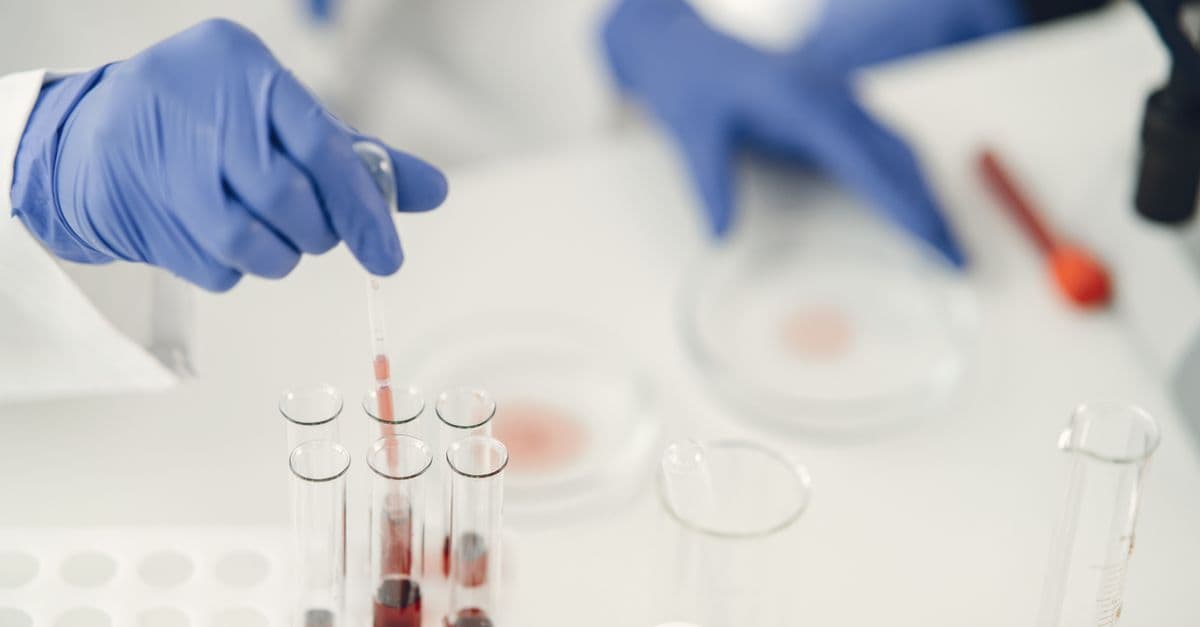
Photo: cottonbro studio / Pexels
In the 1670s, a Dutch cloth merchant in the city of Delft ground tiny glass lenses and pointed them at drops of water from a nearby lake. What he saw — creatures writhing, darting, and tumbling through what appeared to be empty liquid — shook his world.
No human being had ever seen these things before. Anton van Leeuwenhoek had not discovered a new species or a new planet. He had discovered a new scale of life — an entire world of living organisms invisible to the naked eye, of a complexity and abundance no one had imagined.
His observations founded microbiology, directly anticipated germ theory by two centuries, and established the principle that scientific credibility flows from evidence and transparent method — not institutional affiliation.
Who Was Leeuwenhoek?
Anton van Leeuwenhoek (1632–1723) was not a university-trained scientist. He had no Latin, no formal education in natural philosophy, no academic credentials. He was a draper — a fabric and thread merchant — who used magnifying lenses to assess cloth quality.
But Leeuwenhoek was obsessed with lenses. He taught himself to grind small spherical glass lenses to an extraordinary standard, producing magnifications that far exceeded anything else available at the time. His best instruments could magnify more than 270 times — far beyond the compound microscopes of his contemporaries, which typically managed 20–30x before optical aberrations made the image useless.
His secret lay partly in technique: he ground his lenses individually for each instrument rather than stacking multiple lenses (which compound microscopes did), avoiding the compounding of optical errors. And he kept his detailed methods secret until late in life, a precaution that simultaneously protected his competitive advantage and frustrated scientists trying to replicate his instruments.
The First Observations: Animalcules
In 1674, Leeuwenhoek collected water from a nearby lake (Berkelse Meer) and examined it with his microscope. He saw what he called animalcules — "tiny animals" — moving with evident purpose through the water. He described them in extraordinary detail: their shapes (oval, spiral, rod-like), their motion (spinning, tumbling, gliding), their sizes relative to a grain of sand.
He was seeing protozoa — single-celled eukaryotic organisms like Vorticella and Euglena — for the first time in history.
In 1676, he examined an infusion of black pepper in water and made an even more significant discovery: much smaller creatures, too small for protozoa, moving in enormous numbers. By his size estimates — comparing to a grain of sand — these were organisms thousands of times smaller than anything previously observed. He was seeing bacteria.
His letter to the Royal Society of London in 1676 describing these observations was met with skepticism bordering on mockery. Tiny living animals in a drop of water? The Society sent a delegation of observers to Delft to verify the claims. They confirmed them.
A Systematic Documenter
Over the following decades — he continued working until his death at 90 in 1723 — Leeuwenhoek examined almost everything he could obtain:
Aquatic samples:
- Lake water, rain water, well water, snow
- Seawater (finding marine microorganisms)
- Water from house gutters after rain
Bodily substances:
- Saliva — describing bacteria from his own mouth in extraordinary detail
- Dental scrapings — revealing the diverse microbial community of the human oral cavity
- Blood — correctly describing red blood cells as "flat oval particles" (though he incorrectly thought they were spherical)
- Sperm — the first person to observe spermatozoa, from multiple species, correctly recognizing their role in reproduction
Tissues:
- Muscle fibers — describing the cross-striated structure that modern histology confirms
- Plant cells — observing cell walls and vacuoles
- Insect anatomy — compound eyes of flies, the mouthparts of aphids
In nearly 200 letters to the Royal Society and other correspondents between 1673 and 1723, he described a parade of observations that no contemporary could verify — because no one else could build instruments of comparable quality.
The Credibility Problem and How He Solved It
Leeuwenhoek faced a fundamental epistemological challenge: he was making extraordinary claims about an invisible world that only he could see. His correspondents had to take his word for what his microscopes showed.
He addressed this through several strategies:
Inviting verification: He regularly invited visitors to look through his instruments. The Royal Society delegation in 1680 examined his microscopes and confirmed his bacterial observations. This transformed his status from eccentric correspondent to credible observer.
Detailed description: His letters are remarkably specific — sizes given in grain-of-sand fractions, motions described in terms of contemporary analogies, sketches attached. This level of detail is harder to fabricate consistently.
Multiple independent observations: He re-examined the same samples over time and found consistent patterns. He observed bacteria from different sources and described consistent morphological types.
Honest uncertainty: Leeuwenhoek was careful to distinguish what he saw from what he inferred. He speculated cautiously and changed his views when new observations warranted it.
In 1680, the Royal Society elected him a Fellow — an extraordinary honor for a man without academic training. His credibility was ultimately established not by credentials but by the precision and reproducibility of his observations.
The Path from Leeuwenhoek to Germ Theory
Leeuwenhoek never connected his animalcules to disease. The germ theory of disease — the idea that specific microorganisms cause specific illnesses — had to wait nearly two centuries:
1840s: Ignaz Semmelweis showed that handwashing dramatically reduced childbed fever in hospitals, implying some transmissible agent.
1857–1863: Louis Pasteur disproved spontaneous generation (the idea that microorganisms arose from non-living matter), showed fermentation was caused by microorganisms, and developed the germ theory experimentally.
1876–1882: Robert Koch established Koch's Postulates — criteria for proving a specific bacterium causes a specific disease — and identified the agents of anthrax, tuberculosis, and cholera.
1880s: Pasteur and others developed vaccines, extending Jenner's earlier smallpox work to anthrax, chicken cholera, and rabies.
1928: Alexander Fleming discovered that Penicillium mold killed bacteria in culture — eventually leading to the antibiotic revolution.
Every step of this progression — from identifying infectious agents to developing treatments — rested on the foundation that Leeuwenhoek built: the knowledge that an invisible world of microorganisms exists, that they are diverse, abundant, and present in virtually every environment.
The Modern View of the Microbial World
Leeuwenhoek's animalcules turned out to be the dominant form of life on Earth by almost any measure:
- Bacteria alone account for an estimated 10^30 individual cells on Earth — more than all the stars in the observable universe
- The human body contains roughly equal numbers of bacterial and human cells (~3.8 × 10^13 of each)
- The human gut microbiome — ~1000 species of bacteria inhabiting the intestine — weighs roughly 1–2 kg and profoundly influences metabolism, immune function, and even brain chemistry (see our gut microbiome article)
- Deep subsurface bacteria live kilometers underground in rock; bacteria have been found in the stratosphere; tardigrades (microscopic animals) survive in outer space
- Bacteriophages — viruses that infect bacteria — are the most abundant biological entities on Earth, estimated at ~10^31, outnumbering bacteria 10 to 1
What Leeuwenhoek saw in that drop of water wasn't a curiosity. It was the tip of the largest iceberg in biology.
The Scientific Legacy of Curiosity
Leeuwenhoek's example carries a message beyond his discoveries. He was not connected to a university, not sponsored by an aristocratic patron for research purposes, had no formal scientific training, and had no reason to suppose that looking more carefully at water droplets would reveal anything of importance.
He looked because he was curious. He improved his instruments because he wanted to see better. He wrote detailed letters because he wanted to communicate what he found. He invited critics to verify his claims because he was confident the evidence would support him.
This pattern — curiosity, precision, transparency, openness to verification — is what scientific practice looks like when it works, whether in a 17th-century Dutch draper's shop or a 21st-century genomics laboratory.
Comparison: Leeuwenhoek's Observations and Modern Understanding
| What Leeuwenhoek Saw | What We Now Know |
|---|---|
| Small animalcules in lake water | Protozoa — single-celled eukaryotes, including algae, ciliates, flagellates |
| Very tiny organisms (1676 letter) | Bacteria — prokaryotes, 0.5–5 μm in size |
| "Eels" in vinegar | Turbatrix aceti — vinegar nematodes, not bacteria |
| Tiny spirals in dental plaque | Spirochetes and other oral bacteria — now known to be hundreds of species |
| Oval flat particles in blood | Red blood cells (erythrocytes); he initially thought spherical |
| Tailed sperm cells | Spermatozoa — correctly identified as involved in fertilization |
FAQ
Q: Was Leeuwenhoek the first to use a microscope? A: No. Robert Hooke published Micrographia in 1665, including famous observations of cork cells (which he named "cells"), fleas, and the compound eye of flies. Hooke's work was widely read and illustrated with beautiful engravings. But Hooke's microscope magnified only ~30–40 times. Leeuwenhoek's instruments achieved 200–270x magnification, allowing him to see organisms far smaller than Hooke's microscope could reveal. Leeuwenhoek was the first to see bacteria and protozoa.
Q: Why did it take nearly 200 years to connect microorganisms to disease? A: Several reasons: the association between microscopic organisms and illness was not obvious from the organisms' existence alone; the germ theory required controlled experiments showing a specific microorganism causes a specific disease; and prevailing miasma theory (disease caused by bad air) was entrenched. Semmelweis, Pasteur, and Koch each needed to overcome different forms of resistance — institutional, theoretical, and methodological — to establish germ theory.
Q: How did Leeuwenhoek grind his lenses so well? A: The details are still debated. For most of his life he kept his technique secret. Analysis of surviving Leeuwenhoek microscopes (fewer than a dozen remain) suggests he used small spherical lenses — glass balls essentially — rather than the biconcave lenses of compound microscopes. Some modern researchers have made replicas and confirmed they can achieve similar magnifications. Recent analysis (2021, Royal Society Open Science) suggested he may have used a glass-blowing technique rather than traditional grinding.
Q: Can we see viruses with Leeuwenhoek's type of microscope? A: No. Viruses range from ~20 to ~300 nanometers. Light microscopes, regardless of magnification, cannot resolve objects smaller than about half the wavelength of visible light (~200–250 nm). The largest viruses (like poxviruses) are at the edge of light-microscopy visibility, but most cannot be seen. Viruses weren't visualized until the 20th century using electron microscopes, which use electrons (much shorter wavelength than light) to achieve nanometer resolution.
Q: What happened to Leeuwenhoek's microscopes? A: He had hundreds, but gave away many as gifts and sold others. At his death, 26 microscopes were auctioned; most subsequently disappeared. Today, fewer than 10 are known to survive in public collections, held by museums in Utrecht and elsewhere in the Netherlands. They are among the most significant surviving scientific instruments in history.
Sources
- Dobell, C. (1932). Antony van Leeuwenhoek and His "Little Animals." Harcourt, Brace & Company.
- Ford, B. J. (1991). The Leeuwenhoek Legacy. Biopress.
- van Zuylen, J. (1981). The microscopes of Antoni van Leeuwenhoek. Journal of Microscopy, 121(3), 309–328.
- Gest, H. (2004). The discovery of microorganisms by Robert Hooke and Antoni van Leeuwenhoek. Notes and Records of the Royal Society of London, 58(2), 187–201.
- Cocquyt, T., & Gielis, J. (2021). How Leeuwenhoek made his microscopes. Royal Society Open Science, 8(2), 211237.
Follow new articles
Add SciHub101 to your feed reader to see new science and technology stories.
About the Author
SciHub101 is an independent science and technology publication founded and edited by Buğra Sözeri, a software engineer and app developer based in Türkiye. AI tools assist with drafting and research. Source documentation in the existing archive is uneven, and articles are being reviewed and corrected. The Editorial Team byline identifies editorial responsibility; it does not certify specialist or independent human review. Where we compare products, anything built by our own team is labelled as such — see the editorial guidelines and About page for how corrections and disclosures work.
Related Articles
Weber's Touch Experiments: How Vibration Became a Sense
Ernst Heinrich Weber was a hearing anatomist who measured touch with compasses and lifted weights. His work gave psychology its first law and still frames how scientists study vibration and the deaf brain.
Faraday's Induction: From Magnets to Electricity
In 1831, Michael Faraday discovered that changing magnetic fields induce electric currents. This fundamental discovery enabled electric motors, generators, and transformed civilization.
What If Bacteria Evolved Intelligence?
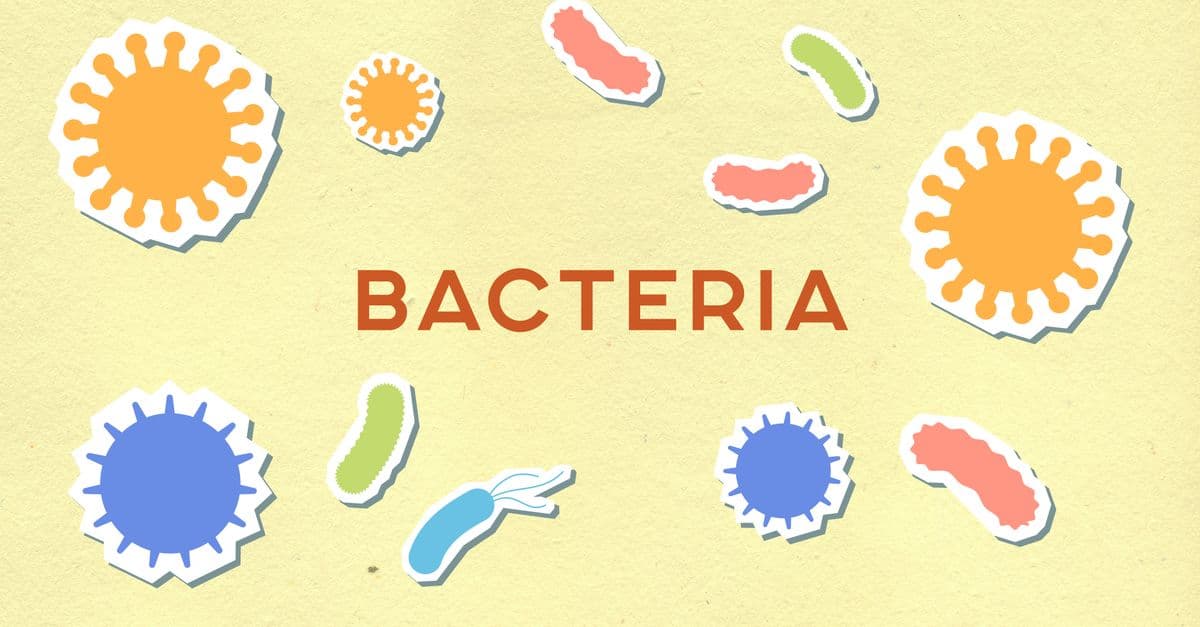
Bacteria have been on Earth for 3.5 billion years, outnumber all complex life combined, and solve optimization problems better than human computers in some cases. If they evolved intelligence through natural selection, they could become the dominant lifeform on Earth — and humanity might not stand a chance.
Plague and Disease: How Epidemics Shaped History
The Black Death killed a third of Europe. The 1918 flu killed more people than World War I. Epidemics have redirected history more than any army.
History of Mathematics: From Euclid to Turing
Mathematics is the only field where we prove things are true forever. The story of how humans discovered that power spans 2,300 years and several revolutions in thought.
History of the Atom: From Dalton to Quantum Mechanics
The atom went from a philosophical guess to a nuclear reality in about 150 years. Each model that replaced the last was stranger than anyone expected.