What If Humans Could Photosynthesize? — Science Explained
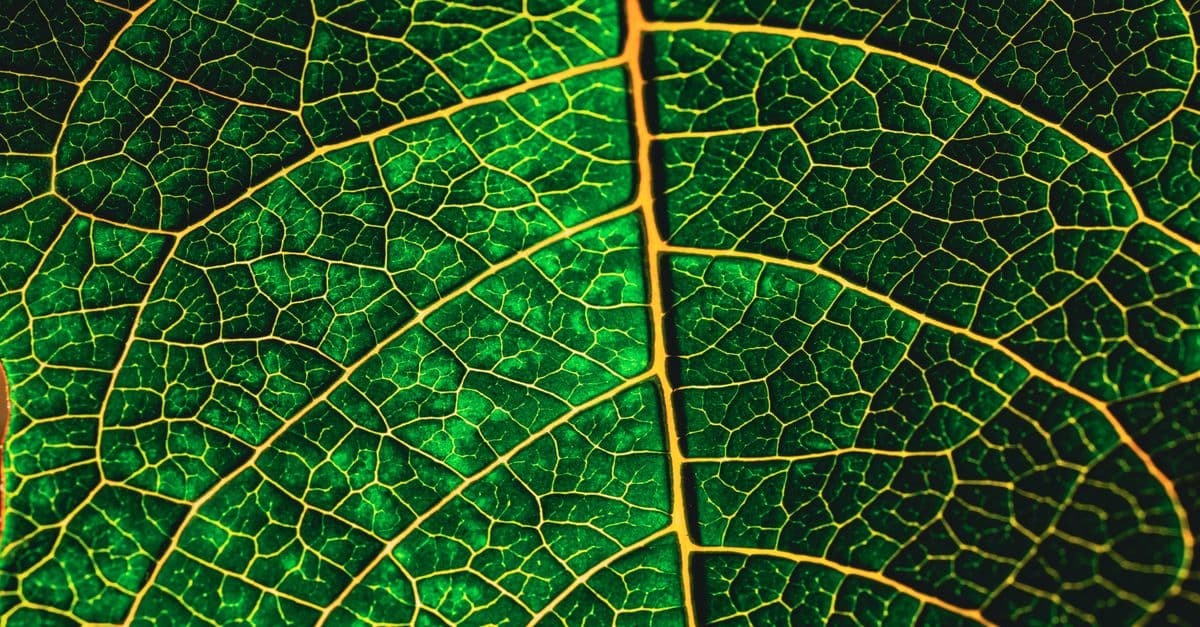
Photo: Gozde Ka / Pexels
The fantasy of never needing to eat is ancient, and photosynthesis looks like the obvious biological loophole. Plants live on nothing but sunlight, water, and air, so why can't we? It sounds like a superpower: walk outside, soak up energy, skip lunch. Grocery bills gone. Farming optional. World hunger solved by standing in a park.
Thought experiment. This article explores a hypothetical scenario for educational and speculative purposes. The events described are not predictions and should not be interpreted as warnings, advocacy, or instructions.
The biology says otherwise, and the numbers are not close. Even in the best-case scenario, human photosynthesis would supply a small fraction of daily energy needs, not a replacement for eating. This piece works through the actual physics of sunlight, the actual efficiency of chlorophyll, and the actual anatomy problem of trying to turn a mammal into something more like a leaf, then looks at what society would look like if evolution had somehow solved it anyway.
Key takeaways
- Energy gap: A resting adult burns roughly 1,650–1,700 kcal/day (about 80 W) just on basal metabolism; a sedentary lifestyle needs closer to 2,000 kcal/day (Cleveland Clinic, 2023; University of Toronto Faraday physics notes).
- Surface area problem: Meeting full caloric needs through skin photosynthesis at realistic efficiency would require somewhere between 10 m² and 50 m² of sun-facing surface, five to thirty times actual human skin area (~1.7–1.9 m², Du Bois formula, 1916).
- Efficiency ceiling: Real-world crop photosynthesis converts roughly 0.1–2% of incoming sunlight into stored chemical energy; the theoretical biochemical maximum is 4.6% for C3 plants and about 6% for C4 plants (Zhu, Long & Ort, 2008, Current Opinion in Biotechnology).
- Nutrients still needed: Photosynthesis only manufactures carbohydrate. Nine essential amino acids and essential fatty acids have no photosynthetic source and would still require eating.
- Nature has already tried this: The sea slug Elysia chlorotica steals chloroplasts from algae and keeps them running for up to ten months without eating (Pierce lab research, summarized in Scientific Data, 2019), and it's the closest any animal has gotten.
What Would Happen First (Seconds to Minutes)
Start with the raw energy numbers, because they are more limiting than most people expect.
Solar irradiance at Earth's surface peaks around 1,000 W/m² on a clear day at solar noon at mid-latitudes; the solar constant above the atmosphere is 1,361 W/m² (NASA), and atmospheric absorption and scattering knock roughly a third of that off by the time light reaches skin. Average adult body surface area, calculated from the 1916 Du Bois formula still used in clinical medicine today, is about 1.7–1.9 m² (NCBI StatPearls, 2023).
Real plants, averaged across a whole growing season including respiration losses, convert only about 1–2% of incident sunlight into stored chemical energy; some staple crops run closer to 0.1% over a full year. Apply the more generous 1% figure to a human:
1,000 W/m² × 1.8 m² × 1% efficiency = 18 watts of metabolic power, under perfect noon sun, with 100% of skin exposed and perfectly oriented toward the sun.
A resting human needs about 80 watts continuously just for basal metabolism, the energy spent on breathing, circulating blood, and running cellular housekeeping without moving a muscle (University of Toronto Faraday physics reference; Cleveland Clinic, 2023). Eighteen watts of photosynthetic input covers about 22% of that baseline, and only during the handful of midday hours when the sun is directly overhead. Even pushing efficiency to the theoretical ceiling for C3 photosynthesis, 4.6% (Zhu, Long & Ort, 2008), yields roughly 83 watts, just barely matching resting metabolism and still assuming flawless noon sun with zero clothing, zero shade, and zero movement.
In the first few minutes of trying this, the uncomfortable truth becomes obvious: skin-level photosynthesis, even under generous assumptions, cannot outrun the energy your body burns just existing.
What Would Happen Next (Hours to Days)
To sustain a human on photosynthesis alone, rather than just supplement resting metabolism, the math forces a total redesign of the body. Work backward from the actual caloric target.
A sedentary adult needs roughly 2,000 kcal/day, which works out to about 97 watts of continuous power (1 kcal/day ≈ 0.0484 W). To generate that much from 1%-efficient photosynthesis at noon-level irradiance:
97 W ÷ (1,000 W/m² × 0.01) = 9.7 m² of unshaded, directly sun-facing surface, roughly five to six times actual human skin area, and that's assuming noon sun sustained continuously, which no location on Earth provides for more than a few hours.
Average solar irradiance across a full day, once you fold in morning, evening, clouds, latitude, and season, is closer to 200 W/m² at mid-latitudes rather than the 1,000 W/m² noon peak. Recalculating against that realistic daily average pushes the required surface area up to roughly 50 m², the floor area of a small studio apartment, all of it needing direct, unobstructed exposure.
A photosynthetic human lifestyle, under these numbers, would not look like a stroll in the sun. It would look like lying flat, unclothed, in full unobstructed daylight for 8–10 hours, every day, with your body spread as wide and thin as anatomically possible to maximize exposed area. Standing upright, the posture that lets humans run, throw, and see over tall grass, is close to the worst possible geometry for solar collection, because it minimizes the skin area facing the sun at any given moment. This is not a supplemental energy source. It is closer to a full-time occupation that competes directly with the two behaviors, mobility and posture, that make humans human. And even after all that sun exposure, a photosynthetic human would still need to eat protein and fat, because photosynthesis manufactures only carbohydrate.
How much surface area would a photosynthetic human actually need?
Between roughly 10 m² under best-case noon conditions and 50 m² under realistic all-day-average irradiance, five to thirty times the 1.7–1.9 m² of surface a real human has. Reaching even the low end would require reshaping the body into something flat and leaf-like rather than roughly cylindrical.
The Mechanism: Why Chlorophyll Can't Just Bolt Onto Human Skin
Photosynthesis is not a coat of paint you apply to a surface. It's a multi-stage molecular assembly line, and every stage has a cost.
Chlorophyll absorbs light efficiently only in two narrow bands, around 430 nm (blue) and 660 nm (red); it reflects green light, which is why plants look green and also why they're throwing away a meaningful chunk of the visible spectrum before conversion even starts. Roughly 43% of solar radiation arrives in wavelengths chlorophyll can actually use in the first place. Of the photons that are absorbed, the light reactions convert them to ATP and NADPH (the cell's energy-carrier molecules) with a theoretical maximum quantum efficiency of about 26%, and the downstream Calvin cycle, the set of enzyme reactions that fixes atmospheric CO₂ into glucose, adds further losses from photorespiration and metabolic overhead. Stack those losses together and you land at Zhu, Long, and Ort's 2008 ceiling: 4.6% for C3 plants, 6% for C4 plants like corn and sugarcane, which use a more efficient carbon-fixation pathway.
Plants also aren't just chemically optimized for this, they're structurally optimized. A leaf is 0.1–0.3 mm thick and nearly flat, maximizing surface area relative to volume, the exact geometry photosynthesis rewards. Animal bodies evolved in the opposite direction: roughly cylindrical or spherical shapes minimize surface area relative to volume, because that geometry conserves heat, protects organs, and supports fast, energy-dense movement. A leaf-shaped human would solve the surface-area problem and simultaneously lose the ability to run, regulate body temperature efficiently, or survive a cold night.
Chloroplasts, the organelles inside plant cells that actually perform photosynthesis, are themselves the fossil imprint of an ancient merger. Roughly 1 to 1.5 billion years ago, a eukaryotic cell engulfed a free-living cyanobacterium (a photosynthetic bacterium) and, rather than digesting it, kept it as a permanent internal power plant, an event called primary endosymbiosis. Over evolutionary time the cyanobacterium's own genome shrank, transferring most of its genes into the host cell's nucleus, until what remained was the modern chloroplast: a bacterium-derived organelle with its own small residual genome, double membrane, and internal thylakoid stacks (Nature Scitable; MDPI Genes review, 2021). Every plant cell alive today carries that merger's legacy. Animal cells never acquired an equivalent partner, and grafting one on late, after 500 million years of animal evolution optimized for speed, warmth, and brainpower instead of light-harvesting, is not a small retrofit.
Has anyone actually gotten chloroplasts working inside animal cells?
Yes, briefly and partially. A 2024 study in the Proceedings of the Japan Academy isolated functional chloroplasts from the red alga Cyanidioschyzon merolae and introduced them into cultured mammalian cells; the chloroplasts kept their internal thylakoid structure and retained measurable photosystem II electron-transport activity for at least two days before degrading (Proceedings of the Japan Academy, 2024, indexed via J-STAGE and PubMed). It's proof that mammalian cells can briefly host working chloroplasts, not evidence that a whole photosynthetic mammal is achievable. Two days of partial function in a lab dish is a long way from a self-sustaining organ.
Long-Term Consequences
Suppose evolution somehow solved this, over hundreds of millions of years, giving humans wide, flat, leaf-like skin extensions, chlorophyll-bearing outer cell layers, and a metabolism rebuilt to interleave plant and animal biochemistry. What would that society actually look like?
Agriculture would shrink rather than disappear. Photosynthesis produces only carbohydrate energy, glucose and its derivatives, so protein and essential fats would still require hunting, fishing, or livestock. Grain farming, the caloric backbone of most historical civilizations, would become largely unnecessary, since carbohydrate needs would be met by sunlight instead of wheat, rice, or corn. But protein agriculture, pastoralism, and fishing would remain essential industries, just reorganized around fat and amino acids rather than calories in general.
Social ritual built around food would shift, not vanish. Shared meals as a survival necessity would lose urgency, but humans build social bonding around scarcity and shared effort regardless of the specific resource, so collective sun exposure, communal rooftop sunning, seasonal "light festivals," might plausibly take over some of the role dinner tables currently play.
Geography would reassign winners and losers. Populations near the equator, with consistent year-round high-angle sun, would have an energy abundance that high-latitude populations, in places like Scotland, Scandinavia, or northern Canada, simply could not match for several months of the year. Seasonal migration toward the sun, something a handful of human cultures already do informally, would become a hard biological necessity for large parts of the population rather than a lifestyle choice, mirroring what many migratory animals already do for food and temperature, not light-harvesting.
Evolution itself would face a genuine trade-off inside human skin. Darker pigmentation absorbs more light across the visible spectrum, which would help photosynthetic efficiency, but ultraviolet light also damages the delicate chlorophyll-containing structures doing the work, the same UV-driven damage that makes plants build UV-absorbing compounds into their outer leaf layers in the first place. A photosynthetic human population would face selective pressure to evolve pigments or protective compounds that let visible light in for energy capture while blocking the UV wavelengths that degrade the photosynthetic machinery itself, essentially re-running, in reverse, some of the same evolutionary logic that shaped skin pigmentation as a defense against UV-driven folate breakdown and skin cancer risk in real human populations (Nutrients, 2018, Vitamin D-Folate Hypothesis literature). Another body-altering idea is covered in the science of superpowers.
Common Confusions and What People Get Wrong
"If plants can do it with no food, why can't we just add chlorophyll to our skin?" Chlorophyll is a pigment molecule, not a self-contained power plant. On its own it can absorb a photon, but converting that absorbed energy into usable chemical fuel requires the entire surrounding machinery: the thylakoid membrane structures that organize chlorophyll into functional light-harvesting complexes, the electron-transport chain that turns absorbed photons into ATP and NADPH, and the Calvin-cycle enzymes that use those products to fix CO₂ into glucose. Painting chlorophyll onto skin, or even genetically inserting the chlorophyll-synthesis genes, without the rest of that apparatus would do essentially nothing.
"Couldn't we just get some energy from sunlight to reduce how much we eat?" This is the one part of the fantasy that survives contact with the numbers, in a much smaller form than people imagine. If human skin could somehow reach the upper end of realistic plant efficiency, around 2%, a person lying in full sun for several hours could plausibly generate on the order of 100–200 kcal over that period, roughly 5–10% of daily caloric need. That's a genuine, if modest, supplement, potentially useful during famine or extreme food scarcity, but nowhere near a replacement for eating, and it still wouldn't touch the need for protein or fat.
"Isn't the sea slug already proof this works?" Elysia chlorotica is real and remarkable, but it is not evidence that active, complex animals can live on photosynthesis alone. The slug is a few centimeters long, lives in shallow, sunlit water, and moves very little, minimizing its energy demand to something photosynthesis can plausibly cover for a stretch of months. It also builds up starch reserves from its algal diet before going "solar," so its survival isn't purely photosynthetic even during its best-documented fasting periods (NCBI, starving-slug starch-reserve research). Scaling that strategy up to a warm-blooded, fast-moving, large-brained mammal changes the energy budget by orders of magnitude.
"Would photosynthetic humans just look green?" Not necessarily uniformly. Chlorophyll a and b absorb blue and red light and reflect green, which is why most plant life looks green, but plenty of photosynthetic organisms use different pigment combinations, carotenoids for orange-yellow, phycoerythrin for red in some algae, that absorb more broadly across the spectrum. A human population under strong selective pressure to maximize light capture might actually evolve darker, broader-spectrum-absorbing pigmentation, closer to deep brown or near-black, rather than plant green, precisely because that would out-compete a narrower green pigment on total energy captured.
Comparing the Real Numbers
| Scenario | Surface area used | Sunlight condition | Power generated | % of daily need covered |
|---|---|---|---|---|
| Bare skin, realistic efficiency | 1.8 m² | Noon, clear sky (1,000 W/m²) | ~18 W | ~22% of resting BMR only |
| Bare skin, theoretical max efficiency | 1.8 m² | Noon, clear sky (1,000 W/m²) | ~83 W | ~100% of resting BMR only |
| Full sedentary caloric need, realistic efficiency, noon sun | 9.7 m² | Noon, clear sky (1,000 W/m²) | ~97 W | 100% of sedentary need |
| Full sedentary caloric need, realistic efficiency, daily average | ~50 m² | All-day average (200 W/m²) | ~97 W | 100% of sedentary need |
Even the most generous realistic scenario needs five times more sun-facing surface than an actual human has, and that's before accounting for clothing, indoor time, cloud cover, or winter. Source figures: solar irradiance (NASA), body surface area (NCBI StatPearls, 2023), photosynthetic efficiency ceiling (Zhu, Long & Ort, 2008), basal metabolic rate (Cleveland Clinic, 2023).
FAQ
Q: Could we genetically engineer humans to photosynthesize? A: Inserting chlorophyll-synthesis genes into human cells is theoretically within synthetic biology's toolkit, since the genetic pathways are well characterized. But making chloroplast-equivalent organelles function stably inside human cells, persist across cell division, and integrate with human metabolism without the animal's oxygen-rich, temperature-regulated internal environment disrupting them is an engineering problem orders of magnitude beyond current capability. A 2024 lab study managed only about two days of partial chloroplast function inside cultured mammalian cells (Proceedings of the Japan Academy, 2024).
Q: What does Elysia chlorotica actually tell us about animal photosynthesis? A: It shows the concept is biologically possible at small scale: a slow-moving, low-energy-demand marine animal can host stolen chloroplasts and survive for up to about ten months partly on their output. It does not show that a fast-moving, warm-blooded, large-brained animal like a human could do the same, because the energy math scales enormously against larger, more active bodies.
Q: Would photosynthetic humans need sunscreen? A: Almost certainly, and it creates a real evolutionary tension. Chlorophyll-based systems need direct sunlight exposure to work, but ultraviolet radiation damages the same photosynthetic structures being exposed. Real plants solve this with UV-absorbing compounds layered above their chlorophyll; a photosynthetic human would likely need an analogous UV-filtering skin layer that lets visible light through while blocking the UV wavelengths that would otherwise degrade the light-harvesting apparatus.
Q: Could photosynthesis realistically supplement rather than replace human food intake? A: This is the most defensible version of the idea. At upper-bound realistic efficiency (around 2%), several hours of full-body sun exposure could plausibly generate somewhere in the range of 100–200 kcal, roughly 5–10% of daily need. That's a meaningful buffer during food scarcity but far short of replacing meals, and it does nothing for protein or fat requirements.
Q: What color would photosynthetic humans be? A: Likely not uniform plant-green. Chlorophyll a and b absorb blue and red wavelengths and reflect green, but organisms under selective pressure to maximize total light capture often evolve broader-spectrum pigments, carotenoids, phycoerythrin, and similar compounds, that absorb more of the spectrum than chlorophyll alone. A photosynthetic human population optimized purely for energy capture might trend toward dark brown or near-black skin rather than green.
Q: Why can't humans just be smaller so photosynthesis covers more of their needs proportionally? A: Smaller bodies do have a better surface-area-to-volume ratio, which is part of why Elysia chlorotica and other photosynthetic sea slugs are all small. But shrinking a human enough to make the ratio work, down toward insect or small-reptile scale, would eliminate the large brain, endothermic (warm-blooded) metabolism, and complex behavior that define being human in the first place. The trade-off runs directly against the traits people usually want to keep in this thought experiment.
Q: Does clothing rule out photosynthetic humans in practice? A: Effectively, yes, for anyone living in a climate that requires clothing for warmth or in a society with clothing norms. Photosynthesis requires direct, unobstructed light on the skin; even light fabric blocks most of the usable wavelengths. A photosynthetic human society would likely need to be built around near-constant nudity in warm, sunny climates, or accept a sharply reduced energy contribution from sunlight for large parts of the year.
Q: How does human photosynthesis compare to solar panels? A: Poorly, on efficiency alone. Commercial silicon solar panels convert roughly 15–22% of incident sunlight into usable electrical energy, three to twenty times better than the biological photosynthetic ceiling of 4.6–6% (Zhu, Long & Ort, 2008). Photosynthesis wins on other fronts, self-repair, self-replication, and direct production of storable chemical fuel rather than electricity, but as a pure energy-conversion efficiency contest, engineered photovoltaics already beat biology.
The Takeaway
Photosynthesis looks like a free-energy shortcut until you run the actual numbers on sunlight intensity, skin area, and biochemical efficiency, at which point it turns into a full-time occupation that still leaves you hungry. The real ceiling on plant photosynthetic efficiency, 4.6% at best (Zhu, Long & Ort, 2008), combined with the enormous surface area a human would need, ten to fifty times actual skin area, explains why animals evolved compact, mobile, warm-blooded bodies instead of flat, sun-collecting ones. Nature's closest attempt, the chloroplast-stealing sea slug Elysia chlorotica, only pulls it off by staying small, slow, and shallow. The honest version of "what if we could photosynthesize" isn't a world without hunger. It's a world where sunlight buys you a modest energy discount, and you still need dinner.
Read next:
Follow new articles
Add SciHub101 to your feed reader to see new science and technology stories.
About the Author
SciHub101 is an independent science and technology publication founded and edited by Buğra Sözeri, a software engineer and app developer based in Türkiye. AI tools assist with drafting and research. Source documentation in the existing archive is uneven, and articles are being reviewed and corrected. The Editorial Team byline identifies editorial responsibility; it does not certify specialist or independent human review. Where we compare products, anything built by our own team is labelled as such — see the editorial guidelines and About page for how corrections and disclosures work.
Related Articles
What If Gravity Was Twice as Strong? — Science Explained
What would actually happen if gravity suddenly doubled? Your skeleton would fracture under your own weight, the atmosphere would compress into a dense killing fog, and tall buildings would collapse. But life could still evolve — just very differently.
What If Earth Had No Atmosphere? — Science Explained
What would actually happen if Earth's atmosphere disappeared? Temperature swings from +120°C to –170°C, water boiling into space, instant deafness, UV sterilisation, and a very bad day for everything alive.
What If Humans Stopped Sleeping? — Science Explained
What would actually happen if humans stopped sleeping? Within days: hallucinations. Within weeks: organ failure. A rare disease called fatal familial insomnia makes this experiment real — and terrifying.
What If Humans Could Photosynthesize Like Plants?
A photosynthesising human sounds like a way to escape grocery bills — but the math says even a perfectly solar-powered human couldn't survive on sunlight alone. Here's why.
What If You Traveled at the Speed of Light? — Science Explained
What would actually happen as you approached the speed of light? The energy bill diverges, your clock slows, the sky bunches up ahead of you, and the empty space between stars turns into a particle beam. The reason the limit exists is more interesting than the scenario.
What If the Internet Went Down Permanently? — Science Explained
What would actually happen if the internet disappeared forever? Financial systems would fail in hours, food supply chains would collapse within days, and modern medicine would be crippled within weeks. The scale of what humanity would lose is staggering.