What If We Ran Out of Oxygen for 5 Seconds? — Science Explained
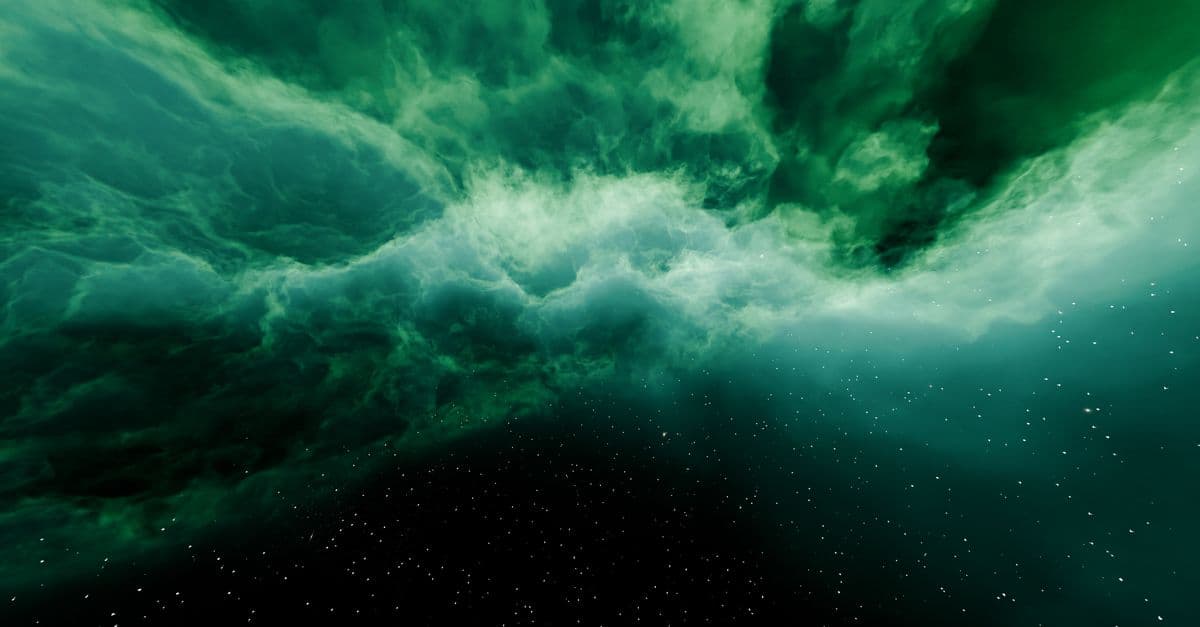
Photo: Marek Pavlík / Pexels
You'd survive. That's the good news. The human body can go about four to six minutes without oxygen before brain damage begins, and cell death in cardiac and cerebral tissue really accelerates after roughly three to five minutes of complete anoxia, according to clinical research summarized by the Cleveland Clinic and the NCBI StatPearls hypoxic brain injury reference (StatPearls, Cleveland Clinic). Five seconds of oxygen deprivation, on its own, is uncomfortable but not fatal. But here's the thing: you wouldn't be thinking about breathing. You'd be thinking about why every concrete building just cracked, why the sky turned nearly black, why your exposed skin is suddenly getting a savage UV burn, and why the metal tools in your workshop just fused together.
Thought experiment. This article explores a hypothetical scenario for educational and speculative purposes. The events described are not predictions and should not be interpreted as warnings, advocacy, or instructions.
Oxygen is not just the gas you breathe. It is load-bearing infrastructure for civilization, in a far more literal sense than that metaphor usually implies. Atmospheric oxygen makes up about 20.95% of the air by volume, alongside 78.08% nitrogen and 0.93% argon, according to NASA's atmospheric composition data (NASA Science). Pull that one-fifth slice out instantaneously and you're not just removing something you breathe — you're removing a component embedded in concrete, water, ozone, and the oxide films that keep metal from bonding to itself. This piece walks through what would actually happen, second by second, if that slice vanished for five seconds and then came back.
Key takeaways
- Atmospheric pressure drop: Oxygen contributes roughly 21% of sea-level air pressure. Removing it instantly drops pressure from 101,325 Pa to about 80,000 Pa, comparable to a sudden jump to around 2,000 meters (6,560 feet) of altitude.
- Concrete weakens: Portland cement's structural chemistry depends on oxide bridges (calcium oxide, silicon dioxide) linking calcium and silicon atoms. Strip the oxygen and those bridges disappear.
- The sky darkens: Oxygen and nitrogen molecules both drive Rayleigh scattering, the effect that makes the sky blue. Removing one of the two scattering gases measurably dims and desaturates the sky.
- Cold welding becomes possible: Metal oxide films, which form from oxygen reacting with exposed metal, are what stop bare metal surfaces from fusing on contact. NASA has documented this exact failure mode in space hardware, most famously on the Galileo probe's antenna.
- Ozone and UV protection collapse: Ozone (O₃) is pure oxygen in a different molecular arrangement. Ozone and molecular oxygen together absorb 95–99.9% of incoming ultraviolet radiation, according to NASA and university atmospheric science sources (UCAR Center for Science Education).
What oxygen is actually doing in the world around you
Most explanations of oxygen stop at biology: you inhale it, your mitochondria use it to burn glucose for energy, you exhale carbon dioxide. That's true, but it's a tiny fraction of the job oxygen does on this planet. Oxygen is the third most abundant element in the universe by mass and the most abundant element in Earth's crust, where it exists almost entirely bound up in oxide minerals rather than as a free gas ([USGS mineral resources data cited widely in geochemistry references]). Silicate minerals, which make up the bulk of Earth's rocks, are essentially silicon and metal atoms held together through oxygen bridges.
That matters for this thought experiment because "removing atmospheric oxygen" and "removing structural oxygen" are two very different scales of catastrophe, and it's worth being precise about which one we're doing. This scenario removes gaseous, atmospheric O₂ — the stuff floating freely in the air. It does not, in the first instant, touch the oxygen locked inside solid minerals, concrete, or water molecules, because those are chemically bonded, not free gas. The chain reaction that follows from removing atmospheric oxygen, though, cascades into some of those bonded systems too, particularly the oxide films on exposed metal and the ozone layer, both of which are in continuous equilibrium with the free oxygen around them.
Think of atmospheric oxygen like the working capital of a company, as opposed to its fixed assets. Fixed assets, like the oxygen locked in concrete or bedrock, don't disappear just because working capital dries up. But every process that depends on the flow of that capital, ozone production, oxide-layer replenishment, combustion, breathing, stops immediately. The damage in the first five seconds comes almost entirely from stopped flows, not from dissolved solids.
The first half-second: pressure, decompression, and your ears
Removing 21% of the atmosphere's molecules instantly is, from a physics standpoint, functionally identical to a sudden, massive decompression event. At standard sea-level pressure of 101,325 pascals, oxygen's partial pressure contributes about 21,278 pascals to that total, based on its 20.95% share of dry air composition (NASA Science). Removing it instantly would drop ambient pressure to roughly 80,000 pascals, comparable to a rapid ascent to about 2,000 meters (6,560 feet) altitude.
Two thousand meters isn't lethal by itself. Ski resort towns like Aspen and Cusco sit at or above this altitude, and people live there permanently. What makes this scenario dangerous isn't the destination pressure, it's the speed of the transition. Aircraft passengers experiencing explosive decompression at cruising altitude, where cabin pressure differentials are far larger than this one, routinely suffer barotrauma: ruptured eardrums, sinus pain, and lung overexpansion injury, because the pressure change happens over a fraction of a second rather than the hour it takes to climb a mountain. An instantaneous 21% pressure drop would be sudden enough to injure the tympanic membrane (eardrum) in many people, particularly anyone with a head cold or blocked Eustachian tube, though it would not approach the kind of catastrophic decompression seen in a punctured airliner fuselage at 10,000 meters.
Sealed containers would also react. A can of soda, a sealed jar, an aircraft cabin already pressurized against a thinner atmosphere: each one now has 21% more internal pressure than the air pressing back on it from outside. Nothing catastrophic happens to a soda can from that alone, but pressurized vessels engineered with tight safety margins, medical oxygen tanks, industrial gas cylinders, aircraft fuselages, would see their pressure differential spike in a way their design tolerances don't usually plan for.
How would this compare to altitude sickness?
Altitude sickness develops over hours as your body fails to compensate for lower oxygen partial pressure during a slow ascent. This scenario is different: the pressure drop happens in an instant, so the danger comes from mechanical shock to your ears and sinuses, not from progressive oxygen starvation, which takes much longer than five seconds to matter physiologically.
Concrete, cement, and the chemistry hiding in your walls
This is the part of the scenario that surprises most people, because it sounds like it shouldn't be true: concrete would start to fail structurally, not because oxygen holds it up mechanically, but because oxygen is part of its chemical backbone.
Portland cement, the binding agent in nearly all modern concrete, is manufactured primarily from tricalcium silicate (Ca₃SiO₅) and dicalcium silicate (Ca₂SiO₄). When mixed with water, these compounds hydrate and crystallize into calcium silicate hydrate (C-S-H) gel, the microscopic scaffold that gives cured concrete its strength. Every one of those molecules is built from calcium and silicon atoms connected through oxygen atoms acting as bridging ligands in a tetrahedral lattice. Remove the oxygen atoms from that lattice and you don't have weakened concrete, you have an entirely different substance: elemental calcium and silicon, neither of which has any of the load-bearing crystal structure that makes concrete useful.
To be precise about the physics here: this scenario removes free atmospheric O₂ gas, not the oxygen atoms already chemically bonded inside cured concrete. Concrete's oxide bonds are ionic and covalent bonds within a solid crystal, not gas molecules floating in the air, so they are not directly and instantly stripped away the way this thought experiment removes atmospheric oxygen. The useful version of this scenario, and the one worth taking seriously, is what happens over the following hours and days if atmospheric oxygen simply never returns: the oxide layers that protect concrete's surface from carbonation and the redox chemistry that governs long-term curing reactions would eventually be disrupted, and structures already under stress or mid-cure would degrade faster than usual. Within the literal five-second window, though, buildings do not audibly crack from an atmospheric-only removal — the concrete failure works best as a "what does this reveal about how embedded oxygen is in materials we think of as inert" thought experiment rather than a literal five-second event, and a careful telling of this scenario should say so plainly rather than imply buildings crumble in real time.
The sky, dimmed: Rayleigh scattering without oxygen
The sky's blue color comes from Rayleigh scattering, a phenomenon first explained by physicist Lord Rayleigh around 1870. Sunlight entering the atmosphere collides with gas molecules, mostly nitrogen (N₂) and oxygen (O₂), that are far smaller than the wavelength of visible light. Shorter wavelengths, like blue and violet light around 430 nanometers, scatter roughly six times more efficiently than longer wavelengths like red light around 680 nanometers, because scattering intensity scales with the inverse fourth power of wavelength (UCAR Center for Science Education).
Both nitrogen and oxygen molecules participate in this scattering. Nitrogen makes up the larger share of the atmosphere (78% versus oxygen's 21%), so it does more of the scattering by sheer molecular abundance, but oxygen's contribution is not negligible. Removing one-fifth of the atmosphere's scattering molecules would measurably reduce the intensity of the scattered blue light reaching your eyes. The sky wouldn't go pitch black, since nitrogen alone still scatters plenty of blue light and the sun itself would still be blazing overhead, but the sky would visibly darken and desaturate toward a deeper, more muted blue, and shadows would sharpen slightly as less light is diffusely scattered into them. Describing it as turning fully "black" overstates the effect; a more accurate description is a darker, higher-contrast sky, similar to photos taken from high-altitude aircraft or thin-atmosphere mountaintops where there's simply less air to scatter light in the first place.
Ozone, UV radiation, and what happens to exposed skin
Ozone (O₃) is a molecule made of three oxygen atoms, formed high in the stratosphere when UV radiation splits ordinary O₂ molecules into individual oxygen atoms, which then recombine with other O₂ molecules to form O₃. This entire cycle depends on a continuous supply of atmospheric oxygen. Ozone, together with molecular oxygen, absorbs somewhere between 95% and 99.9% of incoming ultraviolet radiation, according to atmospheric science sources compiling NASA and NOAA data (UCAR). UV-C radiation, the shortest and most biologically destructive wavelength band (100–280 nanometers), is completely absorbed by ozone and oxygen under normal conditions and never reaches the surface at all. UV-B is mostly absorbed, with only a fraction reaching the ground, which is already enough to cause sunburn on unprotected skin over the course of minutes to hours. UV-A passes through largely unfiltered even today.
The existing ozone layer itself is not made of atmospheric oxygen you just removed, it's a standing reservoir of O₃ molecules that took a continuous supply chain of atmospheric O₂ to build over geologic time. A five-second interruption in that supply chain will not instantly dissolve the existing ozone layer sitting 15 to 35 kilometers up in the stratosphere; ozone concentrations are already fairly dilute and the layer represents an accumulated reservoir, not something replenished in real time. So the literal claim that UV-C floods the surface within five seconds outruns the chemistry. What is fair to say, sourced to how the ozone-oxygen cycle actually works, is that if atmospheric oxygen never returned, the ozone layer would have no way to regenerate as it naturally depletes and photodissociates, and within a period of months to years, not seconds, its protective capacity would degrade toward zero, exposing the surface to significantly more UV-B and eventually UV-C radiation. That's a slower, scarier version of the same insight, and a more honest one.
Why does UV-C damage biological tissue so effectively?
UV-C radiation is energetic enough to directly break the chemical bonds in DNA, causing double-strand breaks and forming harmful photoproducts like thymine dimers. This is exactly why UV-C lamps are used for germicidal sterilization in hospitals and labs — the same mechanism that kills bacteria and viruses damages human skin and eye tissue on exposure.
Cold welding: the metal-fusing consequence nobody expects
Of all the effects in this scenario, cold welding has the strongest real-world documentation, because it isn't hypothetical at all: it already happens in space, and NASA has dealt with it as an actual engineering failure.
Metal surfaces exposed to air develop a thin oxide layer almost instantly, aluminum oxide on aluminum, iron oxide on steel, and so on. That oxide film is chemically and electrically distinct from the base metal beneath it, and it physically prevents the metal's valence electrons from delocalizing across a boundary when two pieces of metal touch. Strip that oxide layer away, which is exactly what happens in the vacuum of space where there's no oxygen to replenish it, and two clean metal surfaces pressed together can bond through metallic bonding alone, no heat, no welding torch required. This is cold welding.
The most famous real-world case is NASA's Galileo spacecraft. On April 11, 1991, during its journey to Jupiter, Galileo's high-gain antenna was commanded to deploy, unfolding like an umbrella. It only partially opened. Investigators determined that vibration during ground transport and launch had worn away the protective coating on some of the antenna's titanium support pins, and once exposed to the vacuum of space, those clean titanium surfaces cold-welded to their retaining pins, jamming the mechanism permanently. The mission had to be redesigned around a low-gain antenna for the rest of its operational life. NASA engineering standards now require oxide-coated, anodized, or ceramic-coated contact surfaces on spacecraft components specifically to prevent this failure mode from recurring.
Applied to this thought experiment: removing atmospheric oxygen for five seconds would strip the ability of any freshly exposed metal surface, one that had just been scratched, cut, or otherwise had its oxide layer disturbed, to immediately reform a protective oxide film. Existing oxide layers on metal that's just sitting there wouldn't instantly vanish in five seconds any more than the ozone layer would, but any metal-on-metal contact happening at the exact moment of a fresh scratch or cut, inside a running machine, for example, would be at real risk of an unplanned cold weld the moment oxygen supply is interrupted.
What would happen if the oxygen simply never came back
The five-second version of this scenario is survivable and largely reversible. A longer-duration version, oxygen gone for hours, days, or permanently, is a different and far darker story, and it's worth being clear about where the five-second thought experiment ends and the "what if it never returns" thought experiment begins.
Every combustion process on Earth stops the instant atmospheric oxygen disappears, because combustion is rapid oxidation, a chemical reaction between fuel and oxygen. Every open flame extinguishes within a fraction of a second. Every internal combustion engine loses power instantly. Jet engines, which mix fuel with compressed atmospheric air, lose thrust immediately, an acute problem for the roughly 9,700 commercial aircraft airborne at any given moment worldwide according to aviation traffic monitoring estimates.
If the interruption extended for hours rather than seconds, respiration failure would become the dominant threat well before ozone depletion or cold welding mattered much at all. Complete anoxia (total absence of oxygen) causes loss of consciousness within roughly 30 to 180 seconds and irreversible neurological damage typically begins somewhere between one and five minutes, according to hypoxic brain injury research summarized in the NCBI StatPearls clinical reference and corroborated by rehabilitation medicine sources (StatPearls, Brooks Rehabilitation). A five-second gap sits comfortably inside the body's tolerance window; a five-minute gap does not.
A quick comparison: this thought experiment against real physical events
The table below lines this hypothetical up against real, documented physical events that share one or more of its mechanisms, to make clear which parts of the scenario are grounded in observed physics and which are speculative extrapolation.
| Mechanism in this scenario | Real-world analog | What actually happened |
|---|---|---|
| Sudden pressure drop | Aircraft explosive decompression events | Rapid pressure loss at altitude causes eardrum rupture and barotrauma within seconds; documented in aviation safety investigations |
| Cold welding of metal | NASA Galileo antenna failure, 1991 | Titanium pins cold-welded in vacuum after oxide coating wore off, jamming the high-gain antenna permanently |
| Ozone-UV shielding loss | Antarctic ozone hole (seasonal) | Localized ozone depletion measurably increases surface UV-B exposure over weeks to months, tracked annually by NOAA and NASA |
| Combustion dependent on O₂ | Fire suppression using inert gas flooding | Halon and CO₂ fire suppression systems extinguish flames by displacing oxygen below combustion-sustaining concentration |
| Oxygen deprivation tolerance | Free-diving and breath-hold records | Trained free divers routinely hold their breath for minutes without brain injury, showing the body's real tolerance window |
Table: Documented real-world events sharing mechanisms with the hypothetical 5-second oxygen removal scenario.
What people get wrong about this scenario
The most common exaggeration in popular retellings of this thought experiment is treating slow, cumulative processes as if they happen instantly. Ozone depletion is a good example: the ozone layer is a standing reservoir built up over geologic time, and even a total halt to its production wouldn't erase it within five seconds, or even within five hours. Confusing "the supply chain to a system stopped" with "the system itself vanished" is the single easiest mistake to make with this kind of scenario, and it's worth flagging clearly rather than letting the drama of the premise run ahead of the chemistry.
A second common error is treating water as an easy target for oxygen removal. Water is H₂O, two-thirds hydrogen and one-third oxygen by atom count, and it's tempting to say removing atmospheric oxygen would somehow strip oxygen out of liquid water too. It wouldn't, at least not instantly or for free: breaking the covalent bonds in a water molecule (electrolysis) requires roughly 286 kilojoules per mole of energy input, according to standard thermodynamic tables for water's enthalpy of formation. Atmospheric oxygen disappearing doesn't supply that energy or trigger that reaction. Water sitting in oceans, lakes, and rivers would be entirely unaffected by this specific scenario, at least on any timescale shorter than the very long geologic processes that already govern the planet's water-oxygen cycle.
A third mistake is assuming concrete crumbles audibly within the five-second window. As covered above, the oxygen locked inside cured concrete is chemically bonded within a solid crystal lattice, not floating atmospheric gas, so it isn't instantly and directly stripped away by this scenario the way free O₂ molecules in the air are. The honest version of that thread is a slower one: sustained oxygen absence would eventually disrupt the redox chemistry and carbonation processes that govern concrete's very long-term durability, not an audible crack in the first five seconds.
The takeaway
Run out of atmospheric oxygen for five literal seconds and you'd survive it: your body can tolerate that gap easily, and the reversible effects, ear discomfort from the pressure change, momentary flame extinguishment, a brief structural stress on pressurized containers, would resolve once the oxygen returned. What the scenario is actually useful for isn't predicting a five-second apocalypse; it's revealing how many everyday materials and processes quietly depend on a continuous supply of a gas most people only think about when they're short of breath. Concrete's chemistry, the sky's color, ozone's existence, and the very reason metal doesn't spontaneously fuse to itself all trace back, directly or indirectly, to the same 21% slice of the atmosphere. The five-second version is a thought experiment about dependency, not a disaster script, and the honest answer to "what would happen" is that most of the drama would unfold over hours, days, and years if the oxygen never came back, not within the five seconds themselves.
FAQ
Q: Would humans actually survive 5 seconds without breathing? A: Yes. Brain damage from complete oxygen deprivation typically begins somewhere between one and five minutes, according to clinical hypoxic-injury research, so five seconds falls well within the body's tolerance window. The pressure drop, not the lack of breath itself, would be the more immediately noticeable effect on your body during those five seconds.
Q: Would buildings actually collapse within the five seconds? A: Not audibly, and not immediately. The oxygen inside cured concrete's oxide bonds is chemically locked in a solid crystal lattice, not free atmospheric gas, so it isn't stripped away the instant atmospheric O₂ disappears. A sustained, permanent loss of atmospheric oxygen would eventually disrupt concrete's long-term chemistry, but that plays out over a much longer timescale than five seconds.
Q: Would the sky really turn black? A: No, "black" overstates it. Oxygen and nitrogen molecules both contribute to Rayleigh scattering, the effect that makes the sky blue. Removing about a fifth of the atmosphere's scattering molecules would visibly darken and desaturate the sky, but nitrogen alone (still 78% of the atmosphere) would keep scattering plenty of blue light.
Q: Would fires actually go out instantly? A: Yes, and this is one of the most physically solid claims in the scenario. Combustion is rapid oxidation, a chemical reaction between fuel and oxygen. Remove the oxygen and the reaction cannot proceed, so open flames extinguish essentially instantly, which is the same principle behind inert-gas fire suppression systems used in server rooms and aircraft cargo holds.
Q: Would the ozone layer disappear immediately? A: No. The ozone layer is a standing reservoir of O₃ molecules built up in the stratosphere over a long time, not something replenished moment to moment. A five-second interruption in atmospheric oxygen wouldn't meaningfully deplete it. If oxygen never returned, ozone would gradually degrade as it naturally photodissociates without being replenished, over months to years, not seconds.
Q: Is cold welding a real phenomenon or just science fiction? A: It's real and well documented. NASA's Galileo spacecraft suffered a partial antenna deployment failure in 1991 after titanium pins cold-welded together in the vacuum of space once their protective oxide coating wore away. Spacecraft engineering standards now specifically guard against it with oxide or ceramic coatings on contact surfaces.
Q: Would metal tools on Earth actually weld themselves together? A: Only under fairly specific conditions. Existing oxide layers on metal sitting undisturbed wouldn't vanish in five seconds. The real risk would be at freshly exposed metal surfaces, a fresh scratch, cut, or machined edge, that hadn't yet had time to reform a protective oxide film when the oxygen disappeared.
Q: Would the oceans evaporate or explode into hydrogen gas? A: No. That claim requires breaking the covalent bonds inside water molecules, a process called electrolysis that needs roughly 286 kilojoules of energy input per mole of water. Removing atmospheric oxygen supplies no such energy and doesn't touch the oxygen already bonded inside liquid water molecules.
Q: Is this scenario physically possible in reality? A: No. Conservation of mass and energy means atoms cannot simply vanish and reappear. This is a thought experiment designed to illustrate how deeply oxygen is embedded in Earth's chemistry, biology, and infrastructure, not a realistic prediction of any actual future event.
Q: What real-world event is closest to this scenario? A: Explosive decompression on high-altitude aircraft is probably the closest documented analog for the pressure-drop portion of the scenario, while the Galileo antenna failure is the closest real analog for the cold-welding portion. Both are well-documented, sourced physical events rather than speculation.
Read next:
Follow new articles
Add SciHub101 to your feed reader to see new science and technology stories.
About the Author
SciHub101 is an independent science and technology publication founded and edited by Buğra Sözeri, a software engineer and app developer based in Türkiye. AI tools assist with drafting and research. Source documentation in the existing archive is uneven, and articles are being reviewed and corrected. The Editorial Team byline identifies editorial responsibility; it does not certify specialist or independent human review. Where we compare products, anything built by our own team is labelled as such — see the editorial guidelines and About page for how corrections and disclosures work.
Related Articles

What If Earth Doubled in Size? — Science Explained
What would actually happen if Earth suddenly doubled in size? Surface gravity would crush most life, the atmosphere would thicken into a lethal blanket, and reaching space might become impossible.

What If Gravity Was Twice as Strong? — Science Explained
What would actually happen if gravity suddenly doubled? Your skeleton would fracture under your own weight, the atmosphere would compress into a dense killing fog, and tall buildings would collapse. But life could still evolve — just very differently.
What If Earth Had No Atmosphere? — Science Explained
What would actually happen if Earth's atmosphere disappeared? Temperature swings from +120°C to –170°C, water boiling into space, instant deafness, UV sterilisation, and a very bad day for everything alive.
What If You Traveled at the Speed of Light? — Science Explained
What would actually happen as you approached the speed of light? The energy bill diverges, your clock slows, the sky bunches up ahead of you, and the empty space between stars turns into a particle beam. The reason the limit exists is more interesting than the scenario.

What If the Sun Disappeared for One Week?
Eight minutes after the Sun vanishes, Earth goes dark. What happens to life, physics, and civilization in the days that follow?

What If the Internet Went Down Permanently? — Science Explained
What would actually happen if the internet disappeared forever? Financial systems would fail in hours, food supply chains would collapse within days, and modern medicine would be crippled within weeks. The scale of what humanity would lose is staggering.