Pluto's Extreme Seasons: How a Dwarf Planet's Atmosphere Grows and Disappears
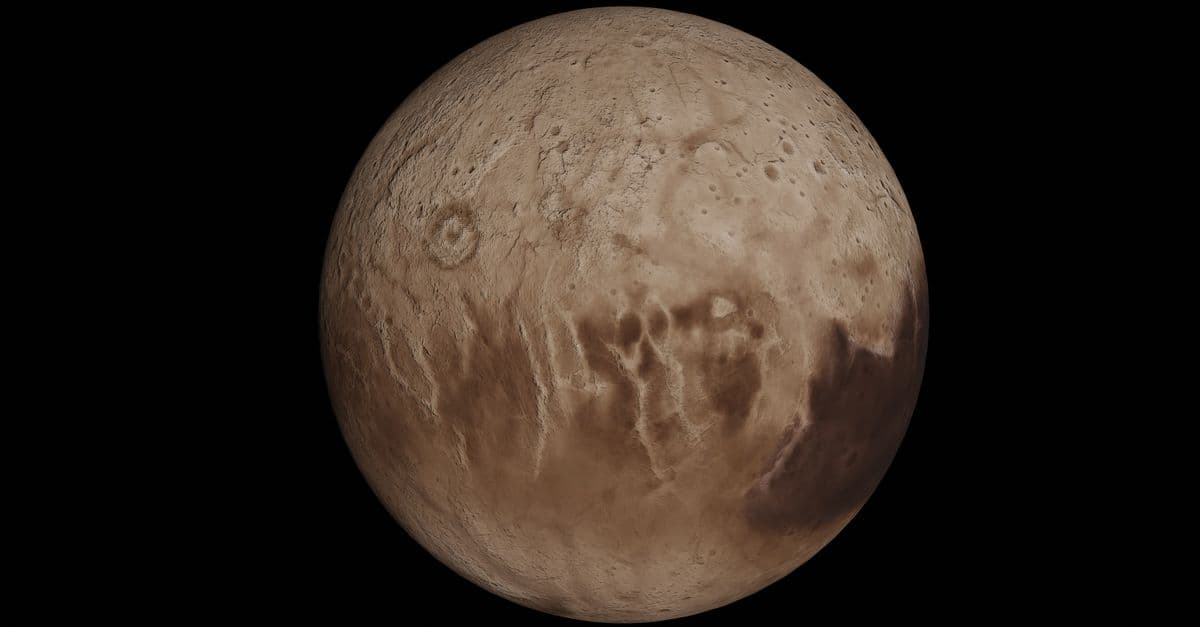
Photo: Zelch Csaba / Pexels
New Horizons passed within 12,550 km of Pluto on July 14, 2015, and found something mission scientists had hoped but not guaranteed: a world with an active atmosphere, weather, and nitrogen winds. The atmospheric surface pressure was about 1 Pascal — roughly the same as the pressure of Earth's atmosphere at an altitude of 80 km, near the edge of space. By the time you read this, that pressure may already be 20% lower than it was in 2015. Within the next few years, Pluto's entire atmosphere is expected to freeze solid onto its surface. This is not a catastrophe or an anomaly. It is the normal seasonal cycle of the solar system's most extreme climate.
Pluto's Orbit: The Cause of Everything
Pluto's climate is almost entirely a product of its orbit. Understanding the seasonal cycle requires understanding three orbital characteristics that together make Pluto unlike any other world with a significant atmosphere.
Orbital eccentricity: Pluto's orbit is highly elliptical. Its distance from the Sun varies from 29.6 astronomical units (AU) at perihelion — closest approach — to 49.3 AU at aphelion — farthest point. For context, Neptune orbits at about 30 AU. At aphelion, Pluto is 67% farther from the Sun than at perihelion. Because solar flux falls as 1/r², the sunlight intensity at aphelion is only about 36% of what Pluto receives at perihelion. No other body in the solar system with a known volatile cycle has this range of solar insolation.
Orbital period: The full cycle takes 248 Earth years. Pluto last reached perihelion on September 5, 1989. It will not reach aphelion until around 2113, and will not return to perihelion until 2237. This means we have never observed a complete Pluto year with telescopes capable of atmospheric measurement, and New Horizons arrived during a single, non-repeatable snapshot in Pluto's seasonal calendar — about 26 years after perihelion, when the atmosphere was still relatively full.
Axial tilt: Pluto's rotational axis is tilted at 119.6 degrees relative to its orbital plane — more than twice Earth's 23.5 degrees, and more than Uranus's 97.8 degrees. This extreme tilt means Pluto has polar regions that can face the Sun for decades continuously and then plunge into darkness for decades. Combined with the long orbital period, the polar summer and winter seasons last for decades.
Source: Stern et al., Science (2015) — the initial New Horizons results paper reporting surface pressure, atmospheric structure, and surface composition from the July 2015 flyby.
Axial tilt — the angle between a planet's rotational axis and the perpendicular to its orbital plane. Earth's is 23.5 degrees; Pluto's is 119.6 degrees, meaning it is technically retrograde (rotating backward relative to its orbit).
What the Atmosphere Is Made Of
Pluto's atmosphere is composed predominantly of molecular nitrogen (N₂), with minor contributions from methane (CH₄) and carbon monoxide (CO). The nitrogen dominance is not coincidental — it reflects the same thermodynamic logic that governs any world with volatile ices at its surface temperature.
At Pluto's surface temperatures, which range roughly from 35 to 55 K (-238 to -218 °C), nitrogen ice sits close to its triple point — the temperature at which solid, liquid, and gas coexist. Small changes in surface temperature produce large changes in sublimation rate, which is why Pluto's atmosphere is so sensitive to seasonal forcing. The vapor pressure of nitrogen ice at 40 K is roughly 10 microbars; at 44 K, it is several times higher. A temperature change of a few degrees, driven by slightly more or less sunlight, can double or halve the atmospheric pressure.
Methane is present in smaller quantities but plays a disproportionate role in atmospheric chemistry. Methane absorbs solar radiation in the infrared, warming the upper atmosphere above the surface temperature — a counter-intuitive inversion. The upper atmosphere of Pluto in 2015 was warmer than the surface, not colder. This inversion affects how quickly the atmosphere escapes to space and how haze layers form.
Temperature inversion — an atmospheric layer where temperature increases with altitude rather than decreasing, as in the troposphere. Pluto's methane-dominated upper atmosphere is warmer than the nitrogen-dominated lower layers, inhibiting convection.
Haze was one of the most striking discoveries. New Horizons found multiple distinct haze layers extending up to 200 km above Pluto's surface — far higher than predicted. These hazes are produced when ultraviolet sunlight breaks apart methane molecules, driving photochemical reactions that produce complex hydrocarbon and nitrile particles (tholins) that scatter light at blue wavelengths. The haze gives Pluto's sky a faint blue color, visible in New Horizons' backlit imagery.
Source: Gladstone et al., Science (2016) — New Horizons UV and atmosphere data reporting haze layers extending to 200 km altitude, temperature inversion structure, and upper atmospheric escape rate.
Tombaugh Regio: The Heart That Drives the Weather
The most visually striking feature of Pluto is a bright, roughly heart-shaped region about 2,500 km across spanning roughly the center of the Pluto-facing hemisphere. This is Tombaugh Regio, informally named for Pluto's discoverer Clyde Tombaugh. It was the first feature visible from New Horizons before closest approach, because its reflectivity (albedo) was so much higher than the surrounding reddish terrain.
Tombaugh Regio consists of two lobes with different geology. The eastern lobe is older, more varied terrain with water-ice mountains reaching 3,500 m in height. The western lobe is Sputnik Planitia — a vast, flat, glacier-filled basin about 1,000 km across, covered in bright nitrogen and carbon monoxide ice, and essentially devoid of impact craters.
Sputnik Planitia — a large impact basin on Pluto, roughly 1,000 km across, filled with actively convecting nitrogen ice and forming the western lobe of the heart-shaped Tombaugh Regio. Its depth and location make it a cold trap for volatile ices.
The absence of craters in Sputnik Planitia is not an ancient mystery: the nitrogen ice there is actively convecting. Heat from Pluto's interior warms the bottom of the ice layer, causing it to rise in large convection cells, turn over at the surface, cool, and sink. The convection cells — visible in New Horizons imagery as roughly polygonal patterns roughly 30 km across — overturn the ice on timescales of perhaps 500,000 years, erasing any craters before they can accumulate. Sputnik Planitia is one of the most geologically active surfaces in the outer solar system, renewed continuously by its internal heat.
Source: McKinnon et al., Nature (2016) — analysis of Sputnik Planitia's convecting nitrogen ice, estimating convection timescales and heat flux, and linking the basin's origin to an ancient impact followed by volatile infilling.
More important to the seasonal story: Sputnik Planitia sits in a topographic basin, and it is located near the anti-Charon point — the hemisphere of Pluto that permanently faces away from its moon, Charon. This location is not coincidental. The mass of nitrogen ice in Sputnik Planitia creates a gravitational anomaly, and because Pluto is tidally locked to Charon, the orientation of the mass anomaly is constrained by the tidal interaction with Charon. Essentially, Sputnik Planitia may have migrated to its current location because it is the gravitationally preferred position for a massive ice cap in a tidally locked system. This is called true polar wander — a reorientation of the entire body to bring its largest mass anomaly toward the equator on the anti-tidal axis.
The basin geometry makes Sputnik Planitia act as a cold trap. Cold air sinks into the basin and cools further; volatile ices preferentially deposit there. As Pluto warms during the approach to perihelion, nitrogen sublimates everywhere, but it re-condenses preferentially in the Sputnik Planitia basin. This concentrates the volatile inventory and allows the heart to persist even as other surface ices migrate poleward.
The heart drives global circulation. Nitrogen sublimating from Sputnik Planitia during the Plutonian day rises, circulates, and condenses on the nightside and at higher latitudes. This drives a weak but measurable circulation — winds of up to roughly 30 km/h (the New Horizons data suggest lower-atmosphere winds roughly equivalent to a gentle breeze on Earth, though the low density means very little momentum is transported). The asymmetric sublimation from the roughly equatorial heart produces a dominant westward atmospheric flow.
Source: Forget et al., Icarus (2017) — global climate model of Pluto's atmosphere driven by the sublimation/condensation cycle, predicting wind patterns and nitrogen transport consistent with New Horizons observations.
The Nitrogen Cycle: Atmosphere as Seasonal Reservoir
The most important thing to understand about Pluto's atmosphere is that it is not a stable envelope in the way Earth's or Mars's atmospheres are. It is part of a volatile cycle that continuously exchanges nitrogen between surface ice and gas, on timescales ranging from daily to orbital.
On a daily (Plutonian day = 6.39 Earth days) cycle: nitrogen ice on the sunlit side sublimates during the "day" and condenses on the dark side during the "night." This daily heartbeat is quite literal — Sputnik Planitia's nitrogen ice sublimates and re-deposits on a 6.39-day cycle, driving the circulation described above.
On a seasonal (248-year) cycle: the total inventory of nitrogen in the atmosphere grows as Pluto approaches perihelion and the surface warms globally, and then shrinks as Pluto recedes. During perihelion, nitrogen ice at lower latitudes sublimates, adding to the atmospheric pressure. During aphelion, the same ice (plus nitrogen from higher latitudes exposed to decades of darkness) freezes back out.
The numbers are striking:
| Phase | Distance from Sun | Approx. Surface Pressure | Atmospheric State |
|---|---|---|---|
| Perihelion (1989) | 29.6 AU | ~1–2 Pa (estimated peak) | Maximum — all volatile regions sublimating |
| New Horizons flyby (2015) | ~32.9 AU | ~1.0 Pa (measured) | Declining post-perihelion |
| Approx. 2030 (projected) | ~34.5 AU | <0.5 Pa (projected) | Near collapse |
| Aphelion (~2113) | 49.3 AU | ~0 Pa (atmospheric freeze-out) | Complete freeze-out expected |
| Approaching perihelion (~2237) | 29.6 AU | ~1–2 Pa (projected) | Rebuilding |
Source: Olkin et al., Icarus (2015) — stellar occultation measurements of Pluto's atmospheric pressure from 1988 to 2015, showing pressure rise from ~1 μbar (1988) to ~10 μbar (2015), then apparent plateau and decline.
The observation record is remarkable. Ground-based stellar occultation measurements — watching Pluto's atmosphere briefly occult (block) distant stars, from which the atmospheric pressure can be inferred from the lightcurve shape — have tracked Pluto's atmospheric pressure from 1988 through at least 2020. The pressure rose roughly tenfold between 1988 and 2015, then began declining. Post-2015 occultation data suggest the pressure has dropped by more than 20% since the New Horizons flyby.
Source: Meza et al., Astronomy & Astrophysics (2019) — stellar occultation analysis 1988–2016 showing Pluto's atmospheric pressure peaked between 2012 and 2015 and began declining, consistent with post-perihelion seasonal cooling.
What New Horizons Found Versus What Models Predicted
Before the 2015 flyby, atmospheric models of Pluto had been developed for decades. Some predictions were accurate; others were not, and the discrepancies are scientifically valuable.
Models correctly predicted the dominant nitrogen composition, the temperature inversion in the upper atmosphere, and the approximate magnitude of atmospheric escape. The escape of nitrogen to space — driven by solar UV heating of the upper atmosphere — was estimated at several tens of grams per second. New Horizons measured a much lower escape rate: about 1,000 times less than pre-flyby predictions. The upper atmosphere was colder and more compact than expected, meaning the escape rate was dramatically overestimated.
This matters because nitrogen escape is the primary mechanism by which Pluto irreversibly loses its volatile inventory over geological time. If the escape rate is 1,000 times lower than estimated, Pluto has lost far less nitrogen over 4.5 billion years than models suggested. This implies that Pluto's current nitrogen inventory is close to its primordial endowment — the planet has not been stripped of its volatiles by escape.
Source: Bagenal et al., Science (2016) — New Horizons plasma science instrument measurements of Pluto's atmospheric escape rate, finding values approximately 1,000 times lower than pre-flyby models predicted.
What was not predicted: the scale and complexity of the haze layers, the extreme geological youth and activity of Sputnik Planitia, the height of water-ice mountains at the edge of the heart, and the extraordinary variety of color and texture across the surface. Pluto's surface showed terrain age ranges spanning most of solar system history — ancient crater-saturated highlands more than 4 billion years old alongside nearly crater-free plains that may be younger than 10 million years.
The mountains at Pluto's surface — particularly the ridges of water ice forming the eastern boundary of Tombaugh Regio — reach up to 3,500 m (11,000 feet). On Earth, mountains of this scale are held up by the strength of silicate rock and the isostatic compensation of a warm mantle. On Pluto at 40 K, water ice is nearly as strong as rock — the low temperature makes it rigid enough to support these structures over geological time, even without a planetary tectonic system.
The Atmospheric Collapse: What Happens Next
As Pluto recedes from the Sun, the surface cools. Nitrogen ice's vapor pressure is highly sensitive to temperature — a drop of a few degrees cuts the sublimation rate dramatically. As atmospheric pressure drops, more nitrogen condenses out than sublimates, driving a runaway process.
The term "collapse" sounds dramatic but is technically accurate. Models predict that within the next several decades — by approximately 2030 in the most aggressive predictions, or somewhat later in more conservative estimates — Pluto's atmospheric surface pressure will drop below 0.1 Pa and continue toward effective zero. The nitrogen that was gas will be ice. The global atmospheric circulation will stop. The planet's sky will be, for all practical purposes, empty.
This is not permanent. As Pluto begins its next approach to perihelion around 2200, surface temperatures will slowly rise again. Nitrogen ice will begin sublimating. The atmosphere will rebuild, perhaps over decades to centuries, reaching peak pressures around the next perihelion in 2237.
Source: Young, Icarus (2013) — predictive model of Pluto's atmospheric seasonal cycle, forecasting the pressure-collapse timeline and the rebuilding during the next perihelion approach.
The collapse scenario places the New Horizons flyby in a particular context. The spacecraft arrived about 26 years after Pluto's perihelion — during a brief window when the atmosphere was declining from its peak but still substantial enough to measure. Had the mission launched 20 years later, the atmosphere it found might have been a factor of 10 thinner or already effectively collapsed. Had it launched in the 1990s during development, the atmosphere would have been near its maximum. The timing was fortunate rather than designed — the mission was defined by Jupiter gravity-assist windows, not by Pluto's seasons. It arrived during the optimal atmospheric window by coincidence.
Why Pluto's Seasons Matter Beyond Pluto
Pluto's volatile cycle is not unique in the solar system; it is an extreme version of processes operating on multiple worlds.
Mars has a CO₂ cycle that transfers about 25% of its atmosphere between polar ice caps and the global atmosphere each year. Triton, Neptune's largest moon, has a nitrogen atmosphere thought to cycle in a similar fashion to Pluto's, driven by slow warming from an eccentric orbit and high obliquity. Eris, Makemake, and other large Kuiper Belt objects are also predicted to have transient nitrogen or methane atmospheres that appear near perihelion and freeze out near aphelion.
Pluto, having been visited at close range, is the test case for understanding this class of volatile-cycle worlds. The discrepancy between pre-flyby atmospheric escape rate predictions and actual measurements alone has revised how planetary scientists model volatile loss over geological time for all these bodies. The sensitivity of Pluto's atmosphere to a few degrees of temperature change also informs models of early Mars, where a thick CO₂ atmosphere may have partially collapsed during cold periods in Martian history, and of exoplanets in eccentric orbits where volatile cycles may drive periodic atmospheric collapse and recovery.
For context on other worlds that illustrate the range of volatile-driven activity in the outer solar system, see the discussion of Enceladus's active geochemistry in Enceladus: hydrothermal vents and the possibility of life.
The Takeaway
Pluto's atmosphere is a seasonal reservoir, not a permanent feature. It is driven by a 248-year orbital cycle that takes the dwarf planet from 29.6 AU at perihelion to 49.3 AU at aphelion — a range of solar insolation that no other atmosphere-bearing world in the solar system matches. The heart-shaped Tombaugh Regio, particularly its western basin Sputnik Planitia, is the dominant cold trap and circulation engine: nitrogen sublimates from it during Pluto's "summer," circulates globally, and re-condenses as the planet cools. New Horizons measured a surface pressure of about 1 Pascal in 2015 — roughly two dozen years after perihelion — and the pressure has been falling since. The atmosphere is expected to freeze nearly completely onto the surface sometime in the 2030s, remaining dormant until the slow warmth of the next perihelion approach in the 2200s begins to rebuild it. We arrived at Pluto during the best available window to see this cycle in action, and the data New Horizons returned will be studied for generations to understand volatile-cycle worlds everywhere in the solar system.
Q: Does Pluto actually have an atmosphere?
A: Yes. Pluto has a thin nitrogen atmosphere with surface pressure of approximately 1 Pascal (10 microbars), measured by New Horizons in 2015. This is about 1/100,000th of Earth's sea-level pressure — comparable to Earth's atmosphere at about 80 km altitude. The atmosphere also contains trace methane and carbon monoxide.
Q: Why does Pluto's atmosphere collapse?
A: Pluto's atmosphere is sustained by the sublimation of surface nitrogen ice. As Pluto moves away from the Sun on its 248-year orbit, temperatures drop and the vapor pressure of nitrogen ice falls sharply. More nitrogen condenses onto the surface than sublimates, causing the atmosphere to thin. Models predict near-complete freeze-out by around 2030, persisting until Pluto's next perihelion approach in the 2200s.
Q: What is Tombaugh Regio and why does it matter for Pluto's climate?
A: Tombaugh Regio is the heart-shaped bright region discovered by New Horizons, about 2,500 km across. Its western lobe, Sputnik Planitia, is a nitrogen-ice-filled basin that acts as a cold trap and climate engine — collecting volatile ices, driving sublimation, and generating global winds. The basin's convecting nitrogen ice constantly resurfaces it, erasing impact craters over timescales of roughly 500,000 years.
Q: Was the 2015 New Horizons flyby timed for Pluto's atmospheric peak?
A: Not intentionally. The mission timing was determined by Jupiter gravity-assist windows. The flyby happened to occur about 26 years after Pluto's perihelion, catching the atmosphere in decline but still substantial. Arriving decades later might have found a nearly collapsed atmosphere; arriving during perihelion itself would have found a thicker one. The scientific timing was fortunate.
Q: How do we measure Pluto's atmospheric pressure from Earth?
A: The primary technique is stellar occultation: observing Pluto pass in front of a distant star and analyzing how the star's light fades as Pluto's atmosphere is encountered. The shape of the lightcurve encodes the atmospheric density profile. This technique has been used since 1988 and has tracked Pluto's atmospheric pressure rise and subsequent decline over more than three decades.
Q: What did New Horizons get wrong about Pluto's atmosphere?
A: The largest surprise was the atmospheric escape rate — the rate at which nitrogen molecules escape to space. Pre-flyby models predicted escape rates orders of magnitude higher than New Horizons measured. The actual escape rate is roughly 1,000 times lower than predicted, implying Pluto has retained far more of its original volatile inventory than expected, and that the upper atmosphere is colder and more compact than models assumed.
Read next:
Follow new articles
Add SciHub101 to your feed reader to see new science and technology stories.
About the Author
SciHub101 is an independent science and technology publication founded and edited by Buğra Sözeri, a software engineer and app developer based in Türkiye. AI tools assist with drafting and research. Source documentation in the existing archive is uneven, and articles are being reviewed and corrected. The Editorial Team byline identifies editorial responsibility; it does not certify specialist or independent human review. Where we compare products, anything built by our own team is labelled as such — see the editorial guidelines and About page for how corrections and disclosures work.
Related Articles

Sagittarius A*: The Black Hole at the Heart of the Milky Way
Four million solar masses packed into a region smaller than our solar system, sitting 26,000 light-years from Earth. For three decades, astronomers tracked stars swinging around it at 3% of the speed of light. Then, in 2022, they photographed it.

Planetary Rings Explained: Not Just Saturn
Saturn's rings are the solar system's most famous structure, but they are far from unique. Uranus has 13 dark, narrow rings discovered by accident in 1977. Neptune has incomplete arcs instead of full circles. Jupiter has a faint ring made of dust blasted off its innermost moons by meteorite impacts. All four giant planets have rings — and they all work differently. Saturn's may be geologically young, which raises a question nobody has fully answered: where did they come from?

Pluto: What New Horizons Found in 2015 and What We Still Don't Know
New Horizons flew within 12,550 km of Pluto on July 14, 2015 — the only spacecraft ever to do so — and transmitted data for 16 months afterward. What it found was not a dead, cratered iceball at the edge of the solar system but an active world with mountains of water ice, a heart-shaped nitrogen glacier the size of Texas, and possibly a liquid ocean beneath the ice.

Why Pluto Is Not a Planet — IAU Reclassification Explained
Why Pluto was demoted in 2006: the IAU's three-part planet definition, the discovery of Eris, New Horizons data, and the ongoing scientific debate.

Why Do Stars Twinkle? The Science of Atmospheric Seeing
Stars twinkle because Earth's turbulent atmosphere bends starlight in constantly shifting ways. Because stars are infinitely distant, they act as point sources, so even tiny bends in light rays cause dramatic brightness and color flickers. Planets, being much closer, show a small disk that averages out the jitter. Twinkling is worst near the horizon and is why the best observatories sit on mountaintops or in orbit.

Why Do We Have Seasons? The Science of Earth's Tilt
Earth's 23.5-degree axial tilt, not its elliptical orbit, is why we have seasons. The tilt means each hemisphere receives more direct sunlight and longer daylight hours for part of the year (summer), then less direct light and shorter days for another part (winter). The two hemispheres always experience opposite seasons simultaneously. Solstices and equinoxes mark the extremes and midpoints of this tilt cycle.