Why Do Stars Twinkle? The Science of Atmospheric Seeing
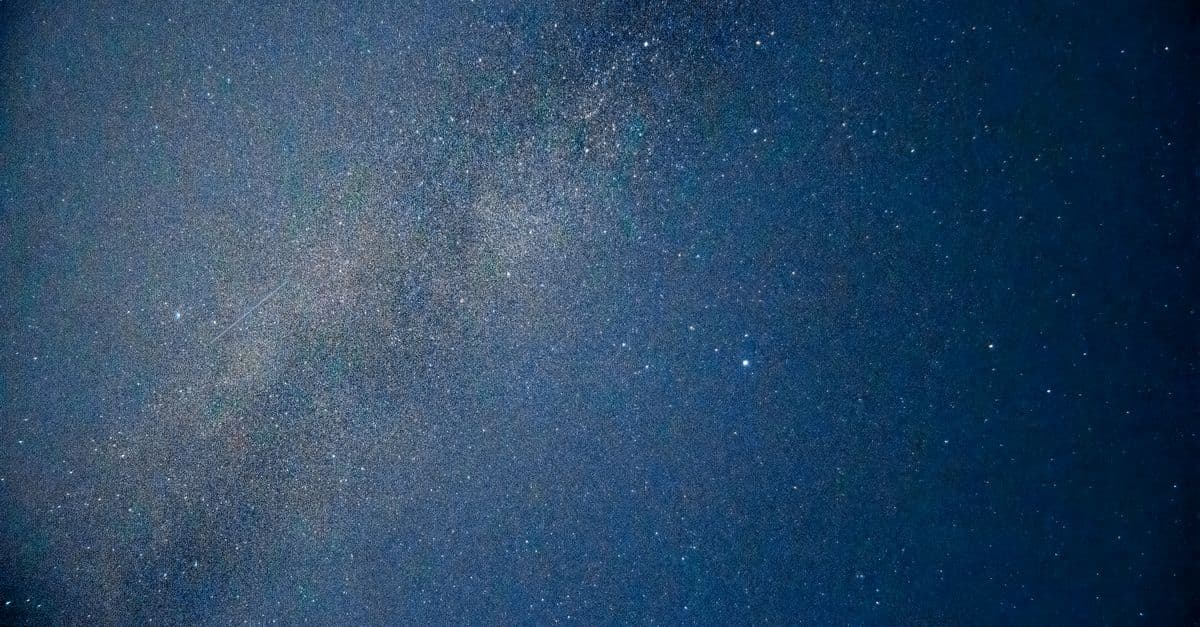
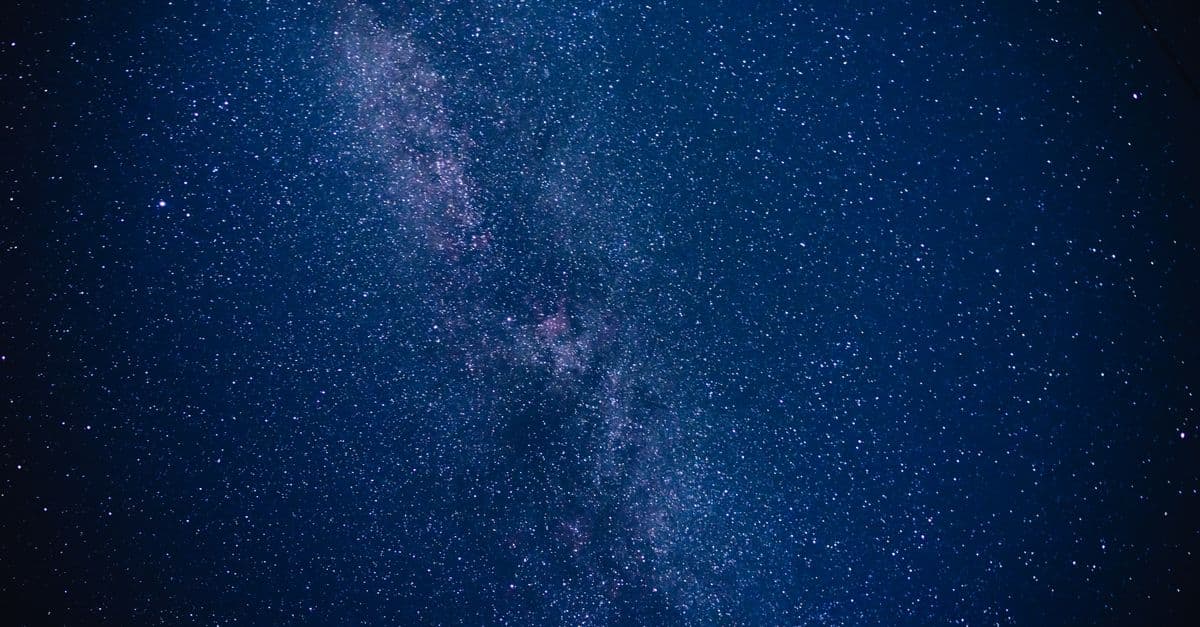
Photo: Alex Bian / Pexels
Every night, people look up at the stars and see them flicker like candles in the dark. For centuries, this twinkling seemed magical and mysterious. The Romans called it the "scintillation" of stars. But the science behind the shimmer is far simpler and more elegant than myth: Earth's turbulent atmosphere is bending starlight in constantly shifting ways. When you understand this one mechanism, you unlock why planets barely twinkle, why the effect is terrible near the horizon, and why the world's best telescopes are either perched on frozen mountaintops or floating in the vacuum of space. This is not a minor detail of observation; it is one of the deepest constraints on ground-based astronomy and a prime driver of telescope design for the past 70 years.
What Twinkling Actually Is: Scintillation and Refraction
Scintillation — the rapid, random variation in the brightness and color of a distant point light source caused by refraction through a non-uniform medium — is what you see when you watch a star flicker. The term comes from the Latin "scintillare," to sparkle. But sparkle here is not pretty: it is the noise in the system, the enemy of clarity.
Light travels in straight lines through uniform media. But Earth's atmosphere is not uniform. It is a churning soup of pockets of air at different temperatures, humidities, and pressures. Warm air near the ground rises; cool air aloft sinks. Jet streams, wind shear, and local convection create constant turbulence. Each pocket of air has a slightly different refractive index — the degree to which it bends light. When starlight (traveling down from space as a nearly parallel beam) enters this turbulent layer, it gets refracted slightly different ways as it passes through different pockets.
Here is the crucial detail: a star is infinitely far away. So far that, from Earth, it has no angular size; it is just a point. When you have a point source of light, even a small bend in its ray makes a big difference on your eye or your telescope's detector. Imagine a laser pointer aiming at you from a mile away. If something bends that beam by just 0.1 degrees, it will miss you by dozens of feet. Same with starlight: a tiny refraction redirects the entire cone of light into a slightly different location on the detector.
Source: Fried, D. L. (1966), "Optical Resolution through a Randomly Inhomogeneous Medium for Very Long and Very Short Exposures," Journal of the Optical Society of America, vol. 56, no. 11. — foundational work on atmospheric turbulence and image degradation.
As the atmosphere churns, the refracted light point moves slightly up and down, side to side, and varies in brightness. Your eye sees this as flicker. The brightness varies because light sometimes gets refracted toward you and concentrated (brightening the image) and sometimes refracted away (dimming it). The color changes because the atmosphere acts a bit like a weak prism: shorter wavelengths (blue) are bent more than longer ones (red), so as the refraction angle changes, the apparent color of the star shifts between blue and red. Bright stars like Sirius can flash through the whole spectrum in a single night.
The time scale of this flickering is rapid, usually between 0.01 and 0.1 seconds. Human eyes cannot follow such quick changes, so they blur together into a shimmer. But if you photographed a star with an exposure of a few milliseconds, you would see the point jitter and flicker in individual frames.
How Atmospheric Turbulence Bends Light: The Physics of Refraction
The physics is surprisingly straightforward. Light bends when it passes from one medium to another at an angle, and the amount of bending depends on the refractive index difference. Air's refractive index depends strongly on temperature: warm air has a lower refractive index than cool air. The relationship is given by the Gladstone-Dale relation, which links refractive index to air density. So when starlight passes through a pocket of warm air, it is refracted slightly differently than when it passes through a pocket of cool air.
The atmosphere has structure at many scales. Large eddies (kilometers across) cause a steady shift in the star's position, which telescopes must track. But smaller eddies — tens of centimeters to a few meters across — cause rapid jitter. The smaller eddies create higher-frequency flicker. The turbulent cascade of energy down from large scales to small scales means that nearly all sizes of eddies contribute to the distortion.
Atmospheric seeing — a term that quantifies how much the atmosphere is degrading your view — is usually expressed as the Full Width at Half Maximum (FWHM) of a stellar image. On a good night at a good site, the FWHM might be 0.5 arcseconds (the width of the blurred stellar image). On a poor night, it might be 2 to 3 arcseconds. For comparison, a human eye can resolve about 1 arcminute, so even bad seeing is sharper than the unaided eye can detect; but for a telescope collecting far more light, that blur erases fine detail.
The effect is worse near the horizon because you are looking through a much thicker layer of atmosphere. At zenith, you are looking straight up through one atmospheric thickness. Near the horizon, you are looking through the atmosphere at an oblique angle, traversing 35 times as much air at 30 degrees altitude. Each extra kilometer of air means more turbulent eddies, more refraction, and more scintillation.
Source: Tatarski, V. I. (1961), Wave Propagation in a Turbulent Medium, McGraw-Hill. — classic reference on light propagation through random media.
Temperature differences near the ground are also more pronounced near the horizon. Warm ground and cool upper air, plus wind shear, create more vigorous turbulence in the boundary layer. This is why observatories are built on high, windswept mountains where the air above is more stable and the path through the lower atmosphere is shorter.
Stars vs. Planets: Why Planets Barely Twinkle
This is the key insight that makes scintillation fascinating. Stars twinkle dramatically; planets barely twinkle at all. Both are in the same sky, both shine with light bent by the same turbulent air. So why the difference?
The answer is angular size. Planets like Jupiter, Venus, or even distant Mars have a measurable angular diameter when viewed from Earth. Jupiter, at opposition, subtends about 50 arcseconds across; Mars subtends about 25 arcseconds at close approach; Venus, about 60 arcseconds. A star subtends perhaps 0.001 arcseconds or less.
When a region of atmosphere bends light by an angle of, say, 1 arcsecond, it shifts the entire image of a point source (a star) by 1 arcsecond. The star image jumps from one spot to another. But a planet, whose light comes from many points across its disk, gets shifted in a different way. The left edge shifts, the right edge shifts, but because they shift roughly together, and the planet's disk is large, the shifts average out. Some parts of the disk brighten, others dim, but the overall apparent position and brightness change far less.
Think of it like this: if a single lightbulb is hidden by a swaying curtain, you see it flicker on and off. But if the lightbulb is replaced by a large, evenly lit billboard, the same swaying curtain barely dims it at all, because the blockage only covers a tiny fraction of the billboard at any moment.
Here is a comparison table:
| Property | Star | Planet | Effect on Twinkling |
|---|---|---|---|
| Angular size | <0.01 arcsec | 0.2–60 arcsec | Smaller → more twinkling |
| Refraction impact | Full point shifts | Edges shift, disk averages | Star image jumps; planet image mostly stable |
| Color flicker | Rapid and obvious | Subtle, rare | Stars change hue noticeably |
| Brightness variation | 50–100% relative | 1–5% relative | Stars appear to flicker; planets glow steadily |
| Visibility effect | Noticeable to naked eye | Imperceptible to naked eye | Planets look serene; stars look alive |
Source: Born, M., and Wolf, E. (1999), Principles of Optics, 7th ed., Cambridge University Press. — comprehensive treatment of diffraction and refraction effects.
This is also why satellite flares and aircraft lights can be nearly as bright as stars but do not twinkle: they are close enough to have an angular size (or at least a blur radius from their motion) that large enough to average out the atmospheric jitter.
The Seeing Constraint: Why Twinkling Ruins Astronomy
For a ground-based telescope, scintillation is a fundamental limit. No matter how large you build the telescope or how high you climb, the atmosphere will still blur your images. This blurring is called the "seeing limit" or "diffraction limit imposed by the atmosphere."
A small telescope, say 10 centimeters across, has a diffraction limit (the finest detail it could resolve if there were no atmosphere) of about 1 arcsecond in visible light. But on a night with 1 arcsecond seeing, the atmosphere is as big a constraint as the optics. A large telescope, say 8 meters across, has a diffraction limit of 0.01 arcseconds, but the same 1 arcsecond seeing washes out all that power. You get almost no benefit from the extra aperture for resolving fine detail.
This is why the world's greatest telescopes are either on mountaintops or in space. High altitude helps: telescopes at 4,000 meters altitude (Mauna Kea in Hawaii, Las Campanas in Chile) sit above a significant fraction of the atmosphere and enjoy seeing of 0.4 to 0.6 arcseconds on good nights. But you cannot escape the problem entirely, because you still have 4 or 5 kilometers of air above you.
Space telescopes have no atmosphere, so they have no seeing limit. The Hubble Space Telescope can resolve features separated by 0.05 arcseconds, a resolution unattainable from the ground because of twinkling. The James Webb Space Telescope, working in the infrared, is limited more by diffraction than by seeing, and its images are correspondingly sharp.
Source: Hufnagel, R. E. (1974), "Propagation through Atmospheric Turbulence," in Laser Beam Propagation in the Atmosphere, ed. J. A. Strohbehn, Springer-Verlag. — detailed analysis of how atmospheric turbulence limits optical systems.
Fighting Back: Adaptive Optics and Other Solutions
If you cannot escape the atmosphere, you can try to correct for it. Adaptive optics (AO) is a technology that measures the wavefront distortion in real time and uses a deformable mirror to undo it. A laser guide star (created by a strong laser aimed at the sodium layer in the upper atmosphere) serves as a reference. A wavefront sensor watches how the laser light is distorted. A computer, running at hundreds of times per second, commands the deformable mirror (which has hundreds or thousands of actuators) to change shape and flatten the distorted wavefront. The result is near-diffraction-limited imaging, even from the ground.
Adaptive optics is not perfect. The correction only works over a small region of sky near the guide star. The laser guide star is artificial, so it does not have the same color as the science target, and chromatic aberrations can degrade the correction. But for bright targets and small-field observations, it is a game changer. The 10-meter Keck Telescope on Mauna Kea can achieve 0.05 arcsecond resolution in the infrared with AO, matching Hubble's resolution without leaving Earth.
Other approaches include:
Speckle interferometry: A technique that takes many short exposures (shorter than the time scale of atmospheric jitter) and computationally reconstructs a high-resolution image by combining the information from the speckle pattern.
Multi-conjugate adaptive optics: Uses multiple guide stars and deformable mirrors at different altitudes to correct distortion over a wider field of view.
Extremely large telescopes with massive mirrors: The Extremely Large Telescope (39-meter mirror, Chile) and the Thirty Meter Telescope use adaptive optics and redundancy to overcome the seeing limit.
The investment in these technologies underscores how fundamental the seeing problem is. Billions of dollars are spent to beat an atmospheric effect caused by turbulent eddies a few centimeters across.
Source: Roddier, F., ed. (1999), Adaptive Optics for Astronomy, Cambridge University Press. — comprehensive review of AO technology and principles.
Color, Spectrum, and Why Sirius Flashes Rainbow
Twinkling has a color component that deserves attention. Because different wavelengths of light are bent by different amounts — a phenomenon called chromatic aberration — the amount of twinkling varies with color. Blue light is refracted more than red light. As the atmosphere churns and the refraction angle changes, the focus point of blue light shifts more than the focus point of red light.
For a bright, white star like Sirius, this manifests as the star flashing through colors. When the blue component is focused onto the detector, the star looks blue. A moment later, when the red component is focused, the star looks red. To human eyes watching a bright star, this color shifting is often the most visible aspect of twinkling: the star sparkles with color.
Sirius is particularly famous for this effect because it is the brightest star in the night sky, and its brightness amplifies the color shifts to naked-eye visibility. Ancient astronomers sometimes thought Sirius was red because they conflated its atmospheric twinkling color with its intrinsic color (Sirius is actually a white A-type star, not red).
This color effect is one reason why some photometric observations require very careful color correction. If you are trying to measure the brightness of a star in a specific filter (say, the V-band in optical astronomy), the atmospheric chromatic aberration means you are sometimes seeing the blue part of the spectrum and sometimes the red part, introducing noise into your measurements.
Surface vs. Stellar vs. Planetary Scintillation: A Taxonomy
There is a subtle distinction in types of scintillation that astronomers make. Stellar scintillation refers to the rapid, high-frequency jitter of point sources (stars). Seeing refers to the overall blurring and low-frequency image drift caused by large-scale atmospheric structures. Planetary scintillation would be any flickering of planets, which is rare.
There is also scintillation at the Earth's surface. When you look at distant objects across a hot surface (like a road), the air above the hot surface refractively distorts the image, creating a shimmering mirage. This is the same physical effect as stellar scintillation, but on the ground rather than crossing the full atmosphere.
For deep-space observations, scintillation combines with diffraction and aberration to create a complex degradation of image quality. Astronomers characterize this with the Strehl ratio (the ratio of the actual peak intensity of an image to the peak intensity of a perfect, diffraction-limited image). A Strehl ratio of 1.0 is perfect; typical ground-based observations without AO have a Strehl ratio of 0.05 to 0.2, meaning most of the collected light is scattered into a halo around the central image.
Source: Roggemann, M. C., and Welsh, B. M. (1996), Imaging Through Turbulence, CRC Press. — detailed treatment of image degradation by atmospheric turbulence.
Why You Will Never See Mars Twinkle (Much) but Venus Might
Venus and Mars are interesting cases. Venus, being the brightest planet and sometimes closer to Earth than any other planet except the Moon, has a larger angular diameter (60 arcseconds at closest approach) and therefore almost no visible twinkling. Mars, at closest approach, subtends about 25 arcseconds and also shows minimal twinkling, even though it is dimmer. Jupiter, at 50 arcseconds, is stable.
But a faint planet, if it happened to exist and be small enough or distant enough to present a tiny apparent size, might twinkle. This is why some of the newly discovered exoplanet-hosting stars have been misclassified: if you see a dim object with a tiny angular size, you cannot tell from twinkling alone whether it is a distant star or a nearby planet. You need other evidence: proper motion, spectrum, radial velocity.
The practical upshot is that if you are trying to find planets around other stars by direct imaging (which is extremely difficult), you are looking for objects about as extended as planets appear, and twinkling helps you distinguish them from stars.
The Takeaway
Twinkling is not magic or mystery; it is the direct consequence of light from point sources passing through turbulent air. Because stars are infinitely far away, they appear as points, and the smallest atmospheric disturbance redirects their light. Planets, being closer, present a disk that averages out the atmospheric roughness. The effect is strongest near the horizon because you are looking through 35 times more air. This seeing problem has shaped telescope design for generations: we build observatories on mountains to minimize the air above us, we send telescopes to space to escape the problem entirely, and we now deploy adaptive optics to correct for it in real time. Every time you look up and see stars twinkle, you are seeing the boundary between the quiet vacuum of space and the chaotic ocean of air above your head.
Frequently Asked Questions
Q: Can I reduce twinkling by moving to a higher altitude?
A: Yes, but with diminishing returns. Every thousand meters of altitude removes some of the turbulent air above you, typically improving seeing by 0.1 to 0.2 arcseconds. But the best ground-based observatories at 4,000-meter altitude still cannot beat a space telescope, because you are never fully free of the atmosphere's distortion.
Q: Why do stars twinkle but the Moon does not?
A: The Moon is about 0.5 degrees across, roughly 1,800 times larger than Venus in angular size. It is so extended that atmospheric refraction only causes a tiny fractional change in brightness. Additionally, the Moon is close enough that parallax effects are measurable, and its reflected sunlight is steady compared to point-source starlight.
Q: Is twinkling worse on humid or dry nights?
A: Humidity affects the density structure of the atmosphere, but the primary driver of seeing is temperature variation. A dry, cold night with stable air masses will have excellent seeing, while a humid night with active convection will have poor seeing. The best nights are typically dry, cool, and high-altitude.
Q: Can adaptive optics completely eliminate twinkling?
A: Adaptive optics can correct most of the wavefront distortion, but it cannot achieve perfect compensation over a wide field of view. The correction is best in the infrared, where the guide star and science target can use separate wavelengths. In the visible, residual errors remain, but the improvement is dramatic, roughly 10-fold.
Q: Why do planets twinkle more when they are lower in the sky?
A: Although planets are extended and do not twinkle much, they still twinkle somewhat because of high-frequency atmosphere jitter. Like stars, this effect is worse near the horizon because you are looking through more air at a steeper angle, even though a planet's finite size provides some averaging.
Q: How fast do stars twinkle?
A: Stellar scintillation occurs on time scales of 0.01 to 0.1 seconds, depending on the size and velocity of atmospheric turbulent eddies. Human eyes, which have a visual persistence of about 0.1 seconds, blur this flickering together. Fast cameras or spectroscopes can resolve the individual fluctuations and measure the high-frequency content of the atmospheric disturbance.
Read next:
Follow new articles
Add SciHub101 to your feed reader to see new science and technology stories.
About the Author
SciHub101 is an independent science and technology publication founded and edited by Buğra Sözeri, a software engineer and app developer based in Türkiye. AI tools assist with drafting and research. Source documentation in the existing archive is uneven, and articles are being reviewed and corrected. The Editorial Team byline identifies editorial responsibility; it does not certify specialist or independent human review. Where we compare products, anything built by our own team is labelled as such — see the editorial guidelines and About page for how corrections and disclosures work.
Related Articles
Why Do We Have Seasons? The Science of Earth's Tilt
Earth's 23.5-degree axial tilt, not its elliptical orbit, is why we have seasons. The tilt means each hemisphere receives more direct sunlight and longer daylight hours for part of the year (summer), then less direct light and shorter days for another part (winter). The two hemispheres always experience opposite seasons simultaneously. Solstices and equinoxes mark the extremes and midpoints of this tilt cycle.
Types of Stars — Stellar Classification Explained
From hot blue O-type giants to cool red dwarfs: the OBAFGKM system, the H-R diagram, and the life cycles of stars. Learn the science, key examples, and...
Deep Learning and Star-Galaxy Classification: Teaching Computers to Read the Sky
Deep learning systems now classify billions of celestial objects with superhuman accuracy, enabling sky surveys that would take human astronomers millennia to complete.
How Stars Are Born and Die: The Complete Story of Stellar Evolution
Every atom of iron in your blood was forged inside a dying star. Here's the full life cycle that made you possible.

The Biggest Stars in the Universe: A Sun So Vast It Could Swallow Saturn's Orbit
If you placed the star UY Scuti where our Sun is, its surface would engulf Mercury, Venus, Earth, Mars, and reach out past the orbit of Jupiter. It is one of the largest known stars — a hypergiant so vast that light takes hours to cross it. Yet by another measure, this colossus is a lightweight: a star can be a thousand times wider than the Sun and still weigh less than the heaviest stars, which are smaller but unimaginably dense. Size, in space, is not what it seems.