The Dark Side of the Moon — Myths and Facts
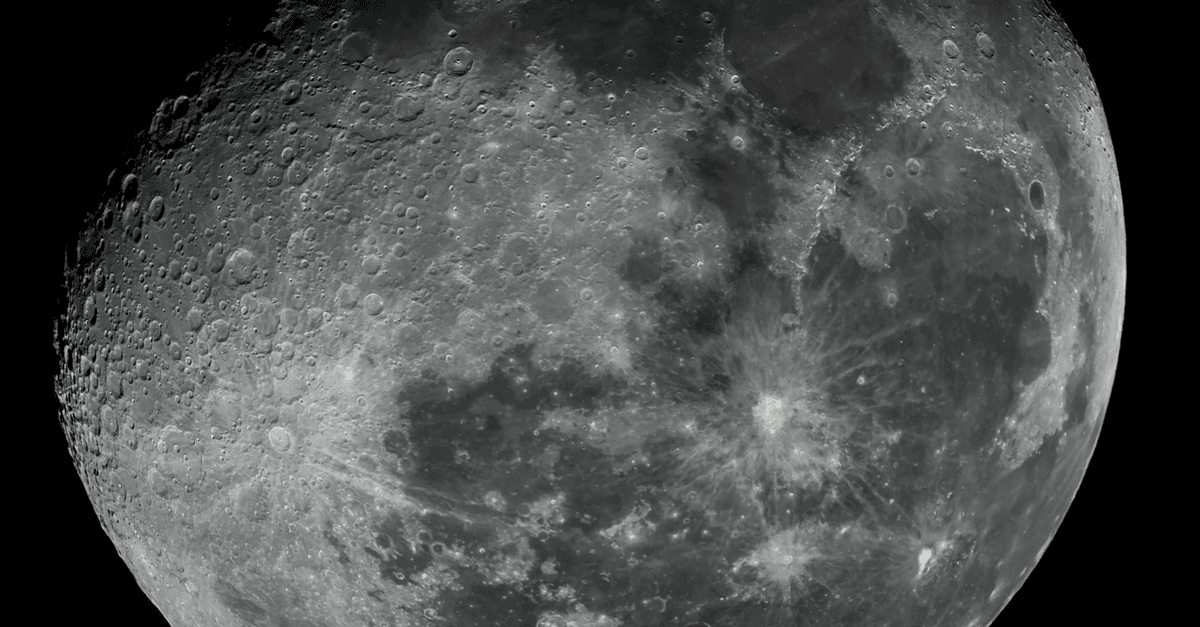
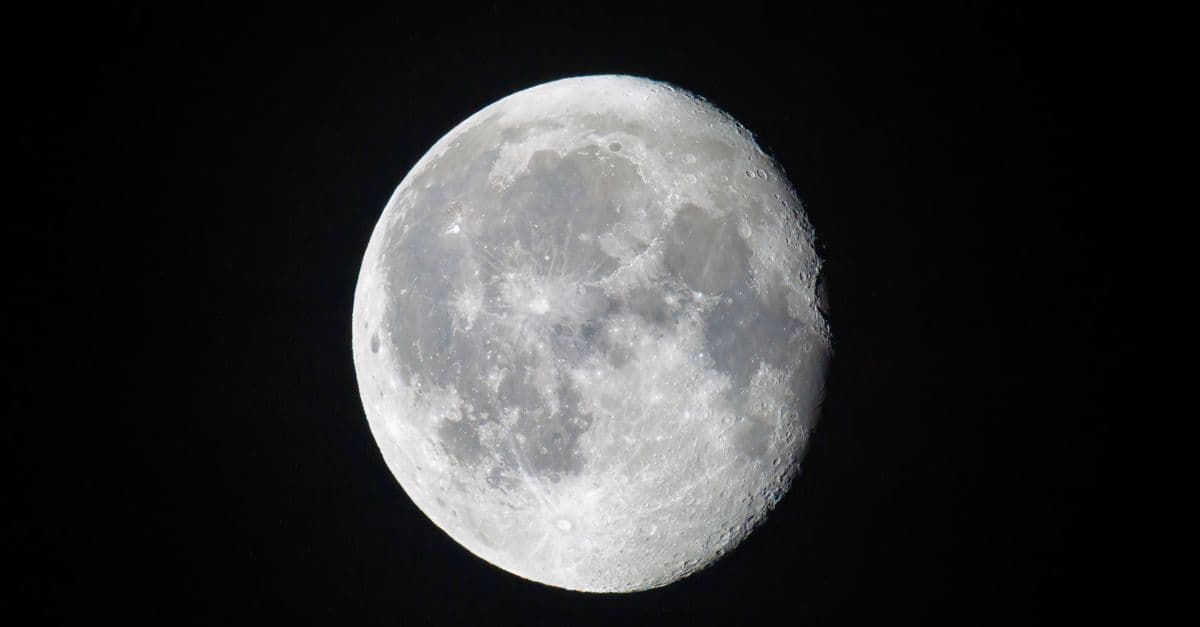
Photo: Dennis Ariel / Pexels
Pink Floyd called it The Dark Side of the Moon, and the phrase stuck — but it's astronomically wrong. The Moon's far side receives exactly as much sunlight as the near side, rotates on a synchronized schedule, and hosts the largest impact crater in the solar system. The real story — tidal locking, crustal asymmetry, ancient volcanism, and why China is racing to explore it — is far more scientifically interesting than any Cold War conspiracy.
"Dark" vs "Far" — Why the Misnomer
"Dark" in old English just meant unknown or unseen, not literally without light. Before the Soviet probe Luna 3 photographed it in October 1959, no human had ever seen the Moon's far hemisphere. It was terra incognita — dark in the metaphorical sense.
But the far side receives sunlight on the same schedule as the near side. When we see a full moon, the far side is in full night. When we see a new moon (the near side is dark), the far side is in full day. Over a complete lunar month, both hemispheres get equal sunlight.
Tidal Locking — Why We Always See the Same Face
The Moon is tidally locked to Earth: its rotation period (about 27.3 days) exactly equals its orbital period around Earth. So as the Moon orbits us, it rotates just enough to keep the same face pointed our way.
How did this happen? Earth's gravity raises tidal bulges on the Moon. If the Moon were spinning faster than its orbital rate, those bulges would lag behind, and Earth's gravity would tug on them, slowing the Moon's rotation. Over billions of years, the Moon's rotation gradually slowed until rotation and orbit synchronized — a stable end state.
This is extremely common in the solar system. Most large moons (Io, Europa, Titan, Phobos, Charon) are tidally locked to their parent planets. Pluto and Charon are mutually locked, always showing each other the same face.
Two Different Hemispheres
When Luna 3's grainy images came back in 1959, scientists were astonished. The far side looked nothing like the near side.
| Feature | Near side | Far side |
|---|---|---|
| Maria (dark plains) | ~31% of surface | ~2% of surface |
| Crater density | Lower | Much higher |
| Crust thickness | ~30 km average | ~50 km average |
| Largest feature | Mare Imbrium (1,145 km) | South Pole-Aitken basin (2,500 km) |
| Visible from Earth | Always | Never (without spacecraft) |
The near side is dominated by maria — dark, flat plains of solidified basalt that formed when lava flooded ancient impact basins billions of years ago. The far side is mostly highlands: brighter, heavily cratered terrain.
Why the Asymmetry?
The leading explanation: crustal thickness. The far-side crust is roughly 20 km thicker than the near-side crust. When ancient asteroid impacts punched into the lunar surface, the thinner near-side crust let molten material below well up and fill the basins, creating maria. On the thicker far side, most impacts couldn't reach the magma layer, so they stayed as bare craters.
Why is the crust uneven? One theory: Earth's heat radiation in the early solar system kept the near-side magma ocean hot longer, so it cooled later and the crust there ended up thinner. Another: a giant impact early in lunar history blasted material to one side.
South Pole-Aitken — A Hidden Giant
The far side hosts the largest confirmed impact crater in the solar system: the South Pole-Aitken basin. It's 2,500 km across and 13 km deep — about the area of a third of the United States.
The impact was so violent it likely exposed material from the Moon's lower crust or upper mantle, making the basin scientifically priceless. This is why it's the target of China's lunar program:
- Chang'e 4 (January 2019) — first soft landing ever on the lunar far side, in the Von Kármán crater inside Aitken. Its Yutu-2 rover is still operating.
- Chang'e 6 (June 2024) — first sample return from the far side. Brought back ~1.9 kg of regolith to Earth, currently being analyzed.
- Chang'e 7 (2026) — south polar exploration, water ice prospecting.
- Chang'e 8 (2028) — testing in-situ resource utilization for a future base.
Early exploration: Luna 3 and the first images
Before 1959, the far side was unknowable — always turned away from Earth. Soviet engineers designed Luna 3 to take the risk: fly around the Moon, photograph the far side, and beam the images back to Earth before crashing.
On October 4, 1959 (the second anniversary of Sputnik), Luna 3 reached the Moon's vicinity and radioed back 29 grainy photographs. They showed a landscape utterly unlike the near side — densely cratered, mountainous, with almost no dark plains. The images were poor quality (small film exposure area, slow transmission), but they were revolutionary. For the first time, humans knew the Moon's entire geography.
Source: Whitaker et al., "Lunar Science Institute, Lunar Cartography," NASA Technical Report, 1972 — Analysis of Luna 3's photographic data and interpretation of the far side's unique geological features.
Luna 3 proved a crucial strategic point during the Cold War: the Soviet Union was ahead in space exploration. American scientists and politicians responded with determination to reach the Moon themselves — a desire that ultimately powered the Apollo program.
The geological story: crustal asymmetry
The far side's heavily cratered surface reveals a deep history. Impacts accumulate over billions of years. The near side has roughly 1 crater per 1,000 km² with diameter >10 km; the far side has 3-4 per 1,000 km². This tells us the far side hasn't been resurfaced by volcanism the way the near side has.
Impact basins and the maria phenomenon
When massive asteroids struck the early Moon (3-4 billion years ago), they excavated enormous basins. On the near side, many of these impacts were powerful enough to puncture through the crust into the magma ocean below. Lava flooded the basins and solidified into dark plains called maria (Latin for "seas"). The craters filled with dark lava, creating the striking contrast we see in Earth's night sky — dark patches against a lighter background.
On the far side, most impacts, even large ones, didn't reach the magma layer. The crust there was too thick. So far-side impact basins remained as bare, impact-shattered terrain rather than filling with lava.
Why the crust is asymmetrical
The far-side crust is roughly 50 km thick; the near-side crust averages 30 km. This ~20 km difference explains the whole asymmetry.
Leading theories include:
Early thermal history — Earth's radiation and gravitational heating kept the Moon's near-side hotter in the first 100-200 million years after formation. Hotter material cools more slowly and contracts less, leaving a thinner final crust on the near side. The far side, cooler and protected from Earth's radiation, cooled faster and built a thicker crust.
Giant impact redistribution — A massive early impact, or series of impacts, blasted material preferentially toward the far side, or buried the near side under ejecta, altering crustal development.
Tidal heating asymmetry — Earth's tidal forces generate heat within the Moon, but the effect is uneven — the near side experiences slightly different tidal heating than the far side, potentially influencing crustal evolution.
Current consensus leans toward early thermal history, but the question isn't fully settled. Lunar samples (especially from Chang'e missions) are helping constrain these models.
Source: Wieczorek et al., "The Crust of the Moon as Seen by GRAIL," Science, 2013 — Detailed gravity field analysis revealing subsurface mass distribution and crustal thickness variations.
South Pole-Aitken: the largest impact structure
The South Pole-Aitken (SPA) basin is a geological superlative. At 2,500 km across and 13 km deep, it's the largest confirmed impact structure in the solar system — larger than the Chicxulub crater that killed the dinosaurs on Earth (which is "only" 180 km across and 10 km deep).
The SPA impact occurred roughly 3.9-4.1 billion years ago, during the Late Heavy Bombardment. The impactor was enormous — estimates suggest a body 200-300 km across traveling at ~20 km/second. The energy released was equivalent to billions of nuclear weapons.
Why SPA is scientifically precious
The SPA impact was so violent it likely exposed material from deep within the Moon — possibly the lower crust or upper mantle. This makes the basin a natural window into the Moon's internal structure and composition. Sampling SPA material directly tells us about the Moon's interior without needing to drill kilometers deep.
Additionally, SPA sits in a unique orbital position: the South Pole region receives near-permanent sunlight while nearby Shackleton Crater and other polar craters remain in permanent shadow, trapping water ice for billions of years. This combination — pristine ancient material from SPA combined with accessible water ice — makes the South Pole a prime target for future lunar bases and in-situ resource utilization (ISRU).
China's Chang'e missions to SPA
China's lunar program is strategically focused on the South Pole-Aitken basin:
- Chang'e 4 (January 2019) — historic first soft landing on the far side, within Von Kármán crater (160 km diameter, inside Aitken basin). The Yutu-2 rover performed soil analysis and has far exceeded its planned operational life, continuing to explore.
Source: CNSA, "Chang'e 4 Mission Overview and Yutu-2 Rover Operations," 2024 — Official mission data and ongoing rover findings in the Von Kármán crater.
Chang'e 6 (June 2024) — the first sample return mission from the far side. Successfully collected ~1.9 kg of regolith and rock samples from the Aitken basin, bringing them back to Earth. Analysis is ongoing and will provide unprecedented insight into far-side geology.
Chang'e 7 (target: 2026) — focused on the South Pole specifically, mapping water ice deposits and assessing resource availability for future human habitation.
Chang'e 8 (target: 2028) — a test of in-situ resource utilization (ISRU) technology — demonstrating how to extract oxygen from lunar regolith, produce fuel, and construct habitats with local materials. This is critical groundwork for a permanent Chinese lunar base.
A Radio-Quiet Refuge
Beyond geology, the far side offers a unique advantage for astronomy: it is shielded from Earth's radio noise. Our planet bombards space with electromagnetic radiation — TV broadcasts, radar, satellite signals, WiFi, cell phone networks, radio telescopes, even stray emissions from power lines. This "radio pollution" is the bane of low-frequency radio astronomy.
The Moon's 3,475 km of rock provides a perfect shield. A receiver on the far side would detect Earth's stray emissions at roughly 10 million times weaker than a receiver on the near side.
Observing the cosmic dark ages
This quiet zone is especially valuable for observing the "cosmic dark ages" — the era roughly 100 million to 1 billion years after the Big Bang, after the universe cooled enough for atoms to form but before the first stars and galaxies were born.
This epoch is invisible to current telescopes. The universe's hydrogen during this era emits a faint signal at 21 cm wavelength (low-frequency radio). By the time those signals reach Earth today, they've been redshifted to even lower frequencies (roughly 10 meters wavelength and longer) due to cosmic expansion.
Observing this redshifted 21 cm emission requires:
- Extremely low radio frequencies (MHz and below)
- Enormous collecting areas
- Incredibly low noise and radio-quiet environment
The far side provides condition #3. Concept missions aim to provide #2:
NASA's LuSEE-Night (Low-frequency Aperture Array for Space Exploration on the Lunar far side, Nighttime) — launched toward the far side for operational deployment in 2026, will deploy a radio interferometer to detect cosmic dark ages signals.
China's proposed Lunar Radio Array — a concept for multiple antennas distributed across the far side, forming a long-baseline interferometer capable of extremely high angular resolution.
These missions could observe the earliest stars and galaxies by detecting their faint radio signatures from the dark ages — transforming our understanding of cosmic structure formation.
Source: Burns et al., "FARSIDE: A Low Radio Frequency Interferometric Array on the Lunar Far Side," Bulletin of the American Astronomical Society, 2021 — Technical specifications and scientific goals for far-side radio astronomy.
Protecting the radio-quiet zone
As more nations land spacecraft on the far side, electromagnetic pollution will inevitably grow. Transmitters, power systems, and scientific instruments all emit radio noise. Astronomers are already advocating for international agreements to designate certain regions of the far side as protected radio-quiet reserves — similar to how the International Dark-Sky Association protects Earth-based astronomy sites.
The International Astronomical Union (IAU) and United Nations have begun discussions about far-side radio protection. If not managed proactively, the far side could lose its advantage within 50 years.
Libration: a glimpse of the hidden quarter
While the far side is perpetually hidden from Earth, we can actually see slightly more than 50% of the Moon's surface over time, thanks to libration — a wobbling motion in the Moon's orbit.
The Moon's orbit is slightly elliptical; it orbits at varying speeds (faster when close to Earth, slower when far). But its rotation rate is constant. This mismatch means the Moon rocks back and forth slightly relative to Earth — "swinging" its edges into view and then back again. Over a full lunar month, this libration lets us glimpse about 59% of the Moon's surface from Earth.
This is why we can occasionally see past the equator into the far side's edge regions from telescopes on Earth — but only the outermost rim. The true far side remains forever hidden without spacecraft.
A Quick Pop-Culture Detour
Pink Floyd's 1973 album The Dark Side of the Moon is one of the best-selling albums of all time, spending 741 weeks on the Billboard 200 chart. The title is metaphorical — referring to inner darkness, human psychology, madness, and despair — not literal lunar geography. The album's themes explore mental illness, mortality, and existential alienation.
Ironically, none of the band members were under any illusion about the Moon. Drummer Nick Mason has joked in interviews that they knew perfectly well there's no permanently dark side — the phrase was chosen for its metaphorical resonance, not scientific accuracy. The album's iconic dark imagery (absence of color in the original prism design) reinforced the metaphor.
The album's cultural dominance has cemented the phrase "dark side" in popular usage, despite being astronomically incorrect. Lunar scientists have spent decades trying to correct the terminology, but "far side" has never quite caught on in common speech.
A Quick Pop-Culture Detour
Pink Floyd's 1973 album The Dark Side of the Moon used the phrase metaphorically — about human inner darkness, madness, and obsession, not lunar geography. It spent 741 weeks on the Billboard 200, a record. Drummer Nick Mason has joked that the band knew perfectly well there's no permanently dark side.
Comparison: Near Side vs Far Side
| Aspect | Near Side | Far Side |
|---|---|---|
| Visible from Earth? | Always | Never directly |
| Sunlight received | Equal over a month | Equal over a month |
| Dominant terrain | Maria (lava plains) + highlands | Almost all highlands |
| Famous features | Sea of Tranquility, Tycho crater | South Pole-Aitken, Mare Moscoviense |
| First photographed | Throughout history | Luna 3, October 1959 |
| First soft landing | Luna 9 (1966) | Chang'e 4 (2019) |
| First sample return | Apollo 11 (1969) | Chang'e 6 (2024) |
| Average crust thickness | ~30 km | ~50 km |
The takeaway
The Moon's far side is not dark — it's just permanently turned away from Earth due to tidal locking, a common phenomenon throughout the solar system. But what makes it scientifically thrilling is precisely what makes it inaccessible: it hosts the solar system's largest impact crater, a pristine geological record stretching back 4 billion years, water ice at the South Pole, and a radio-quiet refuge where astronomers can detect signals from the cosmic dark ages. Luna 3's first grainy photographs in 1959 were a revelation; Chang'e 4 and 6 have proven that human-made robotics can survive the harsh far-side environment. Within the next decade, permanent human presence may follow — and when it does, the far side's mysteries, not least its own geological secrets and its value as an astronomical observatory, will finally be solved.
Frequently Asked Questions
Q: Is the far side of the Moon really dark?
A: No. The far side receives the same amount of sunlight as the near side over a complete lunar month. "Dark" originally meant "unknown" or "unseen" in old English — before the Soviet Luna 3 probe photographed it in October 1959, no human had ever seen it. During a new moon (when the near side faces away from the Sun), the far side is in full daylight, though invisible to us on Earth.
Q: Why do we always see the same side of the Moon?
A: Tidal locking. The Moon's rotation period (27.3 days) exactly equals its orbital period around Earth. This synchronization happened over billions of years as Earth's gravity gradually slowed the Moon's rotation. The same process has locked most large moons in the solar system to their parent planets — it's the inevitable end state of orbital mechanics.
Q: Has anyone landed on the far side of the Moon?
A: Yes. China's Chang'e 4 became the first spacecraft to soft-land on the far side in January 2019, deploying the Yutu-2 rover in Von Kármán crater. Chang'e 6 followed in June 2024 and successfully returned the first samples of far-side material to Earth. No crewed mission has visited yet, but it remains a priority for future exploration.
Q: Why does the far side look so dramatically different from the near side?
A: The far-side crust is roughly 20 km thicker than the near-side crust. Ancient asteroid impacts on the near side broke through to subsurface magma, which flooded the basins to form dark maria plains. On the far side, the thicker crust prevented impacts from reaching magma, so most basins remain as bare, heavily-cratered highlands. This single geological fact explains the entire visual difference.
Q: Could we ever see the far side from Earth with a telescope?
A: No, not in any practical sense. Tidal locking ensures the same hemisphere always faces us. Libration (orbital wobbling) lets us glimpse roughly 59% of the Moon's surface over a month, but the true far side — roughly 41% of the surface — is permanently hidden from Earth without spacecraft. Only robots and future astronauts can explore it.
Q: Why is the far side valuable for astronomy and radio telescopes?
A: The Moon blocks Earth's electromagnetic noise — TV broadcasts, radar, satellites, cell networks, and power-line emissions. A radio telescope on the far side detects cosmic signals roughly 10 million times clearer than on the near side. This makes it ideal for detecting faint signals from the cosmic dark ages (the first 100 million to 1 billion years after the Big Bang), which is otherwise unobservable to current instruments.
The takeaway continued
The moon's far side represents both a scientific frontier and a philosophical shift in how humanity explores. Once truly unknown and unknowable, it's now within reach of robotic missions and soon will host crewed outposts. The geological asymmetry that makes it so different from the near side — thicker crust, no maria, ancient impact basins — tells a story of the Moon's early thermal history and the violent processes that shaped it. The South Pole-Aitken basin, the largest confirmed impact structure in the solar system, awaits deeper scientific investigation. And the radio-quiet refuge offers astronomers a unique vantage point for observing the universe's earliest epochs. Pink Floyd's metaphor was poetic but misleading; the real dark side of the Moon, it turns out, is far brighter scientifically.
Read next:
Follow new articles
Add SciHub101 to your feed reader to see new science and technology stories.
About the Author
SciHub101 is an independent science and technology publication founded and edited by Buğra Sözeri, a software engineer and app developer based in Türkiye. AI tools assist with drafting and research. Source documentation in the existing archive is uneven, and articles are being reviewed and corrected. The Editorial Team byline identifies editorial responsibility; it does not certify specialist or independent human review. Where we compare products, anything built by our own team is labelled as such — see the editorial guidelines and About page for how corrections and disclosures work.
Related Articles
How Microwave Ovens Work — Physics of Heating Food
How microwave ovens heat food at 2.45 GHz, why metals spark, what's safe to microwave, and a comparison with convection, induction, and gas.
What Is Light? Photons and Wave-Particle Duality
Light is both wave and particle. Explore photons, the electromagnetic spectrum, polarization, lasers, and quantum entanglement explained simply.
What Causes Tides? Moon, Sun, and Earth
What causes ocean tides? The Moon's differential gravity, why there are two high tides daily, spring and neap tides, and tidal locking — explained.
Yutu-2 Rover Geological Findings: Exploring the Moon's Far Side
China's Yutu-2 rover explored the Moon's far side, discovering subsurface layers and geological features revealing the Moon's complex evolution.
Why Does the Moon Have Phases? The Science Explained
Half the Moon is always sunlit; phases are how much of that lit half we see as the Moon orbits Earth. The synodic month lasts 29.5 days, moving through new, crescent, quarter, gibbous, and full phases. Phases are NOT Earth's shadow—that's an eclipse. The Moon always shows us the same near side due to tidal locking, a gravitational dance between Earth and Moon.
Solar and Lunar Eclipse Explained
Solar vs lunar eclipses: types, why they don't happen every month, the Saros cycle, famous eclipses, and how to watch safely.