How Vaccines Were Invented: The History That Saved Hundreds of Millions of Lives

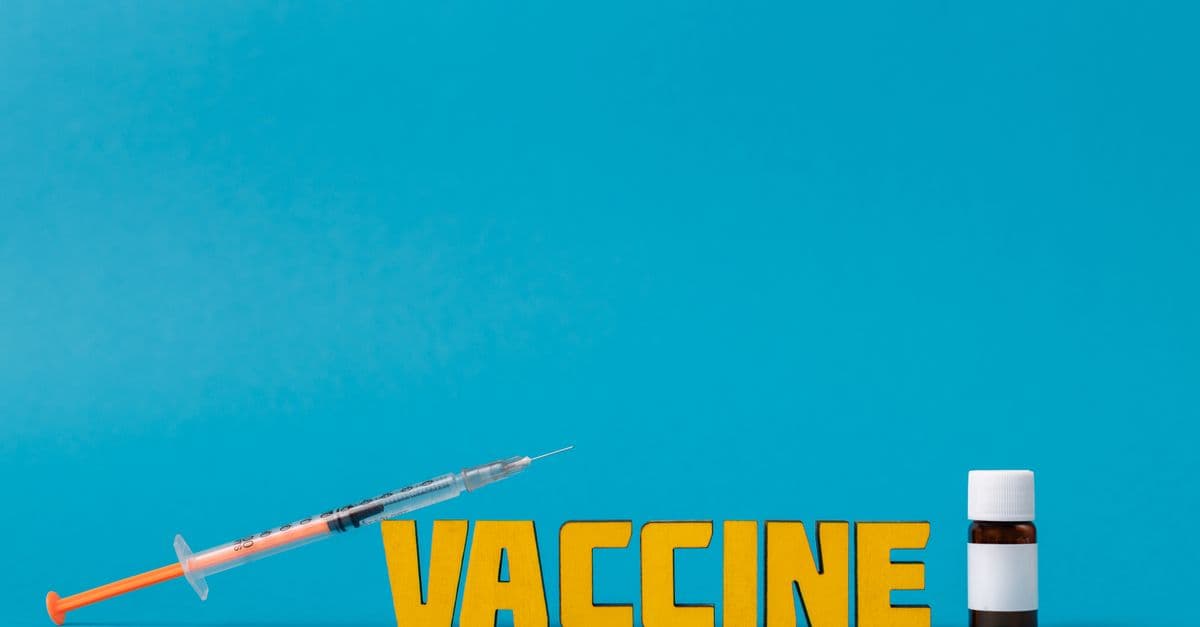
Photo: Tara Winstead / Pexels
In 1980, the World Health Organization announced the eradication of smallpox. A disease that had killed an estimated 300 million people in the 20th century alone — roughly half the total death toll of both World Wars combined — had been eliminated from the earth. Not reduced. Not controlled. Eliminated entirely. No natural disease had ever been conquered before.
The weapon was a vaccine. The technique traced back 184 years to a single English country doctor who noticed that milkmaids didn't get smallpox. The story of how that observation became the technology that has saved more than a billion lives is one of the most extraordinary in the history of science and medicine.
Key Takeaways
- Edward Jenner's 1796 cowpox experiment established the vaccine principle, but inoculation practices existed centuries earlier
- Louis Pasteur developed germ theory and created vaccines for chicken cholera, anthrax, and rabies in the 1880s
- The 20th century delivered vaccines that eliminated or dramatically reduced polio, measles, rubella, diphtheria, and tetanus
- RNA into cells, instructing them to temporarily produce a viral protein that trains the immune system.">mRNA vaccine technology, decades in development, was deployed against COVID-19 in 2020 with extraordinary speed
- Vaccines have prevented an estimated 4–5 million deaths per year in the modern era
Before Jenner: The Ancient Origins of Inoculation
The idea of using disease to prevent disease predates Edward Jenner by centuries. In China by the 10th century, practitioners blew dried smallpox scabs into the nostrils of healthy people — a procedure called variolation. Those exposed to weakened material from mild cases developed immunity without (usually) dying. The procedure was dangerous, with roughly 1–2% mortality, but far better than natural smallpox, which killed 20–30% of those infected.
Variolation reached Europe in 1721, carried by two independent sources: Lady Mary Wortley Montagu, the wife of the British ambassador to the Ottoman Empire, had her children variolated after seeing the practice in Constantinople. Simultaneously, Cotton Mather in Boston had learned of it from an enslaved man named Onesimus, who had been variolated in Africa as a child.
Montagu's advocacy spread the practice among European aristocracy. George Washington ordered the entire Continental Army variolated during the Valley Forge winter of 1777–1778 — arguably one of the most consequential public health decisions in American history. The practice reduced smallpox deaths in the army dramatically.
But variolation remained risky and feared. The breakthrough came in an English village.
Edward Jenner and the Milkmaids
Edward Jenner was a country doctor in Gloucestershire who practiced variolation and had noticed something curious. Milkmaids — women who milked cows and regularly contracted cowpox, a mild infection causing blisters on hands and arms — seemed to never get smallpox. A local folk belief held that cowpox protected against smallpox.
On May 14, 1796, Jenner acted on this observation. He took material from a cowpox blister on a milkmaid named Sarah Nelmes and inoculated an 8-year-old boy named James Phipps. James developed mild cowpox symptoms, then recovered. Six weeks later, Jenner inoculated James directly with material from an active smallpox case. James did not develop smallpox.
Jenner had demonstrated what he called "vaccination" (from vacca, Latin for cow). The Royal Society rejected his paper. He published privately in 1798, and within years the practice had spread across Europe. Napoleon vaccinated his entire army, releasing captive British soldiers at Jenner's personal request. He called Jenner "one of the greatest men in history."
Jenner had no understanding of why vaccination worked. Germ theory hadn't been developed. Viruses wouldn't be discovered for another century. He had only the empirical observation that cowpox exposure prevented smallpox. That observation saved hundreds of millions of lives before anyone understood the mechanism.
Louis Pasteur and the Science of Immunity
Louis Pasteur is the scientist who gave us germ theory — the understanding that infectious diseases are caused by microorganisms. Working through the 1850s–1880s, Pasteur proved that fermentation was caused by microbes, demolished the theory of spontaneous generation, and developed pasteurization.
His contribution to vaccination came almost by accident. In 1878, Pasteur's laboratory was studying chicken cholera. A researcher left chicken cholera cultures untended over a summer holiday. When the aged, weakened cultures were injected into chickens, the chickens became only mildly ill. When those same chickens were then exposed to fresh, virulent chicken cholera — they were immune.
Pasteur had discovered attenuation: weakening a pathogen so it could train the immune system without causing disease. He extended this to anthrax (1881) and, most dramatically, rabies (1885). Rabies was 100% fatal. Pasteur developed a vaccine from dried spinal cord tissue of infected rabbits. In July 1885, a 9-year-old boy named Joseph Meister had been severely bitten by a rabid dog. Facing certain death, his mother begged Pasteur to try the unproven vaccine. Pasteur treated the boy with 13 injections over 10 days. Joseph Meister survived. Pasteur was hailed as a hero across Europe.
In honor of Jenner, Pasteur named all such protective preparations "vaccines."
The 20th Century Vaccine Revolution
The 20th century delivered the industrial-scale vaccine programs that transformed public health globally.
Diphtheria, tetanus, and whooping cough vaccines were developed in the 1920s–1930s and became routine childhood immunizations. Diphtheria once killed tens of thousands of American children annually; by 1980 it was nearly eliminated in the US.
Polio was the great fear of the mid-20th century. In 1952, the US experienced its worst outbreak: 57,000 cases, 21,000 with permanent paralysis. Jonas Salk developed an inactivated polio vaccine, tested it in the largest clinical trial in history — 1.8 million children — and announced results on April 12, 1955. The reaction was euphoric; schools dismissed early and church bells rang across America. Albert Sabin's oral polio vaccine, introduced in 1961, was easier to administer and drove global polio eradication campaigns.
Measles vaccine arrived in 1963. Before it, measles infected nearly every American child; roughly 500 died annually and 48,000 were hospitalized. After routine vaccination, cases dropped 99%.
By the end of the 20th century, the childhood immunization schedule included vaccines for 11–14 diseases, each one responsible for enormous historic mortality. The combined effect was a transformation of childhood mortality in developed and, gradually, developing countries.
mRNA: The Technology That Changed Vaccination
The COVID-19 pandemic that began in late 2019 produced the fastest vaccine development in history. Within 11 months of the virus being sequenced, the Pfizer-BioNTech vaccine received emergency authorization. The technology that made this possible — mRNA vaccines — had been in development for over 30 years.
Katalin Karikó spent decades working on mRNA therapeutics, suffering repeated rejection and demotion because her work was considered impractical. The core problem: synthetic mRNA injected into the body triggered dangerous immune reactions before it could deliver its instructions. Karikó and Drew Weissman discovered in 2005 that modifying a single nucleoside in the mRNA molecule prevented this reaction. This insight was foundational to COVID vaccines.
An mRNA vaccine carries genetic instructions — not a weakened pathogen, not a protein, but the molecular code to make a specific protein. Cells read these instructions, produce the target protein (in COVID vaccines, the spike protein), and the immune system learns to recognize it. The mRNA then degrades; it doesn't enter the cell nucleus or interact with DNA.
The COVID vaccines demonstrated not just efficacy (90%+ against original COVID-19) but the power of the mRNA platform. Clinical trials for mRNA vaccines against influenza, HIV, cancer, and other diseases are now underway. A technology that took 30 years to develop may revolutionize medicine for another century.
FAQ
How do vaccines work? Vaccines introduce the immune system to a pathogen or a component of it — a weakened virus, a killed bacterium, a specific protein, or genetic instructions to make one. The immune system mounts a response and, crucially, forms memory cells. If the real pathogen is encountered later, the immune system recognizes it immediately and responds before disease can develop.
Are vaccines safe? Vaccines undergo some of the most rigorous testing in medicine, including Phase I, II, and III clinical trials and extensive post-market surveillance. Serious adverse events occur but are rare — typically less than 1 in 100,000 doses for most vaccines. The diseases vaccines prevent kill and disable at far higher rates than vaccine adverse events.
What is herd immunity? When enough people in a population are immune to a disease, transmission chains break because the pathogen can't find susceptible hosts. The threshold varies by disease: measles requires ~95% immunity because it's extremely contagious; polio requires ~80–85%. Herd immunity protects people who can't be vaccinated — newborns, immunocompromised individuals.
Why do flu vaccines need to be updated every year? Influenza viruses mutate rapidly, and the strains circulating each winter differ from the previous year. The World Health Organization monitors circulating strains globally and makes annual recommendations for vaccine composition. Manufacturers produce that year's vaccine in a process that takes about six months.
What is the difference between active and passive immunity? Active immunity results from your own immune system learning to fight a pathogen, either through infection or vaccination. It typically lasts years or a lifetime. Passive immunity comes from receiving antibodies produced by someone else — for example, a mother passing antibodies to a fetus through the placenta. Passive immunity is temporary because your body didn't produce the antibodies itself.
Read next:
Follow new articles
Add SciHub101 to your feed reader to see new science and technology stories.
About the Author
SciHub101 is an independent science and technology publication founded and edited by Buğra Sözeri, a software engineer and app developer based in Türkiye. AI tools assist with drafting and research. Source documentation in the existing archive is uneven, and articles are being reviewed and corrected. The Editorial Team byline identifies editorial responsibility; it does not certify specialist or independent human review. Where we compare products, anything built by our own team is labelled as such — see the editorial guidelines and About page for how corrections and disclosures work.
Related Articles

Neural Networks in Network Routing: How AI Optimizes 5G and Beyond
AI-driven network routing is replacing static algorithms in 5G—reducing latency, balancing load, and adapting to traffic in real time.

How Jet Engines Work: The Physics of Flight Power
A single GE90-115B turbofan is rated at 115,300 pounds-force of thrust. The physics behind it is a short chain of ideas: squeeze air, burn fuel in it, and let the hot gas do work.

How Vaccines Work — and Why Some People Refuse Them
Vaccines taught the immune system to beat smallpox, polio, and measles, and a 2024 Lancet study estimated they averted 154 million deaths in 50 years. Yet hesitancy persists. Here is the immunology, the safety evidence, and the psychology behind refusal.

Nanotechnology Explained: The Science of Building at the Atomic Scale
Nanotechnology engineers matter at the level of individual atoms. It's already in your sunscreen, cancer treatments, and phone.
History of Vaccines — From Jenner to mRNA
From variolation and Jenner's cowpox to Pasteur, polio, smallpox eradication, and mRNA — the full history of vaccines and modern frontiers.
How Pandemics Spread — and What Stops Them
What decides how fast a disease spreads, how many people it kills, and which defenses work? The epidemiology of pandemics, from reproduction numbers to vaccines, with the 1918 flu and COVID-19 as test cases.