Ada Lovelace: Poet of Mathematics and the First Computer Program
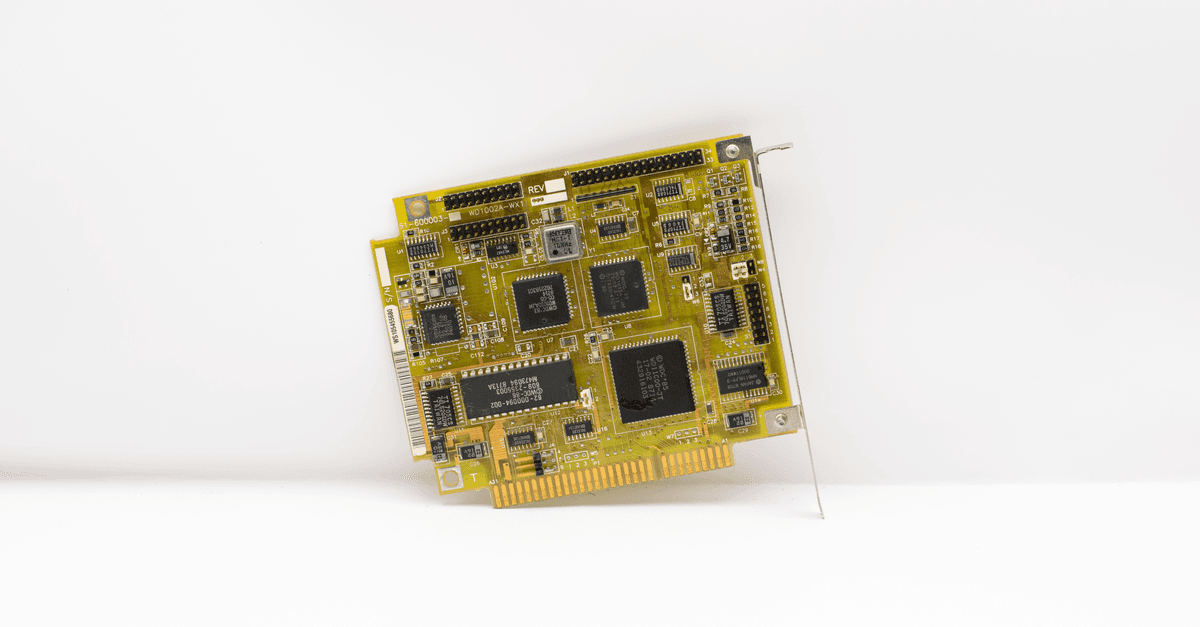
Photo: Nicolas Foster / Pexels
Ada Lovelace (1815–1852) was an English mathematician who wrote what is widely recognized as the first algorithm intended for implementation on a machine — a set of instructions for Charles Babbage's Analytical Engine, published in 1843. She did this at age 27, a decade before the Analytical Engine was even partially built, and she understood something about computational machines that their inventor did not articulate: that they could operate on any symbolic representation, not just numbers, and that their potential was therefore not merely arithmetical but conceptually unlimited. She called mathematics "poetical science," was the daughter of the poet Lord Byron, and spent the last years of her short life developing a gambling system that consumed her health, finances, and reputation.
Quick Biography
Augusta Ada Byron was born on December 10, 1815, in London, the only legitimate child of the poet George Gordon Byron, Lord Byron, and his wife Annabella Milbanke. The marriage was brief and explosive. Byron called Annabella his "Princess of Parallelograms" — an ironic tribute to her mathematical interests — and she left him when Ada was five weeks old, citing his erratic behavior and what she characterized as madness. Byron left England permanently and never saw his daughter again. He died in Greece in 1824 when Ada was eight.
Annabella, fearing that Ada would inherit her father's "poetical temperament," deliberately raised her on a diet of mathematics and science. Ada had music and French lessons like other girls of her class, but her education was structured around the sciences as a deliberate prophylactic against Byronic instability. The strategy succeeded in one sense: Ada became exceptionally capable in mathematics. In another sense it failed entirely: she retained her father's intensity, her mother's relentlessness, and combined them into something unprecedented.
At seventeen, Ada met Charles Babbage at a party and was shown a small model of his Difference Engine — a mechanical calculator designed to compute mathematical tables without human error. She was captivated. Through the mathematician and astronomer Mary Somerville, she maintained contact with Babbage and began a scientific correspondence and friendship that defined her adult life.
In 1835 she married William King, later Earl of Lovelace, becoming Ada, Countess of Lovelace. They had three children. The marriage was stable if not passionate; William was supportive of her work in a manner unusual for the era. Her mathematical mentor was Augustus De Morgan, professor of mathematics at University College London, who taught her through correspondence and reported to her mother that Ada showed "the powers of a first-rate mathematician."
Her major published work appeared in 1843 when she translated an Italian paper on Babbage's Analytical Engine, written by Luigi Menabrea, and added her own notes — which were three times longer than the original text. These notes contain the algorithm for which she is remembered. She died of uterine cancer on November 27, 1852, aged 36, having been nursed in her final weeks by her mother, from whom she had been frequently estranged.
Major Contributions
The First Published Algorithm
In Note G of her translation and annotations of Menabrea's paper, Lovelace wrote out a detailed series of operations for the Analytical Engine to compute Bernoulli numbers — a sequence with applications across mathematics and physics. The algorithm specifies the sequence of machine operations, loops, and conditional handling required to calculate the series. It is, in modern terms, a program: a structured, unambiguous sequence of instructions that a machine, rather than a human, was intended to follow. Babbage had sketched similar ideas in his own notes, and the historical question of whether Note G was Lovelace's independent conception or primarily Babbage's work cleaned up by Ada is genuinely debated by historians. The scholarly consensus, based on the Babbage-Lovelace correspondence at the British Library, is that the algorithm was primarily Lovelace's work, though developed in close dialogue with Babbage.
What makes Note G distinctive is not just the algorithm itself but its framing. Lovelace included explicit discussion of what would happen when the machine encountered a discrepancy in its operations — something like error handling. She described the machine cycling back through a loop when a counter had not reached zero, which is recognizably what modern programmers call a conditional branch. She wrote this description before the machine that would have run it existed.
The Concept of General-Purpose Computing
More significant than the specific algorithm was the conceptual insight Lovelace expressed in Note A. She wrote that the Analytical Engine "might act upon other things besides number, were objects found whose mutual fundamental relations could be expressed by those of the abstract science of operations." She then explicitly considered the example of musical notation — a machine that could compose music if it could be given rules for musical relationships. This is the conceptual leap: from calculator to general-purpose symbol-manipulation machine. Alan Turing would formalize this idea a century later. See also Ada Lovelace and the First Computer Programmer.
The Jacquard loom analogy she used is precise, not decorative. The Jacquard loom was controlled by punched cards that determined which threads were lifted at each step. Babbage had taken the punched card mechanism as inspiration for how the Analytical Engine would store and manipulate data. Lovelace connected these: the machine was a loom for algebra, and just as the loom could weave any pattern described by its cards, the Engine could execute any computation described by its program — including computations over non-numerical symbols.
Recognizing the Limits of the Machine
Lovelace also articulated what became known as a founding question in computer science: can a machine think? Her answer — stated in the notes — was that "the Analytical Engine has no power of originating anything. It can only do what we know how to order it to perform." This formulation, a century before Turing's "Computing Machinery and Intelligence," framed the question of machine intelligence precisely as it is still framed today: not whether machines can compute, but whether they can originate.
Turing explicitly addressed this passage in his 1950 paper, calling it "Lady Lovelace's Objection" and arguing against it. The dialogue between Lovelace's 1843 formulation and Turing's 1950 response is one of the few cases in intellectual history where a direct conceptual thread runs across a century of silence.
Mathematical Frameworks for Babbage
Beyond the published notes, Lovelace worked extensively with Babbage on the mathematical framework needed to describe the Engine's operations. Her correspondence — preserved at the British Library and published by Betty Toole in Ada, the Enchantress of Numbers (1992) — shows a working mathematician, not a popularizer. She pushed back on Babbage's errors, insisted on rigor, and developed notation systems for describing the Engine's operations.
Lesser-Known Habits and Quirks
Childhood Illness: Measles, Paralysis, and Three Years in Bed
At age fourteen, in 1829, Ada contracted a severe case of measles that left her partially paralyzed. She spent approximately three years unable to walk properly, much of that time lying flat or moving only with assistance. During this period — when the standard treatment for an upper-class girl would have been enforced rest and withdrawal from intellectual life — Ada studied mathematics obsessively. Her mother arranged continued instruction by correspondence, and Ada's letters from this period show an intellect that intensified rather than dimmed under physical constraint. She regained full mobility by 1832.
This episode is documented in Benjamin Woolley's The Bride of Science (1999) and in Ada's own correspondence in the Lovelace-Byron archive at the Bodleian Library. It establishes an early pattern: physical adversity that she converted into intellectual focus, a pattern that repeated in her final illness.
"Poetical Science": Mathematics as an Aesthetic Experience
Lovelace described her intellectual method as "poetical science" — the marriage of imagination and rigorous analysis. This was not a vague metaphor. She argued, in letters and in her published notes, that mathematical reasoning and poetic imagination share a common root: the capacity to perceive patterns invisible to ordinary observation, to hold complex abstract structures in the mind, and to make them speak to each other. "I do not believe that my father was (or ever could have been) such a Poet as I shall be an Analyst; for with me the two go together indissolubly," she wrote to her mother in 1844. She regarded the separation of the sciences from the arts as impoverishing to both.
This sensibility is evident in the notes themselves, which contain passages of unusual rhetorical force for a technical document. Her description of the Analytical Engine as weaving "algebraical patterns just as the Jacquard-loom weaves flowers and leaves" — linking the most advanced computing machine of the age to the French mechanical loom that inspired its design — is an act of imagination as much as analysis.
Lord Byron's Daughter: The Shadow and the Inheritance
Lovelace's identity was shaped at every turn by her relationship to a father she never knew. Her mother's obsessive campaign to stamp out Byronic traits — keeping Ada from poetry, structuring her education around calculation — had the paradoxical effect of making Ada acutely conscious of the legacy she was supposedly fleeing. She read her father's poetry in secret, corresponded with people who had known him, and in later life explicitly identified with him: "I am more like my father than my mother." She asked, in the year before her death, to be buried next to Byron — a request that was granted. She lies beside him in the Church of St. Mary Magdalene in Hucknall, Nottinghamshire.
The cultural irony is complete: the woman who created the intellectual framework for computation was the daughter of the poet who wrote "She Walks in Beauty" and Don Juan, and her greatest intellectual achievement was to describe a machine as a loom weaving algebraic flowers.
The Gambling System and the Debts
In the last years of her life, Lovelace became absorbed in developing a mathematical system for betting on horse races. This was not casual gambling. She corresponded with a group of associates about probability theory applied to racing, believed she had devised a method for making reliable predictions, and bet heavily and consistently. She lost. By the time of her final illness she had accumulated significant debts and had pawned the Lovelace family jewels — twice. Her husband paid the debts after her death. The gambling correspondence is preserved in the Lovelace-Byron archive and analyzed in Doris Langley Moore's Ada, Countess of Lovelace (1977). The association between her mathematical interests and gambling is historically documented, not merely circumstantial.
What is particularly striking is the parallel structure: Lovelace was attempting to do with horse racing what she had done with the Analytical Engine — reduce a complex, apparently chaotic system to a set of rules that could be systematically followed for predictable outputs. The failure of the gambling scheme does not contradict the intellectual ambition behind it; it demonstrates that she applied the same framework to both projects.
Mesmerism and Unconventional Medicine
Lovelace, like many educated Victorians, was drawn to practices that blurred the line between science and the occult. She underwent mesmerism (an early form of hypnosis then claimed to have medical properties) as a treatment for various ailments, and expressed interest in phrenology and other pseudosciences fashionable in her era. She also self-medicated with laudanum (opium dissolved in alcohol), prescribed by her doctors, which was standard Victorian practice but accelerated her deterioration in her final years. These interests are documented in her correspondence with Babbage and her mother.
She Corrected Babbage's Errors
Several historians, including Doron Swade in The Difference Engine (2001), note that Lovelace identified errors in Babbage's own descriptions of the Engine and corrected them in her notes without fanfare. Babbage, famously difficult and imperious, accepted the corrections. This is the clearest evidence that her contribution was not merely editorial or popularizing but technically substantive.
Her Mathematical Education Was Exceptional for a Woman in 1830
De Morgan's private assessment of Lovelace's mathematical abilities — sent to her mother, not to Ada — was that she had the capacity for original mathematical work at the highest level, but cautioned against excessive intellectual effort on medical grounds (a standard Victorian concern about women's intellectual activity). He wrote that her grasp of abstract mathematical reasoning was more advanced than most of his university students. This assessment, preserved in the Lovelace-Byron archive, has been cited as corroboration that her contributions to the Analytical Engine notes were not the work of a talented amateur but of a trained mathematician.
Personal Life and Relationships
The Marriage to William King
Ada's marriage to William King, eight years her senior, was arranged through the social networks of educated Victorian England and conducted with the kind of pragmatic affection that upper-class matches of the period often produced. William became Earl of Lovelace in 1838, three years after their marriage, making Ada a countess. He was, by the accounts preserved in the family correspondence, genuinely supportive of her intellectual work — unusual for the era, and essential to the years she spent on the Analytical Engine notes.
Their three children — Byron, Anne Isabella (called "Annabella"), and Ralph Gordon — grew up in a household shaped by Ada's intermittent absences (for medical treatments) and her intense intellectual preoccupations. William managed the household and estates, allowing Ada the time and freedom to correspond with Babbage and pursue her mathematical interests. Their relationship appears to have been companionable rather than passionate; Ada's emotional intensity was directed primarily at her work.
The Relationship with Babbage
The Babbage-Lovelace collaboration was the central intellectual relationship of Ada's adult life, and it was more complicated than simple admiration. Their correspondence shows disagreements, negotiations over credit, and at least one serious falling-out. In 1843, as she was finishing the notes, Ada wrote to Babbage asking him to allow her to manage the publication and presentation of the work — effectively asking to be the public face of the Analytical Engine project. Babbage refused. Ada was furious. The exchange, preserved in the British Library's Babbage Papers and the Lovelace-Byron archive, reveals two powerful personalities in genuine intellectual partnership and genuine conflict.
Babbage's later account of the collaboration, in his autobiography Passages from the Life of a Philosopher (1864), gives Ada credit for the translation but says less about the Notes themselves than historians wished. His silence on the question of their respective contributions is one reason the debate persists.
Her Mother's Control and Its Limits
Annabella Milbanke — Lady Byron after the separation — was one of the most controlling figures in the history of scientific biography. Her management of Ada's education, medical care, social life, and ultimately her death (Ada was nursed by her mother in her final weeks, having at some point confided something to Annabella that caused William to be effectively excluded from the sickroom) shaped Ada's life at every stage. Ada's own letters to her mother alternate between resentment and dependence with a frequency that suggests an unresolvable tension. When Ada asked to be buried next to her father in Hucknall — not in the Lovelace family tomb — it was a final act of self-definition against her mother's long campaign to separate her from Byron's legacy.
Famous Quotes
"That brain of mine is something more than merely mortal; as time will show." From a letter to her mother, written in 1843 — the same year her Analytical Engine notes were published. The combination of confidence and the slightly feverish intensity of her later letters has been noted by biographers as characteristic of her in her final decade.
"I am in a charming state of confusion." Frequently quoted from her correspondence with Babbage, describing her mental state while working on the Engine notes. The full passage conveys excitement rather than distress — the confusion of a mind grappling with something genuinely new.
"The Analytical Engine weaves algebraical patterns just as the Jacquard-loom weaves flowers and leaves." From Note A of her translation of Menabrea's paper (1843). The single most quoted line from her work, and a genuine piece of technical writing that is also a piece of prose.
"I wish to add my mite to the accumulated & accumulating knowledge of the world." From a letter to Babbage, 1843. "Mite" is characteristically self-deprecating; the notes she was working on at the time were anything but minor.
"Mathematical science shows what is. It is the language of unseen relations between things." From an 1841 letter. The formulation anticipates the later understanding of mathematics as a descriptive system for abstract structures — an idea central to 20th-century mathematics and computer science.
Legacy
Ada Lovelace's legacy was largely invisible for a century after her death. Her notes were rediscovered by Alan Turing while he was developing the theoretical framework for computing in the 1930s and 1940s. In 1979, the United States Department of Defense named a programming language "Ada" in her honor — a recognition of her foundational role in the history of computing.
She is now the most prominent symbol of women's contribution to computing, celebrated annually on Ada Lovelace Day (second Tuesday in October), established in 2009. Her portrait hangs in computer science departments worldwide. The Lovelace Medal, awarded by the British Computer Society since 1998, is the most prestigious honor in UK computing.
The historical debate about the precise extent of her contribution — how much was Babbage's, how much hers — is ongoing and legitimate. What is not debated: she understood what a general-purpose computing machine was capable of, expressed it more clearly than anyone else of her era, and wrote it down in a document that survived to become one of the founding texts of the information age.
For more on the history of computing and the pioneers who shaped it, see Alan Turing, Computing, and Artificial Intelligence.
FAQ
Q: Was Ada Lovelace really the "first programmer"? The title is contested and anachronistic — "programmer" is a 20th-century word. She wrote what is widely considered the first algorithm intended for machine implementation. Babbage had written machine operation sequences in his own notes, but Lovelace's Note G is the earliest such algorithm to have been published. The scholarly debate concerns how much of it was independently conceived by her versus developed from Babbage's own sketches.
Q: Did Ada Lovelace actually meet her father? No. Lord Byron left England permanently when Ada was five weeks old and died in Greece in 1824 when she was eight. She grew up with a portrait of him, read his work, and was deeply shaped by his shadow, but they never had a relationship.
Q: Why did Ada Lovelace's gambling system fail? Horse racing is not a deterministic system. The variables affecting race outcomes — horse condition, jockey performance, track conditions, weather — are not reducible to a closed mathematical model in the way Lovelace assumed. The attempt to apply algorithmic thinking to gambling reflects her mathematical confidence; the failure reflects the difference between deterministic machines and probabilistic real-world systems.
Q: Was Ada Lovelace's mathematical ability as advanced as claimed? Based on De Morgan's private assessment and her surviving correspondence with both Babbage and De Morgan, yes — she had genuine mathematical ability, not merely enthusiasm. The specific claim that she was "the first programmer" depends partly on this, and the evidence supports it.
Q: What happened to the Analytical Engine? It was never completed in Babbage's lifetime. A working model of a portion of the Difference Engine was built by the Science Museum in London between 1985 and 1991, following Babbage's original plans. It works correctly, vindicating both the design and the mathematical framework Lovelace annotated.
Q: Did Lovelace know the Analytical Engine would never be built in her lifetime? She appears to have maintained optimism about its eventual construction throughout her life. Her notes are written as if the machine will exist; she refers to future operators and future programs. Whether she understood Babbage's chronic underfunding and the mechanical engineering limits of the era as fatal obstacles is not clear from the correspondence.
Q: How did Lovelace's illness affect her work? The measles-induced paralysis of her teenage years forced a period of intensive study that likely deepened her mathematical education. Her final illness — uterine cancer diagnosed in 1851 — shadowed the last year of her life without stopping her correspondence. She continued writing to Babbage and to her circle of scientific contacts almost until the end. The cancer was treated with increasingly heavy doses of laudanum and other opiates, which her biographers note altered the character of her letters in her final months toward something more erratic.
Q: What was "Lady Lovelace's Objection" in Turing's 1950 paper? In "Computing Machinery and Intelligence," Turing addressed the claim (from Lovelace's Notes) that the Analytical Engine "has no power of originating anything; it can only do what we know how to order it to perform." Turing used this as one of several objections to the idea of machine intelligence and argued against it — suggesting that a machine might surprise its programmer in ways that constitute a form of originality. The exchange established the core question of AI philosophy a century before the field existed.
Sources
- Toole, Betty Alexandra. Ada, the Enchantress of Numbers. Strawberry Press, 1992.
- Moore, Doris Langley. Ada, Countess of Lovelace. John Murray, 1977.
- Swade, Doron. The Difference Engine: Charles Babbage and the Quest to Build the First Computer. Viking, 2001.
- Menabrea, Luigi, trans. Ada Lovelace. "Sketch of the Analytical Engine Invented by Charles Babbage." Scientific Memoirs 3 (1843): 666–731.
- Woolley, Benjamin. The Bride of Science: Romance, Reason, and Byron's Daughter. McGraw-Hill, 1999.
- Essinger, James. Ada's Algorithm. Melville House, 2014.
- Turing, A.M. "Computing Machinery and Intelligence." Mind, 59 (1950): 433–460.
- The Lovelace-Byron archive, Bodleian Library, Oxford.
Follow new articles
Add SciHub101 to your feed reader to see new science and technology stories.
About the Author
SciHub101 is an independent science and technology publication founded and edited by Buğra Sözeri, a software engineer and app developer based in Türkiye. AI tools assist with drafting and research. Source documentation in the existing archive is uneven, and articles are being reviewed and corrected. The Editorial Team byline identifies editorial responsibility; it does not certify specialist or independent human review. Where we compare products, anything built by our own team is labelled as such — see the editorial guidelines and About page for how corrections and disclosures work.
Related Articles

Charles Darwin: The Reluctant Revolutionary Who Ate His Specimens
Charles Darwin's life, discoveries, and verified quirks: eating exotic animals, daily backgammon with his wife, decades of anxiety-induced vomiting, and the theory that changed biology.
Vera Rubin: The Astronomer Who Found the Dark Matter Hiding in Plain Sight
Vera Rubin confirmed dark matter by measuring galaxy rotation curves that defied Newtonian gravity. Turned away from Princeton. Made her own restroom sign at Palomar. Never got the Nobel.
Joseph-Louis Lagrange: The Mathematician Who Rewrote Mechanics
Lagrange's 1788 Mécanique analytique reformulated Newton using pure algebra. He discovered Lagrange points, invented calculus of variations, and survived the Revolution that killed Lavoisier.
Kurt Gödel: The Logician Who Proved Mathematics Has Limits
Kurt Gödel's incompleteness theorems (1931) shattered the dream of a complete mathematics. His Princeton friendship with Einstein and tragic death reveal a singular mind.
Pierre-Simon Laplace: The Mathematician Who Mapped the Solar System
Laplace's celestial mechanics proved the solar system stable, his demon defined determinism, and his probability theory is still used today. He served Napoleon and the Bourbons with equal facility.
Pythagoras: The Theorem, the Brotherhood, and the Man Who Feared Beans
Pythagoras founded a secretive mathematical cult, gave his name to a theorem the Babylonians already knew, and may have had a disciple drowned for proving irrational numbers exist.