Pierre-Simon Laplace: The Mathematician Who Mapped the Solar System
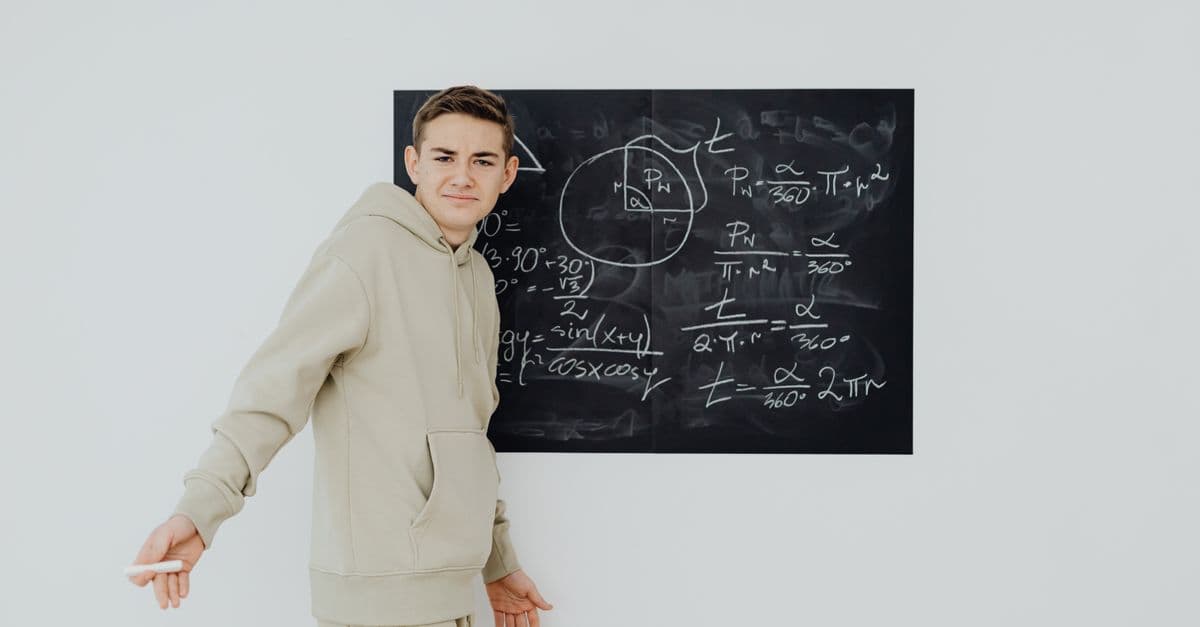
Photo: www.kaboompics.com / Pexels
Pierre-Simon Laplace (1749–1827) was a French mathematician and astronomer who completed what Isaac Newton started: a rigorous mathematical demonstration that the solar system is stable, that its irregularities are periodic rather than accumulating, and that Newtonian gravity alone — with no divine intervention required — explains every observed deviation in the planets' orbits. He also laid the foundations of probability theory as a practical discipline, invented the mathematical tools that bear his name in every physics and engineering textbook, and survived the French Revolution, the Napoleonic Empire, and the Bourbon Restoration by adapting to each with remarkable flexibility.
Early Life: Normandy to Paris
Laplace was born on March 23, 1749, in Beaumont-en-Auge, a small market town in Normandy. His family were peasant farmers, or possibly minor merchants — the records are not precise. What is clear is that his mathematical ability was recognized early, and that local benefactors, including Benedictine monks at a nearby school, facilitated his education.
At 16 he enrolled at the University of Caen to study theology. By 17 he had abandoned theology for mathematics and written a paper on the calculus of finite differences that was good enough to get him noticed. At 18 he arrived in Paris with a letter of recommendation to Jean le Rond d'Alembert, one of the central figures of the French Enlightenment and co-editor of the Encyclopédie.
The interaction with d'Alembert followed a pattern common in that era: the young mathematician presented a general paper on mechanics, d'Alembert was impressed, and within days Laplace had been appointed a professor of mathematics at the École Militaire. He was 19.
Source: MacTutor History of Mathematics — Pierre-Simon Laplace. https://mathshistory.st-andrews.ac.uk/Biographies/Laplace/
He remained in Paris for the rest of his life, building an increasingly formidable reputation through the 1770s and 1780s. He was elected to the Académie des Sciences in 1773 and became one of its dominant figures. By 1790 he was among the two or three most famous mathematicians in Europe.
Celestial Mechanics: Finishing Newton's Work
Newton's Principia (1687) had established that gravity explained planetary motion. But Newton's mathematics was not precise enough to show whether the solar system was stable in the long run. The planets perturb each other's orbits — Jupiter pulls Saturn slightly off course, Saturn pulls Jupiter, and so on through the system. Newton himself worried that these perturbations might be cumulative: the solar system might, over long time periods, become chaotic and require divine correction to remain orderly.
Source: Britannica — Pierre-Simon Laplace. https://www.britannica.com/biography/Pierre-Simon-marquis-de-Laplace
Laplace showed, through the most detailed celestial mechanics calculations undertaken to that point, that the apparent irregularities in planetary motion — particularly the long-observed acceleration of Jupiter and deceleration of Saturn — were not cumulative but periodic. Jupiter and Saturn interact in a near-resonance of their orbital periods (5:2 ratio), creating fluctuations that repeat over a cycle of roughly 929 years. Over that timescale, both planets return to their starting configuration. The solar system is stable.
This work appeared in a series of papers in the 1780s and was consolidated in his five-volume masterwork Mécanique céleste (Celestial Mechanics), published between 1798 and 1825. The Mécanique céleste is to orbital mechanics what Newton's Principia was to classical mechanics — the document that organized and closed a subject.
Think of it this way: Newton showed that planets move according to a single law. Laplace proved that the solar system, running that law for billions of years, would not fly apart. He turned gravity from an explanation of motion into a demonstration of cosmic order.
He also developed the theory of the tides, worked out the shape of Earth (an oblate spheroid, flattened at the poles), analyzed the precession of the equinoxes, and calculated the mass and density of several planets from perturbation data. His prediction of the Roche limit — the distance at which a satellite is torn apart by tidal forces — was derived by later mathematicians directly from his gravitational theory.
Laplace's Demon: The Definition of Determinism
In the introduction to his 1814 work Essai philosophique sur les probabilités (A Philosophical Essay on Probabilities), Laplace described a thought experiment that has been cited in physics, philosophy, and cognitive science ever since.
Definition — Laplace's demon: A hypothetical intellect that knows the precise position and momentum of every particle in the universe at one moment, and can compute — using classical mechanics — the complete future and past of the universe from that knowledge.
Laplace wrote: "We may regard the present state of the universe as the effect of its past and the cause of its future. An intellect which at a certain moment would know all forces that set nature in motion, and all positions of all items of which nature is composed, if this intellect were also vast enough to submit these data to analysis, it would embrace in a single formula the movements of the greatest bodies of the universe and those of the tiniest atom; for such an intellect nothing would be uncertain and the future just like the past would be present before its eyes."
The "demon" itself is Laplace's name, applied retroactively — he described the intellect, not a demon. The concept is the purest statement of classical determinism: if the laws of physics are complete and the initial conditions are known, the future is fixed. Uncertainty, in this view, is always a product of ignorance, not of genuine randomness.
Quantum mechanics, developed a century later, challenged this picture directly: Werner Heisenberg's uncertainty principle establishes that precise simultaneous knowledge of position and momentum is impossible in principle, not merely in practice. Laplace's demon cannot exist because the initial conditions it requires cannot be measured. But the demon remains the clearest expression of what classical physics implies about the nature of time and causation.
Probability Theory: From Gambling to Science
Laplace's contributions to probability were as consequential as his work in astronomy, though they took longer to be recognized as such.
His Théorie analytique des probabilités (1812) systematized the field and introduced what we now call Bayesian probability — the interpretation of probability as a degree of belief, updated in light of evidence. Laplace derived Bayes' theorem independently (Thomas Bayes had published a related result in 1763, posthumously) and extended it into a general framework for inference.
Source: Laplace, P.-S. (1812). Théorie analytique des probabilités. Courcier, Paris.
The Laplace rule of succession — one result from this work — addresses a question that sounds simple: if the Sun has risen every day for 6,000 years, what is the probability it will rise tomorrow? Laplace calculated it as (n+1)/(n+2), where n is the number of observations. For 6,000 years of daily sunrises (about 1,826,213 observations), the probability is 1,826,214/1,826,215 — essentially certainty, but not 1. The point is philosophical as much as mathematical: no amount of past success guarantees future success; it only makes future success more probable.
He also introduced the Laplace transform — a mathematical operation that converts a function of time into a function of frequency. This tool is indispensable in electrical engineering, control theory, and physics: every circuit analysis textbook covers it. He developed the concept of potential in mathematical physics, giving "potential energy" its mathematical definition, and the Laplace equation — the equation satisfied by gravitational and electrical potentials in free space — is named for him.
Source: New World Encyclopedia — Pierre-Simon Laplace. https://www.newworldencyclopedia.org/entry/Pierre-Simon_Laplace
Lesser-Known Work: Black Holes Before Black Holes
In 1796, in his popular book Exposition du système du monde, Laplace calculated that a star sufficiently massive and compact could have an escape velocity greater than the speed of light. He wrote: "A luminous star, of the same density as the Earth, and whose diameter should be two hundred and fifty times larger than that of the Sun, would not, in consequence of its attraction, allow any of its rays to arrive at us."
This is, in all but name, the concept of a black hole — predicted using Newtonian mechanics rather than general relativity, and for reasons that made the result coincidentally correct rather than physically rigorous. John Michell had made a similar calculation in 1783. Laplace included it in two editions of his book and then removed it from the third, possibly because the wave theory of light had undermined the particle-based reasoning he had used. The concept would not return to mainstream physics until Karl Schwarzschild derived the first exact black hole solution from Einstein's field equations in 1916.
For a comparison of how Laplace's gravitational work compares with Isaac Newton's original formulation, see Newton's biography — the two treatments of gravity are complementary, with Laplace providing the analytical machinery Newton's geometric approach could not supply.
Napoleon, Revolution, and Political Survival
Laplace's political career is a study in calculation applied to self-preservation rather than ballistics.
During the Revolution, he served on technical committees — advising on standardizing weights and measures (helping establish the metric system), on educational reform, and on the administration of the new École Polytechnique, which opened in 1794. He maintained a low enough profile during the Terror to avoid arrest, despite the execution of many academic colleagues.
When Napoleon came to power in 1799, Laplace presented him with a copy of the Mécanique céleste. Napoleon, who had a genuine interest in mathematics, reportedly told Laplace that God did not appear in the book. Laplace replied: "I had no need of that hypothesis." This exchange is widely quoted but cannot be independently verified — it appears first in a secondhand account. What is certain is that the book did not mention God, and that Laplace held that gravitational mechanics was sufficient to explain solar system stability without invoking divine maintenance.
Napoleon appointed Laplace Minister of the Interior shortly afterward. The appointment lasted six weeks. Napoleon later wrote that Laplace had brought "the spirit of the infinitely small into the government" — a mathematician's instinct for precision and completeness was, it turned out, not ideal for running a ministry.
Source: Napoleon-Empire.org — Laplace biography. https://www.napoleon-empire.org/en/personalities/laplace.php
Laplace was then honorably transferred to the Senate, where he served more congenially, rising to Chancellor in 1803 and Count of the Empire in 1806. When Napoleon's empire collapsed in 1814, Laplace was among the first to declare for the Bourbon restoration. He was rewarded with a marquisate in 1817. His former colleagues found this adaptability undignified. His later admirers found it rational.
Personal Life
Laplace married Marie-Charlotte de Courty de Romanges in 1788. She was 19, he was 39. The marriage lasted until his death. They had two children, a son and a daughter. The son, Charles-Émile, became a general.
Laplace's personality was complex. He was known to be difficult with younger mathematicians — slow to credit their contributions and reluctant to acknowledge debts to predecessors. He frequently failed to cite sources in the Mécanique céleste, and several mathematicians, including Alexis Clairaut and Adrien-Marie Legendre, found their work absorbed without attribution. On the other hand, he was a consistent patron of Évariste Galois's early work, supporting his application to the École Polytechnique. See Évariste Galois for that story's outcome.
He was meticulous in his personal habits and dress, and maintained a working routine that resisted disruption. He died on March 5, 1827, reportedly with the words: "What we know is not much. What we do not know is immense."
Habits and Quirks
Laplace was notorious for writing "it is easy to see" in mathematical derivations when the intermediate steps were anything but easy — forcing generations of readers to reconstruct calculations he had done in his head and declined to show. The mathematician Nathaniel Bowditch, who translated the Mécanique céleste into English, said that whenever Laplace wrote "it is easy to see," it meant at least an hour's work to verify.
He also had a habit of visiting colleagues to discuss problems, then disappearing with the key insight and publishing it without acknowledgment. Whether this was deliberate appropriation or the act of someone who genuinely forgot where ideas came from is not clear from the historical record. Both explanations have been advanced.
His political flexibility — serving the Revolution, then Napoleon, then the Bourbons — was noted caustically by his contemporaries. The mathematician Joseph Fourier, who knew him well, described him as someone whose "ambition" was "always to be on the winning side." Laplace seems not to have been troubled by this characterization.
Legacy
| Contribution | Field | Current Use |
|---|---|---|
| Mécanique céleste (1798–1825) | Celestial mechanics | Foundational text in orbital mechanics |
| Laplace transform | Mathematics / engineering | Essential tool in circuit analysis, control theory |
| Laplace equation | Mathematical physics | Describes electrostatic and gravitational potentials |
| Laplace's demon | Philosophy / physics | Canonical statement of classical determinism |
| Bayesian probability foundations | Statistics | Basis of Bayesian inference used across science |
| Solar system stability proof | Astronomy | Resolved Newton's open question about perturbations |
| Black hole precursor concept (1796) | Astrophysics | Historical antecedent of modern black hole theory |
Laplace's technical legacy is more durable than his reputation. His name appears on equations in mechanics, electrostatics, fluid dynamics, and probability. His Mécanique céleste remained the definitive work on orbital dynamics for a century. His probability theory, after a long period of dormancy, became central to twentieth-century statistics and remains, in its Bayesian form, one of the dominant approaches to data analysis in science.
He stands, alongside Carl Friedrich Gauss and Leonhard Euler, as one of the three mathematicians who most completely shaped the quantitative toolkit of physics between Newton and the twentieth century.
Source: Physics Today — "Pierre Simon Laplace, 1749-1827: A Determined Scientist." https://physicstoday.aip.org/reviews/pierre-simon-laplace-1749-1827-a-determined-scientist
The Demon and the Rise of Probability
Laplace's demon, as described in the introduction to the 1814 Essai philosophique sur les probabilités, is usually read as the definitive statement of classical determinism. It deserves a closer look in its original framing, because Laplace introduced it not to celebrate determinism but to explain probability — specifically, to argue that probability is always a measure of ignorance, never of genuine randomness.
His argument ran like this. If a perfect intellect knew all positions and momenta, it would need no probability at all: the future would be certain. We, being imperfect, use probability as a tool for reasoning under uncertainty. Probability, for Laplace, is not a property of the world. It is a property of our knowledge of the world. This is now called the Bayesian or subjectivist interpretation of probability, and it is one of Laplace's most consequential intellectual contributions.
Source: Laplace, P.-S. (1814). Essai philosophique sur les probabilités. Courcier, Paris. (Introduction.)
Working within this framework, Laplace developed what he called the "rule of succession" — a method for estimating probabilities from past frequencies when no prior information is available. The rule assigns a probability of (s+1)/(n+2) to the next trial being a success, given s successes in n trials. This may look like a minor technical result, but its implications extend far. Applied to the sunrise problem — if the Sun has risen for n consecutive days, what is the probability it rises tomorrow? — the rule gives a number very close to 1 but never exactly 1. No accumulation of past observations can make a future event certain. Every prediction is, in Laplace's framework, a degree of belief calibrated by evidence, not a deduction from necessity.
Think of it as the difference between a rulebook and a betting slip. Classical mechanics is the rulebook — given perfect information, it tells you exactly what happens. Probability is the betting slip you use when the rulebook exists but you cannot read all of it. Laplace formalized the mathematics of rational betting, and that formalization turned out to be among the most powerful tools in science.
How Boltzmann, Maxwell, and Gibbs inherited Laplace's tools
The physicists who built statistical mechanics in the second half of the nineteenth century worked directly with Laplace's probabilistic machinery, often without fully acknowledging it. James Clerk Maxwell's 1860 derivation of the distribution of molecular speeds in a gas — the Maxwell-Boltzmann distribution — applied Laplace's rule of combining independent probability distributions. Ludwig Boltzmann's H-theorem and his interpretation of entropy as a measure of disorder (S = k log W) used Laplace's combinatorial counting methods, treating the vast number of possible molecular arrangements as a probability problem. Josiah Willard Gibbs formalized all of this in Elementary Principles in Statistical Mechanics (1902), building a mathematical framework — ensemble theory — that is essentially Laplacian probability applied to large systems.
Source: Hacking, I. (1975). The Emergence of Probability. Cambridge University Press. (Chapters 14–16.)
The historical irony is that Laplace's demon — the deterministic intellect for whom probability is unnecessary — gave birth to the tools that eventually undermined classical determinism. Statistical mechanics showed that even in a fully deterministic world, the behavior of large collections of particles could only be described probabilistically. Boltzmann's entropy formula implicitly assumes that we do not know — and cannot know — the exact microstate of a gas. That assumption, Laplacian in origin, led directly to the second law of thermodynamics as a statistical rather than mechanical law.
Modern echoes in machine learning
The connection from Laplace to contemporary machine learning is not metaphorical. Bayesian inference — the framework Laplace built around his rule of succession and Bayes' theorem — is the mathematical foundation of a large class of statistical learning algorithms. A Bayesian classifier starts with a prior probability distribution over possible models or hypotheses, observes data, and updates to a posterior distribution using Bayes' theorem: P(hypothesis | data) ∝ P(data | hypothesis) × P(hypothesis). Laplace derived and used exactly this formula, applying it to astronomical measurement errors and to demographic problems such as estimating the sex ratio at birth from incomplete census data.
Gaussian processes — a standard tool in Bayesian machine learning for function approximation and uncertainty quantification — are named in part for Gauss, but the inference machinery they use is Laplacian. The Laplace approximation, a technique for approximating Bayesian posterior distributions using a local Gaussian, carries his name directly. It appears in neural network training, in probabilistic graphical models, and in the calibration of weather forecasting models. When a modern machine learning system reports not just a prediction but a confidence interval, it is, at a deep level, doing what Laplace formalized: treating uncertainty as a property of knowledge, not of the world, and using past data to update prior beliefs into posterior ones.
Source: Hacking, I. (1975). The Emergence of Probability. Cambridge University Press. (Chapter 18: "Inverse Probability.")
The demon, then, was not the main event. It was the framing device Laplace used to motivate a discipline — probability as rational inference — that turned out to be more consequential than the determinism it was meant to illustrate.
Frequently Asked Questions
Q: What is Laplace's demon? A: A thought experiment Laplace described in 1814: if an intellect knew the exact position and momentum of every particle in the universe, it could calculate the entire future and past. This is the canonical statement of classical determinism. Quantum mechanics rules it out in practice, since the Heisenberg uncertainty principle prevents precise simultaneous measurement of position and momentum.
Q: What did Laplace prove about the solar system? A: He proved that the apparent irregularities in planetary orbits — particularly the alternating acceleration and deceleration of Jupiter and Saturn — are periodic, not cumulative. The solar system is gravitationally stable over long timescales. This closed a question Newton had left open.
Q: What is the Laplace transform? A: A mathematical operation that converts a function of time into a function of complex frequency, making certain differential equations much easier to solve. It is a standard tool in electrical engineering, control systems, and physics.
Q: Did Laplace really tell Napoleon "I had no need of that hypothesis"? A: The story is widely reported but cannot be verified from a contemporary primary source. It first appears in a secondhand account. What is historically accurate is that the Mécanique céleste did not mention God, and that Laplace's celestial mechanics program was explicitly aimed at showing that gravitational mechanics alone explained solar system behavior without invoking divine intervention.
Q: Was Laplace a political opportunist? A: By most historical accounts, yes. He served, in succession, the Revolutionary government, Napoleon's empire, and the Bourbon monarchy, receiving honors and titles from each. His contemporaries found this flexibility distasteful; historians tend to describe it more neutrally as pragmatic adaptation to an era of violent political instability.
Q: What is the Laplace equation? A: The equation ∇²φ = 0 — stating that the Laplacian of a scalar field equals zero in regions free of sources. It describes the behavior of gravitational and electrostatic potentials in empty space and appears throughout physics and engineering.
Follow new articles
Add SciHub101 to your feed reader to see new science and technology stories.
About the Author
SciHub101 is an independent science and technology publication founded and edited by Buğra Sözeri, a software engineer and app developer based in Türkiye. AI tools assist with drafting and research. Source documentation in the existing archive is uneven, and articles are being reviewed and corrected. The Editorial Team byline identifies editorial responsibility; it does not certify specialist or independent human review. Where we compare products, anything built by our own team is labelled as such — see the editorial guidelines and About page for how corrections and disclosures work.
Related Articles

Alfred Wegener: The Man Who Said the Continents Move
Alfred Wegener proposed continental drift in 1912 and was rejected by his field. Plate tectonics vindicated him decades after his death on Greenland's ice.

Murray Gell-Mann: The Man Who Named the Quark
Murray Gell-Mann discovered quarks, built the Eightfold Way, won the 1969 Nobel Prize, and co-founded the Santa Fe Institute. His biography, science, and verified quirks.
Joseph-Louis Lagrange: The Mathematician Who Rewrote Mechanics
Lagrange's 1788 Mécanique analytique reformulated Newton using pure algebra. He discovered Lagrange points, invented calculus of variations, and survived the Revolution that killed Lavoisier.
Kurt Gödel: The Logician Who Proved Mathematics Has Limits
Kurt Gödel's incompleteness theorems (1931) shattered the dream of a complete mathematics. His Princeton friendship with Einstein and tragic death reveal a singular mind.
Pythagoras: The Theorem, the Brotherhood, and the Man Who Feared Beans
Pythagoras founded a secretive mathematical cult, gave his name to a theorem the Babylonians already knew, and may have had a disciple drowned for proving irrational numbers exist.
Archimedes: The Naked Run, the Claw, and the Man Who Almost Invented Calculus
Archimedes of Syracuse: buoyancy, levers, war machines, and verified quirks — the Eureka story examined, the circle and the soldier, and why he came closer to calculus than anyone for 1,800 years.