Archimedes: The Naked Run, the Claw, and the Man Who Almost Invented Calculus
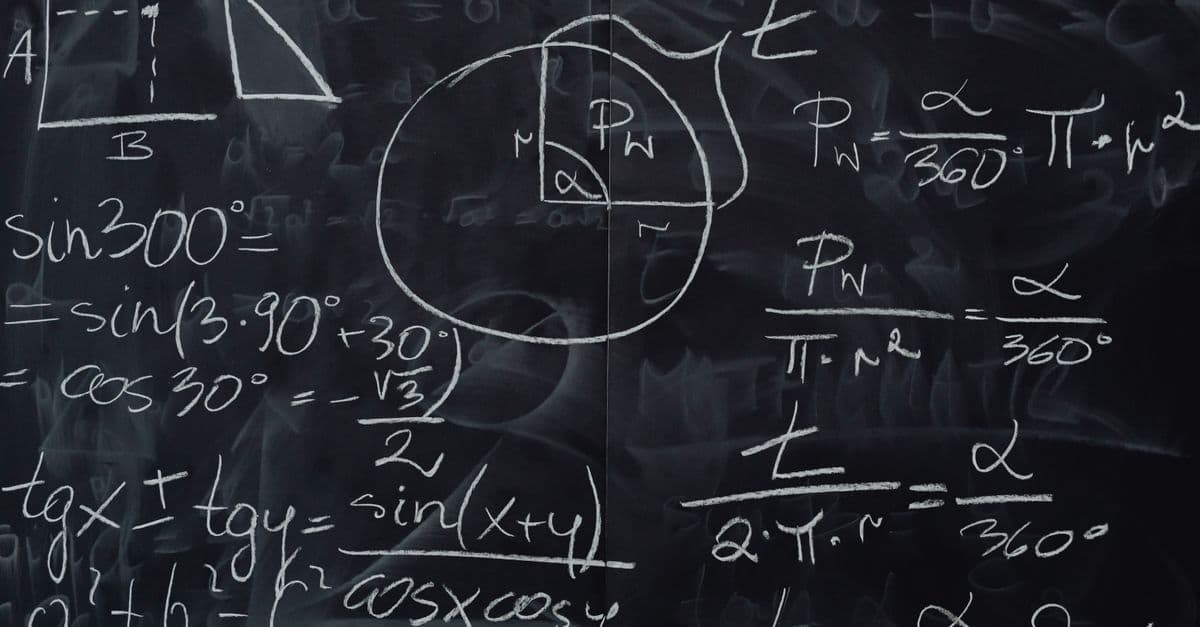
Photo: www.kaboompics.com / Pexels
Archimedes of Syracuse (c. 287–212 BCE) is the closest thing antiquity produced to a theoretical physicist in the modern sense. He calculated pi to an accuracy unmatched for a millennium, derived the volume and surface area of a sphere, established the law of the lever in formal mathematical terms, and articulated the principle of buoyancy that still bears his name. He designed siege engines that held a Roman fleet at bay for two years. He died at the hands of a Roman soldier whose orders were specifically to bring him in alive, reportedly because he refused to leave a geometry problem unfinished. Almost everything about his life is extraordinary, and a surprising amount of it is true.
Quick Biography
Archimedes was born around 287 BCE in Syracuse, a Greek colony on the eastern coast of Sicily, then one of the most powerful cities in the western Mediterranean. His father, Pheidias, was an astronomer — one of the few personal details that Archimedes himself recorded, in the introduction to his work The Sand Reckoner. Ancient sources suggest he may have studied in Alexandria, the intellectual capital of the Hellenistic world, where he would have had access to the library and the tradition of Euclid. He returned to Syracuse and remained there for the rest of his life, working under the patronage of King Hieron II and later Hieron's son Gelon.
His relationship with the ruling family appears to have been productive and warm. Hieron commissioned engineering problems; Archimedes solved them with theoretical foundations that went far beyond what was practically required. The Sand Reckoner — a calculation of how many grains of sand would fill the universe — was addressed to Gelon and was partly an exercise in notation, devising a system to express numbers far larger than the Greek alphabet could accommodate.
The last chapter of his life was the Siege of Syracuse (214–212 BCE), when Rome, allied with a rival Syracusan faction, sent a fleet under the general Marcus Claudius Marcellus to take the city. Archimedes designed the defensive machinery that frustrated the Roman assault for two years. When the city finally fell, Marcellus reportedly gave orders that Archimedes was not to be harmed. A Roman soldier found him working at a geometry problem and killed him — the circumstances are given differently in different ancient sources. He was approximately 75 years old.
Marcellus arranged a funeral and, according to Cicero, honored the mathematician's wish: his tombstone bore a sphere inscribed within a cylinder, commemorating his proof that the sphere's volume and surface area are exactly two-thirds of those of the circumscribed cylinder. Cicero himself located the overgrown tomb in 75 BCE, when he was serving as quaestor in Sicily, and had it cleared — one of the few tomb-visits in antiquity that is both recorded and independently plausible.
Personal Life and the Patronage of Hieron II
Personal details about Archimedes are scarce to the point of near-invisibility. He never married, as far as any ancient source records. He had no known children. His father Pheidias appears only in a single sentence Archimedes himself wrote. Friends and colleagues, if they existed, left no trace in the historical record.
What does exist, documented across several works, is his relationship with the royal household of Syracuse. King Hieron II (c. 308–215 BCE) ruled Syracuse for more than five decades, navigating between Carthage and Rome with considerable political skill, and during his reign the city was prosperous enough to be a genuine intellectual center. Hieron's patronage of Archimedes was not casual: the king commissioned practical engineering questions — the crown problem, the design of the Syracusia (one of the largest ships of antiquity, for which Archimedes designed a bilge pump) — and Archimedes delivered them. That Archimedes continued living in Syracuse, a city of material comfort but not of Alexandria's intellectual scale, for his entire career suggests the arrangement suited him.
Plutarch describes Archimedes as being close to Hieron "as a kinsman and friend" (Life of Marcellus, c. 75 CE). The Greek word Plutarch uses implies something warmer than a client relationship. Whether this reflects Archimedes' own feelings or Plutarch's literary elaboration two centuries later cannot be confirmed. What is consistent across sources is that Archimedes chose to remain in Syracuse, serving its defense and its king, rather than seeking a more prominent stage elsewhere.
The Syracusia, the massive grain ship Hieron commissioned, appears in Athenaeus (Deipnosophistae, c. 200 CE), who credits Archimedes with the screw pump used to keep its bilges dry. This is the Archimedes screw — a helical device that raises water when rotated — still used for irrigation in parts of Egypt, Spain, and the Netherlands today. Athenaeus's account is late; the Archimedes screw appears in earlier sources attributed to him without the Syracusia context. Whether the ship story is accurate or a later addition is debated, but the screw mechanism itself is firmly associated with Archimedes across multiple independent sources.
Major Contributions
The Principle of Buoyancy
The law that a body immersed in a fluid experiences an upward force equal to the weight of the fluid displaced is set out rigorously in Archimedes' On Floating Bodies, the oldest surviving work on hydrostatics. The principle explains why ships float, why balloons rise, and why your body feels lighter in water. It remains in every introductory physics curriculum as Archimedes' Principle. The mathematical treatment in On Floating Bodies — particularly the proofs about the stability of floating paraboloids — is sophisticated enough that modern scholars still study it carefully.
The Law of the Lever
"Give me a place to stand and I shall move the world" is attributed to Archimedes in relation to the lever, and while the exact wording is probably a later compression, the sentiment is authentic. His work On the Equilibrium of Planes established the law of the lever from first principles: that a lever is in equilibrium when the products of each weight and its distance from the fulcrum are equal. This is the foundation of statics. He also applied this reasoning to find the centers of gravity of various plane figures, work that anticipates the methods of Galileo Galilei by nearly two millennia.
Calculation of Pi and the Method of Exhaustion
Archimedes did not use the symbol pi (that notation came much later), but he established that the ratio of a circle's circumference to its diameter lies between 223/71 and 22/7 — equivalent to pinning pi between 3.1408 and 3.1429. He achieved this by inscribing and circumscribing 96-sided polygons around a circle and calculating their perimeters. More fundamentally, his method of exhaustion — approaching a curved area by taking successively smaller polygons whose areas converge on the true value — is the conceptual ancestor of integral calculus. Isaac Newton and Leibniz formalized the limit concept and the fundamental theorem; Archimedes had the key intuition and applied it to spheres, spirals, and parabolas 1,800 years before them.
War Machines
During the Siege of Syracuse, Archimedes designed a suite of defensive engines. The catapults and ballistae are well-attested. More remarkable are two machines that appear in multiple ancient sources. The Claw of Archimedes — the Iron Hand — was reportedly a large crane-like device that could reach over the city walls, seize the prow of a Roman ship with a grappling hook, lift it partially out of the water, and then drop it, capsizing or swamping the vessel. The device is described by Polybius, Livy, and Plutarch independently, which makes it difficult to dismiss entirely, though no physical evidence survives. Inventing in wartime has a long history, and Hedy Lamarr's story is a much later example.
The heat ray — mirrors focused to ignite Roman ships — appears first in Lucian (2nd century CE) and is probably legendary; the physics are plausible but the practical execution (requiring dozens of precisely angled, stationary mirrors aimed at a moving target) is almost certainly beyond what was achievable. Modern reconstruction attempts by MIT students and others have managed to ignite wood under controlled conditions but not at combat range with ships in motion.
The Archimedes Palimpsest: Calculus 1,800 Years Early
The single most significant addition to our knowledge of Archimedes in modern times came not from an excavation but from a medieval prayer book. In 1906, the Danish classical scholar Johan Ludvig Heiberg identified a 10th-century Byzantine manuscript that had been partially erased, washed, and overwritten with liturgical text. Underneath the prayers was a palimpsest — a reused parchment — containing several Archimedes texts, including one work not known from any other source: The Method of Mechanical Theorems, usually called simply The Method.
The Method is extraordinary because Archimedes explains, in his own words, how he actually arrived at his geometrical results before proving them formally. His technique involved thinking of geometric figures as being made up of infinitely many infinitely thin slices, then comparing those slices using the law of the lever — balancing them against known quantities. This is, functionally, an approach to what would become integral calculus. He was clear that he considered this a way of finding results, not of proving them formally; but the conceptual apparatus is unmistakable.
The palimpsest was identified in 1906, briefly studied, then disappeared. It resurfaced at a Christie's auction in 1998, was purchased anonymously for $2 million, and was deposited at the Walters Art Museum in Baltimore for conservation and imaging. Between 1999 and 2008, a team using multispectral and X-ray fluorescence imaging recovered text invisible to the naked eye. The full imaging project, which included the Stomachion and other fragmentary texts, was completed in 2008 and published in 2011 (Netz et al., The Archimedes Palimpsest, Cambridge University Press).
The Stomachion section, partly recovered from the palimpsest, revealed that Archimedes was not merely investigating the geometry of a puzzle made of 14 pieces cut from a square, but counting the distinct ways those pieces could be reassembled — what is now called combinatorics. If the interpretation is correct, Archimedes was doing combinatorial mathematics roughly 2,200 years before the field was formally named. The evidence is fragmentary and some scholars remain cautious, but the palimpsest project has permanently expanded the known range of his work.
Think of it this way: it is as though we believed Newton had invented calculus, only to find a notebook showing that an ancient scholar had worked out the core ideas — not as formal machinery but as a working method he used and explicitly explained. The Archimedes palimpsest is exactly that notebook.
Quirks
The Eureka Story: True in Spirit, Embellished in Detail
Every schoolchild knows the story: Archimedes stepped into a bath, noticed the water rising, and realized he could measure the volume of an irregular solid by water displacement, solving the problem of whether King Hieron's crown was pure gold. He leaped from the bath and ran naked through the streets of Syracuse shouting "Eureka!" — I have found it.
The source for this story is Vitruvius, the Roman architect and engineer, writing in his De Architectura around 25 BCE — roughly 200 years after Archimedes died. No earlier source records it. The version Vitruvius tells is also physically problematic: comparing the water displaced by the crown to that displaced by equal weights of pure gold and silver is technically possible but extremely difficult to execute accurately with ancient measuring tools. Archimedes' actual surviving works contain no reference to this experiment at all.
What Archimedes certainly did understand is buoyancy and the relationship between density and displacement, which is the intellectual core of the story. Whether he had a bath-time epiphany, whether he ran through the streets, whether "Eureka" was the word he used — none of this can be confirmed from a source written two centuries later. Historians of science treat the episode as a plausible legend that preserves a genuine insight while almost certainly embellishing the delivery.
"Do Not Disturb My Circles" — Disputed Last Words
The most famous deathbed utterance in the history of mathematics is attributed to Archimedes in his final moments. A Roman soldier had found him drawing geometric figures in the sand and, impatient to march him before the general, threatened him. Archimedes reportedly replied — depending on which ancient source you read — "Do not disturb my circles," "Stand away from my diagram," or simply "Don't spoil my work." He was killed immediately.
The sources are: Plutarch (Life of Marcellus, c. 75 CE), Livy (Ab Urbe Condita, c. 25 BCE), and Valerius Maximus (c. 30 CE). All three agree that a soldier killed him against Marcellus's orders and that the killing involved interrupting his work. The exact words vary. "Do not disturb my circles" in its memorable form appears in Plutarch, the latest and most literary of the sources. Whether Archimedes said precisely this, or something equivalent, or whether the story is entirely post-hoc — cannot be resolved. What is historically firm is: Marcellus wanted him alive, a soldier killed him, and Marcellus was reportedly grief-stricken at the outcome. The story is not invented wholesale; the memorable phrasing may be.
Engineering Humility — He Didn't Think Much of His Own Engineering
There is a genuine paradox in Archimedes. His siege engines were so effective that a Roman army — the most formidable military force in the Mediterranean — was held off for two years largely by one man's mechanical ingenuity. Plutarch records that the Roman soldiers became so fearful that any rope or piece of timber appearing over the walls of Syracuse would trigger a panic. "Is Archimedes going to attack us again?" they reportedly asked.
Yet Archimedes himself, if the ancient sources are trusted, considered this engineering work beneath his real achievement. Plutarch says he thought mechanical arts "ignoble and sordid" and that only pure mathematical proof deserved serious attention. He reportedly left no written account of his own engineering inventions. His written legacy is almost entirely pure mathematics. The man who built the most feared military machines of his era is remembered in his own works solely as a geometer. The personality reading is consistent: a brilliant mathematician who agreed to do practical work for a king he respected, but kept his heart in proof.
The Stomachion: An Ancient Combinatorics Puzzle
In 2008, scholars working on the Archimedes Palimpsest found evidence that the Stomachion (a puzzle involving 14 pieces cut from a square) was not simply a geometric curiosity but possibly an early study in combinatorics: counting the number of ways the pieces can be rearranged. If this interpretation is correct, Archimedes was doing combinatorial mathematics 2,200 years ago. The evidence is fragmentary; the interpretation is contested. But it points toward a mind that ranged even further than his famous works suggest.
The Sand Reckoner — Inventing a New Number System
Archimedes wrote The Sand Reckoner partly to demonstrate that the number of grains of sand needed to fill the universe was not infinite — that it could be named, even if no existing number system could accommodate it. He needed a way to write down astronomically large numbers, and the Greek alphabetic system had no mechanism for this. So he invented one, based on powers of a myriad (10,000), generating numbers up to what we would write as 10 to the power of 8 × 10^16. The mathematical result was modest; the ambition to make the universe countable was not.
Quotes
"Give me a place to stand, and I shall move the world." (attributed via Pappus of Alexandria, c. 340 CE)
"Do not disturb my circles." (attributed via Plutarch, c. 75 CE — disputed exact wording)
"Eureka!" (attributed via Vitruvius, c. 25 BCE — context and historicity debated)
"There are things which seem incredible to most men who have not studied mathematics." (attributed, source uncertain)
Legacy
The influence of Archimedes on the development of mathematics and physics is almost impossible to overstate. His method of exhaustion fed directly into the development of calculus. His proof that the sphere's volume is two-thirds that of the circumscribed cylinder was, by his own testimony, the result he was proudest of. His work on levers and centers of gravity was the foundation of statics for nearly two millennia.
Galileo Galilei explicitly cited Archimedes as a model: the application of mathematics to physical problems, the insistence on proof, the disdain for authority unsupported by evidence. Isaac Newton, working with the method of exhaustion's heirs, completed the calculus project that Archimedes had begun. The path from Syracuse to Cambridge is long, but it is not broken.
The Archimedes Palimpsest, recovered and fully imaged between 1999 and 2008, continues to yield new readings of works that survived only in that one copy. The project of understanding Archimedes is not finished. What was scraped off to make room for prayers turned out to be more durable than the prayers themselves.
Q: Did Archimedes really run naked through the streets shouting "Eureka"? A: Probably not exactly. The story comes from Vitruvius, writing about 200 years after Archimedes died. No earlier source records it, and the water-displacement method Vitruvius describes would have been very difficult to execute accurately with ancient tools. The underlying principle — that Archimedes understood buoyancy and density — is historically firm. The naked run is a later embellishment that cannot be confirmed.
Q: What is Archimedes' Principle? A: Archimedes' Principle states that any object immersed in a fluid experiences an upward buoyant force equal to the weight of the fluid displaced by the object. Archimedes proved this rigorously in his work On Floating Bodies. It explains why objects float or sink and is a foundational principle of hydrostatics still used in engineering and physics.
Q: Did Archimedes invent calculus? A: He did not invent calculus in the sense that Newton and Leibniz did — he had no formalized concept of the limit or the fundamental theorem linking differentiation and integration. But his method of exhaustion, used to find areas and volumes of curved shapes, is the direct conceptual ancestor of integration. He came closer to calculus than anyone else for roughly 1,800 years.
Q: What is the Archimedes Palimpsest? A: A 10th-century Byzantine manuscript that had been scraped clean and overwritten as a prayer book, containing several Archimedes texts underneath. Identified in 1906 by Johan Ludvig Heiberg, it resurfaced at auction in 1998, was purchased for $2 million, and was fully imaged at the Walters Art Museum in Baltimore using multispectral and X-ray fluorescence technology between 1999 and 2008. It contains the only surviving copy of The Method, in which Archimedes explains the infinitesimal reasoning he used to arrive at his results — a precursor to calculus not found in any other source.
Q: Was the Claw of Archimedes a real weapon? A: The Claw — a ship-grabbing crane device — is described by multiple independent ancient sources including Polybius and Plutarch. Modern historians take it seriously as a real machine, though no physical remains survive and the exact mechanism is reconstructed from descriptions. The heat-ray mirrors, by contrast, appear in later sources and face more severe practical objections; most historians of technology are skeptical of them as a battlefield weapon.
Q: What happened to Archimedes' tomb? A: Cicero, serving as quaestor in Sicily in 75 BCE, reports finding Archimedes' neglected tomb overgrown with vegetation and having it restored. The tomb bore, as Archimedes had requested, a sphere inscribed in a cylinder. No tomb or physical remains have been identified in the modern era.
Q: What was the Archimedes screw? A: A helical device that raises water when rotated, attributed to Archimedes across multiple ancient sources and associated by the later writer Athenaeus with the construction of the massive grain ship Syracusia under Hieron II. The mechanism is still used for irrigation and water management in parts of Egypt, Spain, and the Netherlands. Whether Archimedes invented it or adapted an existing device is debated, but the association is ancient and consistent.
Q: What is the Stomachion? A: A dissection puzzle involving 14 geometric pieces cut from a square. Fragments recovered from the Archimedes Palimpsest suggest Archimedes was not just fitting the pieces together but counting the number of distinct arrangements — an early instance of combinatorial thinking. If the interpretation is correct, it represents a remarkable additional dimension to Archimedes' mathematical work, though the evidence is fragmentary and scholars remain cautious about the extent of the claims.
Sources
- Plutarch. Life of Marcellus. (c. 75 CE)
- Vitruvius. De Architectura, Book IX. (c. 25 BCE)
- Dijksterhuis, E.J. Archimedes. Princeton University Press, 1987.
- Netz, Reviel and Noel, William. The Archimedes Codex. Da Capo Press, 2007.
- Netz, Reviel et al. The Archimedes Palimpsest (2 vols.). Cambridge University Press, 2011.
- Archimedes Palimpsest Project: archimedespalimpsest.org
- Simms, D.L. "Archimedes and the Burning Mirrors of Syracuse." Technology and Culture 18(1), 1977.
- Athenaeus. Deipnosophistae, Book V. (c. 200 CE)
Follow new articles
Add SciHub101 to your feed reader to see new science and technology stories.
About the Author
SciHub101 is an independent science and technology publication founded and edited by Buğra Sözeri, a software engineer and app developer based in Türkiye. AI tools assist with drafting and research. Source documentation in the existing archive is uneven, and articles are being reviewed and corrected. The Editorial Team byline identifies editorial responsibility; it does not certify specialist or independent human review. Where we compare products, anything built by our own team is labelled as such — see the editorial guidelines and About page for how corrections and disclosures work.
Related Articles

Barbara McClintock: The Geneticist Who Saw Jumping Genes Nobody Believed
Barbara McClintock discovered transposons — genes that move within genomes — in 1950. She waited 30 years for the Nobel. She said she could imagine herself inside the chromosome.

Alexander Fleming: The Messy Lab That Changed Medicine Forever
Alexander Fleming's life, discoveries, and verified quirks: the contaminated petri dish that became penicillin, painting with bacteria, and what Florey and Chain actually did.
Pythagoras: The Theorem, the Brotherhood, and the Man Who Feared Beans
Pythagoras founded a secretive mathematical cult, gave his name to a theorem the Babylonians already knew, and may have had a disciple drowned for proving irrational numbers exist.
Hermann von Helmholtz: The Physicist Who Measured a Thought
Hermann von Helmholtz formulated energy conservation, invented the ophthalmoscope, measured nerve impulse speed, and trained Heinrich Hertz. His full biography and science.
Joseph-Louis Lagrange: The Mathematician Who Rewrote Mechanics
Lagrange's 1788 Mécanique analytique reformulated Newton using pure algebra. He discovered Lagrange points, invented calculus of variations, and survived the Revolution that killed Lavoisier.

Kurt Gödel: The Logician Who Proved Mathematics Has Limits
Kurt Gödel's incompleteness theorems (1931) shattered the dream of a complete mathematics. His Princeton friendship with Einstein and tragic death reveal a singular mind.