Kurt Gödel: The Logician Who Proved Mathematics Has Limits
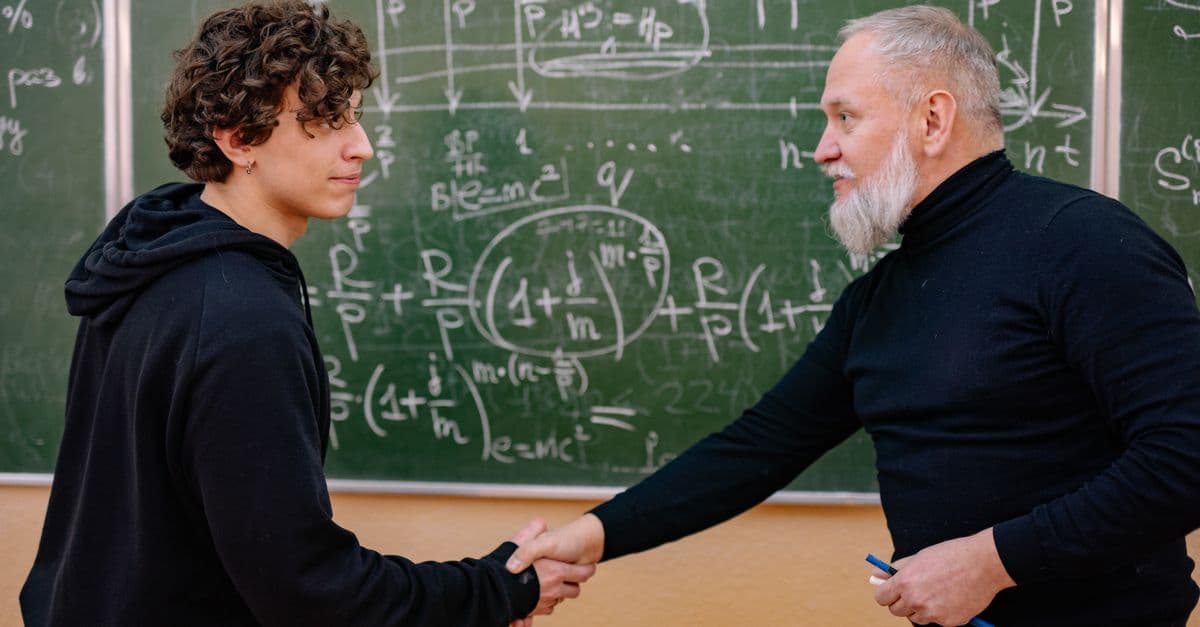
Photo: Yan Krukau / Pexels
Kurt Gödel (1906–1978) was an Austrian-American logician and mathematician whose two incompleteness theorems, published in 1931 when he was 25 years old, permanently altered what humanity believes it can know through formal reasoning. By constructing a mathematical statement that says, in effect, "This statement cannot be proved," he demonstrated that no consistent formal system powerful enough to describe arithmetic can ever prove all true statements within it. The result was not a failure of mathematics — it was a proof about the boundaries of proof itself.
Early Life and the Vienna Circle
Gödel was born on April 28, 1906, in Brünn — then part of the Austro-Hungarian Empire, now Brno in the Czech Republic. His father Rudolf managed a textile factory, and the family was prosperous and German-speaking. As a child, Gödel was so relentlessly inquisitive that his family nicknamed him Herr Warum — "Mr. Why." The nickname turned out to be prophetic: he would spend his career asking why the foundations of logic work the way they do.
He enrolled at the University of Vienna in 1924 to study physics, then shifted to mathematics, drawn in particular to number theory. He fell in with the Vienna Circle — a group of philosophers, logicians, and scientists who met regularly to hash out a program called logical positivism, which held that only claims verifiable by logic or observation are meaningful. Gödel attended the seminars but never fully subscribed to the positivist program. He was, unusually for that milieu, a committed mathematical Platonist: he believed mathematical objects genuinely exist, independently of any formal system or human mind.
Source: Kurt Gödel — Life, Work, and Legacy. Institute for Advanced Study, Princeton. https://www.ias.edu/kurt-godel-life-work-and-legacy
This philosophical conviction mattered for his mathematics. If mathematical truths exist independently, then a formal system — a set of axioms and rules — is a tool for exploring that independent reality, not the source of truth itself. It followed, in Gödel's thinking, that a formal system might fail to capture all of what is true. The incompleteness theorems would prove he was right.
He completed his doctoral dissertation in 1929, proving the completeness of first-order predicate logic — demonstrating that every logically valid formula in that system can be proved. It was an elegant, important result. It was also immediately overshadowed by what he did next.
The Incompleteness Theorems: What Gödel Actually Proved
In September 1930, at a conference in Königsberg, Gödel mentioned offhandedly at the end of a roundtable discussion that he had found a result showing incompleteness in formal arithmetic. John von Neumann, who was in the room, immediately grasped the significance and cornered Gödel afterward. By the time Gödel published the full paper in January 1931, von Neumann had independently proved the second theorem.
Definition — First Incompleteness Theorem: In any consistent formal system strong enough to express basic arithmetic, there exist statements that are true but cannot be proved or disproved within that system.
Definition — Second Incompleteness Theorem: No such consistent system can prove its own consistency — that is, it cannot demonstrate from within itself that it will never produce a contradiction.
To prove these results, Gödel invented a technique now called Gödel numbering: he assigned a unique number to every symbol, formula, and proof sequence in a formal system, allowing the system to talk about its own statements using arithmetic. He then constructed a statement that, when decoded, says roughly: "This statement has no proof in this system." If the system is consistent, the statement is true — but unprovable. If the system could prove it, the system would be inconsistent.
Think of it like a librarian who creates a catalog of every book in a library that does not catalog itself. The catalog either appears in itself (contradiction) or does not (and is therefore incomplete). Gödel built the equivalent of this self-referential object inside arithmetic — and showed the crack it opens is unavoidable, not a quirk of any particular axiom set.
Source: Stanford Encyclopedia of Philosophy — Gödel's Incompleteness Theorems. https://plato.stanford.edu/entries/goedel/
The impact was immediate. The mathematician David Hilbert had spent decades promoting a program to axiomatize all of mathematics and prove that it was complete and consistent. Gödel's theorems ended that program definitively. They showed that Hilbert's goal was not merely unachieved but unachievable.
What Incompleteness Does Not Mean
A common misreading is that Gödel proved mathematics is unreliable or that truth is subjective. He proved no such thing. The incompleteness theorems say nothing about whether specific mathematical facts — like the primality of 17, or Fermat's Last Theorem — are true. They say that any fixed formal system will always leave some truths out of reach. You can add new axioms to capture those truths, but the expanded system will then have its own blind spots. There is no ceiling-free formalism.
Lesser-Known Scientific Work
Gödel's contributions outside formal logic are less celebrated but substantial. In 1940, he proved that the axiom of choice and the generalized continuum hypothesis are consistent with the standard axioms of set theory (ZFC). This was a major result: it showed that you could safely add these controversial axioms without creating a contradiction — though it did not prove they were true, only that accepting them would not break anything.
In 1949, he published a remarkable paper in the journal Reviews of Modern Physics presenting an exact solution to Einstein's field equations in general relativity — a solution describing a rotating universe in which closed timelike curves exist. A closed timelike curve is a path through spacetime that loops back on itself, which would permit, in principle, a traveler to return to their own past. Gödel used this solution to argue that time, as a physical process that flows from past to future, is not a fundamental feature of reality but a product of how we locally experience it.
Einstein reportedly found the result deeply unsettling. The two discussed it extensively during their long daily walks in Princeton.
Source: Gödel, K. (1949). "An Example of a New Type of Cosmological Solutions of Einstein's Field Equations of Gravitation." Reviews of Modern Physics, 21(3), 447. https://doi.org/10.1103/RevModPhys.21.447
In the 1970s, near the end of his life, Gödel produced a formal ontological proof for the existence of God — a modernized version of arguments by Leibniz and Anselm, rendered in modal logic. He had apparently been working on it for decades and showed it reluctantly, worried about being misunderstood. It was eventually published posthumously. Whether or not one finds the proof convincing, it demonstrates that Gödel's Platonism about mathematical objects extended into a broader metaphysical outlook.
Personal Life
Gödel married Adele Nimbursky (née Porkert) in 1938, after a courtship of nearly a decade that his family opposed. Adele was six years older than Gödel, had been married before, and worked as a nightclub dancer — none of which endeared her to the Gödel family. He married her anyway, and the marriage proved to be the practical anchor of his life. Adele handled his finances, managed his social obligations, and, critically, prepared and tasted his food.
He escaped Europe in 1940 by a roundabout route — traveling east through the Soviet Union and across the Pacific — after the Nazis had cancelled his venia legendi (right to teach) in Vienna, partly because he looked too young and was repeatedly harassed as a potential draft evader. He arrived at the Institute for Advanced Study (IAS) in Princeton, where he would spend the rest of his life.
His closest friendship in Princeton was with Albert Einstein. The two were an unlikely pair — Einstein gregarious and physically imposing, Gödel slight and cautious — but they took long walks together daily until Einstein's death in 1955. Einstein once remarked that in his later years at the IAS, his own work had become less important to him and that he came to the institute mainly for the privilege of walking home with Gödel.
Source: Britannica — Kurt Gödel. https://www.britannica.com/biography/Kurt-Godel
When Gödel applied for US citizenship in December 1947, Einstein and his friend and colleague Oskar Morgenstern accompanied him as witnesses. Before the hearing, Gödel told Morgenstern that he had discovered an internal contradiction in the US Constitution — a logical loophole by which the country could legally be converted into a dictatorship. Morgenstern and Einstein begged him not to bring it up during the examination. At the hearing, the judge — who happened to know Einstein and had administered his own citizenship oath — asked Gödel what form of government Germany had. Gödel replied that it was a republic but that the constitution was such that it had been changed into a dictatorship. The judge said that could not happen in America. "Oh, yes, I can prove it," Gödel replied. The judge declined to pursue the matter further. Gödel became a citizen.
The specific flaw Gödel identified was never fully documented in writing and remains a matter of scholarly debate, sometimes called Gödel's Loophole.
Habits and Quirks
Gödel's paranoia about food was a lifelong feature, not a late-life development, though it intensified over time. He was constitutionally suspicious that he was being poisoned, and trusted only Adele to prepare his meals. He kept a meticulous health diary, visited physicians frequently, and was prone to hypochondria on a clinical scale. He feared refrigerants from appliances were seeping into his rooms and insisted that heating vents be taped shut.
He preferred to work at night and slept during much of the day. He was known to leave the lights on in his office regardless of the hour. His desk at the IAS was famously disordered, stacked with papers no colleague dared to touch.
He was also sharply, quietly witty. His letters — published and collected — show a dry precision that extended well beyond mathematics. He was not a recluse in the social sense; he engaged seriously with colleagues and was a careful, patient correspondent. But he preferred depth to breadth, and his circle of genuine intimates was small.
He read widely outside mathematics: Leibniz was a lifelong obsession, and his philosophical papers reveal extensive reading in Kant, Husserl, and theology. For more on how formal systems and logic shaped twentieth-century thought, see Alan Turing's biography on SciHub101, which covers the closely related question of computability that Turing and Gödel each addressed from different angles.
Legacy
| Area | Contribution | Impact |
|---|---|---|
| Mathematical logic | First and Second Incompleteness Theorems (1931) | Ended Hilbert's program; redefined foundations of mathematics |
| Set theory | Consistency of axiom of choice and GCH (1940) | Resolved a decades-long controversy in set theory |
| General relativity | Gödel metric / rotating universe solution (1949) | First rigorous argument for possibility of time travel via CTCs |
| Philosophy | Ontological proof of God (1970s, posthumous) | Extended modal logic into metaphysics |
| Computability | Parallel to Turing's halting problem | Linked to limits of algorithmic proof |
Gödel is routinely placed alongside Alan Turing and David Hilbert as one of the three figures who defined the scope and limits of formal reasoning in the twentieth century. His incompleteness theorems are taught in mathematics, philosophy, computer science, and cognitive science — because the question "what can any formal system know about itself?" turns out to be fundamental to all four fields.
The theorems have also attracted a great deal of popular misappropriation. They have been invoked to argue for mysticism, free will, and the inherent limitations of artificial intelligence — often incorrectly. What they actually show is more precise and, in its own way, more profound: that mathematical truth is richer than any single formalization of it.
Source: Gödel's Incompleteness Theorems — Wikipedia. https://en.wikipedia.org/wiki/G%C3%B6del%27s_incompleteness_theorems
Gödel's death in January 1978 was a consequence of his lifelong paranoia reaching a lethal conclusion. When Adele was hospitalized for six months in 1977, Gödel refused to eat. He did not trust anyone else to prepare his food. He was admitted to Princeton Hospital in late December 1977, weighing approximately 29 kilograms (65 pounds). He died on January 14, 1978. His death certificate listed the cause as "malnutrition and inanition caused by personality disturbance." He was 71.
The Incompleteness Theorems Explained Without Math
The heart of the first incompleteness theorem is a trick called self-reference, and the easiest way into it is through a liar's paradox. Consider the sentence: "This sentence is false." If it is true, it must be false; if it is false, it must be true. Either way, you get a contradiction. Gödel's achievement was to build the mathematical equivalent of that paradox inside formal arithmetic itself — not as a philosophical curiosity, but as a precise, verifiable construction.
The technical vehicle is Gödel numbering. Every symbol in a formal language can be assigned a unique integer: say, "0" maps to 1, "+" maps to 5, "=" maps to 13, and so on. Every formula — a string of symbols — then corresponds to a unique product of primes raised to the codes of its constituent symbols. Every proof, as a sequence of formulas, similarly gets a unique number. Crucially, the arithmetic properties of these numbers mirror the logical properties of the statements and proofs they encode. The formal system can now talk about itself using arithmetic.
Source: Goldstein, R. (2005). Incompleteness: The Proof and Paradox of Kurt Gödel. W. W. Norton. (Chapter 5: "The Proof.")
With this machinery in place, Gödel constructed a specific statement — call it G — whose arithmetic meaning, when decoded, reads: "The formula with Gödel number [n] has no proof in this system," where [n] is exactly the Gödel number of G itself. G says, in effect: "I am unprovable." This is the diagonal argument. If the system is consistent (never proves both a statement and its negation), it cannot prove G, because proving G would mean the system had proved something that says it has no proof — a contradiction. But G is then true: it genuinely has no proof. The system is therefore incomplete — it contains a true statement it cannot prove.
What the diagonal argument does and does not show
The argument is sometimes read as showing that formal systems are broken, or that human minds transcend logic. Neither reading holds. What the diagonal argument shows is that self-reference, combined with the expressive power of arithmetic, generates truths that outrun any fixed set of rules. You can add G as a new axiom, getting an extended system S'. That system is more powerful — it proves G. But S' is then subject to the same construction, producing a new unprovable statement G'. There is no final axiom set that closes the gap. The incompleteness is structural, not a flaw in any particular choice of axioms.
The AI implication is often overstated. Roger Penrose argued in The Emperor's New Mind (1989) that incompleteness shows human mathematical intuition cannot be replicated by any algorithm. Most logicians and philosophers of mind find this argument unpersuasive: incompleteness applies to any consistent formal system, whether running on silicon or neurons, and it tells us something about provability from fixed axioms — not about the richness of human cognition. What it genuinely shows is that mathematical truth is not the same thing as provability within any single system, a result that is profound on its own terms without requiring metaphysical add-ons.
Source: Stanford Encyclopedia of Philosophy — "Gödel's Incompleteness Theorems." https://plato.stanford.edu/entries/goedel/
Think of it this way: incompleteness is like discovering that no single map, however detailed, can fully describe the territory it represents. You can always draw a bigger map, but that map will have its own uncharted edges. The territory — mathematical truth — is always larger than the cartography.
Gödel's Later Cosmology: Rotating Universes and Time Loops
In 1949, Gödel gave Einstein a paper for his 70th birthday. It was not a card. It was an exact solution to Einstein's field equations describing a rotating universe in which time, as a directed flow from past to future, does not exist in any global sense. The paper appeared in Reviews of Modern Physics and was, Gödel believed, his most philosophically significant work after the incompleteness theorems.
Source: Gödel, K. (1949). "An Example of a New Type of Cosmological Solutions of Einstein's Field Equations of Gravitation." Reviews of Modern Physics, 21(3), 447. https://doi.org/10.1103/RevModPhys.21.447
The key feature of Gödel's rotating universe is the existence of closed timelike curves — paths through spacetime that loop back to their own starting point. In general relativity, a massive object follows a path called a worldline through four-dimensional spacetime. In normal cosmological models, every worldline extends indefinitely toward the future without looping back. In Gödel's solution, the global rotation of matter curves spacetime so severely that, for a traveler moving fast enough, a worldline can close: the traveler arrives back at the same spacetime event from which they departed. They have, in principle, traveled into their own past.
Gödel was not primarily interested in time travel as a physical technology. He was interested in what the possibility of closed timelike curves implies about the nature of time. His argument: if it is physically possible, even in principle, for an observer to return to their own past, then there is no objective global "now" — no moment that is unambiguously "the present" for all observers. The flow of time from past to future, which feels fundamental to human experience, is a local illusion produced by our position in a universe that happens not to rotate in the required way. Time, in this view, has no more objective existence than north does at the North Pole.
Why Gödel believed time is an illusion
Gödel pursued this line of argument in a 1949 essay, "A Remark about the Relationship between Relativity Theory and Idealistic Philosophy," published alongside the technical paper. He connected it to his longstanding Platonism: just as mathematical truths exist independently of any proof system, the structure of spacetime exists independently of the experience any observer has of moving through it. The experience of time passing is real; the flow of time as a physical process is not. Einstein reportedly found the result deeply troubling and wrote a brief reply in the same volume acknowledging the discomfort but suggesting that Gödel's rotating universe, however mathematically valid, did not describe the universe we inhabit.
Whether or not our universe rotates in the relevant sense, Gödel's solution demonstrated something with permanent consequences: general relativity, taken at face value, does not prohibit closed timelike curves. The question of whether they exist — and whether they impose logical constraints on what events can precede what other events — has been an active research topic in theoretical physics ever since. Stephen Hawking's "chronology protection conjecture" (1992) proposed that quantum effects would always prevent closed timelike curves from forming in practice, but the conjecture has never been proved.
Source: Goldstein, R. (2005). Incompleteness: The Proof and Paradox of Kurt Gödel. W. W. Norton. (Chapter 7: "Gödel's Philosophical Coda.")
The cosmology paper is, in a sense, the mirror image of the incompleteness theorems: where the theorems showed that formal systems have limits that cannot be resolved from within, the cosmology showed that physical theories — specifically, general relativity — contain possibilities that unsettle the most basic assumptions we bring to them. Both results have the same structure: take a framework seriously, follow its internal logic rigorously, and arrive at a conclusion that most people would prefer not to be true.
Frequently Asked Questions
Q: What did Gödel's incompleteness theorems actually prove? A: They proved that in any consistent formal system capable of expressing basic arithmetic, there are true statements that cannot be proved within that system (first theorem), and the system cannot prove its own consistency (second theorem). This is not a flaw that can be patched — it applies to any such system.
Q: Did Gödel disprove mathematics? A: No. He proved mathematics is inexhaustible — no finite set of axioms can capture all mathematical truth. Existing proofs, including all of classical mathematics, remain valid. Gödel showed there will always be truths that lie beyond any fixed formal system's reach.
Q: Was Gödel friends with Einstein? A: Yes. The two worked at the Institute for Advanced Study in Princeton and took long daily walks together for years. Einstein said in his later life that he came to the institute largely for the privilege of walking home with Gödel.
Q: What was Gödel's Loophole? A: At his 1947 citizenship hearing, Gödel claimed to have found an internal contradiction in the US Constitution that would allow the country to legally become a dictatorship. He never published the argument, and it remains unspecified. Scholars have proposed various candidates in the constitutional text.
Q: How did Gödel die? A: He died on January 14, 1978, of starvation. When his wife Adele was hospitalized, he refused to eat food not prepared by her, fearing poison. He weighed approximately 29 kg at death.
Q: What is Gödel numbering? A: A technique Gödel invented to encode every symbol, formula, and proof in a formal system as a unique natural number. This allowed him to write mathematical statements that refer to their own provability — the key tool in constructing the incompleteness proof.
Follow new articles
Add SciHub101 to your feed reader to see new science and technology stories.
About the Author
SciHub101 is an independent science and technology publication founded and edited by Buğra Sözeri, a software engineer and app developer based in Türkiye. AI tools assist with drafting and research. Source documentation in the existing archive is uneven, and articles are being reviewed and corrected. The Editorial Team byline identifies editorial responsibility; it does not certify specialist or independent human review. Where we compare products, anything built by our own team is labelled as such — see the editorial guidelines and About page for how corrections and disclosures work.
Related Articles
Ludwig Boltzmann: The Physicist Who Died Defending Atoms
Ludwig Boltzmann built statistical mechanics, derived S=k log W, and defended atomic theory for decades against fierce opposition. His biography, science, and tragic end.
Joseph-Louis Lagrange: The Mathematician Who Rewrote Mechanics
Lagrange's 1788 Mécanique analytique reformulated Newton using pure algebra. He discovered Lagrange points, invented calculus of variations, and survived the Revolution that killed Lavoisier.
Pierre-Simon Laplace: The Mathematician Who Mapped the Solar System
Laplace's celestial mechanics proved the solar system stable, his demon defined determinism, and his probability theory is still used today. He served Napoleon and the Bourbons with equal facility.
George Boole: The Logic That Became the Computer
George Boole invented Boolean algebra in 1854, giving mathematics a way to express logical thought. Every digital circuit built since then runs on his rules.
Pythagoras: The Theorem, the Brotherhood, and the Man Who Feared Beans
Pythagoras founded a secretive mathematical cult, gave his name to a theorem the Babylonians already knew, and may have had a disciple drowned for proving irrational numbers exist.
Archimedes: The Naked Run, the Claw, and the Man Who Almost Invented Calculus
Archimedes of Syracuse: buoyancy, levers, war machines, and verified quirks — the Eureka story examined, the circle and the soldier, and why he came closer to calculus than anyone for 1,800 years.