
radio-astronomy
9 articles tagged with #radio-astronomy
Space
What Are Fast Radio Bursts? The Universe's Brightest Millisecond Flashes
Fast radio bursts emit as much energy in a few milliseconds as the Sun does in days, yet last only briefly and come from across the universe. Their origin remained hidden for 17 years until a breakthrough discovery revealed that repeating FRBs originate from magnetars.
Space
The Wow Signal 1977: 72 Seconds That Still Haunt Astronomy
On August 15, 1977, a radio telescope in Ohio detected a signal so precisely matched to the expected frequency of extraterrestrial contact that the astronomer who found it circled it in red ink and wrote one word. The signal never repeated. Nearly five decades later, astronomers still cannot fully agree on what caused it.
Experiments
The Bell Burnell Pulsar Discovery: The Signal That Changed Astrophysics
In 1967, graduate student Jocelyn Bell Burnell detected CP 1919 — the first pulsar. The discovery confirmed neutron stars exist and sparked the most debated Nobel Prize omission in physics history.
Experiments
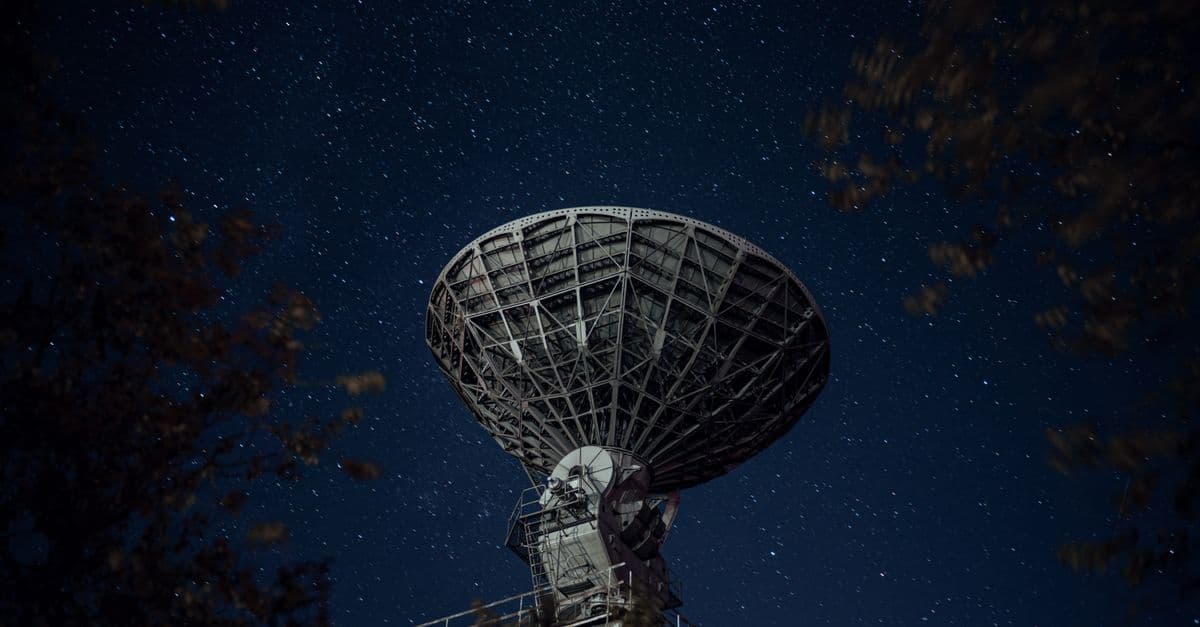
The Cosmic Microwave Background Discovery: Hearing the Big Bang
In 1964, Penzias and Wilson found persistent noise in a Bell Labs antenna they could not explain. It turned out to be the afterglow of the Big Bang. Here is how they found it.
Scientists
Jocelyn Bell Burnell: The Astronomer Who Found Pulsars
Jocelyn Bell Burnell discovered pulsars in 1967 as a PhD student. Her Nobel Prize snub became science's most debated injustice. Here is the full story.
Space
How Do We Search for Extraterrestrial Intelligence? SETI Explained
The search for extraterrestrial intelligence (SETI) has listened for technological signals since Project Ozma in 1960. It now spans radio telescopes, laser searches, and surveys for other technosignatures. No confirmed signal has been found, and the best-known candidates, from the 1977 Wow! signal to BLC1, remain unexplained or were traced to interference.
Space
How Do Radio Telescopes Work? Listening to the Universe at Every Frequency
Radio telescopes collect faint radio waves from pulsars, galaxies, hydrogen gas, and black holes. Because radio waves are long, sharp images need either a giant dish like China's 500-meter FAST or an array of dishes combined by interferometry, like the VLA.