What Are Fast Radio Bursts? The Universe's Brightest Millisecond Flashes
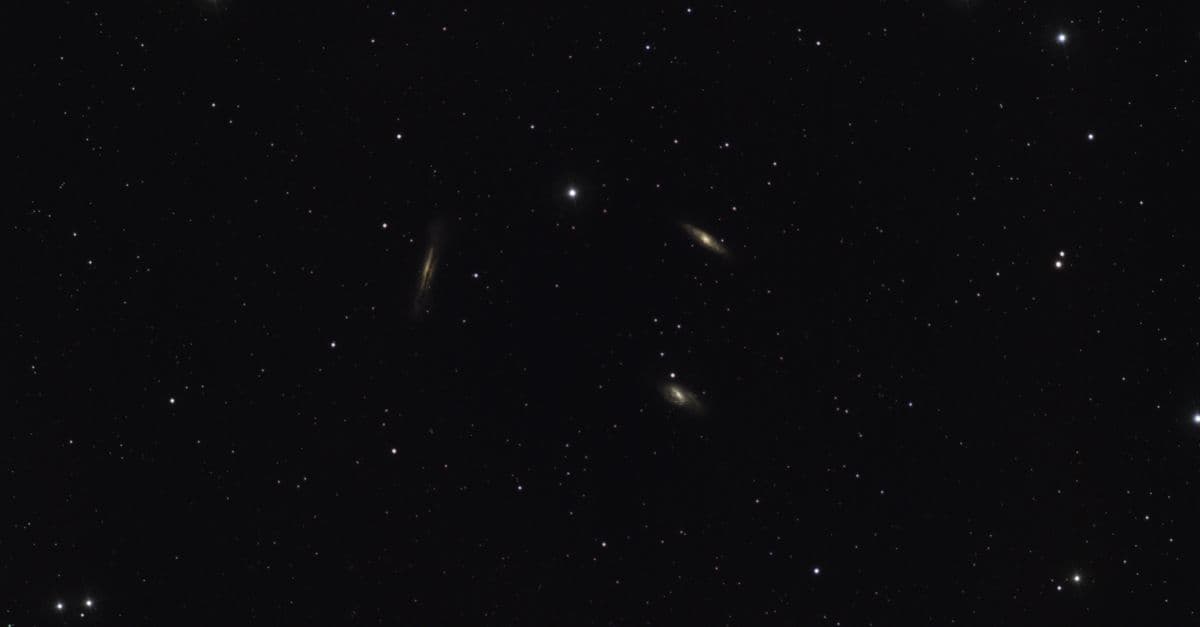
Photo: Jeremy Müller / Pexels
A fast radio burst arrives at Earth as a sudden, intense pulse of radio waves lasting just 1–10 milliseconds — briefer than the blink of an eye. In that fraction of a second, the burst releases as much energy as the Sun emits in 10 days. The source is billions of light-years away, invisible to optical telescopes, and its signal is gone before a human can react to the alert. Over the past 17 years, astronomers have detected thousands of these events, yet their origin remained almost entirely mysterious until a breakthrough discovery in 2024: the first direct proof that some FRBs come from magnetars — the most magnetic objects in the universe.
Fast radio bursts (FRBs) are among the most energetic, most distant, and most enigmatic objects in astronomy. They arrive at Earth with such high signal strength that they stand out dramatically against the background noise of the universe. Yet they vanish instantly, leaving no afterglow, no visible counterpart, and often no second occurrence from the same location.
What exactly is a fast radio burst?
Fast radio burst (FRB) — a brief, intense pulse of radio-wave energy lasting 1–10 milliseconds, arriving from cosmological distances (typically 1–8 billion light-years away) with a signal strong enough to detect, then disappearing. The term encompasses both non-repeating ("one-off") bursts and repeating sources that produce multiple events from the same location.
FRBs are characterized by three observable properties: their arrival time, their frequency content (bandwidth), and their dispersion — the degree to which lower-frequency radio waves arrive slightly delayed compared to higher frequencies.
The dispersion is critical. Radio waves travel through the ionized gas between galaxies — the intergalactic medium. Lower-frequency photons interact more strongly with free electrons and are slowed more than higher frequencies. By measuring the dispersion-arrival-time relationship, astronomers calculate the dispersion measure (DM) — a proxy for the total column density of free electrons between the source and Earth. The DM, combined with models of the intergalactic electron distribution, reveals the FRB's distance.
The energy implied by the observed brightness at such distances is staggering. A typical FRB releases 10³¹ to 10³² joules of energy. For perspective, the Sun's total energy output per second is ~4 × 10²⁶ joules — so a single FRB burst releases as much energy as the Sun emits in 10–100 days, in a volume probably smaller than Earth, in less than a heartbeat.
Source: National Radio Astronomy Observatory (2024) — Fast radio bursts are the most energetic millisecond events detected outside the Milky Way.
The Lorimer Burst: 2007 and 17 years of mystery
On 24 August 2002, the Parkes Radio Telescope in Australia recorded an unusual pulse of radio energy. The event arrived during data reprocessing of archived observations — not in real time — so no follow-up was possible. The burst was anomalous but easily overlooked. Five years later, in 2007, astronomer Duncan Lorimer and his team were analyzing Parkes data specifically searching for pulsar signals when they rediscovered that event and three others like it. Lorimer published the findings in 2007, naming them "fast radio bursts" because of their brief duration and high radio frequency.
The "Lorimer Burst" (FRB 020402) became the prototype. It arrived at a dispersion measure suggesting a distance of roughly 1 billion light-years — far beyond the Milky Way. Yet no optical transient was observed, no X-ray counterpart, no follow-up signal. It had happened and was gone.
From 2007 to 2015, only a handful of FRBs were known. They appeared to be transient, one-time events — a single burst from a single location that never repeated. This made them extremely difficult to study. No two bursts arrived from the same location, making it impossible to gather multi-wavelength follow-up data or pinpoint a counterpart object.
Source: Lorimer, D. R., et al. (2007) — Science — Original discovery paper identifying the first fast radio burst.
The mystery deepened. What could produce such a brief, energetic pulse of radio waves?
Breakthrough 1: FRB 121102 and repeating sources
In November 2012, the Arecibo Radio Telescope detected an event called FRB 121102. It was unremarkable at first — another FRB among dozens now known. But in 2015, Arecibo detected a second burst from the exact same location: FRB 121102 repeated.
This was revolutionary. A repeating source could be studied. The Chandra X-ray Observatory, Swift, and other telescopes could be pointed at the sky coordinates. In 2016, astronomers associated FRB 121102 with an optical counterpart: a dwarf galaxy about 3 billion light-years away, in a region of active star formation. The counterpart had a compact optical source consistent with a young supernova. About 20 km wide but containing more mass than the Sun.">neutron star or black hole.
FRB 121102 has now produced hundreds of bursts, and its properties have been studied in unprecedented detail. Yet it remains an outlier — most FRBs detected since still appear to be one-off events.
Source: Spitler, L. G., et al. (2016) — Astrophysical Journal — Discovery of repeating fast radio bursts and identification of FRB 121102 in a dwarf galaxy.
The discovery of FRB 121102 revealed a crucial fact: FRBs could repeat. This meant at least some FRBs originated from an object or mechanism capable of producing multiple events — ruling out certain classes of explanations (like rare stellar mergers, which occur only once).
Repeating versus one-off FRBs
The distinction between repeating and non-repeating FRBs has become central to understanding their origin:
| Characteristic | Repeating FRBs | One-Off FRBs |
|---|---|---|
| Number detected | ~100 (rapidly increasing with CHIME) | ~9,500+ (most FRBs detected) |
| Repetition rate | Typically days to weeks; some burst multiple times per hour | Single detection; no second event observed |
| Counterpart identification | Several have optical/X-ray counterparts identified | Very few counterparts found |
| Source characteristics | Appear concentrated in younger stellar systems; some show magnetar-like properties | Unknown; may be young supernova remnants or merger events |
| Dispersion variability | Some show changing DM between bursts (scattering material moving near the source) | Fixed DM |
Source: Canadian Hydrogen Intensity Mapping Experiment (CHIME) Collaboration (2023) — Rapid growth in FRB census reveals two populations: repeating and non-repeating sources.
Breakthrough 2: SGR 1935+2154 and the magnetar connection
For 17 years, the origin of FRBs remained speculative. Theories ranged from neutron star core quakes, to black hole jets, to exotic objects not yet identified. But in April 2020, a known magnetar — SGR 1935+2154 — produced a bright burst of radio waves detected by radio observatories. The event was brief, energetic, and in the radio band.
Magnetars are neutron stars with magnetic fields 10,000–1,000,000 times stronger than ordinary pulsars — among the most extreme objects in the universe. The 2020 burst from SGR 1935+2154 showed that magnetars could produce radio bursts consistent with FRB properties.
Then, on 29 October 2024, SGR 1935+2154 produced multiple bursts detected by radio telescopes and X-ray observatories simultaneously. Crucially, the radio bursts were confirmed as FRBs: they had the characteristic short duration and high energy. This was the first definitive proof that at least one FRB source is a magnetar.
Source: CHIME/FRB Collaboration & X-ray burst monitors (2024) — Simultaneous detection of FRB-like radio bursts and X-ray emission from SGR 1935+2154, confirming magnetar origin for at least one FRB population.
This discovery reframed FRB research. If magnetars can produce FRBs, then the extreme magnetic reconnection and plasma dynamics in magnetar flares are candidate mechanisms for the bursts. Yet it also raised a puzzle: SGR 1935+2154 is located only 30,000 light-years away — much closer than typical FRBs. Most FRBs come from billions of light-years away. A magnetar-powered FRB at cosmological distance would need to be extraordinarily energetic.
How magnetars produce FRBs
What is a magnetar? Magnetars are neutron stars with magnetic fields exceeding 10¹¹ tesla — so powerful they can distort atoms and polarize the vacuum itself. Their energy comes from magnetic field decay and internal reorganization.
Within a magnetar's magnetosphere — the region of space dominated by its magnetic field — the conditions are extreme:
Magnetic reconnection events: Field lines can abruptly reconnect, releasing stored magnetic energy into particle acceleration and radiation. This process produces beams of high-energy particles.
Plasma instabilities: The relativistic particle jets interact with the magnetar's surrounding plasma, creating instabilities that radiate at radio frequencies.
Beaming and directionality: The radio emission is concentrated into a narrow beam — perhaps 10–30 degrees wide — which explains why we observe only bursts that happen to point toward Earth.
When the 2024 bursts from SGR 1935+2154 were detected, the radio emission showed properties consistent with this model: rapid onset, high brightness, and narrow bandwidth concentrated in a specific frequency range.
However, not all FRBs may originate from magnetars. Some repeating FRBs show spectral properties or timing characteristics that might indicate different sources — possibly young, rotating neutron stars powered by accretion, or other exotic compact objects.
Source: Bochenek, C. D., et al. (2020) — Nature — First detection of a radio burst from a magnetar, opening the magnetar FRB hypothesis.
The CHIME revolution: suddenly thousands of FRBs
Until 2018, FRB detection was sporadic. Individual radio telescopes pointed at the sky detected bursts randomly. The Canadian Hydrogen Intensity Mapping Experiment (CHIME) changed this dramatically.
CHIME is not a traditional dish telescope. Instead, it's an interferometric array — thousands of small radio antennas working together as a synthetic aperture. CHIME covers a portion of sky continuously, in real time, sensitive to radio frequencies between 400 and 800 MHz. Within days of beginning operations in 2018, CHIME detected more FRBs than had been found in the entire preceding decade.
By 2023, CHIME and its sister instrument (CHIME/FRB, a dedicated fast-radio-burst detection system) had catalogued over 1,000 confirmed FRBs. This explosion in numbers has:
- Revealed the bimodal repeating/non-repeating distribution
- Identified clusters of repeating bursts from the same location
- Allowed statistical studies of FRB source properties
- Enabled follow-up observations at other wavelengths for several sources
Source: CHIME/FRB Collaboration (2023) — Astrophysical Journal — The FRB Catalog from CHIME: over 1,000 bursts detected, population statistics, and repeating source properties.
CHIME's continuous monitoring also revealed a critical property of repeating FRBs: their repeating rate is unpredictable. Some burst once per week, others multiple times per hour. Some show long silent periods followed by sudden activity bursts. This variability hints at underlying mechanisms involving stochastic processes — randomness in magnetar flares or accretion disk instabilities.
Using FRBs to weigh the universe
One of the most practical applications of FRBs is solving one of cosmology's deepest mysteries: Where is the universe's missing matter?
In the early universe, matter was distributed roughly uniformly between galaxies. Today, astronomers can see about 10% of that baryonic matter (ordinary matter made of atoms) in stars and gas within galaxies. The remaining ~90% of baryonic matter exists as a diffuse plasma filling intergalactic space — the intergalactic medium (IGM).
The IGM is virtually invisible to direct observation. Radio waves passing through it experience dispersion, as described earlier. By measuring the dispersion of FRBs at known distances, astronomers can estimate the electron density of the IGM along each line of sight.
When FRBs are detected with redshift measurements (from identifying an optical counterpart or from timing analysis), their dispersion measure can be directly converted to the column density of free electrons. Combining hundreds of FRBs across different directions yields a three-dimensional map of the intergalactic medium.
This has confirmed theoretical predictions: the IGM contains enough diffuse plasma to account for most of the "missing" baryonic matter. FRBs have thus become precision tools for mapping the universe's invisible matter distribution.
Source: Macquart, J. P., et al. (2020) — Nature — Fast radio bursts as probes of the intergalactic medium and baryonic matter distribution.
Cosmological distances and the expanding universe
Because FRBs are so distant and occur at known cosmic epochs (measured by redshift), they also serve as distance markers.
The redshift of an FRB can be inferred from the dispersion measure if the IGM electron density is well-calibrated. Alternatively, if an optical counterpart is identified (as in FRB 121102), direct spectroscopy provides redshift. FRBs have been detected at redshifts up to z ~ 1.0, corresponding to look-back times of ~8 billion years.
At these distances, FRBs can test cosmological models. The relationship between redshift (distance) and dispersion measure is sensitive to the expansion history of the universe — how fast it expanded at different epochs. By collecting many FRB measurements, cosmologists can refine models of cosmic expansion and constrain the properties of dark energy.
Early results from FRB cosmology show consistency with the standard Lambda-CDM model (the cold dark matter universe dominated by a cosmological constant), but the sample remains small. As CHIME and future radio telescopes detect more FRBs, this will become a powerful independent probe of the universe's large-scale structure and expansion history.
Source: Prochaska, J. X., et al. (2019) — Astrophysical Journal Letters — Fast radio bursts as cosmological distance markers and IGM probes.
Common misconceptions about FRBs
Many people encounter FRB news and develop incorrect impressions. Here are the most persistent misunderstandings:
"FRBs are signals from aliens."
No evidence supports this. FRBs are consistent with known physics: either magnetar flares or other high-energy astrophysics. They show no evidence of artificial modulation, encoding, or intentional transmission. Moreover, the sources are often in harsh environments (young star-forming regions, near compact objects) where biological life as we know it is implausible. The scientific consensus attributes FRBs to natural cosmic phenomena.
"FRBs are unpredictable, so we can never study them."
While the non-repeating FRBs remain one-time events, repeating sources like FRB 121102 and others identified by CHIME occur frequently enough to be studied. Multi-wavelength follow-up is now routine. Even non-repeating bursts can be statistically studied — their source locations, dispersions, and brightness distributions reveal properties of the overall population.
"FRBs travel faster than light."
The dispersion of radio waves in plasma is a standard effect predicted by classical electromagnetism. No component of an FRB travels faster than light. The dispersion measure simply reflects the integrated electron density along the propagation path, not any exotic faster-than-light physics.
"FRBs might hit Earth as a threat."
Radio waves pose no biological hazard to Earth. They are non-ionizing radiation — they do not have enough energy to disrupt atoms or molecules. Moreover, FRBs originate from precise directions across the sky; they are not diffuse phenomena. An FRB detection simply alerts us to an interesting event, not a physical threat.
What remains unknown
Despite 17 years of observations and a breakthrough in 2024, major questions persist:
What produces non-repeating FRBs?
The one-off bursts remain mysterious. Magnetars might explain some, but the non-repeating population shows different properties. Candidates include: transient events in young supernova remnants, accretion-powered jets from black holes, exotic states of matter, or mechanisms we have not yet conceived.
What determines the burst properties?
Repeating FRBs show enormous variation in brightness, duration, and spectral shape — even bursts from the same source. What controls whether a magnetar flare produces a faint or brilliant burst?
Why do some sources repeat and others do not?
Is this a fundamental difference in source properties (two distinct FRB populations), or does it reflect the duty cycle and observable timescale relative to a source's active lifetime?
Can we predict FRB timing?
Repeating FRBs show no obvious periodicity, yet some show clustering. Understanding the underlying stochastic process could enable more efficient follow-up observations.
The takeaway
Fast radio bursts are the universe's most energetic millisecond phenomena — releases of as much energy in fractions of a second as the Sun emits in days, from sources billions of light-years away. Their discovery by Duncan Lorimer in 2007 opened an entirely new observational window on the cosmos. Seventeen years of mystery were partially solved in 2024 when a magnetar (SGR 1935+2154) was definitively shown to produce FRB-like bursts, confirming that at least one FRB population originates from these extreme magnetic objects. The explosion in FRB detections from CHIME and other modern radio telescopes has transformed them from rare curiosities into a major observational tool — one that maps the universe's invisible intergalactic medium, tests cosmological models, and probes the extreme physics of neutron stars and magnetars. The non-repeating bursts remain mysterious, suggesting that FRBs arise from multiple distinct sources, each with its own physics and origin story.
Frequently Asked Questions
Q: How do scientists know FRBs originate billions of light-years away?
A: Astronomers measure the dispersion measure (DM) — the degree to which lower radio frequencies arrive delayed compared to higher ones. This dispersion is caused by free electrons in the intergalactic medium, and the total delay correlates with distance. Using models of electron distribution in the universe, the DM translates to a distance of typically 1–8 billion light-years. For FRB 121102, an optical identification of its host galaxy directly confirmed this distance via spectroscopic redshift.
Q: Could a magnetar outside the Milky Way produce an observable FRB?
A: Yes. A magnetar flare in another galaxy would need to be extraordinarily energetic to be visible at cosmological distances, but the 2024 detection from SGR 1935+2154 (30,000 light-years away) shows that even a relatively nearby magnetar can produce FRB-strength bursts. At billions of light-years, a slightly more energetic flare or one with favourable beaming geometry would be easily detectable.
Q: Why don't we detect the optical or X-ray counterpart to most FRBs?
A: Most FRBs are non-repeating, so there is no way to predict where to point optical telescopes. By the time an FRB alert triggers follow-up observations, the transient source has faded. Repeating sources like FRB 121102 can be observed at leisure, allowing detailed multi-wavelength studies. Non-repeating FRBs remain transient mysteries.
Q: Could repeating FRBs eventually help us find the missing baryonic matter?
A: Absolutely. Repeating FRBs allow precise dispersion measurements and, in some cases, redshift determinations. Many individual FRBs, mapped across the sky with known distances, create a three-dimensional census of the intergalactic medium's electron density — directly measuring the diffuse baryonic matter distribution that had been invisible to traditional telescopes.
Q: Is the brightening of some FRBs (from the same source) a sign of danger?
A: No. Radio waves are non-ionizing radiation and pose no biological hazard. The brightening or dimming of an FRB burst reflects the magnetar's internal dynamics or beaming geometry, not a change in threat. Moreover, FRBs are brief, directional phenomena—not diffuse radiation.
Q: Will future radio telescopes detect even more FRBs and reveal the non-repeating sources?
A: Very likely. Next-generation telescopes like the Square Kilometre Array (SKA) will detect FRBs at higher rates and potentially at higher redshifts. Larger samples will improve statistical understanding of source properties and may uncover counterparts for some non-repeating events, revealing their physical origin.
Read next:
Follow new articles
Add SciHub101 to your feed reader to see new science and technology stories.
About the Author
SciHub101 is an independent science and technology publication founded and edited by Buğra Sözeri, a software engineer and app developer based in Türkiye. AI tools assist with drafting and research. Source documentation in the existing archive is uneven, and articles are being reviewed and corrected. The Editorial Team byline identifies editorial responsibility; it does not certify specialist or independent human review. Where we compare products, anything built by our own team is labelled as such — see the editorial guidelines and About page for how corrections and disclosures work.
Related Articles

How Astronauts Survive in Space: Life Support Systems Explained
An astronaut in a spacesuit orbiting Earth faces four immediate threats: the vacuum of space (zero pressure, instant death in seconds without suit), extreme temperature swings (−150°C in shadow, 150°C in sunlight), intense radiation (solar wind, cosmic rays), and hypoxia (lack of oxygen). The Environmental Control and Life Support System (ECLSS) on spacecraft manages all four through oxygen generation, carbon dioxide removal, water recycling, temperature regulation, and pressure maintenance. The International Space Station recycles 90 percent of water and generates oxygen through electrolysis. Deep-space missions to Mars will require even more sophisticated recycling: current ECLSS efficiency is insufficient for 2-year Mars transit. This article examines how astronauts survive in space, the engineering of life support, and the challenges of keeping humans alive in the harshest environment.

Nearest Exoplanets That Could Host Life
A guide to the nearest potentially habitable exoplanets, from Proxima b to TRAPPIST-1e, what JWST has found, and why 'habitable' rarely means confirmed.

Supernova Explained — Star Explosions
How stars explode as supernovae — Type Ia, core-collapse, kilonovae, famous examples, and why every iron atom in your body came from one.
The Cosmic Microwave Background Discovery: Hearing the Big Bang
In 1964, Penzias and Wilson found persistent noise in a Bell Labs antenna they could not explain. It turned out to be the afterglow of the Big Bang. Here is how they found it.
The Hubble Constant Tension: A Crisis in Cosmology
Two carefully checked ways of measuring how fast the universe expands disagree by roughly 8 to 10 percent, a gap near 5 sigma. Either a hidden error remains, or standard cosmology is incomplete.