Proteins and Amino Acids — Life's Building Blocks
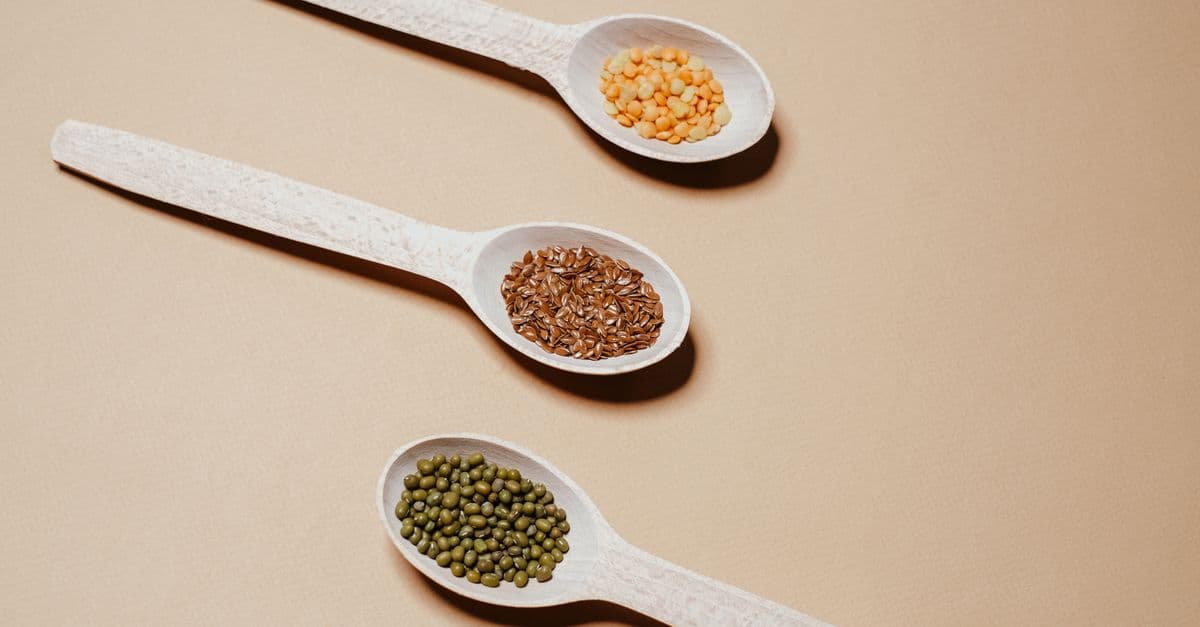
Photo: Vie Studio / Pexels
If DNA is the blueprint of life, proteins are the workforce. Proteins and amino acids sit behind nearly every reaction, signal, and structure in a living cell: the enzyme that digests your lunch, the collagen in your skin, the antibody that recognizes a virus, the hemoglobin that carries oxygen. All of them are chains built from the same 20 standard amino acids. This article explains how those chains are specified by genes, how they fold into working shapes, what happens when the process fails, and what you actually need from food.
Educational content, not medical advice. Talk to your doctor before changing any medication, treatment, or routine. Information here reflects current research but every person's situation differs.
What a protein is, one amino acid at a time
A protein is a chain of amino acids linked by peptide bonds. An amino acid is a small molecule with a shared backbone: an amino group (a nitrogen with two hydrogens), a carboxyl group (a carbon with two oxygens), and a central carbon. What differs from one amino acid to the next is the side chain, also called the R-group, attached to that central carbon. The backbone is the same in all of them, which is what lets them link into chains. The side chain is what gives each one its personality.
A peptide bond forms when the carboxyl group of one amino acid joins the amino group of the next, releasing a molecule of water. Do this hundreds of times and you have a polypeptide, a chain with a defined direction: it starts at an amino end (the N-terminus) and finishes at a carboxyl end (the C-terminus). By convention, a short chain of fewer than about 50 amino acids is a peptide, and longer chains are polypeptides or proteins. Insulin is a good example at the small end. It has 51 amino acids, arranged as two chains of 21 and 30. At the other extreme, titin, the giant elastic protein in muscle, has a canonical human form of 34,350 amino acids.
Think of the 20 amino acids as a 20-letter alphabet. A protein is a word written in that alphabet, and like words, the meaning depends entirely on the order. Change one letter and you may get a harmless variant, a different word, or nonsense.
The 20 letters, sorted by personality
Side chains fall into a few families, and these families determine how a chain will fold.
| Family | Amino acids | Behavior in water |
|---|---|---|
| Nonpolar (hydrophobic) | Glycine, alanine, valine, leucine, isoleucine, methionine, proline, phenylalanine, tryptophan | Avoid water; tend to cluster in a protein's core |
| Polar, uncharged | Serine, threonine, cysteine, tyrosine, asparagine, glutamine | Form hydrogen bonds with water; often on the surface |
| Positively charged | Lysine, arginine, histidine | Attract negative charges, including DNA and other proteins |
| Negatively charged | Aspartate, glutamate | Attract positive charges and metal ions |
Cysteine has a special talent: two cysteines can bond through their sulfur atoms to form a disulfide bridge, a covalent staple that holds distant parts of a chain together. Proline is special for a different reason, because its ring bends the backbone and breaks regular patterns. Glycine, the smallest, can fit into tight spaces where nothing else will.
Essential, non-essential, and conditionally essential
Humans cannot make nine of the 20 amino acids and must get them from food. These essential amino acids are histidine, isoleucine, leucine, lysine, methionine, phenylalanine, threonine, tryptophan, and valine. The body can make the others from other molecules, although six of them (arginine, cysteine, glycine, glutamine, proline, and tyrosine) are called conditionally essential, because synthesis can fall short under particular conditions such as prematurity in infants or severe illness.
The count of "20" is also a simplification. A 21st amino acid, selenocysteine, is built into a small group of proteins in humans and other animals, using a special rewiring of the genetic code. A 22nd, pyrrolysine, appears only in certain microorganisms. For most purposes, though, the 20 standard amino acids do almost all the work.
How a gene becomes a sequence
The order of amino acids in a protein is not decided by the protein. It is written in DNA. The roughly 20,000 protein-coding genes in the human genome each specify one or more chains, and the cell reads them in two steps. In transcription, the gene's DNA is copied into messenger RNA (mRNA). In translation, a molecular machine called the ribosome reads the mRNA and assembles the chain. Our article on how proteins are made, from mRNA to ribosomes follows that second step in detail, and DNA replication and genetics covers the DNA side.
The reading is done in triplets called codons. DNA and RNA have four bases, so three positions give 4 x 4 x 4 = 64 possible codons. Sixty-one of them specify an amino acid, and three are stop signals. One codon, AUG, specifies methionine and also marks where translation starts. With 61 codons covering only 20 amino acids, the code is redundant: most amino acids are specified by more than one codon. Leucine, for instance, has six (CUU, CUC, CUA, CUG, UUA, and UUG), while methionine and tryptophan each have only one.
The redundancy is concentrated at the third position of the codon, often called the wobble position, where many different bases still call for the same amino acid. This acts like spell-check. A change in the third letter of a codon frequently leaves the protein unchanged, which buffers the cell against some mutations. The code is also nearly universal, shared by bacteria, plants, fungi, and animals, which is one of the strongest pieces of molecular evidence that living things share a common ancestor. If you want to see how that fits into the bigger picture, see evolution and natural selection.
The cracking of the code is its own story. In 1961, Marshall Nirenberg and Heinrich Matthaei showed that an artificial RNA made only of uracil produced a chain made only of phenylalanine, the first codon assignment. The experiment, and the decade of work it opened, is described in our piece on the Nirenberg experiment that cracked the genetic code.
Four levels of protein structure
Biochemists describe a protein's architecture in four nested levels.
| Level | What it is | What holds it together |
|---|---|---|
| Primary | The linear sequence of amino acids | Covalent peptide bonds |
| Secondary | Local repeating patterns: alpha helices and beta sheets | Hydrogen bonds between backbone atoms |
| Tertiary | The full 3D shape of one chain | Hydrophobic packing, disulfide bonds, ionic and hydrogen-bond interactions |
| Quaternary | Assembly of several chains into one working unit | The same forces as tertiary, acting between chains |
The primary structure is the spelling. The secondary structure is the first layer of local order. Linus Pauling and Robert Corey proposed the alpha helix, a right-handed coil, and the beta sheet, a set of extended strands lying side by side, in 1951. Both arrange themselves so that the backbone's own atoms hydrogen-bond with one another, which is why the same patterns show up in thousands of unrelated proteins.
The tertiary structure is the overall fold of a single chain. It typically buries hydrophobic side chains in the interior and presents polar and charged ones to the surrounding water. Many large proteins are built from several semi-independent regions called domains, each of which can fold on its own, a bit like rooms in a house that can be built separately and then joined.
The quaternary structure appears when multiple chains assemble. Adult hemoglobin is the classic example: two alpha chains of 141 amino acids and two beta chains of 146 amino acids, each carrying a heme group with one iron atom that can bind one oxygen molecule. The four subunits cooperate. When one binds oxygen, the whole complex shifts shape in a way that makes the next one easier to load, which gives the oxygen-binding curve its characteristic S-shape. Max Perutz determined hemoglobin's structure in 1959 and shared the 1962 Nobel Prize in Chemistry for it.
Why a chain folds into one shape
A fresh chain of amino acids is not yet a working protein. It has to fold, and the main driver is the hydrophobic effect. Water molecules form an organized network, and oily side chains disrupt it. The system gets to a lower-energy state when the oily side chains huddle together, away from water, and the water molecules are free to move again. That is why hydrophobic residues end up in the core and polar ones on the surface. Hydrogen bonds, electrostatic attractions, van der Waals forces (weak attractions between all atoms in close contact), and in some proteins disulfide bridges then lock the structure in place.
The key experiment came from Christian Anfinsen. He found that the enzyme ribonuclease, once chemically unfolded, spontaneously refolded into an active form when the conditions were restored. The conclusion, summarized in his 1973 paper in Science and known as Anfinsen's dogma, was that the amino acid sequence contains the information needed to specify the 3D structure. He received the 1972 Nobel Prize in Chemistry for this line of work.
Levinthal's paradox
There is a puzzle here. A chain of a few hundred amino acids has a staggering number of possible shapes. In 1969, Cyrus Levinthal noted that the number of possible conformations is astronomical, with one of his estimates around 10^143 for a typical chain. If a protein tried them one at a time, even at an absurdly fast sampling rate, folding would take far longer than the age of the universe. Yet real proteins fold in microseconds to seconds, with the slowest cases taking minutes or hours, usually because of a slow step such as proline isomerization (the flipping of a bend in the backbone at proline).
The resolution is that folding is not a random search. Think of a marble dropped into a funnel-shaped bowl. It does not need to try every position; the slope guides it to the bottom from almost anywhere. A folding chain is guided the same way by an energy landscape, and local interactions form first and then guide the rest.
Helpers, mistakes, and late edits
Cells do not leave folding entirely to chance. Chaperones are proteins that help other proteins fold correctly. They do not contain the information for the final shape. They work by preventing wrong conformations and clumping, and cells make more of them under stress. Proteins are also edited after they are built. Enzymes attach phosphate groups, sugars, lipids, and other tags that change a protein's activity or location. A single gene can therefore yield many functional versions of a protein.
Not every protein folds into a single rigid shape. Some functional proteins keep parts of the chain flexible, and these intrinsically disordered regions often serve as adjustable linkers or binding sites that only take a fixed shape when they meet a partner.
What proteins actually do
Proteins do not have a single job; they do almost all of them.
| Role | Example | What it does |
|---|---|---|
| Catalysis | Digestive enzymes, DNA polymerase | Speed up chemical reactions |
| Structure | Collagen, keratin | Give tissues strength and shape |
| Transport | Hemoglobin | Carries oxygen in blood |
| Signaling | Insulin | Tells cells to take up glucose |
| Defense | Antibodies | Recognize and tag invaders |
| Movement | Titin, myosin, actin | Generate and transmit muscle force |
Collagen is the most abundant protein in mammals, making up 25 to 35% of total protein content. Its sequence repeats a pattern in which roughly every third amino acid is glycine, and three chains twist into a triple helix. Vitamin C is a cofactor for the enzymes that modify proline and lysine in collagen, which is why a long-term vitamin C deficiency impairs collagen and causes scurvy. Our look at the Lind scurvy trial tells how that link was first tested.
Insulin shows how a protein can work as a message. For the hormone's role, see insulin and diabetes explained. Antibodies are proteins too; the structure of the immune system's Y-shaped molecules is covered in antibody structure and immune defense.
Enzymes: shape as a machine
Most of the chemistry of life is done by enzymes, proteins that act as catalysts. An enzyme's active site is a pocket whose shape and charges are matched to its reactants, so it holds them in the right position and stabilizes the intermediate state of the reaction. The effect is large. One example is the enzyme orotidine 5'-phosphate decarboxylase, which Richard Wolfenden and colleagues measured in 1995 as speeding its reaction by a factor of about 10^17, turning a process that would take an uncatalyzed time measured in tens of millions of years into one that takes a fraction of a second.
Because activity depends on shape, anything that alters the shape can disable an enzyme: a change in temperature, a shift in acidity, or a mutation. That is why the cell's enzymes work in a narrow range of conditions, and why a heated egg white changes from clear to white as its proteins unfold and clump together, a process called denaturation.
When one letter changes
The sickle cell mutation shows how much one amino acid can matter. In the beta chain of hemoglobin, the sixth amino acid is normally glutamate, which has a negatively charged side chain. In sickle cell hemoglobin, it is valine, which is hydrophobic. That one swap creates a sticky patch on the protein surface. When oxygen is low, the altered hemoglobin molecules stick to each other and form long fibers, distorting red blood cells into rigid crescent shapes. A single-letter change in a gene, and a single amino acid in a chain of 146, is enough.
Misfolding and disease
When folding fails, or when a folded protein loses its shape, the results can be severe. Several diseases involve misfolded proteins or proteins that clump:
- Prion diseases, such as Creutzfeldt-Jakob disease and bovine spongiform encephalopathy, in which a misfolded prion protein induces normal copies to misfold. See what prions are and how misfolded proteins spread.
- Alzheimer's disease, which involves amyloid plaques and tau tangles. For the biology, see Alzheimer's disease: the biology behind the decline.
- Parkinson's disease and Huntington's disease, which involve intracellular protein aggregates.
- Loss-of-function disorders, such as cystic fibrosis, antitrypsin-associated emphysema, and lysosomal storage diseases, in which a protein misfolds and is destroyed instead of reaching its job.
The common thread is not that one mechanism explains all of these. It is that a protein's shape is a condition for its function, and the cell has to pay constant attention to quality control. Misfolded proteins are normally tagged and broken down, and when that system is overwhelmed, trouble follows.
Predicting shapes: from five decades of effort to AlphaFold
For about 50 years, predicting a protein's 3D structure from its amino acid sequence was one of biology's central unsolved problems. Experimental methods such as X-ray crystallography, nuclear magnetic resonance, and cryo-electron microscopy (imaging frozen samples with electrons) can reveal structures, but each one takes substantial time and money. The result of five decades is a Protein Data Bank that now holds roughly a quarter of a million experimentally determined entries.
In 2020, DeepMind's AlphaFold placed first at CASP14, the biennial community contest for structure prediction, scoring above 90 on the standard accuracy measure for about two-thirds of the targets. In 2021, the team published predicted structures for the human proteome. According to the paper in Nature, the dataset covered 98.5% of human proteins, with a confident prediction for 58% of residues. A database run with EMBL's European Bioinformatics Institute now offers over 200 million predictions, covering the large majority of the roughly 230 million proteins catalogued in UniProt.
Two caveats keep the story honest. First, a prediction is not a measurement. AlphaFold reports its own confidence for each region, and low-confidence regions, often the flexible or disordered ones, should not be read as a fixed shape. Second, the system predicts the final structure and does not explain the physical pathway by which a chain gets there, so researchers do not consider the folding problem fully solved. Even so, the impact has been large. In October 2024, the Royal Swedish Academy of Sciences gave half of the Nobel Prize in Chemistry to David Baker for computational protein design and the other half jointly to Demis Hassabis and John Jumper for protein structure prediction.
For the AI side of the story, see AlphaFold: how AI solved protein folding and the AlphaFold protein folding breakthrough.
Protein in the diet: what the amino acids are for
The protein you eat is not stored as protein. It is digested into amino acids and short peptides, absorbed, and added to a pool that cells draw on to build whatever they need. That pool is in constant motion. Estimates of whole-body protein turnover, the amount broken down and rebuilt each day, are usually put at around 300 grams for an adult, with published estimates ranging from roughly 250 to 400 grams, far more than the 50 to 80 grams typically eaten. Most of the amino acids released by breakdown are reused, and food replaces the fraction that is lost, for example as the nitrogen in urea.
A complete protein supplies all nine essential amino acids in adequate proportions. An incomplete protein is low in one or more. The amino acid in shortest supply relative to the body's needs is called the limiting amino acid, and it caps how much of the others can be used.
| Food group | Most common limiting amino acid | Notes |
|---|---|---|
| Eggs, dairy, meat, poultry, fish | None in typical diets | Animal proteins are generally complete |
| Soy, quinoa, buckwheat | None | Among the rare complete plant sources |
| Cereal grains and pasta | Lysine | Complemented by legumes |
| Legumes (beans, lentils) | Methionine plus cysteine | Complemented by grains |
| Nuts and seeds | Varies by type | Profiles differ widely |
Those patterns tell you why classic pairings like rice and beans work: each covers the other's gap. For decades, people were told to combine such foods in the same meal. The Harvard T.H. Chan School of Public Health notes that people who avoid animal foods can eat a variety of protein-containing plant foods each day to get all the amino acids they need, which reflects the fact that the body's pool smooths out differences between meals.
The National Academy of Medicine's recommended dietary allowance is a minimum of 0.8 grams of protein per kilogram of body weight per day, about 50 grams for a 140-pound (63.5 kg) person and about 70 grams for a 200-pound (91 kg) person, and its acceptable range is 10 to 35% of daily calories. The recommended allowance is a floor for avoiding deficiency in healthy adults, not a target for every situation. How much is enough for athletes, older adults, or people recovering from illness is a separate and actively studied question, taken up in how much protein you actually need. How protein fits alongside carbohydrates and fats is a question of macronutrients, and the building of muscle from dietary protein is covered in how muscles grow.
Common confusions about proteins
"Protein" means muscle. Muscle is only one use. Most of the protein in your body is working as enzymes, transporters, receptors, structural fibers, and signals, and the same amino acids are used to make all of them.
Eating a protein gives you that protein. Digestion takes proteins apart into amino acids and small peptides. Eating collagen does not deliver collagen to your skin, because the body rebuilds what it needs from the pieces according to its own instructions.
Heating protein destroys it. Cooking denatures proteins, which means it changes their shape, but it does not break the peptide bonds or destroy the amino acids. Denaturation often makes proteins easier to digest.
More protein is always better. Protein is needed, but the benefits of intake beyond the recommended range depend on circumstances. A Harvard analysis of more than 130,000 people found that the percentage of calories from total protein was not related to overall mortality or to specific causes of death, which suggests that protein quantity alone is not a simple guide to health.
Amino acid supplements are the same as food. The evidence for isolated amino acid products is much narrower than the evidence for the whole-food patterns discussed above, and this article does not recommend any product.
The takeaway
Proteins are where information becomes action. A sequence of letters in DNA becomes a sequence of amino acids, the sequence folds into a shape, and the shape does the work. That chain of dependencies explains a surprising amount of biology: why a single amino acid swap can cause sickle cell disease, why misfolded proteins are central to several brain diseases, why enzymes are so sensitive to conditions, and why a prediction tool for protein shapes earned a Nobel Prize. It also explains what protein in food is for. The body takes your meal apart into amino acids and rebuilds what it needs, which is why the mix of amino acids matters and the brand of protein does not.
FAQs
Q: How many amino acids do humans use to build proteins? A: Twenty standard amino acids make up almost all human proteins. A 21st, selenocysteine, is built into a small group of proteins. Nine of the 20 are essential, which means the body cannot make them and they must come from food.
Q: What is the difference between a peptide and a protein? A: It is mostly a matter of length. Chains of fewer than about 50 amino acids are usually called peptides, and longer chains are polypeptides or proteins. Insulin, with 51 amino acids in two chains, sits near the boundary.
Q: Why is protein folding so important? A: A protein's function depends on its 3D shape, and the shape is set by the amino acid sequence. When folding goes wrong, the result can be a protein that does not work or one that clumps. Misfolding is involved in prion diseases, Alzheimer's disease, Parkinson's disease, and several loss-of-function disorders.
Q: What is AlphaFold and why does it matter? A: AlphaFold is a deep-learning system from DeepMind that predicts a protein's 3D structure from its amino acid sequence. Its database now holds over 200 million predictions. It gives researchers a starting structure in seconds rather than months, though predictions come with confidence scores and are not a substitute for experiments in every case.
Q: Are plant proteins as good as animal proteins? A: Most plant proteins are individually low in one essential amino acid, for example lysine in cereals and methionine in legumes. Eating a variety of plant foods over the day supplies all nine, and soy, quinoa, and buckwheat are complete on their own. Digestibility also differs between sources.
Q: How much protein should adults eat per day? A: The National Academy of Medicine recommends a minimum of 0.8 g per kilogram of body weight per day, within an acceptable range of 10 to 35% of calories. Needs can be higher for some groups, and individual guidance should come from a clinician or registered dietitian.
Sources
- Tunyasuvunakool, K. et al. (2021). "Highly accurate protein structure prediction for the human proteome." Nature, 596, 590-596. doi.org/10.1038/s41586-021-03828-1
- Jumper, J. et al. (2021). "Highly accurate protein structure prediction with AlphaFold." Nature, 596, 583-589.
- AlphaFold Protein Structure Database, EMBL-EBI and Google DeepMind. alphafold.ebi.ac.uk
- Harvard T.H. Chan School of Public Health, The Nutrition Source. "Protein." nutritionsource.hsph.harvard.edu
- Radzicka, A. and Wolfenden, R. (1995). "A proficient enzyme." Science, 267, 90-93. doi.org/10.1126/science.7809611
- Anfinsen, C. B. (1973). "Principles that govern the folding of protein chains." Science, 181, 223-230.
- Pauling, L. and Corey, R. B. (1951). "The pleated sheet, a new layer configuration of polypeptide chains." PNAS, 37, 251-256.
- Royal Swedish Academy of Sciences (2024). Press release for the Nobel Prize in Chemistry 2024.
Follow new articles
Add SciHub101 to your feed reader to see new science and technology stories.
About the Author
SciHub101 is an independent science and technology publication founded and edited by Buğra Sözeri, a software engineer and app developer based in Türkiye. AI tools assist with drafting and research. Source documentation in the existing archive is uneven, and articles are being reviewed and corrected. The Editorial Team byline identifies editorial responsibility; it does not certify specialist or independent human review. Where we compare products, anything built by our own team is labelled as such — see the editorial guidelines and About page for how corrections and disclosures work.
Related Articles
How the Brain Works — Neuroscience Overview
Neurons, action potentials, brain regions, plasticity, and the science behind consciousness — a clear neuroscience primer.
Blood Types Explained — ABO and Rh Systems
ABO and Rh blood groups explained — antigens, antibodies, inheritance, transfusion compatibility, and whether blood type can be changed.
Complete Biology Guide 2026 — How Life Works
The complete guide to biology in 2026: cells and genetics, evolution, the human body, neuroscience, disease, immune systems, and the future of genetic engineering.
Why Do We Have Blood Types? The Science and Evolution
Blood types are inherited molecular markers on red blood cells. The ABO polymorphism has been kept alive in primates for at least 20 million years, and infections such as malaria, cholera, and norovirus are the leading explanation for why.
How Do Fireflies Produce Light: The Science of Bioluminescence
Fireflies generate light without heat through a chemical reaction that achieves 41% efficiency — nearly three times more efficient than an incandescent bulb — powered entirely by ATP and oxygen.
Machine Learning in Drug Discovery: AI Finds Medicines
How neural networks accelerate drug discovery from years to months.