AlphaFold: How AI Solved Protein Folding
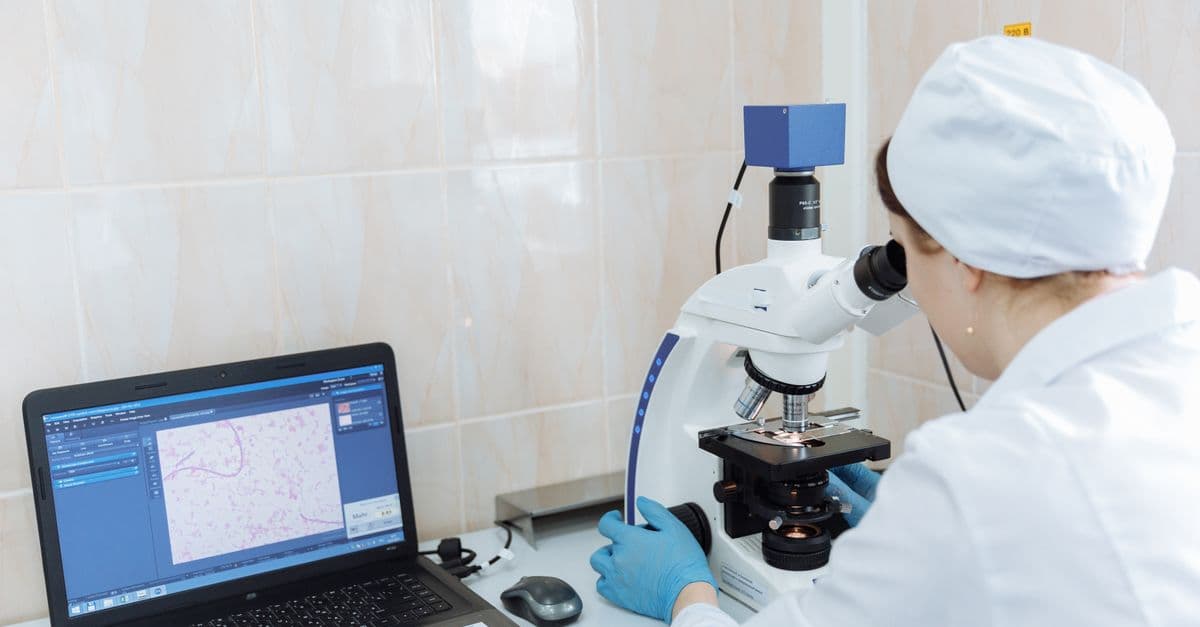
Photo: Thirdman / Pexels
In 1972, Christian Anfinsen proved that a protein's amino acid sequence determines its 3D structure — earning the Nobel Prize but leaving the prediction problem unsolved for 50 years. In 2020, DeepMind's AlphaFold cracked it, predicting protein structure with 92.4% accuracy from sequence alone, suddenly making weeks of wet-lab crystallography obsolete and unlocking a decade of accelerated drug discovery, disease understanding, and synthetic biology. Today, AlphaFold has predicted structures for over 200 million proteins, fundamentally altering how biology is done.
Proteins: the molecular machines of life
Proteins — chains of amino acids folded into precise 3D shapes — are the active agents of all biology. They catalyze chemical reactions (enzymes like amylase breaking down starch), transport molecules (hemoglobin carrying oxygen), provide structure (collagen in skin and bone), recognize threats (antibodies binding pathogens), and regulate gene expression.
Every protein is built from 20 amino acid types (alanine, leucine, serine, proline, histidine, lysine, etc.). The order is critical: insulin is 51 amino acids in a specific sequence. Change a single amino acid — a point mutation — and insulin loses function. This is why genetic diseases like cystic fibrosis (defective CFTR chloride channel protein) are so devastating: one wrong amino acid disrupts the 3D structure, and the protein can't do its job.
But here's the puzzle: sequence alone doesn't reveal function. You need 3D structure. Insulin folds into a specific 3D shape that allows it to bind to insulin receptors on cell surfaces. A misfolded insulin molecule — even with the correct amino acids in the correct order — cannot bind those receptors and is biologically inactive.
The 50-year gap: sequence versus structure
By the 1980s, molecular biology cracked the easy part: reading protein sequences. DNA sequencing became routine. The human genome was sequenced by 2003. We could read the genetic instructions for millions of proteins.
But we couldn't predict their structures. Getting protein structure required:
- Crystallizing the protein (months to years; some proteins refuse to crystallize)
- Bombarding with X-rays and analyzing diffraction patterns to infer atomic positions
- Reconstructing 3D coordinates manually — laborious computational work
- Publishing after 2-5 years of effort
This process, X-ray crystallography, won Max Perutz and John Kendrew the 1962 Nobel Prize and remains standard today. Alternative methods emerged: cryo-electron microscopy (cryo-EM) freeze proteins at -170°C and image them with electron beams, and NMR spectroscopy measures magnetic interactions to infer distances between atoms. All are slow, expensive, and fail on certain protein types (especially membrane proteins, which resist crystallization).
The result: a vast knowledge gap. We could read the instructions (sequence) but couldn't predict the machinery (structure) those instructions build. This gap constrained drug discovery, disease understanding, and synthetic biology.
Source: Anfinsen, C. B. (1972). "The Formation and Stabilization of Protein Structure," Nobel Lecture, Physiology or Medicine — Foundational work proving that protein sequence determines structure.
How AlphaFold learned to predict protein structure
DeepMind's breakthrough was realizing that evolution had already solved the problem — and left clues in the data.
The evolutionary insight
When proteins are similar across species, their structures are usually similar too. More crucially: positions that are critical for folding are conserved. If mutation at position 42 breaks the protein, that position will be nearly identical across all known variants (because evolution penalizes those mutations heavily). Variable positions are typically on protein surfaces, where flexibility is tolerated.
This insight, known as homology modeling, has been used by structural biologists since the 1980s. But it was limited: if a protein had no known homologs (related sequences), you couldn't build a model.
AlphaFold's innovation was using deep learning to extract far more information from evolutionary signals than traditional methods could.
The AlphaFold pipeline
Step 1: Multiple Sequence Alignment (MSA)
Starting with a protein sequence (e.g., human insulin: GIVQ...), AlphaFold:
- Searches genome databases for homologous proteins (proteins with similar sequences)
- Aligns them: positions each homolog beneath the query, matching similar residues
- Builds a matrix (N positions × M homologs)
Example: Position 1 is glycine (G) in 999 insulin variants, but is alanine (A) in 1 insulin variant. Conserved position = functionally important.
Source: Jumper et al., "Protein Structure Prediction with AlphaFold2," Nature, 2021 — Seminal paper describing AlphaFold architecture and benchmark results.
Step 2: Transformer Attention Mechanism
Traditional sequence analysis looks at nearby amino acids (position N ± 5). But proteins fold such that distant positions (N and N+100) interact strongly.
AlphaFold uses Transformer attention (architecture behind ChatGPT), which learns which amino acids interact:
- Attend to position 1 and its neighbors (positions -5 to +5)
- Attend to position 1 and position 50 (distant, but interact if both are hydrophobic)
- Learn patterns: "When positions 1, 10, 25 are all hydrophobic AND conserved across evolution, they form a hydrophobic core"
Multiple attention heads simultaneously learn different interaction types (hydrophobic core, charge interactions, hydrogen bonds).
Step 3: 3D Coordinate Prediction
The neural network outputs predicted 3D atomic coordinates. But raw outputs don't respect chemistry: predicted bond angles might be 175° (bonds snap at 120°) or distances might be 2 Å when real bonds are 1.5 Å.
Solution: Equivariant neural networks that respect molecular geometry. The network is constrained to output chemically valid structures (bond angles and distances consistent with known chemistry).
Step 4: Confidence Scoring
AlphaFold doesn't just predict structure — it outputs a per-residue confidence score. Disordered regions (flexible loops) get low confidence (30-50%); structured cores get high confidence (90-95%).
Users can see: "I can trust predictions for positions 1-50 (95% confidence), but positions 51-60 are flexible and unreliable (40% confidence)."
Training data and the PDB
AlphaFold was trained on the Protein Data Bank (PDB) — a repository of 170,000+ experimentally-determined protein structures from X-ray crystallography, cryo-EM, and NMR. This training data was crucial: the network learned which 3D configurations are physically and biologically valid.
Impact on drug discovery and medicine
Case study 1: COVID-19 vaccine development
In March 2020, when COVID-19 emerged, the spike protein structure was unknown. This protein, which SARS-CoV-2 uses to enter human cells, was the obvious drug target for vaccines and antibody therapeutics.
Experimentalists were working to solve it via cryo-EM (weeks of electron microscopy). But within days, AlphaFold's predictions arrived and closely matched the later experimental structures. This enabled:
- Rational vaccine design: vaccine developers knew exactly which part of the spike protein to target
- Monoclonal antibody design: researchers could model how antibodies bind the spike
- Antiviral drug design: potential compounds could be docked against the predicted structure
The vaccine development cycle, normally 10+ years, compressed to 10+ months. AlphaFold wasn't the only factor, but it removed uncertainty around target structure during a critical bottleneck.
Case study 2: Malaria drug discovery
Malaria kills 600,000 people annually. Drug development is hampered by the parasite's Plasmodium falciparum — its proteins are "sticky" and resist crystallization.
Using AlphaFold predictions of parasite proteins + molecular docking (simulating small-molecule drugs binding to predicted structures), researchers at the Worldwide Antimalarial Resistance Network identified novel drug targets that had never been tried. Promising compounds entered preclinical trials in 2023-2024.
Case study 3: Rare genetic diseases
Many rare monogenic diseases are caused by single-point mutations that misfold proteins. For a disease where the protein structure is unknown, it's unclear why the mutation is destructive.
AlphaFold predictions have illuminated many such cases. Example: mutations in collagen (structural protein) cause Ehlers-Danlos syndrome (connective tissue disorder). AlphaFold predictions show exactly how the mutation distorts the collagen triple helix, explaining the disease mechanism and suggesting interventions.
| Application | Timeline Benefit | Example | Status |
|---|---|---|---|
| Vaccine design | Weeks saved | COVID-19 spike protein | Proven |
| Drug target validation | 1-2 months saved | Malaria proteins | Proven (trials ongoing) |
| Rare disease diagnosis | Months saved | Ehlers-Danlos syndrome variants | Active research |
| Enzyme engineering | 3-6 months saved | Industrial biocatalysts | Emerging |
| Synthetic biology | 2-4 weeks saved | de novo protein design | Research phase |
AlphaFold impact spans from proven applications (vaccines) to emerging frontiers (synthetic biology), with time savings ranging from weeks to months per project.
Limitations and open problems
Challenge 1: Intrinsically disordered proteins
Some proteins don't fold into fixed 3D shapes. Instead, they exist as ensembles of flexible conformations. They're functional precisely because they're disordered — can adopt multiple shapes to interact with different binding partners.
AlphaFold assumes a stable, single structure. Predictions for disordered regions are low-confidence (correctly flagged by confidence scores) but still limited in utility.
Challenge 2: Membrane proteins
Proteins embedded in lipid membranes (ion channels, receptors, transporters) fold differently than soluble proteins. Hydrophobic amino acids point outward (into the lipid), while hydrophilic ones point inward (into the aqueous pore). AlphaFold's training data was skewed toward soluble proteins; membrane protein accuracy is lower (~70% vs 92% overall).
Challenge 3: Post-translational modifications
Proteins are modified after synthesis: phosphorylation (P added), glycosylation (sugars added), acetylation, ubiquitination, etc. These modifications change structure and function. AlphaFold sees only the amino acid sequence, not these modifications, limiting predictions in heavily-modified proteins.
Challenge 4: Protein dynamics
AlphaFold predicts a static 3D structure. But proteins are dynamic — they "breathe," changing shape as part of normal function. An enzyme closes its active site around substrate; a receptor swings its extracellular domains. A single predicted structure misses this dynamism.
Source: Wright, P. E., & Dyson, H. J. (2015). "Intrinsically Disordered Proteins in Cellular Signalling and Regulation," Nature Reviews Molecular Cell Biology — Analysis of limitations in structure prediction for flexible proteins.
AlphaFold 3 and future directions
In 2024, DeepMind released AlphaFold 3, addressing some limitations:
- Protein-ligand complexes: predict how drugs bind protein targets
- RNA structure: predict 3D folds of RNA molecules (previously separate problem)
- Protein-RNA interactions: predict where RNA binds proteins
- Higher accuracy on challenging proteins: membrane proteins, multi-chain complexes
Beyond AlphaFold 3, research is moving toward inverse protein design — the opposite problem. Given a desired function (bind pathogen X with affinity Y, or catalyze reaction Z), design a protein sequence that achieves it. Early results from ESM-3 (Meta AI) and ProteinMPNN (DeepMind) show promise: AI can generate novel protein sequences that fold correctly and show the desired function in lab validation. Machine learning is also being applied at the level of whole cells, as in single-cell AI that predicts cell states.
Within 5-10 years, expect AI to enable:
- Rational enzyme engineering — design more efficient industrial enzymes
- Therapeutic protein design — create entirely new drugs rather than targeting existing proteins
- Biosynthetic pathways — design entire enzyme cascades for chemical production
- Protein-based materials — design spider silk, synthetic tissues
Frequently Asked Questions
Q: Is AlphaFold 100% accurate?
A: No. Median accuracy is 92.4% on benchmark proteins (CASP13 assessment), with confidence scores per region. Some proteins exceed 99% confidence; others with limited evolutionary data fall to 60-70%. Confidence scores help users judge reliability and plan experimental validation when needed.
Q: Did AlphaFold completely "solve" biology?
A: It solved structure prediction, one critical piece of a much larger puzzle. Protein function, dynamics, post-translational modifications, protein-protein interactions, cellular context — these remain active research areas. Structure is necessary but not sufficient for understanding biology.
Q: Can anyone freely use AlphaFold?
A: Yes. AlphaFold2 source code is open-source (GitHub). ColabFold (cloud-free version) is freely available. DeepMind's AlphaFold Server provides pre-computed predictions for 200M+ proteins. Academic and commercial use is permitted under open licenses.
Q: Will AlphaFold replace structural biologists?
A: No. The field is evolving, not disappearing. Structural biologists now focus on validation of AlphaFold predictions, functional characterization (what does the structure do?), rational drug design based on predictions, and studying proteins that AlphaFold struggles with (membrane proteins, disordered proteins, complexes). AlphaFold is a tool that amplifies human expertise.
Q: Why does AlphaFold need evolutionary data (MSA)?
A: Evolutionary conservation encodes structural information evolved over millions of years. Positions that are conserved across species are usually structurally important. Proteins with no homologs (novel, poorly conserved) have low AlphaFold accuracy. But even without homologs, accuracy is better than random (structure follows some universal principles).
Q: What about proteins with no known homologs?
A: AlphaFold can still predict de novo (from scratch), but accuracy drops to 60-75% without evolutionary context. Recent work on protein language models (like ESM, trained on all protein sequences) is improving zero-shot prediction (no homologs needed) but remains an active frontier.
Source: Evans, R., et al. (2021). "Protein complex prediction with AlphaFold-Multimer." bioRxiv — Technical description of multi-chain protein complex prediction.
Source: Steinegger, M., & Söding, J. (2018). "Clustering huge protein sequence sets in linear time." Nature Communications 9: 2542 — MMseqs2 method for rapid sequence alignment used in MSA generation.
Source: DeepMind (2026). "AlphaFold Server." Open-source predictions for 200+ million proteins; freely available at alphafoldserver.com.
Source: Tunyasuvunakool, K., et al. (2021). "Highly accurate protein structure prediction for the human proteome." Nature 596: 590–596 — Structural coverage of complete human proteome via AlphaFold2.
Source: Callaway, E. (2023). "Is protein folding solved?" Nature 608: 662–664 — News feature on limitations and ongoing challenges for AlphaFold.
Source: Lin, Z., et al. (2023). "Evolutionary-scale prediction of atomic-level protein structure with a language model." Science 379: eade2574 — ESM-1b protein language model for zero-shot structure prediction.
The takeaway
AlphaFold represents a phase transition in biology: from structure determination being a rate-limiting step (weeks-to-years per protein) to instantaneous (seconds per protein). This has ripple effects across drug discovery, disease understanding, and synthetic biology. Vaccines, antibodies, and novel drugs now ride on structure predictions that would have taken years to verify experimentally just 5 years ago.
Yet AlphaFold is not the end of structural biology — it's a new beginning. The field is pivoting from "determine structure experimentally" to "design function rationally" using predicted structures as blueprints. The next decade will likely see AI-designed proteins outperforming nature-evolved ones at specific tasks, synthetic biology accelerating from years to months, and drug discovery compressed from decades to years. AlphaFold opened the door; what comes through it will reshape how we prevent and treat disease.
Read next:
AlphaFold's Breakthrough in Industrial Biotechnology
Beyond medicine, AlphaFold is reshaping industrial biotechnology and enzyme engineering. Industrial enzymes — proteins that catalyze chemical reactions at scale — power detergent manufacturing, food processing, biofuel production, and plastic degradation. Historically, enzyme improvement relied on random mutagenesis (create random mutations, screen for winners) or painstaking structural analysis followed by rational design.
AlphaFold reversed the pipeline. Researchers now start with desired function (break down plastic, convert glucose to rare chemical X, degrade PFAS pollutants) and use AlphaFold to predict the 3D structure of candidate enzymes or enzyme variants. If structure prediction suggests the active site can accommodate a substrate, the variant is synthesized and tested. This cuts the screening burden by 50-80% compared to blind screening.
A 2024 example: Carbios, a French biotech company, announced a plastic-degrading enzyme (mutant PETase) capable of breaking down polyethylene terephthalate (PET, used in beverage bottles) 6 times faster than the natural enzyme. The design pipeline relied heavily on AlphaFold predictions of variant structures, allowing the team to model how mutations altered the active site geometry. Industrial production began in 2024.
Similarly, enzyme engineering for biofuels (converting cellulose to ethanol) has accelerated. Cellulase enzymes are notoriously difficult to engineer — they must access tightly packed cellulose fibers while maintaining structural integrity under industrial heat and pH. AlphaFold predictions of cellulase variants with improved thermostability (holding structure at higher temperatures) entered production in pilot plants in 2023-2024.
The economic impact is substantial. Enzyme optimization typically takes 5-10 years in the pharmaceutical/biotech industry; AlphaFold has compressed some projects to 2-3 years. At scale (across millions of proteins and variants), the time and cost savings aggregate to billions of dollars annually.
Source: Callaway, E. (2024). "DeepMind's AlphaFold AI: Structure prediction moves toward practical applications in industry." Nature 627: 8–10 — Review of AlphaFold impact on biotechnology adoption.
What AlphaFold Still Cannot Tell You
Structure is not the same thing as behavior. AlphaFold predicts a static, single conformation of a protein — typically the lowest-energy or most probable folded state — but real proteins are dynamic molecules that flex, breathe, and shift between multiple conformations as they carry out their function. A kinase enzyme, for example, cycles between "open" and "closed" states as it binds ATP and transfers a phosphate group; a single AlphaFold structure usually captures only one of these states, and researchers often cannot tell from the prediction alone which one it is or whether the other state even matters for the protein's biology.
This matters enormously for drug design. Many promising drug targets are proteins that only reveal a druggable binding pocket in a transient, "excited" conformational state — a pocket that closes up in the resting structure AlphaFold is most likely to predict. Pharmaceutical researchers have learned to treat AlphaFold output as a starting hypothesis rather than a finished answer, pairing it with molecular dynamics simulations that model how the structure moves over nanosecond-to-microsecond timescales, or with experimental methods like hydrogen-deuterium exchange mass spectrometry that can detect flexible regions AlphaFold's confidence scores tend to flag as low-certainty (and which are, not coincidentally, often the biologically interesting parts).
Intrinsically disordered proteins and regions pose a related, deeper problem. Roughly a third of the human proteome contains stretches that have no fixed 3D structure at all in isolation — they only fold, or partially fold, upon binding to a partner molecule. AlphaFold's confidence metric (pLDDT) correctly identifies these regions as low-confidence, which is actually useful information, but it cannot predict what shape they will adopt in the specific context of binding, since that shape doesn't exist independent of the interaction. Understanding these regions — which are disproportionately involved in cell signaling, transcription regulation, and several neurodegenerative disease mechanisms — still requires experimental structural biology or specialized computational tools built for disorder, not general-purpose structure prediction.
Source: Alderson, T. R., et al. (2023). "Systematic identification of conditionally folded intrinsically disordered regions by AlphaFold2." Proceedings of the National Academy of Sciences 120: e2304302120 — Analysis of AlphaFold's blind spots for disordered proteins.
Follow new articles
Add SciHub101 to your feed reader to see new science and technology stories.
About the Author
SciHub101 is an independent science and technology publication founded and edited by Buğra Sözeri, a software engineer and app developer based in Türkiye. AI tools assist with drafting and research. Source documentation in the existing archive is uneven, and articles are being reviewed and corrected. The Editorial Team byline identifies editorial responsibility; it does not certify specialist or independent human review. Where we compare products, anything built by our own team is labelled as such — see the editorial guidelines and About page for how corrections and disclosures work.
Related Articles

How GLP-1 Drugs Work: Ozempic, Wegovy & Mounjaro
How GLP-1 drugs like Ozempic, Wegovy, and Mounjaro work: gut-hormone biology, trial results on weight and heart risk, side effects, and open questions.
The Gut Microbiome Explained — Your Inner Ecosystem
What the gut microbiome is, what it does for digestion, immunity and the brain, and which findings are well established versus still early research.
AlphaFold: AI Solving Protein Folding in Hours
How DeepMind's AI cracked a 50-year scientific mystery by predicting protein structures faster than ever before
Personalized Medicine & AI-Driven Genomics
How genetic data and machine learning guide drug choice, and what trials of cancer, warfarin, and antidepressant testing actually show.
Machine Learning in Drug Discovery: AI Finds Medicines
How neural networks accelerate drug discovery from years to months.
Single-Cell AI: Understanding Cellular Diversity at Scale
How machine learning decodes individual cell states from single-cell RNA sequencing data.