Why Do We Have Blood Types? The Science and Evolution
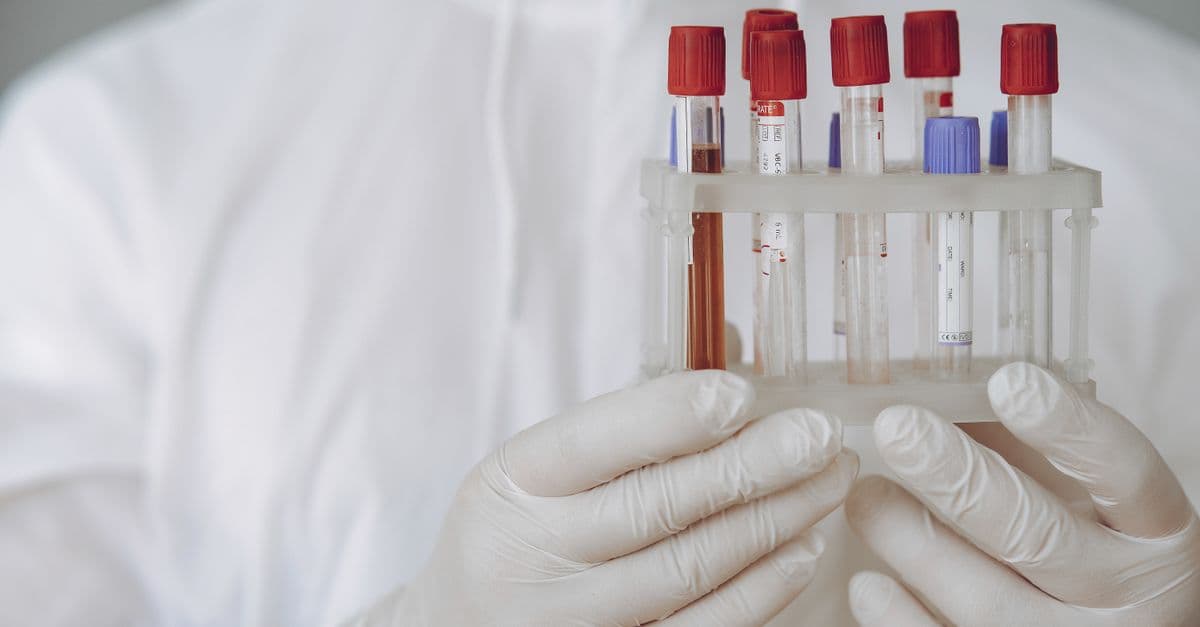
Photo: Gustavo Fring / Pexels
Your blood type is a molecular name tag on your red blood cells, written by inherited genes, and the reason humans carry several versions of it has less to do with transfusions than with infectious disease. The ABO gene has been kept in variable form in primates for at least 20 million years, a span too long to blame on chance. This article explains what the tags are made of, why the immune system attacks mismatched blood, how types are inherited, and what the evidence says about why evolution kept several versions instead of one.
Educational content, not medical advice. This article describes general biology. Medical decisions about transfusion, pregnancy, or disease risk belong with a clinician who knows your history.
What a blood type physically is
Every red blood cell is coated in molecules that stick out from its membrane, a bit like the fuzz on a tennis ball. Some of those molecules are chains of sugar, and some are proteins. Any of them can act as an antigen, a molecule the immune system can recognize and react to. A blood type is a description of which of these antigens your red cells carry.
The ABO system is built from sugars. All red cells start with a base sugar chain called the H antigen. The ABO gene then supplies an enzyme, a glycosyltransferase, that decorates the H chain. The "A" version of the enzyme adds one kind of sugar (N-acetylgalactosamine), the "B" version adds a different one (galactose), and the "O" versions of the gene are loss-of-function variants that produce no working enzyme, so the H chain stays bare.
Think of it as a coat of base paint. Type A cells get a coat of green on top, type B cells get blue, type AB cells get both, and type O cells keep the plain base coat. The paint is not a different species of molecule. It is one small chemical change, and that single change is enough to be read as "self" or "foreign."
The tag is not only on red cells
ABO antigens are not exclusive to red blood cells. They also appear on the lining of blood vessels and on the surfaces of the digestive tract, and in many people they are secreted into saliva and other fluids. Biologists therefore call them histo-blood group antigens, meaning tissue-wide markers that happen to be easy to see on blood.
This matters for the evolutionary story. The 2012 PNAS study by Laure Ségurel and colleagues found that ABO antigens are polymorphic in many primates, but that expression on red blood cells is restricted to apes (hominoids) (Ségurel et al., PNAS, 2012). If the polymorphism is being kept alive by something other than transfusion, the gut is a more likely target than the bloodstream.
How many blood groups are there?
ABO and Rh are only the first two systems anyone found. The International Society of Blood Transfusion (ISBT) now recognizes more than 40 blood group systems, each controlled by one gene or a few closely linked genes. The list has grown as sequencing has found new ones.
Most of these systems have little effect on a routine transfusion, which is why almost everyone knows only their ABO and Rh type. They matter most for people who need repeated transfusions, because each additional mismatch is a chance for the immune system to build antibodies.
Why your immune system attacks the wrong blood
Here is the odd part of ABO: you carry antibodies against the A or B antigens you lack, even if you have never been transfused or pregnant. A person with type A blood has anti-B antibodies in their plasma. A person with type O blood has both anti-A and anti-B. Type AB has neither.
| Blood type | Antigens on red cells | Antibodies in plasma | Can receive red cells from | Can donate red cells to |
|---|---|---|---|---|
| O | None (H only) | Anti-A and anti-B | O | O, A, B, AB |
| A | A | Anti-B | A, O | A, AB |
| B | B | Anti-A | B, O | B, AB |
| AB | A and B | None | A, B, AB, O | AB |
The usual explanation is that A-like and B-like sugars are also found on many bacteria and some foods, so a growing infant's immune system meets them early and learns to react against whichever ones are not its own. The practical result is that ABO incompatibility is dangerous the very first time, because the antibodies are already in place.
When mismatched red cells arrive, those antibodies latch on and activate a cascade of immune proteins that bursts the cells, a process called hemolysis. The released contents, along with clumps of damaged cells, can trigger shock and kidney injury. For how antibodies find and bind their targets, see antibody structure and immune defense, and for the broader picture of how the body separates self from non-self, see how the immune system recognizes threats.
How common is each type?
Frequencies differ across populations. In the United States, the AABB Technical Manual figures reproduced by Stanford Blood Center put the common types at the following shares of the population (Stanford Blood Center):
| Type | Share of US population |
|---|---|
| O positive | 37.4% |
| A positive | 35.7% |
| B positive | 8.5% |
| AB positive | 3.4% |
| O negative | 6.6% |
| A negative | 6.3% |
| B negative | 1.5% |
| AB negative | 0.6% |
These are US averages, and the global picture is different. A study of Han Chinese hospital patients cited in a 2022 meta-analysis found that about 70% of Han Chinese are non-O, while several studies of Caucasian populations put non-O at roughly 50% to 60% (Zhang et al., Frontiers in Oncology, 2022). That unevenness is one of the clues that something other than chance has been shaping blood type frequencies.
The Rh system and the pregnancy problem
The second famous system came from an experiment with monkeys. In 1940, Karl Landsteiner and Alexander Wiener injected rabbits with red cells from rhesus monkeys and found that the resulting serum clumped many human blood samples. In people of European ancestry, about 85% react; they were called Rh positive, and the roughly 15% who did not were Rh negative. The antigen they had found is now called RhD.
Rh-negative people lack the D protein altogether, usually because the RHD gene is missing or inactive. The share of Rh-negative people varies widely by ancestry: it is considerably higher in people of European descent than in Africans or East Asian populations such as the Han Chinese. The origin of the high frequency in Europe is debated. Drift, founder effects, and selection have all been proposed, and none has been proved.
Unlike ABO, Rh antibodies are not present at birth. The immune system makes them only after exposure to Rh-positive cells, through a transfusion or during pregnancy. That creates a specific risk. If an Rh-negative woman carries an Rh-positive fetus, a small amount of fetal blood can enter her circulation, especially at delivery, and her immune system may build anti-D antibodies. In a later Rh-positive pregnancy those antibodies can cross the placenta and attack the fetus's red cells, causing hemolytic disease of the fetus and newborn.
The fix, introduced in 1968, is Rho(D) immune globulin, a preparation of anti-D antibodies. Given to Rh-negative mothers during pregnancy and after delivery of an Rh-positive baby, it clears fetal cells before the mother's immune system can learn to make its own antibodies. It dramatically reduced the disease in countries that use it routinely.
Two rarities that teach the rules
Two unusual blood types show how the system is built. The first is the Bombay phenotype, described in 1952 in Bombay, now Mumbai. People with this type cannot make the H antigen at all, because both copies of the FUT1 gene are inactive. Without the base coat there is nothing for the A or B enzyme to decorate, so their red cells look like type O on a standard test. But their plasma contains an antibody against H itself, which means they can safely receive blood only from other Bombay-phenotype donors, not even from ordinary type O donors.
The second is Rh-null, in which red cells lack the entire Rh protein family. Only a few dozen people have been documented. Because the Rh proteins help hold the red cell membrane together, Rh-null people usually have a mild to moderate hemolytic anemia, and their blood is extremely hard to match.
Landsteiner and the end of the death lottery
For most of history, transfusion was a gamble. Doctors tried it, sometimes with animal blood, and the results were unpredictable because no one knew that blood differed between people. In 1901, Karl Landsteiner mixed blood samples from different people and watched which ones clumped. Serum antibodies reacting with red cells caused the clumping, and the pattern let him sort blood into groups A, B, and O. The fourth group, AB, was identified in 1902 by Alfred von Decastello and Adriano Sturli.
In 1907, Reuben Ottenberg is commonly credited with performing the first transfusion guided by blood typing and crossmatching, in New York. Landsteiner received the Nobel Prize in Physiology or Medicine in 1930.
Mismatches are rare now, not extinct
Modern transfusion is built on this matching, and the failure rate is low. A study by FDA researchers reviewed fatalities reported to the agency after ABO-incompatible red cell transfusions. It found 80 reported deaths in the 20 years from 2000 to 2019, an average of 6 cases a year in 2000 to 2009 and 2 cases a year in 2010 to 2019. The estimated rate fell from 1 per 2 million red cell units transfused in 2000 to 2009 to 1 per 7.14 million in 2010 to 2019 (Storch, Rogerson, and Eder, Transfusion, 2020).
The most common causes were human errors: transfusing the wrong unit to the wrong patient, or drawing a sample from the wrong person, the so-called "wrong blood in tube" problem. The biology is not mysterious. The hard part is making sure the right bag reaches the right arm. For a clinical walk-through of what happens in a reaction, see why blood types matter for transfusions and how blood works.
How blood types are inherited
ABO is the textbook case of how genes work in humans, and it follows the rules Gregor Mendel found in peas; see Gregor Mendel and the founding of genetics for the history. The ABO gene sits on one chromosome pair, and you inherit one copy from each parent. There are three common versions, or alleles: A, B, and O.
Two ideas explain every outcome. First, codominance: A and B are both fully expressed when they occur together, which is why someone with one of each has type AB. Second, recessiveness: the O allele makes no working enzyme, so it is hidden whenever A or B is present. A person with type A might therefore carry two A alleles or one A and one O.
| Parent genotypes | Possible child blood types |
|---|---|
| A (AO) with A (AO) | A or O |
| A (AO) with B (BO) | A, B, AB, or O (25% each) |
| AB with O | A or B only |
| O with O | O only |
| AB with AB | A, B, or AB |
Two results surprise people. First, two type A parents can have a type O child, if each carries a hidden O allele. Second, an AB parent and an O parent cannot have an AB or O child, because the AB parent passes on either A or B and the O parent can only pass on O. Pairs like these have long been used as a rough screen in paternity questions, but they are not proof of anything on their own. Rare variants such as the Bombay phenotype can break the usual pattern, which is why modern paternity testing uses DNA rather than blood type.
For Rh, the D allele is dominant. A child is Rh negative only if both parents pass on a non-functional version, which is why two Rh-positive parents can have an Rh-negative child when both carry a hidden negative allele. For the molecular basics of how a gene becomes a trait, see how genes actually work.
Why evolution kept several blood types
This is the question the article title asks, and it has a more interesting answer than "different types help against different diseases." The honest version has three layers: the polymorphism is ancient, pathogens are the best explanation, and the exact pathogens are only partly known.
The polymorphism is at least 20 million years old
If one blood type had a consistent advantage, natural selection would spread it until everyone had it. The fact that humans carry A, B, and O alleles in nearly every population suggests that no variant has won. A balanced polymorphism is the name for this situation: two or more variants maintained at stable frequencies by selection, because each does better in some circumstances.
Ségurel and colleagues tested how old this balance is. They sequenced part of the ABO gene in several primates and combined the data with earlier studies, finding that variation in humans, gibbons, and Old World monkeys is inconsistent with repeated independent origins of the A and B forms. Some alleles are shared by descent among these species, which the authors describe as balancing selection maintained for tens of millions of years (Ségurel et al., PNAS, 2012). The evidence is that A and B alleles cluster by type rather than by species in a gene tree, which means that in the region studied, a human A allele is more closely related to a gibbon A allele than to a human B allele. A polymorphism that survives across species boundaries for that long is called a trans-species polymorphism, and it is one of the signatures of long-term balancing selection.
The O alleles tell a different story. Multiple independent loss-of-function O alleles exist, and they are not shared among species, so "type O" has arisen repeatedly by different breakages of the same gene (Ségurel et al., 2013).
The twist: it is not about red blood cells
An obvious guess is that red cell antigens are the target of selection. The 2012 paper found a problem with that. The polymorphism exists in species that lack ABO antigens on red blood cells, so whatever maintains it is probably not tied to red cell antigens. The authors say the selective mechanism is largely unknown, as it is for the immune gene cluster known as MHC, but histo-blood antigens can act as pathogen receptors, so infectious disease is a plausible driver.
The review that followed favors fluctuating or frequency-dependent selection over a simple heterozygote advantage, with gut pathogens as the most likely source of pressure. The best-known analogy is a game of rock, paper, scissors. Whatever is most common gets targeted by the pathogens best adapted to it, which makes the rarer types relatively safer. Once the rare type becomes common, the pathogens shift, and the advantage swings back. The result is that no type ever wins outright.
A second analogy: think of ABO sugars as the landing pads on a runway. Some viruses, bacteria, and parasites use particular sugar structures to dock. A population with several types is a runway with several kinds of pads, and a pathogen tuned to one kind will fail on the others.
The pathogens that have been identified
Several infections have been linked to ABO or to the genes that control where ABO antigens appear. The evidence varies from strong to suggestive.
| Pathogen | What was found | Direction | Strength of evidence |
|---|---|---|---|
| Plasmodium falciparum (malaria) | Group O children were less likely to develop severe malaria | O protective | Strong in several studies |
| Vibrio cholerae (cholera) | Group O individuals have more severe disease | O disadvantaged | Strong for severity, mixed for infection risk |
| Norwalk virus (norovirus) | People who lack a working FUT2 gene resisted infection | Non-secretors protected | Direct challenge study |
| Helicobacter pylori | A-binding strains rarer in populations fixed for O | Matching of strain to host type | Suggestive |
| Plasmodium vivax (Duffy system) | Duffy-negative red cells resist invasion | Duffy-negative protected | Strong |
Malaria and the sticky rosettes
Plasmodium falciparum is the most lethal malaria parasite, and it does something unusual to the cells it infects. Infected red cells can stick to uninfected ones and form clusters called rosettes, which can block small blood vessels. The A and B sugars on uninfected cells act as rosetting receptors, and the parasite protein PfEMP1 binds the A antigen directly. Group O cells lack both, so their rosettes tend to be smaller and easier to break apart. Picture the clumps like hook-and-loop fasteners: type A and B cells offer plenty of loops, and type O offers fewer.
In 2007, J. Alexandra Rowe and colleagues tested this in a matched case-control study of 567 children in Mali. Group O made up 21% of severe malaria cases but 44% to 45% of the children with uncomplicated malaria and of healthy controls. Group O was associated with a 66% reduction in the odds of severe malaria (odds ratio 0.34, 95% confidence interval 0.19 to 0.61), and parasite isolates from group O children rosetted less (Rowe et al., PNAS, 2007). The authors suggested malaria may help explain the uneven global distribution of blood groups.
There is a caveat. Malaria rosetting cannot be the whole story, because the polymorphism also exists in monkeys whose red cells carry no ABO antigens, so red cell effects cannot explain its deep history. Malaria may be one of several pressures that have shaped frequencies in particular regions.
Cholera: a severity effect
The cholera link was first recognized in 1977 by Barua and Paguio, and many later investigators confirmed that group O is associated with disease severity. According to a 2016 review, group O does not clearly change the risk of infection with Vibrio cholerae, but it strongly affects severity: when cholera reached Peru in 1991, people with group O were about eight times more likely to be hospitalized with severe disease. The same review notes that the Ganges delta, where cholera has probably been endemic for centuries, has the lowest prevalence of group O in the world (Harris and LaRocque, 2016).
The mechanism is still unsettled. In lab-grown intestinal tissue, cholera toxin produced a larger cyclic AMP response in group O cells than in group A cells, and converting a group A cell line to group O by gene editing reproduced the effect. Because ABO sugars are not the toxin's main receptor, the full explanation is unresolved. Findings on infection risk are not entirely consistent either.
Norovirus and the secretor gene
Norovirus is a common cause of stomach bugs, and some strains attach to ABO-type sugars on the gut lining. Whether those sugars are present in the gut and secretions depends on a separate gene, FUT2. People with two broken copies, called non-secretors, do not display the ABH sugars there.
A 2003 challenge study published in Nature Medicine by Lindesmith and colleagues exposed volunteers to Norwalk virus. Non-secretors, who lack the sugar the virus binds, did not become infected. Some people with a working FUT2 gene were also resistant, suggesting that immune memory or other factors play a role too. For the difference between norovirus and a related stomach virus, see norovirus versus rotavirus.
The Duffy system: a clearer case of selection
Not every blood group is a balancing act. The Duffy system shows what strong one-way selection looks like. The Duffy protein on red cells is the doorway used by Plasmodium vivax, a second major malaria parasite. A single mutation in the gene's regulatory region disrupts a binding site for the red-cell transcription factor GATA-1, so the protein is no longer made on red cells but is still made in other tissues. The Duffy-negative phenotype occurs in over 95% of the population in west and central Africa, where vivax is rare.
The protection is not absolute. A 2017 study in Cameroon found P. vivax infection in people with a Duffy-negative genotype, so the parasite may have found a way in. It is still a good illustration of how a pathogen can push a blood group variant to near fixation, whereas ABO stays balanced.
What about COVID-19 and other infections?
Associations have been reported for many other infections, and the quality varies. A 2020 genome-wide association study of patients with severe COVID-19 and respiratory failure in Italy and Spain (it began with 1,980 patients) found a signal at the ABO locus, and the authors concluded it supported a potential involvement of the ABO system (Ellinghaus et al., NEJM, 2020). That is a modest shift in risk across a population, not a prediction for an individual. See SARS and MERS coronaviruses for the family of viruses involved.
The key lesson is that these associations are statistical. Blood type changes the odds slightly in particular settings, and it is one factor among many, alongside age, genetics, prior immunity, and exposure.
Blood type and clotting: a different kind of trade-off
Infection is not the only place where ABO matters. The ABO gene also influences how much von Willebrand factor and factor VIII, two proteins that help blood clot, circulate in the plasma. A 2022 meta-analysis summarizes that these levels are approximately 25% higher in people who are not type O than in people who are (Zhang et al., Frontiers in Oncology, 2022).
More clotting factor means a higher tendency to clot. In the same analysis of catheter-associated blood clots (4 studies, 7,804 patients), type O had a lower risk than non-O types (odds ratio 0.58), although the effect was not significant in the subgroup of Caucasian patients. Lower clotting factor levels in type O have a flip side, since they can make bleeding more likely, a pattern that has been reported in other meta-analyses. This is the kind of trade-off that balancing selection can maintain. A variant that helps in one setting, such as a lower clot risk, can cost something in another, such as a higher bleeding risk after injury or childbirth.
Do not read this as a personal risk score. These are population averages, and for any one person the effect is small compared with factors such as age, surgery, immobility, and medication.
Can a blood type be changed?
Normally no, because the ABO type is set by your genes. There are exceptions where the cells themselves change. After a bone marrow or stem cell transplant from a donor with a different ABO type, the recipient's new blood cells are made by the donor's stem cells, so the recipient's blood type gradually converts to the donor's. Certain cancers and infections can also alter antigen expression on red cells temporarily.
Researchers have also tried to strip the A and B sugars off donated blood and organs. In 2019, a team led by Peter Rahfeld and Stephen Withers screened gut bacteria for enzymes that can remove the A antigen, and found a pair of enzymes from a bacterium called Flavonifractor plautii that converts A to the H antigen, which is the type O form (Rahfeld et al., Nature Microbiology, 2019). The work is experimental, and it shows how the sugar-coat picture of ABO can be used in practice: if the problem is a sugar, an enzyme can chew it off.
What blood type does not tell you
Personality. The idea that blood type shapes temperament is popular in Japan and parts of East Asia, where it dates to the 1920s. The data do not support it. A 2014 analysis of large surveys in Japan and the United States found that 65 of 68 personality-related items showed no significant difference between blood groups, and effect sizes were below .003 (Nawata, Shinrigaku Kenkyu, 2014).
Diet. The "blood type diet" claims that people should eat according to their ABO type. A 2013 systematic review in the American Journal of Clinical Nutrition searched the literature and screened 1,415 references. It found no studies showing health effects of ABO-based diets, and concluded that no evidence currently exists to validate the purported benefits (Cusack et al., 2013).
"Type O is the best." Being a universal red cell donor is a property of the cells in an emergency, not a health advantage. The clotting and infection findings above cut both ways, which is the whole point of balancing selection.
"Rare blood types are a sign of something." Rare types are simply uncommon combinations of antigens. They matter to transfusion services because matching takes more effort, not because they say anything about a person.
The takeaway
Blood types are small chemical differences, one sugar here and one missing protein there, that your immune system treats as a boundary between self and not-self. They matter in a hospital because antibodies to ABO are already in your plasma at birth. They matter in evolution because the ABO polymorphism has been maintained for at least 20 million years in primates, a span that points away from chance and toward pathogens. Malaria, cholera, and norovirus each interact with the system, and the Duffy story shows what one-way selection looks like in contrast. The best summary is that evolution has hedged its bets: with several types in circulation, no single pathogen can exploit everyone.
Frequently Asked Questions
Q: Can your blood type change over your lifetime? A: Not through ordinary biology, because ABO and Rh type are set by inherited genes. The main exception is a bone marrow or stem cell transplant from a donor of a different type, after which the recipient's new blood cells carry the donor's type. Some cancers and infections can also temporarily alter how antigens show up on red cells.
Q: Why are some blood types more common than others? A: Frequencies reflect ancestry and, probably, selection by local pathogens. In the United States, O positive (37.4%) and A positive (35.7%) are the most common, while AB negative is the rarest at 0.6%. Studies suggest non-O types are more common in some populations, such as about 70% of Han Chinese, but the reasons are not fully worked out.
Q: Is blood type linked to disease risk? A: For some conditions, modestly. Group O has been associated with lower odds of severe malaria (odds ratio 0.34 in a Malian study) and with a lower risk of blood clots, but also with more severe cholera. These are averages across populations, and for an individual they are small next to age, genetics, and lifestyle.
Q: Why does a mismatched transfusion cause a reaction the first time? A: Because ABO antibodies are already in your plasma before any exposure, probably triggered in infancy by A-like and B-like sugars on bacteria and food. When mismatched cells arrive, those antibodies attack at once and the cells burst. Rh antibodies behave differently: they form only after exposure through a transfusion or pregnancy.
Q: How did doctors figure out blood types? A: In 1901, Karl Landsteiner mixed blood from different people and watched for clumping. The pattern let him sort samples into groups A, B, and O, and colleagues identified AB in 1902. Matching by ABO was first used successfully in a transfusion in 1907. Modern labs still rely on the same antibody-and-clumping logic, with DNA testing available for complex cases.
Q: Can blood type affect pregnancy? A: Yes, mainly through the Rh system. If an Rh-negative mother carries an Rh-positive baby, she can develop anti-D antibodies that endanger a later Rh-positive pregnancy. Since 1968, Rho(D) immune globulin given around the time of pregnancy and delivery has prevented most of these cases. ABO differences between mother and baby can also cause mild disease, but it is usually less severe.
Q: Does the blood type diet or a blood type personality profile work? A: No evidence supports either. A 2013 systematic review found no studies showing health benefits from ABO-based diets, and a 2014 analysis of large Japanese and US surveys found virtually no link between blood type and personality.
Sources
- Ségurel L, et al. The ABO blood group is a trans-species polymorphism in primates. PNAS, 2012;109(45):18493-18498. Link.
- Ségurel L, Gao Z, Przeworski M. Ancestry runs deeper than blood: the evolutionary history of ABO points to cryptic variation of functional importance. BioEssays, 2013;35(10):862-867. Link.
- Rowe JA, et al. Blood group O protects against severe Plasmodium falciparum malaria through the mechanism of reduced rosetting. PNAS, 2007;104(44):17471-17476. Link.
- Harris JB, LaRocque RC. Cholera and ABO blood group: understanding an ancient association. Am J Trop Med Hyg, 2016;95(2):263-264. Link.
- Storch EK, Rogerson B, Eder AF. Trend in ABO-incompatible RBC transfusion-related fatalities reported to the FDA, 2000-2019. Transfusion, 2020;60:2867-2875. Link.
- Ellinghaus D, et al. Genomewide association study of severe Covid-19 with respiratory failure. NEJM, 2020. Link.
- Rahfeld P, et al. An enzymatic pathway in the human gut microbiome that converts A to universal O type blood. Nature Microbiology, 2019. Link.
- Cusack L, et al. Blood type diets lack supporting evidence: a systematic review. Am J Clin Nutr, 2013;98(1):99-104. Link.
- Nawata K. No relationship between blood type and personality: evidence from large-scale surveys in Japan and the US. Shinrigaku Kenkyu, 2014. Link.
- Stanford Blood Center, blood type frequencies from the AABB Technical Manual. Link.
- Zhang Q, et al. ABO blood group and venous thromboembolism risk in patients with PICCs: a meta-analysis. Front Oncol, 2022. Link.
Read next:
Follow new articles
Add SciHub101 to your feed reader to see new science and technology stories.
About the Author
SciHub101 is an independent science and technology publication founded and edited by Buğra Sözeri, a software engineer and app developer based in Türkiye. AI tools assist with drafting and research. Source documentation in the existing archive is uneven, and articles are being reviewed and corrected. The Editorial Team byline identifies editorial responsibility; it does not certify specialist or independent human review. Where we compare products, anything built by our own team is labelled as such — see the editorial guidelines and About page for how corrections and disclosures work.
Related Articles
How the Gut Microbiome Affects Mental Health
Your gut microbiome influences your brain through the vagus nerve, immune signaling, and microbial chemistry. Here is what the mechanisms, the animal work, and the human trials actually show, and where the evidence stops.

Why Do Onions Make Us Cry? The Science of Tear Gas
An intact onion does nothing to your eyes. But cutting one releases enzymes that act on sulfur compounds, triggering a chemical cascade that produces syn-propanethial-S-oxide — a volatile gas that irritates your cornea and forces your eyes to water. The science behind this everyday kitchen reaction reveals how plants weaponize chemistry as a defense mechanism.
Complete Biology Guide 2026 — How Life Works
The complete guide to biology in 2026: cells and genetics, evolution, the human body, neuroscience, disease, immune systems, and the future of genetic engineering.
What Is the Appendix For? Biology Explained
What does the appendix actually do? The microbiome safe-house hypothesis, immune function, appendicitis, and why it's not really useless.

Evolution and Natural Selection — How Life Changes
Darwin's theory, modern synthesis, mechanisms, evidence, speciation, and human evolution — explained clearly with common misconceptions corrected.
How Stem Cells Work and What They Can Actually Treat
A single fertilized egg becomes a complete human being, and a few of its descendants never stop being flexible. This is how stem cells work, how scientists learned to reprogram them, and which therapies have reached patients.