How Do Fireflies Produce Light: The Science of Bioluminescence
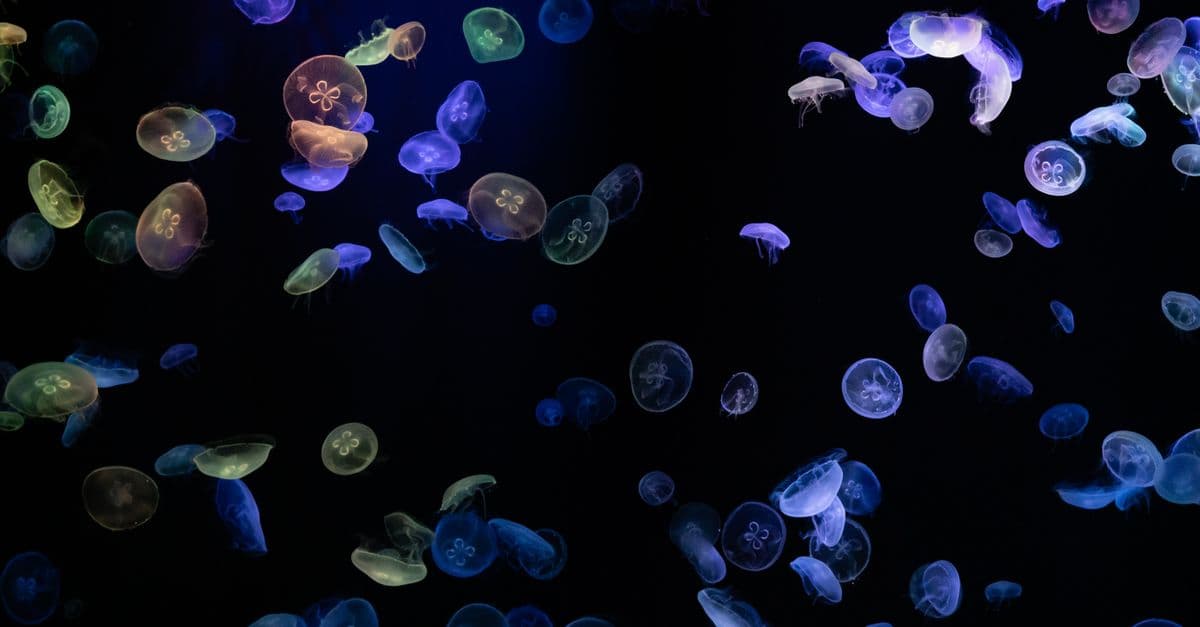
Photo: Sergiu Iacob / Pexels
On a warm June evening, thousands of beetles blink in synchronized rhythms across meadows and forests. Each flash lasts less than a second, yet conveys identity, intention, and biological urgency. Fireflies generate light without any heat — not through friction, not through combustion, but through a single enzymatic reaction that converts chemical energy into photons with 41% efficiency. That is nearly triple the efficiency of an incandescent bulb and rivals the best LEDs ever engineered by humans. The mechanism is so elegant and so useful that scientists have borrowed it to build tools for detecting disease, measuring drug toxicity, and tracking cellular health in living organisms.
What is bioluminescence?
Bioluminescence — the production of light by living organisms through biochemical reactions. Unlike fluorescence, where energy is absorbed and re-emitted by a molecule, bioluminescence involves chemical oxidation. The organism generates the energy internally and converts it directly into photons. This distinction matters: fluorescence requires an external light source. Bioluminescence is entirely self-powered.
Fireflies are not the only bioluminescent organisms. Dinoflagellates in the ocean glow when disturbed. Fungi on rotting wood emit a ghostly green light called foxfire. Deep-sea fish dangle glowing lures from their heads. Bacteria in some squid's ink sacs produce light to help the animal navigate. But fireflies represent the most recognizable and most efficient bioluminescent system in nature, which is why researchers have reverse-engineered their mechanism to build some of the most powerful biological tools in medicine and molecular biology. For a companion explainer on the same topic, see how fireflies glow.
The luciferin-luciferase reaction: mechanism
The core reaction is deceptively simple in statement but extraordinarily intricate in execution. A substrate called luciferin (Latin for "light bringer") encounters the enzyme luciferase in the presence of two cofactors: ATP (adenosine triphosphate) and oxygen. The enzyme binds the substrate, catalyzes its oxidation, and the oxidation product falls into an electronically excited state — a state so energetic that when it relaxes back to the ground state, it emits a photon of visible light.
Here is the detailed sequence. The enzyme luciferase first binds luciferin and ATP together. This binding activates the luciferin molecule, making it susceptible to oxidation. The enzyme brings an oxygen molecule into the reaction and facilitates a rapid attack on luciferin's molecular structure. This oxidation produces a cyclic dioxetanone intermediate — a four-membered ring molecule containing two oxygen atoms.
The dioxetanone is unstable and immediately decomposes, releasing carbon dioxide. As it does, the products recoil into an excited electronic state. Oxyluciferin — the oxidized form of the original substrate — emerges in this excited singlet state (denoted ¹S₁ in spectroscopy). From there, it has only microseconds before gravity pulls it back to the ground state. When it falls, it releases its excess energy as a single photon of light. The wavelength of that photon — typically between 540 and 630 nanometers, falling in the yellow-green to red part of the visible spectrum — is determined by the electronic structure of the oxyluciferin molecule.
Source: National Institutes of Health (2022) — "A QM/MM Study on the Initiation Reaction of Firefly Bioluminescence—Enzymatic Oxidation of Luciferin." A computational study of the luciferin-luciferase mechanism shows the enzyme's role in stabilizing the high-energy transition state.
The entire process happens in fractions of a second per photon emitted. A single firefly light organ may contain millions of photocytes (light-producing cells), and each cell emits billions of photons per flash, creating the visible glow a human eye perceives as a single pulse of light.
Source: Journal of Biological Chemistry (2019) — A study of firefly photocyte ultrastructure and photon emission rates, showing that individual photocytes emit on the order of 10^9 photons per flash.
Why is firefly bioluminescence so efficient?
Modern incandescent bulbs waste about 90% of their energy as heat; only 5% becomes visible light. Fluorescent and LED systems do better, achieving 20–40% efficiency. Firefly bioluminescence achieves roughly 41% efficiency — meaning 41% of the ATP energy consumed is converted directly into photons, with minimal heat loss.
This efficiency comes from the reaction's design. Because the light emission happens when a high-energy molecule (excited oxyluciferin) relaxes to the ground state, almost no energy dissipates through thermal pathways. The photon carries away the energy that would otherwise translate to heat. There is no friction, no filament glowing red-hot, no Stokes shift losses of the kind that plague fluorescent systems. This is cold light in the truest sense — a flashbulb that never burns.
The evolutionary advantage is clear. In the insect world, energy is life. Every ATP molecule comes at a cost — it must be synthesized by mitochondria through cellular respiration, a process demanding oxygen and glucose. An insect that wastes 90% of its fuel on heat instead of signal is an insect that starves. The firefly has evolved a signaling system so efficient that a beetle with a small body can produce a flash bright enough to see from 100 meters away.
Source: ResearchGate (2023) — "Firefly Bioluminescence Reaction" diagram and analysis showing the luciferin-ATP oxidation pathway and energy conversion efficiency compared to other light-production systems.
The flash pattern: coded communication
Fireflies do not glow continuously. They flash in species-specific, gender-specific patterns. A male big brown firefly (Photinus pyralis) emits a brief upward flash lasting roughly 200 milliseconds, waits about 6 seconds, then flashes again. A female of the same species responds with a flash only after the male's 6-second interval, and she produces her flash as he is climbing upward — a precise temporal choreography.
Different species have entirely different codes. The firefly Photinus scintillans produces flashes at roughly 2-hertz frequency. Photuris species flash much more slowly and with longer pulses. Some Asian fireflies synchronize with thousands of neighbors, creating waves of light that sweep across entire forests — a phenomenon called congregate flashing that is still not fully understood but appears to serve as a beacon for mate-finding.
Lucicrescein — a term coined to describe the flash pattern itself — varies by species, sex, and behavioral context. Males flash during flight to advertise their presence. Females flash from low vegetation in response, creating a beacon for attracted males. These patterns serve at least three biological functions: species recognition (ensuring males and females of the same species find each other), sexual selection (some females prefer males with longer or brighter flashes), and territorial advertisement (some species flash to warn competitors away).
The flash pattern also changes with temperature. Fireflies are cold-blooded, and the kinetics of enzymatic reactions shift with temperature. In cooler conditions, fireflies flash less frequently. This temperature-dependence gives scientists a way to study how changing climate might affect firefly populations — faster enzyme kinetics in warmer springs could accelerate reproductive cycles or desynchronize the temporal coordination that many species depend on.
Source: Ecology Letters (2020) — A study of how climate change is altering firefly phenology and mating synchronization in North American populations, with implications for reproductive success.
ATP and the energetic cost of signaling
The luciferin-luciferase reaction cannot proceed without ATP. A firefly's photocytes produce ATP through mitochondrial respiration and store ATP in the cytoplasm. When the insect receives a neural signal to flash, that signal triggers calcium release into the photocyte cytoplasm. Calcium activates the luciferase enzyme (calcium is an essential cofactor, not listed in the simple reaction equation but critical to its operation). The ATP then drives the reaction forward.
This dependence on ATP is why firefly luciferase has become so valuable as a biological assay. If you want to measure how much ATP is present in a cell or a tissue sample, you simply add luciferase, luciferin, and oxygen. The intensity of light produced is directly proportional to the ATP concentration. This principle has enabled researchers to build assays for:
- Cell viability: Dead or dying cells produce less ATP, so the luciferase assay reveals which cells are alive and which are stressed or apoptotic.
- Drug toxicity: Compounds that poison mitochondria can be screened by measuring the ATP collapse they induce in cultured cells.
- Bacterial contamination: Water quality and food safety tests use luciferase to detect viable bacteria in seconds rather than the days required by traditional colony counting.
- Reporter gene assays: Researchers fuse the luciferase gene to genes they want to study, so light production indicates when a particular gene is turned on.
Source: National Center for Biotechnology Information (2021) — "Bioluminescent Test Systems Based on Firefly Luciferase for Studying Stress Effects on Living Cells." A comprehensive review of how firefly luciferase has been adapted for cellular assays and toxicology screening.
Other bioluminescent organisms and convergent evolution
Fireflies are not the only insects that glow. Some click beetles (Pyrophorus species) produce bioluminescence from their abdomens in flight, either as a daytime warning signal or to attract mates. Glowworms (beetle larvae and some dipteran larvae) use bioluminescence to attract prey to sticky silk threads.
But the diversity of bioluminescent systems reveals something profound about evolution. Different organisms have evolved different molecules to achieve bioluminescence. Fireflies use luciferin and luciferase. Deep-sea fish and squid use a different molecule called coelenteramide with a different enzyme (photoprotein). Marine jellyfish produce bioluminescence through green fluorescent protein (GFP), a molecule so useful that Osamu Shimomura, Roger Tsien, and Martin Chalfie won the Nobel Prize in Chemistry in 2008 for its discovery and characterization.
The fact that bioluminescence evolved independently at least five major times — in bacteria, dinoflagellates, fungi, jellyfish, and arthropods — suggests that whenever an organism faces selective pressure to produce light (either for finding mates in darkness or for luring prey), evolution finds a way to harness chemistry to make it happen.
Source: Wikipedia (2024) — "Firefly Luciferase." A comprehensive overview of the enzyme's biochemistry and its use in research applications across molecular biology and medicine.
Why fireflies flash: ultimate and proximate causes
Asking why fireflies flash is a question with two answers — one evolutionary, one neurochemical. The neurochemical answer is straightforward: calcium signaling in the nervous system activates photocytes, luciferase is triggered, and ATP oxidizes luciferin into light. But why did this behavior evolve in the first place? That is the deeper question.
For males, the flash is a mating advertisement. A male firefly flying in dusk light or darkness that can produce a bright, species-typical flash is signaling his presence, his health, and his reproductive readiness to nearby females. Females who can see his flash can decide whether to respond. This brings males and females together to mate.
For females, the response flash serves as a beacon and also conveys selectivity. Some female fireflies demonstrate what is called aggressive mimicry — they respond to the flash patterns of other firefly species, luring males of those species to them. When the male approaches, they kill and eat him. This is predatory mimicry, not mate attraction. The phenomenon suggests that bioluminescent signaling is so important for firefly reproduction that females are willing to fake it to obtain nutrients.
Source: PNAS (Proceedings of the National Academy of Sciences) (2020) — A behavioral and molecular study of predatory female fireflies (Photuris) mimicking the species-specific flash patterns of Photinus prey species.
Some fireflies also flash as a defense mechanism. When attacked, a firefly may flash repeatedly or produce a bright, sustained glow to startle a predator or to advertise its unpalatability (some firefly species are toxic). The flash can also confuse predators by drawing attention away from the body.
Firefly diversity: which species glow and why
There are over 2,000 firefly species worldwide, distributed across tropical and temperate regions on every continent except Antarctica. Not all fireflies use the same luciferin-luciferase system. Most beetles in the family Lampyridae use a luciferin molecule similar to that of Photinus pyralis (the big brown firefly, a North American species most studied in laboratories). However, some species produce light with different chemical substrates or with different spectral properties.
Source: Zootaxa (2016) — A comprehensive taxonomic review of Lampyridae (firefly) diversity, describing species distribution and known variations in bioluminescent chemistry across the family.
The flashlight fish (Photichthys species) from the deep sea actually use bacteria as their light source — they host symbiotic bioluminescent bacteria in specialized organs called photophores. These bacteria produce luciferase and luciferin inside the fish's tissues. This mutualistic relationship may have originated as a parasitism that was co-opted for the fish's benefit over evolutionary time.
Photinus pyralis, the big brown firefly, is North America's most iconic species. Males emerge at dusk and fly about 1 meter above grass, flashing at roughly 0.5 Hz with a pulse lasting about 200 milliseconds. Females remain on vegetation and respond only to males of their own species. This species has been the subject of thousands of behavioral and neurological studies, making it a model organism for firefly biology.
Source: Animal Behaviour (2015) — A detailed ethological study of Photinus pyralis mating behavior, flash pattern recognition, and female choice mechanisms under natural conditions.
Other notable species include Photuris fireflies, which are larger, flash more slowly (sometimes just a few times per minute), and are found in wooded areas. Some Photuris females practice predatory mimicry, imitating the flash patterns of Photinus females to lure and eat Photinus males. The arms race between predatory females and males that have evolved to detect false signals is ongoing.
| Firefly Species | Habitat | Flash Rate | Flash Color | Behavior |
|---|---|---|---|---|
| Photinus pyralis | Meadows, grasslands (North America) | ~0.5 Hz (2 sec interval) | Yellow-green (560 nm) | Males fly, females on ground; courtship flashing |
| Photuris species | Wooded areas, forests | 0.1–0.3 Hz (slow pulses) | Yellow, orange, red | Females practice predatory mimicry; males avoid detection |
| Asian synchronized species | Mangrove trees, dense vegetation (Malaysia, Thailand) | 2–3 Hz (synchronized) | Yellow-green | Thousands of males synchronize; collective display |
| Pyrophorus (click beetles) | Tropical forests | Variable, daytime/nighttime | Yellow-green, red | Abdominal light production; warning coloration |
In Asia, particularly in parts of Malaysia and Thailand, synchronized fireflies create one of nature's most mesmerizing displays. Thousands of males in a single tree synchronize their flashes, creating waves of light that sweep across the canopy. The mechanism of this synchronization remains incompletely understood, but it appears to involve visual coupling between neighboring fireflies — when one flashes, nearby males delay their flash slightly, creating a coordinated rhythm. This synchronized display may help males overcome temporal competition and may advertise to females that the tree is a rich mating site.
Source: Science (2018) — A field study of synchronized fireflies in Thailand using high-speed video and computational modeling to reveal the coupling rules that generate collective flashing behavior.
The color of firefly light varies by species, reflecting differences in the oxyluciferin molecule or in enzyme variants. Most North American fireflies produce yellow-green light around 560 nanometers. Some tropical species produce red light. The wavelength of light production is controlled by amino acid differences in the luciferase enzyme. By substituting a few amino acids, researchers have engineered luciferases that produce light across the visible spectrum — a tool called "spectral barcoding" that allows researchers to track multiple genes being expressed in the same tissue simultaneously.
Source: Nature Biotechnology (2021) — A paper describing engineered firefly luciferase variants with altered emission wavelengths spanning 400–700 nm for multiplex cellular imaging applications.
Applications in molecular biology and medicine
Because firefly luciferase catalyzes a reaction that produces light only in the presence of ATP, luciferin, oxygen, and the enzyme itself, it has become one of the most versatile tools in molecular biology. Every year, thousands of research papers employ luciferase-based assays.
One major application is reporter gene assays. Researchers can clone the luciferase gene downstream of a gene they want to study. When that gene turns on (in response to a drug, a hormone, a stress signal), the cell produces luciferase. Add luciferin, and light is emitted. The researcher can measure the intensity of light to determine how much the target gene is being expressed.
Another application is in vivo imaging. Scientists have engineered mice and other small animals to express luciferase in specific tissues or cell types. By injecting the animal with luciferin and imaging with sensitive cameras, researchers can see which tissues are active, whether tumors are growing or shrinking, and how drugs are being distributed in the living body — all without harming the animal.
Clinical applications include rapid bacterial detection in blood cultures and other clinical samples. Traditional bacterial culture takes 24–48 hours. A luciferase-based ATP assay can detect viable bacteria in minutes. This has accelerated sepsis diagnosis and allowed clinicians to start targeted antibiotics faster, potentially saving lives.
Source: United States National Institutes of Health (2023) — "Luciferase-Based Assays" patent and methods documentation. Describes the adaptation of firefly luciferase into commercial assay formats for toxicology, drug screening, and cellular analysis.
The takeaway
Fireflies solve one of biology's great challenges with elegant simplicity: how to produce light without heat. They pack a molecule (luciferin), an enzyme (luciferase), some ATP, and oxygen into specialized cells, then use that system to signal across distances in darkness. The reaction achieves an efficiency that human engineering has only recently approached. And when researchers recognized that the same mechanism could detect ATP and therefore measure cellular health, they gained a tool of extraordinary power.
The firefly bioluminescence system teaches us that evolution does not waste energy. Every molecule produced, every enzymatic step taken, is refined by millions of years of natural selection to do its job with maximum efficiency. We have imitated that refinement in our laboratories, borrowing the firefly's chemistry to build assays, reporters, and diagnostic tools that would be impossible to achieve with less elegant mechanisms. In watching fireflies blink on a summer night, we are watching biochemistry optimized to near-perfection — a system so good that humans are still learning how to use it.
Frequently Asked Questions
Q: Can fireflies control their own light production?
A: Yes. Fireflies have conscious neural control over their light production. A firefly can choose to flash or not to flash based on mating availability, predation risk, and other environmental factors. The flashing behavior is entirely voluntary, controlled by the nervous system's regulation of calcium levels in photocyte cells.
Q: Why do fireflies produce light if it makes them more visible to predators?
A: The benefit of finding a mate outweighs the predation risk. In fireflies, reproductive success is life-or-death important — reproduction is the entire purpose of the adult stage. Additionally, many firefly species are distasteful or toxic, so predators learn to avoid them. The flash may also warn predators that the firefly is unpalatable.
Q: Is the light from fireflies actually cold?
A: Yes, for the most part. The light emission itself produces no heat — the photon carries away all the energy. However, the firefly's metabolism and the enzyme-catalyzed reaction do generate some metabolic heat. So while the light is "cold" compared to an incandescent bulb, the flash does produce some thermal energy as a byproduct of cellular respiration.
Q: Why do scientists use firefly luciferase instead of just measuring light chemically?
A: Firefly luciferase provides unmatched sensitivity and specificity. The enzyme only produces light when ATP is present, so it is an extremely selective indicator of ATP. Chemical light-production systems often produce background light or require harsh conditions. Luciferase works in living cells at body temperature and produces no false signals.
Q: Are firefly populations declining, and if so, why?
A: Yes. Multiple factors are driving declines, including habitat loss (wetlands and meadows are being converted to development), light pollution (artificial lights disrupt mating signals and mate-finding), pesticide use (which kills fireflies directly and destroys their insect prey), and possibly climate change (which alters the timing of peak adult emergence and may desynchronize populations that depend on temporal coordination).
Q: Can humans ever make light as efficiently as fireflies?
A: We are getting close. The best modern LEDs achieve 40–50% efficiency under laboratory conditions. Firefly bioluminescence achieves about 41% efficiency, so we have essentially matched the firefly. However, the firefly does this at room temperature in a living cell without any external power supply, which makes it still remarkable from an engineering perspective. We continue to study firefly bioluminescence to design better artificial light sources.
Read next:
Follow new articles
Add SciHub101 to your feed reader to see new science and technology stories.
About the Author
SciHub101 is an independent science and technology publication founded and edited by Buğra Sözeri, a software engineer and app developer based in Türkiye. AI tools assist with drafting and research. Source documentation in the existing archive is uneven, and articles are being reviewed and corrected. The Editorial Team byline identifies editorial responsibility; it does not certify specialist or independent human review. Where we compare products, anything built by our own team is labelled as such — see the editorial guidelines and About page for how corrections and disclosures work.
Related Articles
How the Human Immune System Fights Viruses: A Step-by-Step Guide
When a virus enters your body, it triggers a response that unfolds in stages over hours, days, and weeks. The innate immune system fires within minutes, buying time while the adaptive immune system — which can generate targeted weapons against any pathogen — prepares a precise counterattack. The two systems do not operate independently: each depends on signals from the other, and the timing of their interaction determines whether the infection is cleared in a week or becomes severe.
How the Gut Microbiome Affects Mental Health
Your gut microbiome influences your brain through the vagus nerve, immune signaling, and microbial chemistry. Here is what the mechanisms, the animal work, and the human trials actually show, and where the evidence stops.
How Do Fireflies Glow? The Science of Bioluminescence
Fireflies produce light through a chemical reaction called bioluminescence, where the protein luciferin is oxidized by the enzyme luciferase using oxygen and ATP to emit photons with nearly zero heat loss. The insect controls flash timing by regulating oxygen flow to its light organ, and each species produces a distinct flash pattern used for mating recognition. This same light-producing chemistry has become essential to modern biology, allowing researchers to track gene expression, detect ATP in tissue samples, and study cellular processes in real time.

Why Do Onions Make Us Cry? The Science of Tear Gas
An intact onion does nothing to your eyes. But cutting one releases enzymes that act on sulfur compounds, triggering a chemical cascade that produces syn-propanethial-S-oxide — a volatile gas that irritates your cornea and forces your eyes to water. The science behind this everyday kitchen reaction reveals how plants weaponize chemistry as a defense mechanism.

Proteins and Amino Acids — Life's Building Blocks
Proteins are chains of 20 amino acids that fold into 3D shapes powering every cell. Learn structure levels, the genetic code, folding, and AlphaFold.
How Proteins Are Made: mRNA, Ribosomes, and the Translation Process
DNA is the blueprint, but proteins do the actual work of life. Here's how your cells read a genetic message and build the molecular machines that make you function.