The Perrin Brownian Motion Experiment: Proving Atoms Are Real

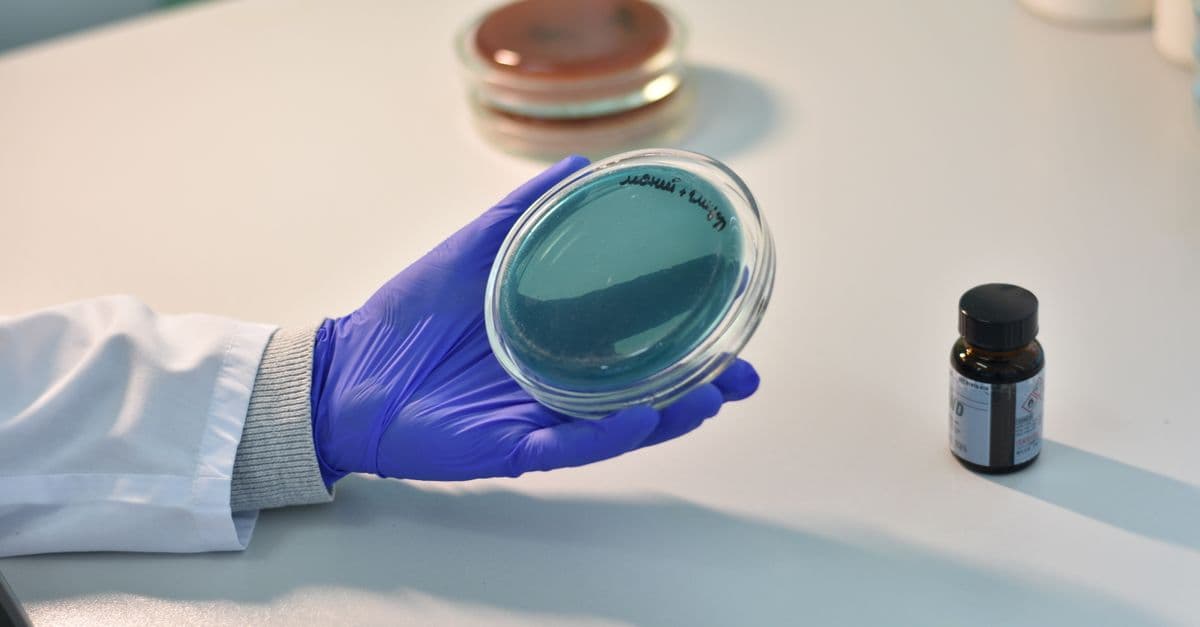
Photo: Steve A Johnson / Pexels
The question of whether atoms exist as physical entities — or whether they were convenient mathematical fictions used to organize chemistry — was not settled until 1909. For more than two thousand years, from Democritus to Dalton to the early twentieth century, atomism was a useful theory without definitive physical proof. It was a 31-year-old French physicist named Jean Perrin who settled the question, not by seeing atoms directly, but by measuring the invisible jitter of particles too small to see with the naked eye and showing that the mathematics of atomic collisions described their motion precisely. The experiment gave physics Avogadro's number to 1% accuracy and gave science its clearest answer to the question: are atoms real?
The Long Dispute: Atoms as Theory, Not Fact
The idea that matter is composed of discrete, indivisible units is ancient. Democritus proposed it in the fifth century BCE; Epicurus elaborated it; Lucretius preserved it in De rerum natura. But ancient atomism was philosophical, not mathematical — atoms were a way of thinking about matter, not a quantitative theory with testable predictions.
John Dalton formalized atomic theory in chemistry at the start of the nineteenth century, proposing that chemical reactions combine atoms in fixed integer ratios. This explained why elements combine in definite proportions — the law of definite proportions — and correctly predicted the law of multiple proportions. Dalton's atomic theory became the foundation of quantitative chemistry.
Source: Dalton, J. (1808), A New System of Chemical Philosophy (Manchester) — the original statement of chemical atomic theory with combining ratios.
But the question of whether atoms were physical objects or mathematical conveniences remained open through the entire nineteenth century. The philosopher Ernst Mach, one of the most influential physicists of the late 1800s, flatly rejected atoms as real. His position: physics should be based only on directly observable quantities. Atoms were not observable. Therefore, atoms were a mathematical tool, not a physical truth. Mach's positivism was widely respected, and his skepticism about atomic reality was shared by several prominent chemists.
Source: Mach, E. (1883), Die Mechanik in ihrer Entwicklung historisch-kritisch dargestellt (Leipzig) — Mach's positivist philosophy and skepticism about unobservable entities.
Wilhelm Ostwald, a Nobel Prize-winning physical chemist, held a similar view until very late in his career, arguing that thermodynamics — which describes the behavior of heat and energy without reference to microscopic mechanisms — was more fundamental than any atomic hypothesis. Ostwald and Mach represented the most sophisticated scientific resistance to atomic reality.
The kinetic theory of gases, developed by Maxwell and Boltzmann in the 1860s–1880s, treated matter as composed of atoms or molecules in constant motion and successfully explained the pressure, temperature, and viscosity of gases. But it was still a model — an assumption that worked. It was not proof.
Source: Brush, S. G. (1976), The Kind of Motion We Call Heat: A History of the Kinetic Theory of Gases (North-Holland) — comprehensive history of the kinetic theory and the atomic debate.
Brownian Motion: A Clue Without an Explanation
In 1827, the Scottish botanist Robert Brown was examining pollen grains suspended in water under a microscope when he noticed that tiny particles within the pollen grains moved in a continuous, erratic, seemingly random jitter — even though the water was perfectly still. Brown initially thought the motion might be biological. He then tried it with pollen from plants that had been dead for a century, with ground-up granite dust, and with particles of window glass. They all jittered. The motion had nothing to do with life.
Source: Brown, R. (1828), "A brief account of microscopical observations made on the particles contained in the pollen of plants," Philosophical Magazine, 4, 161–173 — the original report of Brownian motion.
For the next 75 years, Brownian motion was explained variously as caused by convection currents, vibrations, light pressure, and electromagnetic forces. None of these explanations fit the observations quantitatively. The motion was too persistent, too random, and too universal to fit any macroscopic cause.
The correct explanation had to wait for Einstein.
Einstein's 1905 Theory: Atoms Hit Particles
In his miraculous year of 1905, Albert Einstein published five papers that each constituted a major advance in physics. One of them was a derivation of the quantitative theory of Brownian motion from atomic assumptions.
Source: Einstein, A. (1905), "Über die von der molekularkinetischen Theorie der Wärme geforderte Bewegung von in ruhenden Flüssigkeiten suspendierten Teilchen," Annalen der Physik, 17, 549–560 — Einstein's Brownian motion paper.
Einstein's model was the following: a microscopic particle suspended in liquid is continuously bombarded by individual molecules of the liquid from all sides. Because molecular collisions arrive at random, slightly more collisions hit from one direction at any instant, giving the particle a net push in that direction. A moment later, the pattern of collisions is different, and the particle gets pushed in a different direction. The cumulative result is the erratic jitter that Brown had observed.
What made Einstein's contribution decisive was the quantitative prediction. He derived an equation relating the mean square displacement of a particle — how far it drifts from its starting point on average — to measurable physical quantities: the size of the particle, the viscosity of the liquid, the temperature, and Avogadro's number (the number of molecules per mole).
The Einstein diffusion equation is:
⟨x²⟩ = 2Dt
where ⟨x²⟩ is the mean square displacement, D is the diffusion coefficient, and t is the elapsed time. The diffusion coefficient D is given by the Stokes-Einstein equation:
D = kT/(6πηr)
where k is Boltzmann's constant (equal to the gas constant R divided by Avogadro's number N_A), T is the absolute temperature, η is the viscosity of the liquid, and r is the radius of the particle.
Source: Einstein, A. (1905), Annalen der Physik, 17, 549–560 — the complete derivation includes the diffusion equation and the particle displacement statistics.
Avogadro's number (N_A) — the number of atoms or molecules in one mole of a substance. Its modern value is 6.02214076 × 10²³ per mole. It connects the macroscopic world (moles, grams) to the microscopic world (individual atoms and molecules). Any accurate measurement of N_A is simultaneously a measurement of atomic reality.
Einstein's formula predicted that if you measured the mean square displacement of Brownian particles at known temperature in a liquid of known viscosity, you could calculate Avogadro's number. The displacement statistics were specific: they should increase linearly with time, and the slope of the ⟨x²⟩ vs. t graph gives D, from which N_A follows.
Einstein published this derivation as a test — he explicitly wrote that he did not know whether the motion he was describing was the same as Brownian motion, since reliable observations had not yet been made with sufficient precision. He was offering a theoretical prediction and a measuring protocol simultaneously.
Remarkably, Einstein had derived this theory without knowledge of Perrin's experiments. And Perrin had begun his own experiments without, initially, knowing about Einstein's 1905 paper.
Source: Perrin, J. (1909), "Mouvement brownien et réalité moléculaire," Annales de Chimie et de Physique, 18, 5–114 — Perrin notes in his long 1909 paper that he became aware of Einstein's work during his experimental program.
Perrin's Experiment: Measuring the Invisible
Jean Perrin, a professor at the Sorbonne, approached the problem with extraordinary experimental care. The challenge was twofold: obtaining particles of known, uniform size, and making measurements precise enough to test Einstein's quantitative predictions.
Perrin's chosen material was gamboge — a yellow resin obtained from trees in Southeast Asia, used historically as a pigment and purgative medicine. When gamboge is dissolved in water and the solution allowed to settle, particles of different sizes separate by density. Through a laborious process of fractional centrifugation — spinning the suspension at controlled speeds to separate particles by size, then collecting the fraction of the desired size — Perrin produced suspensions of gamboge spheres that were nearly uniform in radius.
Source: Perrin, J. (1908), "Agitation moléculaire et mouvement brownien," Comptes Rendus de l'Académie des Sciences, 146, 967–970 — the first of Perrin's experimental papers presenting Brownian motion results.
Gamboge — a gum resin from the tree Garcinia hanburyi, native to Southeast Asia. Its density (approximately 1.2 g/cm³) is close to that of water, making it suitable for long-duration suspension. When dispersed to micrometer and sub-micrometer sizes, gamboge particles undergo visible Brownian motion under a light microscope.
Perrin's particle radii ranged from about 0.2 to 1.4 micrometers (0.0002 to 0.0014 mm) depending on the experiment. He measured radii by several independent methods: observing how fast particles settled under gravity (Stokes' law), counting particles under the microscope, and measuring the refractive index of the suspension. The multiple measurements agreed within a few percent, giving him confidence in his particle size values.
To measure particle displacements, Perrin observed individual particles under a microscope and recorded their positions at fixed time intervals — typically 30 seconds. By tracking a single particle through many successive intervals, he could build up the displacement statistics that Einstein's theory predicted. The particle moved erratically; its position at one moment bore no systematic relation to its next position. But the statistical distribution of displacements — the probability of finding the particle a given distance from its starting point after time t — should follow a Gaussian distribution with variance 2Dt.
Source: Perrin, J. (1909), Annales de Chimie et de Physique, 18, 5–114 — the full experimental report, 110 pages, presenting displacement measurements, equilibrium distribution results, and multiple determinations of N_A.
The Equilibrium Distribution: A Second Independent Method
Perrin also developed a second, independent approach that did not require tracking individual particle displacements. Instead, he measured how particles distributed themselves vertically in a suspension under the combined effects of gravity (pulling them down) and Brownian diffusion (dispersing them upward).
Think of the atmosphere: gravity pulls air molecules down, while thermal motion disperses them upward. The result is an exponential decrease of density with altitude. The same principle applies to colloidal particles, but because the particles are millions of times more massive than air molecules, the scale height is much shorter — a fraction of a millimeter rather than kilometers.
Source: Perrin, J. (1908), "La loi de Stokes et le mouvement brownien," Comptes Rendus de l'Académie des Sciences, 147, 475–476 — the equilibrium distribution method.
The height distribution of particles follows a barometric formula:
n(z) = n₀ × exp(−mgz/kT)
where n(z) is the number density at height z, n₀ is the density at the bottom, m is the effective mass of the particle (actual mass minus buoyancy correction), g is gravitational acceleration, and kT is thermal energy.
By counting particles at different depths in a thin sample under the microscope — using a fine micrometer screw to move the focus up and down — Perrin could measure the exponential decay of particle concentration with height. From the rate of decay and the known particle mass, he could extract Boltzmann's constant k, and from k = R/N_A (where R is the gas constant, known precisely from macroscopic measurements), he could calculate Avogadro's number.
| Method | N_A Obtained by Perrin |
|---|---|
| Brownian displacement statistics (Einstein method) | ~6.4 × 10²³ |
| Vertical equilibrium distribution | ~6.0 × 10²³ |
| Rotational Brownian motion | ~6.5 × 10²³ |
| Blue of the sky (Rayleigh scattering, independent) | ~6.0 × 10²³ |
| Radioactive decay counting (Rutherford) | ~6.4 × 10²³ |
Source: Perrin, J. (1913), Les Atomes (Félix Alcan, Paris) — Perrin's popular scientific book summarizing all convergent N_A determinations; translated as Atoms (Constable, London, 1916).
The modern accepted value of Avogadro's number is 6.02214076 × 10²³ per mole. Perrin's measurements gave values ranging from about 6.0 to 6.5 × 10²³ depending on the method and the particular experimental run — close to correct, with deviations of a few percent attributable to experimental uncertainties in particle size measurement.
The critical point, which Perrin hammered home in his 1913 book Les Atomes, was not the precision of any single determination but the convergence of many independent methods. Five completely different physical phenomena — Brownian displacement, sedimentation equilibrium, rotational diffusion, Rayleigh scattering of light, and radioactive alpha particle counting — all gave Avogadro's number in the range 6 × 10²³. They used different particles, different physics, different experimental techniques, different experimenters, different laboratories. They could not all be wrong in the same direction by coincidence. Atoms were real.
Timeline: From Brown's Pollen to Nobel Prize
| Year | Event |
|---|---|
| 1827 | Robert Brown observes erratic motion of pollen particles in water |
| 1828 | Brown publishes the observation; rules out biological cause |
| 1860s–1880s | Maxwell, Boltzmann develop kinetic theory of gases; atomic model applied to gases |
| 1900 | Mach, Ostwald represent peak of anti-atomist scientific opinion |
| 1905 | Einstein publishes quantitative theory of Brownian motion in Annalen der Physik |
| 1905 | Marian Smoluchowski independently derives similar theory (published 1906) |
| 1908 | Perrin publishes first experimental results confirming Einstein's formula |
| 1909 | Perrin publishes 110-page comprehensive paper in Annales de Chimie et de Physique |
| 1911 | Ostwald publicly concedes that atomic theory is correct, citing Perrin's work |
| 1913 | Perrin publishes Les Atomes, summarizing convergent N_A evidence |
| 1926 | Nobel Prize in Physics to Perrin "for his work on the discontinuous structure of matter" |
| 1970s | N_A measured to 6 significant figures using X-ray crystal lattice spacings |
| 2019 | N_A redefined as exactly 6.02214076 × 10²³ per mole in the revised SI system |
Source: Nobel Prize Committee (1926), Physics Prize announcement; BIPM (2019), The International System of Units (SI), 9th edition — the 2019 redefinition of SI units fixed N_A exactly.
The Significance: What Atoms Being Real Changed
The confirmation of atomic reality was not merely a philosophical resolution. It had concrete consequences for physics and chemistry.
Statistical mechanics becomes physical. Ludwig Boltzmann had spent his career developing statistical mechanics — the framework that connects the behavior of individual atoms to the macroscopic properties of matter. He suffered from severe depression, partly exacerbated by what he experienced as rejection of atomic theory by Mach and Ostwald, and died by suicide in 1906, the year after Einstein's Brownian motion paper but before Perrin's confirmation. He did not live to see his framework validated. Perrin's work made Boltzmann's statistics unambiguously physical, not merely formal.
Source: Cercignani, C. (1998), Ludwig Boltzmann: The Man Who Trusted Atoms (Oxford University Press) — Boltzmann's biography and the context of the atomic debate.
Ostwald converts. Wilhelm Ostwald, who had spent decades arguing that atoms were conventions rather than realities, publicly changed his position in 1911, specifically citing Perrin's Brownian motion experiments as the deciding evidence. This was a significant intellectual concession: a major scientist abandoning a long-held position based on experimental evidence.
Source: Ostwald, W. (1911), Grundriss der allgemeinen Chemie, 4th ed. — Ostwald's preface acknowledges the reality of atoms following Perrin's work.
Quantum mechanics is grounded. The development of quantum mechanics in the 1920s rested on atomic structure as an established fact. The Bohr model of the atom, the Schrödinger equation, and the entire apparatus of quantum theory were not hypotheses about whether atoms exist — that question was settled. Quantum mechanics could be built on a solid atomic foundation in part because Perrin had made that foundation solid.
Avogadro's number as a linchpin. N_A connects every molar quantity in chemistry to every per-atom or per-molecule quantity in physics. Reaction yields, gas laws, electrochemistry, thermodynamics — all of chemistry that uses molar quantities is implicitly using N_A. Perrin's precise measurement of N_A unified the macroscopic and microscopic scales of matter in a quantitative way that had not existed before.
Perrin as Experimentalist: The Craft of the Measurement
It is worth dwelling on what Perrin actually did in the laboratory, because the technical difficulty was substantial.
Producing uniform gamboge spheres required weeks of preparation per batch. The fractional centrifugation process was slow and required careful control of temperature and rotation speed. Each batch needed characterization by multiple methods before Perrin trusted its size measurement.
The microscope observations required patient manual tracking. Perrin or an assistant would observe a single particle through the microscope, mark its position on graph paper every 30 seconds, and continue this for minutes or hours. This was not automated. The experimenter had to maintain focus, avoid bumping the apparatus (which would destroy a run), and correctly identify the same particle from one observation to the next.
Source: Perrin, J. (1909), Annales de Chimie et de Physique, 18, 5–114 — Perrin's own description of the experimental procedure, including the care required to avoid systematic errors.
The sedimentation equilibrium measurements required thin samples — Perrin used cells about 100 micrometers (0.1 mm) deep — and a calibrated micrometer screw to move the microscope objective in precise vertical steps. He would count particles in the field of view at each depth, building up a concentration profile over many counts at many depths.
Perrin's attention to systematic errors was exemplary. He varied particle size, liquid viscosity, temperature, and time intervals to verify that the results were consistent. He measured N_A by multiple independent methods specifically to check for systematic errors that might affect one method but not another. The convergence of the results was not an accident — it was the result of deliberate experimental design.
What People Get Wrong About Brownian Motion
"Brown thought the particles were alive." Brown initially speculated about a "vital force" but quickly ruled it out. He tested inorganic particles — ground granite, glass, metals — and found the same motion. His 1828 paper explicitly concludes that the motion is not biological.
"Einstein explained Brownian motion." Einstein derived a quantitative theory of a motion that was already known. He predicted the statistical properties of the displacement — linear growth of ⟨x²⟩ with time — without knowing whether his calculation would match the actual observations. Perrin's experiment tested and confirmed that prediction.
"The particles are moved by individual molecules you can see." The particles are moved by a cumulative imbalance in the bombardment from millions of molecules over short time intervals. Individual molecule impacts are not visible and occur at rates far too high to observe separately. What you see is the net statistical fluctuation in the combined push from a very large number of molecules.
"Perrin directly observed atoms." Perrin observed micrometer-scale particles — still millions of times larger than atoms — and inferred atomic properties from their statistical behavior. He made atomic reality visible through its macroscopic consequences, not by imaging atoms directly. Direct atomic imaging had to wait for the invention of field ion microscopy in the 1950s and scanning tunneling microscopy in the 1980s.
FAQs
Q: What is Brownian motion?
A: Brownian motion is the continuous, erratic, random movement of microscopic particles suspended in a fluid, caused by the unceasing thermal bombardment of the particles by the surrounding molecules. Named for Robert Brown, who described it in 1827, the phenomenon was quantitatively explained by Einstein in 1905 as a direct consequence of the kinetic-molecular theory of heat.
Q: What did Perrin actually measure?
A: Perrin made two types of measurements. First, he tracked individual gamboge particles under a microscope and measured their displacements over fixed time intervals, comparing the distribution of displacements to Einstein's predicted Gaussian formula. Second, he measured the equilibrium vertical distribution of particles in a suspension, comparing it to the barometric formula. Both methods allowed him to calculate Avogadro's number.
Q: What is Avogadro's number and why does it matter?
A: Avogadro's number (N_A = 6.022 × 10²³ per mole) is the number of atoms or molecules in one mole of a substance. It is the conversion factor between the macroscopic chemical unit (the mole) and the microscopic unit (individual atoms). Measuring N_A precisely is equivalent to measuring the absolute size of atoms, and convergent measurements from multiple methods constitute proof that atoms are real physical objects.
Q: Did Perrin know about Einstein's 1905 paper before his experiments?
A: Perrin began his Brownian motion experiments without knowing about Einstein's 1905 paper. He became aware of it during his experimental program, and his 1909 comprehensive paper explicitly tests Einstein's theoretical predictions against his measurements. Perrin later acknowledged that Einstein's paper provided the quantitative framework that made his measurements interpretable.
Q: Why did it take until 1909 to prove atoms exist?
A: The difficulty was twofold: producing particles uniform enough that their size could be precisely characterized, and making microscope observations precise enough to yield statistically reliable displacement data. Earlier experimenters lacked both the preparation methods and the measurement precision. Perrin's gamboge preparation technique and his systematic measurement protocol solved both problems simultaneously.
Q: What happened to the anti-atomist position after Perrin?
A: It collapsed. Wilhelm Ostwald — the most scientifically credible opponent of atomic reality — publicly conceded in 1911, specifically citing Perrin's work. Ernst Mach, though he never fully conceded before his death in 1916, was increasingly isolated. By the 1920s, when quantum mechanics was being developed, atomic reality was accepted by essentially all physicists and chemists.
The Takeaway
Jean Perrin did not discover Brownian motion, and he did not invent the theory of atoms. What he did was construct an experiment precise enough to show that Einstein's atomic theory of Brownian motion was not just approximately correct but quantitatively correct — and that five completely independent physical methods all gave the same number for Avogadro's constant. That convergence is what ended the debate. Atoms were not a convenient fiction or a mathematical shorthand. They were objects with a definite size, definite mass, and definite number per mole. The two-thousand-year-old question was answered in a Paris laboratory with a microscope, some yellow resin, and a micrometer screw.
Read next:
Follow new articles
Add SciHub101 to your feed reader to see new science and technology stories.
About the Author
SciHub101 is an independent science and technology publication founded and edited by Buğra Sözeri, a software engineer and app developer based in Türkiye. AI tools assist with drafting and research. Source documentation in the existing archive is uneven, and articles are being reviewed and corrected. The Editorial Team byline identifies editorial responsibility; it does not certify specialist or independent human review. Where we compare products, anything built by our own team is labelled as such — see the editorial guidelines and About page for how corrections and disclosures work.
Related Articles

Chicago Pile-1: The First Controlled Nuclear Chain Reaction
On December 2, 1942, Enrico Fermi and his team achieved the first self-sustaining nuclear chain reaction under a Chicago sports stadium. Here is exactly what happened.

The Bell Burnell Pulsar Discovery: The Signal That Changed Astrophysics
In 1967, graduate student Jocelyn Bell Burnell detected CP 1919 — the first pulsar. The discovery confirmed neutron stars exist and sparked the most debated Nobel Prize omission in physics history.

John Dalton: Proposing the Atomic Theory of Matter
Dalton proposed that all matter consists of indivisible atoms, and that chemical reactions involve atoms rearranging. He transformed chemistry from observational to theoretical science — and was right about almost everything.

The AlphaFold Protein Folding Breakthrough
AlphaFold changed structural biology by predicting protein shapes at scale. This guide explains the problem, the model, and the limits.
The Beadle-Tatum Experiment: One Gene, One Enzyme
In 1941, Beadle and Tatum X-rayed bread mold and proved that each gene controls one enzyme. The experiment that bridged genetics and biochemistry — and won a Nobel Prize.

The Compton Scattering Experiment: How X-Rays Proved Light Has Mass
In 1923, Arthur Compton showed that X-rays scatter off electrons like billiard balls — shifting wavelength in a way only particles explain. The Compton effect settled the wave-particle debate and won the 1927 Nobel Prize.