John Dalton: Proposing the Atomic Theory of Matter

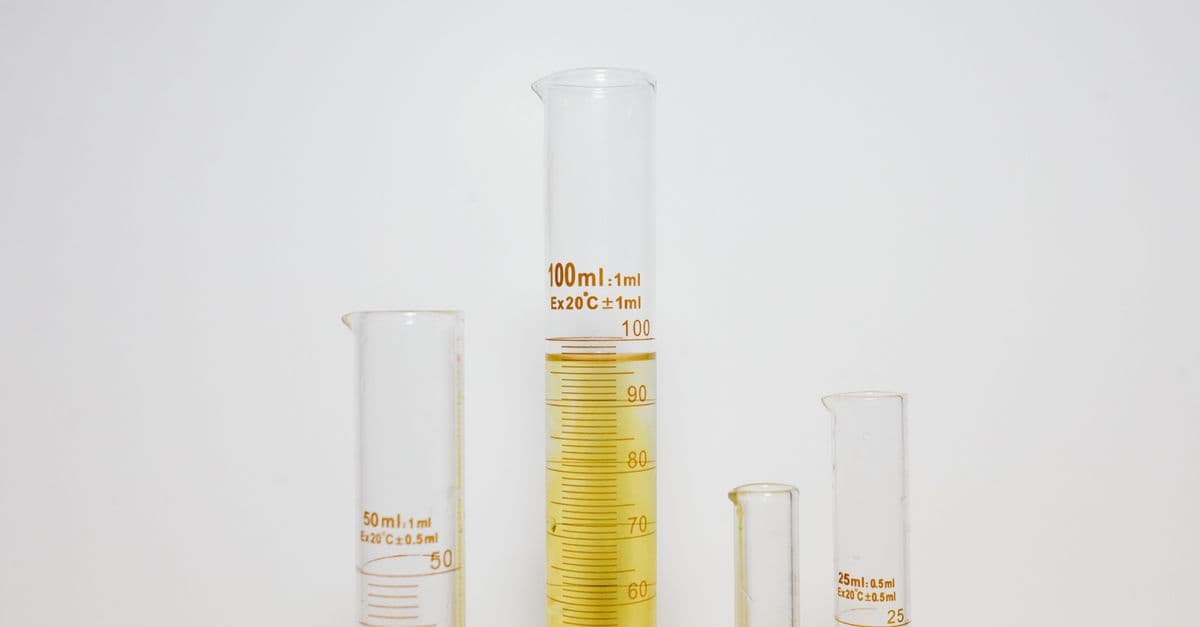
Photo: Danilo Gutiérrez / Pexels
For centuries, philosophers debated whether matter could be divided forever or whether it was built from fundamental units. The ancient Greek atomists argued for units, but their claim was philosophy: no experiment could be set up to test it, and no prediction followed from it.
In the first years of the nineteenth century, John Dalton gave the idea something it had never had, a set of numbers to answer to. His proposal, laid out in A New System of Chemical Philosophy in 1808, was that each element is made of atoms of a characteristic mass, and that chemical reactions rearrange those atoms. This article follows how he got there, what he got wrong, and why the theory survived its mistakes.
The patterns that needed explaining
By Dalton's time, chemists had established several regularities that nobody could explain. Each one is a statement about weights, which is what made them testable.
| Law | Who and when | What it says |
|---|---|---|
| Conservation of mass | Lavoisier, 1780s | Total mass of reactants equals total mass of products |
| Definite proportions | Joseph Proust, 1797 | A given compound always contains the same elements in the same mass proportions |
| Multiple proportions | Dalton, c. 1803 to 1804 | When two elements form more than one compound, the masses of one that combine with a fixed mass of the other are in small whole-number ratios |
The first law comes out of the careful weighing described in the account of Lavoisier's combustion experiments and the broader story of Antoine Lavoisier. The second was not accepted without a fight. Proust's paper is dated 1794 but was printed in 1797, and Claude Louis Berthollet opposed it, arguing that elements could combine in any proportion. The dispute shows how blurry the line between a compound and a mixture still was.
Proust's law is easy to check against modern numbers. Water is about 88.8 percent oxygen and 11.2 percent hydrogen by mass, whether it comes from a glacier, a tap, or a combustion engine's exhaust. That consistency was strange. A mixture can be made in any ratio, as sugar in tea can. A compound, it seemed, had a recipe.
The third law is where Dalton entered. Consider the two oxides of carbon. In carbon monoxide, 12 grams of carbon combine with 16 grams of oxygen. In carbon dioxide, 12 grams of carbon combine with 32 grams of oxygen. The oxygen masses stand in the ratio 1:2, not 1:1.73 or any other awkward fraction.
Dalton's own examples came from tin and nitrogen. His grey tin "protoxide" held about 13.5 grams of oxygen per 100 grams of tin, and his white "deutoxide" held about 27 grams, a 1:2 ratio that matches what we now write as SnO and SnO₂. For the nitrogen oxides, the figures per 140 grams of nitrogen are 80, 160, and 320 grams of oxygen: 1:2:4.
Why whole numbers? Why exactly 1:2:4, with nothing in between? That was the puzzle, and it was screaming for a structural explanation.
The man behind the theory
John Dalton was born on September 5 or 6, 1766, in Eaglesfield, Cumberland, into a Quaker family. At ten he began working for a wealthy Quaker, Elihu Robinson. He later made his way to Manchester, where he earned his living as a teacher and private tutor and did his science in whatever time and rooms he could find. He never married and lived modestly, in line with his Quaker upbringing.
Two habits shaped his work. The first was record-keeping. In 1787, at 21, he started a meteorological diary and kept it for 57 years, ending with more than 200,000 observations. His first book, Meteorological Observations and Essays, appeared in 1793. The second was curiosity about gases: from 1800 to 1809 he was secretary of the Manchester Literary and Philosophical Society, where much of his work was read, and a person who has spent decades measuring the atmosphere tends to think about what the atmosphere is made of.
His standing in the formal scientific world came late. He declined a fellowship of the Royal Society in 1810, was elected in 1822, and received the society's Royal Medal in 1826. When he died in Manchester on July 27, 1844, aged 77, his body lay in state at Manchester Town Hall for four days, and more than 40,000 people filed past the coffin.
Why gases pushed him toward atoms
Dalton did not set out to discover atoms. He set out to understand why the atmosphere's gases stay mixed, and not stacked in layers by weight. In a paper read in November 1802 and published in 1805, he considered the proportion of the several gases in the atmosphere. A paper read on October 21, 1803, and published the same year, set out the law now named after him: in a mixture of gases, each gas contributes its own pressure, and the total pressure is the sum of these partial pressures.
An analogy helps. Imagine a crowded room where several conversations run at once. Each conversation is audible on its own terms, and the total noise is roughly the sum of the separate conversations. Dalton's gases behaved as though each one filled the container alone, ignoring the others. For air at sea level, the standard atmosphere is 101.325 kilopascals, and since oxygen makes up about a fifth of the air by volume, its share is roughly 21 kilopascals.
This behavior is easiest to explain if each gas is made of separate particles that mostly pass one another by. If gases were smooth continuous fluids, they would blend into something with a single combined behavior. Particles that each carry their own pressure are a more natural fit. The wider family of gas relationships, including Boyle's and Charles's laws, is covered in the piece on gas laws and Avogadro.
A notebook entry dated September 6, 1803, lists relative atomic weights, so the quantitative idea was already forming then. Dalton explained his scheme to the chemist Thomas Thomson in 1804, and Thomson published the first full account in the 1807 edition of A System of Chemistry. Dalton's own book followed in 1808.
Dalton's insight
His central proposal was simple enough to state in one sentence: matter consists of tiny, discrete particles, and each element has its own kind. If that is true, three things follow:
- Each atom of a given element has a fixed, characteristic mass.
- Compounds form when atoms combine in whole-number ratios: one atom with one, or one with two.
- Chemical reactions rearrange atoms but do not create or destroy them.
Think of an alphabet. A few dozen letters, rearranged, make every word in a language, and the number of letters is the same before and after a word is rearranged into another. Atoms play the part of the letters, compounds the words, and a chemical reaction is an anagram.
Textbooks usually condense the theory into five claims, drawn from his 1808 book:
- All matter consists of atoms, tiny particles that Dalton took to be indivisible and indestructible.
- All atoms of a given element are identical in mass and chemical behavior, and differ from the atoms of other elements.
- Atoms cannot be created, destroyed, or split in chemical reactions.
- Compounds form when atoms of different elements combine in fixed whole-number ratios.
- A chemical reaction is the rearrangement, separation, or combination of atoms.
How one assumption explained three laws
The power of the theory was that a single assumption accounted for all three laws at once.
Conservation of mass. If reactions only rearrange atoms, the same atoms are present before and after. Their total mass cannot change.
Definite proportions. If a compound is built from a fixed ratio of atoms, say two hydrogen atoms for each oxygen atom, and each atom has a fixed mass, then the mass ratio is fixed too. Water is always the same recipe.
Multiple proportions. If the same two elements can combine in different atom ratios, the masses must differ by whole-number multiples. The nitrogen oxides are the cleanest illustration. In modern notation they are N₂O, NO, and NO₂. For a fixed 28 grams of nitrogen, which is two atoms' worth, the oxygen in each is 16, 32, and 64 grams: 1:2:4. Scaled up to 140 grams of nitrogen, that gives the 80, 160, and 320 grams of oxygen noted earlier.
The explanation worked in both directions. It accounted for facts that were already known, and it generated a new expectation: if two elements form another compound that nobody has isolated yet, its composition should again be a simple multiple. Predictions of this kind are what distinguish a theory from a story.
The rule of simplicity and the water problem
The theory had a built-in difficulty. Weighing a compound tells you the mass ratio of its elements, but not how many atoms of each are involved. To turn mass ratios into atomic weights, you need the formula, and nobody had a way to measure formulas.
Dalton's workaround was what is called the rule of greatest simplicity. When two elements form only one compound, he assumed it contained one atom of each. When they form several, he assumed the simplest combinations. It was an assumption, not something he could independently confirm, but his atomic weight calculations required it.
The rule gave the right answer for the two carbon oxides, CO and CO₂. It gave the wrong answer for water. Dalton assumed water was OH, one atom of each, instead of H₂O.
The consequence is easy to see with numbers. Measured by mass, water contains about 7.9 parts of oxygen for each part of hydrogen. If water is HO, one oxygen atom weighs about 8 times as much as one hydrogen atom. If water is H₂O, as it actually is, the single oxygen atom must weigh about 16 times as much as one hydrogen atom, because it balances two. The same data, a different formula, and the atomic weight is off by a factor of two.
His first table gave relative weights for six elements, hydrogen, oxygen, nitrogen, carbon, sulfur, and phosphorus, with hydrogen set at 1. The 1808 book lists 21 elements and 17 simple molecules. Many figures were wrong, and the pattern of errors came from the formula assumptions rather than from sloppy laboratory work.
The weights were wrong. The concept was not. For the first time, an element had a number attached to its identity, a characteristic mass that could be measured, compared, and refined. That is the thread that runs from Dalton through the periodic table of Dmitri Mendeleev to the instruments that weigh individual molecules today, such as those described in how mass spectrometry identifies molecules.
Gay-Lussac, Avogadro, and a missed fix
The way out of the formula problem had already appeared by 1808, and Dalton resisted it. Joseph Louis Gay-Lussac published his law of combining volumes that year: gases react in simple whole-number volume ratios. Hydrogen and oxygen, for instance, combine in a 2:1 volume ratio to make water vapor.
Dalton distrusted Gay-Lussac's conclusions about combining volumes and probably never fully accepted them. In 1811, Amedeo Avogadro proposed a way to reconcile the two ideas: equal volumes of any gases at the same temperature and pressure contain equal numbers of molecules. Combined with the idea that elemental gases such as hydrogen and oxygen exist as molecules of two atoms, the 2:1 volume ratio for water makes sense, and so does the formula H₂O.
Avogadro's hypothesis got little attention. His contemporary Ampère proposed a similar theory three years later and met the same indifference. Part of the problem was that Dalton did not consider gases to be made of molecules composed of atoms, and his authority was considerable. The tangle of conflicting atomic weights and formulas persisted for roughly half a century, until Stanislao Cannizzaro, a major proponent of the modern distinction between atoms and molecules, pressed the case at the Karlsruhe Congress of 1860, the first international congress of chemists. The chemists' scholarly history of this slow resolution is told in Alan Rocke's Chemical Atomism in the Nineteenth Century.
The episode is a useful reminder that being right and being persuasive are separate things. The correct tool existed in 1811 and sat unused for decades.
Skepticism and the long road to acceptance
Dalton's theory was not immediately celebrated, and the objections were reasonable ones.
The philosophical objection. Atoms could not be seen. Many nineteenth-century chemists felt that unobservable entities had no place in science, and some preferred to work with equivalent weights, purely empirical combining ratios, which accounted for the same facts without committing to anything hypothetical.
The empirical objection. The numbers did not always agree. Atomic weights were uncertain, and one idea, Prout's hypothesis, held that all atomic weights should be whole multiples of hydrogen's. Better measurements ruled it out in the 1820s and 1830s. Chlorine's atomic mass, for example, came out at 35.45, nowhere near a whole number. The puzzle was only solved a century later, when isotopes explained it: the figure is an average over atoms of different masses.
The foundation objection. Some scientists accepted atoms as a bookkeeping device but not as physical objects. Ludwig Boltzmann, who built the statistical physics of gases on the assumption that atoms are real, spent much of his career defending that position, as recounted in the biography of Ludwig Boltzmann.
Accumulating evidence slowly shifted opinion. The periodic table that Mendeleev published in 1869 tied his arrangement to atomic mass, left gaps for undiscovered elements, and used the law to predict their properties. Gallium turned up in 1875, scandium in 1879, and germanium in 1886, all matching the predictions. A theory of matter that forecasts elements nobody has found is hard to dismiss as bookkeeping.
The last doubts yielded to experiments on Brownian motion, the jiggling of small particles suspended in a fluid, first noted by Robert Brown in 1827. In 1905, Albert Einstein argued that the motion is caused by water molecules striking the particles and developed a mathematical model. In 1908, Jean Perrin confirmed the model experimentally. Perrin also gave the Avogadro constant its name, in 1909, and his determinations of it, made by several independent methods, formed much of the basis for his 1926 Nobel Prize in Physics. The details are in the Perrin Brownian motion experiment.
Where Dalton was wrong
Each of Dalton's postulates has been refined, which is not the same as being refuted.
| Dalton's claim (1808) | Modern understanding | What overturned it |
|---|---|---|
| Atoms are indivisible | Atoms have a nucleus of protons and neutrons surrounded by electrons | Thomson's cathode-ray work in the late 1890s; Rutherford's nuclear atom, 1911; Chadwick's neutron, 1932 |
| Atoms are indestructible | Nuclear reactions can change one element into another | Radioactivity and nuclear physics in the early twentieth century |
| All atoms of an element are identical | Atoms of one element can differ in neutron number: isotopes | Thomson and Aston on neon, 1912 to 1919; the term "isotope" in 1913 |
| Compounds always have simple whole-number ratios | True for molecular compounds; some solids have variable composition | Studies of non-stoichiometric compounds |
| Simplest formula is the right formula | Formulas require independent evidence | Avogadro's hypothesis and Cannizzaro's advocacy |
A few of these deserve a closer look. The idea that atoms have parts followed from the discovery of the electron, described in the Thomson cathode-ray experiment, and then from the discovery that nearly all of an atom's mass sits in a tiny nucleus, covered in the Rutherford nuclear atom. The neutron, the particle that makes the isotope story intelligible, was identified by James Chadwick in 1932, as told in the Chadwick neutron discovery. The picture of electrons arranged around the nucleus then took shape in the Bohr atomic model.
Isotopes deserve their own note. Margaret Todd suggested the word to Frederick Soddy in 1913, and it means "the same place," since isotopes occupy the same slot in the periodic table. J. J. Thomson's mass-spectrometry work had shown that neon appeared to be a mixture of two kinds of atoms near mass 20 and mass 22, and F. W. Aston resolved the two in 1919. Soddy received the 1921 Nobel Prize in Chemistry for his work on radioactivity and isotopes. Tin has the most stable isotopes of any element, ten, while 26 elements have only one.
Non-stoichiometric compounds break the whole-number rule in a different way. Wüstite, an iron oxide, is ideally FeO but in practice is iron-deficient because of vacancies in its crystal structure, with a typical formula of about Fe₀.₉₅O. Proust's measurements were not precise enough to detect it, and Dalton's postulate about whole-number ratios holds best for molecules, not for every solid.
None of this overturns Dalton's core idea, which was that matter is built from discrete units with characteristic properties and that chemistry is the rearrangement of those units. Everything else was detail, albeit important detail.
The cascade that followed
Once atomic weights were on the table, a series of developments built on them:
- Avogadro's hypothesis (1811): equal volumes of gases at equal temperature and pressure hold equal numbers of molecules, the key to correct molecular formulas.
- Kinetic theory of gases (1860s and 1870s): temperature as the average kinetic energy of molecules, with pressure produced by their collisions with the container walls.
- The periodic table (1869): elements ordered by atomic weight reveal repeating chemical behavior.
- Atomic number (1913): Henry Moseley's X-ray work showed that atomic number, not weight, is the true ordering principle.
- Chemical bonding (1910s to 1930s): the electron-sharing models of Gilbert Lewis and, later, Linus Pauling.
- Molecular biology (1953): the structure of DNA as an arrangement of atoms, the territory of the Watson and Crick story.
None of it would have been possible without the notion that matter is made of atoms. The fuller arc from Dalton's picture to quantum mechanics is traced in the history of the atom from Dalton to quantum, and the modern fundamentals are in how atoms and molecules work.
Dalton's atomic idea at work: a worked example
The simplest way to see why the idea still matters is to use it. Burning methane, the main component of natural gas, follows one equation:
CH₄ + 2 O₂ → CO₂ + 2 H₂O
The equation is Dalton's third postulate in symbols: the same atoms on both sides, rearranged. Count them. The left side has one carbon, four hydrogen, and four oxygen atoms. The right side has one carbon, four hydrogen, and four oxygen atoms.
Now add mass, using modern atomic masses (C 12.011, H 1.008, O 15.999).
| Species | Amount | Mass in grams |
|---|---|---|
| CH₄ | 1 mol | 16.04 |
| O₂ | 2 mol | 64.00 |
| Reactants total | 80.04 | |
| CO₂ | 1 mol | 44.01 |
| H₂O | 2 mol | 36.03 |
| Products total | 80.04 |
The totals match, which is Lavoisier's law of conservation of mass. The ratio of oxygen to carbon in the product, 32 grams of oxygen per 12 of carbon, is the one-to-two relationship that struck Dalton in carbon dioxide. A chemistry student can use the same method to work out how much oxygen is needed to burn a given mass of fuel. That is Dalton's theory doing what he built it to do: converting what can be weighed into what is happening among the atoms.
Seeing atoms, counting atoms
For a century the atom was inferred and never seen. That changed with the scanning tunneling microscope. In 1989, IBM scientists Donald Eigler and Erhard Schweizer used one to arrange 35 xenon atoms on a chilled nickel crystal so that they spelled "IBM." The letters were 5 nanometers tall and 17 nanometers wide, and it was the first time atoms had been precisely positioned on a flat surface.
The counting side of Dalton's legacy has also been modernized. The number of particles in a mole is now fixed by definition. Since May 20, 2019, the Avogadro constant has had the exact value 6.02214076×10²³ per mole, and the mole is defined as exactly that many constituent particles. Before 2019, the mole was defined as the amount of substance in exactly 12 grams of carbon-12, which meant the Avogadro number had to be measured. The shift turns Dalton's relative weights into a fixed bridge between the atomic scale and the laboratory balance.
Perrin's own determination of the constant, in the first decade of the twentieth century, used a different definition again, the number of molecules in 32 grams of oxygen gas. The number's history is a small example of how measurement conventions evolve while the underlying idea holds still.
Dalton's eyes
Dalton is remembered for one more discovery, and it was personal. Shortly after joining the Manchester Literary and Philosophical Society in 1794, he presented a paper titled "Extraordinary facts relating to the vision of colours," describing his own color vision and his brother's. The condition was long called Daltonism.
Dalton proposed that his vitreous humour, the gel inside the eye, was tinted blue, and he asked that his eyes be examined after his death to test the idea. They were, and no blue tint was found. In 1995, an examination of the preserved eye showed he had deuteranopia, a form of congenital red-green color blindness. A man who had been wrong about the mechanism was right about the phenomenon, which is a fair summary of his career.
Much of Dalton's collected written work was damaged when Manchester was bombed on December 24, 1940. The surviving papers are kept at the John Rylands Library.
Why Dalton's theory counts as science
The ancient atomists and Dalton said nearly the same words, and yet only one of them founded a science. The difference is in the follow-through. Democritus and Leucippus, in the fifth century BCE, held that matter is made of indivisible particles, the word atomos meaning "uncuttable," and that atoms and void are all that exists. Epicurus and the Roman poet Lucretius carried the idea forward, and the Indian philosopher Kaṇāda described eternal, indivisible atoms in a separate tradition. These accounts remained speculation incapable of experimental test.
Dalton's atoms came with weights. They made predictions about how compounds combine, those predictions could fail, and they did not. When they came out wrong, as with water, the failure could be traced to a specific assumption and fixed. A theory that can be wrong in a specific way is one that can be improved, and the improvements came, from Avogadro to Cannizzaro to Perrin.
FAQ
Q: Did the ancient Greeks already have an atomic theory? A: They had an atomic philosophy. Leucippus and his pupil Democritus proposed in the fifth century BCE that matter is made of indivisible particles, and later Epicurus and Lucretius developed the idea. But it made no quantitative predictions and could not be tested. Dalton's contribution was tying atoms to measurable masses and combining ratios, which turned the idea into an experimental science.
Q: Why did Dalton get some atomic weights wrong? A: Because he did not know the true formulas of compounds. His rule of greatest simplicity assumed that two elements forming one compound combine one atom to one atom, so he took water to be OH rather than H₂O. Measured by mass, water has about 7.9 parts oxygen to one of hydrogen, so a wrong formula doubled or halved the apparent atomic weight. Avogadro's 1811 hypothesis offered the fix, but it was widely ignored until Cannizzaro's advocacy at the 1860 Karlsruhe Congress.
Q: How do we know atoms are real if we cannot see them? A: Several independent lines of evidence agree. Perrin's measurements of Brownian motion, following Einstein's 1905 model, gave consistent values for the Avogadro constant by different methods. Modern instruments now resolve atoms directly: in 1989, IBM researchers used a scanning tunneling microscope to position 35 xenon atoms into the letters "IBM" on a nickel surface.
Q: What is Avogadro's number and how does it relate to Dalton? A: It is the number of particles in one mole of a substance. Since May 20, 2019, it has been defined exactly as 6.02214076×10²³ per mole. Before that, a mole was the amount of substance in exactly 12 grams of carbon-12. Dalton supplied relative atomic masses; the Avogadro constant is the link that converts those relative masses into grams you can weigh.
Q: Are Dalton's postulates still taught as correct? A: As a first approximation, yes, and with caveats. Atoms are divisible, nuclear reactions can change one element into another, and the atoms of an element can differ in mass because of isotopes. For ordinary chemical reactions, where electrons are rearranged and nuclei stay put, Dalton's picture still works very well, which is why it remains the starting point of every chemistry course.
Q: What else is Dalton known for? A: A 57-year weather diary with more than 200,000 observations, the law of partial pressures in gas mixtures, and a pioneering description of color blindness, which was long called Daltonism. His body lay in state in Manchester for four days after his death in 1844, and more than 40,000 people filed past it.
Q: Did Dalton discover the law of multiple proportions? A: He is credited with formulating it and showed it with his own examples, such as the oxides of tin and nitrogen. His atomic theory was built to explain it. Jöns Jacob Berzelius was the first known writer to call it the "doctrine of multiple proportions," in 1813.
The takeaway
Dalton's theory is a reminder that science often advances by making an old idea answer to numbers. Atoms had been proposed for more than two thousand years. What changed in 1808 was that someone attached them to the balance sheet of chemistry and let measurement decide.
He got the details wrong: the formula of water, many atomic weights, the indivisibility of the atom itself. He also made the first move in a sequence that ran through the periodic table, the nucleus, and the isotope to the individual atoms we can now see and move. A good theory is one that is wrong in ways that teach you where to look next, and Dalton's was wrong in exactly that way.
Sources
- Dalton, J. (1808). A New System of Chemical Philosophy. Manchester: R. Bickerstaff.
- Rocke, A. J. (1984). Chemical Atomism in the Nineteenth Century: From Dalton to Cannizzaro. Ohio State University Press.
- Thackray, A. (1972). John Dalton: Critical Assessments of His Life and Science. Harvard University Press.
- Perrin, J. (1910). Brownian Movement and Molecular Reality. Translated by F. Soddy. Taylor and Francis.
- Online reference, John Dalton, for biographical dates, the meteorological diary, honors, and the 1995 eye examination.
- Online reference, Atomic theory, for the Thomson, Perrin, Rutherford, and Chadwick chronology.
- Online reference, Law of multiple proportions and Law of definite proportions, for Dalton's tin and nitrogen examples, Proust, Berthollet, and wüstite.
- Online reference, Amedeo Avogadro, Avogadro constant, and Isotope, for the 1811 hypothesis, the 2019 redefinition, and isotope history.
- Online reference, Atomism, for Leucippus, Democritus, Epicurus, Lucretius, and Kaṇāda.
- Online reference, IBM (atoms), for the 1989 xenon experiment.
Read next:
Follow new articles
Add SciHub101 to your feed reader to see new science and technology stories.
About the Author
SciHub101 is an independent science and technology publication founded and edited by Buğra Sözeri, a software engineer and app developer based in Türkiye. AI tools assist with drafting and research. Source documentation in the existing archive is uneven, and articles are being reviewed and corrected. The Editorial Team byline identifies editorial responsibility; it does not certify specialist or independent human review. Where we compare products, anything built by our own team is labelled as such — see the editorial guidelines and About page for how corrections and disclosures work.
Related Articles

How Nuclear Reactions Work: Fission and Fusion Explained
One splits atoms to release energy; the other fuses them together. Both tap the same fundamental force — and both are transforming how we power civilization.

The Psychology of Social Media: Why It's So Addictive
Social media platforms lean on variable rewards, cue-triggered dopamine wanting, and social comparison. Here is what the research shows, and where it falls short.
How Atoms and Molecules Work: The Basics of Chemistry
Everything you touch, breathe, and eat is built from atoms. Here is how a handful of particles bond into the molecules and crystals that make up ordinary matter.

The Periodic Table Explained: How Chemistry Is Organized
How the periodic table organizes the elements: Mendeleev's predictions, atomic number, electron shells, trends, gold's color, and superheavy oganesson.

The Periodic Table Explained: How Elements Are Organized
The periodic table is the most powerful organizing tool in science, and it predicted elements that had not been discovered yet.

Crystallography: X-ray Diffraction Methods
How X-ray crystallography revealed atomic structure of crystalline solids