How Atoms and Molecules Work: The Basics of Chemistry
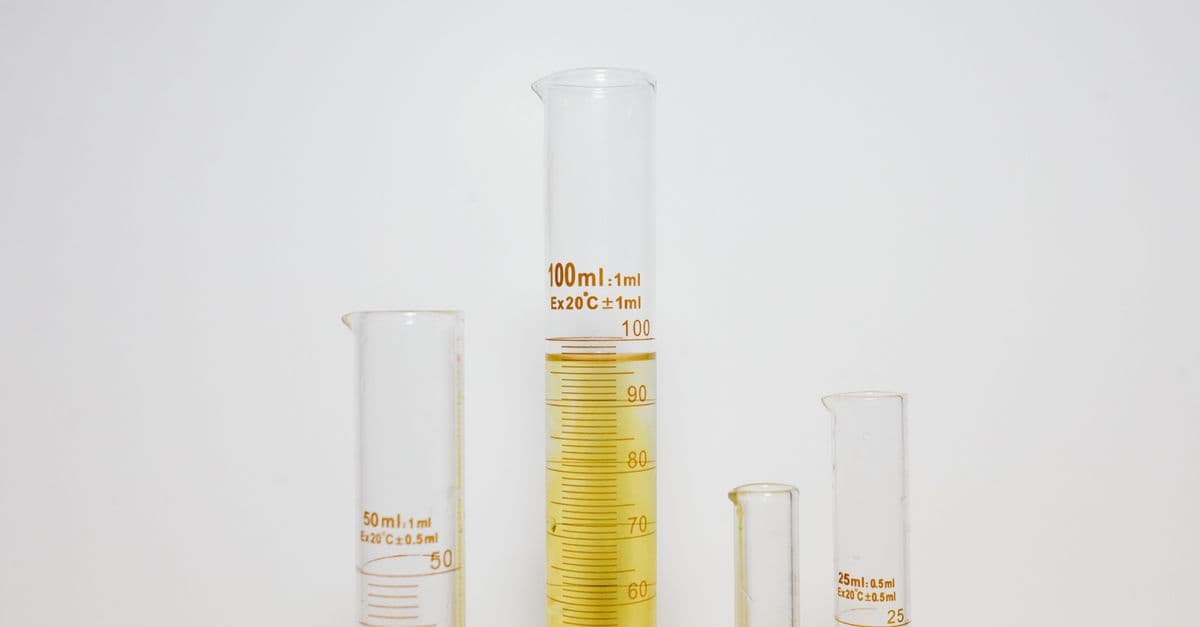
Photo: Tara Winstead / Pexels
A typical human hair is somewhere between several hundred thousand and a million carbon atoms wide, and every one of those atoms is mostly empty space. Yet a few dozen kinds of atoms, arranged in different patterns, account for stars, oceans, your body, and the screen you are reading on. Understanding how atoms and molecules work comes down to one question: what do the electrons on the outside of each atom want to do?
This article follows that question from the structure of a single atom to the bonds that hold salt crystals, water molecules, and DNA together. Along the way it covers where the simple rules fail, because the exceptions are where chemistry gets interesting.
Key takeaways
- Atomic structure: Every atom has a nucleus of protons and neutrons surrounded by electrons in defined energy levels called shells.
- Atomic number: The number of protons uniquely defines an element. Carbon always has 6, oxygen always has 8.
- Octet rule: Many atoms are most stable with 8 electrons in their outer shell (2 for the smallest atoms), which drives much of chemical bonding.
- Ionic bonds: Form when one atom gives up electrons to another, creating oppositely charged ions that attract.
- Covalent bonds: Form when atoms share electron pairs, producing discrete molecules such as water (H₂O).
- Electronegativity: An atom's pull on shared electrons sets how polar a bond is, and polarity governs how molecules behave.
What an atom is made of
Atoms consist of three kinds of particles. Protons carry a positive charge and sit in the nucleus. Neutrons carry no charge and also sit in the nucleus. Electrons carry a negative charge and occupy the space around it.
The scale is hard to hold in your head. Atomic diameters run from about 62 picometers (helium) to about 520 picometers (caesium), according to the reference values summarized for the atom. A picometer is a trillionth of a meter. The nucleus has a radius of only a few femtometers, around 100,000 times smaller than the atom it sits in.
Here is an analogy that holds up. Scale an atom to a 100-meter-wide stadium, and the nucleus becomes a speck about a millimeter across at the center. The electrons are far lighter than that speck (a proton is roughly 1,836 times heavier than an electron), so more than 99.94% of an atom's mass lives in the nucleus. Everything else, the entire volume of the "stadium," is a region where electrons are likely to be found.
Atomic number, isotopes, and ions
The number of protons is the atomic number, and it defines the element. Carbon has 6 protons; add one and you have nitrogen. There are 118 known elements, from hydrogen (1 proton) to oganesson (118).
Neutrons can vary within an element, which produces isotopes. Carbon-12 has 6 neutrons and carbon-14 has 8. Carbon-14 is radioactive, with a half-life of about 5,700 years, and it forms in the upper atmosphere when cosmic-ray neutrons strike nitrogen atoms, per the reference summary for carbon-14. Living things absorb it while alive and stop doing so at death, which is why radiocarbon dating works for material up to roughly 50,000 years old.
A neutral atom has as many electrons as protons. Lose or gain electrons and you get an ion: a sodium atom that loses one electron becomes Na⁺, and a chlorine atom that gains one becomes Cl⁻. Chemistry, with one major exception covered at the end, happens at the level of electrons. Changing the number of protons is nuclear physics, and it takes far more energy.
From planetary orbits to probability clouds
Most people picture electrons orbiting like tiny planets. That picture comes from Niels Bohr's 1913 model, which was an important step but is incomplete. For a closer look at how that model worked and where it broke down, see Niels Bohr and the quantized atom.
Modern quantum mechanics describes each electron as occupying an orbital, a region of space where it is likely to be found. An orbital is a probability map, not a track. The electron has no path you could follow with a camera; there is only a statistical distribution of where a measurement would find it. If that idea is new, quantum mechanics explained builds it up from scratch.
How the nucleus got discovered
It is worth knowing how we learned this, because the evidence is more convincing than the diagrams. In the late 1890s, J.J. Thomson showed that cathode rays were streams of negatively charged particles far lighter than any atom, which meant atoms were not indivisible. You can read the details in Thomson's cathode ray experiment.
Ernest Rutherford's group then fired alpha particles at thin gold foil around 1911. Most passed straight through, a few bounced back sharply, and the only sensible explanation was a tiny, dense, positively charged core. The Rutherford nuclear atom walks through that result. Later, experiments such as Franck-Hertz showed directly that atoms absorb energy only in fixed steps, which is the signature of electrons occupying discrete energy levels.
Shells, valence electrons, and the periodic table
Orbitals group into shells, and each shell has a capacity. The first holds up to 2 electrons, the second up to 8, and the third up to 18, following the pattern 2n² for shell number n. Electrons fill from the lowest energy upward.
Two things make this pattern work. First, an electron squeezed close to the nucleus acquires large kinetic energy, so there is a lowest-energy state it cannot fall below. Second, the Pauli exclusion principle, formulated by Wolfgang Pauli, forbids two electrons from occupying the same quantum state. Together these force electrons to stack into successive shells rather than all collapsing into the lowest one, which is why atoms have size and why elements differ chemically.
The outermost electrons are valence electrons, and they do almost all the chemistry. The inner electrons are held tightly and rarely participate. Dmitri Mendeleev's periodic table, published in 1869, groups elements in columns that share the same number of valence electrons, which is why elements in a column behave alike. Mendeleev's story includes the predictions he got right.
The octet rule and where it came from
In 1916, Gilbert Lewis described a "rule of eight" in his cubical atom model. In the same year Walther Kossel proposed that atoms bond so as to reach the electron arrangement of the nearest noble gas, and Irving Langmuir refined the idea in 1919 into what became the octet rule, according to the history of the octet rule.
The rule says atoms tend to gain, lose, or share electrons until they have 8 in the outer shell (2 for hydrogen and helium). Noble gases such as neon and argon already have full outer shells, which is why they barely react. Sodium has one valence electron and chlorine has seven. Each is one step from a noble-gas arrangement, in opposite directions.
Ionization energy: why some atoms give up electrons easily
Ionization energy is the energy needed to remove an electron from an atom. The first ionization energy of sodium is about 496 kJ/mol, while that of chlorine is about 1,251 kJ/mol, as listed in the ionization energy reference. Sodium's outer electron sits far from the nucleus and is shielded by two inner shells, so it comes off easily. Chlorine holds its electrons far more tightly.
Two trends follow. Ionization energy generally rises across a row of the periodic table, because nuclear charge increases while the atom shrinks. It generally falls going down a column, because each new row adds an inner shell and the outer electron sits farther away. Caesium, for example, has a first ionization energy of only about 3.89 eV (roughly 375 kJ/mol), lower than sodium's, so it gives up its outer electron even more readily.
Ionic bonds: when electrons change owners
When sodium reacts with chlorine, sodium hands over its lone valence electron. The result is Na⁺ and Cl⁻, and the electrostatic attraction between them is the ionic bond.
A common misconception is that the electron transfer itself releases energy. It does not. Removing sodium's electron costs energy, and chlorine's gain only partly repays it. What makes the reaction favorable is the final step: the ions pack into a crystal, and that releases a lattice energy of about 786 kJ/mol for NaCl, per the lattice energy reference. The crystal pays the bill.
Why salt is a crystal and not a molecule
Table salt is not a molecule with one sodium and one chlorine. It is an extended grid where each ion has six neighbors of the opposite charge, arranged in a face-centered cubic pattern with a lattice constant of about 564 picometers, according to the sodium chloride reference. Because the bonds are non-directional and spread across the whole crystal, there is no separate "NaCl molecule" to point to.
This structure explains the properties you can observe:
| Property | Value for NaCl | Why |
|---|---|---|
| Melting point | about 801 °C (800.7 °C) | Strong ion-to-ion attraction throughout the lattice |
| Brittleness | Shatters along planes | A shift of one layer lines up like charges, which repel |
| Solubility in water | about 360 g/L at 25 °C | Polar water molecules surround and stabilize individual ions |
| Density | about 2.17 g/cm³ | Compact cubic packing |
Water's role deserves attention. Each water molecule has a slightly negative oxygen end and slightly positive hydrogen ends, so water molecules cluster around Na⁺ with oxygen facing in and around Cl⁻ with hydrogen facing in. That solvation pays back the lattice energy. It also explains a practical fact, covered in why salt melts ice on roads, and part of why the ocean is salty.
Covalent bonds: when electrons are shared
Not every pair of atoms has such opposite needs. Two hydrogen atoms, each with one electron and room for one more, solve the problem by sharing. Both electrons sit in a region between the two nuclei, and the attraction of each nucleus for that shared pair holds the atoms together. That is a covalent bond.
Covalent bonding produces discrete molecules. In water, oxygen (6 valence electrons, needs 2 more) bonds to two hydrogens (1 each, need 1 more). Everyone ends up with a full outer shell, and the bonds point in definite directions, unlike ionic attraction.
Single, double, and triple bonds
Atoms can share one, two, or three electron pairs. More shared pairs mean a stronger, shorter bond. The table below compares bond dissociation energies, the energy needed to break a bond.
| Bond | Energy (kJ/mol) | Where you meet it |
|---|---|---|
| C–C | about 347 | Backbone of fats and plastics |
| C–H | about 413 | Gasoline, natural gas, sugars |
| H–H | about 436 | Hydrogen gas |
| O=O | about 498 | The oxygen you breathe |
| C≡C | about 839 | Acetylene |
| N≡N | about 945 | Nitrogen, 78% of air |
Values from the chemical bond reference and bond-dissociation energy tables; they vary a little with the molecule and conditions.
The triple bond in N₂ is among the strongest in common chemistry, which is why the nitrogen in air is nearly inert. Plants cannot use it directly. Breaking it on an industrial scale is the job of the Haber-Bosch process, which typically runs at about 300 to 500 °C and 60 to 180 bar over an iron catalyst, per the Haber process reference. The same reference states that nearly half the nitrogen in human tissue now comes from it. The man who made it work, Fritz Haber, is one of the more morally complicated figures in chemistry.
Reading molecules like a parts list
Counting valence electrons lets you predict simple molecules. Carbon has 4 valence electrons and wants 4 more, so it forms four bonds: methane (CH₄) has one carbon and four hydrogens. Nitrogen has 5 and wants 3, so ammonia is NH₃. Oxygen has 6 and wants 2, so water is H₂O. Carbon dioxide works out as O=C=O, with two double bonds so carbon reaches 8 and each oxygen reaches 8.
This is the same bookkeeping every chemistry student learns, and it works because the octet rule captures what many main-group atoms are trying to achieve. It is a predictor, not a law of nature, which is why the next sections matter.
Electronegativity: the tug-of-war for shared electrons
Linus Pauling introduced electronegativity in 1932 as a measure of how strongly an atom in a bond attracts the shared electrons. It is the reason Linus Pauling's work on the chemical bond changed how chemists think about bonding. On the Pauling scale, fluorine is highest at 3.98, followed by oxygen at 3.44, chlorine at 3.16, and nitrogen at 3.04. Carbon is 2.55, hydrogen 2.20, sodium 0.93, and caesium 0.79.
Subtract the two values and you get a quick estimate of bond character. Differences below about 0.3 suggest a nonpolar covalent bond, 0.3 to 1.7 a polar covalent bond, and above about 1.7 a bond that is mostly ionic. These cutoffs are conventions, not boundaries in nature, and the same chemical-bond reference notes there is no clear line between ionic and covalent bonding.
| Bond | Electronegativity values | Difference | Likely character |
|---|---|---|---|
| H–H | 2.20 and 2.20 | 0 | Nonpolar covalent |
| C–H | 2.55 and 2.20 | 0.35 | Nearly nonpolar |
| O–H | 3.44 and 2.20 | 1.24 | Polar covalent |
| Na–Cl | 0.93 and 3.16 | 2.23 | Mostly ionic |
Electronegativity values from the electronegativity reference.
The lesson is that "ionic" and "covalent" are two ends of a continuum. Even in NaCl, the electrons are not perfectly transferred, and in H–O bonds they are not perfectly shared.
Why water is bent, and why that matters
Because oxygen pulls harder on the shared electrons than hydrogen does, each O–H bond carries a partial negative charge (δ−) on oxygen and a partial positive charge (δ+) on hydrogen. If the molecule were a straight line, those two pulls would cancel. It is not. The H–O–H angle is about 104.5°, so the charges do not cancel and water is polar overall.
That one geometric fact gives water its character. The measured properties from the reference page on water read like a list of oddities: a specific heat of about 4,184 J/(kg·K), a surface tension of about 72 mN/m at 25 °C, and a density maximum near 4 °C. The reason for ice being less dense than liquid water, which is why lakes freeze from the top down, is covered in why ice floats and water is weird.
Bonds between molecules
Everything so far describes forces inside a molecule or crystal. Molecules also attract each other, more weakly. A hydrogen bond is an attraction between a hydrogen atom bonded to nitrogen, oxygen, or fluorine and a lone pair on another such atom. Hydrogen bonds range from about 4 to 167 kJ/mol depending on the pair and geometry, but they are generally far weaker than a covalent bond, perhaps 5% as strong as a carbon-carbon bond according to the hydrogen bond reference.
Weak does not mean unimportant. A water molecule can form up to four hydrogen bonds, which is why water boils at about 100 °C when similarly sized molecules such as methane boil far below 0 °C. Hydrogen bonds also link the two strands of DNA, which is why the double helix can be unzipped for copying. The mechanism is explained in how DNA works.
Van der Waals forces are even weaker. They arise from temporary shifts in electron clouds and act between all molecules. Geckos exploit them to walk up glass.
Why bonding pattern decides properties
The same element can behave in completely different ways depending on how its atoms are bonded. Carbon in diamond forms four bonds to four neighbors in a rigid tetrahedral network, and diamond rates 10 on the Mohs hardness scale. Carbon in graphite bonds to three neighbors in flat sheets, with weak forces between the sheets, so the layers slip. The atoms are identical; the connections differ.
Metals add a third pattern. In metallic bonding, valence electrons are delocalized across a lattice of atoms, which accounts for electrical conductivity, luster, and malleability. Ionic crystals do not conduct as solids because their ions are locked in place, but they do when dissolved or melted, because ions can then move.
| Bonding type | What holds it together | Typical behavior |
|---|---|---|
| Ionic | Attraction between oppositely charged ions | Brittle, high melting point, conducts when dissolved |
| Covalent molecular | Shared electron pairs, weak forces between molecules | Often low melting point, gases and liquids common |
| Covalent network | Shared electrons throughout the solid | Very hard, very high melting point (diamond) |
| Metallic | Delocalized electrons around a lattice | Conducts, malleable, shiny |
Each row is a pattern, not a rule without exceptions. Real materials mix these types, and the electronegativity continuum above is why.
Reading the periodic table as a bonding map
Once you know that valence electrons drive bonding, the periodic table stops being a chart to memorize and becomes a map you can navigate. Columns share a valence count, so a column shares a bonding habit. Rows tell you how far the outer electrons sit from the nucleus.
| Group | Valence electrons | Typical behavior | Example |
|---|---|---|---|
| Alkali metals (column 1) | 1 | Give up one electron easily, form +1 ions | Sodium, caesium |
| Halogens (column 17) | 7 | Gain one electron or share one pair, form -1 ions or single bonds | Chlorine, fluorine |
| Noble gases (column 18) | 8 (2 for helium) | Rarely react, full outer shell | Neon, argon |
| Carbon group (column 14) | 4 | Form four bonds, long chains and networks | Carbon |
| Oxygen group (column 16) | 6 | Form two bonds or gain two electrons | Oxygen |
Pair columns and you can predict outcomes. An alkali metal with a halogen gives an ionic salt, because one atom wants to lose exactly what the other wants to gain. Two halogen atoms share a pair and form a diatomic molecule. Carbon with hydrogen gives the hydrocarbons in fuels. The pattern is not perfect, but it correctly guesses the formula of a surprising number of compounds.
The electronegativity numbers above follow the same map. They rise toward the upper right, where fluorine sits at 3.98, and fall toward the lower left, where caesium sits at 0.79. A bond between elements far apart on that diagonal is ionic. A bond between neighbors is covalent, and a bond between the same element on both sides, as in H₂, is perfectly nonpolar.
A quick way to size up an unfamiliar compound
You can run a short mental checklist on a compound you have never met. First, ask which elements are in it and where they sit on the table. Second, subtract their electronegativities to estimate bond character. Third, count valence electrons to guess how many bonds each atom forms. Fourth, ask whether the molecule is symmetric, because symmetric molecules can cancel their bond polarities.
Carbon dioxide shows why the fourth step matters. Each C=O bond is polar, since oxygen is more electronegative than carbon, but the molecule is a straight line, so the two pulls cancel and the molecule as a whole is nonpolar. Water has the same kind of polar bonds and a bent shape, so its pulls add up instead. Same ingredients, opposite outcome, which is exactly why shape matters as much as composition.
Where the simple rules break down
The octet rule is a heuristic. Boron trichloride, for example, has an empty orbital and ends up with six electrons around boron, which is why it behaves like a "sextet rule" case. Radicals, such as the methyl radical, have an unpaired electron and are highly reactive. Molecules described as hypervalent, where a central atom seems to hold more than eight electrons, were long treated as octet violations, but calculations show almost all known examples can be described with octet-obeying resonance structures, as noted in the octet rule reference.
Transition metals follow an even looser pattern, and their compounds are why many solutions are brightly colored. For that reason, a chemist treats the octet rule like a good rule of thumb for main-group elements, not a law that must hold.
The Bohr picture also fails beyond hydrogen. It cannot explain why different orbitals within one shell have slightly different energies, and it gives the wrong shapes for orbitals. Quantum mechanics does the job, but at the cost of replacing a picture with mathematics.
From bonds to reactions
A chemical reaction breaks some bonds and forms others. Energy is absorbed to break bonds and released when new ones form. If the new bonds are stronger overall, the reaction releases net energy; if not, it absorbs it.
Activation energy explains why stable fuels do not ignite on their own. The C–H bonds in gasoline are strong enough that a spark must supply energy to start the process, even though burning releases more energy than it took to ignite. Catalysts speed reactions by offering an alternate pathway with lower activation energy, without being used up. The enzyme amylase in saliva begins breaking the glycosidic bonds of starch into sugars before food reaches the stomach. How catalysts speed up reactions covers the mechanism in more depth.
The same logic applies at much larger scales. Most of the elements in your body were forged inside stars, and nucleosynthesis explains how. Even a reaction as common as dissolving an acid in water is a story of electrons and protons moving between molecules, as in acid-base chemistry and the pH scale.
Common misconceptions
Atoms do not touch. When you press your hand on a table, the electron clouds of surface atoms repel each other. The sensation of solid contact is electromagnetic repulsion.
Electrons do not orbit. They occupy orbitals, which are probability distributions.
Chemical bonds are not little sticks. They are regions of shared or attracted electron density. Drawing a line between atoms is a notation convention.
Ionic compounds do not exist as molecules. The formula NaCl gives the ratio of ions in the crystal, not a unit you can pick up.
Isotopes do not behave identically in every respect. They share chemistry because chemistry depends on electrons, but heavier isotopes react slightly more slowly, a phenomenon called the kinetic isotope effect.
The takeaway
The whole of introductory chemistry rests on a short chain of cause and effect. The number of protons fixes the element. That fixes the number of electrons, which fixes how many sit in the outer shell. The outer shell sets how the atom bonds, and bond type and electronegativity set the shape, polarity, and behavior of the substance you can actually hold or drink.
The most useful habit is to stop treating atoms as billiard balls and start treating them as electron traders. Whether electrons are given away, shared evenly, or shared unevenly decides whether you get a crystal, a gas, a solvent, or a diamond. Everything else in the subject is detail added to that idea.
FAQ
Q: How small is an atom really? A: Atomic diameters range from about 62 picometers for helium to about 520 picometers for caesium, so a hydrogen atom is on the order of 0.1 nanometers across. A human hair is several hundred thousand to a million carbon atoms wide, depending on the hair. The nucleus is roughly 100,000 times smaller than the atom, so atoms are almost entirely empty space.
Q: Why don't atoms collapse if they are mostly empty space? A: An electron confined close to the nucleus would need very high kinetic energy, so there is a lowest-energy state it cannot fall below. The Pauli exclusion principle also prevents electrons from all occupying that lowest state, so they fill successive shells. Those two effects give atoms their size.
Q: What is the difference between an atom and an element? A: An element is a type of matter defined by its atomic number, the number of protons. An atom is a single particle of that element. "Carbon" is an element, and one carbon atom is a single atom of it.
Q: Can atoms be created or destroyed in chemical reactions? A: No. In ordinary chemical reactions atoms are rearranged, not created or destroyed, so the number of each kind of atom is the same before and after. Only nuclear reactions such as fission and fusion change the number of protons and so turn one element into another.
Q: What holds the nucleus together if protons repel each other? A: The strong nuclear force, one of the four fundamental forces, acts between protons and neutrons at distances of a few femtometers. At that range it overcomes the electromagnetic repulsion between protons, but it falls off rapidly with distance.
Q: Do isotopes behave differently chemically? A: Mostly not. Isotopes are versions of an element with different neutron counts, such as carbon-12 and carbon-14, and chemistry depends on electron arrangement. Heavier isotopes do react slightly more slowly, and unstable isotopes such as carbon-14 are radioactive, which is useful for dating.
Q: What is a mole in chemistry? A: A mole is a counting unit. Since the 2019 redefinition of the SI, the Avogadro constant is fixed at exactly 6.02214076 × 10²³ per mole, per NIST. One mole of carbon-12 atoms has a mass of roughly 12 grams, which lets chemists weigh out countable numbers of atoms. The story of how the idea arose is in Avogadro's molecular theory.
Sources
- NIST CODATA: Avogadro constant
- Atom (reference summary of atomic sizes and mass distribution)
- Chemical bond
- Electronegativity
- Octet rule
- Sodium chloride
- Properties of water
- Haber process
Read next:
Follow new articles
Add SciHub101 to your feed reader to see new science and technology stories.
About the Author
SciHub101 is an independent science and technology publication founded and edited by Buğra Sözeri, a software engineer and app developer based in Türkiye. AI tools assist with drafting and research. Source documentation in the existing archive is uneven, and articles are being reviewed and corrected. The Editorial Team byline identifies editorial responsibility; it does not certify specialist or independent human review. Where we compare products, anything built by our own team is labelled as such — see the editorial guidelines and About page for how corrections and disclosures work.
Related Articles

Physics-Informed Neural Networks (PINNs): When AI Learns the Laws of Physics
PINNs embed physical equations directly into neural network training, enabling powerful simulations that respect the laws of nature by design.
Fermat's Last Theorem: The 358-Year Math Mystery Finally Solved
A margin note scribbled in the 1630s baffled the world's greatest mathematicians for 358 years. Here's how it was finally cracked.

John Dalton: Proposing the Atomic Theory of Matter
Dalton proposed that all matter consists of indivisible atoms, and that chemical reactions involve atoms rearranging. He transformed chemistry from observational to theoretical science — and was right about almost everything.

The Periodic Table Explained: How Chemistry Is Organized
How the periodic table organizes the elements: Mendeleev's predictions, atomic number, electron shells, trends, gold's color, and superheavy oganesson.

The Periodic Table Explained: How Elements Are Organized
The periodic table is the most powerful organizing tool in science, and it predicted elements that had not been discovered yet.

Amedeo Avogadro: Equal Volumes, Equal Particles
Avogadro proposed that equal volumes of gases contain equal numbers of particles. His insight bridged atomic and molecular theory, enabling modern chemistry's quantification.