The Periodic Table Explained: How Elements Are Organized

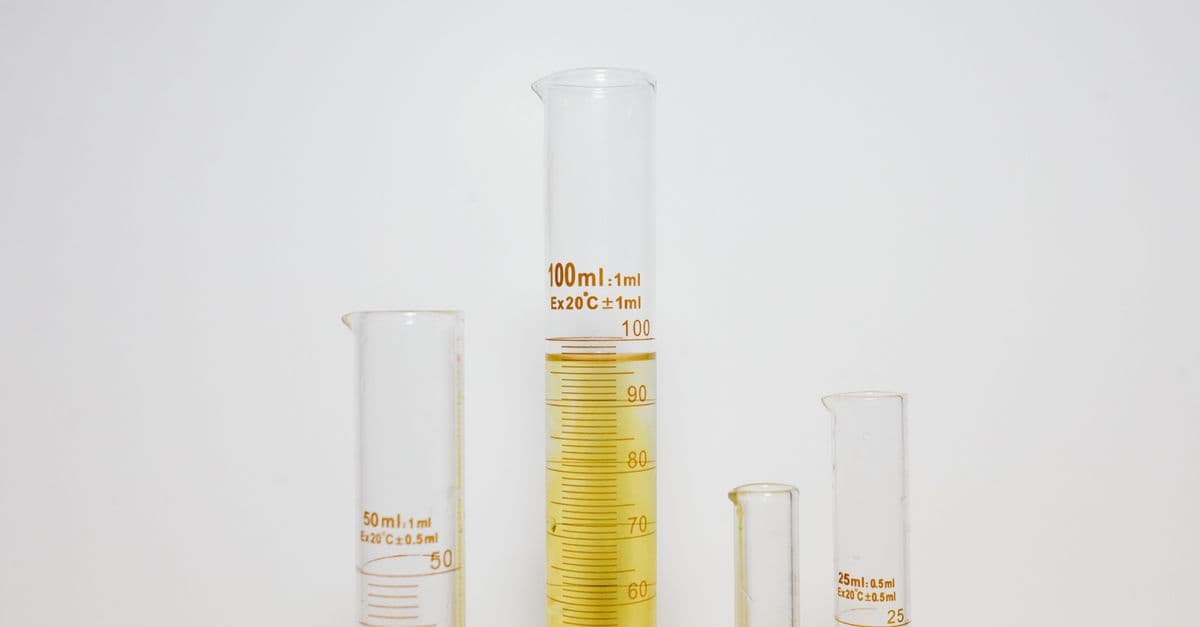
Photo: cottonbro studio / Pexels
In 1869, Dmitri Mendeleev arranged the 63 elements then known by atomic weight and noticed that their chemical properties repeated at regular intervals. He trusted the pattern enough to leave gaps for elements nobody had found, and he described what those elements should be like. When gallium turned up in 1875 and germanium in 1886, they matched his descriptions closely. Few organizing schemes in science have ever been tested so cleanly.
Today the table holds 118 confirmed elements and is ordered by atomic number rather than weight, but the logic is unchanged. Electron configuration drives chemical behavior, and electron configuration repeats in a rhythm that quantum mechanics can explain.
Key takeaways
- Atomic number: Elements run left to right, top to bottom, by increasing number of protons, from hydrogen (1) to oganesson (118).
- Periods: Each horizontal row is a period. Moving across a period adds electrons to the same outer shell while the nucleus gains protons.
- Groups: Each vertical column is a group. Members share a similar valence electron arrangement and therefore similar chemistry.
- Periodic trends: Atomic radius, ionization energy, and electronegativity change in predictable directions across periods and down groups, with a few instructive exceptions.
- Blocks: The table divides into s, p, d, and f blocks according to which orbital subshell is filling.
- Mendeleev's gaps: He predicted the atomic mass and several properties of what became gallium, germanium, and scandium before any of them was isolated.
How the table is organized
The modern table has 118 elements arranged in seven horizontal rows (periods) and 18 vertical columns (groups). The organizing principle is atomic number, the count of protons in the nucleus. That number fixes an element's identity: add one proton to carbon and you have nitrogen, no matter how many neutrons come along.
Think of the table the way you might think of a calendar. A calendar is not just a list of days. Weeks, months, and weekdays are layered so that a glance tells you what comes next and what repeats. The periodic table does the same job for chemistry: each row is a "week" that ends in a noble gas, and each column is a "weekday" where behavior recurs.
Each period corresponds to an outer electron shell filling up. Period 1 holds only hydrogen and helium, because the first shell takes at most two electrons. Period 2 runs from lithium to neon, filling the second shell. Periods 2 and 3 each have eight elements, periods 4 and 5 have 18, and periods 6 and 7 have 32 once the lanthanides and actinides are counted. Those two series are normally printed as a detached strip below the main grid so the table fits on a page.
Groups are numbered 1 through 18 under a 1988 IUPAC recommendation. The group number tells you about valence electrons, the outermost electrons that take part in bonding. All group 1 elements (hydrogen, lithium, sodium, potassium, rubidium, cesium, francium) have one valence electron. The halogens in group 17 (fluorine, chlorine, bromine, iodine, astatine) have seven. The noble gases in group 18 have full outer shells, which is why they rarely react.
Two small details are worth knowing. First, 94 of the 118 elements occur naturally on Earth in at least trace amounts, and the other 24 have only been made in laboratories (per the Wikipedia summary of the chemical elements). Second, only two elements are liquid at 0 °C and one atmosphere of pressure: mercury and bromine.
| Period | Elements in the period | What fills |
|---|---|---|
| 1 | 2 (H, He) | 1s |
| 2 | 8 (Li to Ne) | 2s, 2p |
| 3 | 8 (Na to Ar) | 3s, 3p |
| 4 | 18 (K to Kr) | 4s, 3d, 4p |
| 5 | 18 (Rb to Xe) | 5s, 4d, 5p |
| 6 | 32 (Cs to Rn) | 6s, 4f, 5d, 6p |
| 7 | 32 (Fr to Og) | 7s, 5f, 6d, 7p |
Notice that the order of filling is not simply 1, 2, 3, 4. In period 4, the 4s subshell fills before the 3d subshell. That quirk matters, and it comes up again below.
The blocks: s, p, d, and f
Chemists divide the table into four blocks named for the orbital type being filled. An orbital is a region around the nucleus where an electron is likely to be found, and a subshell is a set of orbitals of the same shape. The names s, p, d, and f are historical labels from spectroscopy, and the numbers of orbitals per subshell (1, 3, 5, and 7) set the capacity of each block. Each orbital holds at most two electrons.
| Block | Groups | Electron capacity | Elements |
|---|---|---|---|
| s | 1 and 2 (plus helium) | 2 | 14 |
| p | 13 to 18 | 6 | 36 |
| d | 3 to 12 | 10 | 40 |
| f | Lanthanides and actinides | 14 | 28 |
The four counts add to 118. That is not a coincidence, and it is a good check on your understanding of the layout. (The d-block and f-block counts here assume lutetium and lawrencium sit in group 3, a choice discussed in the FAQ.)
The s-block holds the alkali metals and alkaline earth metals. These are reactive elements that give up their outer s electrons readily. Lithium, the lightest metal in the block, sits at the heart of rechargeable batteries; the story of how it got there is told in the lithium-ion battery article.
The p-block covers groups 13 to 18 and is the most varied region. It includes metals such as aluminum and lead, metalloids such as silicon and arsenic, and nonmetals such as oxygen, sulfur, and the halogens. Life's backbone elements, carbon, nitrogen, and oxygen, all live here.
The d-block contains the transition metals, among them iron, copper, silver, gold, and nickel. Their partly filled d subshells lie close in energy to the outer s electrons, so these metals can lose different numbers of electrons. Iron commonly appears as Fe²⁺ or Fe³⁺, and copper as Cu⁺ or Cu²⁺. That flexibility is why transition metals make good catalysts and colorful compounds.
The f-block holds the lanthanides (cerium through lutetium in most listings, with lanthanum often counted too) and the actinides, which include uranium and plutonium. The lanthanides are the "rare earth" elements used in magnets, phosphors, and some catalysts. They are not especially rare in the Earth's crust, but they are hard to separate from each other because their chemistry is so similar.
Reading a configuration: from sodium to iron
Electron configuration is a shorthand for where an atom's electrons sit. It is the key that turns the table from a chart to memorize into a pattern you can derive.
Sodium has 11 electrons. Two go into 1s, two into 2s, six into 2p, and the last one into 3s. Written compactly, that is [Ne]3s¹, where [Ne] stands for the neon core of 10 electrons. Because the single outer electron sits alone in a new shell, far from the nucleus, sodium loses it easily and forms Na⁺. Every group 1 element has the same ns¹ pattern, so they behave alike.
Chlorine has 17 electrons and the configuration [Ne]3s²3p⁵. It needs one more electron to fill its p subshell and reach the stable neon-like argon arrangement. That explains why sodium and chlorine pair up so eagerly: sodium has an electron to spare and chlorine has room for exactly one.
Iron, with 26 electrons, is [Ar]3d⁶4s². Here the 4s electrons are written after 3d but they fill first. This ordering follows a rule of thumb called the Madelung (or n + ℓ) rule, which says subshells fill in order of increasing n + ℓ, where n is the shell number and ℓ is 0, 1, 2, or 3 for s, p, d, and f. Ties go to the lower n. The resulting sequence is 1s, 2s, 2p, 3s, 3p, 4s, 3d, 4p, 5s, 4d, 5p, 6s, 4f, 5d, 6p, 7s, 5f, 6d, 7p. Read left to right, that string is the structure of the table.
The rule has exceptions. Chromium is [Ar]3d⁵4s¹ rather than the predicted 3d⁴4s², and copper is [Ar]3d¹⁰4s¹ rather than 3d⁹4s². Counting across all seven periods, there are 20 elements whose measured configuration differs from the simple prediction, 11 in the d-block and nine in the f-block (according to the Aufbau principle summary). The exceptions come from electron-electron repulsion and from the extra stability of half-filled and filled subshells. They are small energy adjustments, not breakdowns of the pattern.
Periodic trends
Once you accept that electron configuration repeats, several properties follow predictable directions. Two forces compete. Moving across a period, protons are added to the nucleus while electrons are added to the same shell, so the nuclear pull on the outer electrons grows. Moving down a group, a whole new shell is added, which puts the outer electrons farther away and shields them with inner electrons.
Atomic radius is the effective size of an atom. It shrinks across a period and grows down a group. The numbers below are empirical radii in picometers (1 pm is a trillionth of a meter), accurate to about 5 pm, from the atomic radii data page.
Ionization energy is the energy needed to strip one electron from a neutral atom in the gas phase. It generally rises across a period and falls down a group. First ionization energies in kilojoules per mole come from the ionization energies data page.
| Element (period 2) | Radius (pm) | First ionization energy (kJ/mol) |
|---|---|---|
| Lithium | 145 | 520.2 |
| Beryllium | 105 | 899.5 |
| Boron | 85 | 800.6 |
| Carbon | 70 | 1,086.5 |
| Nitrogen | 65 | 1,402.3 |
| Oxygen | 60 | 1,313.9 |
| Fluorine | 50 | 1,681.0 |
| Element (group 1) | Radius (pm) | First ionization energy (kJ/mol) |
|---|---|---|
| Lithium | 145 | 520.2 |
| Sodium | 180 | 495.8 |
| Potassium | 220 | 418.8 |
| Rubidium | 235 | 403.0 |
| Cesium | 260 | 375.7 |
Read the first table downward and the radius falls from 145 pm to 50 pm while the ionization energy climbs from 520 to 1,681 kJ/mol. Read the second table downward and the opposite happens: bigger atoms that let go of their outer electron more easily. Cesium has the lowest first ionization energy of the elements in these lists, which is part of why it reacts so violently with water.
The period 2 numbers contain two small dips that make a good test of understanding. Boron (800.6) is lower than beryllium (899.5), because boron's outer electron is in a 2p orbital that sits slightly farther out and is partly shielded by the 2s electrons. Oxygen (1,313.9) is lower than nitrogen (1,402.3), because in oxygen two electrons must share one p orbital, and their mutual repulsion makes one easier to remove. The trend is a general direction, not a law that every neighbor must obey.
Electronegativity measures how strongly an atom in a bond pulls the shared electrons toward itself. Linus Pauling introduced the scale in 1932. It follows the same directions as ionization energy: up across a period, down a group.
| Element | Pauling electronegativity |
|---|---|
| Fluorine | 3.98 |
| Oxygen | 3.44 |
| Chlorine | 3.16 |
| Nitrogen | 3.04 |
| Carbon | 2.55 |
| Hydrogen | 2.20 |
| Sodium | 0.93 |
| Potassium | 0.82 |
| Cesium | 0.79 |
Fluorine is the most electronegative element. Cesium is listed as the least, at 0.79. Francium is expected to be only slightly different, but nobody has measured it because the element is so rare and radioactive that no experiment has been done to refine the value. The size of the gap between two atoms predicts the kind of bond. A large gap, as between sodium (0.93) and chlorine (3.16), gives an ionic bond in which the electron is effectively transferred. A small gap, as between carbon (2.55) and hydrogen (2.20), gives a nearly even covalent bond.
Electron affinity, the energy change when an atom gains an electron, rises toward the upper right of the table with exceptions. Among the halogens, chlorine has the highest electron affinity, not fluorine. Fluorine's atom is so small that its crowded electrons repel an incoming one, which dulls the pull.
Mendeleev's gaps and what they predicted
Mendeleev did not invent the idea of arranging elements in patterns. Johann Döbereiner noticed groups of three similar elements, which he called triads, in 1829. Alexandre-Émile Béguyer de Chancourtois sketched a spiral arrangement by atomic weight in 1862. John Newlands compared the repeating pattern to musical octaves in 1864. Lothar Meyer published a valence-based table of 28 elements that same year. What set Mendeleev apart was his willingness to trust the pattern over the data. The timeline is summarized in the history of the periodic table.
He arranged 63 elements by increasing atomic weight in 1869 and began forecasting undiscovered elements in 1870. Where the sequence demanded a gap, he assumed an element existed. If an element's accepted weight put it in the wrong column, he questioned the measurement. For the space below aluminum, he wrote of "eka-aluminium" (eka is Sanskrit for "one beyond"), and he listed its expected atomic mass and density.
Gallium, found in 1875, matched. Germanium, found in 1886, matched even more closely. Scandium, isolated in 1879, filled the space he had called eka-boron. The comparison between his forecasts and the modern values is the best single piece of evidence that the table was more than a filing system.
| Predicted element | Observed element | Property | Mendeleev's prediction | Measured value |
|---|---|---|---|---|
| Eka-boron | Scandium | Atomic mass | 44 | 44.96 |
| Eka-aluminium | Gallium | Atomic mass | 68 | 69.72 |
| Eka-aluminium | Gallium | Density (g/cm³) | 6.0 | 5.91 |
| Eka-silicon | Germanium | Atomic mass | 72 | 72.63 |
| Eka-silicon | Germanium | Density (g/cm³) | 5.5 | 5.32 |
| Eka-silicon | Germanium | Oxide density (g/cm³) | 4.7 | 4.23 |
| Eka-silicon | Germanium | Chloride boiling point | under 100 °C | 86.5 °C (GeCl₄) |
The values are from the Mendeleev's predicted elements compilation.
Not every prediction worked. Mendeleev's forecasts for some elements in the lower part of the table went astray, largely because the lanthanides in period 6 had not been recognized as a distinct series. Honest history includes the misses. A prediction method that fails sometimes but succeeds spectacularly when it succeeds is still a scientific method, and the successes were checkable within his lifetime.
For more on the man himself, including how he developed the table, see the Mendeleev profile and Mendeleev's Periodic Table: Predicting Elements.
Why atomic number replaced atomic weight
Mendeleev's table had a few places where ordering strictly by weight put an element in the wrong column. Cobalt (58.9) is heavier than nickel (58.7), yet their chemistry says cobalt belongs first. The weight-based approach could patch such cases with judgment calls, but it had no explanation.
In 1913, Antonius van den Broek proposed that the true ordering number is the nuclear charge. Henry Moseley then measured the characteristic X-ray frequencies emitted by many elements. He found that the square root of the frequency rises in a regular way with an integer, the atomic number (per Moseley's law). The integers were consecutive, which meant gaps in the sequence were really missing elements. This settled the ordering question and gave chemists a way to count exactly how many elements remained to be found.
The idea fits with Ernest Rutherford's earlier work on the nucleus; see the Rutherford gold foil experiment for how the nucleus was discovered in the first place. And for a broader view of how atomic theory developed from Dalton onward, the history of the atom covers the steps in order.
The modern justification: quantum mechanics
Why does the table have its particular shape, with row lengths of 2, 8, 8, 18, 18, 32, and 32? The explanation is quantum mechanics. In 1926 Erwin Schrödinger's wave equation described electrons in atoms as wavefunctions, mathematical objects that give the probability of finding an electron at a given place. Solving the equation for an atom yields four quantum numbers for each electron: the principal quantum number (shell), the azimuthal number (subshell type: s, p, d, f), the magnetic number (orbital orientation), and spin.
Wolfgang Pauli's exclusion principle, formulated in 1925, states that no two electrons in an atom can share all four quantum numbers. That limits each orbital to two electrons with opposite spin. The Aufbau ("building up") principle says electrons fill the lowest available energy levels first. Combine the two and the row lengths drop out: an s subshell holds 2, a p subshell 6, a d subshell 10, and an f subshell 14. Period 6, for instance, fills 6s (2), 4f (14), 5d (10), and 6p (6), which sums to 32.
So the table is a map of quantum structure. For a deeper look at the physics behind those quantum numbers, see the physics of the very small, and for the scientist behind the exclusion principle, see the Wolfgang Pauli profile.
Where the elements come from
The table lists what exists, not where it came from. Hydrogen and helium formed in the Big Bang and still make up most of ordinary matter, in a ratio of about 3:1 by mass or 12:1 by number of atoms (per the chemical element overview). Heavier elements were forged later, in stars and in stellar explosions. The process is covered in the nucleosynthesis article, and the cosmic abundance numbers are laid out in the most abundant elements in the universe.
Earth's own mix is quite different from the cosmic mix, because lighter gases escaped and heavier elements sank into the planet's core. That is why the table's chemistry feels so metal-rich and oxygen-heavy compared with the universe at large.
Beyond the stable elements: synthetic and superheavy
By the first decades of the twentieth century, most elements found in ordinary ores had been isolated, but several holes in the sequence remained. Element 43 is a tidy example. Mendeleev had left a gap beneath manganese and called it eka-manganese. In 1925, Walter Noddack, Otto Berg, and Ida Tacke announced they had found it and named it masurium, but others could not reproduce the result. The element was confirmed in 1937 at the University of Palermo by Carlo Perrier and Emilio Segrè, who analyzed a molybdenum foil that had been part of a cyclotron deflector at Berkeley. Because it was the first element produced artificially, it was named technetium, from the Greek for "artificial." Trace amounts of technetium-99 were later found in natural uranium ore in 1962, but for practical purposes the element is man-made. It has no stable isotopes (see the technetium entry).
Beyond uranium, the elements are made by bombarding heavy target nuclei with lighter beams in accelerators. Oganesson (118), the heaviest confirmed element, was first synthesized in 2002 at the Joint Institute for Nuclear Research in Dubna, Russia, by a joint Russian and American team led by Yuri Oganessian. The result was announced in 2006. Only a handful of atoms have ever been detected. The isotope oganesson-294 decays in under a millisecond: the infobox figure is about 0.7 ms, and the experimental estimate from three observed atoms was 0.89 ms with large uncertainty (per the oganesson entry). IUPAC announced the final names for elements 113, 115, 117, and 118 on November 28, 2016, as listed on the IUPAC periodic table page: nihonium, moscovium, tennessine, and oganesson.
Is the table finished? Not necessarily. Laboratories have attempted elements 119 and 120 without success so far. RIKEN in Japan has been running a curium-248 plus vanadium-51 campaign for element 119 since January 2018, and Berkeley Lab's 88-inch cyclotron produced two atoms of livermorium-290 in 2024 using a titanium-50 beam on plutonium-244, a test of the beam needed for element 120 (according to the extended periodic table summary). As of that summary, no one has reported making element 119 or 120.
The long-standing hope is an "island of stability." The term was coined by William Myers and Władysław Świątecki in the late 1960s, and Glenn Seaborg promoted it. Nuclei, like atoms, have shell structure, and certain "magic numbers" of protons and neutrons give extra stability. The predicted closed shells lie near 114, 120, or 126 protons and 184 neutrons. The most neutron-rich superheavy nuclides made so far reach only 177 neutrons, short of 184, so the island has not been reached (see the island of stability entry). Some isotopes show encouraging trends: copernicium-285 lives almost five orders of magnitude longer than copernicium-277. Predicted half-lives on the island range from minutes or days to, in optimistic cases, much longer, and the debate is open.
There may also be a limit set by relativity rather than by nuclear instability. In heavy atoms the inner electrons move at a large fraction of the speed of light, and that changes their orbital sizes. The effect is already visible in everyday materials. Gold looks yellow because relativistic contraction of its 6s orbital and expansion of its 5d orbital shifts light absorption into the blue. Mercury is a liquid because its 6s electrons contribute little to bonding. Calculations even attribute about 10 volts of the 12 volts of a six-cell lead-acid car battery to relativistic effects (all from the relativistic quantum chemistry overview). Extended tables calculated by Fricke and Pyykkö go up to element 172, with several elements breaking the Madelung order.
What people get wrong about the table
A few misunderstandings recur often enough to address directly.
"The table is arranged by weight." It was, in 1869. Since Moseley's work it has been arranged by atomic number, and the two orderings agree for almost every pair of neighbors. Atomic weight is also not a fixed number for most elements, because it is an average over naturally occurring isotopes. IUPAC's Commission on Isotopic Abundances and Atomic Weights maintains the official values; the most recent report listed on its page is the 2021 edition, published in 2022.
"Elements in the same group are identical." They are similar, not identical. Group 1 elements all form +1 ions, but lithium is much less reactive with water than cesium. Trends within a group are as important as the similarity.
"The shape of the table is a design choice." The shape is mostly forced by orbital capacities. What is a choice is how to display it. The detached lanthanide and actinide strip is a printing convenience, and a 32-column "long form" shows the f-block in place.
"Hydrogen is an alkali metal." Hydrogen sits above group 1 because it has one valence electron, but it is a nonmetal gas with chemistry unlike the alkali metals. Some tables place it elsewhere, which shows that the arrangement is a convention.
"The table settles everything." The table is a summary of patterns, and patterns have edges. Chromium and copper bend the filling rule. The composition of group 3 is still argued over. Superheavy elements may not follow the trends at all.
FAQ
Q: Why is hydrogen placed in group 1 if it is not a metal? A: Hydrogen has one valence electron, like the alkali metals, so it sits at the top of group 1. It is not a metal at ordinary conditions. It also needs one electron to fill its shell, which resembles the halogens, so some tables put it above group 17 or float it by itself. The placement is a convention, not a perfect fit.
Q: What is the difference between a period and a group? A: A period is a horizontal row. Elements in a period have their outer electrons in the same shell. A group is a vertical column. Elements in a group have similar valence electron arrangements and so share chemical behavior.
Q: Why are the lanthanides and actinides shown at the bottom? A: They belong inside periods 6 and 7, between groups 2 and 3, but inserting them would make the table 32 columns wide, which is hard to print. The detached strip is a space-saving convention. "Long form" tables show them in place.
Q: Which elements belong in group 3? A: Scandium and yttrium are always there. The open question is whether the next two are lanthanum and actinium or lutetium and lawrencium. Many textbooks show La and Ac. Most specialists who have studied the issue favor Lu and Lr, which gives f-blocks of the expected 14 elements, and IUPAC's 2021 provisional report treated the choice as a matter of convention while suggesting the lutetium form as a compromise (see the group 3 summary). IUPAC's own periodic table page says the question "has been debated from time to time."
Q: What is the most reactive metal? A: Among the alkali metals, reactivity rises down the group, so cesium and francium top the list. Cesium reacts explosively with water. Francium is so rare and radioactive that its chemistry has barely been studied.
Q: Can the periodic table ever be complete? A: In principle, nothing stops the atomic number from growing, but superheavy nuclei decay almost instantly, and some calculations suggest that neutral atoms stop making sense somewhere near element 170. Experimenters are still trying for elements 119 and 120, and nuclear theorists still debate whether an island of stability exists.
Q: Why do transition metals have so many oxidation states? A: Their d electrons are close in energy to the outer s electrons, so several electrons can take part in bonding. Iron's Fe²⁺ and Fe³⁺ states are used in living cells to shuttle electrons, for example.
The takeaway
The periodic table works because atoms are built from a small set of quantum rules, and those rules repeat. Count protons and you know the element. Count electrons and fill the subshells in Madelung order and you know the outer shell, and from the outer shell you can predict size, reactivity, and bonding. Mendeleev found the pattern empirically and bet on it, and quantum mechanics later supplied the reason it holds. The open edges, from group 3 to the superheavy elements, are where chemistry and nuclear physics are still being worked out.
Sources
- IUPAC: Periodic Table of Elements
- NIST: Periodic Table, Atomic Properties of the Elements
- History of the periodic table
- Mendeleev's predicted elements
- Extended periodic table
- Island of stability
Read next:
Follow new articles
Add SciHub101 to your feed reader to see new science and technology stories.
About the Author
SciHub101 is an independent science and technology publication founded and edited by Buğra Sözeri, a software engineer and app developer based in Türkiye. AI tools assist with drafting and research. Source documentation in the existing archive is uneven, and articles are being reviewed and corrected. The Editorial Team byline identifies editorial responsibility; it does not certify specialist or independent human review. Where we compare products, anything built by our own team is labelled as such — see the editorial guidelines and About page for how corrections and disclosures work.
Related Articles

Amedeo Avogadro: Equal Volumes, Equal Particles
Avogadro proposed that equal volumes of gases contain equal numbers of particles. His insight bridged atomic and molecular theory, enabling modern chemistry's quantification.

The Chemistry of Explosives: How They Work
Explosions are chemistry happening at extreme speed — here's the science of rapid oxidation, activation energy, and why some molecules store enormous energy.

The Periodic Table Explained: How Chemistry Is Organized
How the periodic table organizes the elements: Mendeleev's predictions, atomic number, electron shells, trends, gold's color, and superheavy oganesson.

Mendeleev's Periodic Table: Predicting Elements
How Dmitri Mendeleev organized elements and predicted undiscovered elements
How Atoms and Molecules Work: The Basics of Chemistry
Everything you touch, breathe, and eat is built from atoms. Here is how a handful of particles bond into the molecules and crystals that make up ordinary matter.

John Dalton: Proposing the Atomic Theory of Matter
Dalton proposed that all matter consists of indivisible atoms, and that chemical reactions involve atoms rearranging. He transformed chemistry from observational to theoretical science — and was right about almost everything.