The Chemistry of Explosives: How They Work

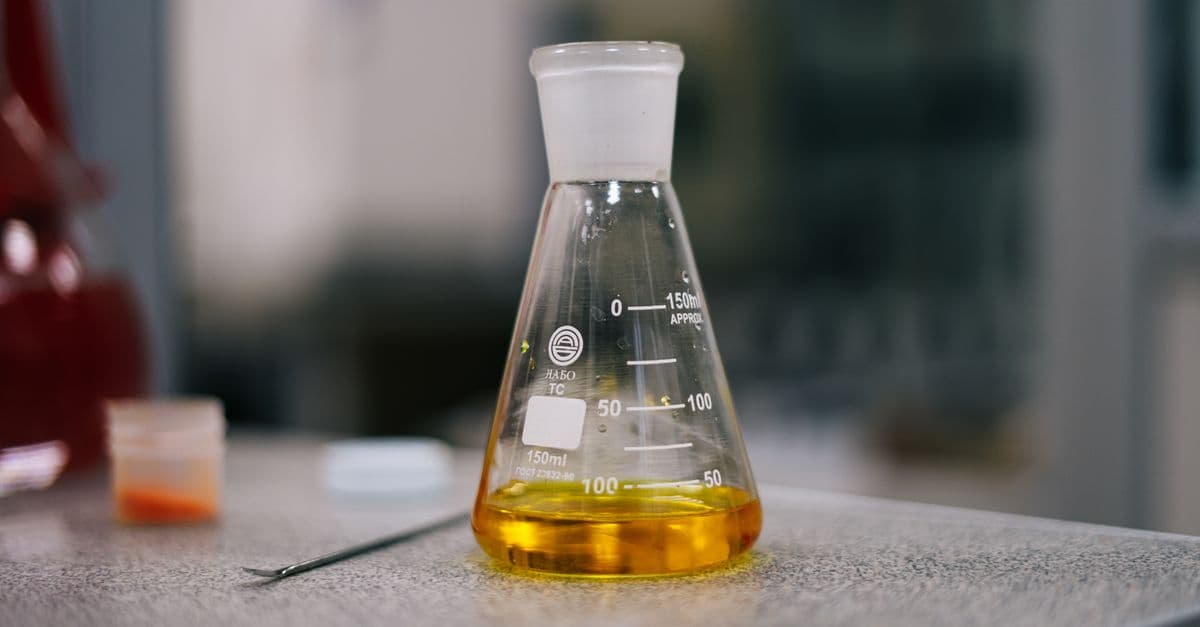
Photo: Aan SW / Pexels
An explosion is not magic — it is chemistry at catastrophic speed. A substance that takes hours to burn in ordinary combustion can release the same energy in microseconds if the molecules are engineered correctly. Understanding explosives means understanding oxidation reactions, activation energy, and the molecular architecture that lets certain compounds store enormous chemical potential and release it almost instantaneously.
The science of explosives has driven mining, construction, and demolition for centuries — and understanding it reveals fundamental principles of thermodynamics and reaction kinetics.
Key takeaways
- Rapid oxidation: All explosions are fundamentally rapid oxidation reactions — carbon, hydrogen, and nitrogen bonds break and re-form as stable molecules (CO₂, H₂O, N₂), releasing energy.
- Oxygen balance: High explosives carry their own oxidizer within the molecule, allowing combustion faster than atmospheric oxygen can diffuse in.
- Activation energy: A small energy input (spark, shock, heat) triggers an exothermic chain reaction that releases far more energy than was input.
- Deflagration vs. detonation: Gunpowder deflagrates (burns rapidly with subsonic flame front); high explosives like TNT detonate (supersonic shockwave drives the reaction).
- TNT equivalence: The reference unit for explosive yield is TNT — trinitrotoluene — which releases about 4.6 megajoules per kilogram.
- ANFO: Ammonium nitrate fuel oil is the most widely used industrial explosive — cheap, stable, and devastating when initiated.
What All Explosives Have in Common
Every chemical explosive is a substance that can rapidly convert itself into a large volume of hot gases. The key word is rapidly: what makes an explosion different from ordinary combustion is the rate of energy release.
When wood burns, the carbon and hydrogen in the cellulose react with oxygen from the air. The reaction is exothermic — it releases energy — but it is limited by how fast oxygen diffuses to the fuel surface. The combustion front advances slowly.
High explosives break this bottleneck by embedding the oxidizer within the molecule itself. TNT (trinitrotoluene, C₇H₅N₃O₆) contains nitrogen-oxygen groups bonded directly to the aromatic ring. When detonation begins, the molecular framework collapses in a cascade: carbon bonds to oxygen to form CO₂, hydrogen bonds to oxygen to form H₂O, and nitrogen bonds to itself to form N₂. All of these products are extremely stable molecules. The energy released is the difference between the energy of the bonds in TNT and the energy of the bonds in the product gases — and it is enormous.
A kilogram of TNT produces roughly 4.6 megajoules of energy and 700 liters of gas (at atmospheric pressure) in less than a microsecond. The sudden generation of that gas volume creates the pressure wave we recognize as an explosion.
Gunpowder: The Original Explosive
Black powder (gunpowder) is a mechanical mixture, not a single compound. The traditional formula is approximately 75% potassium nitrate (KNO₃, "saltpeter"), 15% charcoal (carbon), and 10% sulfur. The components must be ground fine and mixed thoroughly for reliable performance.
Potassium nitrate is the oxidizer: it readily releases oxygen when heated. Charcoal provides the fuel (carbon). Sulfur lowers the ignition temperature and helps the reaction propagate.
The approximate reaction: 2 KNO₃ + 3C + S → K₂S + N₂ + 3CO₂
The products include nitrogen gas and carbon dioxide — the rapid expansion of these gases propels a bullet or fragments a container. However, not all of the reaction is this clean; black powder also produces potassium carbonate, potassium sulfate, and other solids, which explains the dense white smoke.
Black powder deflagrates rather than detonates: the flame front travels at a few hundred meters per second (subsonic). This makes it suitable for propellants in firearms and fireworks, where a sustained push is more useful than an instantaneous shock. It is poorly suited for breaking rock because deflagration tends to push rather than shatter.
TNT: The Benchmark of Destruction
Trinitrotoluene was first synthesized by German chemist Julius Wilbrand in 1863, but its explosive potential was not recognized until Joseph Hepp demonstrated it in 1891. By World War I it had become the standard military explosive.
TNT's molecular structure is a benzene ring (toluene) with three nitro groups (–NO₂) attached. The nitro groups are weakly bonded to the ring; under shock or heat, those bonds break first. The nitrogen atoms, stripped of their oxygen, rush to pair with each other (forming N₂, an extraordinarily stable triple bond). The freed oxygen oxidizes the carbon and hydrogen.
The reaction is thermodynamically catastrophic: the products (CO₂, H₂O, N₂) are far more stable than the reactants. The energy difference becomes kinetic energy of the gas molecules — temperature and pressure spike to thousands of degrees and hundreds of thousands of atmospheres in the detonation front, which travels at about 6,900 meters per second.
TNT's civilian virtues: it melts at 80°C and can be poured into casings, it is relatively insensitive to shock and fire in its solid state (difficult to accidentally detonate), and it stores without degrading. The military compound Composition B (60% RDX, 40% TNT) exploits TNT as a melt-castable carrier for the more powerful but more sensitive RDX (cyclotrimethylenetrinitramine).
RDX, PETN, and Modern Military Explosives
RDX (Research Department Explosive, or cyclonite) has the molecular formula C₃H₆N₆O₆. Its six nitrogen atoms are arranged in a ring, each bonded to an –NO₂ group. The detonation velocity is about 8,750 m/s and the brisance (shattering power) is higher than TNT.
PETN (pentaerythritol tetranitrate, C₅H₈N₄O₁₂) is used in detonating cord and blasting caps. Plastic explosives like C-4 are mixtures of RDX with a plasticizing binder, giving them the consistency of modeling clay — they can be shaped to focus the blast and are stable enough to be kicked or burned without exploding (they require both heat and shock simultaneously).
Semtex, used in several high-profile terrorist attacks, is a mixture of PETN and RDX with a plasticizer. Its odorless nature before taggants were added made it notoriously difficult to detect — an issue addressed by the Montreal Convention on plastic explosives (1991), which requires manufacturers to add detectable chemical markers.
ANFO: Industrial Explosives
The most widely used explosive in the world is not TNT or C-4 — it is ANFO: ammonium nitrate fuel oil. Approximately 94% ammonium nitrate (NH₄NO₃) mixed with 6% diesel fuel by weight. ANFO accounts for roughly 80% of global explosive consumption, used primarily in mining and quarrying.
Ammonium nitrate is an oxidizer that is also a fertilizer — cheap to produce and widely available. Diesel fuel provides the hydrocarbon needed for complete oxidation. When detonated:
5 NH₄NO₃ + CH₂ (fuel oil approximation) → 4 N₂ + 9 H₂O + CO₂
The products are nitrogen, water, and carbon dioxide — relatively benign. ANFO is insensitive enough to handle safely (it resists accidental detonation by shock, fire, or friction) but requires a substantial booster charge to initiate.
Its limitations: low density (lower energy per volume than TNT), poor water resistance, and sensitivity to quality of mixing. The 1995 Oklahoma City bombing used approximately 2,200 kg of ANFO — a sobering reminder that industrial materials can be weaponized.
Detonation: The Shock Wave Mechanism
The distinction between deflagration and detonation is fundamental. Deflagration is subsonic burning propagated by heat conduction. Detonation is a supersonic shock wave that compresses, heats, and reacts the explosive ahead of it in a self-sustaining cascade.
In detonation, the shockwave and the reaction front are coupled: the shockwave compresses the explosive to thousands of atmospheres, raising its temperature to initiation point; the energy released by the reaction sustains and amplifies the shockwave. This coupling, described by the Chapman-Jouguet theory (and more rigorously by ZND detonation theory developed in the 1940s), means detonation travels at a well-defined velocity characteristic of the explosive and produces far greater pressure than deflagration.
A detonator — typically a small charge of a primary explosive like lead azide (PbN₆) or mercury fulminate (Hg(CNO)₂) — provides the initial shock to initiate a secondary explosive like TNT. Primary explosives are sensitive to flame, heat, and shock; secondary explosives require the intense shock of a primary to detonate.
FAQ
Q: Why don't explosives explode on their own? A: Explosives are kinetically stable — the activation energy barrier prevents spontaneous decomposition at ambient conditions. The bonds in TNT, for example, are stable unless struck by a shockwave or heated to ignition. The explosiveness is thermodynamic potential; the safety is kinetic barrier.
Q: What makes an explosion louder? A: The shock wave propagating through air — the "bang" — is a pressure pulse. More energy per unit mass and faster detonation velocity create larger, faster pressure fronts and louder sounds. The sharp crack of a high explosive reflects its supersonic detonation; the "boom" of gunpowder is its slower deflagration.
Q: Is nitroglycerin really that unstable? A: Yes, nitroglycerin (glyceryl trinitrate, C₃H₅N₃O₉) is notoriously sensitive to shock, heat, and vibration. Alfred Nobel's solution was to absorb it in diatomaceous earth to produce dynamite — a stable form that requires a detonator to explode. Nobel's invention effectively made nitroglycerin practical and industrially transformative.
Q: How is explosive yield measured? A: Yield is typically expressed in TNT equivalent — the mass of TNT that would release the same energy. The Hiroshima atomic bomb had a yield of approximately 15 kilotons TNT equivalent. Large chemical explosions like the 2020 Beirut ammonium nitrate explosion were estimated at 1–2 kilotons TNT equivalent.
Q: Can explosives be detected by smell? A: Some can. TNT has a faint almond-like odor. Trained detection dogs can identify trace amounts of many explosive compounds. Modern detection technologies include ion mobility spectrometry (the machines at airport security) and mass spectrometry, which can identify explosive molecules at parts-per-billion concentrations.
Q: What is the difference between an explosive and a propellant? A: A propellant is designed to burn in a controlled, sustained manner to produce a pressure gradient that propels a projectile. An explosive is designed to detonate as rapidly as possible to produce shock and fragmentation. Smokeless powder in a firearm is a propellant; the warhead of a shell is a high explosive. The chemistry is similar but the application and burn rate are very different.
Q: What makes shaped charges so effective? A: A shaped charge uses the Munroe effect: a cavity lined with a metal (typically copper) is cut into the explosive. On detonation, the converging shockwave collapses the copper liner into a high-velocity jet (traveling at 7–10 km/s) that penetrates armor or rock by hydrodynamic pressure rather than brute force. This is the mechanism in anti-tank warheads and in oil well perforating guns.
Read next:
Follow new articles
Add SciHub101 to your feed reader to see new science and technology stories.
About the Author
SciHub101 is an independent science and technology publication founded and edited by Buğra Sözeri, a software engineer and app developer based in Türkiye. AI tools assist with drafting and research. Source documentation in the existing archive is uneven, and articles are being reviewed and corrected. The Editorial Team byline identifies editorial responsibility; it does not certify specialist or independent human review. Where we compare products, anything built by our own team is labelled as such — see the editorial guidelines and About page for how corrections and disclosures work.
Related Articles

The Periodic Table Explained: How Elements Are Organized
The periodic table is the most powerful organizing tool in science, and it predicted elements that had not been discovered yet.

How Plastics Are Made: The Science of Polymer Chemistry
Plastics are engineered at the molecular level — long chains of repeating units that give materials their remarkable properties and their persistence problem.

Catalysis Discovery: How Catalysts Speed Chemical Reactions
How catalysts enable reactions without being consumed, revolutionizing chemistry


Why Is the Ocean Salty? The Science of Sea Salt
Ocean water is salty primarily because rain and rivers slowly weather rocks on land, dissolving ions like sodium and chloride and carrying them to the sea. When seawater evaporates, water leaves but salts remain and accumulate over geological time. Hydrothermal vents and volcanic activity add dissolved minerals. The ocean sits near steady state, with salt being removed about as fast as it arrives.