Acid-Base Chemistry: pH Scale Discovery
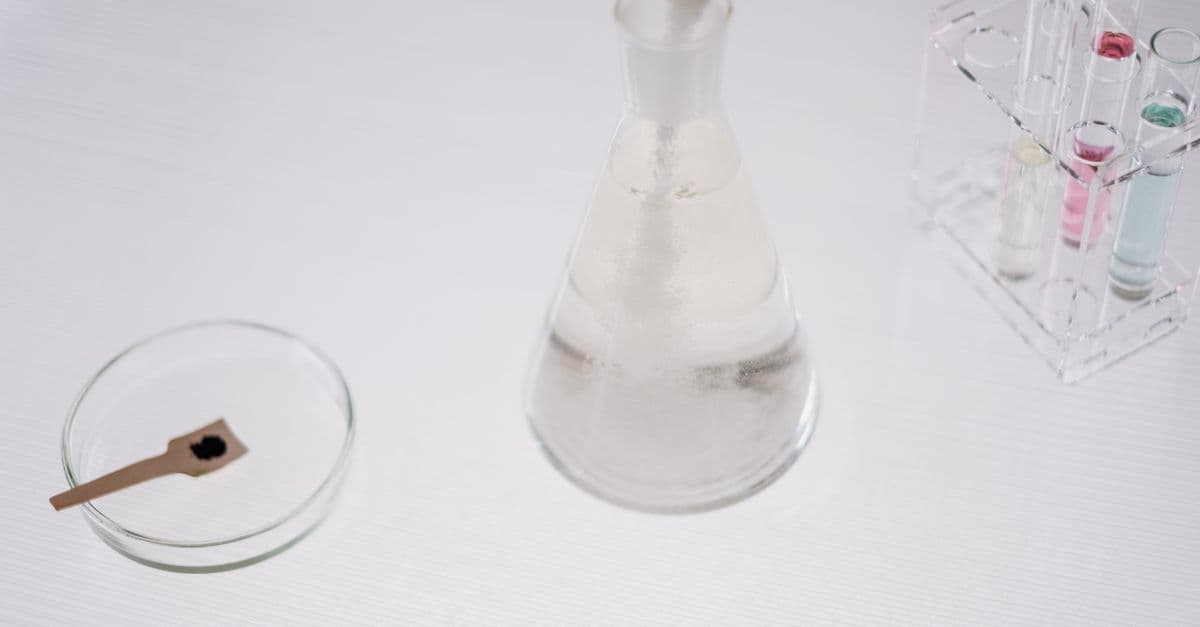
Photo: Ron Lach / Pexels
Every glass of orange juice (pH about 3.5), every liter of human blood (pH 7.35 to 7.45), and every cubic meter of seawater (pH about 8.1) sits at a precise, measurable point on a single 0-to-14 scale. That scale did not exist until 1909, when a Danish biochemist working at a beer company needed a way to describe hydrogen ion concentrations that spanned 14 orders of magnitude without writing out impossibly long decimals. His solution, the pH scale, is now one of the most-used measurements in science.
Key Takeaways
- The pH scale quantifies acidity as pH = -log[H⁺], where [H⁺] is hydrogen ion concentration in moles per liter.
- pH 0-7 is acidic, pH 7 is neutral, and pH 7-14 is basic (alkaline), each whole-number step representing a tenfold change in acidity.
- Søren Sørensen introduced the scale in 1909 while working at the Carlsberg Laboratory in Copenhagen, where he needed a practical way to standardize enzyme experiments in beer brewing.
- Human blood pH is held within a narrow 7.35–7.45 window; a swing of even half a unit outside that range signals a medical emergency.
- Ocean pH has fallen from an estimated pre-industrial average of about 8.2 to roughly 8.1 today, a change that sounds small but represents a real increase in acidity because the scale is logarithmic.
Before the Scale: Acids and Bases as Categories, Not Numbers
Long before anyone could measure acidity precisely, people could taste it. Vinegar, citrus juice, and soured milk all carried the sharp, sour bite that later chemists would trace to acetic acid, citric acid, and lactic acid. Bases showed up as the bitter, slippery opposite: lye leached from wood ash, used for centuries to make soap.
The theoretical picture sharpened slowly. Antoine Lavoisier argued in the late 18th century that oxygen was the defining element of acids, a claim that turned out to be wrong (hydrochloric acid, for one, contains no oxygen at all) but that kept chemists focused on the right general question. It took until 1884 for Svante Arrhenius, then a doctoral student in Sweden, to propose a workable definition: acids are substances that release hydrogen ions (H⁺) when dissolved in water, and bases release hydroxide ions (OH⁻). His dissertation committee at Uppsala reportedly gave him the lowest passing grade for the idea. Arrhenius won the Nobel Prize in Chemistry for it in 1903, seven years before his examiners' skepticism aged especially poorly.
Arrhenius's theory explained why acids and bases behaved as they did, but it left a practical problem unsolved. Two solutions could both be "acidic" while differing enormously in strength. A liter of concentrated hydrochloric acid and a liter of dilute vinegar are both sour and reactive, yet one will dissolve metal and the other will not. Chemists needed a number, not just a category.
How Sørensen Built the pH Scale
Søren Peder Lauritz Sørensen took charge of the chemistry department at the Carlsberg Laboratory in Copenhagen in 1901, an institute the Carlsberg brewery had founded in 1876 specifically to fund rigorous science (Carlsberg Group). His job had nothing to do with beer marketing and everything to do with proteins, enzymes, and the chemistry of fermentation, all of which turned out to be exquisitely sensitive to acidity.
By 1909, Sørensen was studying how hydrogen ion concentration affected enzyme activity in the brewing process, and he ran into the same wall every chemist before him had hit: the numbers were unmanageable. Writing "[H⁺] = 0.0000001 moles per liter" over and over, and trying to compare it meaningfully against "[H⁺] = 0.01 moles per liter," was clumsy and error-prone. So he did what chemists and physicists have done with unwieldy numbers ever since Napier invented logarithms: he took the log.
Sørensen defined what he called the hydrogen ion exponent, using "p" for the German word potenz (power), paired with "H" for hydrogen:
pH = -log₁₀[H⁺]
Because the negative sign flips the direction, a higher hydrogen ion concentration (more acidic) produces a lower pH number, and a lower hydrogen ion concentration (more basic) produces a higher pH number. Sørensen published the method in Danish, French, and German in 1909, describing both an electrode-based measurement technique and a simpler colorimetric method using indicator dyes (Science History Institute; ResearchGate, "One Hundred Years of pH").
Think of the pH scale the way you'd think of the Richter scale for earthquakes. A magnitude 6 earthquake is not twice as strong as a magnitude 3 earthquake, it's a thousand times stronger, because the Richter scale is logarithmic too. In the same way, a solution at pH 4 is not twice as acidic as one at pH 6, it's a hundred times more acidic, because pH steps compress tenfold jumps in hydrogen ion concentration into single-digit increments.
Why is water neutral at pH 7?
Water molecules constantly split apart and reform in a reaction called autoionization: H₂O ⇌ H⁺ + OH⁻. At 25°C, the product of hydrogen and hydroxide ion concentrations always equals 10⁻¹⁴ (a constant called Kw). In pure water, [H⁺] and [OH⁻] are equal, so each must equal 10⁻⁷ moles per liter, giving pH 7. Raise the temperature and Kw shifts, so "neutral" technically moves too; at 100°C, neutral water measures closer to pH 6.
How does a pH meter actually measure hydrogen ions?
A pH meter uses a glass electrode with a thin, ion-sensitive membrane. Hydrogen ions in the test solution create a small electrical voltage across that membrane, proportional to hydrogen ion concentration. The meter compares that voltage to a stable reference electrode and converts the difference into a pH reading, after calibration against solutions of known pH (usually 4, 7, and 10).
What the Scale Made Possible
Once acidity had a number attached to it, chemists could do things that had been impossible with qualitative description alone.
Predicting neutralization. When an acid and a base mix, hydrogen and hydroxide ions combine to form water: H⁺ + OH⁻ → H₂O. The point where moles of H⁺ exactly equal moles of OH⁻ is the equivalence point, and its pH depends on what reacted. Mixing a strong acid with a strong base lands the equivalence point at pH 7. Mixing a weak acid with a strong base pushes it above 7, because the conjugate base left behind (the negatively charged partner an acid becomes after giving up its proton) is itself weakly basic. Titration curves, plots of pH against volume of titrant added, let chemists read a reaction's entire progress at a glance.
Distinguishing strong from weak. Strong acids like hydrochloric acid (HCl) and sulfuric acid (H₂SO₄) ionize almost completely in water, meaning nearly every acid molecule releases its hydrogen ion. Weak acids like acetic acid (the acid in vinegar) only partially ionize, so a 1-molar solution of acetic acid has a far higher pH (is far less acidic) than a 1-molar solution of hydrochloric acid, even though both started at identical concentration. pH exposed this difference numerically instead of leaving it as a vague sense that "some acids are stronger."
Building buffers. A buffer solution resists pH change when small amounts of acid or base are added, using a mix of a weak acid and its conjugate base (or a weak base and its conjugate acid). The relationship is captured by the Henderson-Hasselbalch equation: pH = pKa + log([base]/[acid]), where pKa is a constant describing how readily the weak acid gives up its proton. Buffers are the reason your blood, your cell cytoplasm, and most laboratory reactions can tolerate small chemical disturbances without swinging wildly off course.
Acid-Base Theory After Sørensen: Brønsted-Lowry and Lewis
The Arrhenius definition of acids and bases, useful as it was, only worked for reactions happening in water. In 1923, chemists Johannes Brønsted (Danish) and Thomas Lowry (English) independently proposed a broader definition: an acid is any species that donates a proton (H⁺), and a base is any species that accepts one (Britannica, "Brønsted-Lowry theory"). This freed acid-base chemistry from requiring water as a solvent and introduced the idea of conjugate acid-base pairs, where every acid has a matching base formed once it loses its proton.
That same year, American chemist Gilbert N. Lewis at UC Berkeley went further still, defining acids as electron-pair acceptors and bases as electron-pair donors. The Lewis definition captures compounds like boron trifluoride (BF₃) that behave as acids without containing any hydrogen to donate at all. pH itself remains tied to the Arrhenius and Brønsted-Lowry picture, since it specifically measures hydrogen ion activity in aqueous solution, but the Lewis framework shows that "acid" and "base" describe a broader family of electron-sharing behaviors than pH alone can capture.
Why pH Control Matters Inside a Living Body
Nowhere is pH sensitivity more dramatic than in human physiology. Arterial blood pH is normally held between 7.35 and 7.45, a range of exactly one-tenth of a pH unit (NCBI StatPearls, "Metabolic Acidosis"). Fall below 7.35 and a patient is in acidosis; rise above 7.45 and it's alkalosis. Both are dangerous, not decorative lab values. A retrospective study of intensive care admissions in France found that of over 2,000 patients, 77 arrived with blood pH below 7.0, a median of 6.94, and pH below roughly 6.8 is widely considered incompatible with survival outside of exceptional case reports (StatPearls, "Alkalosis").
The body defends that narrow window with a layered system: chemical buffers (chiefly the bicarbonate buffer) act in seconds, the lungs adjust breathing rate to expel or retain carbon dioxide within minutes, and the kidneys fine-tune acid and base excretion over hours to days. For a full breakdown of that three-stage defense, see how the body keeps blood pH stable.
Enzymes are the reason this matters so much at the cellular level. Every enzyme, the protein catalysts that make biochemical reactions happen fast enough to sustain life, has an optimal pH range where its three-dimensional shape and the electrical charges lining its active site work correctly. Push pH too far in either direction and hydrogen bonds holding the enzyme's shape start breaking, a process called denaturation, and the enzyme stops working. Pepsin, the digestive enzyme in your stomach, is built to function around pH 1.5 to 2, an acidity that would destroy most other proteins in your body; trypsin, the enzyme that takes over digestion in your small intestine, needs a much more neutral-to-basic pH around 7.5 to 8.5 to function at all. The same general principle, that catalysts speed reactions without changing their fundamental chemistry, but only within the right conditions, shows up broadly across chemistry; see how catalysts speed up reactions for the mechanism.
pH in the Environment: Acid Rain and Ocean Acidification
Acidity is not just a laboratory or a physiology concern, it is a planetary-scale environmental metric. Unpolluted rain is naturally slightly acidic, around pH 5.6, because atmospheric carbon dioxide dissolves into raindrops and forms weak carbonic acid. What chemists call acid rain is precipitation that falls well below that baseline, typically pH 4 to 4.5, driven by sulfur dioxide and nitrogen oxides from fossil fuel combustion reacting with atmospheric water to form sulfuric and nitric acid. Acid rain strips nutrients from soil, mobilizes aluminum that is toxic to fish and tree roots, and has damaged forests and freshwater lakes across the industrialized Northern Hemisphere since the mid-20th century.
Ocean acidification works through a related mechanism but on a far larger scale. The ocean absorbs roughly a quarter of the carbon dioxide humans emit each year, and when CO₂ dissolves in seawater it forms carbonic acid, which then releases hydrogen ions. NOAA and independent researchers estimate that global average surface ocean pH has fallen from a pre-industrial baseline of roughly 8.15 to 8.2 down to about 8.05 to 8.1 today, a shift driven by industrial-era carbon emissions (NOAA Climate.gov, "Ocean Acidification, Today and in the Future"). Because the pH scale is logarithmic, that seemingly modest 0.1-unit drop represents roughly a 26 to 30 percent increase in ocean hydrogen ion concentration since before the Industrial Revolution. Left unaddressed, moderate-emissions projections put average surface ocean pH near 8.0 by the end of this century.
That acidification threatens shell-forming and coral-reef organisms directly. Lower pH reduces the availability of carbonate ions that mollusks, corals, and some plankton species need to build calcium carbonate shells and skeletons, forcing these organisms to spend more energy on shell maintenance and, in extreme cases, causing existing shells to dissolve. Because ocean and freshwater chemistry are tightly linked to broader planetary water systems, readers curious about seawater's baseline chemistry may also want why is the ocean salty.
| pH | Example substance | Approximate [H⁺] (mol/L) |
|---|---|---|
| 0 | Battery acid (concentrated) | 1 |
| 1.5–2 | Stomach acid | 0.01–0.03 |
| 2.4 | Lemon juice | 0.004 |
| 3.5 | Orange juice / vinegar | 0.0003 |
| 5.6 | Unpolluted rain | 0.0000025 |
| 6.5 | Milk | 0.0000003 |
| 7.0 | Pure water (25°C) | 0.0000001 |
| 7.35–7.45 | Human blood | ~0.00000004 |
| 8.05–8.1 | Ocean surface water (today) | ~0.000000009 |
| 8.3 | Baking soda solution | ~0.000000005 |
| 11 | Ammonia solution | 0.00000000001 |
| 13 | Lye (concentrated NaOH) | 0.0000000000001 |
| Approximate pH values for common substances and environments, illustrating the scale's practical range. |
Where pH Shows Up Beyond the Lab
Understanding pH quantitatively changed how entire industries operate, not just how chemists write equations.
Water treatment. Municipal water plants adjust pH to precipitate out dissolved metals, control corrosion in distribution pipes, and optimize disinfection with chlorine, which works best in a specific pH band. Pipe corrosion tied to low pH was a central factor in the Flint, Michigan water crisis, where inadequately treated, more acidic water leached lead from aging pipes into the public supply.
Agriculture. Soil pH governs which nutrients plants can actually absorb, independent of how much fertilizer is applied. Most crops grow best in slightly acidic to neutral soil, roughly pH 6 to 7; outside that window, essential nutrients like phosphorus and iron become chemically locked up and unavailable to roots even when present in the soil. Farmers apply agricultural lime (calcium carbonate) to raise pH in acidic soils, a practice that traces directly back to the same chemistry Sørensen was formalizing when he built his scale.
Food science and fermentation. Fermentation, pickling, and cheesemaking all hinge on pH control, since the bacteria and enzymes doing the work have narrow optimal ranges, and pH below about 4.6 is also a standard food-safety threshold, since it inhibits the growth of Clostridium botulinum, the bacterium responsible for botulism.
Pharmaceutical manufacturing. Many drugs are only stable, soluble, or absorbable within a specific pH window, so pH control during synthesis and formulation directly affects a medication's shelf life and how effectively the body can absorb it.
Common Confusions About pH
"A neutral pH is always 7." Only at 25°C. Because water's autoionization constant (Kw) changes with temperature, the pH at which [H⁺] equals [OH⁻] shifts too; at higher temperatures, neutral water reads below 7 even though it is chemically neutral by definition.
"Strong acid means concentrated acid." These are different properties. Strength describes how completely an acid ionizes in water (a fixed chemical property); concentration describes how much of it is dissolved (a variable you control by adding water). A dilute solution of a strong acid can have a higher (less acidic) pH than a concentrated solution of a weak acid.
"pH can't go below 0 or above 14." It can, in principle, for very concentrated strong acids or bases, since the 0-to-14 range is simply the convenient span for the concentrations chemists encounter most often, not a hard mathematical limit. Concentrated hydrochloric acid solutions above 1 molar can measure below pH 0.
"Small pH changes are small changes in chemistry." Because the scale is logarithmic, a shift of just one full pH unit means a tenfold change in hydrogen ion concentration. That is precisely why the roughly 0.1-unit drop in global ocean pH represents a substantial real-world increase in acidity, not a rounding error.
FAQ
Q: Why did Sørensen use a logarithmic scale instead of listing hydrogen ion concentration directly? A: Hydrogen ion concentration in common solutions ranges from about 1 mole per liter down to 10⁻¹⁴ moles per liter, a 14-order-of-magnitude spread. Writing and comparing numbers across that range directly is impractical. The logarithm compresses it into a manageable 0-to-14 scale, which is why pH caught on universally.
Q: What does the "p" in pH actually stand for? A: Sørensen used "p" for the German word potenz, meaning power or exponent, since pH literally denotes the (negative) power of ten needed to express hydrogen ion concentration. He originally called it the "hydrogen ion exponent" in his 1909 paper, with "pH" appearing far less often than that longer name.
Q: Can pH go below 0 or above 14? A: Yes, though rarely in everyday chemistry. Very concentrated strong acids (above roughly 1 molar HCl) can measure below pH 0, and very concentrated strong bases can exceed pH 14. Most solutions chemists and biologists encounter stay comfortably within the standard 0-to-14 range.
Q: Why is pure water neutral at pH 7? A: At 25°C, water's autoionization constant fixes [H⁺] × [OH⁻] at 10⁻¹⁴. In pure water, hydrogen and hydroxide ion concentrations are equal, so each equals the square root of 10⁻¹⁴, which is 10⁻⁷, giving pH 7. At higher temperatures this constant shifts, moving the neutral point below pH 7 even though the water is still chemically balanced.
Q: How does the Henderson-Hasselbalch equation relate to buffers? A: It calculates a buffer's pH from the ratio of its base and acid components: pH = pKa + log([base]/[acid]). Adding small amounts of acid or base shifts that ratio only slightly, which is why buffers resist large pH swings, a property essential to blood chemistry and most laboratory reactions.
Q: Why are enzymes so sensitive to pH? A: Enzyme function depends on a precise three-dimensional shape held together partly by hydrogen bonds and ionizable side chains. Shifting pH changes the electrical charge on those side chains, which can distort or unfold the enzyme (denaturation) and shut down its catalytic activity. Each enzyme has a narrow pH range where it performs best.
Q: What is the difference between pH and pOH? A: They are complementary measures of the same water equilibrium: pH + pOH = 14 at 25°C, since [H⁺][OH⁻] = 10⁻¹⁴ and taking logarithms of both sides produces that simple sum. Knowing either value lets you calculate the other directly.
Q: How much has ocean pH actually changed, and why does it matter? A: Estimates put global average surface ocean pH down from a pre-industrial baseline near 8.15–8.2 to roughly 8.05–8.1 today, a change driven by absorbed atmospheric carbon dioxide. Because pH is logarithmic, that shift represents on the order of a 26 to 30 percent increase in ocean acidity, enough to measurably reduce the carbonate ions that shell-forming marine organisms need.
Q: Is stomach acid actually more acidic than battery acid? A: No. Stomach acid typically sits around pH 1.5 to 2, while concentrated battery acid (sulfuric acid) can approach pH 0 or below, making it substantially more acidic. Stomach acid is still extremely corrosive by biological standards, which is why the stomach lining is coated in a protective mucus layer.
Q: Do all acids taste sour and all bases taste bitter, the way ancient chemists first noticed? A: As a rough historical generalization yes, but it is not a safe or reliable test. Many acids and bases are toxic or corrosive, and taste was abandoned as an identification method once quantitative tools like pH indicators and electrodes became available in the early 20th century.
The takeaway
Sørensen's 1909 insight was not a new chemical discovery, it was a measurement discovery: taking a negative logarithm turned an unmanageable, 14-order-of-magnitude range of hydrogen ion concentrations into a simple number anyone could read at a glance. That single move gave chemistry a common language for acidity, one precise enough to predict reactions, engineer buffers, and diagnose a medical emergency from a single blood draw. More than a century later, the same logic scales up to describe entire oceans, where a drop of just a few tenths of a pH unit signals a real and measurable shift in planetary chemistry. Few scientific tools this simple have proven this durable.
Read next:
Follow new articles
Add SciHub101 to your feed reader to see new science and technology stories.
About the Author
SciHub101 is an independent science and technology publication founded and edited by Buğra Sözeri, a software engineer and app developer based in Türkiye. AI tools assist with drafting and research. Source documentation in the existing archive is uneven, and articles are being reviewed and corrected. The Editorial Team byline identifies editorial responsibility; it does not certify specialist or independent human review. Where we compare products, anything built by our own team is labelled as such — see the editorial guidelines and About page for how corrections and disclosures work.
Related Articles

Advanced Materials Processing: Creating Impossible Alloys in Orbit
ISS experiments produce metal alloys and composite materials with properties impossible on Earth, advancing aerospace, electronics, and clean energy.
Marie Curie: Discovering Radioactivity and Redefining Science
Marie Curie's discovery of radioactivity and isolation of radium revolutionized physics and chemistry. The first woman to win a Nobel Prize, she sacrificed health for science.
Why Is the Ocean Salty? The Science of Sea Salt
Ocean water is salty primarily because rain and rivers slowly weather rocks on land, dissolving ions like sodium and chloride and carrying them to the sea. When seawater evaporates, water leaves but salts remain and accumulate over geological time. Hydrothermal vents and volcanic activity add dissolved minerals. The ocean sits near steady state, with salt being removed about as fast as it arrives.
The Chemistry of Photosynthesis — From Photons to Sugar
How photosynthesis works at the molecular level — the light reactions, Z-scheme, electron transport chain, Calvin cycle, and why quantum coherence may be involved.