Marie Curie: Discovering Radioactivity and Redefining Science
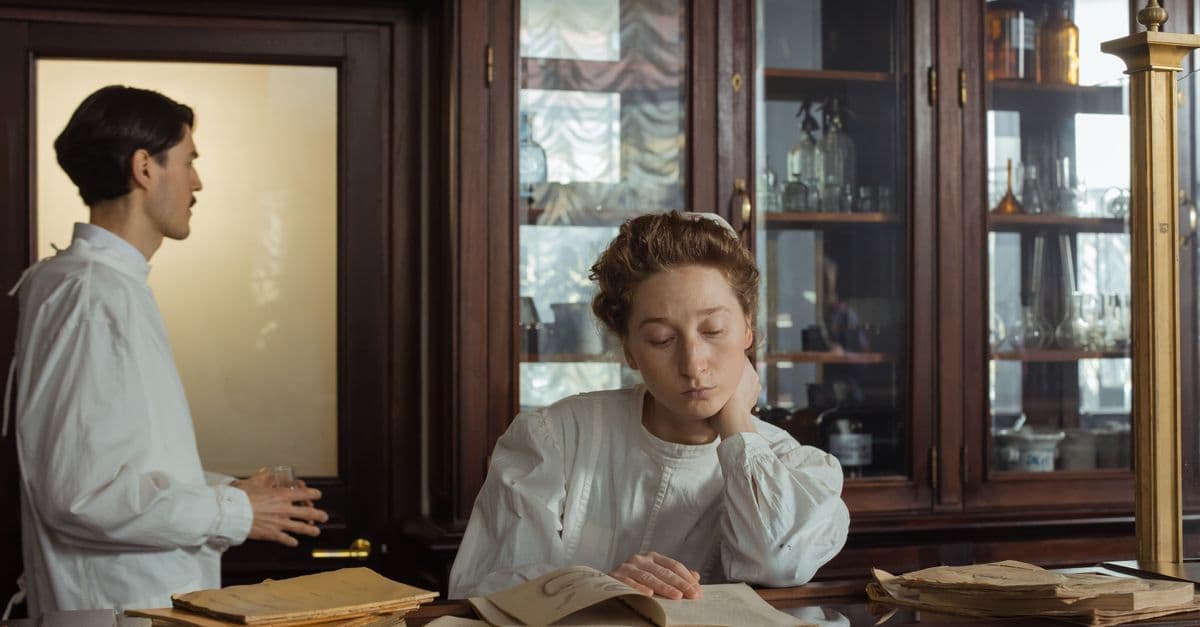
Photo: Daria / Pexels
In 1898, working in a leaky Paris shed with no ventilation, Marie Curie identified two elements the periodic table did not yet contain: polonium and radium. The discovery reshaped how physicists and chemists understood matter itself, and it made her the first woman to win a Nobel Prize. She remains, more than a century later, the only person ever awarded Nobel Prizes in two different sciences (NobelPrize.org). The same radioactive material that built her career also destroyed her health, one exposure at a time.
Who was Marie Curie, and why does her work still matter
Marie Skłodowska was born in Warsaw in 1867, in a Poland then partitioned and controlled by the Russian Empire, where the occupying government barred women from university education. She worked for years as a governess to save enough money to study abroad. In 1891, at age 23, she enrolled at the University of Paris (the Sorbonne), one of the few European universities that admitted women at the time (Britannica).
There, physics and mathematics consumed her. She lived on bread, butter, and tea in an unheated garret room and often fainted from hunger during her studies. That discipline paid off. By 1894, she had earned degrees in physics and mathematics and was searching for laboratory space to begin research of her own, which is how she met a French physicist named Pierre Curie.
The two married in 1895 and became one of history's most productive scientific partnerships, an arrangement that was almost unheard of for the era. Together they turned their attention to a puzzle that had emerged from the work of French physicist Henri Becquerel: uranium salts, without any external light source, fogged photographic plates and emitted a mysterious form of energy. Marie Curie decided to make that mystery her doctoral thesis.
How Marie Curie discovered radioactivity
Curie's investigative tool was an instrument Pierre and his brother Jacques had built years earlier: a piezoelectric electrometer, a device that measures tiny electrical currents produced when certain crystals are placed under mechanical stress. She adapted it to measure the faint electrical charge that uranium compounds left in the surrounding air, a charge caused by radiation ionizing (stripping electrons from) air molecules.
Think of the electrometer the way you'd think of a very sensitive kitchen scale. A bathroom scale can't detect the weight of a feather, but a scale built for a jeweler can register a fraction of a gram. Curie's electrometer was that jeweler's scale for radiation, sensitive enough to register currents too small for any instrument before it to reliably catch.
Testing element after element, she found that thorium produced the same air-ionizing effect as uranium. That was the moment she realized the phenomenon wasn't unique to one element. It was a property of the atom itself, something intrinsic to certain kinds of matter regardless of what compound they were locked into. She gave the property a name that stuck: radioactivity.
What is radioactivity, exactly
Radioactivity is the spontaneous emission of energy or particles from an unstable atomic nucleus as it decays toward a more stable configuration. Curie's key insight was that the intensity of this emission depended only on the quantity of the radioactive element present, not on its chemical form, temperature, or the compound surrounding it. That observation pointed straight at the atom's nucleus (its dense core) as the source, decades before physicists had a working model of what a nucleus was.
Why pitchblende was the real clue
The observation that broke the case open was quantitative, not qualitative. Curie measured the radioactivity of pitchblende, the uranium-bearing ore mined at Jáchymov in Bohemia, and found it was roughly four times more radioactive than the pure uranium it contained could account for (Nobel Prize biographical materials). Something else in the ore, in trace amounts, had to be far more radioactive than uranium itself. That arithmetic mismatch is what sent the Curies chasing an unknown element hiding inside tons of mining waste.
Isolating polonium and radium from tons of ore
Pierre set aside his own research on crystals and magnetism to join Marie's hunt full time. The French Academy of Sciences would not fund a proper laboratory for them, so they worked in a converted shed at the School of Physics, a space one visiting chemist later described as a cross between a stable and a potato cellar, without a floor and with a leaking glass roof (Atomic Heritage Foundation).
The Austrian government sold them the residue left over after uranium extraction from pitchblende, a byproduct nobody else wanted, at a low price since it was considered industrial waste. Over roughly four years, the Curies processed several tons of this material by hand, in batches, using standard chemical separation techniques: dissolving, precipitating, and recrystallizing to isolate ever-purer fractions.
By July 1898, they had isolated a substance several hundred times more radioactive than uranium. They named it polonium, after Marie's native Poland, then still partitioned and stateless on the map of Europe. Five months later, in December 1898, they announced a second new element, radium, isolated from the same barium-containing fraction of the ore.
Radium turned out to be extraordinary even by the young standards of radioactivity research. It glowed faintly blue in the dark, generated its own heat continuously without any external energy source, and was millions of times more radioactive than uranium by weight. To the public and even to many scientists, it looked less like chemistry and more like a small, self-sustaining miracle. In 1902, after nearly four more years of grinding, repetitive purification, Marie Curie finally isolated one decigram, about one-tenth of a gram, of pure radium chloride from several tons of starting ore (Nobel Prize biographical materials).
Table: Key stages in the discovery of polonium and radium
| Year | Milestone | Significance |
|---|---|---|
| 1896 | Becquerel observes uranium fogging photographic plates | Establishes that uranium emits energy without an external source |
| 1897–1898 | Marie Curie tests thorium, coins "radioactivity" | Shows the effect is a general atomic property, not unique to uranium |
| July 1898 | Polonium isolated | First new element traced to radioactive decay |
| December 1898 | Radium isolated | Element hundreds of times more radioactive than uranium |
| 1902 | Pure radium chloride isolated (0.1 g) | Confirms radium as a genuine new element with a measurable atomic weight |
| 1910 | Pure metallic radium isolated | Definitively settles radium's atomic weight and chemical identity |
Table: Curie's radioactivity work moved from a puzzling observation to an isolated, weighable element in under six years, despite minimal funding and no dedicated laboratory.
Two Nobel Prizes in two different sciences
In 1903, the Royal Swedish Academy of Sciences prepared to award the Nobel Prize in Physics to Pierre Curie and Henri Becquerel for radioactivity research, leaving Marie off the nomination entirely. Pierre, learning of this from a sympathetic academy member, insisted his wife be included, since the isolation of polonium and radium had been substantially her work. The Academy relented, and Marie, Pierre, and Becquerel shared the 1903 Nobel Prize in Physics. Marie Curie became the first woman to win a Nobel Prize in any category (History.com).
Pierre died in 1906, struck by a horse-drawn cart while crossing a Paris street in the rain. Marie continued the research alone, took over his professorship at the Sorbonne (becoming its first female professor, though initially at a lower salary than her male predecessor), and kept pushing to isolate radium in its pure metallic form rather than as a compound.
She succeeded in 1910, and in 1911 the Nobel Committee awarded her a second prize, this time in Chemistry, for the discovery of radium and polonium and the isolation of pure radium. She was recognized alone, without Pierre, for a discovery that was unambiguously hers. That made her the first person, of any gender, to win Nobel Prizes in two different scientific disciplines, a distinction she still holds (NobelPrize.org).
Did other scientists win Nobel Prizes for radioactivity too
Yes. Henri Becquerel shared the 1903 Physics Prize with the Curies for his original observation of uranium's spontaneous radiation. Ernest Rutherford won the 1908 Nobel Prize in Chemistry for his own investigations into radioactive decay and the transformation of elements, work that built directly on the Curies' isolation of radioactive materials to study. Rutherford's later gold foil scattering experiments, which revealed the atomic nucleus, depended on radioactive sources that traced back to Curie's laboratory methods.
The radiation hazard that nobody understood yet
The physics community in the 1890s and 1900s had no framework for radiation's biological danger, because nothing like radium had ever been studied in a lab before. Curie handled radioactive material with her bare hands for decades. Her fingertips grew calloused, cracked, and permanently darkened. Colleagues remarked on the burns visible on her skin. She and Pierre both kept vials of radium salts in their pockets as a kind of party trick, showing colleagues how the glowing solution lit up a darkened room, unaware that each demonstration meant sustained, close-range exposure to their internal organs.
Laboratory habits of the era compounded the danger. Pipetting by mouth, drawing liquid up a glass tube using suction from the lips, was standard technique for handling ordinary chemicals, and Curie's notebooks and letters make no indication she treated radioactive solutions any differently. There was no ventilation in the shed where she processed pitchblende, no gloves, no lead shielding, and no dosimetry (a way of measuring how much radiation a person has absorbed) because the entire concept of radiation dose had not yet been invented.
By the 1920s, the cumulative toll was unmistakable. Curie suffered from chronic anemia, a persistent reduction in her red blood cell count that made her tire easily and, in retrospect, was almost certainly an early sign of bone marrow damage. She developed cataracts in both eyes, a clouding of the eye's lens that is a well-documented consequence of chronic radiation exposure, and underwent several eye surgeries to preserve her vision. Her fingers became so damaged by radiation burns that she reportedly had difficulty manipulating fine laboratory instruments in her final years.
In July 1934, Marie Curie died at age 66 of aplastic anemia, a failure of the bone marrow to produce enough new blood cells. Aplastic anemia is a recognized consequence of prolonged exposure to ionizing radiation, which damages the hematopoietic stem cells (the cells in bone marrow responsible for generating blood cells) faster than the body can replace them. A biographical review published in the medical literature attributes her death directly to decades of unshielded radiation exposure accumulated over her research career (PMC, "Marie Curie: Twice Nobel Laureate and Her Enduring Legacy in Radiation Medicine").
The mobile X-ray units that saved soldiers' lives
Curie's response to World War I shows a different side of the same drive that isolated radium. When the war broke out in 1914, she recognized that battlefield surgeons badly needed a way to locate bullets and shrapnel inside wounded soldiers without transporting them to distant hospitals equipped with fixed X-ray machines. Her solution was to build X-ray units on wheels.
She personally solicited donated cars, X-ray tubes, and portable electric generators from manufacturers and wealthy acquaintances, then had local garages retrofit the vehicles into rolling radiology units, complete with a darkroom for developing photographic plates on site. French soldiers nicknamed them "petites Curies," little Curies. She drove some of the vehicles to the front herself and personally trained roughly 150 women in radiological technique, anatomy, basic car maintenance, and photographic processing so the units could operate independently near the front lines (Smithsonian Magazine).
By the war's end in November 1918, historians estimate that more than one million French soldiers had been examined using Curie's mobile and stationary X-ray units (IEEE Spectrum). It is a scale of humanitarian impact that rarely appears alongside her Nobel Prizes in popular retellings, but it arguably applied her science to save more lives, directly and immediately, than any other chapter of her career.
What radioactivity built: from nuclear physics to nuclear medicine
Curie's isolation of radium and polonium gave physicists something they had never had before: concentrated, reliable sources of radioactive emission to experiment with. Ernest Rutherford used radioactive sources of this kind in his 1909 gold foil experiment, in which alpha particles (helium nuclei emitted by radioactive decay) were fired at a thin sheet of gold foil. Most particles passed through, but a small fraction bounced back sharply, a result that only made sense if almost all of an atom's mass and positive charge were concentrated in a tiny central nucleus. Our guide to the Rutherford gold foil experiment covers exactly how that discovery reshaped the atomic model Curie's generation inherited.
That nuclear model, in turn, is the direct ancestor of twentieth-century nuclear physics, including the discovery of nuclear fission and the chain reactions that power both reactors and weapons. Our explainer on Chicago Pile-1, the first nuclear reactor, traces how Enrico Fermi's team achieved the first controlled chain reaction in 1942, a direct descendant of the same nuclear physics that began with Curie's radioactivity measurements decades earlier. The wartime program that followed, covered in our piece on the science behind the Manhattan Project, applied that same fission physics at industrial scale.
Medicine took a gentler path from the same starting point. Radiation's ability to damage cells, the very property that was slowly poisoning Curie, turns out to be selectively lethal to fast-dividing cancer cells when delivered in controlled doses. Radiotherapy, using gamma rays or high-energy particles to destroy tumors, traces directly back to Curie's radium research and to the Radium Institute she founded in Paris and Warsaw, which trained generations of researchers in both physics and medical applications of radioactivity. Diagnostic nuclear medicine, in which radioactive tracers reveal how organs function in real time, and brachytherapy, in which radioactive seeds are implanted directly next to a tumor, both descend from techniques first developed at her institute.
The Radium Girls: when Curie's discovery became a consumer product
Radium's glow and self-generated warmth made it a marketing sensation in the 1910s and 1920s, decades before its risks were widely understood by the public or by regulators. Companies incorporated radium-based paint into watch and clock dials to make them glow in the dark, and hired young women, mostly in their teens and twenties, to hand-paint the tiny numerals with fine brushes. Supervisors instructed the dial painters to shape their brush tips between their lips before each stroke, a technique called "lip-pointing" that caused them to ingest small amounts of radium-laced paint hundreds of times a day.
The United States Radium Corporation in New Jersey employed dial painters this way and reassured them the paint was harmless, telling some workers that swallowed radium would simply pass through their bodies. It did not. Radium chemically mimics calcium, so the body incorporates it directly into bone tissue, where its continuous internal radiation slowly destroys the surrounding cells. By the mid-1920s, dial painters were developing severe anemia, spontaneous bone fractures, and a horrifying condition nicknamed "radium jaw," a necrosis, or tissue death, of the jawbone (ORAU, "Radium Girls").
In January 1928, five affected workers, Grace Fryer, Edna Hussman, Katherine Schaub, Quinta Maggia McDonald, and Albina Maggia Larice, filed suit against the United States Radium Corporation. By the time the case reached its first hearing, several of the plaintiffs were too weak to raise their arms to take an oath, and Grace Fryer needed a back brace simply to sit upright in court (Wikipedia, citing contemporary court records). The case settled later that year, with each woman awarded $15,000 plus $600 annually for ongoing medical care, a landmark early precedent for occupational disease liability in US labor law.
The same radium that Marie Curie had spent four years isolating from mining waste, believing it might one day help cure disease, was being marketed to the public in cosmetics, tonics, and even suppositories claiming rejuvenating properties, none of which had any legitimate medical basis and all of which caused real harm. Regulatory oversight of radioactive consumer products in the United States remained patchy for decades afterward; the FDA did not comprehensively restrict radioactive novelty products until 1968.
Did Marie Curie know radium was dangerous when it was sold to consumers
By the time the radium consumer craze peaked in the 1920s, Curie herself was already suffering visible health effects and was well aware that radiation caused tissue damage. She was not involved in and did not endorse the commercial radium products that caused the Radium Girls tragedy; those products were developed and marketed by manufacturers who exploited public excitement about radium's glow while ignoring or downplaying the safety warnings that legitimate researchers, including Curie, were beginning to raise.
Institutional barriers Curie faced as a woman in science
Curie's scientific path ran directly against the institutional structure of her era. Polish universities under Russian control barred women outright. French universities rarely appointed women to permanent research or teaching positions, regardless of qualifications. Early academic credit for the Curies' joint discoveries often defaulted to Pierre, simply because he was the senior, male half of the partnership, until Pierre himself pushed back on Marie's exclusion from the 1903 Nobel nomination.
The pattern did not end with Marie Curie. Physicist Lise Meitner, who provided the theoretical explanation for nuclear fission alongside Otto Hahn's experimental work, was passed over for the 1944 Nobel Prize in Chemistry, which went to Hahn alone, despite Meitner's essential contribution. Rosalind Franklin's X-ray diffraction images were critical evidence in identifying the structure of DNA, yet the 1962 Nobel Prize recognized James Watson, Francis Crick, and Maurice Wilkins without her, since she had died in 1958 and Nobel Prizes are not awarded posthumously. Our profile of Rosalind Franklin and her X-ray crystallography work covers that story in detail, and it echoes the same pattern of uncredited contribution that shadowed even Curie's early career.
Curie herself did not escape gender bias even at the height of her fame. In 1911, the same year she won her second Nobel Prize, the French Academy of Sciences rejected her application for membership by a narrow vote, in a controversy fueled partly by a smear campaign in the French press over her personal life. She never became a member of the Academy, an institution that did not admit its first woman until 1979, decades after her death.
What people get wrong about Marie Curie
A common misconception is that Curie discovered X-rays. She did not; Wilhelm Röntgen discovered X-rays in 1895, a distinct phenomenon produced by electron bombardment of a metal target, not by radioactive decay. Curie's contribution was radioactivity, the spontaneous emission from unstable nuclei, and her wartime X-ray units applied Röntgen's earlier discovery rather than her own.
Another persistent myth is that radium was banned outright after the Radium Girls scandal and simply vanished from use. In reality, radium continued to have legitimate medical applications, particularly in early cancer radiotherapy, for decades after the consumer products were phased out; what changed was regulatory oversight of dosage, shielding, and who was permitted to handle it, not radium's existence as a research or clinical material.
A third misconception treats Curie's radiation poisoning as proof she was reckless or careless by the standards of any era. The historical record does not support that framing. Radiation biology, as a field, did not exist yet when she began her work; the International Commission on Radiological Protection, the body that eventually established exposure limits and safety standards, was not founded until 1928, six years before her death and roughly three decades after she began handling radioactive material. She was operating at the frontier of a phenomenon nobody, anywhere, yet understood to be dangerous.
The takeaway
Marie Curie's four years processing pitchblende in an unheated shed produced two new elements, redefined how physicists understood the atom, and eventually gave medicine an entirely new category of cancer treatment. It also, slowly and invisibly, destroyed her bone marrow. Both facts are true at once, and neither cancels the other out. Her career is the clearest historical case of a discovery that was simultaneously transformative and dangerous to the person who made it, which is exactly why the safety standards radiation researchers rely on today exist in the first place.
Read next:
- The Rutherford Gold Foil Experiment Explained
- The First Nuclear Reactor: Chicago Pile-1
- Rosalind Franklin and the X-Ray Clue to DNA
Frequently Asked Questions
Q: What did Marie Curie actually discover? A: Marie Curie discovered the phenomenon of radioactivity itself, showing it was an atomic property rather than a chemical reaction, and she isolated two new radioactive elements, polonium and radium, from uranium ore between 1898 and 1902 (NobelPrize.org).
Q: How many Nobel Prizes did Marie Curie win, and for what? A: Two. She shared the 1903 Nobel Prize in Physics with Pierre Curie and Henri Becquerel for radioactivity research, then won the 1911 Nobel Prize in Chemistry alone for isolating pure radium and discovering polonium and radium (NobelPrize.org).
Q: What did Marie Curie die of? A: Aplastic anemia, a failure of the bone marrow to produce blood cells, attributed by modern physicians to decades of unshielded exposure to radioactive materials during her research career (PMC).
Q: Are Marie Curie's notebooks still radioactive today? A: Yes. Her 1890s laboratory notebooks remain contaminated with radium-226, which has a half-life of about 1,600 years, and are stored in lead-lined boxes at the Bibliothèque Nationale de France. Visitors must sign a waiver and wear protective clothing to examine them (Open Culture).
Q: Who were the Radium Girls, and how are they connected to Marie Curie? A: The Radium Girls were factory workers who hand-painted watch dials with radium-based glow-in-the-dark paint in the 1910s and 1920s and developed severe radiation poisoning from ingesting the paint. They were not connected to Curie's own research, but their tragedy involved the same element she discovered, marketed commercially without the safety understanding Curie herself was beginning to develop through hard personal experience (ORAU).
Q: Did Marie Curie invent the X-ray machine? A: No. Wilhelm Röntgen discovered X-rays in 1895, before Curie's radioactivity research began. Curie's wartime contribution was designing and deploying mobile X-ray units, nicknamed "petites Curies," that applied Röntgen's existing technology to battlefield medicine during World War I.
Q: How many soldiers did Marie Curie's mobile X-ray units help during World War I? A: Historians estimate more than one million French soldiers were examined using her mobile and stationary X-ray units between 1914 and 1918 (IEEE Spectrum).
Q: Why didn't scientists in Curie's era protect themselves from radiation? A: Radiation biology did not exist as a field yet. The International Commission on Radiological Protection, which established the first formal exposure guidelines, was not founded until 1928. Curie was working at the frontier of a phenomenon nobody yet understood to be hazardous.
Q: What is the difference between radioactivity and nuclear fission? A: Radioactivity is the spontaneous decay of an unstable atomic nucleus, releasing particles or energy over time, which is what Curie studied. Nuclear fission is the splitting of a heavy nucleus into two lighter nuclei, usually triggered by neutron bombardment, which releases much larger amounts of energy at once and underlies both nuclear reactors and weapons.
Q: Was Marie Curie the only woman scientist of her era to face discrimination? A: No. Physicist Lise Meitner was excluded from the 1944 Nobel Prize in Chemistry despite her central role in explaining nuclear fission, and Rosalind Franklin's X-ray diffraction work was essential to identifying DNA's structure but went unrecognized by the 1962 Nobel Prize, awarded to her male collaborators after her death.
Follow new articles
Add SciHub101 to your feed reader to see new science and technology stories.
About the Author
SciHub101 is an independent science and technology publication founded and edited by Buğra Sözeri, a software engineer and app developer based in Türkiye. AI tools assist with drafting and research. Source documentation in the existing archive is uneven, and articles are being reviewed and corrected. The Editorial Team byline identifies editorial responsibility; it does not certify specialist or independent human review. Where we compare products, anything built by our own team is labelled as such — see the editorial guidelines and About page for how corrections and disclosures work.
Related Articles
Acid-Base Chemistry: pH Scale Discovery
How chemists quantified acidity and basicity through the pH scale
Why Does Food Taste Good? The Science of Flavor
Flavor is not just taste — it's a symphony of chemistry, physics, and neuroscience happening in your mouth and brain.
Radiocarbon Dating: How Carbon-14 Tells Us the Age of Ancient Things
Carbon-14 dating lets scientists calculate the age of once-living organisms with remarkable accuracy. Here is the physics behind how a radioactive isotope became archaeology's most powerful clock.

Maria Goeppert Mayer: The Nuclear Shell Model and 30 Years Without Pay
Maria Goeppert Mayer built the nuclear shell model that explains why certain atoms are extraordinarily stable, then waited decades for a paid academic position.
Marie Curie: Radioactive Notebooks and a Life Beyond Convention — SciHub101
Marie Curie's biography, discoveries, and verified quirks: radioactive notebooks, radium in her pockets, two Nobel Prizes, and the scandal that nearly ended her.

Complete Science Guide 2026: Physics to Climate
How physics, chemistry, earth and climate science and materials science work, with the evidence behind each field and the best deep dive for every topic.