What Are X-Ray Binaries? Neutron Stars and Black Holes That Feed
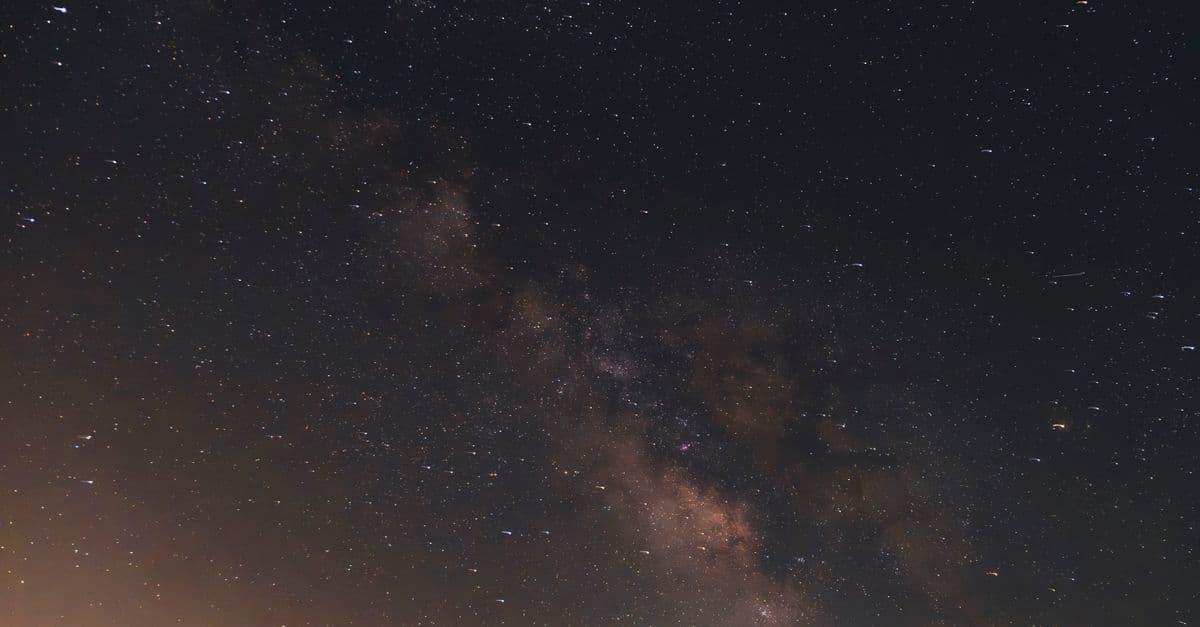
Photo: Necati Ömer Karpuzoğlu / Pexels
An X-ray binary is a pair of stars in which one member is a supernova. About 20 km wide but containing more mass than the Sun.">neutron star or black hole that pulls gas off its companion. The gas falls inward, heats to millions of degrees, and radiates mostly X-rays. These systems matter because they are among the few places where we can watch a black hole or neutron star at work: weighing them, timing their spin, and catching their thermonuclear explosions. This article covers how the engine runs, why the two main classes differ, and what astronomers have learned from the best-studied systems.
How a rocket flight found the first one
In 1962, a team led by Riccardo Giacconi launched a rocket aimed at the Moon, hoping to catch X-rays reflected from its surface. The rocket instead picked up a strong source elsewhere in the sky. That source, later named Scorpius X-1, was the first X-ray source found beyond the solar system. In 1967, before pulsars were discovered, Iosif Shklovsky concluded that the X-rays came from a neutron star pulling matter from a companion, according to the Wikipedia entry on Scorpius X-1. Today the neutron star is estimated at about 1.4 solar masses and the companion at about 0.42, and its X-ray output alone is about 60,000 times the Sun's total luminosity.
Earth's atmosphere blocks X-rays, so everything after that had to fly. The next big step was Uhuru, the first satellite built to survey the X-ray sky. It launched on December 12, 1970, from the San Marco platform off the coast of Kenya. "Uhuru" is Swahili for "freedom," a nod to the launch site's host country. Its two sets of proportional counters covered roughly 2 to 20 kiloelectronvolts (keV) of photon energy with 0.084 square meters of detector area, and it produced the first uniform X-ray survey of the whole sky. Contact ended in March 1973, after a little over two years. The Uhuru catalog lists 339 sources, including binary systems, supernova remnants, active galaxies, and galaxy clusters, per the NASA HEASARC mission page. Among the binaries it caught pulsing were Centaurus X-3, Vela X-1, and Hercules X-1.
The engine: why falling gas shines so brightly
Picture a waterfall. Water at the top has stored energy, and by the time it hits the bottom, that energy has turned into motion and spray. Gas falling toward a neutron star or black hole does the same thing, except the drop is enormous. A neutron star packs about 1.4 times the Sun's mass into a ball roughly 10 kilometers across. Gas that falls onto it gives up a large share of its rest-mass energy as heat and light.
The energy released per gram of infalling gas is roughly GM/R, where G is the gravitational constant, M the object's mass, and R its radius. For a neutron star of 1.4 solar masses and 10 km radius, the arithmetic gives about 1.9 × 10²⁰ ergs per gram. Divide by c², the energy locked in each gram of mass, and the efficiency comes out near 21%. Hydrogen fusion in a star like the Sun converts only about 0.7% of the mass to energy. So accretion onto a neutron star is about 30 times more efficient than fusion.
For black holes there is no surface, so the efficiency depends on how close gas can orbit before it plunges in. For a non-spinning black hole, the innermost stable circular orbit, or ISCO, sits at six gravitational radii (6GM/c²), and the efficiency is about 5.7%. For a rapidly spinning black hole with gas orbiting in the same direction as the spin, the ISCO shrinks and the efficiency climbs to roughly 30% or more. The Wikipedia article on X-ray binaries puts the general figure at up to 30% of rest mass, against about 0.7% for hydrogen fusion.
A worked example
Take a neutron star accreting 10⁻⁸ solar masses per year, a fairly typical rate for a bright system. That is about 6 × 10¹⁷ grams per second. Multiplying by 1.9 × 10²⁰ ergs per gram gives a luminosity near 1.2 × 10³⁸ ergs per second, or about 30,000 times the Sun's output, from a body 10 km wide. Put another way, that neutron star radiates in one second about as much energy as the Sun does in eight hours.
The Eddington limit
There is a ceiling on how bright accreting gas can get, called the Eddington limit. Light carries momentum, and radiation pressing outward on infalling gas can push back against gravity pulling it in. When the two balance, more gas cannot fall in without being blown away. For a star-like object the limit is about 1.3 × 10³⁸ ergs per second for each solar mass, so a 1.4-solar-mass neutron star tops out near 1.8 × 10³⁸ ergs per second. Many bright X-ray binaries sit close to this value. A few exceed it by large factors, which we will return to in the section on ultraluminous sources.
Two ways to feed a compact object
Gas can move from the companion to the compact object in two ways, and which one dominates divides X-ray binaries into two classes.
Roche lobe overflow. Each star in a binary controls a teardrop-shaped region of space where its own gravity wins. The two teardrops touch at a point between the stars, called the inner Lagrange point. Think of two bowls connected by a narrow bridge. If one star swells, or the orbit shrinks, until it fills its teardrop, gas spills across the bridge and falls toward the other star. Because the gas carries angular momentum, it cannot drop straight in. It spirals into a flattened accretion disk around the compact object.
Stellar winds. Massive stars blow strong winds, streams of gas leaving the surface at thousands of kilometers per second. A compact object orbiting nearby captures a fraction of that wind with its gravity, much as a dust cloud drifting past a magnet leaves some iron filings behind. This path forms a weaker or more irregular disk, or none at all.
High-mass and low-mass systems
Astronomers classify X-ray binaries by the mass of the visible companion, called the donor.
| Feature | High-mass X-ray binaries (HMXBs) | Low-mass X-ray binaries (LMXBs) |
|---|---|---|
| Donor star | O or B star, blue supergiant, sometimes red supergiant or Wolf-Rayet star | Star lighter than the compact object, often a K or M dwarf, or a white dwarf |
| Main feeding route | Stellar wind, sometimes Roche lobe overflow | Roche lobe overflow through an accretion disk |
| Typical compact object | Neutron star or black hole | Neutron star or black hole |
| Typical variability | X-ray pulsations from magnetic funneling | X-ray bursts from thermonuclear explosions |
| Stellar population | Young; found near regions of recent star formation | Old; found in the galactic bulge and globular clusters |
| Orbital periods | Days to months or longer | About 10 minutes to hundreds of days |
| Number detected in the Milky Way | Over 150 detected | About 200, 13 of them in globular clusters |
The comparison draws on the Wikipedia overview of X-ray binaries. The age split follows from the donors. A massive star burns out in a few million years, so its X-ray binary must be young. A low-mass star lives for billions of years, so its partner can feed for a long time and can be found in ancient stellar populations.
Be/X-ray binaries
A large subclass of HMXBs pairs a neutron star with a Be star, a fast-spinning B-type star that sheds a disk of gas around its equator. The neutron star follows a wide, stretched orbit. Most of the time it sits far from the disk and the system is quiet. When the orbit carries the neutron star through or near the disk, it captures a flood of gas and flares in hard X-rays. These outbursts repeat with each close pass.
Cygnus X-1: from a rocket survey to the first black hole
Cygnus X-1 is the textbook case of a black hole in an X-ray binary. Its history shows how astronomers pieced together the evidence.
- 1964: Detectors on two Aerobee sounding rockets launched from White Sands, New Mexico, detected it among eight new X-ray sources.
- Early 1970s: Uhuru found that the X-ray brightness fluctuated several times a second. That implied the emitting region is no more than about 100,000 km across, far too small for a normal star.
- 1971: Radio detections pinned the source's position, which matched the supergiant star HDE 226868.
- 1972: Doppler measurements showed that the supergiant was orbiting an unseen companion with a large mass. By the end of 1973, most astronomers accepted a black hole as the likeliest explanation.
These steps are summarized in the Wikipedia article on Cygnus X-1. Radio astrometry puts the system about 7,200 light-years away. The orbit takes 5.6 days and the stars sit only about 0.2 astronomical units apart. In 2021, a team led by James Miller-Jones reported a black hole mass of 21.2 ± 2.2 solar masses, higher than earlier estimates. A 2025 study cited on the same page gives lower figures of 17.5 and 13.8 solar masses by different methods, so the exact mass is still debated. The system is young, about 5 million years old if it belongs to the Cygnus OB3 association.
Cygnus X-1 also owes some fame to a bet. In 1974 or 1975, Stephen Hawking wagered with Kip Thorne that it was not a black hole, as a kind of insurance policy for his career in black hole theory. He conceded in 1990 as the evidence strengthened. Hawking put his certainty at about 80% in 1975 and 95% by 1988, according to the same article. For the physics of the objects themselves, the article on black holes covers the basics, and stellar versus supermassive black holes places Cygnus X-1 on the mass scale.
How a black hole binary behaves: the two main states
Black hole X-ray binaries do not shine steadily. Cygnus X-1 switches unpredictably between a more common "hard" state and a less common "soft" state, as the same entry describes. The states reflect different arrangements of gas around the black hole.
| Property | Hard state | Soft state |
|---|---|---|
| Dominant X-ray light | Energetic, power-law spectrum from a hot cloud, or corona, near the black hole | Thermal glow from a thin, hot accretion disk |
| Inner disk | Truncated, ending far from the ISCO or replaced by hot, puffy flow | Reaches close to the ISCO |
| Radio jet | Steady, compact jet | Jet weak or suppressed |
| Typical brightness | Lower | Higher |
In the soft state, the disk may move in as close as about 150 km from the black hole, and the corona cools or is ejected. Transient black hole systems, which spend most of their lives quiet and then erupt, often trace a loop through these states during an outburst. They rise through the hard state, flip to soft near peak brightness, fade in the soft state, and return to hard at a lower brightness than where they switched. The asymmetry is a puzzle that researchers still debate, with explanations that link the jet and the disk geometry.
The states give astronomers a way to separate the signal of the accretion flow from the signal of the black hole, which is essential for measuring spin.
Neutron stars add surface fireworks
A neutron star has a solid surface, which a black hole lacks. That surface produces effects with no black hole equivalent.
Thermonuclear bursts
In many LMXBs, hydrogen and helium pile up on the neutron star's surface, compressed by surface gravity roughly 200 billion times stronger than Earth's. When the layer gets dense and hot enough, fusion ignites everywhere at once in a thermonuclear runaway. Burn that would take millions of years in the Sun finishes in seconds.
The results are called Type I X-ray bursts, and a source that shows them is an X-ray burster. According to the Wikipedia article on X-ray bursters, these events have rise times of about 1 to 10 seconds, followed by a slower decline. Each releases about 10³² to 10³³ joules, and the burst flux is typically on the order of 100 times the persistent accretion flux. Bursts recur every few hours to days in most sources. Because the brightest bursts reach the Eddington limit, which depends on the neutron star's mass, they can serve as standard candles for distance estimates and as probes of the star's radius.
Rare "superbursts" are far longer and more energetic, and are thought to come from burning carbon in deeper layers.
Spin from burst oscillations
During some bursts, the X-ray brightness oscillates at a steady frequency. Burning begins at one point and spreads across the surface, so the hot spot rotates with the star and modulates the flux. The oscillation frequency is the spin rate. In EXO 0748-676, the neutron star spins at 552 times per second, about 33,000 revolutions per minute. For a star 10 km in radius, that puts the equator moving at roughly a tenth of the speed of light.
Pulsars fed by magnetic funnels
If the neutron star has a strong magnetic field, the field channels infalling gas onto the magnetic poles. Hot spots form at the poles, and as the star spins, they sweep past our line of sight like a lighthouse beam. This creates X-ray pulsations, and it is how Uhuru caught Centaurus X-3 and Hercules X-1. HMXBs show this behavior commonly, while LMXBs show bursts, because the older neutron stars in LMXBs have weaker fields.
Jets: microquasars
Some X-ray binaries launch narrow beams of plasma at a large fraction of the speed of light. Because they resemble the jets of quasars but scaled down to stellar size, they are called microquasars.
GRS 1915+105 was discovered in August 1992 by the WATCH monitor on the Granat satellite. In 1994, Félix Mirabel and Luis Rodríguez showed that it launched jets whose blobs appeared to move across the sky faster than light, the first such apparent superluminal motion found in our galaxy. The effect is a geometric illusion from a jet moving at about 90% of light speed nearly toward us, not a violation of relativity. The black hole is estimated at 12.4 solar masses and spins at least 950 times per second, according to the Wikipedia article on GRS 1915+105, though the page flags inconsistent mass and distance values across sources. Decade-long Chandra observations suggest that a hot wind blowing off the disk can choke the jet until the wind subsides.
SS 433 is the first microquasar discovered. Its jets move at about 26% of the speed of light and wobble around a tilted axis every 162.5 days, like a spinning top. The system lies about 18,000 light-years away. The compact object is likely a black hole of roughly 15 solar masses, though the page notes a wide range of estimates, and the companion is an A-type supergiant of about 11 solar masses. The orbit takes 13.082 days. The jets have stretched the surrounding W50 nebula into an elongated shape, and in 2018 the HAWC observatory detected gamma rays above 25 teraelectronvolts from the lobes. That energy range indicates electrons accelerated to hundreds of teraelectronvolts, per the Wikipedia entry on SS 433.
The link between jets and states is a general pattern: hard-state systems typically make steady compact jets, and soft-state systems suppress them. This pattern matters because it ties together disk structure, magnetic fields, and outflows in a way that also applies to supermassive black holes. The article on active galactic nuclei shows the larger-scale version.
Measuring what cannot be seen
An X-ray binary gives astronomers several ways to measure properties of compact objects that no telescope can resolve directly.
Mass. The companion star's orbital motion, from Doppler shifts, gives the mass of the unseen partner, as with Cygnus X-1. If that mass exceeds about 3 solar masses, it is too large to be a neutron star and the object is a black hole candidate. The mass limit for neutron stars is uncertain, but it is a few solar masses at most.
Black hole spin. Two techniques are common. Continuum fitting measures the thermal glow of the disk. In the soft state, the disk's inner edge is at the ISCO, and fitting the spectrum gives that radius, which depends on spin. The iron-line method uses a fluorescent X-ray line from iron that is smeared and skewed by motion and gravity near the black hole. The line's shape reveals how close the disk reaches. Both methods depend on assumptions about the disk geometry, and they sometimes disagree.
Neutron star size. The NICER telescope (Neutron Star Interior Composition Explorer) launched on June 3, 2017, and is mounted on the International Space Station. It carries 56 X-ray detectors that record each photon's energy and arrival time to better than 300 nanoseconds, in the 0.2 to 12 keV band, according to the Wikipedia entry for NICER. By modeling how gravity bends light from hot spots on a spinning neutron star, NICER can estimate both its mass and radius. For the millisecond pulsar PSR J0740+6620, which spins every 2.9 milliseconds and orbits a white dwarf, NICER results give a mass of 2.08 ± 0.07 solar masses and a radius of about 12.4 km, with an uncertainty of roughly one kilometer, per the Wikipedia entry on that pulsar. A heavy neutron star with a radius that size constrains how matter behaves at densities no laboratory can reach. The article on neutron stars discusses what that means, and the article on pulsars explains why spinning neutron stars keep such good time.
A related instrument, the Imaging X-ray Polarimetry Explorer, launched on December 9, 2021, and observes in the 2 to 8 keV range. It measures the orientation of X-ray light waves, which carries information about the geometry of the gas near a compact object.
Ultraluminous X-ray sources: breaking the limit
Ultraluminous X-ray sources, or ULXs, are X-ray sources in other galaxies that outshine the Eddington limit for a typical stellar black hole, above about 10³⁹ ergs per second. For decades the explanation was debated. One idea was that they hold intermediate-mass black holes, hundreds to thousands of solar masses, shining at a normal fraction of their limit. The other idea was that ordinary stellar-mass objects somehow exceed the limit.
A 2014 result favored the second idea for at least some sources. Using NuSTAR, a team led by Matteo Bachetti detected regular X-ray pulses every 1.37 seconds from M82 X-2, in a galaxy about 12 million light-years away. Pulses mean a neutron star, because only a neutron star has a surface and a magnetic field that create such a clock. Yet the source was about 100 times brighter than the Eddington limit for a 1.4-solar-mass star, radiating the equivalent of about ten million Suns. The companion has a mass of at least 5.2 solar masses if the neutron star is average, and the two orbit each other every 2.5 days. The paper appeared in Nature 514, pages 202 to 204, on October 9, 2014, as the Wikipedia page on M82 X-2 records.
Several ideas explain how a neutron star can exceed its limit: gas that arrives in clumps and thick disks, radiation beamed along a magnetic axis rather than in all directions, and very strong magnetic fields that reduce how effectively light pushes on infalling gas. Which of these dominates is still being worked out.
Why X-ray binaries matter beyond their own neighborhoods
Several lines of research depend on these systems.
Black hole census. Black hole X-ray binaries are among the few ways to find stellar-mass black holes in the Milky Way, because black holes that do not feed are dark. Each binary with a measured mass adds a data point to the mass distribution that gravitational-wave detectors are now measuring from the other side, through mergers. The article on gravitational waves explains that approach.
Dense matter. A neutron star's mass-radius relation depends on the equation of state of matter at several times the density of an atomic nucleus. Systems like PSR J0740+6620 narrow that relation.
Accretion physics. The same disk and jet physics applies to black holes that are millions of times heavier. X-ray binaries evolve in days and weeks, while the equivalent changes in a supermassive black hole take thousands of years or more. So a stellar-mass black hole is a fast-forward preview.
Close-binary evolution. The same mass-transfer process makes novae on white dwarfs, covered in the article on cataclysmic variables. Comparing white dwarf and neutron star versions of the process shows how the depth of the gravitational well changes the outcome. For more on what a binary system is, see the article on binary star systems.
Common misconceptions
"The X-rays come from the black hole itself." Nothing escapes from inside the event horizon. The X-rays come from gas heated while falling toward the black hole, mostly from the inner disk and corona before the gas crosses the horizon. The article on Hawking radiation explains the one process by which a black hole might emit anything, and it is far too faint to matter here.
"All X-ray binaries contain black holes." Most known systems hold neutron stars. Black holes are the minority, though they are the most dramatic.
"Faster-than-light jets break relativity." The apparent superluminal motion in GRS 1915+105 is a projection effect. The blobs move at about 90% of the speed of light, and because they travel almost toward us, they nearly catch up with their own light.
"Accretion makes the object heavier by the amount that falls in." Part of the infalling mass-energy leaves as radiation, so the compact object gains less mass than the gas supplied. For a neutron star, about a fifth of the rest-mass energy radiates away.
"The Eddington limit is a hard cap." It is a balance for simple, spherical flow. Beamed radiation, clumpy gas, and strong magnetic fields let some sources shine well above it, as M82 X-2 shows.
FAQ
Q: What is an X-ray binary? A: A binary star system in which a neutron star or black hole pulls gas from a normal companion star. The gas heats as it falls inward and emits X-rays. Systems are classed as high-mass or low-mass by the donor star.
Q: Why are X-ray binaries so bright? A: Gas falling into a deep gravitational well releases a large share of its rest-mass energy, about 20% for a neutron star and 5.7% or more for a black hole, compared with about 0.7% for hydrogen fusion. That makes accretion far more efficient than fusion.
Q: What is the difference between high-mass and low-mass X-ray binaries? A: A high-mass system has a massive O or B star as donor, feeds mostly by stellar wind, and is young. A low-mass system has a donor lighter than the compact object, feeds by Roche lobe overflow through a disk, and is old. About 200 low-mass systems are known in the Milky Way.
Q: How do astronomers know Cygnus X-1 is a black hole? A: Doppler measurements in 1972 showed that the visible supergiant orbits an unseen companion too massive to be a neutron star. A 2021 radio-parallax study put the black hole mass at 21.2 ± 2.2 solar masses, and its rapid X-ray flickering shows the emitting region is tiny.
Q: What is an X-ray burst? A: A thermonuclear explosion on the surface of an accreting neutron star. Hydrogen and helium pile up, then ignite everywhere at once. The flash rises in 1 to 10 seconds, releases roughly 10³² to 10³³ joules, and decays more slowly. Bursts recur every few hours to days in many sources.
Q: Can a neutron star outshine the Eddington limit? A: Yes. M82 X-2, found in 2014 to pulse every 1.37 seconds, is about 100 times brighter than the limit for a 1.4-solar-mass star. Beamed radiation, clumpy gas, and strong magnetic fields are leading explanations.
The takeaway
X-ray binaries turn a hard problem, studying objects that give off no light of their own, into a measurement problem. The gas that feeds a neutron star or black hole acts as a bright, flickering tracer of everything near it: its mass through the companion's orbit, its spin through the disk's inner edge, its surface through bursts, and its magnetic field through pulses. Fifty years after Uhuru, the same systems are being used to constrain the physics of matter at nuclear densities and to calibrate how black holes shape their surroundings. The brightness that made them easy to find is the same property that makes them useful, since the energy that falls in has to go somewhere, and in these systems it goes out as X-rays.
Sources
- Uhuru mission page at NASA HEASARC: launch date, instruments, 339-source catalog.
- X-ray binary: classification, accretion efficiency, LMXB counts.
- Cygnus X-1: discovery history, mass estimates, Hawking-Thorne bet, state transitions, citing Miller-Jones et al. (2021).
- Scorpius X-1: the 1962 discovery and the system's parameters.
- X-ray burster: burst rise times, energies, and recurrence.
- GRS 1915+105 and SS 433: microquasar jets and parameters.
- M82 X-2, citing Bachetti et al. (2014), Nature 514: 202-204.
- NICER and PSR J0740+6620: instrument specifications and the neutron star mass and radius.
Related Reading
Follow new articles
Add SciHub101 to your feed reader to see new science and technology stories.
About the Author
SciHub101 is an independent science and technology publication founded and edited by Buğra Sözeri, a software engineer and app developer based in Türkiye. AI tools assist with drafting and research. Source documentation in the existing archive is uneven, and articles are being reviewed and corrected. The Editorial Team byline identifies editorial responsibility; it does not certify specialist or independent human review. Where we compare products, anything built by our own team is labelled as such — see the editorial guidelines and About page for how corrections and disclosures work.
Related Articles

How Do We Search for Dark Matter? Detection Experiments and Methods
Dark matter makes up 27% of the universe's energy content, yet its nature remains one of science's deepest mysteries. Physicists are searching for it underground, in space, at particle accelerators, and with gravitational telescopes — using every tool available to trap something that refuses to interact.
What Are Wolf-Rayet Stars? The Universe's Most Extreme Suns
Wolf-Rayet stars are massive, extremely hot stars that have blown away their outer layers in winds of thousands of kilometers per second. They show us the inside of a star, they seed space with dust and heavy elements, and many will end as supernovae or black holes.
Machine Learning and Gravitational Wave Detection: How AI Listens to the Universe
LIGO's gravitational wave detectors produce a constant roar of noise. Machine learning is the ear that hears the cosmos whispering beneath it.
How Do Black Holes Form? Every Pathway, From Stars to Seeds
Black holes form through several distinct pathways: massive stars collapsing after fusion ends, neutron star mergers that exceed the mass limit, direct collapse of gas clouds in the early universe, and possibly primordial black holes from density fluctuations just after the Big Bang. Supermassive black holes remain partly mysterious in origin, but likely grew through a mix of heavy seeds, mergers, and accretion.
What Happens When a Star Dies? Supernovas, White Dwarfs, and Black Holes Explained
Stars don't burn out quietly. Depending on their mass, they end their lives as cooling embers, supernova explosions, neutron stars, or black holes. Here's what actually happens.

Gravitational Waves Explained — Listening to the Universe
Einstein predicted them in 1916. We detected them for the first time in 2015. Gravitational waves let us "hear" cosmic events that produce no light. Here's how they work and what they reveal.