Gravitational Waves: LIGO's Historic Detection
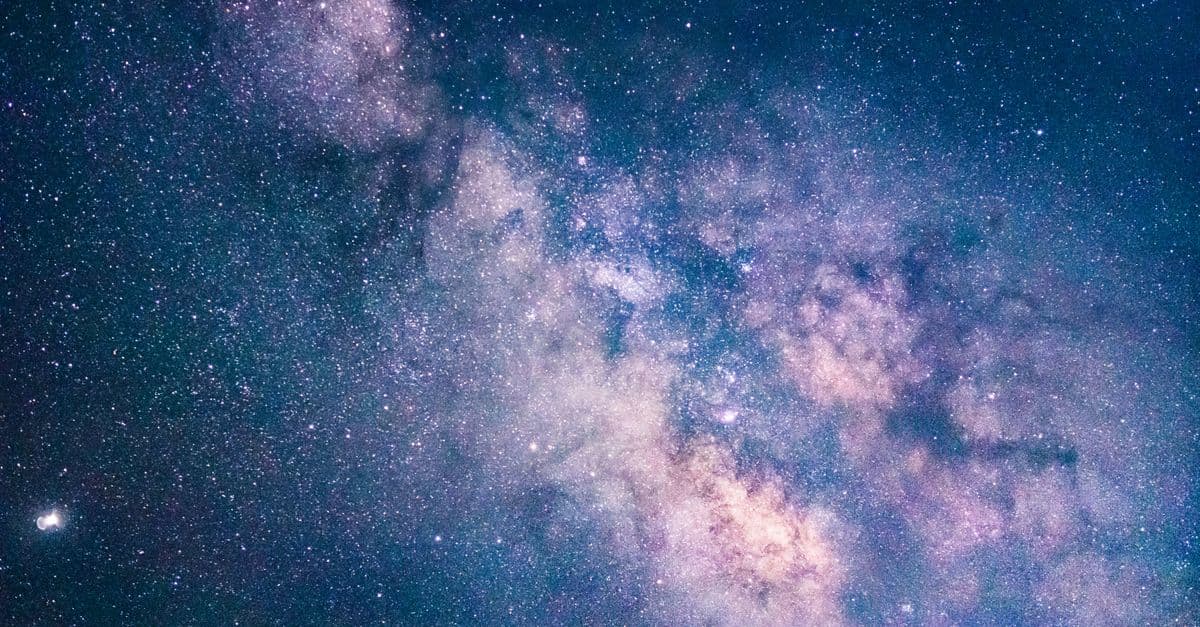
Photo: Engin Akyurt / Pexels
LIGO does not "see" gravitational waves the way a telescope sees light. It measures a distance change smaller than one ten-thousandth the width of a proton, spread across two 4-kilometer (2.5-mile) laser arms, and does it fast enough to catch a signal that lasts a fraction of a second. The 2015 detection of GW150914 proved the concept worked. What happened after is less well known: a second landmark event in 2017 that let astronomers watch the same explosion with both gravitational waves and light, and a growing global network of detectors that has now logged well over 200 confirmed mergers. This piece explains the machine itself — how a laser beam becomes a spacetime ruler — and what the detector network has found since the first detection.
What a gravitational wave actually does to matter
A gravitational wave is a ripple in spacetime geometry produced by accelerating mass, in the same way an accelerating electric charge produces electromagnetic radiation. As the wave passes through a region of space, it alternately stretches space in one direction and squeezes it in the perpendicular direction, then reverses, cycling at the wave's frequency.
The effect on any object caught in the wave's path is described by a number called strain: the fractional change in length, denoted h. For GW150914, the strain at Earth was about 10⁻²¹, meaning a 4-kilometer arm changed length by roughly 4 x 10⁻¹⁸ meters, about 1/1,000th the diameter of a proton. That is not a small number to measure — it is arguably the smallest distance change ever measured by a laboratory instrument.
Two things make this measurable at all. First, LIGO's arms are long, so even a tiny fractional strain produces an absolute length change large enough to chase with light. Second, the same experiment is run at two separated sites — LIGO Hanford in Washington state and LIGO Livingston in Louisiana, roughly 3,000 kilometers (1,865 miles) apart — so a real astrophysical signal shows up in both with a timing offset that matches the light-travel time between them, while local noise (a truck door slamming, a distant earthquake) does not.
How the interferometer turns spacetime distortion into a signal
LIGO's core design is a Michelson interferometer: a laser beam hits a beam splitter, sends half the light down each of two perpendicular arms, bounces it off mirrors, and recombines the two beams. If both arms are exactly the same length, the recombined light interferes destructively and almost no light reaches the output photodetector. A passing gravitational wave stretches one arm while squeezing the other, which shifts the relative phase of the two beams and lets a small amount of light leak through to the detector. That leaked light is the signal.
A plain Michelson interferometer isn't nearly sensitive enough on its own, so Advanced LIGO adds three refinements on top of that basic geometry, according to the LIGO Scientific Collaboration's technical description of the instrument published in Classical and Quantum Gravity (arXiv:1411.4547).
- Fabry-Perot arm cavities. Each arm is not a single bounce but a cavity formed by two suspended mirrors, an "input test mass" and an "end test mass," that reflect the light back and forth roughly 300 times before it exits. This multiplies the effective path length the light travels through the strained spacetime, amplifying the phase shift a gravitational wave produces.
- Power recycling. Almost all of the laser light that isn't absorbed or scattered returns toward the source instead of the detector, because the interferometer is tuned to destructive interference at the output. A power recycling mirror placed at the input reflects that returning light back in, building up circulating laser power inside the instrument to roughly kilowatts from an input of about 125 watts.
- Signal recycling. A separate mirror placed at the output (dark) port lets the tiny signal-carrying sidebands of light resonate and build up before they're read out, which sharpens the detector's frequency response in the band where merging black holes and neutron stars actually radiate, roughly 10 Hz to a few kHz.
An analogy: think of the arm cavities as an echo chamber for a whisper. A single pass of the whisper past a listener is nearly impossible to hear. Bounce that whisper back and forth 300 times past the same listener and the effective exposure time — and the accumulated phase information — goes up by two orders of magnitude, even though nothing about the whisper itself changed.
Why does LIGO need two perpendicular arms instead of one?
A gravitational wave stretches space along one axis while compressing it along the perpendicular axis simultaneously, a pattern called a quadrupole distortion. A single arm would show almost no net signal because a laser bouncing along only one axis can't distinguish a true stretch from ordinary laser frequency drift. Comparing two perpendicular arms against each other cancels out common-mode noise and isolates the differential stretch-squeeze signature unique to a gravitational wave.
The noise problem, and how squeezed light and vibration isolation solve it
Building an interferometer sensitive to 10⁻¹⁸ meter changes means every other source of vibration or optical noise has to be pushed below that threshold across a wide frequency band. LIGO's mirrors ("test masses") are 40-kilogram (88-pound) fused silica cylinders suspended from multi-stage pendulum systems, some housed at the bottom of vacuum chambers isolated from ground vibration by active feedback systems that damp seismic noise by many orders of magnitude at the frequencies LIGO cares about.
Even after removing seismic and thermal noise, one obstacle remains that no amount of mechanical isolation fixes: quantum noise from the light itself. Laser light is made of photons, and the random arrival times of individual photons (shot noise) plus the random momentum kicks they impart to the mirrors (radiation pressure noise) set a fundamental floor on sensitivity. Since 2019, LIGO has pushed below that floor using "squeezed light," a quantum optics technique that trades noise in one measurable quantity for extra noise in a quantity the experiment doesn't care about.
According to Caltech's LIGO Laboratory and a 2024 update on the technique, injecting frequency-dependent squeezed vacuum states into the interferometer's dark port reduces quantum noise across the detector's full frequency band and increased LIGO's astrophysical detection rate by up to 65%, achieved with a 300-meter (984-foot) filter cavity added at both the Hanford and Livingston sites (SPIE Photonics Focus, 2023; Caltech/LIGO Lab). Squeezed light is a genuinely strange idea worth unpacking: quantum mechanics guarantees a minimum uncertainty between two paired properties of a light field, but nothing forces that uncertainty to be distributed evenly between them. Squeezing shifts more of the uncertainty onto a property that doesn't affect LIGO's measurement, and less onto the one that does, essentially reshaping quantum randomness to LIGO's advantage rather than eliminating it.
How sensitive does an instrument have to be to detect a gravitational wave?
LIGO's strain sensitivity in its most sensitive frequency band is about 10⁻²³ per root-Hz, which lets it detect fractional length changes down to roughly 10⁻²¹ integrated over a signal's duration. That sensitivity has to be maintained continuously across a multi-kilometer instrument sitting on a planet full of trucks, earthquakes, and ocean waves, which is why isolation and quantum noise reduction are as important as the interferometer's core optical design.
GW170817: the merger astronomers watched with more than gravity
GW150914 proved gravitational waves were real. GW170817, detected on August 17, 2017, proved gravitational wave astronomy could work alongside every other kind of astronomy at once. The signal came from two neutron stars, not black holes, spiraling together and merging, with component masses later measured in the range of roughly 0.86 to 2.26 solar masses, according to the LIGO-Virgo collaboration's discovery paper published in Physical Review Letters (LIGO-P1700294; arXiv:1710.05833).
What made GW170817 historic was the 1.7-second delay. NASA's Fermi Gamma-ray Burst Monitor independently detected a short gamma-ray burst, designated GRB 170817A, just 1.7 seconds after the gravitational wave signal ended, definitively linking short gamma-ray bursts to supernova. About 20 km wide but containing more mass than the Sun.">neutron star mergers for the first time. Less than 11 hours later, ground-based telescopes, starting with the Swope 1-meter telescope in Chile, located an optical counterpart in the galaxy NGC 4993, about 40 megaparsecs (roughly 130 million light-years) away.
That optical glow was the first confirmed observation of a kilonova, an explosion powered by the radioactive decay of heavy elements freshly synthesized in the neutron-rich merger debris through what's called the r-process. In plain terms: a substantial fraction of the universe's gold, platinum, and other heavy elements likely trace back to events exactly like this one, and GW170817 is the first time anyone caught the production process in the act, across gravitational waves, gamma rays, X-rays, optical, infrared, and radio light.
The detector network today: more eyes, better triangulation
A single gravitational wave detector can tell you a signal happened and roughly what produced it, but not precisely where in the sky it came from — the arms respond to a wave from almost any direction, so localization requires timing differences between multiple, widely separated detectors, similar to how the human brain locates a sound by comparing arrival time at each ear.
The current global network includes the two LIGO detectors in the US, the Virgo detector near Pisa, Italy (3-kilometer, or 1.9-mile, arms, operated by the European Gravitational Observatory), and KAGRA in Japan, an underground detector built in a mountain to reduce seismic noise, which became the first detector network to have LIGO, Virgo, and KAGRA all taking data simultaneously during the O4 observing run that began May 24, 2023, according to Caltech's LIGO Lab (ligo.caltech.edu). During the initial segment of that run alone, the network identified 128 statistically significant gravitational wave candidates after full offline analysis, roughly 50% more than were flagged in real time, reflecting both improved detector sensitivity and better analysis pipelines (LIGO-G2401768).
| Detector | Location | Arm length | First joined network |
|---|---|---|---|
| LIGO Hanford | Washington, USA | 4 km (2.5 mi) | 2015 |
| LIGO Livingston | Louisiana, USA | 4 km (2.5 mi) | 2015 |
| Virgo | Cascina, Italy | 3 km (1.9 mi) | 2017 |
| KAGRA | Kamioka, Japan | 3 km (1.9 mi), underground | 2020 (full network participation from 2023) |
Table: The current gravitational wave detector network, as described by the LIGO Scientific Collaboration and LIGO-Virgo-KAGRA observing run reports.
Between O3 (2019–2020) and O4, the LIGO detectors themselves also got measurably more sensitive: laser power injected into the interferometer rose to 60–75 watts from about 37 watts in O3, and frequency-dependent squeezing cut low-frequency noise, together reducing detector noise across almost the entire observing band (arXiv:2202.00847). More sensitivity means detecting fainter, more distant, or lower-mass events that earlier detector generations would have missed entirely.
What people get wrong about how LIGO works
A common misconception is that LIGO's mirrors physically wiggle back and forth in a way you could, in principle, watch happen. They do move, but by a distance so far below atomic scale that "movement" is really a statement about accumulated laser phase, not something with a meaningful before-and-after snapshot. The signal is fundamentally a measurement of interference patterns integrated over the arm cavity's roughly 300 round trips, not a video of a mirror shaking.
Another frequent mix-up is treating LIGO's discovery of GW150914 and its later detections as evidence that gravitational waves are strong, dramatic phenomena. They're the opposite: gravity is by far the weakest of the four fundamental forces, and even a merger releasing three solar masses' worth of energy as pure gravitational radiation (as GW150914 did) produces a strain at Earth of one part in a sextillion. What LIGO demonstrates is not that gravitational waves are powerful, but that human measurement technology got precise enough to catch something extraordinarily faint.
A third confusion: people sometimes assume the detector network can "point" at a merger the way a telescope points at a star. It can't. Localization comes entirely from comparing arrival-time differences and signal strength across multiple detectors placed far apart, which is why adding Virgo and KAGRA to the network mattered as much for sky localization as for raw detection sensitivity. A two-detector network like early LIGO alone can narrow a source to a large arc of sky; a four-detector network can narrow it enough for optical telescopes to actually find the right galaxy, which is exactly what let astronomers locate GW170817's kilonova in NGC 4993 within hours.
How is a black hole merger detection different from a neutron star merger detection?
Black hole mergers produce no light at all, only gravitational waves, because black holes by definition emit no electromagnetic radiation. Neutron star mergers, like GW170817, involve ordinary matter that gets shredded, heated, and ejected during the collision, producing gamma rays, kilonova light, and radio emission alongside the gravitational wave signal, which is why only neutron star (or neutron star-black hole) mergers enable multimessenger follow-up.
Frequently asked questions
Q: How small is the distance LIGO actually measures? A: For GW150914, the strain was about 10⁻²¹, which corresponds to a length change of roughly 4 x 10⁻¹⁸ meters across a 4-kilometer arm, about 1/1,000th the diameter of a proton. LIGO's most sensitive frequency band reaches a strain sensitivity of about 10⁻²³ per root-Hz.
Q: Why does LIGO need two widely separated detectors? A: A single detector can't distinguish a real gravitational wave from local noise like a passing truck or a distant earthquake. Two sites 3,000 kilometers (1,865 miles) apart, Hanford and Livingston, must register the same signal with a timing offset matching the light-travel time between them, which filters out almost all non-astrophysical noise.
Q: What is squeezed light and why does LIGO use it? A: Squeezed light is a quantum optics technique that redistributes the unavoidable quantum uncertainty in a laser beam so less of it falls on the property LIGO measures. Since 2019, frequency-dependent squeezing has cut quantum noise across LIGO's full detection band and increased its detection rate by up to 65%, per Caltech's LIGO Laboratory.
Q: Did GW170817 prove anything general relativity hadn't already shown? A: Yes. It confirmed gravitational waves travel at the speed of light to within about one part in 10¹⁵, based on the near-simultaneous arrival of the gravitational wave signal and the gamma-ray burst, and it directly linked short gamma-ray bursts and heavy-element production to neutron star mergers for the first time.
Q: How many gravitational waves has the network detected so far? A: The count keeps growing with each observing run. During just the first segment of the O4 run that began in May 2023, the LIGO-Virgo-KAGRA network identified 128 statistically significant candidate events after full analysis, on top of roughly 90 events catalogued from the three previous observing runs combined.
What comes after LIGO: bigger arms and a detector in space
Advanced LIGO, Virgo, and KAGRA are already close to the limits of what a 3-to-4-kilometer, ground-based interferometer can do. The next leap in sensitivity isn't a software upgrade, it's a fundamentally larger and, in one case, completely different kind of instrument.
Cosmic Explorer, the proposed US successor to LIGO, would build two L-shaped interferometers with arms of 40 kilometers (25 miles) and 20 kilometers (12.4 miles), roughly 10 times longer than LIGO's current 4-kilometer arms. Longer arms mean a passing gravitational wave produces a proportionally larger absolute length change for the same fractional strain, which is why Cosmic Explorer's designers project sensitivity improved by more than an order of magnitude over Advanced LIGO (arXiv:1907.04833).
Europe's answer is the Einstein Telescope, a proposed underground observatory built as a triangle rather than an L, with three 10-kilometer (6.2-mile) arms meeting at 60-degree angles instead of 90. Building it underground, similar in spirit to KAGRA's mountain tunnel, isolates the instrument from the surface seismic noise (wind, ocean waves, human traffic) that limits how quiet LIGO's above-ground sites can ever get. The triangular geometry also means the Einstein Telescope is really three overlapping detectors in one facility, which lets it cross-check its own signals against instrumental artifacts without needing a second, distant site (arXiv:2401.04388). Current planning targets observations beginning around 2035.
The most radical departure, though, is LISA (Laser Interferometer Space Antenna), a European Space Agency mission that abandons solid ground entirely. LISA will fly three spacecraft in a triangular formation trailing Earth's orbit around the Sun, connected not by rigid arms and mirrors but by laser beams spanning 2.5 million kilometers (about 1.55 million miles, more than six times the Earth-Moon distance) between each pair of spacecraft. ESA gave the mission formal go-ahead, with launch on an Ariane 6 rocket planned for 2035 (ESA; LISA Consortium).
That enormous arm length isn't just LISA's headline stat, it's what lets the mission see an entirely different slice of the gravitational wave spectrum. Ground-based detectors like LIGO are only sensitive to frequencies roughly between 10 Hz and a few kHz, set by the length of noise-free arms that fit on Earth's surface. LISA's million-kilometer arms instead target the millihertz band, roughly 0.1 mHz to 1 Hz, which is populated by sources no ground detector can hear at all: pairs of white dwarf stars orbiting each other within our own galaxy, and the mergers of supermassive black holes at the centers of colliding galaxies, millions of times heavier than anything LIGO has detected (arXiv:2409.00927).
Put together, the three projects aren't competing for the same discovery, they're splitting up the gravitational wave spectrum the way radio, infrared, and X-ray telescopes split up the electromagnetic one. Cosmic Explorer and the Einstein Telescope push ground-based sensitivity deep enough to catch fainter and more distant stellar-mass mergers than LIGO ever could; LISA opens an entirely separate low-frequency window that only a detector with arms spanning millions of kilometers, something no structure on Earth could ever hold rigid enough, can access.
The takeaway
LIGO's real achievement isn't the discovery of any single merger, it's building an instrument that turns 300 laser round-trips, kilowatts of recycled power, and quantum-squeezed vacuum states into a ruler precise enough to register spacetime moving by less than a proton's width. That precision is what made GW150914 possible in 2015, and it's what let GW170817 in 2017 become the first event ever observed through both gravity and light at once, tying gravitational wave astronomy directly to the origin of heavy elements like gold and platinum. With Virgo and KAGRA now running alongside the two LIGO detectors, the network isn't just detecting more mergers, it's finally able to say where in the sky they happened, and that's what turns a single dramatic detection into an ongoing observational science.
Read next:
Follow new articles
Add SciHub101 to your feed reader to see new science and technology stories.
About the Author
SciHub101 is an independent science and technology publication founded and edited by Buğra Sözeri, a software engineer and app developer based in Türkiye. AI tools assist with drafting and research. Source documentation in the existing archive is uneven, and articles are being reviewed and corrected. The Editorial Team byline identifies editorial responsibility; it does not certify specialist or independent human review. Where we compare products, anything built by our own team is labelled as such — see the editorial guidelines and About page for how corrections and disclosures work.
Related Articles

Haber-Bosch Process: Industrial Nitrogen Fixation
The synthesis process that enabled agriculture to feed billions
Genetic Expression in Microgravity: What Space Reveals About Our DNA
NASA's Twins Study, GeneLab rodent missions, and single-cell astronaut data show how removing gravity rewrites gene activity — and what that reveals about immunity, aging, and disease on Earth.
The LIGO Gravitational Wave Detection: GW150914 Explained
On September 14, 2015, LIGO detected a ripple in spacetime from two merging black holes a billion light-years away. Here is how the instrument works and what it measured.

The First Gravitational Wave Detection
LIGO's first gravitational-wave detection confirmed a century-old prediction of general relativity and opened a new way to observe the universe.
Stellar vs. Supermassive Black Holes: The Mass Gap Mystery
Black holes come in sizes that span 10 orders of magnitude, from a few solar masses to tens of billions — but the range between roughly 65 and a few hundred solar masses appears nearly empty. A 2020 gravitational wave event punched straight through that forbidden zone, and nobody fully agrees on how.
Machine Learning and Gravitational Wave Detection: How AI Listens to the Universe
LIGO's gravitational wave detectors produce a constant roar of noise. Machine learning is the ear that hears the cosmos whispering beneath it.