What Are Exomoons? The Hunt for Moons Beyond Our Solar System
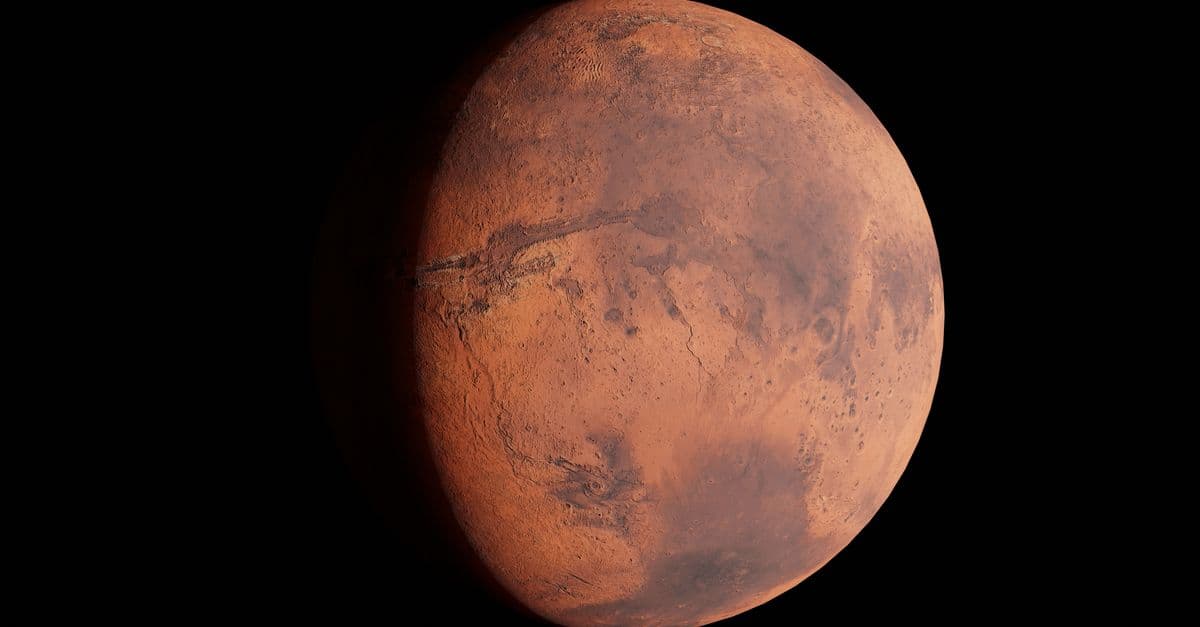
Photo: Zelch Csaba / Pexels
An exomoon is a moon that orbits a planet around another star, and as of this writing none has been confirmed. That is odd, because the solar system is crowded with moons: Saturn alone has 293 with confirmed orbits as of June 2026, according to the Wikipedia list of its moons. Astronomers have found thousands of planets and expect moons to be common around them. This article explains why the moons are so hard to catch, what the two best candidates actually show, and how a moon could be habitable even when its planet is not.
What counts as an exomoon, and why astronomers expect them
A moon is a natural satellite bound to a planet rather than directly to a star. An exomoon is the same thing around a planet in another planetary system. The definition is simple. Proving that one exists is not.
The expectation comes from our own neighborhood. Every giant planet in the solar system has a retinue of moons, and several of the largest are worlds in their own right. Ganymede is bigger than Mercury. Titan has a dense atmosphere with methane rain and rivers, which the article on Titan covers in detail. Io is the most volcanically active body we know of. If planets elsewhere form the same way, with a disk of gas and dust around a young giant that builds satellites the way the Sun's disk built planets, then large moons around exoplanets should be routine.
The catch is that this expectation rests on one example. We do not yet know how often giant planets in other systems keep large moons, how big those moons get, or how many are stripped away when planets migrate. An exomoon census would answer all three. It would also test whether the moon-forming process we infer from Jupiter and Saturn is typical or a local accident.
Two kinds of moons matter for the rest of this article. Regular moons form in a disk around their planet and orbit close in, roughly in the planet's equatorial plane. Captured moons, like Neptune's Triton, start life elsewhere and get snared by the planet's gravity. Detection methods favor large, wide-orbiting moons, so the first exomoons found are likely to be unusual cases, not typical ones.
Why moons are so hard to see
Imagine trying to spot a gnat circling a streetlamp from a mile away, while the lamp flickers on its own. That is close to the exomoon problem. The moon is small, it sits next to a much brighter object, and the star it all orbits has its own noise.
The most productive planet-finding method is the transit: a planet crosses the face of its star and blocks a sliver of light. The fractional dimming is roughly the square of the ratio of the two radii. A moon crossing the same star blocks far less. The table below runs the arithmetic for a Sun-like star with a radius of 695,700 km.
| Transiting body | Radius | Approximate dimming |
|---|---|---|
| Jupiter | 69,911 km | about 1.0% |
| Neptune-sized moon (3.9 Earth radii) | about 24,800 km | about 0.13% |
| Earth | 6,371 km | about 84 parts per million (ppm) |
| Titan | 2,575 km | about 14 ppm |
| Earth's Moon | 1,737 km | about 6 ppm |
Dimming is (body radius / star radius) squared, computed here as a worked example. Real signals vary with the star's size and the geometry of the crossing.
Now compare those figures with what telescopes can do. The Kepler space telescope aimed for 20 ppm precision on a magnitude-12 star over a 6.5-hour window and reached a median of 29 ppm. A Titan-sized moon around a Sun-like star sits at about half that noise floor for a single transit. It can only emerge by stacking many transits and modeling out starspots, granulation on the star's surface, and instrument drift.
Size is not the only problem. A planet transits on a fixed schedule, which makes it easy to fold many orbits together. A moon moves around its planet while the planet moves around the star, so the moon's dip lands in a different place each time. Folding the data does not stack the moon's signal cleanly. Researchers instead fit a full model of the planet and moon orbiting together and ask whether the extra parameters improve the fit more than random noise would.
Three signals a moon leaves behind
A moon can reveal itself in three ways, and the best claims need more than one.
A second dip. The moon crosses the star near the planet's transit, producing a shallow extra dimming just before or after the main one. Because the moon is farther from the star's disk center at some phases and closer at others, the dip's position shifts from orbit to orbit.
Transit timing variations (TTVs). The planet and moon orbit their shared center of mass, called the barycenter. The planet therefore wobbles slightly, and the time it crosses the star advances and lags by a small amount each orbit. Astronomers proposed this method in 2007. The size of the wobble depends on the moon's mass and its distance from the planet.
Transit duration variations (TDVs). The same wobble changes the planet's velocity across the star, which stretches or shrinks the transit time. In 2009 David Kipping showed that combining TTV and TDV can fix both the moon's mass and its orbital distance, which makes the pair a far stronger signature than either alone, according to the Wikipedia summary of exomoon detection.
The trouble with all three is that other things mimic them. A second, unseen planet in the system can shift transit times. A dark starspot passing under the planet can change a transit's depth and shape. A hiccup in the telescope's pointing can produce a dip that looks real. For any single signal, astronomers have a competing explanation ready.
Kepler-1625b-i: the first serious candidate
Kepler-1625 is a Sun-like star in the constellation Cygnus, about 8,200 light-years away. Its planet, Kepler-1625b, circles it every 287.4 days at about 0.98 astronomical units (AU), meaning roughly the distance from Earth to the Sun. It receives about 2.6 times the sunlight Earth does, according to the Wikipedia entry for the planet, which compiles the published values. The planet is a gas giant: about 1.18 Jupiter radii across, with a mass that is unmeasured but below about 11.6 Jupiter masses.
In 2017, Alex Teachey and David Kipping at Columbia University noticed hints of a moon in archival Kepler data. They asked for Hubble Space Telescope time to look again. In October 2017 Hubble watched a transit of the planet, and the team reported in October 2018 that two signals appeared. The planet crossed the star about 20 minutes off schedule, and a small extra dimming followed the main transit. The two signals pointed to a moon of roughly Neptune's size and mass, orbiting more than 3 million kilometers from the planet. That is about eight times the distance between Earth and the Moon, as listed in the same Wikipedia entry.
The team's own abstract is cautious. It says the evidence is consistent with a large exomoon but rests mainly on "a single but highly precise Hubble epoch," and it calls for further monitoring (Teachey and Kipping 2018, arXiv abstract).
The reanalyses
Other groups downloaded the same data and ran their own models. Their results split along the same lines as the signals:
- February 2019: Rene Heller and colleagues recovered both signals but suggested that an undetected, inclined hot Jupiter in the system could also explain the data without any moon.
- April 2019: Laura Kreidberg, Rodrigo Luger, and Megan Bedell recovered the timing offset but not the extra dip, which weakens the moon case because a real moon should produce both.
- 2020: Teachey, Kipping, and Burke replied that the second reanalysis contained stronger systematic errors that may explain the different outcome.
- Planet mass: A radial-velocity study set an upper limit of about 11.6 Jupiter masses, which keeps the planet below the deuterium-fusion limit but does not settle whether anything orbits it.
Years later, the candidate has not been confirmed or killed. That is a common fate in this field. When the signal sits at the edge of the data, more analysis can move it either direction without ever resolving it.
One more point is worth stating plainly. If the moon is real, it is a Neptune-sized body orbiting a giant planet. Nothing in our solar system looks like that. Standard formation models struggle to build satellites that massive around a planet, so if the candidate holds up, it would force a rethink of how moons form.
Kepler-1708b-i: a second candidate, with a thinner record
Kipping and colleagues reported a second candidate from a systematic search of 70 cool giant planets in the Kepler archive: Kepler-1708b-i. The host star is about 5,580 light-years away. The planet is slightly smaller than Jupiter, at about 0.89 Jupiter radii, and takes 737 days to circle its star at 1.64 AU. It receives only about 56% of the sunlight Earth does (Wikipedia entry for Kepler-1708b).
The candidate moon is smaller than the first, at about 2.6 Earth radii, and could orbit up to 12 planetary radii out. That puts it in a size range that people call "mini-Neptune," a class of planets with no counterpart in our solar system. The planet itself transited only twice in the Kepler data, so no timing variations could be measured, and the case rests on the dimming alone.
Disagreement followed here as well. A 2024 paper by Heller and Hippke disputed the signal. Kipping's group replied that the moon remains likely but needs more observations. A follow-up analysis suggested Hubble probably cannot detect the moon, while JWST should be able to confirm or refute it. The same entry notes that the original analysis put the chance of at least one false positive in its 70-planet sample below 50%. In plain terms: the authors thought the odds favored the moon being real, but not by a margin that closes the case.
| Candidate | Host planet distance | Claimed moon size | Evidence type | Status |
|---|---|---|---|---|
| Kepler-1625b-i | about 8,200 light-years | about Neptune's size and mass | Hubble dip plus 20-minute timing offset | Disputed since 2019 |
| Kepler-1708b-i | about 5,580 light-years | about 2.6 Earth radii | Transit dip in two Kepler transits | Disputed since 2024; JWST could test |
Other claims and non-transit routes
The transit method is not the only way to look for moons, and it is not the only route that has produced claims. Each approach has its own blind spots.
Sodium and volcanic moons. Io spews sulfur dioxide and sodium into a huge cloud around Jupiter. A 2019 study suggested that unusually high sodium around the planet WASP-49 Ab might come from a volcanic moon, and a 2024 follow-up by Oza and colleagues examined it again, according to the exomoon overview on Wikipedia. WASP-12 b is another candidate with excess sodium. These are proposals, not detections.
Microlensing. Gravitational microlensing happens when a foreground object passes in front of a background star and briefly magnifies it. Astronomers have reported two candidate moons of free-floating planets this way, one by Bennett and colleagues (2013, 2014) and one by Miyazaki and colleagues (2018). Because a microlensing event never repeats, these cases cannot be re-observed.
Direct imaging. Tidally heated moons around wide-orbit young giants may glow in infrared. JWST could image them in principle if they sit far enough from their star, as Limbach and Turner suggested in 2013.
Radio emissions. Io's interaction with Jupiter's magnetic field produces bursts of decametric radio waves. Searches for similar emission from exoplanets could in theory point to a moon feeding the planet's magnetosphere.
Pulsar timing. A moon around a planet that circles a pulsar could be detectable through tiny shifts in the pulsar's clock-like pulses, but this works for only a handful of systems.
What does not work. Doppler spectroscopy, the radial-velocity technique that found the first exoplanets, cannot detect an exomoon. A planet and its moon pull on the star as a single point mass.
In 2025, a JWST transit search for moons of Kepler-167e was inconclusive; the dip it saw may be better explained by a planet passing over a starspot. In July 2026 ESO announced radial-velocity evidence for at least one planetary-mass satellite orbiting CD-35 2722 B, an object that is probably a brown dwarf. Whether that counts as an exomoon depends on definitions, since the object is massive enough to be a planet itself. Both items come from the same Wikipedia overview, and neither changes the status of the field: no moon beyond the solar system is confirmed.
How far from its planet can a moon stay?
A moon must stay inside the region where its planet's gravity beats the star's. That region is the Hill sphere, and its radius scales with the planet's orbital distance and the cube root of the planet-to-star mass ratio. For Earth the Hill sphere reaches about 1.5 million km. The Moon orbits at 384,399 km, which is a bit over a quarter of the way out.
In general, moons that orbit in the planet's rotation direction stay stable only inside part of the Hill sphere, and the stable fraction shrinks for planets close to their star. A common rule from simulations is that a moon's orbital period needs to be shorter than about one-ninth of its planet's year. For a planet with a 90-day orbit, that means the moon must circle in under 10 days. Simulations cited in the Wikipedia article on habitability of natural satellites suggest moons with periods under roughly 45 to 60 days stay bound to a giant planet orbiting 1 AU from a Sun-like star.
The inner edge is just as unforgiving. Inside the Roche limit, a moon's self-gravity cannot hold it together against the planet's tidal pull, and it breaks into a ring. So a stable moon lives in a window, and the window is wider around heavier planets with longer orbits. That is one reason Kepler-1625b-i and Kepler-1708b-i, both on year-long orbits around Jupiter-sized planets, make sense as targets: the planet's year is long enough to leave room for a big moon.
There is a second constraint that works in the opposite direction. Tides from the planet can slowly drag a moon outward or pull it inward, depending on whether the planet spins faster than the moon orbits. Over billions of years, a moon can spiral out of its stable window or crash into the planet. The Moon is moving away from Earth by a few centimeters a year for this reason. A moon that looks stable today may have lasted only a fraction of its host star's lifetime.
Could an exomoon be habitable?
The habitability case has two parts: moons that sit in a star's habitable zone, and moons that get their heat from tides. They overlap in some designs and diverge in others.
Habitable-zone moons: the "Pandora" scenario
A giant planet inside its star's habitable zone, the band where an Earth-like planet could hold liquid water, may carry moons that could, too. Wikipedia's habitability summary cites more than 120 giant planets in habitable zones by 2018, so there is no shortage of candidate hosts. The planet itself would be a gas giant, but a large moon could in principle have a solid surface and an atmosphere. The article on the habitable zone explains how that band is defined and why it moves with the star's brightness.
Several conditions apply, drawn from the published modeling:
| Condition | Value or finding | Source |
|---|---|---|
| Minimum star mass | About 0.2 solar masses | Heller (2012); Heller and Barnes (2013) |
| Moon mass to hold an Earth-like atmosphere for 4.6 billion years (Mars-like density) | At least about 7% of Earth's mass | Habitability of natural satellites |
| Mass for an intrinsic magnetosphere | Ganymede has one at 2.5% of Earth's mass | Habitability of natural satellites |
| Habitable edge | Moons inside it are uninhabitable due to tidal heating and illumination | Heller and Barnes (2013) |
| Orbit range that works | Roughly 5 to 20 planetary radii | Habitability of natural satellites |
| Typical planet-to-moon mass ratio | About 10,000 | Habitability of natural satellites |
The "habitable edge" idea, from Heller and Barnes in 2013, says that a moon too close to its giant planet is heated too strongly by tides and by the planet's own infrared glow, which can push it into a runaway greenhouse. The edge depends on the planet's mass, the moon's orbit, and its eccentricity. Outside the edge, a moon can have a stable climate.
The mass ratio of about 10,000 matters because it limits how heavy a moon can be. The satellites of Jupiter and Saturn follow that pattern: each is a tiny fraction of its planet's mass. To get a moon with Earth-like mass, you need a planet with thousands of Earth masses to start with, which means a super-Jupiter. That is why gas giants in the habitable zone, rather than ordinary ones, are the best candidate hosts.
Atmosphere retention is the other hurdle. Stellar ultraviolet light and particle bombardment strip air from small worlds, so atmosphere-retention modeling favors large moons. The habitability literature puts the minimum at roughly 7% of Earth's mass for an Earth-like atmosphere to last 4.6 billion years, as the table above shows.
M dwarfs, the dim red stars that make up most stars, are a hard case. The habitable zone around a dim star sits so close that the star's gravity and tides make moon orbits unstable, and published modeling sets a minimum host-star mass of about 0.2 solar masses for habitable moons. Those stars are poor hunting grounds.
Tidal heating: warm moons far from any star
The second route is independent of starlight. A moon on a slightly stretched orbit flexes as it moves closer to and farther from its planet. The flexing generates friction inside the moon, which turns into heat. Tidal heating is the conversion of orbital and rotational energy into heat through tidal friction, as the Wikipedia article on tidal heating describes it. A resonance with other moons keeps the orbit stretched, because their repeated tugs stop the orbit from smoothing into a circle.
Our solar system supplies three working examples:
- Io. The most volcanically active body in the solar system. Its orbital resonances with Europa and Ganymede keep its orbit eccentric. The article on Io goes through the observations.
- Europa. Evidence points to a liquid saltwater ocean, possibly about 100 km deep, beneath an ice shell estimated at 10 to 30 km thick, according to the Wikipedia entry on Europa. Tidal friction in its core, ocean, and ice helps keep that ocean liquid.
- Enceladus. Its resonance with Dione is thought to sustain a liquid ocean and the water-vapor geysers that NASA's Cassini probe sampled. The article on Europa and Enceladus covers the search for life in both.
Scale these up. A cold gas giant, far outside any habitable zone, with several large moons locked in resonance, could host ocean moons for billions of years. If so, the places where life could exist would include the dark, cold outskirts of planetary systems around stars too faint to warm any planet's surface. That would greatly enlarge the number of potentially habitable worlds. It would also make them nearly impossible to find with current instruments, since a distant, dark moon gives off almost no light.
The problems that remain
Several things could cancel the advantages above.
Radiation. A giant planet's magnetic field shields its inner moons from the stellar wind, but it also traps charged particles in intense belts. Europa's surface receives about 5.4 sieverts per day, enough to harm or kill a person within one Earth day, per the same Europa entry. Life on such a moon would have to live under ice or rock. A moon orbiting farther out gets less radiation but also less tidal heat, so there is a trade-off.
Eclipses. A moon in orbit around a planet spends part of each orbit in the planet's shadow. For a moon close in, the dark spell is short. For a moon farther out, eclipses may lengthen and chill the surface. A tidally locked moon has a day equal to its orbital period, and the planet-facing side may be bathed in reflected and infrared light from the giant. The article on tidal locking explains why almost every large moon is locked this way.
Impacts and young-system chaos. Young giant planets stir up smaller bodies with their gravity. A moon near one of them can endure a heavy bombardment in the first few hundred million years.
Stability over time. Tides slowly shift moon orbits. A moon that sits comfortably in the habitable zone today may not stay long enough for biology to take hold.
The result is not that exomoons are habitable or uninhabitable as a class. It is that a small fraction of them, with the right mass, orbit, and heating, could be, and we have no way yet to count them.
What would settle the question
Confirming an exomoon will take a clean signal from an instrument built for the job. Several are in play.
JWST. The James Webb Space Telescope observes in infrared with high photometric stability, and the follow-up analysis of Kepler-1708b suggests it should be able to confirm or refute that candidate. JWST can also measure the atmospheres of planets, a technique covered in the article on exoplanet atmospheres and biosignatures. If a large moon with its own atmosphere transits, the signal could in principle be separated from the planet's.
Roman Space Telescope. The Nancy Grace Roman telescope carries a microlensing survey of the galactic bulge. Per the Wikipedia entry for the mission, it launched on August 30, 2026, on a Falcon Heavy, and its microlensing census can reach planets down to a few times the Moon's mass. Microlensing events do not repeat, so any moon candidate it finds would be hard to confirm, but the survey's large sample could put the first statistical limits on moons of free-floating planets.
PLATO. The European Space Agency's PLATO mission is expected to launch in early 2027, according to the same exomoon overview. It will watch bright, nearby stars for years with Kepler-like precision, which is the kind of long, continuous, high-precision record that exomoon searches need.
TESS and ground-based follow-up. NASA's TESS covers bright stars across most of the sky, but it watches most of them for only about 27 days at a time, which is too short for planets on year-long orbits. Its value for exomoons is in finding bright targets for others to study.
A confirmation would likely need the same ingredients as any extraordinary claim: a signal repeated across independent observations, a pattern that matches a physical model in detail, and failure of every alternative explanation. A single epoch at the edge of the noise will not carry it, which is the lesson of the Kepler-1625b debate.
Common misconceptions
"Exomoons have been found." They have been claimed, not confirmed. The two Kepler candidates remain disputed, and other claims rest on indirect hints like excess sodium.
"Exomoons would orbit like Earth's Moon." The first detectable moons are likely to be large and far from their planet, because those are the ones that produce measurable timing shifts. Typical moons may be smaller and closer in than anything we can currently see.
"A moon of a habitable-zone giant would be Earth-like." It could receive Earth-like sunlight, but its habitability depends on its mass, its atmosphere, the planet's radiation belts, and eclipses. Mass alone rules out most candidates.
"No exomoon found means they are rare." Detection limits are the main reason for the silence. A Titan-sized moon around a Sun-like star dims it by about 14 ppm, below Kepler's per-transit noise. The absence of detections says more about our instruments than about the galaxy.
"Tidal heating means any moon can be warm." Tidal heating needs an eccentric orbit, and an eccentric orbit usually needs a resonance partner. A lone moon on a circular orbit gets almost none. And heating that is too strong, as at Io, makes a world a volcanic furnace instead of an ocean.
FAQ
Q: Has any exomoon been confirmed? A: No. As of this update, Kepler-1625b-i and Kepler-1708b-i remain candidates, and independent reanalyses have questioned both. Other claims, such as excess sodium near WASP-49 Ab, are indirect hints rather than detections.
Q: Why is Kepler-1625b-i controversial? A: The original 2018 claim rested on a single Hubble observation showing a 20-minute timing offset and a small extra dip. A 2019 reanalysis found an inclined hot Jupiter could explain the data, and another found the timing signal but not the dip. The original authors disputed the second reanalysis.
Q: How big would an exomoon have to be to detect? A: With current instruments, about Neptune-sized or larger for the first detections. A Titan-sized moon dims a Sun-like star by about 14 ppm, which is under Kepler's median precision of 29 ppm for a single transit window.
Q: Could an exomoon support life? A: Possibly. A large moon of a giant planet in its star's habitable zone could hold liquid water, and a moon with tidal heating could keep a subsurface ocean far from any star. No exomoon has been shown to be habitable, and radiation, eclipses, and orbit stability can all rule moons out.
Q: What is the difference between an exomoon and a rogue planet? A: An exomoon orbits a planet that orbits a star. A rogue planet orbits nothing and drifts through space on its own. Microlensing has produced two candidate moons of free-floating planets, so the two categories can overlap.
Q: Which telescopes will search for exomoons next? A: JWST could test Kepler-1708b-i. ESA's PLATO, expected to launch in early 2027, will watch bright stars for years with high precision. NASA's Roman telescope has a microlensing survey that may set statistical limits on moons of free-floating planets.
The takeaway
Exomoons are the cleanest case of a prediction that nobody has yet checked. Theory says they should be common, large ones could be habitable, and tidal heating could make dark, distant moons warmer than any planet around the same star. Observation says the signals are at or below the noise floor of the best telescopes ever flown, and every claim so far has a competing explanation. The first confirmation will likely come not from a single dramatic image but from a repeated, model-matching signal that survives every challenge, and that bar is what separates a candidate from a discovery.
Sources
- Teachey, A. and Kipping, D. (2018), evidence for a large exomoon orbiting Kepler-1625b, arXiv:1810.02362.
- Kepler-1625b, planet and candidate moon parameters with citations to Teachey et al. (2018), Heller et al. (2019), Kreidberg et al. (2019), and Teachey et al. (2020).
- Kepler-1708b, planet and candidate moon parameters, citing Kipping et al. (2022).
- Exomoon, detection methods, candidate list, and 2025-2026 updates.
- Habitability of natural satellites, stability and atmosphere-retention figures, citing Heller and Barnes (2013), Astrobiology 13(1): 18-46.
- Tidal heating, Europa, and Kepler space telescope, for the figures quoted above.
- Hill sphere and Nancy Grace Roman Space Telescope, for the orbital-stability and mission facts quoted above.
Related Reading
Follow new articles
Add SciHub101 to your feed reader to see new science and technology stories.
About the Author
SciHub101 is an independent science and technology publication founded and edited by Buğra Sözeri, a software engineer and app developer based in Türkiye. AI tools assist with drafting and research. Source documentation in the existing archive is uneven, and articles are being reviewed and corrected. The Editorial Team byline identifies editorial responsibility; it does not certify specialist or independent human review. Where we compare products, anything built by our own team is labelled as such — see the editorial guidelines and About page for how corrections and disclosures work.
Related Articles

How Does the Moon Affect Earth? Tides, Climate, and the Conditions for Life
The Moon raises the ocean tides, slows Earth's rotation, and is drifting away at about 3.8 cm per year. Whether it also keeps Earth's tilt stable enough for a mild climate is a live scientific debate, and this article lays out both sides.
What Is the Anthropic Principle? Why the Universe Seems Fine-Tuned for Life
The universe's physical constants appear finely tuned for life: change them slightly and stars, atoms, or chemistry might not exist. The anthropic principle argues this is a selection effect, since we can only observe a universe that permits observers. Whether that explains fine-tuning or merely restates it is one of the deepest debates in modern cosmology.
What Are Exoplanets — and Could Any of Them Host Life?
We've found over 5,500 planets orbiting other stars. Some are hot Jupiters, some are super-Earths, and a handful sit in habitable zones. Here's the science of finding them and the search for life elsewhere.

AI and Astrobiology: Machine Learning in the Search for Life Beyond Earth
From Mars rock targeting to exoplanet spectra, AI is helping astrobiologists sort possible signs of life from chemistry that looks alive but is not. Here is what it does, what it has not done, and why the hardest step is still human.
Kepler's Three Laws: Why Planets Speed Up Near the Sun
Kepler's three laws explained with NASA data: why orbits are ellipses, why planets speed up near the Sun, and how P² = a³ weighs planets and finds exoplanets.