What Is the Anthropic Principle? Why the Universe Seems Fine-Tuned for Life
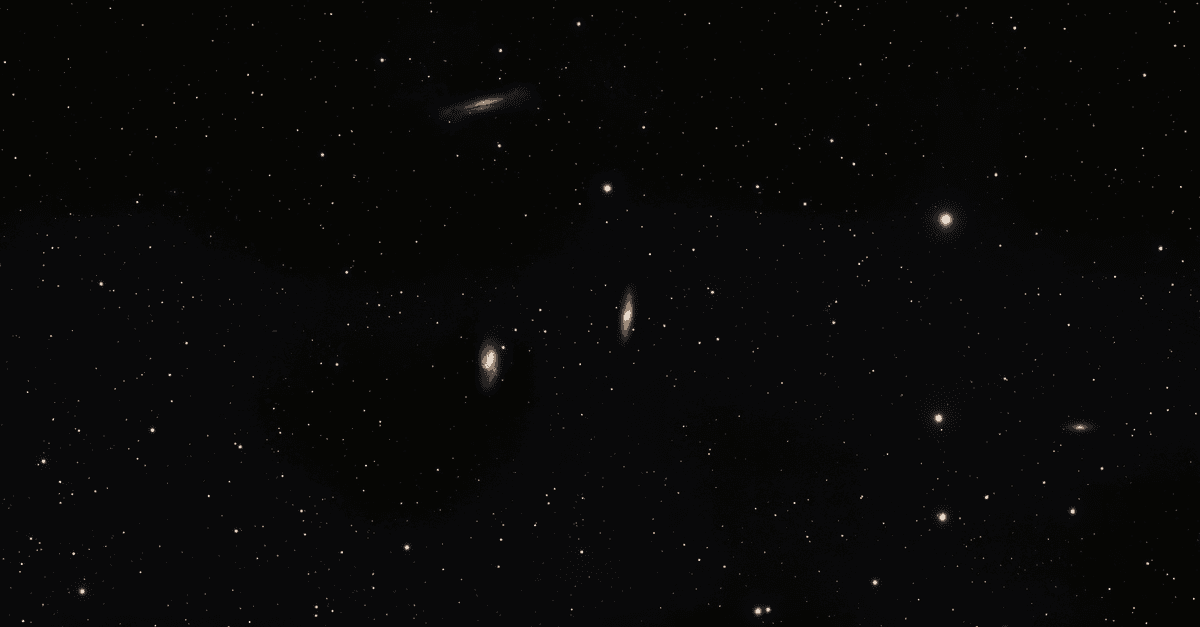
Photo: Del Woodcock / Pexels
The cosmological constant, the energy density of empty space, is measured at about 6 × 10⁻³⁰ grams per cubic centimeter, while a naive quantum calculation overshoots it by roughly 120 orders of magnitude. If it were just a few orders of magnitude larger, galaxies could not form. Why is it so small? The anthropic principle answers that we could only ever observe a universe in which observers can exist. This piece explains what that answer covers, where it works, and where critics say it stops working.
The fine-tuning problem in plain language
Physics has two kinds of ingredients: laws, which describe how things behave, and numbers, which set how strong the interactions are and how big the particles are. The laws do not tell you why the numbers have the values they do. The mass of the electron, the strength of gravity, and the amount of dark energy in the universe are measured, not derived.
Fine-tuning is the observation that life, or even basic structure like stars and galaxies, seems to depend sensitively on some of these numbers. The Stanford Encyclopedia of Philosophy defines the term as a situation where a model "reproduces observed phenomena only if its parameters take values within an extremely narrow range." The word is a metaphor. It suggests a dial being set, and the dispute is whether any dial-setter or dial-setting process exists.
An analogy helps. Imagine a combination lock whose correct code is 8-3-7-1. If you open it on your first try, you wonder whether someone told you the code. If you learn that every possible code was tried on a million different locks and you are holding the one that opened, the surprise evaporates. Fine-tuning arguments are about which of these two stories fits the universe.
The cosmological constant
The cosmological constant is the most dramatic case. Planck-satellite measurements give a vacuum energy density of about 5.96 × 10⁻²⁷ kg/m³, or about 6 × 10⁻³⁰ g/cm³, according to the overview of the cosmological constant problem on Wikipedia. Quantum field theory suggests the vacuum should carry far more. Depending on assumptions about where to cut off the calculation, the mismatch is between 50 and 123 orders of magnitude, and with a cutoff at the Planck scale it is about 120. The Stanford Encyclopedia entry on fine-tuning states the same range.
Meanwhile, as that entry notes, citing Steven Weinberg's 1987 work, only values a few orders of magnitude above the actual one are compatible with galaxy formation. A larger vacuum energy would drive space to expand so fast that matter could never clump into galaxies. The dark energy that accelerates the expansion is therefore both far smaller than quantum estimates and close to the largest value that still permits structure.
Examples that are often cited, and how solid they are
The table lists commonly discussed constants. The "caveat" column matters as much as the claim, because the strength of fine-tuning arguments varies a lot from case to case.
| Quantity | Approximate value | Common claim | Caveat |
|---|---|---|---|
| Cosmological constant | About 6 × 10⁻³⁰ g/cm³ | Much larger values prevent galaxies (Weinberg 1987) | The bound is a few orders of magnitude above the observed value, not a razor's edge |
| Gravity versus electromagnetism | Ratio of about 10³⁶ for two protons | Stronger gravity gives smaller, shorter-lived stars | Depends on other constants changing too |
| Primordial fluctuation amplitude (Q) | About 10⁻⁵ | Much smaller: no structure; much larger: dense systems and many black holes | Tied to inflation models and to the other parameters |
| Nuclear efficiency of hydrogen fusion | About 0.007 (0.7% of mass converted) | Changes alter stellar lifetimes and chemistry | Range of viable values is debated |
| Hoyle state in carbon-12 | About 7.65 MeV | Needed for carbon production in stars | Sensitivity measured by simulations, see below |
| Neutron-proton mass difference | About 1.29 MeV (neutron 0.14% heavier) | Reversal would make hydrogen unstable | Standard textbook argument; combined effects are complicated |
The gravity ratio is easy to check. The electric repulsion between two protons exceeds their gravitational attraction by a factor of about 1.2 × 10³⁶ at any distance, because both forces fall off as the square of the distance. That is the "gravity is weak" fact in numbers. The four forces involved are summarized in the four fundamental forces of nature. The primordial fluctuation amplitude is the size of the ripples seen in the cosmic microwave background, the afterglow from the early universe, which are about one part in 100,000.
The carbon story: Hoyle's resonance
Carbon is made in stars when three helium nuclei combine in what is called the triple-alpha process. The first step, two helium nuclei merging into beryllium-8, produces a nucleus that falls apart almost instantly, so the third helium nucleus has to arrive at nearly the same moment. That would be too rare to produce much carbon unless the combined system happens to have an energy level that matches, a resonance.
In 1953 Fred Hoyle and collaborators argued that carbon-12 must have such a state, and a Caltech group led by William Fowler later found a resonance near the predicted energy, about 7.65 MeV. The Stanford Encyclopedia cites the 1953 paper, "A state in C12 predicted from astrophysical evidence," for the claim that carbon and oxygen production is very sensitive to the strong nuclear force.
A caution is needed. The popular story says Hoyle reasoned that carbon-based life exists, so the resonance must exist. The historian Helge Kragh has disputed that Hoyle was using anthropic reasoning, calling that version an "anthropic myth," as the Wikipedia article on the anthropic principle notes. Hoyle's prediction stands as a successful physical prediction either way. Whether it was an anthropic prediction is a question about his motives, not about the nucleus.
The sensitivity has also been tested with modern computing. In a 2013 paper in Physical Review Letters (arXiv:1212.4181), Evgeny Epelbaum, Ulf-G. Meißner, and colleagues used lattice simulations of nuclear forces to see how the Hoyle state responds when the light quark mass and the strength of electromagnetism are varied. They derived limits on how far those constants can shift while stars still make enough carbon and oxygen. The limits are fairly tight, but they concern one element's supply and do not show that life is impossible elsewhere in parameter space.
Where the anthropic principle came from
The idea has older roots, but the name and the modern form come from the Australian physicist Brandon Carter, who introduced "anthropic principle" at a 1973 symposium in Kraków . Copernicus taught that Earth holds no special place, and Carter's point was that our location is nonetheless special in one specific respect: it must be compatible with our being here to look. The Stanford Encyclopedia gives his phrase for the weak form, that our position is "necessarily privileged to the extent of being compatible with our existence as observers."
The age of the universe as a first example
A cleaner example predates Carter. In 1961, Robert Dicke argued that the age of the universe, as seen by observers, cannot be random. Carbon, oxygen, and the other elements needed for chemistry were forged in stars, and stellar nucleosynthesis takes billions of years. A universe a million years old has no heavy elements and no planets, so nobody could ask about its age. Meanwhile, after the last stars burn out, no one is left to ask either. We therefore find ourselves in a window, and the Planck estimate of about 13.8 billion years sits comfortably inside it.
Two versions, and why they are not equal
Carter distinguished two statements.
- Weak anthropic principle (WAP). Our observations of the universe are limited to conditions compatible with our existence. This is a statement about sampling.
- Strong anthropic principle (SAP). The universe must be such as to admit the creation of observers within it at some stage. This sounds like a requirement on the universe itself.
The Stanford Encyclopedia notes that Carter himself treated the two as highlighting the same selection bias, with the strong version being stronger only when combined with a multiverse hypothesis. Later authors took it further. John Barrow and Frank Tipler's 1986 book The Anthropic Cosmological Principle gave the strong principle a teleological reading, in which the universe must have properties that allow life to develop, and proposed elaborations such as the claim that observers are needed to bring the universe into being. John Wheeler's "participatory" version linked observers to quantum measurement. Barrow and Tipler's "final" anthropic principle added that intelligent information processing, once arisen, never dies out. Martin Gardner mocked it as the "completely ridiculous anthropic principle." Most physicists reserve the term for the weak form, or for the strong form when it is tied to a multiverse.
How can a selection effect explain anything?
Selection effects explain a great deal in ordinary science. A classic analogy attributed to Arthur Eddington imagines a fisherman who uses a net with two-inch holes, catches no fish smaller than two inches, and concludes that the sea contains no smaller fish. The conclusion reflects the net, not the sea. The weak anthropic principle says that our existence is the net. We should not read the contents of the sample as the contents of the sea.
The principle is therefore a warning against a particular mistake. When we ask why the universe permits life, part of the answer is that we could not be asking if it did not. Whether that exhausts the question depends on whether other universes, or other regions, exist to be sampled. Without them, the selection effect has nothing to select from.
The multiverse connection
The selection argument becomes scientifically substantial when combined with the multiverse, the idea that our universe is one of many, with different constants. See multiverse theory explained for the range of proposals. The logic has four steps.
- Many constants are not fixed by any known fundamental theory and could, in principle, take other values.
- Some theories predict a vast set of possible vacuum states, each with different low-energy constants. In string theory, this set is called the landscape. Leonard Susskind's 2003 paper "The Anthropic Landscape of String Theory" (arXiv:hep-th/0302219) described it as "unimaginably large and diverse." A commonly cited lower bound is 10⁵⁰⁰ vacua, and a 2015 revision by Taylor and Wang raised the estimate far higher, according to the Wikipedia article on the string theory landscape.
- If a process such as eternal inflation realizes many of these vacua in different regions, the constants vary from place to place.
- Observers arise only in the regions where constants permit them, so that is where we must find ourselves.
The analogy here is a lottery. Someone has to win, and the winner is not shocked at the odds because millions of tickets were sold. A unique universe with a unique ticket would be strange. A multiverse of many tickets makes our winning draw unremarkable, if the draw happens in a region where life can exist.
What Weinberg actually did with the cosmological constant
A frequently repeated claim says Steven Weinberg used anthropic reasoning in 1987 to predict dark energy before its 1998 discovery. The record is more nuanced, and the nuance is useful.
Weinberg's 1987 paper in Physical Review Letters is cited by the Stanford Encyclopedia for the result that only values a few orders of magnitude above the actual one are compatible with galaxy formation. That is an upper bound on the vacuum energy, not a prediction of the observed number.
So the 1987 paper was a bound, not a prediction. A more complete calculation followed. In 1998, Hugo Martel, Paul Shapiro, and Weinberg published "Likely Values of the Cosmological Constant" in The Astrophysical Journal (arXiv:astro-ph/9701099). They computed how much matter collapses into structures big enough to host observers for different vacuum energies, and concluded that a small positive vacuum energy of up to about three times the present mass density is a reasonably likely value to observe, even if all values were equally probable a priori. The measured dark energy, in round numbers 70 percent of the cosmic energy budget against 30 percent for matter, is about twice the matter density today. That fits.
The right summary is that anthropic reasoning gave a prior expectation that was in the right ballpark, which is better than the naive quantum estimate by over a hundred orders of magnitude. It did not nail the value to many digits, and critics point out that the result depends on assumptions about the distribution of possible values and on which observers count.
The case against the anthropic principle
Criticism comes from several directions, and not all of it is aimed at the same target.
The tautology objection. The weak principle says that observers observe a universe that permits observers. That is true, but critics say it does not answer "why these values?" any more than "because I am here" answers "why is there a table in this room?" The reply is that the weak principle is not meant to be the whole answer. It tells you what the other half of the answer has to be: a mechanism that produces a range of values.
The measure problem. To say our constants are unlikely, or that a multiverse makes them likely, you need a probability distribution over possible values. The Stanford Encyclopedia notes that a uniform measure over real-valued constants assigns zero probability to any finite interval, a point raised by McGrew and coauthors in 2001 and by Colyvan and coauthors in 2005. In multiverse theories with infinitely many regions, counting them runs into the "measure problem," where different counting rules give different answers. Without a settled measure, claims that the constants are "improbable" or "probable" lack a firm basis.
The reference class problem. Anthropic predictions depend on which observers you count. All observers in our universe? All possible ones? Different choices give different expectations. The principle cannot be applied without that choice.
The inverse gambler's fallacy. The philosopher Ian Hacking pointed out in 1987 that if you walk into a room and see a pair of dice showing double sixes on the first roll you witness, it is a mistake to infer that many rolls must have happened before. Roy White applied the same objection to the multiverse in 2000: the existence of other universes does not make this universe more likely to be life-permitting. Defenders, such as Isaacs, Hawthorne, and Russell in 2022, have given formal arguments that many ways of conditioning on evidence do yield some confirmation of the multiverse. The debate is live.
Boltzmann brains. Ludwig Boltzmann proposed in 1896 that our ordered universe might be a rare fluctuation out of equilibrium. The counterargument, developed by Arthur Eddington in 1931 and later by Richard Feynman, is that a small fluctuation is vastly more probable than a large one, so most observers produced by fluctuations would be minimal, momentary minds floating in disorder, complete with false memories. By 2004, Andreas Albrecht and Lorenzo Sorbo had pushed this to its conclusion in cosmological theories. Sean Carroll, quoted in the Wikipedia entry for Boltzmann brains, described the scenario as one of "cognitive instability" and said, "We're not arguing that Boltzmann brains exist, we're trying to avoid them." For anthropic reasoning, the point is that counting observers across an unlimited multiverse can produce absurd answers unless the counting is constrained. It connects to the arrow of time and entropy.
Testability. If any set of constants can be explained by saying "we live in a region with those constants," the explanation risks being compatible with every outcome. David Gross, according to the string landscape article, has suggested that the idea may be unscientific, unfalsifiable, or premature. Supporters reply that the framework does make statistical statements, such as how likely a given vacuum energy is, which can be checked against data. Whether the statements are precise enough is the sticking point.
Other responses to fine-tuning
Anthropic selection is one of several answers. Each deserves its own weighing.
Design. Some argue that fine-tuning is evidence of intention. This is a philosophical and theological position that science neither confirms nor excludes. Many physicists reject using the design hypothesis within physics because it makes no distinctive, testable predictions about the constants.
A deeper theory. A complete theory of quantum gravity might fix the constants, or relate them so that fewer are free. Then the apparent fine-tuning would reflect our ignorance of necessity. String theory was once hoped to do this, but the landscape results suggest it allows many options instead.
Less fine-tuning than claimed. Fred Adams, in a 2019 review in Physics Reports (arXiv:1902.03928), examined constraints on coupling constants, particle masses, vacuum energy, and the amplitude of density fluctuations, and looked at special cases such as unstable deuterium and a stable diproton. He concluded that viable universes exist across a considerable range of parameter values, and that very different universes could still be habitable. Victor Stenger made a related argument, that fine-tuning claims often vary one parameter at a time. Luke Barnes, in a review in Publications of the Astronomical Society of Australia (arXiv:1112.4647), found many of Stenger's claims problematic, and the Stanford Encyclopedia summarizes Barnes as arguing that the life-permitting region in multidimensional parameter space is likely small. This is an unresolved technical dispute, not a settled one.
We do not know what life requires. Almost all fine-tuning claims assume chemistry like ours. If other forms of complexity could arise, the habitable range could be wider. The same worry applies to the habitable zone around a star, which is defined for liquid-water life.
Cosmological natural selection
Lee Smolin proposed in 1992, and popularized in his 1997 book The Life of the Cosmos, that universes reproduce through black holes. Each black hole spawns a new universe with slightly altered constants, so universes that make many black holes leave many descendants. Over many generations, the typical universe would have constants that favor star formation and black holes, and since stars also feed chemistry, that would incidentally favor life.
The idea has a feature rare in this field: a testable prediction. Smolin predicted in 1992 that no supernova. About 20 km wide but containing more mass than the Sun.">neutron star should be heavier than about 1.6 solar masses, later revised in more detailed modeling to about 2.0. Astronomers have since found a 1.97-solar-mass pulsar in 2010, PSR J0740+6620 at 2.08 ± 0.07 in 2019, and PSR J0952−0607 at 2.35 ± 0.17 in 2022, according to the Wikipedia article on cosmological natural selection. Those exceed the revised limit, which counts against the theory as stated. Critics also argue that the information transfer through a black hole it requires is untenable, a point made by Leonard Susskind, and Joe Silk has argued that our universe is about four orders of magnitude short of maximal black hole production. The mass of neutron stars thus gives an example of how a speculative cosmological idea can be confronted with data.
What the principle can and cannot do
The following distinctions keep the debate clear.
| Claim | Status |
|---|---|
| Observers can only observe conditions compatible with their existence | True by construction (weak principle) |
| The age of the universe falls in a window set by stellar evolution | Well supported, from Dicke onward |
| The observed vacuum energy is consistent with what anthropic selection would likely give | Plausible, depends on assumptions about the distribution |
| The universe must produce observers (strong principle) | Speculative; read as teleology by Barrow and Tipler |
| A multiverse exists, and so selection explains the constants | Unproven; no direct observation |
| The fine-tuning is extreme in all cases | Disputed; Adams finds more latitude |
Common confusions
"The anthropic principle says the universe was made for us." The weak form says nothing of the kind. It says we are located in a place and time that permits us. Only the strong form, read teleologically, suggests purpose, and most physicists do not adopt that reading.
"Fine-tuning proves a multiverse." It does not. Fine-tuning is the puzzle; a multiverse is one proposed solution, and the Stanford Encyclopedia discusses philosophical objections to the inference. A deeper theory could also remove the puzzle.
"If constants were different, nothing could exist." That is too strong. Some changes would eliminate stars or atoms as we know them, but others might allow different stable structures. Adams's review is built around that possibility.
"The 10¹²⁰ mismatch means the cosmological constant is tuned to one part in 10¹²⁰." The mismatch is between a measured value and a calculation whose cutoff is a choice, as the 50 to 123 range shows. It is a real problem for theory, but the number depends on assumptions.
"Anthropic reasoning predicted dark energy." It gave a reasonable prior range, as described above, not a precise forecast.
What this means
The anthropic principle is best understood as a constraint on explanations, not as an explanation itself. It forces any account of the universe's constants to confront the sampling problem: we are not neutral observers of all possible worlds, and the one we see is conditioned on our existence. That alone removes some of the apparent magic from observations like the age of the universe or the presence of carbon.
The principle cannot do the rest of the work. To turn selection into explanation, you need a population of universes or regions with a defined distribution of constants, and you need a method for counting observers that does not collapse into absurdities like Boltzmann brains. Today neither piece is established. The prudent summary is that the weak principle is sound, the multiverse version is a live hypothesis with real but unproven connections to string theory and inflation, and the stronger claims are philosophy. The questions it raises, such as why the vacuum is so nearly empty, are real physics problems that a better theory may yet dissolve.
FAQ
Q: What is the anthropic principle in one sentence?
A: It is the idea that observers can only exist in, and therefore only observe, universes whose properties permit observers, so the observed values of physical constants are biased toward life-friendly ones. Brandon Carter introduced the term in 1973 at a symposium in Kraków.
Q: What is the difference between the weak and strong anthropic principles?
A: The weak principle says our location in space and time must be compatible with our existence as observers. The strong principle says the universe must be such as to admit observers at some stage. The weak form is a statement about sampling and is close to a tautology. The strong form is more speculative and has been read teleologically.
Q: Does the anthropic principle explain why the cosmological constant is so small?
A: Partly, and only with extra assumptions. If vacuum energy varies across a multiverse, regions with large values form no galaxies and have no observers, so we find ourselves where it is small. Martel, Shapiro, and Weinberg found in 1998 that values up to a few times the matter density are reasonably likely to be observed. The multiverse itself remains unproven.
Q: Is the universe really fine-tuned for life?
A: Experts disagree. Some constants, such as the vacuum energy and the conditions for carbon production, appear to be constrained. A 2019 review by Fred Adams argues that viable universes exist across a wide range of parameters, while Luke Barnes defends the view that the life-permitting region is small. The result depends on which parameters are varied together and on what counts as life.
Q: What are Boltzmann brains, and why do they matter here?
A: A Boltzmann brain is a hypothetical, momentary mind formed by a random fluctuation, complete with false memories of an ordered past. In a vast enough universe or multiverse, such brains could outnumber ordinary observers, which makes naive anthropic counting predict that we are one. Cosmologists treat this as a warning to constrain how observers are counted.
Q: Is the anthropic principle scientific?
A: The weak principle is a logical point about observation selection. Applied to a multiverse, it can be scientific if it yields statistical predictions that can be compared with data, as with the likely range of vacuum energy. Critics worry that without a defined probability measure it can accommodate any result, which would make it unfalsifiable.
Related Reading
Follow new articles
Add SciHub101 to your feed reader to see new science and technology stories.
About the Author
SciHub101 is an independent science and technology publication founded and edited by Buğra Sözeri, a software engineer and app developer based in Türkiye. AI tools assist with drafting and research. Source documentation in the existing archive is uneven, and articles are being reviewed and corrected. The Editorial Team byline identifies editorial responsibility; it does not certify specialist or independent human review. Where we compare products, anything built by our own team is labelled as such — see the editorial guidelines and About page for how corrections and disclosures work.
Related Articles
What Are Exomoons? The Hunt for Moons Beyond Our Solar System
Exomoons are moons orbiting planets beyond our solar system. None has been confirmed, despite two serious candidates, because their signals are tiny and easily mimicked. If they exist around giant planets, some could hold liquid water through tidal heating, even far from any star.

What Is Planetary Migration? How Planets Wander Across Solar Systems
Planets do not always stay where they form. Torques from the gas disk around a young star, resonances between planets, and later gravitational scattering can all shift orbits. Migration explains hot Jupiters, tightly packed super-Earths, and possibly Mars's small size.
Multiverse Theory Explained: What It Is and Whether It's Real
There may be infinitely many universes where you made different choices. Here's what physics actually says about the multiverse.

What Is Cosmic Inflation? The Universe's Fastest Expansion
Cosmic inflation is a proposed burst of exponential expansion in the first fraction of a second after the Big Bang, stretching space by a factor of at least about 10²⁶. It explains why the universe is flat and uniform and where galaxies came from. Its best-known direct test, a 2014 claim by BICEP2, turned out to be dust.

What If Parallel Universes Are Real? The Physics Behind the Multiverse
The multiverse isn't just sci-fi — it's a serious prediction of multiple physics theories, including quantum mechanics, inflation, and string theory. Here's what the science actually says.
Why Is the Night Sky Dark? Olbers' Paradox Explained
The night sky is dark because the universe has a finite age, not because stars are few. How Olbers' paradox works, who solved it, and what it reveals.