What Is Space Colonization? The Physics and Challenges of Living Off Earth
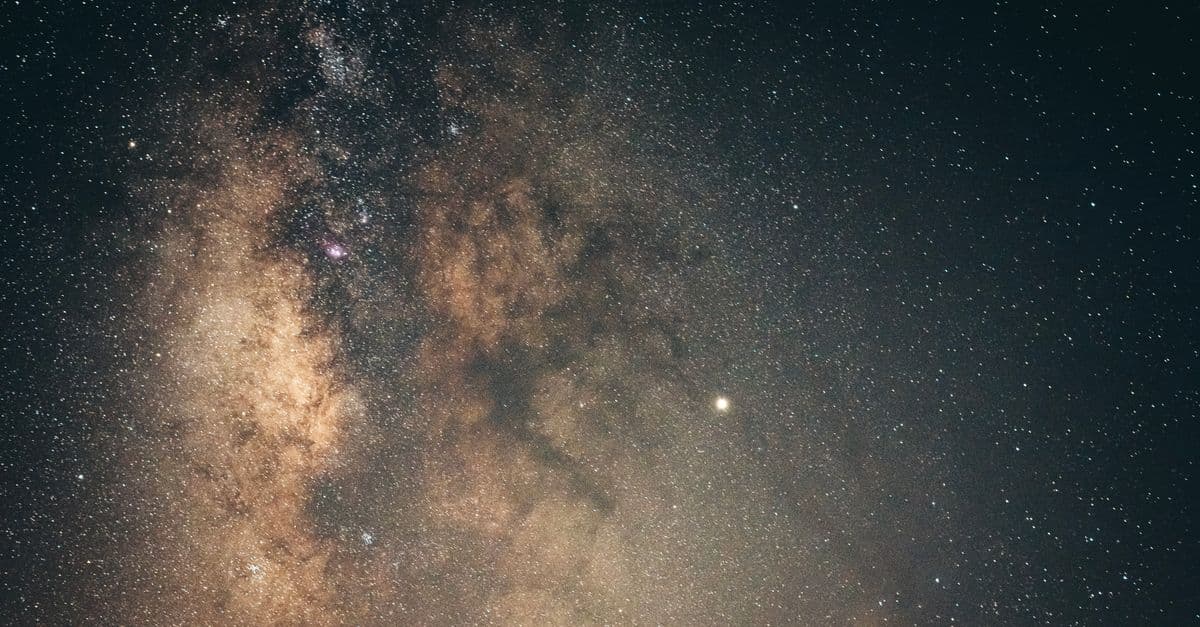
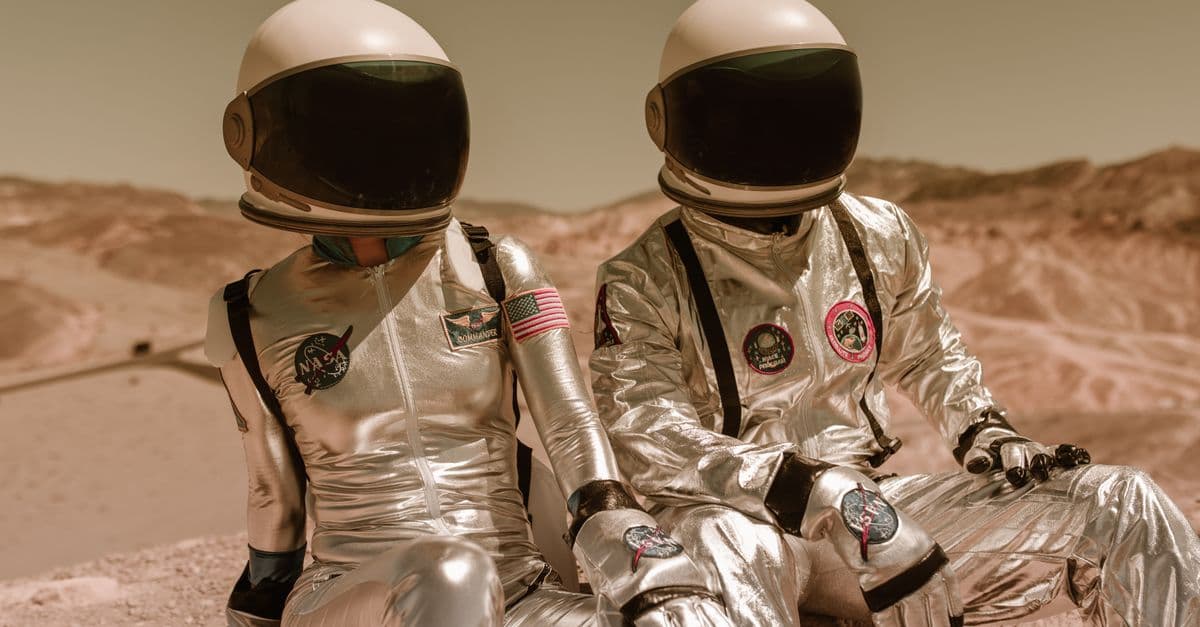
Photo: Connor Scott McManus / Pexels
Space colonization means establishing a permanent, growing human settlement somewhere other than Earth: on the Moon, on Mars, or inside a purpose-built habitat in open space. The idea has moved from fiction to engineering programs, but the hard parts are not the ones most people expect. Getting to orbit is largely a solved problem. Staying alive for years, with no hospital, no resupply truck, and no atmosphere to absorb radiation, is not.
This article walks through the constraints one at a time, using measured data wherever it exists: the radiation dose Curiosity recorded on its way to Mars, the bone loss tracked on the International Space Station (ISS), the oxygen that fell out of the air in Biosphere 2, and the 122 grams of oxygen that the MOXIE instrument made on Mars. The picture that emerges is neither "impossible" nor "just a matter of money." It is a list of specific problems with specific numbers attached.
Three places to live, and what each one demands
The three candidate sites differ so much that "colonization" means a different project in each. The Moon is close and low in gravity, but its day-night cycle lasts about a month and its surface is bombarded by raw sunlight and space radiation. Mars has an atmosphere, but one so thin it offers almost no protection. A free-floating habitat can be designed around human needs, but everything inside it must be hauled up from somewhere.
| Property | Moon | Mars | Free-space habitat |
|---|---|---|---|
| Surface gravity | 1.62 m/s² (0.165 g) | 3.73 m/s² (0.38 g) | Whatever rotation provides |
| Atmosphere | Effectively none | 6.36 mb mean pressure, 95.1% CO₂ | Built and sealed by the crew |
| Temperature | 95 K to 390 K at the equator (about −178 to +117 °C) | 184 K to 242 K at one Viking site (about −89 to −31 °C) | Controlled by radiators and insulation |
| Day length | 29.53 Earth days for one day-night cycle | About 24.6 hours | Chosen by the designers |
| One-way radio delay to Earth | About 1.3 seconds | About 3 to 22 minutes | Depends on location |
| Mean sunlight | 1,361 W/m² (same as Earth) | 586 W/m² (about 43% of Earth's) | 1,361 W/m² at Earth's distance |
Sources: NASA Goddard Moon and Mars fact sheets. Radio delays are computed from the fact sheets' distances (384,400 km for the Moon; 54.6 million to 401.4 million km for Mars) at the speed of light.
A few consequences follow directly. Mars's 6.36 millibars is about 0.6% of the roughly 1,013 millibars at Earth's sea level, so an unprotected person would lose consciousness quickly and a pressurized suit or habitat is mandatory. The Moon's two-week nights make solar power useless for half of every cycle unless a settlement sits near a pole or relies on stored energy or fission. Mars's radio delay means a crew in trouble cannot be talked through a repair in real time by experts on Earth.
Mars receives only about 43% of the sunlight Earth does, and the Moon's night lasts about two weeks. Power, not just air, shapes where a settlement can go.
Radiation: the constraint that shielding barely touches
On Earth, two layers protect you. The magnetic field steers many charged particles away, and the atmosphere, which amounts to about 10 meters of water in mass per unit area, absorbs most of the rest. Take both away and the exposure is dominated by two sources that behave very differently.
Galactic cosmic rays
Galactic cosmic rays (GCRs) are atomic nuclei, mostly protons but including heavy ions, accelerated by supernova remnants and other violent sources and arriving from every direction all the time. Their energies are high enough that stopping them with a wall is like trying to stop a bullet with a curtain. When one strikes a thick hull, it can break apart atoms in the material and create a shower of secondary particles, including neutrons, which are themselves harmful. For a deeper look at the particles themselves, see what cosmic rays are and where they come from.
This is why adding mass is a poor answer to GCRs. Cary Zeitlin, who led the analysis of the Radiation Assessment Detector (RAD) data from Curiosity's trip to Mars, put it bluntly: even an aluminum hull a foot thick would not change the dose very much, according to a Southwest Research Institute release. Light, hydrogen-rich materials such as water and polyethylene do better per kilogram than metal, but the improvement is modest compared with the scale of the problem.
Solar particle events
Solar particle events (SPEs) are bursts of protons and heavier ions thrown out by solar flares and coronal mass ejections. They are far more intense than the GCR background while they last, but they are also lower in energy, so shielding works much better. NASA's astronaut standard sets a separate limit for the dose from a single event, and mission planners expect crews to have a storm shelter, a small, heavily shielded compartment to retreat to for the hours or days an event lasts. About 5% of the dose RAD measured in transit came from solar particles, during a relatively quiet part of the solar cycle. For how these storms form, see solar storms and space weather.
What the measured numbers add up to
The best data come from the RAD instrument on Curiosity, which measured the dose inside the spacecraft during the 2011-2012 cruise and then on the Martian surface. The units matter, so a quick unpacking: a millisievert (mSv) is a measure of biological radiation dose, and 1,000 mSv make one sievert (Sv). Typical background exposure on Earth is on the order of 2 to 3 mSv per year.
| Quantity | Value | What it means |
|---|---|---|
| GCR dose equivalent in transit to Mars | 1.8 mSv/day (about 657 mSv/year) | Several hundred times Earth's yearly background, accumulated in a year |
| GCR dose equivalent on the Martian surface | 0.67 mSv/day (about 245 mSv/year) | About 2.7 times lower than in transit, because the planet blocks half the sky and the thin air helps a little |
| Shortest round-trip transit, current propulsion | About 0.66 Sv | Transit phases only, before any time on the surface |
| Any mission dose of 1 Sv | 1,000 mSv | Associated with roughly a 5% increase in fatal cancer risk, per SwRI; a surface stay adds to the transit total |
| NASA career limit for astronauts | 600 mSv | Intended to cap added cancer-death risk at about 3% |
Sources: Southwest Research Institute releases on the Mars transit and surface measurements (Zeitlin et al. and Hassler et al., both in Science); NASA's radiation protection technical brief for the career limit. Yearly figures are computed by multiplying the daily rates by 365.
Two caveats keep this honest. First, dose equivalent (what RAD reports) and effective dose (what the career limit uses) are close cousins but not identical quantities, so the comparison with 600 mSv is approximate. Second, the data came from a solar cycle with moderate activity, and GCR dose rises when the Sun is quiet, because a more active Sun deflects more cosmic rays.
Even with those caveats, the arithmetic is sobering. At the surface rate of 0.67 mSv per day, a worker would reach 600 mSv in roughly 900 days, and that is before counting the trip there. For a short visit this is tolerable. For a permanent settler who might live decades, it means radiation protection has to be part of the architecture from day one. For more on the Mars measurements, see radiation measurement on Mars.
Burying the problem
The most credible mitigation is not a force field but dirt. A habitat covered by a few meters of regolith (loose surface material) or built inside a lava tube gets the planet itself as a shield, which blocks the half of the sky below the horizon and absorbs a large share of what comes from above. Water is the other cheap shield, and a settlement that stores its water in a layer around living quarters gets double use from the same mass.
Active shielding, meaning magnetic or electrostatic fields that would deflect charged particles around a habitat, is often proposed. It remains a design concept. Nobody has flown a superconducting magnet system large enough to matter, and the mass, cooling, and reliability questions are unresolved. For Earth's own version of this effect, see how planetary magnetic fields work.
Low gravity: what the body does without its 1 g load
Human bodies are built for Earth's gravity, and many systems quietly rely on it. Take the load away and the body begins to reallocate resources, because bone, muscle, and blood vessels are all maintained in proportion to how hard they are used.
Bone loss. NASA's risk summary puts the average loss of bone mineral density at 1 to 1.5% per month at weight-bearing sites such as the hip, lumbar spine, and legs, based on scans of astronauts on typical four-to-six-month missions. The Advanced Resistive Exercise Device (ARED), which provides up to about 272 kg (600 lb) of resistive force, has reduced the loss compared with earlier exercise hardware, but has not eliminated it. Recovery after flight is slow. For the detailed ISS studies, see bone loss in weightlessness.
Muscle. Muscles that stop working against gravity shrink, and the postural muscles of the back and legs shrink fastest. Exercise can hold most of this off, but at a cost in crew time that grows with mission length. In a small colony that also has to grow food and fix machines, a large part of each day spent on a treadmill is a real budget item. The research is covered in muscle atrophy in space.
Heart and blood vessels. Without gravity pulling blood toward the feet, fluid shifts toward the head, and the heart does less work. After landing, many astronauts have trouble maintaining blood pressure when they stand, which is why they are carried or supported at first.
Eyes. A subset of long-duration astronauts develops spaceflight-associated neuro-ocular syndrome (SANS), with swelling of the optic disc, flattening of the back of the eyeball, and shifts in vision. The leading explanation is that the head-ward fluid shift raises pressure around the optic nerve, though the mechanism is still under study. It is on NASA's list of unresolved long-duration risks.
The gap in the data: partial gravity
Here is the uncomfortable fact for colonization. Every long-duration study has been done in microgravity (near zero g) or on Earth (1 g). Nobody has measured the human body for months at 0.38 g or 0.165 g. It is possible that Mars gravity is enough to hold most of the damage at bay. It is also possible that the benefit is small. Until a facility can test it, planners are working with an interpolation across a gap, not a measurement.
How big would a spinning habitat have to be?
Rotation can substitute for gravity. In a rotating ring, the floor pushes on your feet with a centripetal acceleration a = ω²r, where ω is the rotation rate in radians per second and r is the radius. Solve for radius and you get r = g/ω², which the table below applies for three rotation rates and three target gravity levels.
| Spin rate | Radius for 1 g | Radius for 0.38 g (Mars) | Radius for 0.165 g (Moon) |
|---|---|---|---|
| 2 rpm | 224 m | 85 m | 37 m |
| 4 rpm | 56 m | 21 m | 9 m |
| 6 rpm | 25 m | 9 m | 4 m |
Computed from r = g/ω² with g = 9.81 m/s².
The trade-off is the Coriolis effect: when you move your head in a rotating habitat, the inner ear senses motion that does not match what your eyes see, which can cause dizziness and nausea. The faster the spin, the worse it gets, which is why designers lean toward the larger radii at the top of the table. For comparison, the ISS is about 109 m end to end and is not designed to spin, so no existing station comes close to the structure a 1 g ring would need. A tethered pair of modules rotating around a shared center could reach large radii without a rigid structure, but it has never been demonstrated with people on board.
Closed-loop life support: recycling everything
A settlement that is supposed to last cannot rely on regular deliveries. That means recycling air, water, and as much food as possible, in a system where a single failure can spread.
Water
The ISS is the best test bed. In June 2023, NASA announced that the station's recovery system had reached 98% of the water the crew brings into space, recycled from urine, sweat, and humidity. The gain came from adding a Brine Processor Assembly, which wrings more water out of the leftover brine from urine distillation; before it, recovery sat around 93 to 94%. The remaining 2% still has to be resupplied, and on a station with a few people that is manageable. On Mars, resupply is a multi-month trip, so the target for a settlement is higher still. For how the hardware works, see how astronauts recycle water in space.
Air
People exhale roughly a kilogram of carbon dioxide per day, and it has to be removed before it accumulates. One chemical route is the Sabatier reaction (CO₂ + 4 H₂ → CH₄ + 2 H₂O), which combines carbon dioxide with hydrogen to make water and methane; the water can be split by electrolysis to recover oxygen. The weak point is hydrogen, which has to come from somewhere, and the methane is a by-product that is either vented or used as fuel. Plants offer a biological alternative, absorbing CO₂ and releasing oxygen, but they bring their own demands for light, water, and space. A broader tour of the hardware is in life support systems explained.
Food, and why Biosphere 2 matters
Growing all of a crew's food in a sealed system is the hardest piece, and the best evidence comes from an experiment that was not even designed for space. Biosphere 2, a sealed glass-and-steel complex in Arizona, housed eight people from September 26, 1991 to September 26, 1993. The crew grew most of what they ate.
But the air was a different story. Oxygen fell from about 20.9% to about 14% over the first 16 months, a level that threatens health, and managers began pumping in oxygen from outside. Accounts attribute much of the loss to chemical reactions in the soil and to carbon dioxide being absorbed by the concrete. The lesson is not that closed ecosystems cannot work. It is that a living system with hundreds of interacting parts can surprise its designers, and that a settlement has no outside to pump oxygen in from.
Power
Every one of these systems runs on electricity. Mars receives a mean of about 586 W/m² of sunlight against Earth's 1,361, and dust storms can cut the amount reaching the ground further. NASA's answer for the power side is nuclear fission at small scale. The Kilopower design was tested in the KRUSTY experiment at the Nevada National Security Site from November 2017 to March 2018, culminating in a 28-hour, full-power run that simulated a mission. The flight design is meant to deliver up to 10 kilowatts of electricity for at least 10 years from a core about the size of a roll of paper towels, and several units could be landed together. That would cover a small outpost. A settlement of thousands, with heavy industry, would need orders of magnitude more.
Repair and spare parts
The overlooked problem in closed-loop systems is not recycling, it is maintenance. Every pump, filter, valve, and sensor eventually fails, and a settlement either brings spares, makes them, or does without. Manufacturing capacity is therefore a life-support issue, which is part of why the question of population size, covered below, matters so much.
Living off the land: in-situ resources
Carrying everything from Earth is too expensive to sustain, so settlements must extract what they can from local material, a practice known as in-situ resource utilization (ISRU).
On Mars
Mars's thin air is 95.1% carbon dioxide by volume. The MOXIE instrument on the Perseverance rover, which landed in 2021, split CO₂ in a solid-oxide electrolysis cell to make oxygen. Over its 16 runs it produced a total of 122 grams of oxygen at a peak rate of 12 grams per hour and at least 98% purity, according to NASA's summary of the results. That is about what a small dog breathes in 10 hours, so MOXIE is a proof of principle rather than a supply line. A crew of four would need a unit scaled up by orders of magnitude, running reliably for months.
Water is the other prize. Mars has ice at its poles and buried at mid-latitudes, and radar from orbit has mapped subsurface deposits. Melting and electrolyzing it gives drinking water, oxygen, and hydrogen for propellant. The catch is the soil. When the Phoenix lander tested samples in the northern plains, the analysis found 0.4 to 0.6% perchlorate by mass in the soluble salts, according to the 2009 paper in Science. Perchlorates are chemically reactive salts that are a concern for human health on Earth, so regolith intended for agriculture would need washing first. The investigators cautioned that two teaspoons of soil may not represent all of Mars, though.
On the Moon
The lunar poles hold water ice in permanently shadowed craters, a result first supported by the 2009 LCROSS impact experiment. In 2020, NASA's SOFIA airborne observatory also found molecular water, at roughly 100 to 412 parts per million, in the soil of the sunlit Clavius crater, which points to water being more widespread than expected. The deposits are real but thin and hard to extract, and the cold traps where ice survives are among the most difficult places on the Moon to work. For how scientists search for it, see lunar ice detection methods.
Regolith itself is a resource and a hazard. Sintering or melting it can produce bricks and shielding, but lunar dust is sharp and abrasive and caused problems for Apollo crews. That story is told in why Moon dust is dangerous.
Can Mars be terraformed?
Terraforming means engineering a planet so that its surface becomes habitable without life support. Mars is the usual candidate, and the numbers are not encouraging. The mean pressure is about 6 millibars, against Earth's 1,013, and almost all of it is carbon dioxide that humans cannot breathe.
The most direct test of the idea came from Bruce Jakosky and Christopher Edwards, whose 2018 paper in Nature Astronomy tallied the carbon dioxide that exists on Mars today in the polar caps, the soil, and carbonate minerals, using data from MAVEN, Mars Express, Odyssey, and Mars Reconnaissance Orbiter. They concluded that there is not enough CO₂ available to provide significant greenhouse warming if it were all released, and that terraforming is not possible with present-day technology. Importing the missing volatiles by redirecting comets or asteroids is far beyond any foreseeable capability.
A second obstacle is that Mars lost much of its original atmosphere over billions of years, a process still measured today; see why Mars lost most of its atmosphere. Even if a thick atmosphere could be built, it would not hold forever without a way to slow that loss, and no one has a design for that at planetary scale. Then there is oxygen. A breathable atmosphere requires about a fifth oxygen, which means producing it in quantity over very long periods.
The more modest idea is paraterraforming, building enclosed, pressurized regions rather than changing the whole planet. It is slow and expensive, but it is at least within the realm of known engineering, and it is how the first settlements are realistically going to work.
Free-space habitats: the Stanford torus
Gravity wells are expensive, so some designers skip planets. The best-known concept is the Stanford torus, from a ten-week 1975 study at Stanford University and NASA's Ames Research Center, published as NASA SP-413, Space Settlements: A Design Study. The design was a wheel-shaped habitat about 1.8 km across, rotating to give roughly 1 g, sized for 10,000 permanent residents. Gerard O'Neill's proposals for large rotating settlements inspired much of the work.
The appeal is control: you choose the gravity, the day length, the atmosphere, and you get nearly continuous sunlight. The cost is that you have to build it all, and the study assumed materials from the Moon and eventually asteroids delivered cheaply. Nothing remotely that large has been attempted. The largest structure humans have assembled in orbit is the ISS, at 109 m long and 419,725 kg, with a pressurized volume of about 1,005 cubic meters, a tiny fraction of what the torus would need. See the ISS explained for how that station is built and run.
How many people does a colony need?
Population is where engineering meets biology and economics. There are at least three different questions folded into "how many," and they have different answers.
| Question | Estimate | Source and caveat |
|---|---|---|
| Fewest people to survive on Mars using local resources | About 110 | Jean-Marc Salotti, Scientific Reports, 2020; a model of the working time needed for survival versus the time settlers can supply |
| Founding population for a roughly 150-year interstellar voyage | About 14,000 to 44,000 | Cameron Smith, Acta Astronautica, 2014; a population-genetics estimate for a different problem, a multi-generational voyage |
| Settlement that can build and repair all its own technology | Not established | No credible study has settled this; it depends on how much industry is built locally |
The first number sounds small, and it is: it describes the minimum for survival, not for independence from Earth. Salotti himself called 110 a relatively low number, and the model is sensitive to assumptions about how well local resources can be used. The second answers a different problem, genetic health over generations in a closed population, and should not be read as a Mars target. The third, the number of people needed to maintain the full chain of modern industry, is a question with no settled answer. A modern phone depends on thousands of specialized suppliers, and a settlement that wants to repair its own electronics has to either replicate that chain or accept limits.
What people get wrong about colonization
"Shielding is just a matter of adding more metal." For solar particle events, thicker walls help a lot. For galactic cosmic rays, extra metal can generate secondary particles, and a foot of aluminum barely changes the dose. Regolith, water, and polyethylene do better, and burial beats any hull.
"Mars's gravity is close enough to Earth's." It is 0.38 g. No human has been studied for months in that gravity, and no one knows whether it prevents bone and muscle loss, so the benefit remains unmeasured.
"The ISS proves we can live in space." The ISS proves that people can live in orbit with regular resupply and rescue within hours. Its recycling is impressive at 98% water recovery, but it depends on a steady flow of parts, food, and crew from Earth.
"Terraforming will make Mars breathable in a few generations." The inventory of CO₂ on Mars falls far short of what greenhouse warming would need, and the planet's atmospheric loss would erode a thicker atmosphere over time.
"Colonization is a launch problem." Launch cost matters, but the settlement still has to solve radiation, gravity, food, power, repair, and population, none of which gets easier when the rocket gets cheaper.
Where things stand in 2026
The near-term path runs through the Moon. Artemis II launched on April 1, 2026 and splashed down on April 10 (Pacific time) after sending four astronauts around the Moon, setting a distance record of 406,771 km from Earth, according to the mission summary. NASA has since changed Artemis III to a crewed test in low Earth orbit, announced on February 27, 2026, in which Orion would dock with commercial lander prototypes; the first crewed landing is now planned for Artemis IV in early 2028, according to the Artemis III summary. On March 24, 2026, NASA also said it was pausing the Lunar Gateway station in its current form to concentrate on surface infrastructure, per Reuters reporting. Dates in this field slip often, so treat these as the status on the date this article was updated. For the program's background, see the Artemis program explained, and for the vehicle most often tied to Mars plans, SpaceX Starship explained.
Frequently asked questions
Q: How much radiation would a person get on a trip to Mars? A: Curiosity's RAD instrument measured about 1.8 mSv per day inside the spacecraft in transit. The shortest round trip with current propulsion would total roughly 0.66 Sv for the transit phases alone, and time on the surface would add to that.
Q: What is NASA's radiation limit for astronauts? A: NASA's standard sets a career effective dose limit of 600 mSv, intended to cap the added risk of cancer death at about 3%. A separate limit applies to a single solar particle event.
Q: Could Mars be terraformed with today's technology? A: A 2018 analysis in Nature Astronomy found there is not enough accessible carbon dioxide on Mars to provide significant greenhouse warming if all of it were released, and concluded that terraforming is not possible with present-day technology.
Q: Can people make oxygen on Mars? A: On a small scale, yes. The MOXIE instrument on Perseverance made 122 grams of oxygen across 16 runs, with a peak rate of 12 grams per hour. Supporting a crew would require a much larger system.
Q: How much water does the ISS recycle? A: NASA reported in June 2023 that the station's system recovers 98% of the water the crew brings into space, up from about 93 to 94% before a brine processor was added.
Q: How many people would a self-sustaining Mars colony need? A: A 2020 model estimated a minimum of about 110 people for survival using local resources. Independence from Earth for technology and repair would likely require far more, and no study has settled the number.
The takeaway
Living off Earth is a systems problem more than a propulsion problem. The measured radiation dose on a Mars round trip sits near or above the career limit NASA sets for astronauts, no one has data on how the body fares at Mars's 0.38 g, and the longest attempt to seal people inside a living ecosystem lost a third of its oxygen and needed outside help. Those facts do not make settlement impossible, but they explain why the credible plans start small: buried habitats, imported spares, and a long period of dependence on Earth.
The useful way to read any claim about colonizing Mars or the Moon is to ask which of these constraints it addresses and what measurement supports the answer. A plan that names its radiation dose, its water recovery rate, its power source, and its repair capacity is engineering. A plan that skips them is a slogan.
Sources
- Southwest Research Institute, radiation exposure on a trip to Mars (Zeitlin et al., Curiosity RAD cruise data)
- Southwest Research Institute, first radiation measurements from the surface of Mars (Hassler et al.)
- NASA Goddard, Mars fact sheet and Moon fact sheet
- NASA, Water recovery milestone on the ISS, June 2023
- NASA, ISS facts and figures
- Jakosky and Edwards, Inventory of CO2 available for terraforming Mars, Nature Astronomy, 2018
- NASA, Risk of spaceflight-induced bone changes
Related Reading
Follow new articles
Add SciHub101 to your feed reader to see new science and technology stories.
About the Author
SciHub101 is an independent science and technology publication founded and edited by Buğra Sözeri, a software engineer and app developer based in Türkiye. AI tools assist with drafting and research. Source documentation in the existing archive is uneven, and articles are being reviewed and corrected. The Editorial Team byline identifies editorial responsibility; it does not certify specialist or independent human review. Where we compare products, anything built by our own team is labelled as such — see the editorial guidelines and About page for how corrections and disclosures work.
Related Articles
What Is Stellar Feedback? How Stars Reshape the Galaxies They're Born In
Stars do not sit quietly inside galaxies. Their radiation, winds, and supernovae heat, push, and enrich the gas around them. This stellar feedback is why star formation is slow, why dwarf galaxies are faint, and where much of a galaxy's heavy elements end up.
What Is Reionization? The Cosmic Dawn and the First Stars
After the Big Bang's fireball faded, the universe entered a dark age lasting hundreds of millions of years — no stars, no galaxies, just a sea of neutral hydrogen. Then the first stars ignited, and their ultraviolet radiation gradually reionized the cosmos in one of the most dramatic phase transitions in cosmic history.

Can Humans Live on Mars? Terraforming and the Body's Limits
Two questions decide whether Mars can ever be a real second home: can we re-engineer the planet, and can the human body survive years of radiation and low gravity? The science on both is more sobering than the pitch decks suggest.
What If You Lived on Mars?
Daily life on Mars: 38% gravity, radiation, blue sunsets, regolith homes, hydroponic food, and the psychology of 22-minute light-lag from Earth.

Why Is Mars Red? The Science of the Red Planet
Mars looks red because iron in its dust and surface rocks has oxidized into rust-colored minerals. A 2025 study argues the main pigment is ferrihydrite, a water-bearing iron mineral, and that planet-wide winds spread the fine powder that gives Mars its color.
Can Humans Live on Mars? The Real Challenges
A realistic look at Mars settlement: radiation, dust, low gravity, water, food, power, medicine, psychology, and the economics of staying alive.