What Is Reionization? The Cosmic Dawn and the First Stars
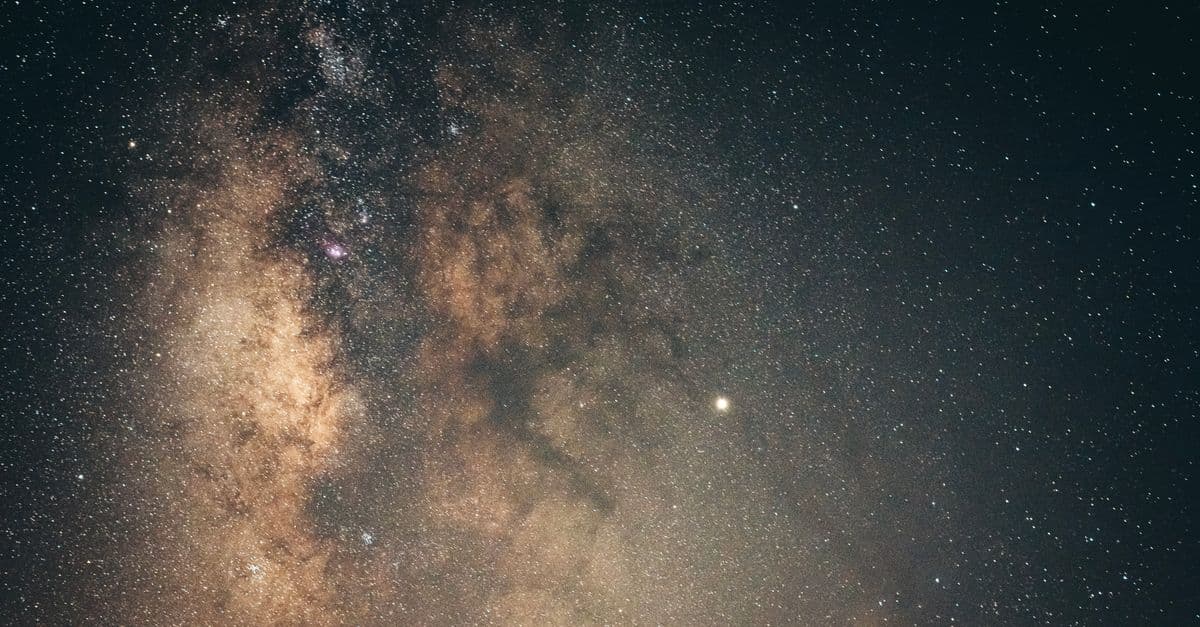
Photo: Marcelo Mora / Pexels
The universe was not always full of light. Between the cosmic microwave background — the afterglow of the Big Bang's fireball, emitted 380,000 years after the Big Bang — and the first quasars and galaxies visible in deep surveys, there lies a forgotten era called the cosmic dark ages: hundreds of millions of years during which no stars shone, the universe was filled with cold neutral hydrogen gas, and the cosmos was, in a very real sense, dark and silent.
Then something changed. The first stars ignited. Their ultraviolet radiation blasted into the surrounding neutral hydrogen, ionizing it. Gradually — over hundreds of millions of years — these bubbles of ionized gas grew, merged, and eventually encompassed essentially the entire intergalactic medium. This process is called cosmic reionization, and it is one of the most important phase transitions in the history of the universe. It ended the dark ages, transformed the intergalactic medium from a neutral fog to a transparent plasma, and set the stage for the galaxy-rich cosmos we inhabit today.
Reionization is also, as of the 2020s, one of the most observationally active frontiers in astronomy. The James Webb Space Telescope, designed partly to observe this epoch, is transforming the field with unprecedented views of the first galaxies — and finding surprises that challenge our theoretical models.
The Recombination Era and the Dark Ages
To understand reionization, we must begin with recombination — a misleadingly named event (the electrons and protons were combining for the first time, not recombining) that occurred 380,000 years after the Big Bang when the universe cooled to ~3,000 K.
Before recombination, the universe was an opaque plasma: photons could not travel far before being scattered by free electrons. When the temperature dropped enough for protons and electrons to combine into neutral hydrogen, photons were suddenly free to travel unimpeded — the universe became transparent. These first freely-traveling photons are the CMB we detect today, redshifted from ~3,000 K to ~2.7 K by the universe's expansion.
After recombination, the universe contained:
- ~75% hydrogen (neutral)
- ~25% helium (neutral He and He⁺)
- ~dark matter (not coupled to baryons)
- A tiny trace of lithium and other light elements from Big Bang nucleosynthesis
- No stars, no galaxies, no metals, no solid objects of any kind
This is the cosmic dark ages. The universe was a neutral gas cloud slowly cooling and clumping under gravity. The CMB photons stream freely, but there is no other light source. If you could exist in this universe, you would see a perfectly uniform glow in all directions from the CMB — and nothing else.
The dark ages lasted from z ≈ 1100 (redshift, when recombination occurred) until the first stars formed, probably around z ≈ 20–30 (100–200 million years after the Big Bang). During this time, small density fluctuations — quantum fluctuations in the inflationary epoch amplified by dark matter clustering — grew under gravity into the first dark matter halos.
The First Stars: Population III
The first generation of stars — called Population III (Pop III) — formed in conditions utterly different from those that make stars today. The key difference: there were no heavy elements. The gas was pure hydrogen and helium, with trace lithium. This absence of metals has profound consequences.
In modern star-forming regions, dust and molecules like CO cool the gas below 100 K, allowing gravity to fragment collapsing clouds into many small pieces — producing mainly low-mass stars (0.1–1 M☉). Without metals, the primordial gas cannot cool effectively below ~200–1,000 K. The Jeans mass (the minimum mass a cloud must exceed to collapse against pressure) scales as T^(3/2) ρ^(-1/2), so warmer, less dense primordial gas fragments into much larger pieces than modern molecular clouds.
The theoretical prediction: Population III stars were extremely massive — perhaps 10–1,000 solar masses, with some models allowing "super-massive" stars of 10⁴–10⁵ M☉ in the most massive early halos. These super-stars shine with enormous ultraviolet luminosities, ionizing vast bubbles of surrounding gas almost immediately after their formation.
Pop III stars were also extremely hot (surface temperatures of 50,000–100,000 K, far hotter than any modern star), extremely short-lived (millions of years at most), and ended their lives in dramatic fashion: the most massive exploded as pair-instability supernovae (for masses ~140–260 M☉, where electron-positron pair production destabilizes the core before nuclear fuel exhaustion), producing no compact remnant and ejecting all their nucleosynthesis products. Less massive Pop III stars collapsed to black holes, providing seeds for the first quasars.
Pop III stars have never been directly observed — their light has been cosmologically redshifted out of optical bands, and even with JWST, individual Pop III stars in the early universe are inaccessible. However, candidate Pop III stellar clusters have been reported in JWST observations: Chruslinska et al. (2023) and Vanzella et al. (2023) identified candidate sources at z > 6 with spectral signatures consistent with extremely low metallicity stellar populations. The definitive detection of Pop III systems remains elusive but is a primary goal of next-generation facilities.
The nucleosynthesis products of Pop III stars — the metals they ejected — can be traced in the chemical abundances of the oldest stars still living today (ancient Pop II stars in the Milky Way halo with [Fe/H] < −4). These "stellar fossils" show abundance patterns (particularly strange ratios of carbon, nitrogen, and iron) that constrain what kinds of supernovae produced the first metals. Carbon-enhanced metal-poor (CEMP) stars are particularly numerous among the most metal-poor stars, suggesting Pop III supernovae preferentially produced carbon.
The Epoch of Reionization
As the first stars and galaxies formed, their ultraviolet photons began ionizing the surrounding neutral hydrogen. This process — reionization — did not happen instantaneously everywhere. Instead, ionizing radiation carved out H II regions (regions of ionized hydrogen, named from the spectroscopic designation of ionized hydrogen) around individual sources. At first, these bubbles were isolated islands of ionized gas in a sea of neutral hydrogen. Over hundreds of millions of years, the bubbles grew, merged, and eventually percolated through the entire intergalactic medium.
Reionization is "inside-out": The densest regions, where the first galaxies formed, were ionized first. The voids of the cosmic web — the underdense regions far from any galaxy — were ionized last, as the ionizing photons finally penetrated these remote regions. This topology has observational consequences.
Timeline of reionization:
- z ~ 20–30 (100–150 Myr): First Pop III stars form in mini-halos of 10⁶–10⁷ M☉. Small H II regions appear around individual massive stars.
- z ~ 15 (200 Myr): First galaxies form in halos of 10⁸–10⁹ M☉. Ionized bubbles grow to megaparsec scales around early galaxy groups.
- z ~ 10 (460 Myr): Reionization is well underway; the universe is probably 10–50% ionized by volume.
- z ~ 6–7 (800–950 Myr): Reionization is nearing completion; the neutral fraction has fallen to a few percent and is declining rapidly.
- z ~ 5.5 (1 Gyr): Reionization is essentially complete; the intergalactic medium is highly ionized (neutral fraction ~10⁻⁵).
Observational Evidence for Reionization
How do we know when and how reionization occurred? Multiple independent techniques constrain the reionization epoch:
The Gunn-Peterson Trough
In 1965, James Gunn and Bruce Peterson predicted that even a tiny neutral hydrogen fraction in the intergalactic medium would completely absorb the Lyman-alpha emission from a background quasar blueward of Lyman-alpha (121.6 nm, or equivalently, in the ultraviolet rest frame). This is because the cross-section for Lyman-alpha absorption by neutral hydrogen is enormous — even a neutral fraction of ~10⁻⁴ causes complete absorption.
Quasar spectra at z < 6 show increasing Lyman-alpha forest — a dense collection of absorption lines from neutral hydrogen clouds at various redshifts along the line of sight. At z > 6, the forest transitions to a near-complete Gunn-Peterson trough (complete absorption) in some quasars, indicating that the neutral fraction of the IGM rises above ~10⁻³ approaching the end of reionization.
The Fan et al. (2006) analysis of SDSS quasars found that the optical depth for Gunn-Peterson absorption increases dramatically above z ≈ 6, suggesting the IGM neutral fraction was ~1–10% at z ~ 6 and increasing rapidly with redshift. This was key evidence establishing z ~ 6 as the rough end of reionization.
CMB Optical Depth: Thomson Scattering
The CMB photons we observe today were scattered by free electrons between us and the surface of last scattering. But some CMB photons were rescattered after reionization freed electrons from hydrogen again. This rescattering produces a measurable suppression of the CMB power spectrum on small scales and a characteristic polarization signal.
The Thomson scattering optical depth τ_es ≈ 0.054 ± 0.007 (Planck 2018) constrains the integrated column of free electrons back to recombination. For a reionization model, τ_es constrains the timing: if reionization was instantaneous (a step function), τ_es = 0.054 corresponds to reionization redshift z_reion ≈ 7.7. The actual shape of the reionization history is less certain, but τ_es is inconsistent with reionization significantly later than z ~ 6.
Lyman-Break Galaxies and Lyman-Alpha Emitters
High-redshift galaxy surveys detect galaxies during the reionization epoch using several techniques:
Lyman-break galaxies (LBGs): The Lyman limit at 912 Å (91.2 nm) is a hard cutoff in galaxy spectra — neutral hydrogen in the galaxy absorbs all radiation shortward of this wavelength. By observing galaxies through multiple photometric filters and identifying the dropout in successively redder filters (as the Lyman break redshifts into the optical), astronomers identify galaxies at specific redshifts. The technique selects galaxies at z ~ 2–6 efficiently.
Lyman-alpha emitters (LAEs): Galaxies with strong Lyman-alpha emission (λ = 121.6 nm) can be detected with narrow-band filters tuned to Lyman-alpha at specific redshifts. The key observation: the abundance of Lyman-alpha emitters drops dramatically above z ~ 6. This is precisely what reionization predicts — neutral hydrogen in the partially reionized IGM absorbs the Lyman-alpha emission before it reaches us. By measuring how the Lyman-alpha luminosity function evolves, astronomers trace the increasing neutral fraction as a function of redshift.
Lyman-alpha equivalent width distribution: Even among high-z galaxies detected via other means, the fraction showing strong Lyman-alpha emission declines steeply above z ~ 6, consistent with a partially neutral IGM at those epochs.
21-cm Cosmology: The Future of Reionization Science
The most powerful (and technically challenging) probe of reionization is the 21-cm line of neutral hydrogen. Neutral hydrogen in the ground state has two hyperfine levels (electron spin aligned or anti-aligned with the proton spin), with a transition frequency of 1420 MHz (λ = 21 cm). During the dark ages and reionization, neutral hydrogen in the IGM emitted or absorbed 21-cm photons against the CMB background.
Observing the 3D distribution of 21-cm emission as a function of redshift (frequency) would provide a tomographic map of reionization — directly imaging the neutral hydrogen bubbles, their sizes, and how they grew over time. The global 21-cm signal (the sky-averaged signal) would show a characteristic absorption trough around 70–100 MHz (corresponding to z ~ 15–20, when the first stars heated the gas) and later emission, tracing the entire reionization history.
EDGES detection (2018): The EDGES experiment reported a detection of the global 21-cm absorption signal centered at 78 MHz — corresponding to z ≈ 17, earlier than expected, with an amplitude (500 mK) roughly twice as deep as the most extreme standard model predictions. If real, this could imply the primordial gas was cooled below expected temperatures (perhaps by dark matter-baryon interactions) or that the radiation background was enhanced above the CMB. The EDGES result has been disputed on instrumental grounds; the SARAS 3 experiment found no detection consistent with EDGES. The result remains controversial.
HERA, MWA, LOFAR: These radio interferometers are attempting to detect the power spectrum of 21-cm fluctuations from the reionization epoch — a statistical measurement rather than direct imaging. Upper limits from HERA and MWA already constrain some extreme reionization models. The Square Kilometre Array (SKA), expected to begin operations in the late 2020s, will have the sensitivity to actually image neutral hydrogen during reionization in 3D — a transformational capability.
What JWST Is Revealing
The James Webb Space Telescope, operational since 2022, has spectacularly exceeded expectations in its study of the early universe. Several major results bear directly on reionization:
Galaxies at z > 10: JWST has confirmed galaxies at spectroscopic redshifts up to z ≈ 13–14 (when the universe was only ~320–370 million years old). Photometric candidates up to z ~ 16–17 have been reported. The very existence of bright, relatively massive galaxies at these redshifts is a tension with standard structure formation models: the expected number of such bright galaxies falls short of observations by factors of 10–100. This "early galaxy problem" may reflect higher star formation efficiencies in the early universe, different stellar populations (Pop III contributing more UV photons), Active Galactic Nuclei contributions, or possibly modifications to early universe physics (like early dark energy or modified power spectra).
Stellar masses and star formation rates: Several z > 10 galaxies detected by JWST have stellar masses of 10⁸–10¹⁰ M☉ — implying they formed and assembled their stars astonishingly early. Massive, red galaxies at z ~ 5–8 previously unexpected in ΛCDM simulations have been reported. The "impossibly early massive galaxy" problem remains a focus of intense debate.
Ionizing photon escape fraction: The fraction of ionizing UV photons produced by galaxies that actually escape into the IGM (rather than being absorbed by gas within the galaxy) is a crucial parameter determining how quickly galaxies can reionize the universe. JWST spectroscopy is measuring this directly for high-z galaxies for the first time, finding values of 5–20% in typical galaxies — enough to drive reionization if the galaxy luminosity function is steep enough at the faint end.
Direct detection of reionization-era galaxy environments: JWST has observed large-scale overdensities at z ~ 7–10 where multiple galaxies are clustered together, potentially representing early galaxy clusters. In these environments, ionized bubbles around multiple galaxies can grow and overlap especially quickly.
NIRSpec spectroscopy through the Gunn-Peterson trough: By observing background galaxies (rather than quasars) through lines of sight to z > 6, JWST can probe the IGM neutral fraction more sensitively than quasars alone, as the bright UV background of the galaxy allows transmission measurements in multiple spatial pixels.
Who Reionized the Universe?
The fundamental question: what was the dominant source of ionizing photons that reionized the universe?
Star-forming galaxies: The leading candidate. UV photons from hot, massive stars can ionize hydrogen if enough escape the galaxy. For galaxies to reionize the universe, several conditions must be met simultaneously: the star formation rate density must be high enough, the ionizing photon production efficiency must be favorable (preferring young, metal-poor stellar populations), and the escape fraction must be sufficient. JWST observations suggest that abundant faint galaxies (below current detection limits) may dominate the ionizing budget.
Quasars/AGN: Quasars are the most efficient UV photon producers per unit mass, but they are rare at z > 6. The quasar luminosity function drops steeply at z > 3, and at z > 6 quasars are sufficiently rare that they likely contributed only 10–30% of the ionizing budget. However, "faint AGN" (low-luminosity active galactic nuclei below quasar thresholds) might be more numerous than expected, and JWST is finding AGN activity in many high-z galaxies that would have been classified as star-forming galaxies by Hubble.
Pop III stars: The first very massive metal-free stars may have contributed to early reionization (z > 15) but their total contribution is limited by their short lifetimes and the low star formation rates in the earliest mini-halos.
X-ray sources: X-ray photons from the first X-ray binaries and black holes heat the IGM before and during reionization, affecting the 21-cm signal and the thermal state of the gas — but X-rays do not directly ionize hydrogen efficiently.
The current consensus: star-forming galaxies drove reionization, with faint galaxies (below the detection threshold of current surveys) contributing the majority of ionizing photons. The next generation of telescopes — SKA for 21-cm, JWST for galaxies, Roman Space Telescope for wide-field surveys, and Extremely Large Telescopes for spectroscopy — will refine this picture dramatically.
The Aftermath of Reionization
Reionization was not merely a chemical transition — it had profound consequences for subsequent galaxy evolution:
Suppression of small galaxies: Reionization heated the IGM to ~10,000 K, raising the Jeans mass in the low-density IGM and preventing gas from falling into low-mass halos (< 10⁹ M☉). This photoionization heating may explain the "missing satellites problem" — the Milky Way hosts far fewer satellite dwarf galaxies than predicted by dark matter simulations alone. Small halos lost their gas supply after reionization, forming no new stars.
Fossil galaxies: The faintest surviving dwarf galaxies of the Local Group — with stellar masses as low as a few thousand solar masses — are believed to be fossils of reionization-era galaxies that formed some stars before reionization heated away their remaining gas. Their ancient, metal-poor stellar populations are consistent with this interpretation.
The UV background: After reionization, the intergalactic medium was bathed in a metagalactic UV background — the accumulated radiation from all quasars and galaxies — that kept hydrogen and helium ionized for the rest of cosmic history. This background maintained the IGM at ~10,000 K and regulated star formation in low-mass galaxies by suppressing their gas supply.
Helium reionization — a separate, later event — occurred at z ~ 3 when quasar radiation (harder UV photons capable of doubly ionizing helium) became sufficient to reionize He⁺ to He²⁺. The HeII Lyman-alpha forest in quasar spectra traces this second reionization event.
The 21-cm Dark Ages Signal: The Farthest Observable Era
Beyond the reach of even JWST lies the truly dark era — the cosmic dark ages from z ~ 200 to z ~ 30 before any stars formed. The 21-cm signal from this epoch (at frequencies < 50 MHz, in the low-frequency radio band) is the only observable probe. The gas temperature, spin temperature, and density can in principle be mapped in 3D across the entire dark ages — providing an enormous amount of cosmological information. Proposals for lunar far-side radio arrays (where Earth's ionosphere and radio interference do not disrupt these extremely low-frequency observations) could eventually probe this era. The Lunar Crater Radio Telescope (LCRT) concept and various other lunar astronomy proposals aim to open this final unexplored observational window.
Related Reading
- What Is the Big Bang Theory? The Origin of the Universe Explained
- What Is the James Webb Space Telescope and What Has It Discovered?
- What Is the Cosmic Microwave Background? The Afterglow of the Big Bang
- What Is Cosmic Inflation? The Universe's First Fraction of a Second
- What Is Active Galactic Nuclei? Quasars and Blazars Explained
Follow new articles
Add SciHub101 to your feed reader to see new science and technology stories.
About the Author
SciHub101 is an independent science and technology publication founded and edited by Buğra Sözeri, a software engineer and app developer based in Türkiye. AI tools assist with drafting and research. Source documentation in the existing archive is uneven, and articles are being reviewed and corrected. The Editorial Team byline identifies editorial responsibility; it does not certify specialist or independent human review. Where we compare products, anything built by our own team is labelled as such — see the editorial guidelines and About page for how corrections and disclosures work.
Related Articles
What Is Space Colonization? The Physics and Challenges of Living Off Earth
Establishing a permanent human presence on the Moon, on Mars, or in free-space habitats means solving problems in radiation, partial gravity, closed-loop life support, local resources, and population size. Here is what the measurements and the physics actually demand.
What Is a Pulsar Timing Array? How Millisecond Pulsars Detect Gravitational Waves
A network of millisecond pulsars scattered across the Milky Way works as a galaxy-sized gravitational wave detector. In 2023, several independent collaborations reported the first evidence of a nanohertz gravitational wave background. Here is how pulsar timing arrays work and what they are finding.
What James Webb Telescope Has Actually Found (2022–2026) — The Discoveries That Rewrote Astronomy
JWST's confirmed discoveries from 2022 to 2026: ancient galaxies too massive for theory, exoplanet biosignature debates, star formation in infrared, and solar system science.