James Webb Deep Field: The Universe's Ancient Light
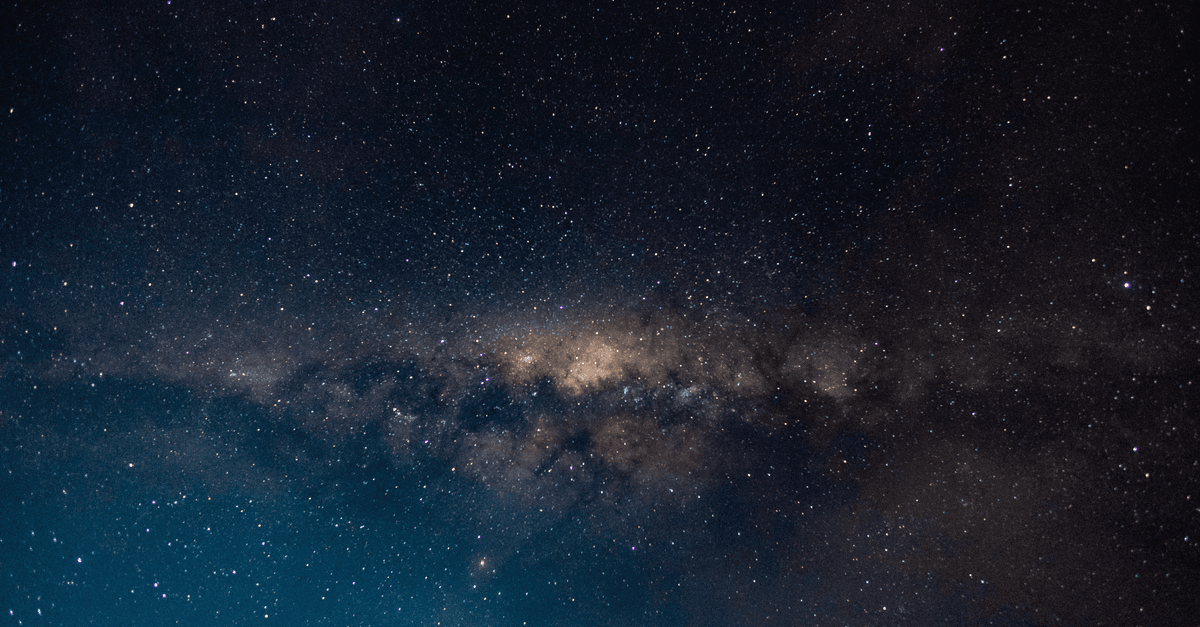
Photo: Fahrettin Turgut / Pexels
On July 12, 2022, NASA unveiled the first full-color images from the James Webb Space Telescope (JWST). The centerpiece was the Deep Field—an image of a region of sky about the size of a grain of sand held at arm's length, containing over 10,000 galaxies. Some of these galaxies are so distant that their light has been traveling for over 13 billion years, showing us what the universe looked like when it was less than 500 million years old.
What JWST revealed shocked astronomers. The early universe contained galaxies far larger and more mature than expected. Some galaxies were comparable in mass to the Milky Way despite existing when the universe was less than 1 billion years old. This challenged our understanding of how quickly galaxies form and evolve. The James Webb observations are reshaping cosmic history, hinting that the universe's first galaxies were more complex and abundant than previous theory predicted.
Key Takeaways
- The Challenge: Observing distant galaxies from the early universe requires detecting extremely faint, redshifted light from sources billions of light-years away
- The Breakthrough: JWST's infrared sensitivity and unprecedented mirror size reveal galaxies at the universe's edge of time
- Real-World Impact: Revised understanding of galaxy formation; enabled spectroscopy of early galaxies; discovered unexpected early structures
- Future Directions: Even deeper observations will reveal the universe's first galaxies and possibly the first stars
The Challenge
Observing the early universe is one of astronomy's fundamental challenges. Light travels at finite speed, so observing a distant object means observing its past. The farther you look, the earlier in cosmic history you see.
The most distant objects—from the universe's first few billion years—emit light that has been traveling 13+ billion years. This ancient light has been stretched by cosmic expansion, shifting from ultraviolet into infrared wavelengths—a phenomenon called cosmological redshift. The redshift z = 10 means wavelengths have expanded 11-fold. What was ultraviolet is now infrared. Observing these wavelengths requires infrared telescopes.
The Hubble Space Telescope revolutionized deep-field observations. Hubble observed the Deep Field in 1995—a tiny region, 1/13 millionth of the sky—revealing thousands of galaxies at various distances. Yet Hubble's sensitivity at infrared wavelengths is limited. It couldn't penetrate to the very early universe as deeply as needed.
The James Webb Space Telescope, conceived in the 1980s and launched in December 2021 after decades of development and a $10 billion budget, was designed specifically for this challenge. Its advantages:
Infrared Capability: JWST observes primarily in infrared (0.6-28 micrometers), perfect for detecting redshifted light from distant galaxies.
Large Mirror: JWST's 6.5-meter mirror is 2.7 times larger than Hubble's 2.4-meter mirror. Mirror area scales as diameter squared, so JWST collects about 7 times more light—critical for detecting faint distant sources.
Cold Sensors: Infrared observations require cold detectors to avoid heat noise. JWST maintains instruments at 40 Kelvin (-233°C), enabling exquisite sensitivity.
Advanced Optics: JWST's infrared spectrographs enable measuring galaxy redshifts precisely from spectral features, determining distances and ages accurately.
The Breakthrough
JWST's first deep-field observations exceeded expectations. The image contained over 10,000 galaxies across a region about 15 arcminutes squared (the area of a grain of sand held at arm's length, roughly 1/13 millionth of the full sky).
The deepest galaxies reached redshift z > 20, meaning their light left when the universe was merely 200-300 million years old. Some galaxies appeared so early and so massive that they challenged galaxy formation models.
Key discoveries:
Unexpected Galaxy Sizes: Some galaxies at z > 10 (universe younger than 500 million years) appeared as massive as the Milky Way. Current models predict galaxies grow slowly through mergers and gradual accretion. Finding mature galaxies so early suggests either: (1) galaxy formation was far more efficient than expected, or (2) galaxy mergers happened earlier and faster than thought.
Galaxy Abundances: The density of galaxies at high redshift exceeded predictions. Either galaxies formed more abundantly in the early universe, or previous surveys missed the faintest galaxies.
Early Star Formation: The infrared observations enable measuring star formation rates. The early universe showed vigorous star formation—hot, young stars producing intense light—contrary to vague notions that the early universe was serene.
Diversity of Morphologies: Early galaxies came in varied shapes: spirals, ellipticals, irregular. They weren't primordial blobs but already developed structures. This suggests rapid structural assembly.
Dusty Galaxies: Some early galaxies were surprisingly dusty. Dust forms slowly (it requires heavy-element atoms forged in stars). Finding dusty galaxies so early suggests rapid chemical evolution.
How It Works
Understanding JWST's capabilities reveals why these discoveries were possible:
Infrared Observations: JWST's primary science instrument, the Near Infrared Camera (NIRCam), observes from 0.6-5 micrometers. The Mid-Infrared Instrument (MIRI) observes 5-28 micrometers. These wavelengths capture redshifted light from early galaxies perfectly.
Large Collecting Area: The 6.5-meter primary mirror collects far more light than Hubble. For a given observing time, JWST detects fainter sources. More remarkably, sources that Hubble can barely detect appear bright to JWST, enabling detailed studies.
Spectroscopy: JWST's infrared spectrographs (NIRSpec and MIRI spectrograph) break light into constituent wavelengths. Galaxies show spectral features—absorption and emission lines—that reveal composition, age, and star formation rate. These spectroscopic measurements determine redshifts with high precision (better than 1%), enabling distance and age determinations.
Adaptive Optics (partially): While not as aggressive as ground-based adaptive optics, JWST's design minimizes wavefront errors, approaching diffraction-limited resolution.
Multiple Instruments: JWST carries multiple imaging and spectroscopic instruments. Observing the same region with different instruments and wavelengths provides cross-checks and enables multi-wavelength analysis.
Segmented Mirror: JWST's mirror comprises 18 hexagonal segments. These segments are phased (aligned to function as a single mirror) after launch, achieving coherent focusing despite assembly in space.
Real-World Impact
JWST's observations are transforming cosmology:
Galaxy Formation Theory: The observations show early galaxies formed faster and grew larger than traditional models predicted. Theorists are revising simulations to understand rapid galaxy assembly in the early universe.
Reionization: The universe's first galaxies produced intense ultraviolet radiation, ionizing hydrogen gas filling space—an epoch called reionization. JWST observations constrain when and how rapidly reionization occurred, informing models of this critical epoch.
Stellar Populations: Spectroscopy reveals stellar ages and compositions. The early universe contained stars with compositions similar to today's, surprising because elements heavier than helium take time to produce. Finding metal-rich stars so early suggests rapid chemical evolution.
Black Holes: Some JWST observations hint at supermassive black holes in very early galaxies. If confirmed, these indicate black holes grew even faster than galaxies—a puzzle for black hole formation theory.
Quasar Studies: JWST enables studying quasars (supermassive black hole-powered active nuclei) at even greater distances, understanding how black holes grew so massive.
Exoplanet Atmospheres: Beyond the deep field, JWST's spectroscopy of exoplanet atmospheres is revolutionizing habitability studies. Measuring compositions and temperatures of distant worlds enables assessing atmospheric conditions.
Star Formation: JWST reveals star formation in nearby galaxies at unprecedented detail, understanding how stars form.
What's Next
JWST's ongoing and future observations:
Even Deeper Fields: Astronomers plan deeper, longer exposures pushing to redshift z > 30—the universe's first hundred million years.
Gravitational Lensing: Using foreground galaxies' gravity as magnifying glasses, objects appear magnified, enabling studying fainter sources. JWST exploits lensing to observe even more distant objects.
Multiple Spectroscopy: Obtaining spectra for thousands of galaxies in the deep field, rather than just hundreds, will reveal the early universe's structure in detail.
Quasar Absorption Systems: Studying how quasar light is absorbed by intervening galaxies and gas, revealing structure and composition along sight lines to the early universe.
Reionization Epoch: Searching for the first stars and galaxies responsible for reionization—the universe's fundamental transition.
Transients and Time Domain: JWST is discovering transient phenomena (explosions, collisions, disruptions) in early galaxies, revealing dynamic processes.
Next-Generation Telescopes: Future telescopes (Extremely Large Telescopes) will build on JWST's success, observing even fainter, more distant sources.
FAQ
Q: How does JWST see through dust if it's infrared? A: Infrared light penetrates dust far better than visible light. Dust grains scatter visible light (explaining dark clouds), but infrared wavelengths are comparable to or larger than dust grain sizes, so dust scattering is less effective. Additionally, objects emitting at infrared wavelengths (including dust-shrouded sources) are directly visible at infrared.
Q: What does the Deep Field image actually show? A: The Deep Field shows a pencil-beam survey of the sky—a small region containing thousands of galaxies at various distances. The brightest objects are nearby (cosmologically speaking). The faintest, most redshifted objects are distant, early universe galaxies. The image is color-composite: different detectors' observations are assigned colors for visualization. The "true" colors of distant galaxies are different because of redshift.
Q: How were such distant galaxies detected if they're so faint? A: JWST's large mirror, sensitive detectors, and dark telescope (cold enough to minimize thermal noise) enable detecting extremely faint objects. Observing the same region for many hours accumulates light, enabling detection of sources 1 billion times fainter than human eyes can see.
Q: Could there be even more distant galaxies we haven't seen? A: Likely. The Deep Field is limited by detector sensitivity and observing time. Infinitely fainter galaxies likely exist but are undetectable even by JWST. Future telescopes with larger mirrors might detect them.
Q: How do we know galaxies are at such extreme distances? A: Spectroscopy measures redshift. Emission and absorption lines shift to longer wavelengths. From the shift amount, we calculate redshift and, using cosmological models, infer distance and age.
Q: Does the abundance of early galaxies mean galaxy formation was different then? A: Possibly. Early galaxies might have formed more rapidly, or mergers might have been more frequent. Alternatively, star formation might have been more efficient. Theorists are working to understand the mechanisms enabling such rapid growth.
Q: Is the James Webb making Hubble obsolete? A: Not entirely. Hubble observes visible light, ideal for nearby objects and studying local universe structure. JWST observes infrared, ideal for distant/early universe observations. The telescopes are complementary, and both continue operating.
Related Articles
- How Stars Die: Supernovae Types Explained
- How Gravity Works: General Relativity
- Event Horizon Telescope: First Black Hole Image
Sources:
- Labbé, I., et al. (2023). "A massive galaxy 200 Myr after the Big Bang and implications for early galaxy formation." Nature, 616(7954), 266-269. https://doi.org/10.1038/s41586-023-05786-2
- Naidu, R. P., et al. (2022). "Early Results on the Stellar Mass Function from CEERS: The Rapid Assembly of Massive Galaxies and Implications for Quenching." The Astrophysical Journal Letters, 940(2), L14. https://doi.org/10.3847/2041-8213/ac9b22
Read next:
Follow new articles
Add SciHub101 to your feed reader to see new science and technology stories.
About the Author
SciHub101 is an independent science and technology publication founded and edited by Buğra Sözeri, a software engineer and app developer based in Türkiye. AI tools assist with drafting and research. Source documentation in the existing archive is uneven, and articles are being reviewed and corrected. The Editorial Team byline identifies editorial responsibility; it does not certify specialist or independent human review. Where we compare products, anything built by our own team is labelled as such — see the editorial guidelines and About page for how corrections and disclosures work.
Related Articles
James Webb Space Telescope: First Images Transform Our Universe View
July 2022: JWST's first images revealed galaxies 13.6 billion light-years distant, formed just 100 million years after the Big Bang, reshaping cosmology.
Hubble Deep Field: Revealing the Universe's True Scale
December 1995: Hubble stared at one blank patch of sky for about 10 days and found roughly 3,000 galaxies, changing how astronomers count the universe.
How Many Galaxies Are in the Universe?
Astronomers' galaxy counts have swung from 100 billion to 2 trillion and back to hundreds of billions. Here's why the number keeps changing, and what it actually means.
How Galaxies Form and Evolve: From the First Stars to Today
Galaxies are not eternal — they are born, grow through mergers, and eventually die. Here's how the universe built these island universes.
Edwin Hubble: The Man Who Discovered the Universe
Edwin Hubble proved galaxies exist beyond the Milky Way and that the universe is expanding. His 1924 and 1929 discoveries rewrote cosmology forever.
What James Webb Telescope Has Actually Found (2022–2026) — The Discoveries That Rewrote Astronomy
JWST's confirmed discoveries from 2022 to 2026: ancient galaxies too massive for theory, exoplanet biosignature debates, star formation in infrared, and solar system science.