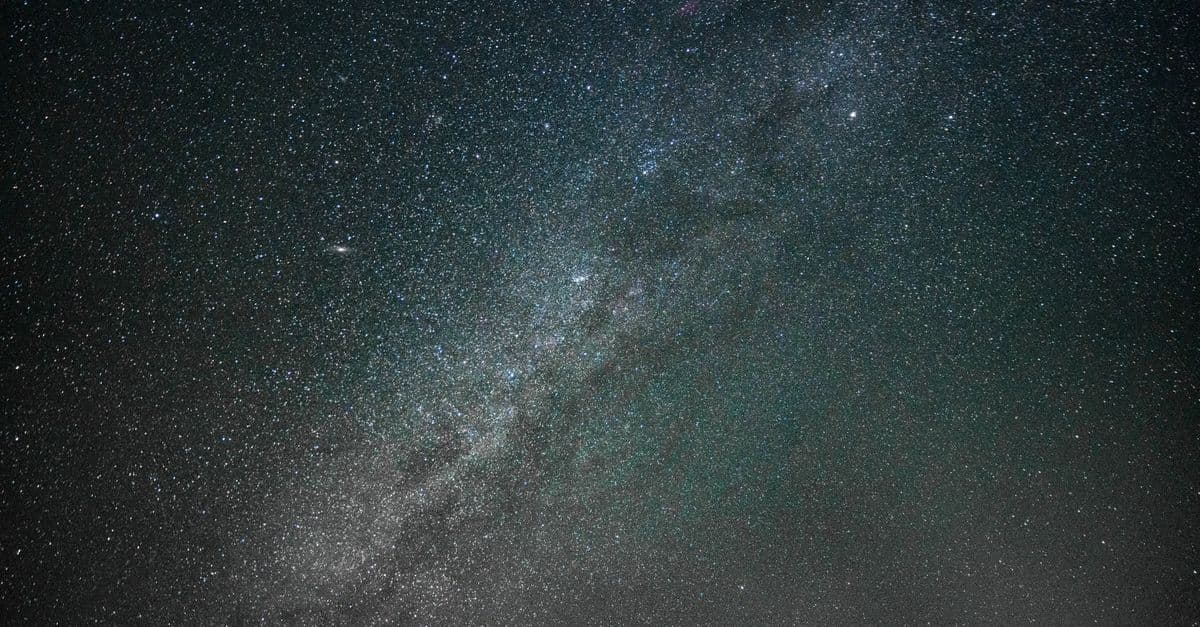
Andromeda-Milky Way Collision Explained
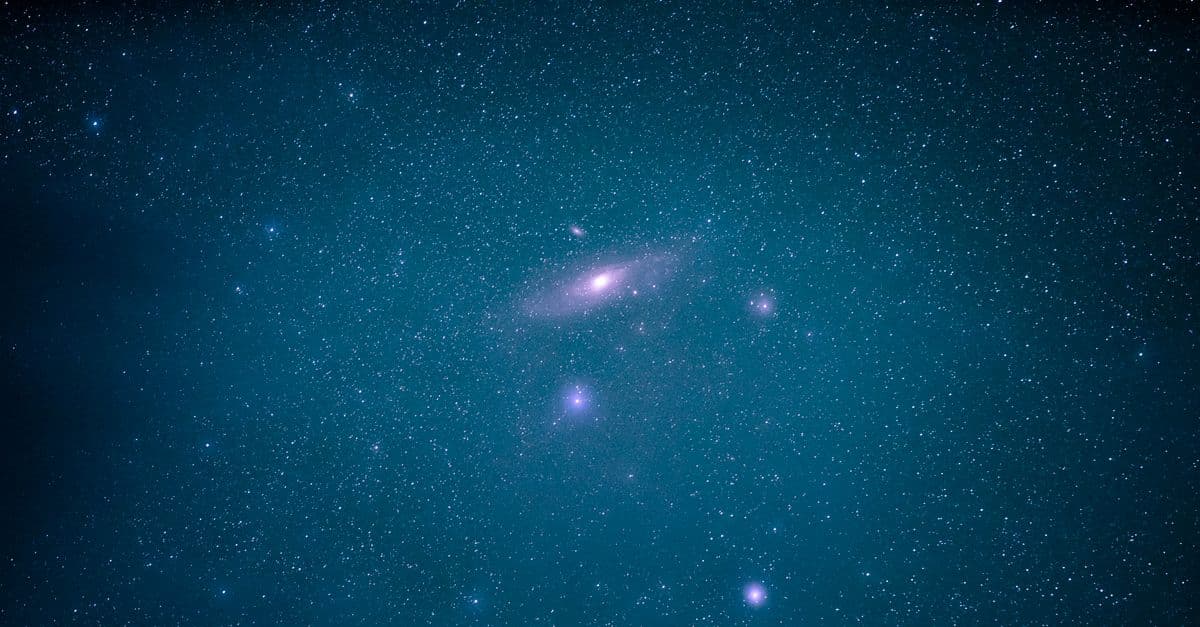
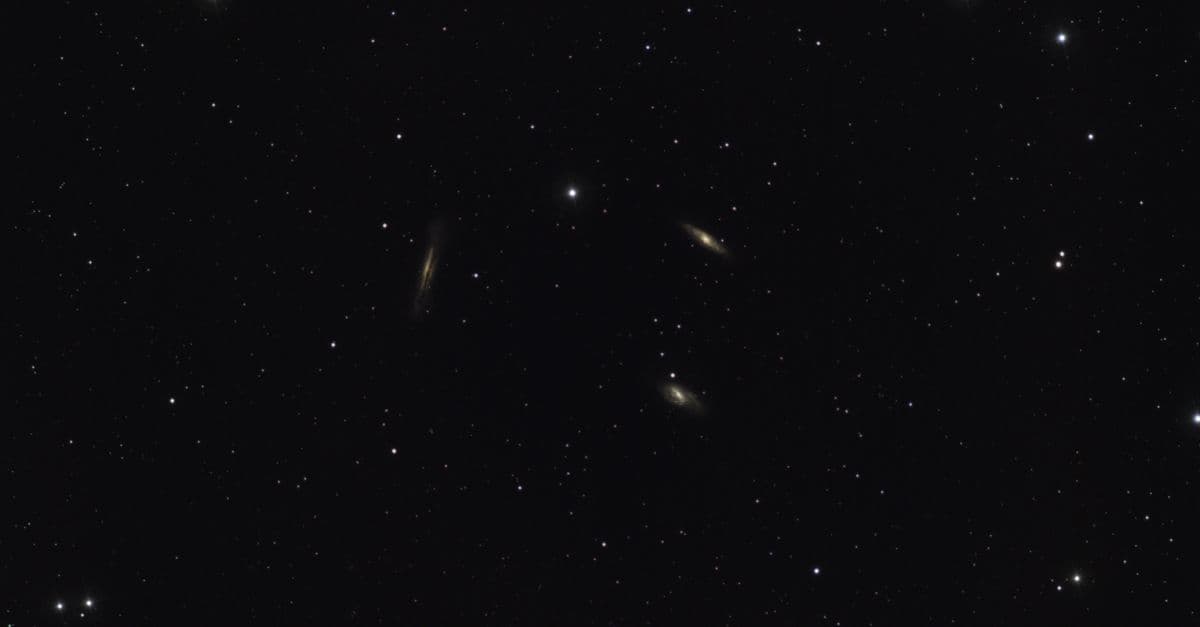
Photo: Benjamin Farren / Pexels
The Andromeda Galaxy is the largest object you can see with the naked eye — a smudge of light containing about a trillion stars, 2.5 million light-years away. It is also approaching us at about 110 km/s. In roughly 4.5 billion years (some recent estimates put it in the 4-5 Gyr range), Andromeda and the Milky Way will collide and eventually merge into a single galaxy that astronomers have nicknamed Milkomeda (or sometimes Milkdromeda).
And here's the first surprise: in that titanic collision, the odds of any two stars actually crashing into each other are essentially zero.
How we know it's coming
The first clue came from Vesto Slipher at Lowell Observatory in 1912, who measured the spectrum of Andromeda and found a blueshift — meaning it's moving toward us. Most other galaxies are redshifted (moving away due to cosmic expansion). Andromeda is one of the few close enough that its local motion overcomes the Hubble flow.
For a century, we knew Andromeda was approaching but not whether it was a head-on impact or a near miss. The transverse (sideways) velocity is much harder to measure than the radial component.
This changed with the Hubble Space Telescope (Sohn et al., 2012) and especially Gaia DR2 and DR3 (2018, 2022), which measured the proper motion of individual stars in Andromeda. Recent reanalyses (van der Marel et al. 2019, Salomon et al. 2020) suggest the trajectory is close to head-on but with non-trivial sideways motion — enough that the first pass may be a fast, near-collision rather than a slow merger. Gaia DR4 and DR5, expected later this decade, should pin down the exact geometry.
What actually happens when galaxies collide
The popular image of "galaxy collision" suggests stars smashing together in a fireworks display. The reality is much stranger and emptier.
Galaxies are mostly empty space. The typical distance between stars in our local neighborhood is about 4 light-years — meaning if you shrunk the Sun to the size of an orange, the nearest star (Proxima Centauri) would be another orange roughly 2,000 km away. Two such star fields passing through each other have essentially zero chance of any star physically colliding.
What galaxies do exchange when they collide is gravity and gas. The consequences:
- Tidal distortion — the mutual gravity tears the spiral arms into long streams of stars stretching hundreds of thousands of light-years.
- Gas cloud collisions — interstellar gas clouds do collide, compress, and trigger massive bursts of star formation (a "starburst" galaxy).
- Black hole mergers — the supermassive black holes at the centers (the Milky Way's Sagittarius A* at ~4 million solar masses, Andromeda's M31* at ~100 million) eventually spiral in and merge, releasing gravitational waves.
- Multiple passes — galaxies don't merge on first contact. They pass through each other, swing back, pass again, and finally settle over hundreds of millions of years.
The timeline
| Time from now | Phase | What happens |
|---|---|---|
| 0 (today) | Approach | Andromeda visible as smudge; 2.5 M ly away |
| ~2 Gyr | Sun heats up | Earth's oceans likely boil due to brightening Sun (unrelated to collision) |
| ~4 Gyr | First close pass | Galaxies' spiral arms stretched into tidal tails; intense star formation begins |
| ~4.5-5 Gyr | Sun becomes red giant | Inner Solar System engulfed (also unrelated, just bad timing) |
| ~5-6 Gyr | Second pass | Galaxies further disrupted; centers approach |
| ~6-7 Gyr | Final merger | Single elliptical galaxy "Milkomeda" forms |
| ~7+ Gyr | Black hole merger | Sgr A* and M31* spiral in and merge; gravitational wave signal |
What an Earth-based observer would see
If Earth somehow survived (it almost certainly won't, see below) and someone could watch the sky over millions of years:
- For ~3 billion years, Andromeda would grow steadily larger and brighter — eventually a vast spiral filling 10° of sky (twenty Moons across).
- During the first close pass, Andromeda's disk would be stretched into long luminous arcs across the sky.
- For ~100 million years around the merger, the night sky would be filled with bright young star clusters from triggered star formation.
- The final state would be an elliptical galaxy — Milkomeda would have no spiral arms, just a fuzzy ellipsoid of older, redder stars.
What happens to the Sun
In simulations (Cox & Loeb 2008, Hopkins et al. 2008), the Sun has roughly:
- ~50% chance of being flung to the outer halo of the merged galaxy (15-30 kpc out), with new orbital companions but a much darker sky
- ~25% chance of remaining in the inner disk in a position broadly similar to today
- ~25% chance of more dramatic outcomes — including ejection from the merged galaxy entirely
Whatever happens, the Sun is unlikely to find itself anywhere near Andromeda's central black hole, which is the only place the collision would directly threaten a star system.
But the Sun will kill Earth first
The collision is a beautiful long-term story, but Earth probably won't be there to see it. The Sun's luminosity increases by about 1% every 100 million years. In roughly:
- 1 Gyr — Earth's oceans begin a runaway greenhouse and likely boil away
- ~5 Gyr — Sun expands to red giant, possibly engulfing Earth's orbit
- ~6 Gyr — Sun becomes a white dwarf
So when the galaxies actually merge, Earth has already been a charred ball (or vapor) for billions of years. The "what we'll see" descriptions assume hypothetical future observers, not us.
Galaxy collision phases compared
| Phase | Duration | Stellar collisions? | Visible signatures |
|---|---|---|---|
| Pre-collision | Billions of years | None | Mutual approach, mild tidal effects |
| First pass | ~100 M years | None | Long tidal tails, starburst onset |
| Inter-pass | Hundreds of M years | None | Galaxies recede, then return |
| Final merger | ~100 M years | None | Massive starburst, AGN activity possible |
| Post-merger relaxation | ~1 Gyr | None | Elliptical galaxy forms, fading starburst |
| Black hole merger | Tens of M years (final inspiral) | None | Gravitational wave signal |
Beyond the merger
Milkomeda will not be alone. The Triangulum Galaxy (M33) is part of our Local Group and may join the merger. Smaller dwarf galaxies (the Large and Small Magellanic Clouds, the Sagittarius Dwarf, others) will be absorbed along the way.
Looking even further ahead: dark energy is accelerating cosmic expansion. Within roughly 100 Gyr, every galaxy beyond our gravitationally bound Local Group will be receding faster than light from our reference frame and will disappear from view. Milkomeda's distant descendants — if any observers remain — will see an essentially empty universe outside their own galaxy.
After that, on timescales of 10^40 years, even stars will fade and matter itself may decay. We covered the universe's long-term future in our dark energy explainer and our dark matter article. For the beginning of the story, see our Big Bang piece.
How we simulate it
Galaxy mergers are modeled with N-body codes — software that integrates the gravitational interactions of millions to billions of "particles" representing stars, dark matter, and gas. Major codes include GADGET, RAMSES, AREPO, and ChaNGa. These simulations now incorporate hydrodynamics, star formation, and supermassive black hole feedback. Each Andromeda-Milky Way simulation takes weeks to months on a supercomputer.
FAQs
Q: When exactly will Andromeda hit us? A: About 4.5 billion years from now for the first close pass. Final merger is around 6-7 Gyr. Gaia DR3-era estimates have widened the uncertainty slightly — some show the first pass closer to 4 Gyr.
Q: Will any stars collide? A: Essentially none. Stars are absurdly far apart relative to their sizes. The chance of two stars actually colliding during the merger is roughly zero.
Q: What will happen to the Solar System? A: It will likely survive intact, just relocated. Simulations give about a 50% chance of being flung to the outer halo and a smaller chance of remaining near the center.
Q: Will Earth be around to see it? A: Almost certainly not. The Sun will have made Earth uninhabitable in about 1-2 billion years, long before the collision.
Q: What's "Milkomeda"? A: The nickname for the merged galaxy. It's expected to be an elliptical galaxy — fuzzy, mostly older red stars, no spiral arms. "Milkdromeda" is an alternative name.
Q: Do the supermassive black holes merge? A: Yes, eventually. Sgr A* and M31* will spiral toward each other over hundreds of millions of years after the galactic merger and finally combine, releasing detectable gravitational waves.
Sources
- Sohn, S. et al. (2012). "The M31 velocity vector. III. Future Milky Way M31–M33 orbital evolution." ApJ 753: 9.
- van der Marel, R. et al. (2019). "First Gaia dynamics of the Andromeda system." ApJ 872: 24.
- Salomon, J. et al. (2020). "Kinematics of the Local Group from Gaia DR2." MNRAS 498: 1572-1584.
- Cox, T. & Loeb, A. (2008). "The collision between the Milky Way and Andromeda." MNRAS 386: 461-474.
- Hopkins, P. et al. (2008). "Cosmological framework for the Local Group's collision." ApJ 679: 156.
- Slipher, V. (1913). "The radial velocity of the Andromeda Nebula." Lowell Obs. Bulletin 1: 56-57.
Follow new articles
Add SciHub101 to your feed reader to see new science and technology stories.
About the Author
SciHub101 is an independent science and technology publication founded and edited by Buğra Sözeri, a software engineer and app developer based in Türkiye. AI tools assist with drafting and research. Source documentation in the existing archive is uneven, and articles are being reviewed and corrected. The Editorial Team byline identifies editorial responsibility; it does not certify specialist or independent human review. Where we compare products, anything built by our own team is labelled as such — see the editorial guidelines and About page for how corrections and disclosures work.
Related Articles
Parker Solar Probe — Touching the Sun
NASA's Parker Solar Probe is the first spacecraft to fly inside the Sun's corona — here's what it has found and why it matters.
Mars Rovers Explained — Perseverance and Curiosity
From Sojourner to Perseverance, every Mars rover explained — missions, discoveries, and the race to bring samples back to Earth.
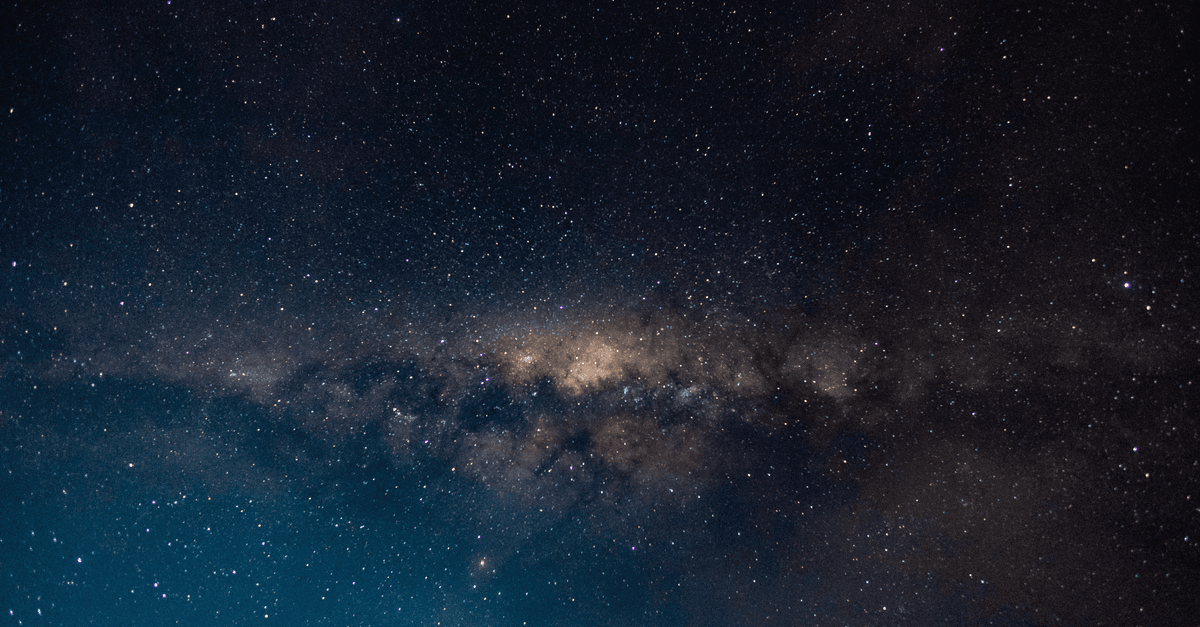
What Is the Fate of Galaxies? The Milky Way's Collision with Andromeda
The Andromeda Galaxy is approaching the Milky Way at ~110 km/s and will collide in approximately 4.5 billion years. The two galaxies will merge over several billion years of passes, ultimately forming a giant elliptical galaxy — sometimes called 'Milkomeda.' Despite the collision of two galaxies each containing hundreds of billions of stars, individual stellar collisions are extremely rare. Earth will likely survive, though in a dramatically different night sky.
How Galaxies Form and Evolve: From the First Stars to Today
Galaxies are not eternal — they are born, grow through mergers, and eventually die. Here's how the universe built these island universes.
Kepler's Three Laws: Why Planets Speed Up Near the Sun
Kepler's three laws explained with NASA data: why orbits are ellipses, why planets speed up near the Sun, and how P² = a³ weighs planets and finds exoplanets.