Dark Matter in 2026: Evidence, Candidates, and Current Theories
Photo: Micotino / Pexels
About 27% of the universe consists of something that has never been directly detected, emits no light, absorbs no light, and yet exerts gravitational force on everything around it. We call it dark matter — and while we have known of its existence for nearly ninety years, we still do not know what it is made of.
The evidence for dark matter is overwhelming, coming from multiple completely independent lines of observation. The list of what it could be has narrowed dramatically over four decades of experiments. Yet the fundamental question — what particle or object comprises dark matter — remains unanswered. Understanding where the science stands in 2026 requires understanding each evidence stream, each candidate, and the current experimental frontier.
The First Evidence: Galaxy Rotation Curves
In the 1970s, astronomer Vera Rubin and her colleague Kent Ford made systematic measurements of the rotational velocities of stars at different distances from the centers of spiral galaxies, using spectroscopic observations of Doppler shifts. Classical Newtonian dynamics makes a clear prediction: stars far from the luminous center of a galaxy, where most visible mass is concentrated, should orbit more slowly (as planets in the outer solar system do). This is called a Keplerian decline.
Rubin and Ford found the opposite: stars far from galactic centers rotate at roughly the same velocity as those near the center — flat rotation curves extending far beyond the visible disk. For the rotation curve to be flat, there must be mass distributed throughout and beyond the visible galaxy — mass that extends in a roughly spherical "halo" surrounding the visible disk, that is transparent to light, and that provides additional gravitational pull.
The conclusion is inescapable: galaxies are embedded in massive halos of unseen matter. For a typical spiral galaxy like the Milky Way, the visible stars and gas constitute perhaps 10–15% of the total mass; dark matter comprises the remaining 85–90%.
Fritz Zwicky had actually proposed the existence of "missing mass" in galaxy clusters even earlier, in 1933, from velocity dispersion measurements of the Coma Cluster. His work was largely overlooked for decades; Rubin's systematic survey of dozens of galaxies established the case definitively.
Evidence Stream 2: Gravitational Lensing
General relativity predicts that mass — any mass — bends the path of light passing nearby. A massive object between Earth and a distant source acts as a gravitational lens, distorting and magnifying the background source.
If a galaxy cluster contains far more mass than its visible stars and gas suggest, its lensing effect will be correspondingly stronger. This is precisely what astronomers observe. The lensing mass of every galaxy cluster measured substantially exceeds its visible mass — by factors of 5–10 — consistent with dark matter halos.
The Bullet Cluster (1E 0657-558) provides perhaps the most direct evidence for dark matter and against alternatives. It is the product of two galaxy clusters that collided roughly 150 million years ago. In the collision:
- The hot gas (the dominant baryonic mass, visible in X-ray) was slowed by electromagnetic drag and remained near the collision center
- The galaxies passed through each other with minimal interaction (they are widely spaced)
- The gravitational mass, mapped by weak lensing, remained associated with the galaxies — not with the gas
This separation demonstrates that the dominant mass component of these clusters cannot be the gas — it passed through the collision without slowing down, exactly as collisionless dark matter particles would. Alternative gravity theories (which predict gravity proportional to visible matter) cannot explain this spatial offset.
Evidence Stream 3: The Cosmic Microwave Background
The CMB — the afterglow of the Big Bang visible as microwave radiation filling the entire sky — carries precise information about conditions when the universe was 380,000 years old. Its tiny temperature fluctuations (of order 1 part in 100,000) encode the acoustic oscillations of the early universe.
The pattern of these fluctuations (measured with extraordinary precision by WMAP and Planck satellites) depends critically on the composition of the universe. The best-fit cosmological model (ΛCDM — Lambda Cold Dark Matter) requires:
- ~5% ordinary (baryonic) matter
- ~27% cold dark matter
- ~68% dark energy
The "cold" in cold dark matter refers to particles that were non-relativistic when structure formation began — necessary for forming the galaxies and cosmic web observed today. "Hot" dark matter (relativistic particles like neutrinos) free-streams out of density concentrations, erasing small-scale structure that we clearly observe.
The CMB fit to ΛCDM is spectacularly precise. Any model that eliminates dark matter must reproduce this fit through other means — a task that alternative theories struggle with.
Evidence Stream 4: Large-Scale Structure
The cosmic web — the filaments, walls, voids, and galaxy clusters that form the largest structures in the universe — emerged from tiny quantum fluctuations in the early universe, amplified by gravity over 13.8 billion years.
Cold dark matter acts as the gravitational scaffold for this structure. It began clumping earlier than baryonic matter (which was coupled to radiation and prevented from clumping until recombination at 380,000 years). When baryonic matter was finally freed, it fell into pre-existing dark matter potential wells, forming the galaxies and clusters we observe.
N-body simulations of a universe with cold dark matter reproduce the observed large-scale structure with remarkable fidelity — the characteristic filamentary pattern, the cluster mass function, the correlation functions of galaxies. Simulations without dark matter fail to reproduce the observed structure.
Evidence Summary Table
| Evidence Type | What Is Observed | What It Implies | Strongest Example |
|---|---|---|---|
| Galaxy rotation curves | Flat velocity profiles at large radii | Extended mass halos beyond visible disk | Milky Way, Andromeda, ~hundreds of spirals |
| Gravitational lensing | Lensing mass >> visible mass | Invisible mass dominates cluster gravity | Bullet Cluster (spatial offset) |
| CMB power spectrum | Acoustic peak ratios require ~27% cold dark matter | Non-baryonic dark matter present at recombination | Planck 2018 results |
| Large-scale structure | Cosmic web matches CDM simulations | Dark matter scaffolded structure formation | SDSS galaxy survey, Euclid 2024 |
| Galaxy cluster dynamics | Velocity dispersions require additional mass | Missing mass in clusters (Zwicky, 1933) | Coma Cluster, Virgo Cluster |
| Baryon acoustic oscillations | Scale imprinted in galaxy distribution | Dark matter set gravitational potential wells | BOSS/DESI survey |
Dark Matter Candidates
WIMPs: The Leading Theoretical Candidate (Now Constrained)
Weakly Interacting Massive Particles (WIMPs) emerged in the 1980s as theoretically motivated dark matter candidates. The reasoning was compelling: supersymmetric extensions of the Standard Model (e.g., the MSSM) predicted new particles with masses of 10–1,000 GeV and weak-force interaction cross-sections. Remarkably, calculating the relic density of such particles from the early universe naturally produces the observed dark matter abundance — the "WIMP miracle."
WIMPs should be detectable via:
- Direct detection: WIMPs scatter off atomic nuclei, depositing small amounts of energy in ultra-sensitive underground detectors
- Indirect detection: WIMP self-annihilation produces gamma rays, neutrinos, or positrons
- Collider production: LHC proton collisions might produce WIMPs as missing energy signatures
The results have been progressively disappointing for WIMPs:
- LUX-ZEPLIN (LZ) (2022–2023): world-leading direct detection, no signal, cross-sections down to ~10⁻⁴⁸ cm² excluded for 30 GeV WIMPs
- XENON1T / XENONnT: no WIMP signal
- LHC Run 3: no evidence for supersymmetric particles
- Fermi-LAT gamma-ray: no excess from galactic center or dwarf galaxies
WIMPs are not ruled out — the parameter space is vast — but the most theoretically natural region (the WIMP miracle sweet spot) is now almost entirely excluded. The field has moved toward lower mass "light dark matter" candidates.
Axions: Rising Candidate
Axions were originally proposed by Roberto Peccei and Helen Quinn in 1977 to solve the "strong CP problem" — why QCD does not violate charge-parity symmetry. The axion is a consequence of the Peccei-Quinn symmetry; it couples extremely weakly to photons and has a very small mass (typically 1 μeV – 1 meV, or ~10⁻⁶ to 10⁻³ eV).
Axions produced in the early universe behave as cold dark matter. They can be detected by their conversion to photons in strong magnetic fields (the Primakoff effect).
Key experiments:
- ADMX (Axion Dark Matter eXperiment): microwave cavity resonator in a strong magnetic field; probing axion masses of ~2–4 μeV. Ongoing and producing the world's leading limits.
- HAYSTAC: quantum-limited detection pushing into higher masses
- ABRACADABRA/DMRadio: broadband axion detection using lumped-element circuits
- CAST / IAXO (International Axion Observatory): solar axion searches
Axions remain viable and are now the most theoretically motivated alternative to WIMPs. The detection challenge is extreme sensitivity — the photon signal from axion conversion is faint beyond imagination, requiring quantum-limited amplification.
Sterile Neutrinos
Standard Model neutrinos interact via the weak force and gravity but are too light (< 1 eV) and hot to be cold dark matter. Sterile neutrinos — hypothetical neutrinos that interact only via gravity — with masses of 1–100 keV could constitute warm dark matter.
A possible signal: a 3.5 keV X-ray line observed in galaxy clusters by Chandra and XMM-Newton telescopes (2014) was proposed as sterile neutrino decay. Subsequent analysis found the signal inconsistent across observations, and the dedicated XRISM mission (launched 2023) found no confirmed line. The 3.5 keV signal remains unconfirmed and controversial.
Primordial Black Holes
Primordial black holes (PBHs) — black holes formed from density fluctuations in the very early universe, before any stars formed — are a non-particle dark matter candidate. They require no new physics beyond general relativity.
LIGO/Virgo gravitational wave observations of binary black hole mergers sparked renewed interest: could some mergers involve PBHs? Constraints from microlensing surveys (EROS, OGLE, Subaru Hyper Suprime-Cam), CMB distortions, and gravitational wave merger rates have severely constrained PBHs across most mass ranges. A window remains open around 10²⁰ – 10²⁴ g (roughly asteroid mass), where constraints are weakest. PBHs in this mass range could constitute a fraction of dark matter but likely not all of it.
Candidate Particles: Status Table
| Candidate | Mass Range | Interaction | Key Experiments | Current Status |
|---|---|---|---|---|
| WIMP (generic) | 10 GeV – 10 TeV | Weak + gravity | LZ, XENONnT, LHC | Most natural parameter space excluded; not ruled out |
| Axion | 1 μeV – 1 meV | Electromagnetism (weak coupling) | ADMX, HAYSTAC, DMRadio | Active searches; viable; no detection yet |
| Sterile neutrino | 1–100 keV | Gravity only | XRISM, Chandra (X-ray) | Claimed 3.5 keV signal unconfirmed |
| Primordial black holes | ~10²⁰–10²⁴ g (asteroid mass) | Gravity | Microlensing, LIGO, CMB | Constrained to small fraction; window remains |
| Fuzzy dark matter (ultralight axion) | ~10⁻²² eV | Gravity | Lyman-alpha forest, galaxy structure | Viable; produces characteristic quantum pressure effects |
| Gravitino (SUSY) | 1 GeV – 1 TeV | Gravity (R-parity) | LHC (indirect) | No SUSY evidence reduces motivation |
| Self-interacting dark matter (SIDM) | Any | Self-interaction + gravity | Cluster collision morphologies | Addresses small-scale structure anomalies |
The MOND Alternative
Modified Newtonian Dynamics (MOND), proposed by Mordehai Milgrom in 1983, takes a fundamentally different approach: rather than postulating new matter, it modifies gravity (or inertia) at very low accelerations. In MOND, below an acceleration threshold a₀ ≈ 1.2 × 10⁻¹⁰ m/s², the gravitational force falls off more slowly than Newtonian 1/r². This naturally produces flat rotation curves without dark matter.
MOND's successes are real: it predicts the rotation curves of many individual galaxies from visible baryonic mass alone with striking accuracy, and it successfully predicted the Tully-Fisher relation (a tight correlation between galaxy rotation speed and luminosity).
Its failures are also real:
- The Bullet Cluster: gravitational mass offset from baryonic mass cannot be explained without dark matter
- Galaxy clusters: MOND requires substantial unseen mass (perhaps neutrinos) in clusters
- CMB power spectrum: relativistic extensions of MOND (RMOND, RelMOND, TeVeS) struggle to fit CMB data without invoking additional matter
- Large-scale structure: MOND-based models do not reproduce the cosmic web as naturally as ΛCDM
Most cosmologists treat MOND as a possibly useful phenomenological description of galactic dynamics rather than a replacement for dark matter — perhaps a clue to the nature of dark matter's distribution rather than evidence against its existence.
The Vera Rubin Observatory: Dark Matter's Next Test
The Vera Rubin Observatory (formerly LSST — Legacy Survey of Space and Time), named in honor of Vera Rubin herself, achieved first light in 2024 and began its 10-year survey in 2025. Over its operational lifetime it will:
- Map the distribution of dark matter via weak gravitational lensing across billions of galaxies
- Detect thousands of strong lensing events
- Constrain the dark matter power spectrum to unprecedented precision
- Test MOND and alternative gravity theories with galaxy clustering statistics
Combined with the Euclid space mission (launched 2023) and DESI (Dark Energy Spectroscopic Instrument), the 2025–2030 period may yield the most precise measurements of dark matter's distribution in history — even without directly detecting the particle.
As Albert Einstein's general relativity predicts the lensing that reveals dark matter's presence, and as Stephen Hawking's work on primordial black holes motivates one candidate class, the study of dark matter sits at the intersection of every major area of modern physics. The answer — when it comes — will almost certainly require either extending the Standard Model or fundamentally reconsidering our understanding of gravity.
Frequently Asked Questions
Q: What is dark matter and how do we know it exists? A: Dark matter is a form of matter that does not emit, absorb, or reflect electromagnetic radiation but exerts gravitational force. We know it exists from multiple independent evidence streams: galaxy rotation curves that require more mass than visible stars contain; gravitational lensing that reveals cluster masses far exceeding visible matter; the CMB power spectrum that requires ~27% cold dark matter; and large-scale structure simulations that only match observations when dark matter is included.
Q: What is the leading dark matter candidate in 2026? A: As of 2026, no dark matter candidate has been detected. The most theoretically motivated candidates are WIMPs (now significantly constrained by direct detection experiments) and axions (actively searched by ADMX and related experiments). The axion remains viable and theoretically well-motivated. No candidate has been confirmed.
Q: Why hasn't CERN found dark matter particles? A: The LHC can produce dark matter particles if they interact with quarks at TeV energies — the signature would be missing energy. No such signal has been found, ruling out the simplest supersymmetric WIMPs. However, dark matter might couple too weakly to quarks to be produced at collider energies, or might have a mass outside the LHC's accessible range. Absence of detection constrains the parameter space but does not rule out all candidates.
Q: What is the Bullet Cluster and why is it important? A: The Bullet Cluster is two galaxy clusters that collided ~150 million years ago. When mapped with X-ray observations (hot gas) and gravitational lensing (total mass), the gravitational mass is spatially offset from the gas — because the gas was slowed by electromagnetic interactions while the dark matter passed through. This spatial offset is essentially impossible to explain without dark matter and constitutes the most direct observational evidence for it.
Q: Is MOND a viable alternative to dark matter? A: MOND succeeds in explaining individual galaxy rotation curves from visible matter alone and correctly predicted the Tully-Fisher relation. However, it fails for galaxy clusters (which require unseen mass even in MOND), cannot explain the Bullet Cluster mass offset, and does not reproduce the CMB power spectrum without additional matter components. Most cosmologists regard it as a phenomenological description rather than a complete alternative.
Q: Could primordial black holes be dark matter? A: Primordial black holes (formed in the early universe) are a viable partial dark matter candidate. Microlensing surveys, CMB distortion constraints, and gravitational wave observations have ruled out PBHs across most mass ranges. A window near asteroid-mass BHs (~10²⁰–10²⁴ g) remains open but is unlikely to account for all dark matter. Renewed interest followed LIGO detections but has not yielded confirmation.
Q: What is the Vera Rubin Observatory and what will it tell us about dark matter? A: The Vera Rubin Observatory in Chile, named for the astronomer who established the evidence for dark matter from rotation curves, began its 10-year Legacy Survey of Space and Time in 2025. It will map dark matter distribution via weak gravitational lensing across billions of galaxies, constrain dark matter's clustering properties, and test alternative gravity theories. It will not directly detect dark matter particles but will provide the most detailed map of where dark matter is in the universe.
Q: What would discovering dark matter's identity change about physics? A: Identifying dark matter would be among the biggest discoveries in physics since the Standard Model itself. If the particle is a WIMP within a supersymmetric framework, it would confirm supersymmetry — revolutionizing particle physics. If it is an axion, it would simultaneously solve the strong CP problem. Either discovery would point to physics beyond the Standard Model, potentially opening entirely new areas of particle physics and cosmology.
Sources
- Rubin, V.C. & Ford, W.K. "Rotation of the Andromeda Nebula from a Spectroscopic Survey of Emission Regions." Astrophysical Journal, 159, 379–403, 1970.
- Clowe, D. et al. "A Direct Empirical Proof of the Existence of Dark Matter." Astrophysical Journal Letters, 648, L109–L113, 2006. (Bullet Cluster)
- Planck Collaboration. "Planck 2018 results. VI. Cosmological parameters." A&A, 641, A6, 2020.
- Milgrom, M. "A modification of the Newtonian dynamics as a possible alternative to the hidden mass hypothesis." Astrophysical Journal, 270, 365–370, 1983.
- Peccei, R.D. & Quinn, H.R. "CP Conservation in the Presence of Pseudoparticles." Physical Review Letters, 38, 1440, 1977.
- LUX-ZEPLIN (LZ) Collaboration. "First Dark Matter Search Results from the LUX-ZEPLIN (LZ) Experiment." Physical Review Letters, 131, 041002, 2023.
- Bertone, G. & Hooper, D. "History of dark matter." Reviews of Modern Physics, 90, 045002, 2018.
- Ivezic, Z. et al. "LSST: From Science Drivers to Reference Design and Anticipated Data Products." Astrophysical Journal, 873, 111, 2019.
Related Articles
- Dark Matter and Dark Energy Explained
- What Is Dark Energy and Why Is the Universe Accelerating?
- The Big Bang Theory: The Origin of the Universe
- How Gravity Works: From Newton to General Relativity
- Vera Rubin — Scientist Biography
- Albert Einstein — Scientist Biography
- Stephen Hawking — Scientist Biography
Follow new articles
Add SciHub101 to your feed reader to see new science and technology stories.
About the Author
SciHub101 is an independent science and technology publication founded and edited by Buğra Sözeri, a software engineer and app developer based in Türkiye. AI tools assist with drafting and research. Source documentation in the existing archive is uneven, and articles are being reviewed and corrected. The Editorial Team byline identifies editorial responsibility; it does not certify specialist or independent human review. Where we compare products, anything built by our own team is labelled as such — see the editorial guidelines and About page for how corrections and disclosures work.
Related Articles

Asteroid Mining — Trillion Dollar Space Industry
Asteroid mining could unlock trillions in metals and water. Explore the targets, companies, technologies, and economics of mining the sky.
Black Holes Explained: From Formation to Hawking Radiation
Black holes explained: how they form from stellar collapse, what happens at the event horizon, why Hawking radiation matters, and what the information paradox means for physics.
Dark Matter and Dark Energy Explained
What is dark matter and dark energy? Discover the invisible forces shaping 95% of the universe — from galaxy rotation curves to the accelerating cosmos.
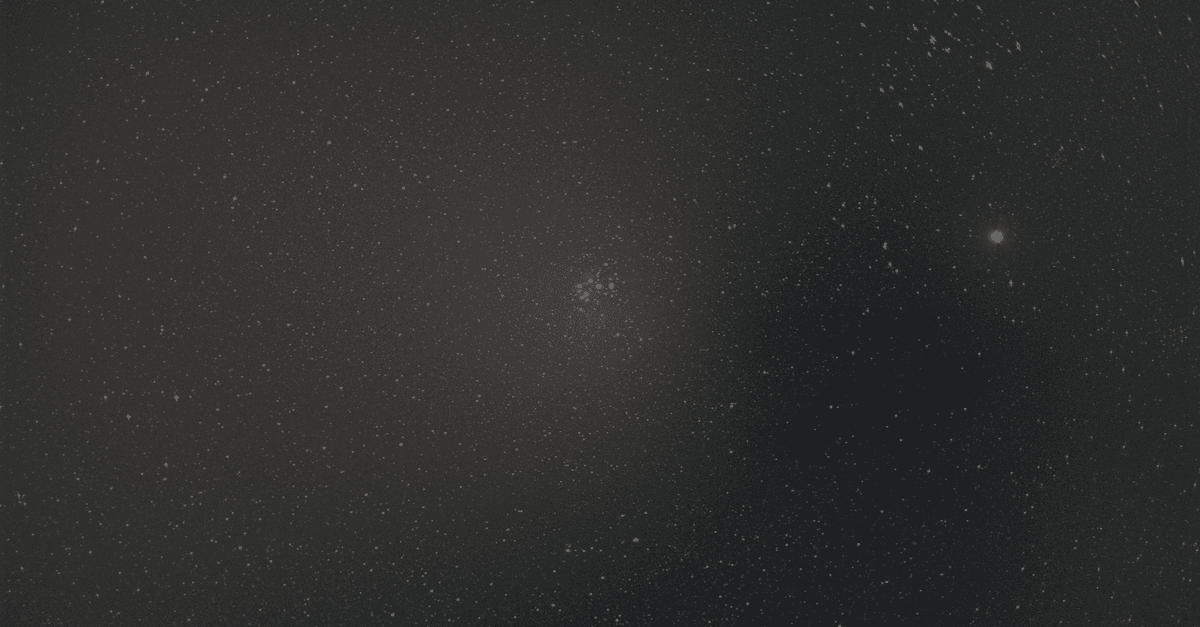
What Are Galaxy Clusters? The Largest Gravitationally Bound Structures in the Universe
Galaxy clusters are the largest structures held together by their own gravity: hundreds to thousands of galaxies, a vast reservoir of X-ray-bright gas, and a dark matter halo that outweighs everything else. They also work as natural telescopes, bending and magnifying light from the early universe.

How Do We Search for Dark Matter? Detection Experiments and Methods
Dark matter makes up 27% of the universe's energy content, yet its nature remains one of science's deepest mysteries. Physicists are searching for it underground, in space, at particle accelerators, and with gravitational telescopes — using every tool available to trap something that refuses to interact.