What Are Galaxy Clusters? The Largest Gravitationally Bound Structures in the Universe
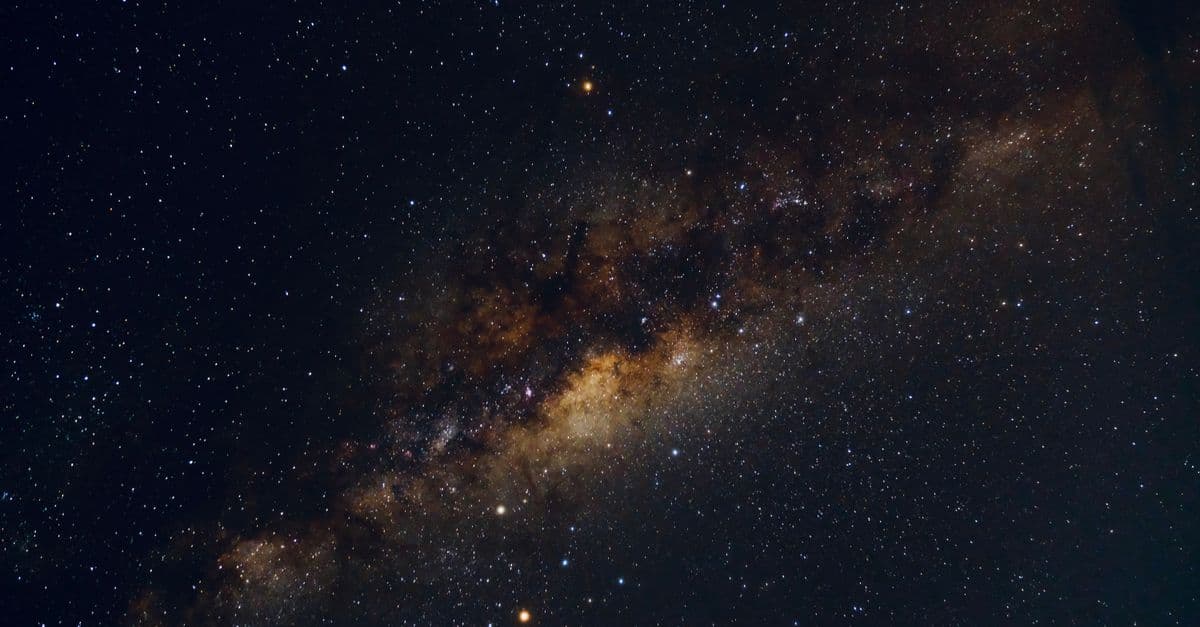
Photo: Jass Sosa / Pexels
In 2003, NASA's Chandra X-ray Observatory released an image of the Perseus galaxy cluster showing ripples in its hot gas, features that look like sound waves spreading from the black hole at the cluster's center. Chandra's team noted that the pitch of those waves corresponds to a B flat about 57 octaves below middle C, more than a million billion times deeper than anything a person can hear (Chandra, Perseus release). No ear will ever pick it up, but the point stands: the biggest objects held together by gravity are active, dynamic systems.
Galaxy clusters hold hundreds to thousands of galaxies, huge clouds of gas at tens of millions of degrees, and dark matter halos that dominate the mass. This article explains what they are made of, how they form, why they glow in X-rays, and how astronomers use them as both scales for weighing the universe and telescopes for seeing farther than any lens could alone.
What a galaxy cluster is, and what it is not
A galaxy cluster is a system of galaxies bound together by gravity. Typical clusters contain 100 to 1,000 galaxies spread across 1 to 5 megaparsecs, where one megaparsec is about 3.26 million light-years, and their total masses run from 10^14 to 10^15 times the mass of the Sun (Wikipedia: Galaxy cluster). The Milky Way weighs on the order of 10^12 solar masses, so a rich cluster is something like a hundred to a thousand Milky Ways in mass.
Groups are the smaller version, with a few to a few dozen large galaxies. Our own Local Group, which includes the Milky Way, Andromeda, and dozens of smaller galaxies, is a modest group and not a cluster. Superclusters and the cosmic web are larger still, but they are not gravitationally bound. They are patterns that are still being stretched by cosmic expansion, which is why clusters hold the title of largest bound structures. For the larger picture, see the cosmic web.
Galaxies inside a cluster move fast. Typical velocities are about 800 to 1,000 km per second (Wikipedia: Galaxy cluster), so a galaxy crosses a cluster in a few billion years, and every orbit is a close pass through gas and neighbors. A cluster is closer to a busy rotary than a calm solar system.
The mass budget: galaxies are the smallest ingredient
The most counterintuitive fact about clusters is that the galaxies, the part we see in ordinary photographs, are only a sliver of the total mass. A commonly quoted breakdown gives about 1% galaxies, about 9% hot intracluster gas, and about 90% dark matter (Wikipedia: Galaxy cluster, summarizing published reviews). Exact fractions differ from cluster to cluster, but the ordering is stable: dark matter first, hot gas second, stars last.
| Component | Approximate share of mass | How we detect it |
|---|---|---|
| Dark matter | about 90% | Gravitational lensing, galaxy motions, gas temperature |
| Intracluster gas | about 9% | X-ray emission, Sunyaev-Zeldovich effect |
| Galaxies (stars) | about 1% | Optical and infrared light |
The intracluster medium (ICM) is a thin plasma, a gas so hot its atoms are stripped of electrons, with a temperature that Wikipedia's summary of Chandra work puts between 30 and 100 million degrees Celsius (Wikipedia: Galaxy cluster). It is very dilute. Its density is about a thousandth of a particle per cubic centimeter, far emptier than any vacuum chamber on Earth, yet because it fills a region millions of light-years wide, it contains several times more mass than all the stars in the cluster's galaxies combined.
Hot, thin gas glows in X-rays because free electrons radiate when they are deflected by ions, a process called bremsstrahlung (German for "braking radiation"). That makes the gas visible only to X-ray telescopes such as Chandra and eROSITA. In visible light a cluster looks like a swarm of galaxies. In X-rays the same cluster is a single glowing cloud with the galaxies reduced to faint dots.
Famous clusters and what each one teaches
A handful of clusters carry much of the field's history. The table lists well-studied examples with distances where a source was checked.
| Cluster | Distance | Why it matters |
|---|---|---|
| Virgo | about 55 million light-years (ESA/Hubble) | Nearest rich cluster; contains the giant elliptical M87 |
| Perseus | about 250 million light-years (Chandra) | Best-studied case of black hole heating of cluster gas |
| Coma | about 320 million light-years | Fritz Zwicky's 1933 dark matter clue |
| Bullet Cluster | about 3.8 billion light-years (Chandra) | Direct evidence that dark matter is separate from gas |
| El Gordo | about 7 billion light-years (light-travel distance at z = 0.87) | Massive merging cluster seen when the universe was young |
Distances are from the ESA/Hubble Virgo image page, the Chandra Perseus release, and the Chandra Bullet Cluster release. The El Gordo distance is from reporting on the Chandra and Atacama Cosmology Telescope result.
Perseus: where a black hole stirs the gas
Perseus lies about 250 million light-years away at a redshift of z = 0.0183 (Chandra). At its center sits the giant galaxy NGC 1275, which hosts an active supermassive black hole. Chandra images show bubbles and wave-like ripples in the surrounding gas. The release suggests the waves push aside hot gas across hundreds of thousands of light-years and may help explain why the central gas stays hot instead of cooling and forming stars. That is the starting point of a puzzle covered in the cooling flow section below.
Coma: the first hint of dark matter
In 1933 the Swiss-American astronomer Fritz Zwicky measured the speeds of galaxies in the Coma Cluster and found a velocity spread of about 1,000 km per second. For the cluster not to fly apart, he concluded, its mass had to be far larger than the light implied. His quoted overdensity of about 400 was inflated by an old, too-large value of the Hubble constant, and corrected figures are lower, but the direction of the result held up. Sidney van den Bergh's review of this period also covers Sinclair Smith's 1936 work, Babcock's 1939 study and Oort's 1940 study (van den Bergh, "The Early History of Dark Matter"). The story continues in the work of Vera Rubin, who found the same kind of anomaly inside galaxies.
The Bullet Cluster: gas and mass pulled apart
The Bullet Cluster is two clusters that collided, about 3.8 billion light-years away. Chandra's 2006 release explains the key observation: the hot gas, seen in X-rays, was slowed by the collision, while the bulk of the mass, mapped through gravitational lensing, passed ahead of it (Chandra, Bullet Cluster). The lensing map shows mass in a different place than most of the ordinary matter. Chandra's team called this direct evidence that nearly all of the matter in the clusters is dark, and said it is hard to reproduce in theories where hot gas dominates the mass.
A rough analogy helps. Imagine two crowds of people walking through a fog of sticky syrup. The people slow down in the syrup but a few ghosts walking with them pass straight through. In the Bullet Cluster, the syrup is hot gas, the people are ordinary matter, and the ghosts are dark matter. For a broader treatment of the evidence, see dark matter evidence and current theories.
El Gordo: a giant already assembled early
El Gordo, Spanish for "the fat one," is a merging pair of clusters at a redshift of 0.87. A 2012 analysis found a mass of (2.16 plus or minus 0.32) times 10^15 solar masses, a velocity dispersion of 1,321 km per second from 89 member galaxies, and an X-ray temperature near 14.5 keV, which is about 170 million degrees (Menanteau et al. 2012). The authors describe it as a major merger with a mass ratio of roughly two to one, and as a possible high-redshift cousin of the Bullet Cluster. Finding such a massive system so early is a useful stress test for structure-formation models.
How galaxy clusters form
Clusters grow by hierarchy. In the standard model, tiny density ripples in the early universe were amplified by gravity. Dark matter, which does not feel radiation pressure, collapsed first into clumps called halos. Gas followed, forming the first stars and galaxies inside those halos. Small halos merged into larger ones, and the biggest merged into clusters, a process that is still going on today.
Cluster formation is not a single event but a long series of mergers and accretion. Gas falling into the deep gravitational well is heated by shock waves, which is how the ICM reaches tens of millions of degrees. When two clusters collide, the shocks are stronger and the gas can be heated for a while to even higher temperatures. A cluster with a smooth, round X-ray profile has typically been left alone for a few billion years. A lumpy, irregular one has probably merged recently.
Astronomers use the word "virialized" for a cluster that has settled into balance, with the kinetic energy of the galaxies and gas balancing the pull of gravity. Most massive clusters that we see today are not fully relaxed, because mergers continue to arrive. That matters for measurements, since the usual mass estimates assume balance. A cluster in the middle of a merger can look heavier or lighter than it is, depending on the method.
The intracluster medium: a hot plasma with a cooling problem
The ICM's temperature is set mostly by the cluster's mass. Heavier clusters have deeper wells, so infalling gas speeds up more and heats more. Temperatures are often quoted in kiloelectronvolts (keV), where 1 keV is about 11.6 million degrees. El Gordo's 14.5 keV puts it at one of the hotter extremes.
The gas cools by radiating X-rays, and the cooling should be fastest in the dense central region. Models in the 1970s and 1980s predicted a "cooling flow," a stream of gas cooling and sinking toward the center and forming stars at enormous rates. Observations did not show it. Star formation in central galaxies is far lower than a naive cooling-flow model predicts, which is the cooling flow problem.
Black hole feedback as the likely thermostat
The leading answer is feedback from the supermassive black hole in the central galaxy. When gas reaches the black hole, it launches jets that inflate bubbles of hot plasma in the surrounding gas. Those bubbles rise, push gas aside, and stir the medium, and as the Perseus release suggests, they can drive waves that carry energy outward. The result works like a household thermostat: when the gas cools, the black hole feeds and heats it, and when the gas warms, the feeding drops. The physics of those engines is covered in active galactic nuclei, quasars, and blazars.
Not everything is settled. Researchers still debate how precisely the energy from jets is converted into heat across the whole cooling region, and which mechanisms matter most, whether bubbles, shocks, sound waves, or turbulence. Chandra's Perseus observations are one of the best data sets for testing these ideas.
Metals and stripping
The ICM is not pure hydrogen and helium. It contains heavier elements, astronomers' "metals," such as iron, oxygen, and silicon, produced by supernovae in cluster galaxies and carried into the gas by galactic winds and by stripping. Measurements of those abundances let researchers trace the history of star formation across the cluster.
Stripping happens because galaxies plow through the ICM at high speed. The pressure of the hot gas on a galaxy, ram pressure, can peel away the galaxy's own gas, like wind stripping leaves off a branch. The galaxies with long streamers of stripped gas are nicknamed jellyfish galaxies, and some form new stars in their tails. When a galaxy loses its gas, it loses its star-forming fuel, which is one reason clusters are dominated by older, redder galaxies.
Gravitational lensing: clusters as natural telescopes
General relativity says mass bends light. A galaxy cluster's mass, mostly dark matter, bends light from background galaxies and magnifies them. Where the alignment is close, the background galaxy is stretched into long arcs and sometimes appears several times. Each distorted image is a clue to how mass is distributed in the cluster. For a deeper look at the mechanism, see how gravitational lensing magnifies galaxies.
There are two regimes. Strong lensing near the cluster core makes giant arcs and multiple images, which allow precise mass maps of the central region. Weak lensing is subtler: the shapes of thousands of background galaxies are slightly stretched in a coherent pattern, and averaging them reveals the mass of the cluster out to its outskirts. Together with X-ray data on the gas, these maps let astronomers compare where the mass is and where the gas is, which is exactly what the Bullet Cluster showed. The broader technique of measuring masses is explained in how astronomers weigh galaxies.
Hubble's Frontier Fields and Webb's first image
The Hubble Frontier Fields program turned this effect into a survey. It targeted six massive clusters, Abell 2744, MACS J0416.1-2403, MACS J0717.5+3745, MACS J1149.5+2223, Abell S1063, and Abell 370, with over 840 Hubble orbits, plus deep Spitzer imaging (Lotz et al., arXiv). In the lensed regions near the strongest magnification, the images reach intrinsic depths of roughly 30 to 33 magnitudes over very small volumes, which means they can show galaxies fainter than any blank-sky exposure would find.
The James Webb Space Telescope used the same trick on its first public deep field in July 2022. That image shows the cluster SMACS 0723 as it appeared about 4.6 billion years ago, with some of the magnified background galaxies dating from when the universe was less than a billion years old (ESA/Webb). The image combined 12.5 hours of near-infrared exposure. More Webb results are summarized in what the James Webb Space Telescope has found.
Clusters as scales for cosmology
Clusters are rare, massive peaks in the matter distribution, and rare things are sensitive to the underlying rules. If matter were more abundant or density fluctuations had started larger, more clusters would have formed by now. Counting clusters of a given mass at different cosmic times therefore constrains the amount of matter, the amplitude of density fluctuations, and the behavior of dark energy. Cluster catalogs built from the Planck satellite's microwave maps have been used for exactly this kind of constraint on the matter density, the amplitude of fluctuations, and dark energy (Planck 2015 SZ catalogue paper).
The method depends on measuring cluster masses accurately, and that is hard. Gas pressure, X-ray temperature, galaxy velocities, and lensing each give a mass, and they do not always agree, particularly for merging clusters. Calibrating those mass estimates is currently the largest source of uncertainty in cluster cosmology.
Three ways to weigh a cluster
Galaxy motions. If a cluster is in balance, the speeds of its galaxies tell you how strong the gravity is. A rough version of the virial estimate is M ≈ 3σ²R/G, where σ is the line-of-sight velocity spread, R is the cluster's radius, and G is the gravitational constant. Plug in the Coma-like values of 1,000 km per second and 1.5 megaparsecs and you get on the order of 10^15 solar masses. This is an illustrative order-of-magnitude calculation, not a measured result, but it shows why a velocity spread of that size demands far more mass than the stars supply.
Hot gas. Hydrostatic equilibrium means the gas pressure balances gravity, the same logic as a balloon holding its shape. Measure the X-ray temperature and density profile and you can solve for the mass that must be doing the holding. The catch is that moving gas in a merger adds extra support, so the method can underestimate the true mass.
Lensing. Light bending depends only on the total mass along the line of sight, whether dark or visible, and not on whether the cluster is in balance. That makes lensing the least assumption-laden of the three, though it measures a projected mass and needs careful modeling. Comparing all three methods on the same cluster is how astronomers check for bias.
The Sunyaev-Zeldovich effect: seeing clusters in the microwave sky
The most important tool for finding distant clusters is not a visible-light or X-ray observation. It is the thermal Sunyaev-Zeldovich (SZ) effect, predicted by Rashid Sunyaev and Yakov Zeldovich around 1970. Photons from the cosmic microwave background pass through the hot cluster gas, and some are scattered by fast electrons, which gives them a small energy boost through inverse Compton scattering (Wikipedia: Sunyaev-Zeldovich effect). The cluster therefore leaves a faint shadow in the microwave sky at lower frequencies, and a slight brightening at higher ones.
The signal strength does not depend on a cluster's redshift, so a distant cluster is nearly as easy to detect as a nearby one. Surface brightness in X-rays, by contrast, fades quickly with distance. The CMB itself is described in what the cosmic microwave background is. A separate effect, the kinetic SZ effect, arises when a cluster moves relative to the expanding universe and was first detected in an individual cluster, MACS J0717.5+3745, in 2012.
Catalogs have grown from dozens to thousands
| Survey | Method | Size | Source |
|---|---|---|---|
| South Pole Telescope | SZ | 415 clusters discovered as of 2015 | Wikipedia: SZ effect |
| Planck PSZ2 | SZ | 1,653 detections, 1,203 confirmed | Planck 2015 results |
| eROSITA eRASS1 | X-ray | 12,247 optically confirmed clusters and groups | Bulbul et al. 2024 |
The eROSITA catalog covers 13,116 square degrees of sky out to redshift 1.32, and about two-thirds of its clusters had no known counterpart in earlier literature (Bulbul et al. 2024, arXiv). The sky survey approach turns clusters from curiosities into a statistical sample.
How clusters change the galaxies inside them
The cluster environment reshapes galaxies. Nearby clusters are dominated by red, passive elliptical and lenticular galaxies with little new star formation, while the field is full of blue spirals. In 1978, Harvey Butcher and Augustus Oemler found that more distant clusters contain a larger fraction of blue galaxies, which was the first evidence that cluster galaxies evolve and that their star formation gets switched off over cosmic time.
Several processes help quench galaxies:
- Ram pressure stripping removes the cold gas directly.
- Starvation cuts off new gas, because the hot ICM prevents a galaxy from accreting more fuel.
- Tidal interactions with neighbors and with the cluster's overall gravity heat and strip gas.
- Mergers can trigger a burst of star formation that uses up the gas.
At the center of most clusters sits a brightest cluster galaxy (BCG), the most massive galaxies in the universe, often with a huge, diffuse halo of stars. BCGs grow partly by swallowing smaller galaxies, a process of cannibalism similar in spirit to the mergers described in galactic cannibalism in the Milky Way's history. The tight "red sequence," a narrow band in the color-brightness diagram where cluster ellipticals sit, shows that most of these galaxies formed their stars early and have been passively aging since.
What we still do not know
Clusters are well observed but not fully understood. Four questions remain active.
What is dark matter? Clusters demonstrate that it exists, and the Bullet Cluster shows it behaves as a nearly collisionless component, but the particle is still unidentified. Detection efforts are covered in how scientists search for dark matter.
How accurate are cluster masses? If cluster masses are biased by even a modest amount, the cosmological parameters derived from cluster counts shift with them. Lensing, X-ray, and SZ methods are being cross-calibrated across larger samples.
What does cluster counting say about dark energy? Cluster abundance across cosmic time is one of several independent tests of the accelerating expansion described in what dark energy is. Agreement between different methods is a strong check on the standard model, and disagreements would be important.
How is gas heated and mixed? The balance between jet heating, shock heating, turbulence, and magnetic fields in the ICM is still a subject of observation and simulation.
The takeaway
Galaxy clusters are the places where the universe's three main ingredients, stars, hot gas, and dark matter, can all be seen at once, and where their proportions are most extreme. The galaxies we see are about a percent of the story. The rest is a hot plasma that can be mapped with X-rays and microwaves, and a dark halo that can be mapped only through its gravity. Because clusters are both massive enough to act as lenses and rare enough to be sensitive to cosmological parameters, they are tools as much as objects: scales for weighing the universe, and telescopes for looking at galaxies that are otherwise too faint to see.
Frequently asked questions
Q: What is the difference between a galaxy group and a galaxy cluster? A: Groups contain a few to a few dozen large galaxies and have lower masses, while clusters contain roughly 100 to 1,000 galaxies and masses of 10^14 to 10^15 solar masses. There is no sharp dividing line. The Milky Way belongs to a modest group called the Local Group.
Q: Why are galaxy clusters called the largest bound structures? A: Their gravity is strong enough to hold them together against cosmic expansion. Superclusters and cosmic web filaments are larger, but they are not bound and will be pulled apart as the universe expands.
Q: What is the intracluster medium? A: It is the hot, thin plasma between the galaxies, at tens of millions of degrees and about a thousandth of a particle per cubic centimeter. It outweighs the stars in a cluster's galaxies several times over and shines in X-rays.
Q: How do galaxy clusters prove dark matter exists? A: Several independent measurements, including galaxy speeds, gas temperature, and gravitational lensing, give masses far larger than the visible matter. In the Bullet Cluster, the lensing mass is offset from the hot gas after a collision, which is difficult to explain without dark matter.
Q: How are galaxy clusters used as telescopes? A: Their mass bends and magnifies light from more distant galaxies behind them. Hubble's Frontier Fields and Webb's first deep field both used clusters this way to see very faint, distant galaxies.
Q: What is the Sunyaev-Zeldovich effect? A: It is a small distortion of the cosmic microwave background caused by photons scattering off hot electrons in a cluster. Its strength does not fall with redshift, so it can detect very distant clusters.
Q: How many galaxy clusters are known? A: Catalogs now list thousands. Planck's second SZ catalog has 1,653 detections and the eROSITA first-pass X-ray catalog has 12,247 optically confirmed clusters and groups, though completeness varies by method.
Sources
- Chandra X-ray Observatory, Perseus Cluster release and Bullet Cluster release.
- Menanteau et al., El Gordo, a massive merging cluster at redshift 0.87.
- Lotz et al., The Frontier Fields: Survey Design and Initial Results.
- Bulbul et al., eROSITA All-Sky Survey: first catalog of galaxy clusters and groups; Planck Collaboration, Second Planck Catalogue of Sunyaev-Zeldovich Sources.
- ESA/Hubble, Virgo cluster image page; ESA/Webb, Webb's first deep field.
Related reading
Follow new articles
Add SciHub101 to your feed reader to see new science and technology stories.
About the Author
SciHub101 is an independent science and technology publication founded and edited by Buğra Sözeri, a software engineer and app developer based in Türkiye. AI tools assist with drafting and research. Source documentation in the existing archive is uneven, and articles are being reviewed and corrected. The Editorial Team byline identifies editorial responsibility; it does not certify specialist or independent human review. Where we compare products, anything built by our own team is labelled as such — see the editorial guidelines and About page for how corrections and disclosures work.
Related Articles
What Is Spectroscopy? How Light Reveals Everything About the Universe
Spectroscopy, the analysis of light spread out by wavelength, is the most productive tool in astronomy. From a single beam of starlight it can reveal temperature, composition, speed, rotation, and magnetic field strength. Doppler shifts of spectral lines exposed the expansion of the universe, and the fingerprints of atoms identify every element the light has passed through.
What Are Rogue Planets? Worlds Drifting Alone in the Dark
Rogue planets, also called free-floating planets, are planetary-mass objects that orbit no star. Some were ejected from planetary systems and some may have collapsed from gas clouds on their own. Microlensing surveys suggest they are common, and a thick hydrogen atmosphere could in theory keep a few of them warm enough for liquid water.
Dark Matter in 2026: Evidence, Candidates, and Current Theories
A complete primer on dark matter — Vera Rubin's galaxy rotation curves, gravitational lensing, CMB, WIMP and axion candidates, what experiments have ruled out, the MOND debate, primordial black holes, and where the science stands in 2026.
Dark Matter and Dark Energy Explained
What is dark matter and dark energy? Discover the invisible forces shaping 95% of the universe — from galaxy rotation curves to the accelerating cosmos.
How Galaxies Form and Evolve: From the First Stars to Today
Galaxies are not eternal — they are born, grow through mergers, and eventually die. Here's how the universe built these island universes.